Key takeaways
- Buy first. Build only if data residency rules block vendors, you need engine or market coverage nobody sells, or GEO tooling is itself your product.
- The prototype is cheap. The tail is not: AI engines change fanout behavior, citation counts, and sources in sudden steps, so an in-house tracker is never finished.
- API output and real user-interface output can differ, so an API-only tracker may not match what your buyers actually see.
- Most enterprises end up hybrid: a bought platform for tracking and fixing, plus thin internal glue that pulls exports into the data warehouse.
- Score the decision on five-year cost, maintainability, compliance, coverage gaps, and whether GEO is core to what you sell.
Why this question keeps coming up
Someone on your team says it out loud in a planning meeting: "I could build this in a week." And they are probably right. Send a list of prompts to a few model APIs, store the answers, count brand mentions, chart it. A working prototype by Friday.
That is the trap. The same pattern shows up in every build vs buy debate for internal software. Reflex's 2026 framework puts it well: AI made building faster and cheaper up front, but the tail did not move. Almost nobody repriced the maintenance to match. The decision now turns on what happens after launch.
This guide is for enterprise teams (marketing, SEO, data, or engineering) deciding whether to build a GEO tracker on top of model APIs or buy a platform. I lean toward buying for most companies, and I will explain why and where I would change my mind.
What an in-house GEO tracker has to do
The week-one script and the thing your CMO will trust in a board deck are very different products. Here is what the production version needs, based on the build-vs-buy analysis from Vizby (a vendor, so read it with that bias in mind) and common sense.
- Statistical sampling across sessions and geographies, because a single run of an AI answer is noise.
- Entity resolution, so a mention means your brand and not a similarly named company or a common word.
- Prompt-set governance: who adds prompts, who retires them, how topics and personas are organized.
- Historical trending that survives model changes.
- Citation capture and source classification, not only brand mentions.
- A UI that marketers can use without filing tickets.
- Enterprise basics: SSO, role-based access, audit logs, multi-brand and multi-market workspaces, warehouse export.
The Zuplo developer portal analysis makes a parallel point in a different domain. Teams budget for the initial sprint, ship a basic version, then spend two years patching auth flows and building the key management they should have had from day one. GEO trackers follow the same arc.

The moving target problem
This is the strongest argument against building, and it comes from the data rather than from opinion. AI engines change behavior without warning, and a tracker has to absorb every change.
Fanout behavior shifts in steps
Promptwatch's ChatGPT query fanouts report shows average fanouts per response at 2.15 in early December and about 1.84 by early March. After a gap in the data, they returned in April at exactly 1.0 per response. Average fanout query length fell from about 117 characters in December to the high 80s in February and March, then to roughly 53 characters in April. The report ties the drops to ChatGPT behavior changes and advises re-auditing after major updates. A tracker that assumes a fixed query format goes stale.
Then on August 8, 2026, ChatGPT started using the site: operator at scale. Promptwatch Data recorded site: queries jumping from about 0.4% to about 17% of all fanout queries overnight, with searches per response nearly doubling (report). If your tracker parsed fanouts, it needed a patch that week.
Citation patterns move overnight
Six days later, reddit.com's share of ChatGPT citations fell from roughly 4% to 0.5% on August 14, 2026, while AI Overviews and AI Mode declined more gradually (Promptwatch Data). Earlier, average citations per ChatGPT response dropped across GPT-5.3, GPT-5.4, and GPT-5-Mini around the March 4, 2026 rollout (report).
If your internal dashboard showed a sudden Reddit collapse, would your team know whether it was a real shift, a parsing bug, or a rate-limit artifact? Vendors with data across thousands of brands can tell the difference. A single in-house pipeline usually cannot.
Engines behave differently from each other
Promptwatch's average sources per response report (published September 2025) found ChatGPT citing about 5 sources per answer when web search triggers, Google AI Overviews about 10 and steady, and Perplexity almost exactly 10 every day. Copilot's average swung from under 2 to nearly 17 within a few weeks, then settled at the low end. Every engine needs its own collection and parsing logic, and each one will drift.
APIs are not the same as what users see
Most build plans start with model APIs because they are easy. The catch is that user-facing answers, citations, and shopping results can differ from API outputs. A consumer ChatGPT session with search on is not the same thing as a raw API call. Platforms like Promptwatch collect from the real interfaces of ChatGPT, Gemini, Perplexity, AI Overviews, AI Mode, Copilot and others, and track API models separately to show what models believe from training data. I could not find published API-vs-UI comparison numbers, so treat this as a methodological risk to test rather than a proven gap.
There is a second problem I could not resolve in research: I found no official guidance on automated scraping of consumer UIs. If you want UI-level fidelity in-house, you are taking on legal and technical risk that API-only builds avoid. Have legal review it before you commit.

What building really costs
I could not find reliable public pricing for GEO platforms or for search-enabled model API usage, so I will not invent numbers. Use these cost drivers to build your own estimate.
| Cost driver | Build | Buy |
|---|---|---|
| Initial prototype | A week or two for one engineer | Days to onboard |
| Production hardening (sampling, entity resolution, UI) | Multiple quarters | Included |
| API usage | Pay per query, scales with prompts x models x countries x frequency | Bundled into plan |
| Maintenance after launch | Ongoing engineering time | Vendor absorbs it |
| Competitive benchmarking | Hard, needs broad continuous sampling | Spread across vendor customers |
| Enterprise features (SSO, RBAC, audit log) | You build them | Usually on enterprise tiers |
| Security review | Your own audit | Vendor certifications |
The Reflex piece cites an estimate that a tool costing X to build runs roughly two to four times X to keep alive. That multiplier traces back to a secondary source (adevs.com) that I could not verify, so use it as a rough planning heuristic, not a fact. Still, the direction is hard to argue with. Faster builds do not shrink maintenance, and AI-generated code can make it riskier. Reflex also points to security researchers who found AI models generate working endpoints with no access control unless asked.
Geckoboard says something similar about dashboards: APIs are only the starting point, and building and maintaining integrations is ongoing work, not a one-off task. They estimate over 250,000 hours spent on integrations across 15 years. Vizby claims a stale dashboard nobody trusts appears within about two quarters of a DIY build. That is an assertion without data, but it matches what I have seen on internal tooling.

When building is the right call
Vizby's three narrow cases hold up, and I would add scoring discipline around them.
Data residency blocks vendors
If your prompts or brand data legally cannot leave your infrastructure, the choice narrows to build or a self-hostable product. Check first, though. Some vendors are ISO/IEC 27001 certified and GDPR compliant with EU-based data handling, which clears many procurement reviews. The question is whether you can meet your obligations on the deployment model a vendor actually offers.
Nobody sells the coverage you need
Maybe you operate in a market, language, or niche engine that no platform covers. That is a real reason. Check the vendor's model list and country coverage before assuming a gap exists. Many platforms now track 10 or more engines across countries and languages.
GEO is your product
If you are an agency or SaaS company selling AI visibility, the tracker is core. Even then, many agencies buy an agency plan and build on top of the API instead of building collection from scratch.
When buying is the right call
For everyone else, which is most enterprises, the logic is the same as any commodity workflow. The Reddit thread on build vs buy gives common advice: buy anything outside your core business, then build in areas adjacent to your core. Tracking how AI describes your brand is not your core business unless you sell it.
Buying also gets you the part you cannot cheaply replicate: breadth. Citation data across thousands of brands tells you whether a change is yours or the engine's. It also gets you more than monitoring. The better platforms close the loop with content gap analysis, content generation, crawler logs, and AI traffic attribution, which is where the revenue story lives.
The vendor landscape
Platforms differ a lot. Some are dashboards that report a score and leave the work to you. Others also diagnose and fix.
| Platform | Type | Notes |
|---|---|---|
| Promptwatch | End-to-end GEO: tracking, crawler logs, content generation, publishing, traffic attribution | Real-UI data collection, ISO 27001, MCP and REST API for warehouse export |
| Profound | Enterprise monitoring | Monitoring-first, no remediation per Vizby's description |
| Semrush AI Toolkit | Add-on to an SEO suite | Useful if you already pay for Semrush |
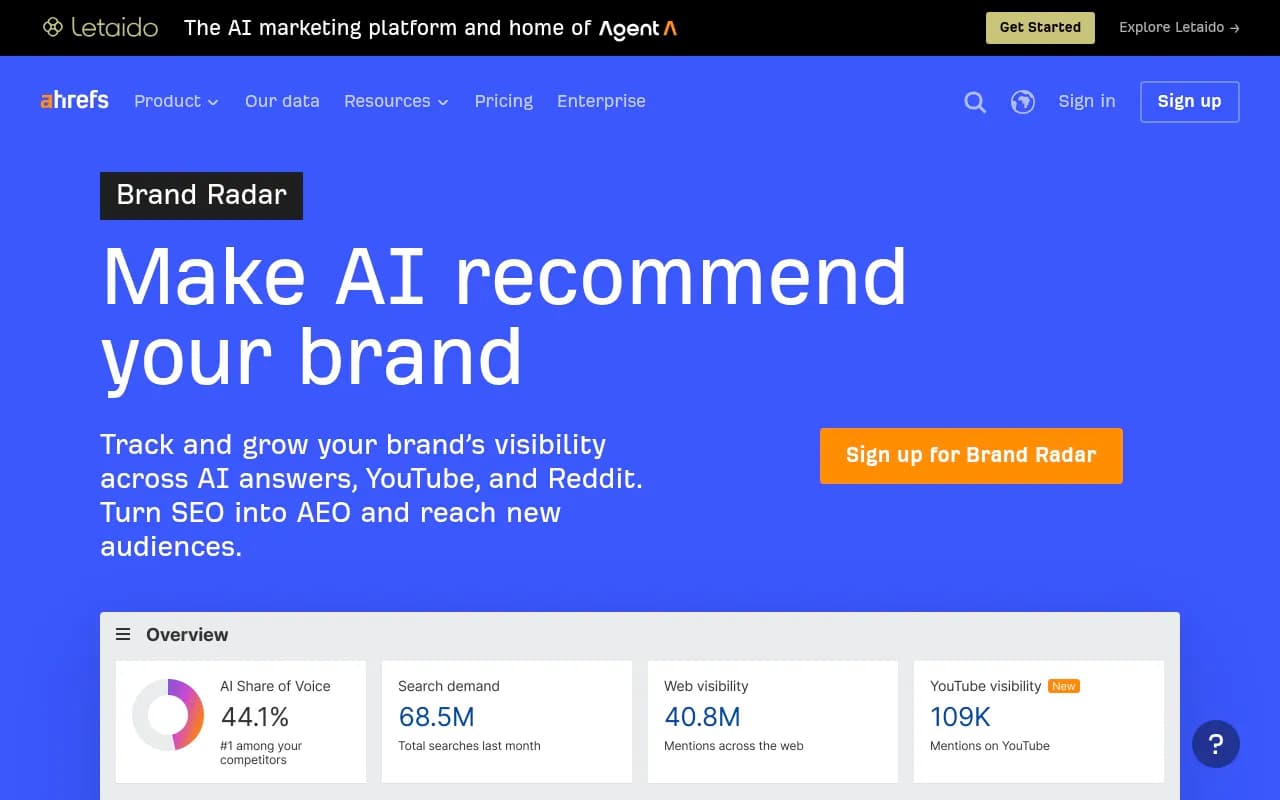
| Ahrefs Brand Radar | Add-on to an SEO suite | Same logic |
| Peec AI, Otterly.AI | Lighter trackers | Faster onboarding, thinner enterprise governance |
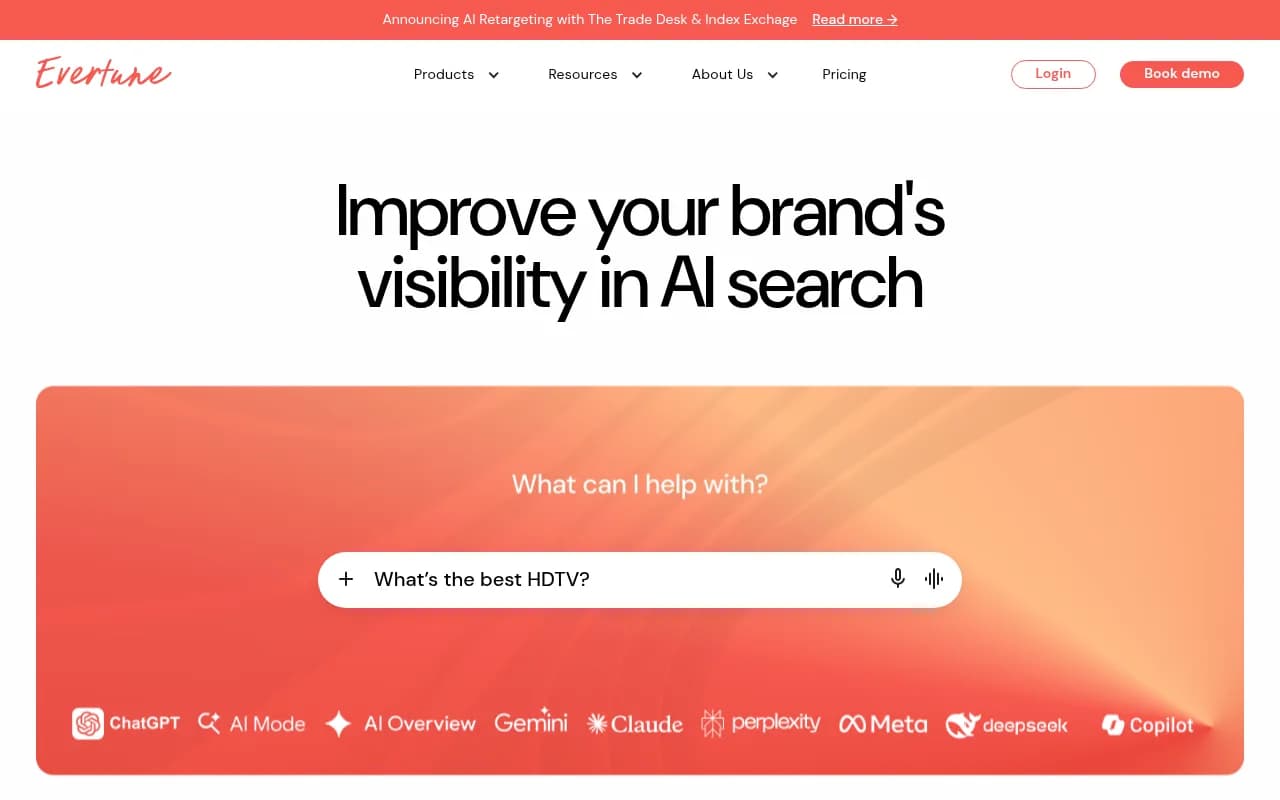
| Evertune | Enterprise GEO | Aimed at Fortune 500 brands |
Profound


Otterly.AI

For head-to-head detail, see the 2026 comparison of GEO platforms or the pages for Promptwatch vs Profound and Promptwatch vs Semrush. To browse more options, the GEO software directory at bestgeosoftware.com lists a lot of them.
Two caveats. Vizby is itself a competitor, so its framing leans toward buying. And Promptwatch is the platform 1001 SEO Media uses, so factor that in when weighing my lean. I would still tell you to test any vendor against your own prompts before signing.
The hybrid path most enterprises land on
The pragmatic end state is to buy the tracking and fixing, then build only the thin layer that is specific to you. In practice that means:
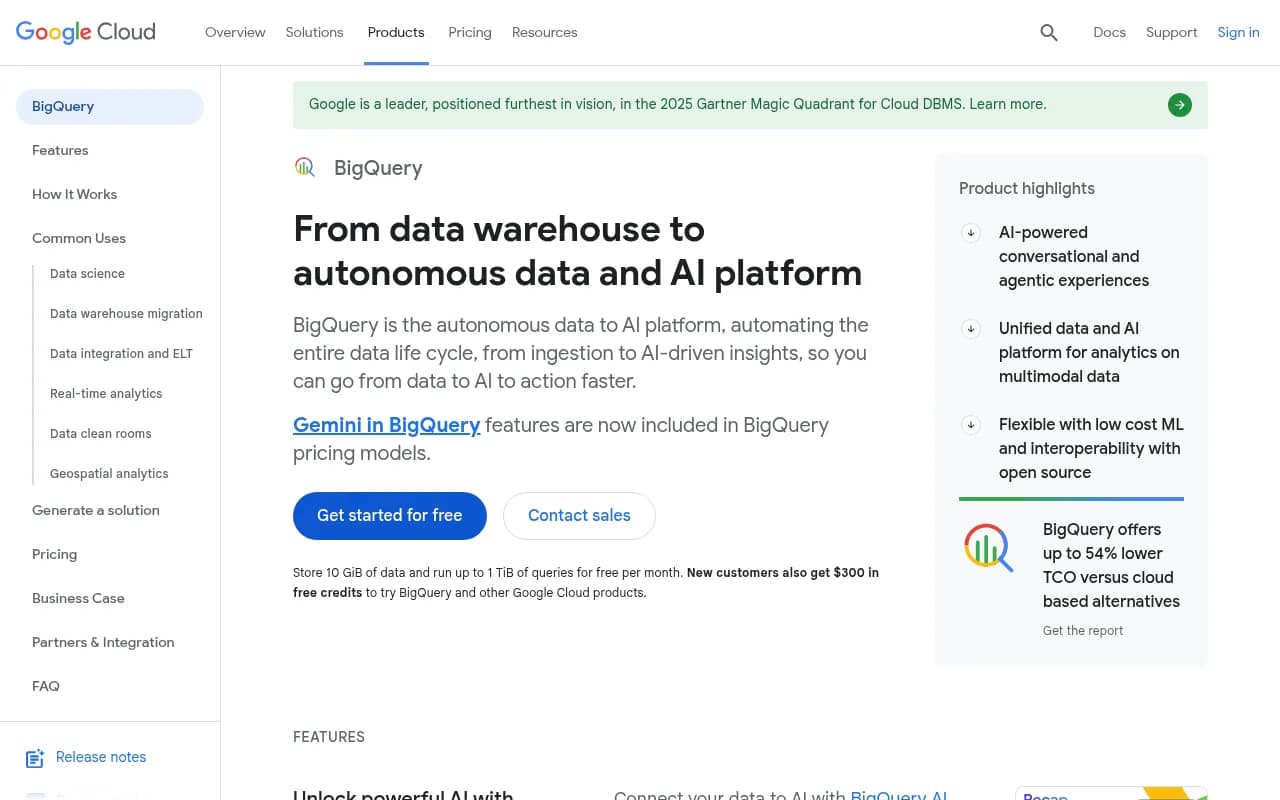
- Pull prompts, responses, citations, and visibility data into BigQuery, Snowflake, or whatever warehouse you run, through a REST API or exports.
- Join it with your own revenue, CRM, and product data in your BI tool.
- Use an MCP server or API to let internal agents query visibility data.
- Keep the vendor's collection, sampling, and parsing, because that is where the maintenance pain lives.
This gives engineering something interesting to build and removes the part that decays. Check that your chosen vendor offers an API with generous limits and date ranges, plus connectors such as Looker Studio, before you commit.
A scorecard you can use
Adapted from the Reflex framework, with GEO-specific criteria. Score each from 1 (buy) to 5 (build), weight them, and be honest.
| Criterion | 1 looks like | 5 looks like | Suggested weight |
|---|---|---|---|
| Five-year cost | Platform fee is below your engineering cost | Your volume makes API cost exceed platform pricing and you have spare engineers | 20% |
| Maintainability | You would end up with a black box one person understands | A team that owns and documents it | 15% |
| Compliance | Vendors meet your security and residency needs | Data cannot leave your infrastructure | 25% |
| Coverage | Vendors cover your engines and markets | You need engines or markets nobody sells | 20% |
| Strategic fit | GEO is a marketing function | GEO tooling is your product | 20% |
A weighted score under about 2.5 means buy. Between 2.5 and 3.5, go hybrid. Above that, building deserves a serious look. Replace my weights with your own before trusting the result.
Questions to ask before you build
- Who maintains this when the engineer who wrote it leaves?
- What happens the day ChatGPT changes its fanout behavior again?
- How will we tell a real visibility drop from a parsing bug?
- Does API output match what our customers see? Have we tested it?
- Are we measuring only mentions, or also citations, crawler access, and AI-referred traffic?
- What will we do with the data? A tracker that reports and does nothing is a dashboard, not a growth tool.
That last question is the one I would push hardest. Monitoring tells you where you are invisible. Fixing it takes content gap analysis, publishing, and measurement of whether the fix worked. Building all that in-house multiplies the project several times over. If you want an agency to run the program rather than a team to own tooling, 1001 SEO Media does GEO work on top of a bought platform.
My recommendation
Run a 30-day proof of concept before you decide. Build the quick prototype if you like. It is a fun week and it teaches your team what matters. In parallel, trial a platform on the same prompt set (Promptwatch has a 7-day free trial, and a free AI visibility report is available with no login). Compare the outputs, the setup time, and what each path would take to keep running for three years.
Most enterprises will find the platform wins on cost, coverage, and time, and that the real work is what you do with the data. Build the reporting layer, not the collector. If your scorecard says compliance or coverage forces your hand, build it knowingly, budget for the tail, and plan to re-audit every time an engine changes.