Key takeaways
- 50% of B2B software buyers now start their research in an AI chatbot -- up 71% in just four months, according to G2's 2025 buyer survey
- ChatGPT is the preferred AI model for 47% of B2B buyers, making it the single most important AI surface to optimize for
- Getting cited requires a different approach than traditional SEO: it's about being a quotable, authoritative source -- not ranking #1
- Dedicated AI visibility tools (not traditional rank trackers) are now essential for monitoring and improving your presence in AI-generated answers
- The brands winning in AI search are publishing structured, question-answering content and earning mentions from sources that AI models already trust
Why B2B brands can't ignore ChatGPT anymore
Here's the uncomfortable truth for most B2B marketing teams: you can be winning at SEO and still be completely invisible to half your potential buyers.
G2 surveyed over 1,000 B2B software buyers and found that 50% now start their buying journey inside an AI chatbot rather than Google. That number jumped 71% in just four months. And 87% say AI chatbots are changing how they research software.
When a buyer opens ChatGPT and asks "what's the best project management tool for mid-market B2B teams?" -- they're not getting a list of links. They're getting a curated answer. If your brand isn't in that answer, you don't exist for that buyer at that moment. No amount of Google ranking fixes that.
The stat that really drives this home: 47% of B2B buyers name ChatGPT as their preferred AI model, roughly three times any other platform. So if you're going to prioritize one AI surface, this is it.
How AI citation works (and why it's different from SEO)
Traditional SEO is about ranking. You optimize a page, it climbs the results, people click it. AI search is different -- ChatGPT doesn't serve a ranked list. It synthesizes an answer from multiple sources and either cites you or it doesn't.
What determines whether you get cited? A few things:
- Whether your content directly and clearly answers the questions buyers are asking
- Whether your brand is mentioned across trusted third-party sources (review sites, industry publications, Reddit threads, analyst reports)
- Whether AI crawlers can actually access and read your pages
- Whether your content is structured in a way that's easy to extract and quote
This is why the old playbook doesn't transfer cleanly. You can have a technically perfect website with strong backlinks and still get zero citations in ChatGPT responses -- because your content isn't written in a way that AI models find quotable.
The types of queries where B2B brands get cited
Not all prompts are equal. B2B buyers tend to use AI for a few specific research patterns:
Comparison and shortlist queries -- "What are the best alternatives to [competitor]?" or "Compare [Tool A] vs [Tool B]". These are high-intent and heavily influence vendor shortlists. If you're not showing up here, you're not on the list.
Category definition queries -- "What is [category] software?" or "How does [category] work?". Buyers use these to get oriented. Brands that own these answers get positioned as category authorities.
Problem-solution queries -- "How do I solve [specific pain point]?" These are earlier in the journey but shape which brands feel relevant when the buyer gets to evaluation.
Validation queries -- "Is [your brand] a good choice for [use case]?". These happen after initial discovery. If the AI gives a lukewarm or vague answer here, deals stall.
Understanding which query types your brand is and isn't appearing in is the starting point for any real strategy.
Strategies that actually move the needle
Write content that answers questions, not just content that ranks
The shift here is subtle but important. SEO content is often optimized around keywords. AI-cited content needs to be optimized around questions -- specific, direct, complete answers that a language model can extract and reproduce.
That means:
- Lead with the answer, not the setup. Don't bury your conclusion in paragraph four.
- Use clear headers that mirror how buyers phrase questions ("What does [your product] do?" not "Product Overview")
- Include specific data points, named use cases, and concrete comparisons -- vague marketing language gets ignored
- Cover the full question, including objections and limitations. AI models favor balanced, complete answers over promotional ones.
Build your presence on the sources AI trusts
ChatGPT doesn't just read your website. It synthesizes from a wide range of sources -- and many of those sources carry more weight than your own domain.
For B2B brands, the high-leverage sources are:
- G2, Capterra, and Trustpilot reviews (AI models cite these heavily for software recommendations)
- Industry publications and analyst reports
- Reddit discussions in relevant subreddits
- LinkedIn articles and thought leadership posts
- YouTube videos (yes, transcripts from YouTube get cited)
Getting mentioned in these places isn't just good for brand awareness -- it's directly feeding the training and retrieval data that shapes AI responses. A single well-placed G2 review mentioning your specific use case can influence how ChatGPT describes your product.
Make your site technically accessible to AI crawlers
This one gets overlooked. AI models use crawlers to read your content, and if those crawlers hit errors, get blocked by your robots.txt, or can't parse JavaScript-heavy pages, your content simply doesn't get read.
Check that:
- GPTBot (OpenAI's crawler) isn't blocked in your robots.txt
- Your most important pages load quickly and render correctly
- Your sitemap is current and submitted
- Key content isn't hidden behind login walls or dynamic JavaScript that crawlers can't execute
Tools like Promptwatch include AI crawler logs that show exactly which pages AI bots are visiting, how often, and what errors they're encountering -- which makes diagnosing these issues much faster than guessing.

Use structured data and schema markup
Schema markup helps AI models understand what your content is about. For B2B brands, the most useful schema types are:
FAQPagefor question-and-answer contentHowTofor process-based contentArticlewith proper author and organization markupProductandSoftwareApplicationfor product pages
This isn't a magic bullet, but it reduces ambiguity. When an AI model is deciding whether your page answers a specific question, clear structured data makes that determination easier.
Publish comparison and alternative content
This is one of the fastest ways to get into buyer research queries. Create dedicated pages for:
- "[Your product] vs [Competitor]" comparisons
- "Best [category] tools" roundups where you're featured
- "[Competitor] alternatives" pages (yes, even if you're the alternative)
These pages directly match the comparison queries that dominate B2B AI research. They're also the pages that get cited most frequently in AI responses because they're directly answering the question the buyer is asking.
Tools for tracking and improving your ChatGPT visibility
Monitoring whether you're being cited in AI responses requires different tools than traditional rank tracking. Here's what's available and what each is best for.
Dedicated AI visibility platforms
These are purpose-built for tracking brand mentions across AI models:
Promptwatch is the most comprehensive option for B2B teams that want to go beyond monitoring. It tracks citations across 10 AI models (including ChatGPT, Perplexity, Claude, Gemini, and Google AI Overviews), shows you which prompts competitors are visible for that you're not, and includes a built-in content generation tool to help you close those gaps. The crawler logs feature is particularly useful for diagnosing technical access issues. Pricing starts at $99/month.
Profound is strong for enterprise brands that need deep narrative tracking and conversation volume data. It's monitoring-focused but gives good visibility into how your brand is being described across AI models.
Profound

Otterly.AI is a lighter option that works well for agencies managing multiple brands. It covers the main AI engines and gives a Brand Visibility Index score, though it doesn't include content optimization features.
Otterly.AI

Peec AI tracks visibility across ChatGPT, Perplexity, and Claude with a clean interface. Good for teams that want straightforward monitoring without a lot of complexity.

Rankshift focuses specifically on ChatGPT and Perplexity citation tracking, with competitive benchmarking built in.

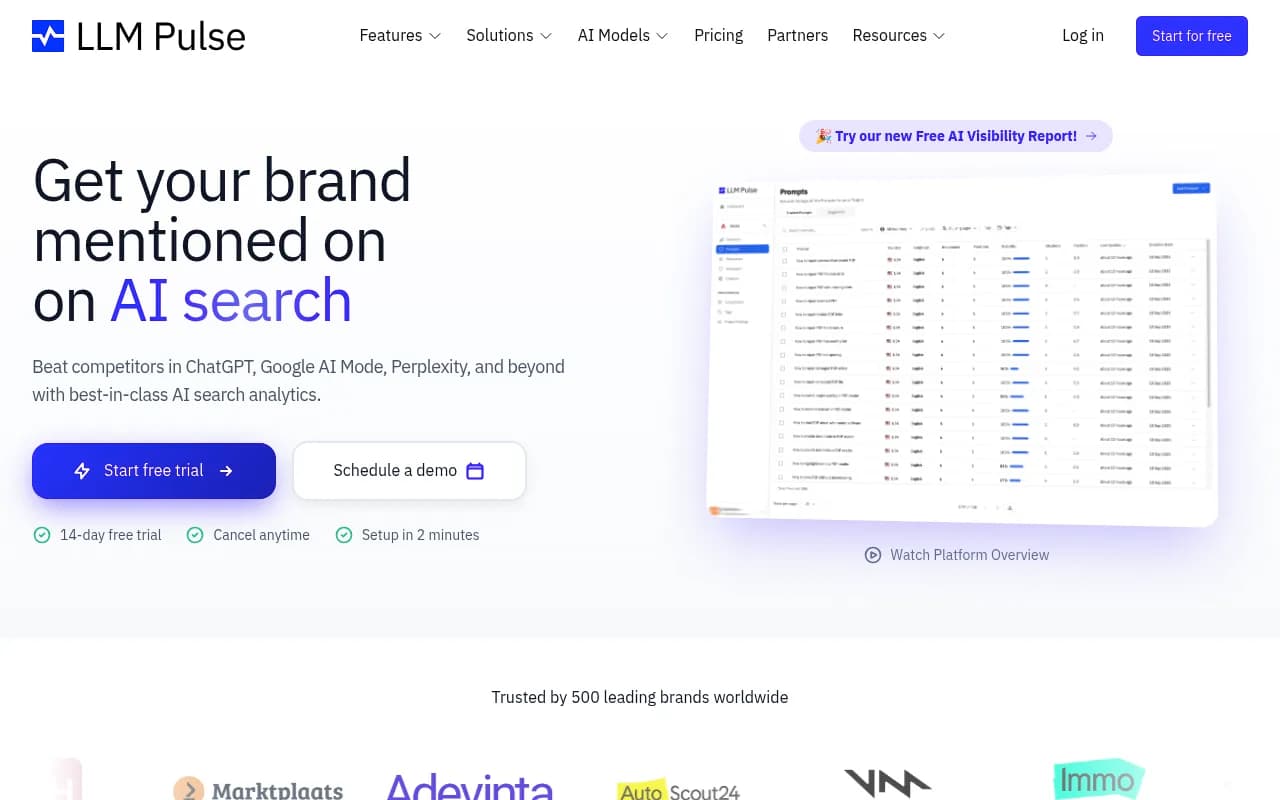
LLM Pulse is a solid option for tracking brand mentions across ChatGPT, Perplexity, and other AI search engines with a focus on visibility scoring.
Tools for content optimization
Getting cited requires great content. These tools help you create it:
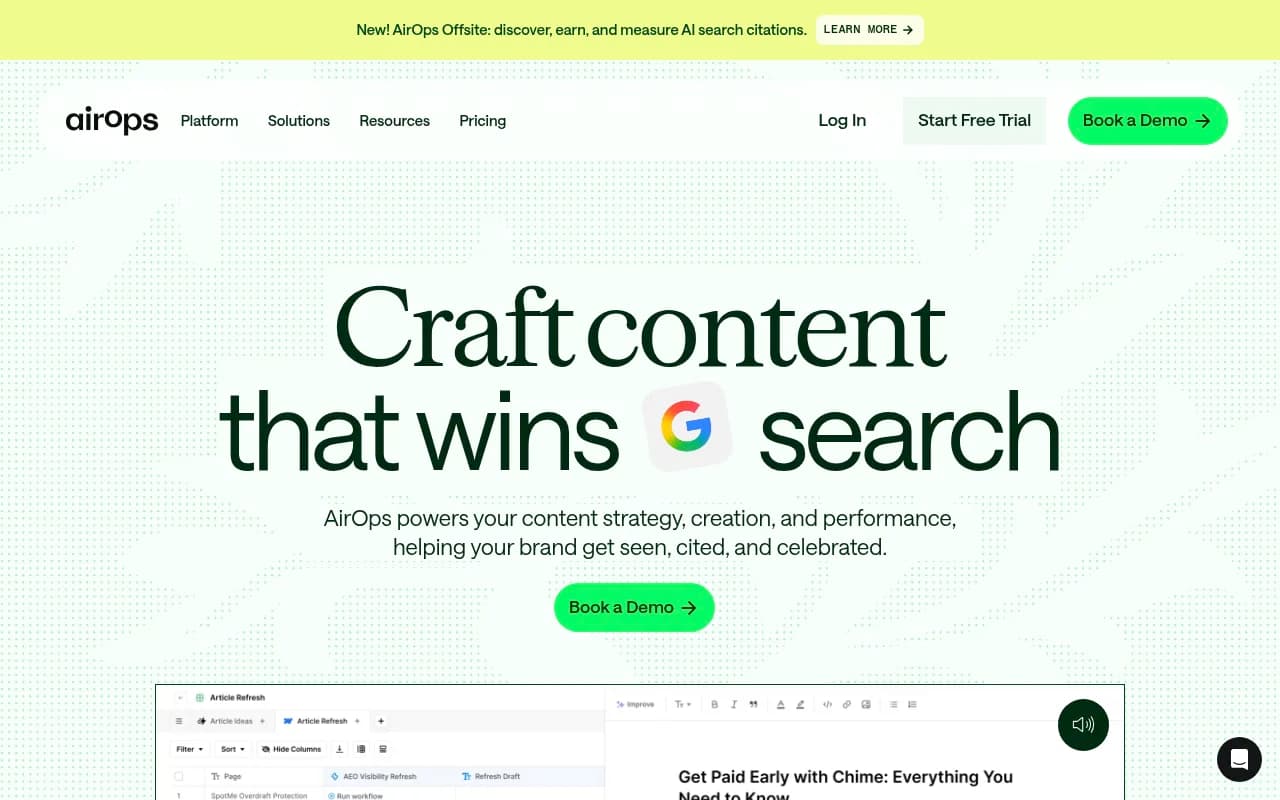
AirOps is built specifically for AI search visibility content -- it helps teams research, brief, and publish content engineered to rank in AI responses.
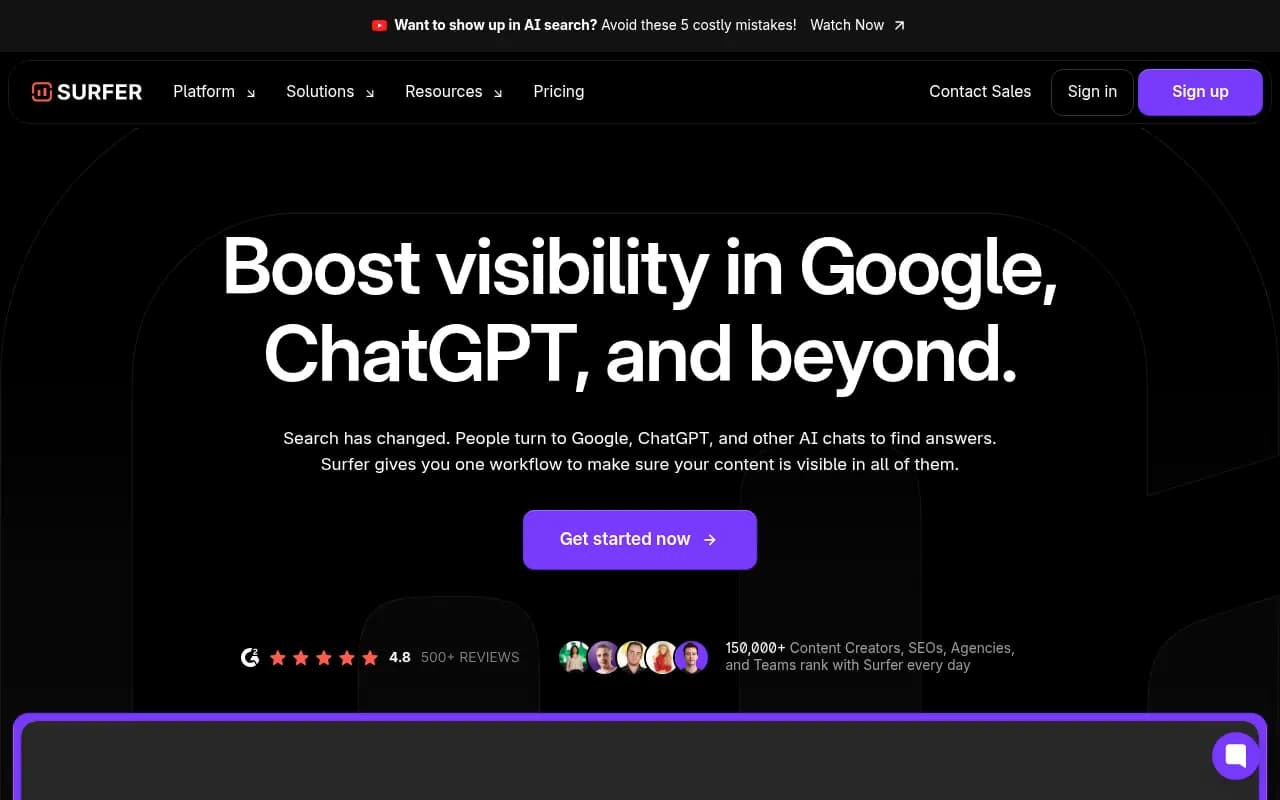
Surfer SEO remains useful for structuring content in ways that AI models can parse, even though it was built for traditional SEO.
MarketMuse helps identify content gaps and build topical authority -- both of which directly influence AI citation rates.
Comparison table: AI visibility tools for B2B brands
| Tool | AI models tracked | Content gap analysis | Content generation | Crawler logs | Best for | Starting price |
|---|---|---|---|---|---|---|
| Promptwatch | 10 (incl. ChatGPT, Claude, Gemini, Perplexity) | Yes | Yes (built-in AI writer) | Yes | Full-cycle optimization | $99/mo |
| Profound | 9+ | Limited | No | No | Enterprise monitoring | $99/mo |
| Otterly.AI | 5+ | No | No | No | Agency brand monitoring | $29/mo |
| Peec AI | 3 (ChatGPT, Perplexity, Claude) | No | No | No | Simple monitoring | Varies |
| Rankshift | 2 (ChatGPT, Perplexity) | No | No | No | Citation tracking | Varies |
| AthenaHQ | 5+ | Limited | No | No | Monitoring-focused teams | Varies |
The key distinction to understand: most tools in this space are monitoring dashboards. They tell you where you stand but don't help you improve. Promptwatch is the main exception -- it's designed around the full loop of finding gaps, creating content, and tracking results.
A practical workflow for B2B marketing teams
If you're starting from scratch, here's a realistic sequence:
Week 1-2: Audit your current visibility Run your brand and key competitors through an AI visibility tool. Find out which prompts you're appearing in, which you're not, and where competitors are beating you. Pay particular attention to comparison queries and category queries.
Week 3-4: Fix technical access issues Check your robots.txt for GPTBot blocks. Audit your most important pages for crawlability. Fix any obvious issues before investing in content.
Month 2: Build your third-party presence Prioritize getting reviews on G2 and Capterra that mention your specific use cases. Reach out to industry publications for coverage. Engage in relevant Reddit communities (genuinely -- not with spam).
Month 2-3: Create targeted content Build out comparison pages, alternative pages, and FAQ content that directly addresses the queries where you're not appearing. Use real buyer language, not marketing language.
Ongoing: Track and iterate Monitor your visibility scores weekly. When you publish new content, watch whether citation rates improve for the relevant prompts. Adjust based on what's working.
What the brands getting cited have in common
Looking at what actually drives AI citations for B2B brands, a few patterns stand out consistently:
They have strong third-party validation. G2 ratings, analyst mentions, press coverage -- AI models weight external sources heavily because they're harder to game than owned content.
They answer questions completely. Not just "yes we do X" but "here's how X works, when it makes sense, when it doesn't, and how it compares to alternatives." Completeness signals trustworthiness.
They're specific about use cases. Vague claims ("we help teams collaborate better") don't get cited. Specific claims ("used by 500+ mid-market SaaS companies for cross-functional project tracking") do.
They publish consistently. AI models favor brands with a track record of publishing relevant content over time. A single well-optimized page helps, but consistent publishing builds the kind of topical authority that leads to reliable citation rates.
The good news for B2B brands is that most of your competitors are still treating this like a traditional SEO problem -- optimizing for Google rankings while ignoring what's happening in AI search. That gap won't last forever, but right now it's a real opportunity.