Key takeaways
- Sprout Social starts at $199/user/month; Hootsuite starts at $99/month for one user. For a 5-person team, that's roughly $12,000/year more for Sprout.
- Hootsuite wins on price-to-feature ratio, integrations (100+), and social listening depth via Talkwalker. Sprout wins on UX polish, reporting quality, and customer support.
- Sprout's social listening is an expensive add-on (~$999/month extra). Hootsuite includes listening in paid plans.
- For most mid-size teams doing scheduling, reporting, and basic monitoring, Hootsuite delivers more per dollar. Sprout justifies its cost mainly for teams where reporting polish and support SLAs are non-negotiable.
- Budget-conscious teams should also look at alternatives like Vista Social, SocialBee, and Buffer before committing to either.
The price gap between Hootsuite and Sprout Social is real, and it's not small. Depending on your team size, you could be looking at a $10,000-$15,000 annual difference. That's a junior hire. That's a paid media budget. That's not a rounding error.
So the question isn't really "which tool is better?" — it's whether what Sprout does differently is worth that much to your specific team. The answer depends on what you actually use day-to-day, and most comparisons skip that part.
This guide tries to be more honest about it.
How the pricing actually stacks up
Let's start with the numbers, because the sticker prices can be misleading.
Hootsuite's Professional plan is $99/month for one user with 10 social accounts. The Team plan jumps to $249/month and covers up to 3 users. Enterprise pricing requires a conversation, but publicly available information suggests minimums around $15,000/year.
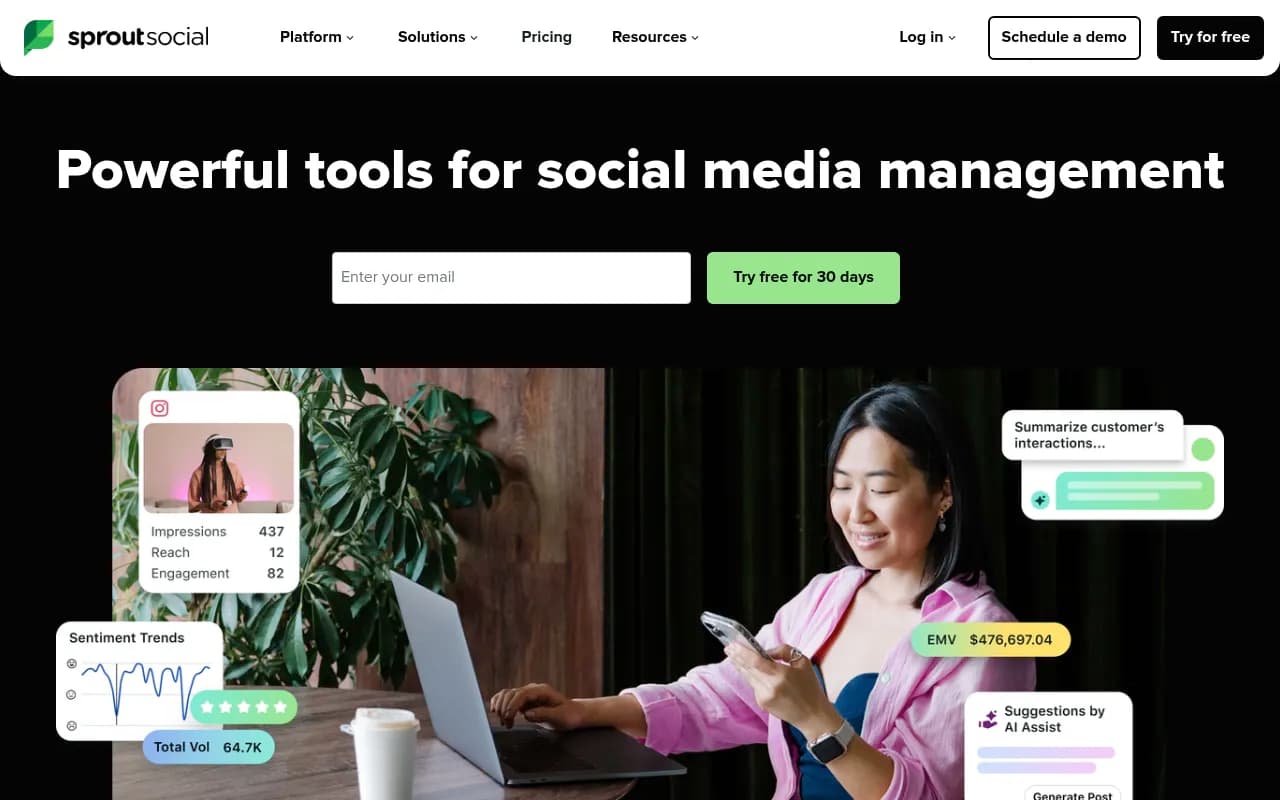
Sprout Social starts at $199/user/month on the Standard plan. Every seat costs that. A 3-person team is $597/month before you've added a single add-on. The Professional tier is higher still, and social listening — one of the features Sprout is most known for — is a separate add-on that reportedly runs around $999/month on top of your base plan.
| Plan tier | Hootsuite | Sprout Social |
|---|---|---|
| Entry-level | $99/mo (1 user, 10 accounts) | $199/user/mo (Standard) |
| Small team (3 users) | $249/mo (Team plan) | ~$597/mo |
| Social listening | Included in paid plans | ~$999/mo add-on |
| Enterprise | ~$15K/year minimum | Custom (typically higher) |
| Free trial | Yes | Yes (30 days) |
For a 5-person mid-size team, the annual difference between Hootsuite Team and Sprout Standard is roughly $12,000-$18,000 depending on your negotiated rate. That's the number you need to justify.

Where Hootsuite actually pulls ahead
Price-to-feature ratio
This is Hootsuite's clearest win. You get bulk scheduling, an AI content assistant (OwlyWriter), social listening, analytics, and 100+ integrations at a price point that Sprout simply can't match. For teams that need breadth without a massive budget, Hootsuite is hard to argue against.
The Talkwalker-powered listening is particularly notable. Hootsuite acquired Talkwalker in 2023, and the integration means you're monitoring 150 million+ sources — websites, forums, review sites, TV networks — across all paid plans. Sprout's listening, by contrast, is a premium add-on. If social listening is part of your workflow, Hootsuite's bundled approach saves you a significant amount.
Integrations
Hootsuite claims three times as many integrations as Sprout. HubSpot, Zapier, Mailchimp, and hundreds more connect directly to the dashboard. For teams that run complex martech stacks, this matters. You're not constantly exporting CSVs or building workarounds.
Scheduling at scale
Hootsuite's bulk scheduling and automation tools are faster for high-volume publishing workflows. If your team is managing multiple brands or dozens of accounts, the efficiency gains are real. Sprout's scheduler is good, but Hootsuite was built around this use case from day one.
Where Sprout Social actually pulls ahead
UX and onboarding
Sprout's interface is cleaner. That's subjective, but it shows up consistently in user reviews and the learning curve is noticeably lower. For teams that are onboarding new members frequently, or where not everyone is a power user, Sprout's polish reduces friction.
Hootsuite has more features, which means more surface area to navigate. That's a genuine tradeoff.
Reporting quality
Sprout's reports look better out of the box. They're more polished, easier to share with stakeholders, and require less manual work to turn into something presentable. Warwick Business School switched to Hootsuite specifically because Sprout lacked full reporting capabilities for organic and paid combined — but that's an enterprise-level use case. For teams sending weekly reports to a marketing director, Sprout's default outputs are more client-ready.
Customer support
Sprout's support reputation is consistently better than Hootsuite's in user reviews. Response times are faster, and the support team is generally more helpful. For teams that rely on support when things break — and things always break — this matters more than it sounds.
AI features for customer service
Sprout's AI Assist is genuinely useful for social customer service teams. Real-time sentiment analysis across mentions, automated response suggestions, and reporting automation that turns raw engagement data into something readable. If your social team handles a significant volume of inbound messages, Sprout's AI tooling is more mature for that specific workflow.
The honest breakdown by team type
Not every mid-size team is the same. Here's how the decision actually plays out:
You should lean toward Hootsuite if:
- You're managing multiple brands or many social accounts
- Social listening is part of your workflow and you don't want to pay for it separately
- You need deep integrations with your existing martech stack
- Budget is a genuine constraint and you need to justify the spend
- Your team is comfortable with a slightly steeper learning curve
You should lean toward Sprout Social if:
- Your team is smaller (2-4 people) and UX friction has real productivity costs
- You're sending regular reports to clients or executives and presentation quality matters
- Social customer service is a core function and you need AI-assisted response workflows
- Support quality and response time is non-negotiable for your team
- You're already in the Sprout ecosystem and retraining costs would offset any savings
One Reddit commenter in the AskMarketing community put it well: "If your team already knows Hootsuite well, I'd only switch if the pricing difference is genuinely meaningful because retraining plus the transition period will eat into any savings."
That's real. Tool switching has hidden costs that don't show up in the pricing comparison.
What both tools miss in 2026
Here's something worth saying: both Hootsuite and Sprout were built for a social media landscape that looked different five years ago. They're excellent at scheduling, monitoring text-based mentions, and generating reports on engagement metrics.
What they're not built for is the video-first reality of 2026. TikTok, Reels, and YouTube Shorts are where a huge portion of brand conversations happen now, and neither platform has meaningful capability to monitor untagged video mentions or transcribe spoken brand references. If your brand is being discussed in a 90-second TikTok without a hashtag, neither tool will catch it.
This doesn't make either platform useless. It just means the "complete social intelligence" framing both tools use in their marketing is more aspirational than accurate for video-heavy categories.
Alternatives worth considering before you decide
If you're genuinely on the fence about whether either platform is worth the price, there are cheaper options that cover the basics well.
Buffer is the obvious starting point for teams that primarily need scheduling and basic analytics. It's significantly cheaper than both Hootsuite and Sprout, and for teams that don't need social listening or advanced reporting, it does the job without the overhead.
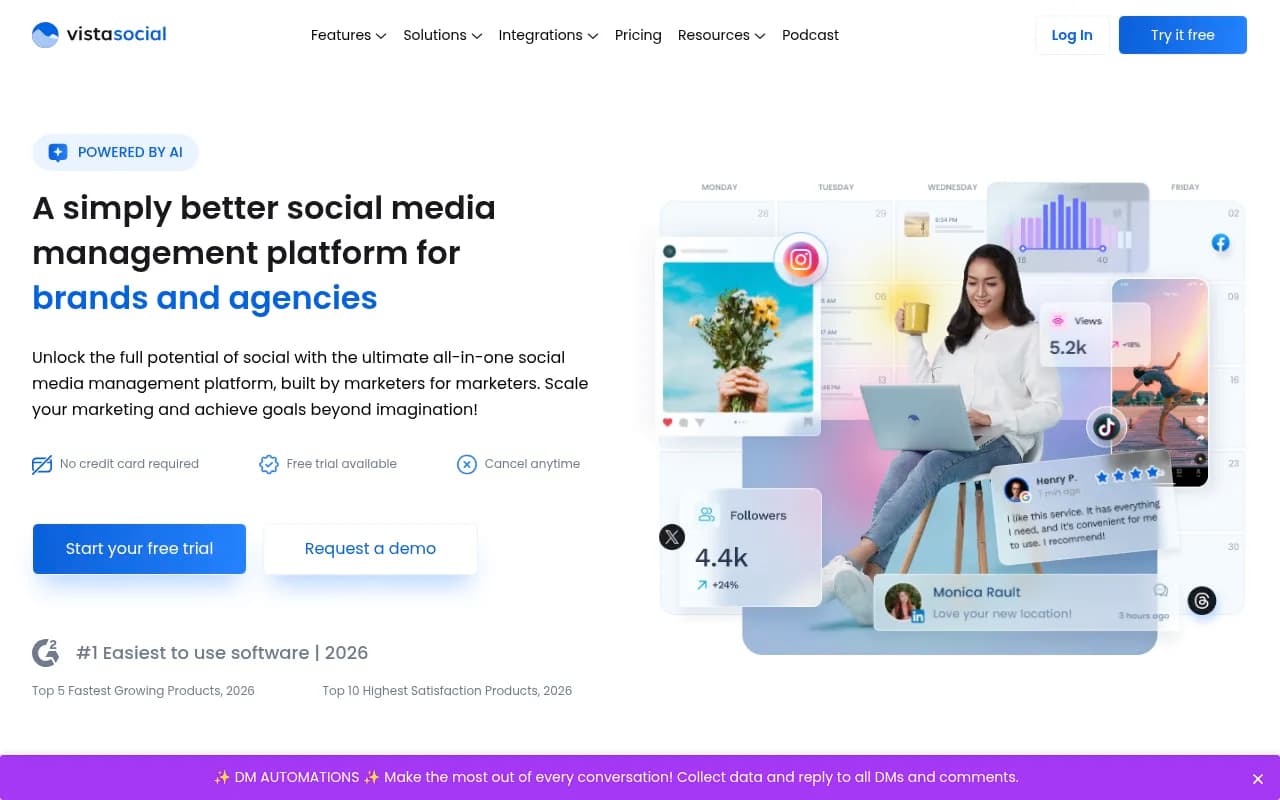
Vista Social has become a popular alternative for budget-conscious teams. It covers scheduling, analytics, and engagement management at a fraction of the cost. The Reddit marketing community has been recommending it more frequently as Sprout's pricing has climbed.
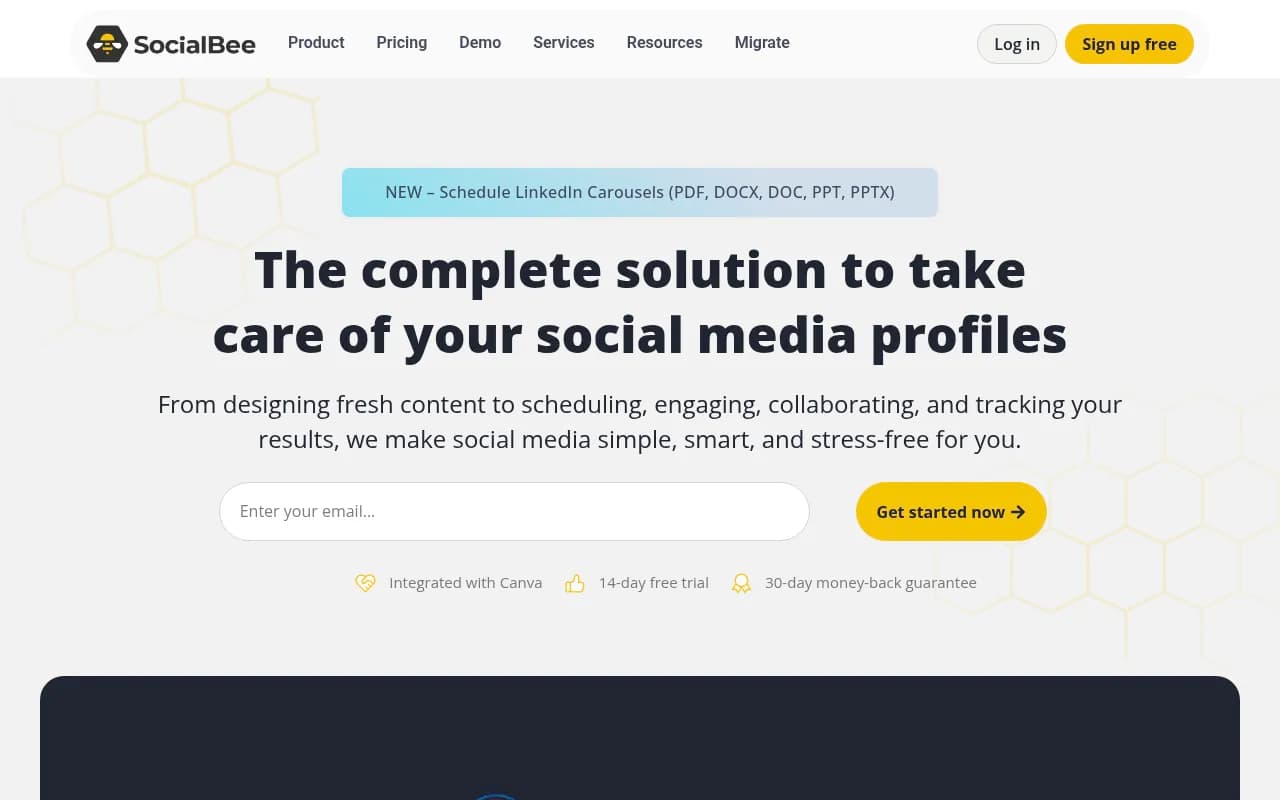
SocialBee is worth looking at if content recycling and category-based scheduling are important to your workflow. It's priced well for small-to-mid teams and has added AI content creation features that compete with Hootsuite's OwlyWriter.

Later is strong for visually-oriented brands, particularly those where Instagram and TikTok are primary channels. The visual calendar and link-in-bio tools are better than either Hootsuite or Sprout for that specific use case.
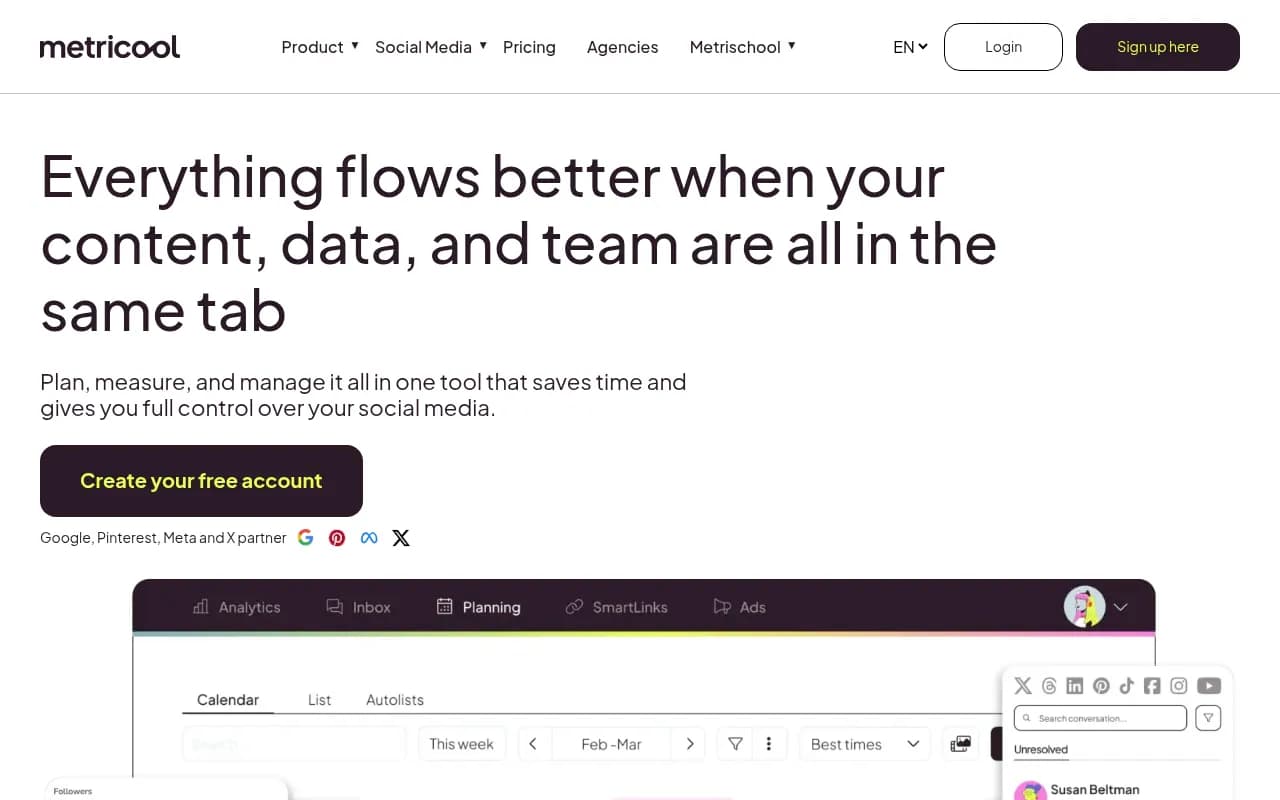
Metricool is an underrated option for teams that want solid analytics alongside scheduling. It covers more platforms than most people realize and the reporting is cleaner than you'd expect at its price point.
A quick feature comparison
| Feature | Hootsuite | Sprout Social | Buffer | Vista Social |
|---|---|---|---|---|
| Starting price | $99/mo | $199/user/mo | $6/mo | $39/mo |
| Social listening | Included (Talkwalker) | Add-on (~$999/mo) | No | Basic |
| AI content tools | OwlyWriter | AI Assist | AI Assistant | Basic |
| Integrations | 100+ | ~35 | ~30 | ~20 |
| Bulk scheduling | Yes | Yes | Yes | Yes |
| Reporting polish | Good | Excellent | Basic | Good |
| Learning curve | Moderate | Low-moderate | Low | Low |
| Support quality | Average | Strong | Good | Good |
| Best for | Multi-account teams, agencies | In-house teams, client reporting | Small teams, individuals | Budget-conscious teams |
The verdict for mid-size teams
For most mid-size teams — say 3-10 people managing social for one or two brands — Hootsuite is the more defensible choice on pure value. You get listening, bulk scheduling, strong integrations, and AI tools at roughly half the per-seat cost. The UX is heavier, but it's not unusable, and the feature set is genuinely broader.
Sprout Social earns its premium in specific situations: teams where reporting quality directly affects client relationships, teams with heavy social customer service workloads, and teams where onboarding speed matters because headcount turns over frequently.
The $12,000+ annual difference is real money. Before you spend it, be specific about which Sprout features you'd actually use that Hootsuite doesn't offer. If the honest answer is "the interface is nicer and support is better," that might not clear the bar. If the answer is "we send polished reports to 10 clients every week and our team is constantly onboarding new people," it might.
Neither tool is wrong. The question is whether the premium is justified for your team's actual workflow — and that's a question only you can answer with specifics.