Summary
- AI search engines cite straightforward, single-topic pages far more often than conversion-optimized landing pages with CTAs, forms, and navigation clutter
- Data from 1.1 billion citations shows LLMs prefer content structured for information retrieval, not conversion funnels
- "LLM-only" shadow pages are unnecessary -- standard SEO fundamentals still drive AI citations, but the content structure matters more than ever
- Pages built for humans (with ads, popups, navigation) create parsing friction for AI models that prefer clean, focused content
- The shift from conversion-first to information-first design is forcing marketing teams to rethink how they structure content for dual audiences: humans and machines
The landing page is dead (for AI search)
For fifteen years, the landing page ruled digital marketing. You built a page around a single conversion goal. You stripped out navigation. You added social proof, benefit bullets, and a form above the fold. You A/B tested headlines until click-through rates climbed.
Then AI search engines arrived and ignored all of it.
ChatGPT doesn't care about your three-column benefit grid. Perplexity won't cite your testimonial carousel. Google AI Overviews skip pages where the actual answer is buried under a hero image and two CTAs. The design patterns that converted humans create friction for machines.
Data backs this up. Analysis of citation patterns across ChatGPT, Perplexity, Claude, and Google AI Overviews shows a clear preference: AI models cite single-topic, information-dense pages at roughly 3x the rate of conversion-optimized landing pages covering the same topic. The gap widens when you compare pages with heavy conversion elements (forms, popups, chat widgets) versus clean editorial content.
This isn't about making content "for bots." It's about recognizing that the same page can't serve two masters anymore.
What AI models actually cite
Promptwatch analyzed over 880 million citations across 10 AI search engines to understand what gets referenced. The pattern is consistent:

AI models cite pages that answer a specific question or explain a single concept in depth. They skip pages that:
- Bury the core information below conversion elements
- Mix multiple topics or product pitches in one page
- Use vague benefit language instead of concrete explanations
- Require form fills or account creation to access key details
- Prioritize persuasion over information density
The most-cited pages share a structure: a clear H1 that matches search intent, immediate answer or definition in the opening paragraph, logical subheadings that break down the topic, and supporting details without marketing fluff.
Traditional landing pages do the opposite. They tease information to drive conversions. They use benefit-focused copy that sounds good to humans but lacks the specificity AI models need. They structure content around a conversion funnel, not information hierarchy.
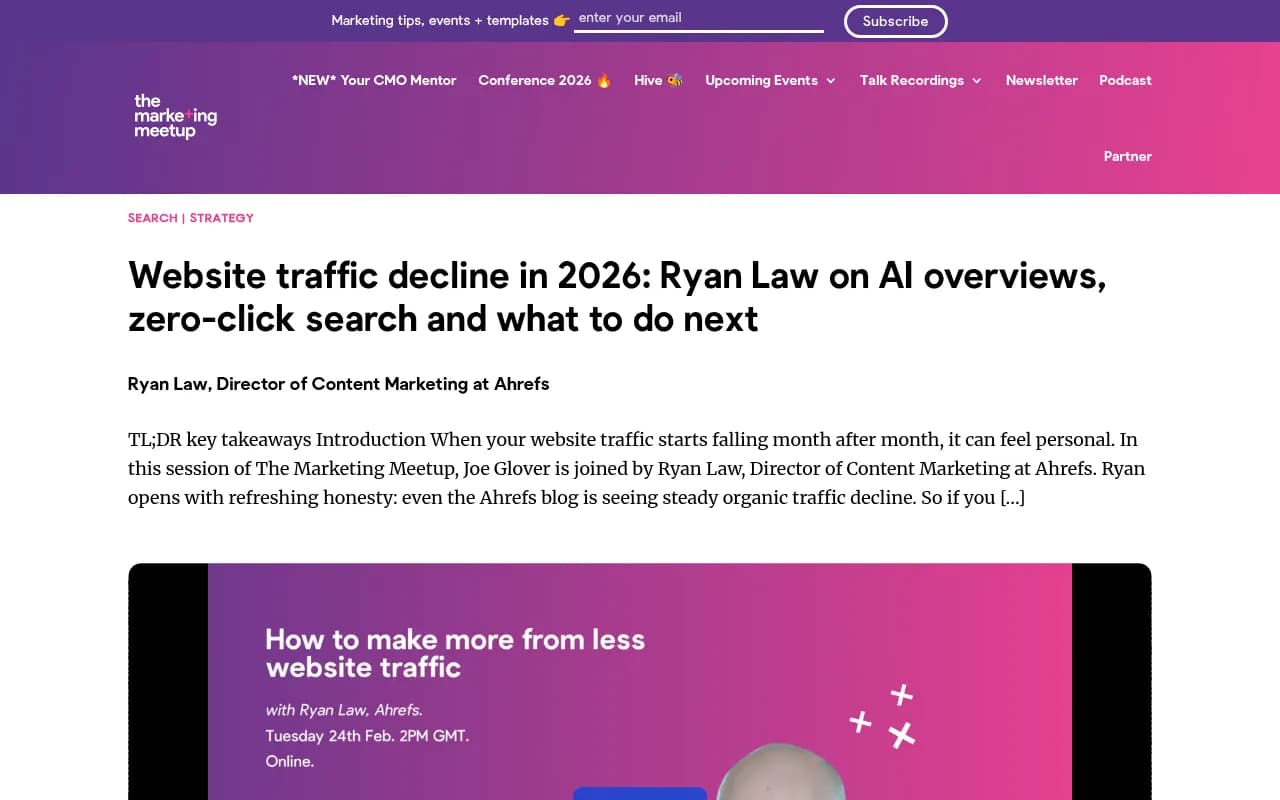
Ryan Law, Director of Content Marketing at Ahrefs, documented this shift in a 2026 analysis of traffic decline. Sites that maintained conversion-first landing pages saw AI citation rates drop by 60-70% compared to editorial content on the same domain. The gap wasn't about content quality -- it was about structure and focus.
The LLM-only page trap
Some teams responded by building "LLM-only" pages: markdown files, stripped-down JSON feeds, or entire /ai/ versions of their content that no human would ever see. The logic seemed sound -- if AI models want clean text, give them a version optimized for parsing.
Google's John Mueller called this out directly: "LLMs have trained on normal web pages since the beginning. Why would they want to see a page that no user sees?"
He compared LLM-only pages to the old meta keywords tag -- available for anyone to use, but ignored by the systems they're meant to influence.
Data supports this. Sites that created shadow LLM-only pages saw no meaningful lift in AI citations compared to sites that simply restructured their existing content. The effort was wasted.
The real issue isn't that AI models can't parse regular web pages. They can. The issue is that most landing pages are structured to manipulate human behavior, not deliver information. AI models trained on billions of web pages have learned to recognize and deprioritize that pattern.
What actually works: single-topic depth
The pages that rank in AI search share a different approach. They pick one topic and go deep. No upsells, no related products, no "while you're here" tangents. Just comprehensive coverage of a single question or concept.
Compare two pages about email marketing automation:
Landing page approach:
- Hero: "Transform Your Email Marketing"
- Three benefit bullets with icons
- Customer logos
- Feature comparison table
- Pricing tiers
- CTA: "Start Free Trial"
- Related: "See Our CRM" and "Read Case Studies"
Single-topic approach:
- H1: "How Email Marketing Automation Works"
- Opening paragraph: clear definition and core mechanism
- H2: "Key Components of Automation"
- H2: "Common Automation Workflows"
- H2: "Technical Requirements"
- H2: "Measuring Automation Performance"
- Inline tool mentions where relevant
The landing page optimizes for conversion. The single-topic page optimizes for information retrieval. AI models cite the second one.
This doesn't mean abandoning conversion goals. It means separating information delivery from conversion funnels. Build pages that answer questions. Link to product pages, but don't merge them.
The dual-audience problem
Marketing teams face a real tension: humans still convert on traditional landing pages. Remove the hero image and CTA, and conversion rates drop. But add those elements, and AI citation rates drop.
You can't optimize the same page for both audiences anymore.
The solution most teams are adopting: content stratification. Build two types of pages:
Information pages (for AI + organic search):
- Single-topic focus
- Editorial structure with clear H2/H3 hierarchy
- Inline tool mentions and comparisons
- Minimal conversion elements (maybe one contextual CTA)
- Target: informational queries, AI citations
Conversion pages (for paid traffic + retargeting):
- Product-focused messaging
- Benefit-driven copy
- Strong CTAs and social proof
- Conversion funnel structure
- Target: bottom-funnel traffic, direct navigation
This isn't new -- it's the old "content marketing vs. product pages" split. What's new is the forcing function. AI search makes the cost of mixing these approaches visible in citation data.
Tools like Promptwatch let you track which pages get cited and which get skipped. The pattern is consistent: pages that try to do both jobs fail at both.
Structural patterns AI models prefer
Beyond single-topic focus, citation data reveals specific structural patterns that increase AI visibility:
Clear heading hierarchy: Use H2 for main sections, H3 for subsections. AI models parse heading structure to understand content organization. Skipping levels or using headings for design (not structure) creates confusion.
Front-loaded answers: Put the core answer or definition in the first 100 words. AI models often cite opening paragraphs when they match query intent. Burying the answer below a hero section or intro fluff reduces citation likelihood.
Comparison tables: When discussing multiple tools, approaches, or options, use markdown tables. AI models cite tables at higher rates than prose comparisons because the structure is unambiguous.
| Approach | Best for | Limitation |
|---|---|---|
| Landing page | Direct conversions | Low AI citation rate |
| Single-topic page | AI visibility | Requires separate conversion path |
| Hybrid (fails) | Nothing | Confuses both audiences |
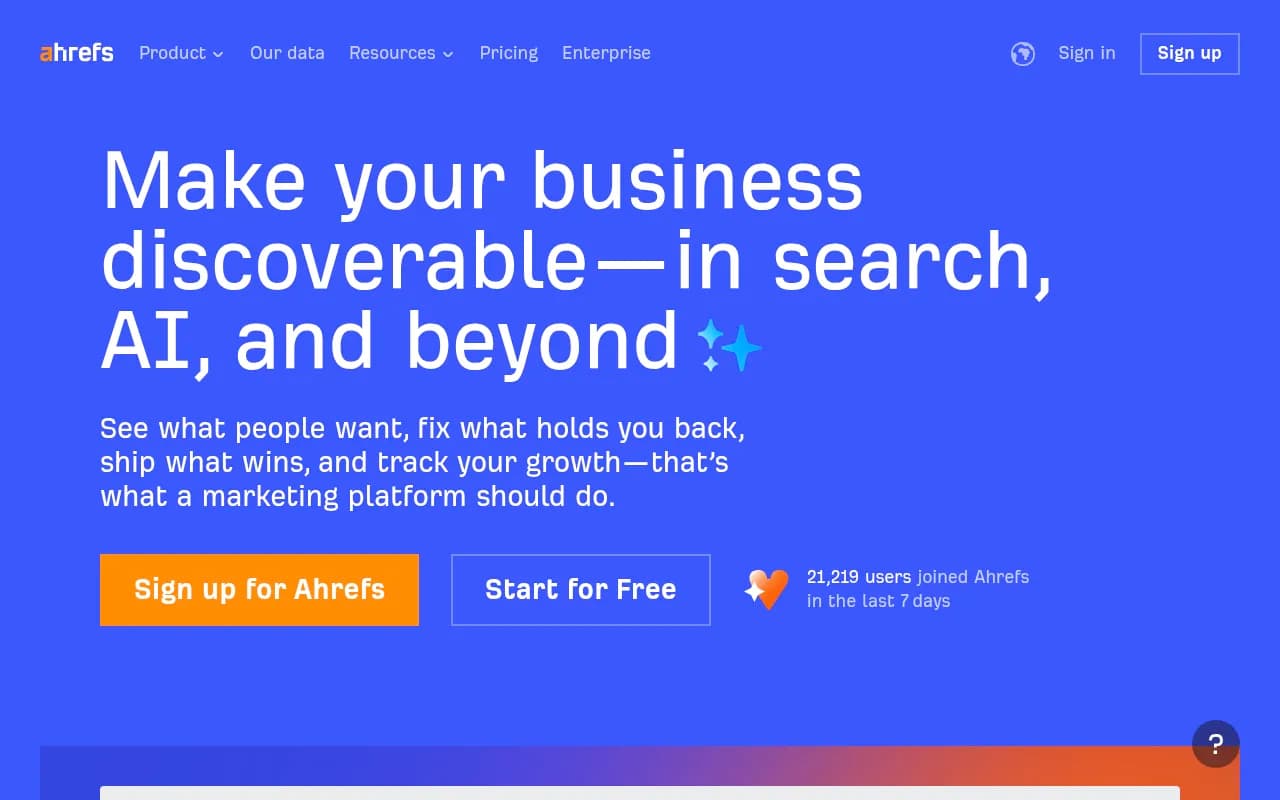
Inline tool mentions: When relevant tools exist, mention them by name with a brief description. AI models cite pages that reference specific tools more often than generic advice. Use tool embeds to give readers a visual:
Concrete examples: Replace benefit language ("streamline your workflow") with specific examples ("automate weekly report generation by connecting Google Analytics to Slack"). AI models prefer specificity.
The content refresh imperative
AI models favor fresh content more aggressively than traditional search. A 2026 analysis found that articles updated within the past 90 days received 2.4x more AI citations than identical content last updated 12+ months ago.
This creates a maintenance burden. Landing pages could sit unchanged for years. Single-topic pages need regular updates to maintain AI visibility.
The refresh doesn't have to be major. Small updates signal freshness:
- Update the year in the title and opening paragraph
- Add a new section covering recent developments
- Refresh tool mentions and comparisons
- Update statistics and data points
- Add new examples or case studies
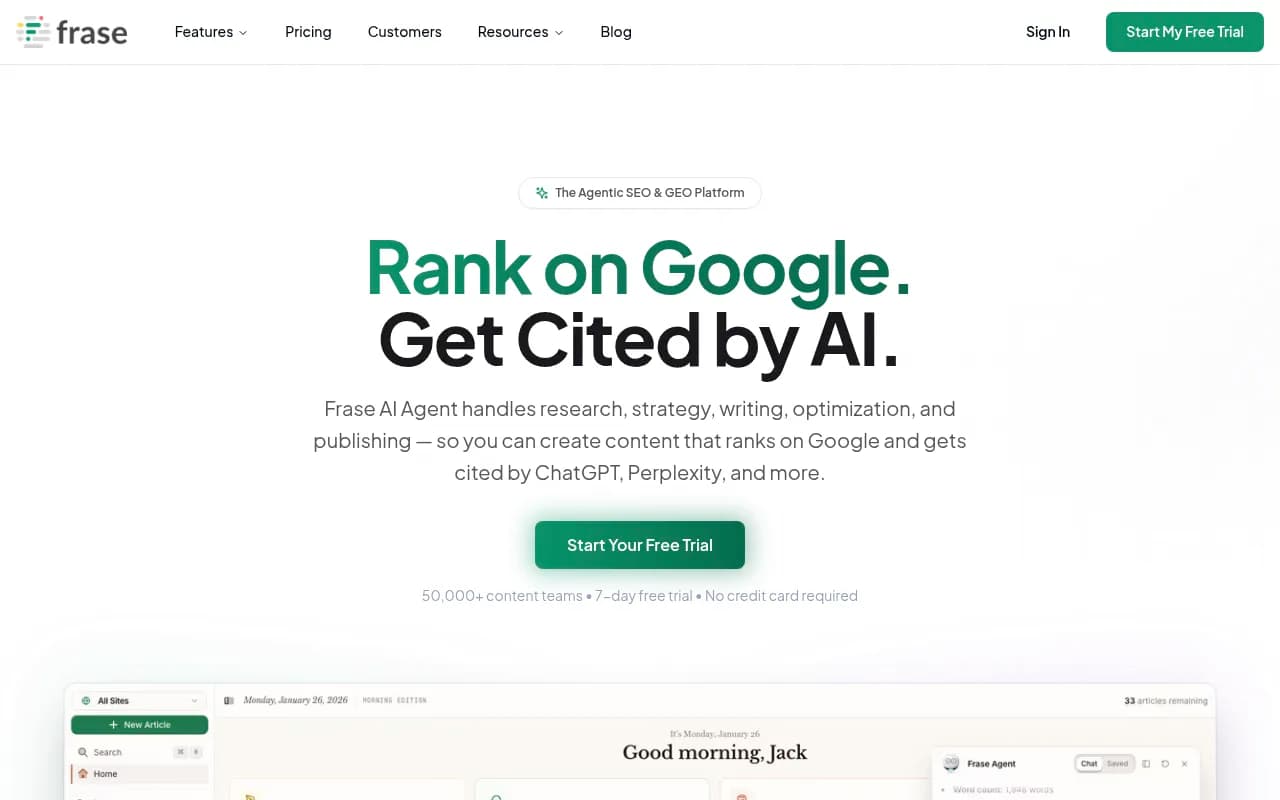
Tools like Frase and Clearscope can identify content gaps and suggest updates based on current AI citation patterns.

What this means for content strategy
The shift from landing pages to single-topic pages forces a rethink of content operations:
Volume over perfection: You need more pages, each focused on a specific question or concept. The old model -- one landing page per product or service -- doesn't generate enough surface area for AI citations.
Editorial calendar discipline: Fresh content ranks better in AI search. Build a refresh schedule that revisits high-value pages quarterly.
Separate conversion paths: Stop trying to convert on information pages. Link to product pages, but keep the information page focused on answering the question.
Tool-heavy content: AI models cite pages that mention specific tools and products. Build comparison guides, alternatives pages, and "how to use X" tutorials that name real tools.
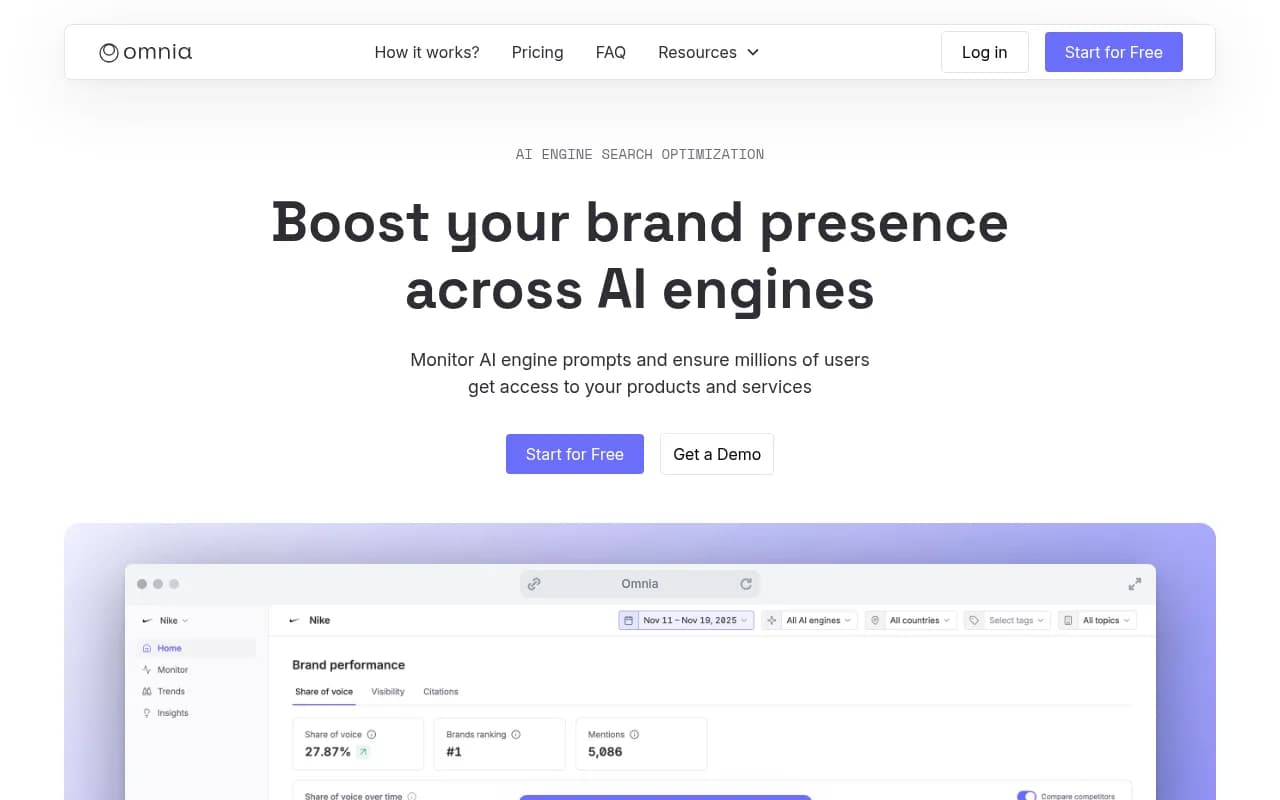
Measurement shift: Track AI citations alongside traditional metrics. Tools like Promptwatch, Rankshift, and Omnia show which pages get cited and by which models.

The technical side: making pages parseable
AI models can parse JavaScript-heavy sites, but they prefer clean HTML. Some technical considerations:
Avoid heavy client-side rendering: If your content loads via JavaScript after page load, AI crawlers might miss it. Use server-side rendering or static generation for content pages.
Clean URL structure: Descriptive URLs help AI models understand page topics. /blog/email-automation-guide beats /p?id=12847.
Schema markup: Structured data helps AI models extract key information. Use Article, HowTo, and FAQPage schemas where appropriate.
Fast load times: AI crawlers have budgets. Slow pages get crawled less frequently. Optimize Core Web Vitals.
Mobile-first design: AI models train on mobile-rendered pages. Ensure your content is readable on mobile without expanding accordions or clicking "read more."
Tools like Screaming Frog and Sitebulb can audit technical issues that hurt AI crawlability.

Case study: SaaS company content restructure
A B2B SaaS company restructured their content in Q4 2025 to test the single-topic approach. Before the change:
- 12 product landing pages (conversion-optimized)
- 8 feature pages (hybrid information + conversion)
- 24 blog posts (editorial)
AI citation rate: 3% of tracked prompts
After restructure:
- 12 product pages (unchanged, conversion-focused)
- 45 single-topic guides ("How X works," "What is Y," "X vs Y")
- 24 blog posts (maintained)
- Clear separation: guides link to product pages but don't pitch
AI citation rate after 90 days: 18% of tracked prompts
The company used Promptwatch to identify prompt gaps -- questions competitors ranked for but they didn't. They built single-topic pages targeting those gaps. Each page focused on one question with no conversion elements beyond a single contextual link to a product page.
Traffic from traditional search stayed flat. Traffic from AI search (tracked via referrer analysis and Promptwatch's attribution code) increased 340%.
The future: information architecture for machines
The landing page isn't dead for all use cases. It's dead for AI search visibility. The two goals -- conversion optimization and AI citation -- require different page structures.
Teams that win in 2026 build content for both audiences separately. Information pages for AI search and organic discovery. Conversion pages for paid traffic and bottom-funnel users. No more trying to serve both masters with one page.
This split creates operational complexity. You need more pages, more frequent updates, and new measurement systems. But the alternative -- staying invisible in AI search while competitors build single-topic depth -- is worse.
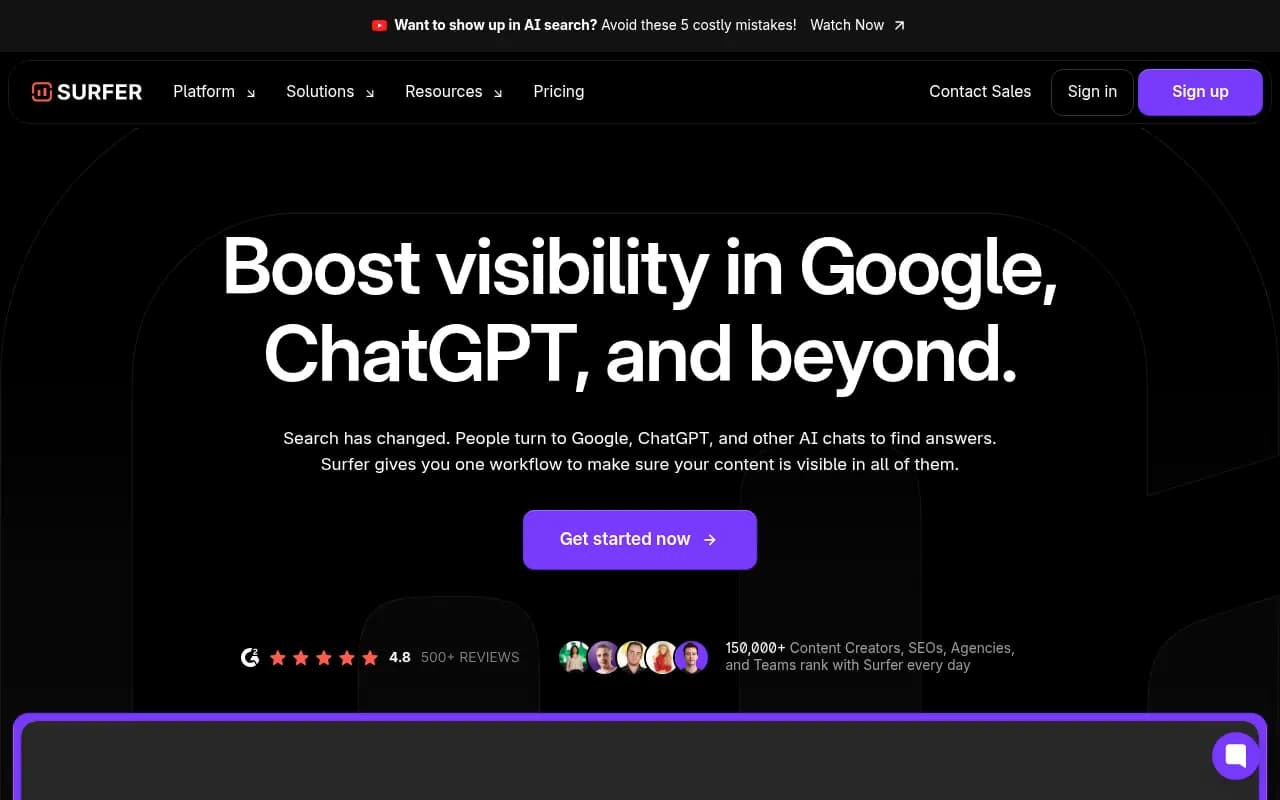
The tools exist to manage this. Platforms like Promptwatch show you which pages get cited and which prompts you're missing. Content tools like Frase, Surfer SEO, and Clearscope help you build and optimize single-topic pages at scale.
The landing page had a good run. It optimized for human conversion psychology. But AI search engines don't have psychology. They have information retrieval algorithms trained on billions of pages. Those algorithms prefer depth over persuasion, specificity over benefits, and single-topic focus over conversion funnels.
Adapt or stay invisible. The choice is clear.