Key takeaways
- A good local prompt set is small, fixed, and structured: roughly 20-40 prompts per location, run across 2-3 AI models for at least 30 days before you draw conclusions (SE Ranking's guidance).
- Put the city, neighborhood, or landmark inside the prompt text. Uberall's advice is to track each neighborhood variation as its own prompt so you can see where a competitor is winning ground you thought you owned.
- Mix branded and unbranded prompts, and favor intents that lead to a visit, call, or booking rather than pure discovery.
- Keep wording and schedules frozen. ChatGPT's behavior can change overnight, so annotate platform change dates in your reports.
- Below you'll find templates for 8 industries: restaurants, dental and medical, home services, legal, real estate, automotive, hotels and travel, and fitness and wellness.
Why local prompts are a different job
Keyword tracking gave us volumes, positions, and a tidy list of competitors. Prompt tracking gives you none of that. SE Ranking puts it bluntly: no reliable query volume, no positions, and technically infinite prompt variations. The same question can also return different brand recommendations depending on session context, location, or history.
Local makes this messier. "Best dentist" means nothing without a place attached. "Best dentist near me" depends on where the person is standing. And an AI answer for "Lincoln Park" can differ from the one for "the Loop" even though both are Chicago.
So the goal is not to track every possible prompt. It's to build a representative, repeatable sample that you can run every week and compare over time. Think of it as a panel survey, not a census.
A caution before we start: I wouldn't trust any single run. AI answers change every time you ask. The value comes from trends across many runs of a fixed set.
The anatomy of a local prompt
Every local prompt has four parts. When you build templates, you're really filling in these slots:
- Service or category ("emergency plumber", "family dentist")
- Location (city, neighborhood, landmark, or ZIP)
- Intent modifier ("open now", "accepts Delta Dental", "under $200", "for a toddler")
- Brand slot (empty for unbranded prompts, your name or a competitor's for branded ones)
A prompt like "Who is the best emergency plumber in Wicker Park that can come tonight?" uses all but the brand slot. Add "Is [Brand] a good choice?" and you have a branded prompt.
Branded vs. unbranded
Track both, but report them separately. Unbranded prompts tell you whether AI recommends you to people who don't know you yet. Branded prompts tell you what AI says once someone does know you (reviews, pricing, hours, reputation). SE Ranking also recommends tracking brand-versus-competitor comparison prompts on their own, because mixing them in skews category metrics.
Intent buckets that matter locally
SE Ranking lists five core prompt types: informational, comparative, instructional, brand-specific, and transactional. Most brands over-index on comparative prompts. For local, I'd reshape these into five buckets:
- Discovery: "best [service] in [place]"
- Qualification: "[service] in [place] that [constraint]"
- Comparison: "[Brand A] vs [Brand B] in [place]"
- Trust check: "Is [Brand] in [place] legit?" or "reviews of [Brand]"
- Action: "book / call / get a quote / open now"
Uberall's point about intents that lead to a visit rather than just discovery is the important one here. A prompt like "what is a root canal" may mention your clinic, but it won't fill a chair.
Step-by-step: build the set
Step 1: List your locations and the neighborhoods inside them
Start with the geography. For a single-location business, that is the city plus 3-6 surrounding neighborhoods or landmarks people actually use. For a multi-location brand, do this per location, and resist copying one city's list to the next. Locals in Austin say "South Congress" and "East Austin"; Chicagoans say "Wicker Park" and "the Loop".
Track the neighborhood variations as separate prompts with the same city, as Uberall suggests. That is how you find the neighborhood a competitor quietly owns.
Step 2: Start from SEO inputs, then rewrite as questions
Profound's seven-step approach starts with traditional SEO inputs, and I agree with it. Take your Google Business Profile categories, your best local keywords, and your Search Console queries. Then convert them into conversational prompts. Don't paste keywords in raw.
- Keyword: "plumber Wicker Park"
- Prompt: "Who is a reliable plumber in Wicker Park I can call for a same-day leak?"
You can use an AI assistant such as ChatGPT or Claude to do the rewrite in bulk, then edit by hand.
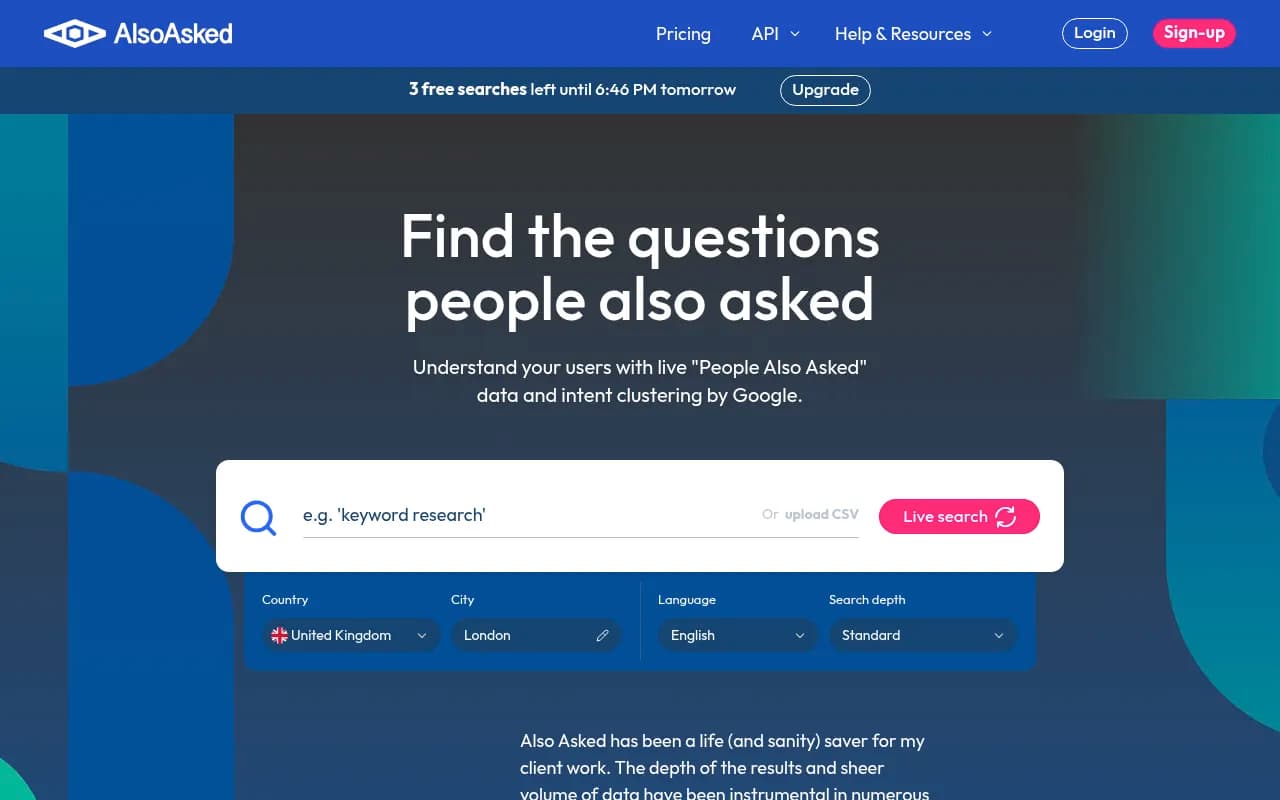
For extra raw material, Google Search Console shows queries you already get, and question tools like AnswerThePublic or AlsoAsked surface real phrasing.
Step 3: Mine support, sales, and reviews
Profound's second step is gathering data from support, sales, and users. For local businesses this is the gold mine. Read your last 50 call transcripts, front-desk notes, and Google reviews. The phrases customers use ("do you take walk-ins", "is parking easy", "do you do Saturday") are exactly the constraints that make good qualification prompts.
Step 4: Map to the customer journey
Cover awareness, consideration, and purchase. A rough split for a local set:
- 30% discovery
- 30% qualification
- 15% comparison
- 15% trust check and branded
- 10% action
This is a starting point, not a rule. A law firm will skew toward trust checks; a pizza place toward action.
Step 5: Group prompts, don't just list them
Aleyda Solis's prompt library guide recommends building prompt groups, not only individual prompts. A group lets you say something like "visibility is weak across emergency-service prompts in the north side" instead of reporting on 40 individual lines. Tag each prompt by industry service, neighborhood, intent bucket, and branded/unbranded. Those tags are what turn a spreadsheet into insights.
Step 6: Cap the size
SE Ranking suggests starting with 20-40 prompts, running across 2-3 AI models, and tracking at least 30 days. For a multi-location brand, that is per location or per region, so costs add up fast. Start lean. Add prompts only when a gap in the data justifies it.
Templates for 8 industries
Replace the bracketed slots. Each block gives you a starter set you can expand to 20-40 by swapping neighborhoods and constraints.
1. Restaurants and cafes
- Discovery: "Best [cuisine] restaurant in [neighborhood]"
- Qualification: "[Cuisine] place in [neighborhood] with outdoor seating that takes groups of 8"
- Qualification: "Gluten-free friendly dinner near [landmark]"
- Comparison: "[Your restaurant] vs [competitor] for date night in [city]"
- Trust check: "Is [Your restaurant] in [neighborhood] worth it? What do reviews say?"
- Action: "Where can I get a table tonight near [landmark] without a long wait?"
2. Dental and medical practices
- Discovery: "Best family dentist in [neighborhood]"
- Qualification: "Dentist in [city] that accepts [insurance] and has weekend appointments"
- Qualification: "Pediatric dentist near [landmark] good with anxious kids"
- Trust check: "Is [Practice] in [city] a good dentist? Any complaints?"
- Action: "Emergency dentist open now in [city]"
For health topics, remember that AI leans on authoritative sources. Promptwatch Data's healthcare citation report found NIH, the FDA, and the NHS lead ChatGPT citations, with government and public health sites earning almost half (Sep 9 to Oct 8, 2026). Expect informational prompts to cite those sources, and local intent prompts to be where practices can actually appear.
3. Home services (plumbing, HVAC, electricians)
- Discovery: "Best HVAC company in [city]"
- Qualification: "Emergency plumber in [neighborhood] available tonight"
- Qualification: "Licensed electrician in [city] for a panel upgrade, what does it cost?"
- Comparison: "[Your company] vs [competitor] for AC repair in [city]"
- Trust check: "Is [Your company] a reputable roofer in [city]?"
- Action: "Who can give me a free quote for a water heater replacement in [ZIP]?"
4. Legal services
- Discovery: "Best personal injury lawyer in [city]"
- Qualification: "Divorce attorney in [city] who offers a free consultation"
- Qualification: "Immigration lawyer near [landmark] who speaks [language]"
- Trust check: "Is [Firm] in [city] a good law firm? Reviews and results"
- Action: "How do I find a DUI lawyer in [county] today?"
Localize by language here, not just by translation. Aleyda Solis makes the point that prompts should be localized by market and language, and legal clients often search in a second language.
5. Real estate
- Discovery: "Best real estate agent in [neighborhood]"
- Qualification: "Agent in [city] who specializes in first-time buyers under $400k"
- Qualification: "Which agents sell the most condos near [landmark]?"
- Comparison: "[Your agency] vs [competitor] in [city]"
- Trust check: "Is [Agent name] a good listing agent in [city]?"
- Action: "Who should I call to value my home in [neighborhood]?"
6. Automotive (dealers, repair, detailing)
- Discovery: "Best auto repair shop in [neighborhood]"
- Qualification: "Honest mechanic in [city] for a [make] brake job"
- Qualification: "Used car dealer near [landmark] with certified pre-owned [make]"
- Trust check: "Is [Dealer] in [city] trustworthy?"
- Action: "Where can I get an oil change today in [neighborhood]?"
Expect marketplaces to compete with you. Promptwatch Data's automotive citation report found Autotrader and Cars.com outrank every car brand in ChatGPT citations (August 2026). For dealers, that means your listings on those marketplaces matter as much as your own site.
7. Hotels and travel
- Discovery: "Best boutique hotel in [neighborhood]"
- Qualification: "Pet-friendly hotel near [landmark] with free parking"
- Qualification: "Family hotel in [city] close to [attraction] under $250 a night"
- Comparison: "[Your hotel] vs [competitor] in [city]"
- Action: "Where should I stay in [city] for a weekend, and where do I book direct?"
According to Promptwatch Data's travel citation report, Skyscanner, Going, and Tripadvisor lead ChatGPT citations, and booking and search sites earn more than half (Sep 28 to Oct 4, 2026). So when you track hotel prompts, also record which booking sites get cited instead of you.
8. Fitness and wellness
- Discovery: "Best yoga studio in [neighborhood]"
- Qualification: "Gym in [city] with a pool and childcare open before 6am"
- Qualification: "Personal trainer near [landmark] for post-injury recovery"
- Comparison: "[Your studio] vs [competitor] for beginners in [city]"
- Action: "Studio near [landmark] with a free trial class this week"
Quick reference table
| Industry | Strongest qualifiers | Typical competitor in answers | Prompt count to start |
|---|---|---|---|
| Restaurants | Dietary needs, group size, seating | Review and listing sites | 20-30 |
| Dental and medical | Insurance, hours, patient type | Directories, health authorities | 25-40 |
| Home services | Urgency, licensing, price | Lead-gen marketplaces | 25-40 |
| Legal | Case type, language, free consult | Legal directories | 20-30 |
| Real estate | Price range, buyer type, area | Portals and brokerages | 25-40 |
| Automotive | Make, service type, certification | Marketplaces | 20-35 |
| Hotels and travel | Pets, parking, price, landmark | Booking sites | 20-35 |
| Fitness and wellness | Amenities, hours, goal | Class aggregators | 20-30 |
These counts are my judgment calls, not benchmarks. Adjust them to how many locations you have and what you can afford to run.
What to know about how AI engines behave
A few findings from Promptwatch Data should shape how you set up the schedule.
- Sources per answer differ by engine. Promptwatch's average sources per response data shows ChatGPT citing about 5 sources per web-search answer, Google AI Overviews about 10, and Perplexity almost exactly 10 every day. The page is from September 2025, so treat the averages as directional. Perplexity's stability makes it a decent test bench: if your citations move there, the cause is more likely your content than engine noise. Measure each engine separately.
- ChatGPT changes quickly. On August 8, 2026, ChatGPT started using the
site:operator at scale, per Promptwatch Data: its share of fanout queries jumped from 0.37% to 16.8% in a day, and average searches per response rose from about 1.08 to about 1.83. Fanout mappings built before that date are stale. My own inference, not a stated finding: location pages need to be crawlable and indexed so lookups on your domain can reach them. - Fanouts are shorter than you might think. Promptwatch's ChatGPT query fanout data shows average query length falling from about 117 characters in December 2025 to about 53 in April 2026. Headings that read like short keyword queries, with the entity and category up front, match that pattern.
The practical lesson: freeze your prompt wording, and when something shifts, write the date down. Otherwise you'll blame your content for a platform change.
Set the tracking schedule
SE Ranking recommends at least 30 days before drawing conclusions, and I'd go further. Run the same set weekly, same time, same models. Record the results in a way you can compare:
- Was the brand mentioned (yes/no)?
- Position in the answer
- Which domains were cited
- Which competitors appeared
- Sentiment of the mention
If you're doing this by hand, eSEOspace's approach works: a fixed list of questions, grouped by intent, with answers recorded and re-run on a schedule. It's slow, but it's a fine way to validate your list before paying for software.
Choosing a tool to run the set
Once the set exists, you need something to run it on a schedule across engines and locations. The options split into a few types.
| Type | Examples | Best for |
|---|---|---|
| AI visibility and GEO platforms | Promptwatch, Profound, Peec AI | Tracking by country, city, and model, with action on gaps |
| Local marketing suites | Uberall, Yext, Birdeye | Multi-location brands managing listings plus AI visibility |
| Local rank trackers | BrightLocal, Local Falcon | Map pack and local SERP tracking alongside AI |
| General SEO suites | SE Ranking, Semrush | Teams already on those suites adding AI tracking |
Promptwatch tracks the real interfaces of ChatGPT, Google AI Overviews, AI Mode, Gemini, Perplexity, and others, with country tracking on every paid plan and state and city tracking from the Business plan. It also shows prompt volumes and difficulty, which helps when you're deciding which candidate prompts deserve a slot, and its Action Board turns gaps into a to-do list.

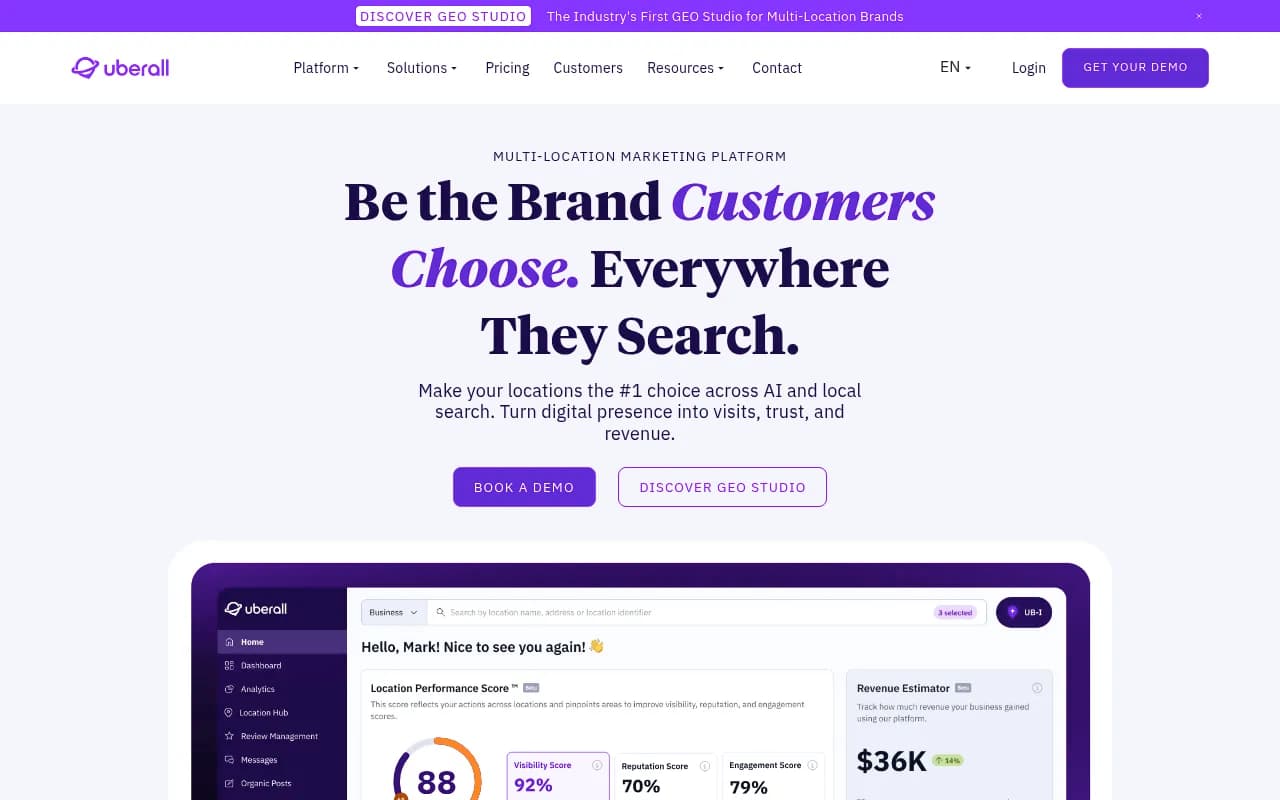
For multi-location brands, Uberall has published its own prompt tracking guidance and builds it into its platform.
Profound is another option for enterprise teams, and its blog is the source of the seven-step method referenced above.
Profound

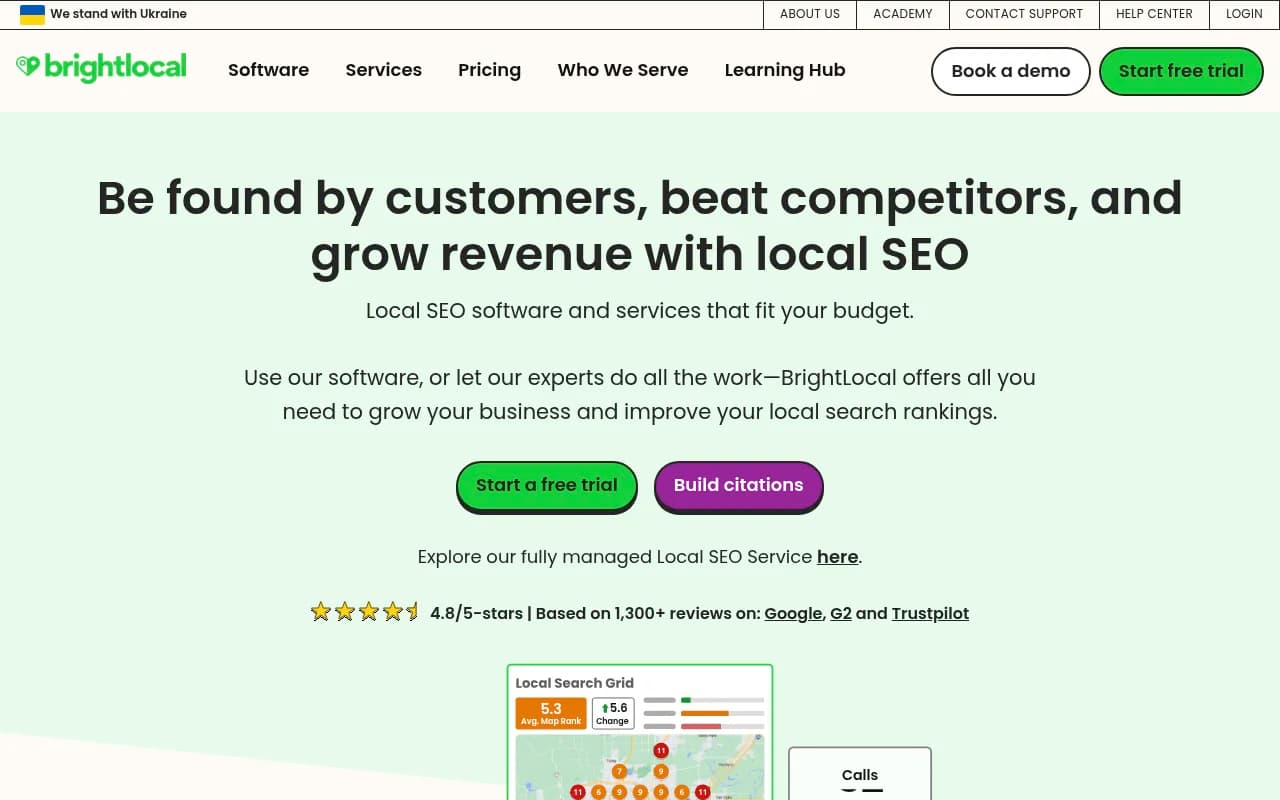
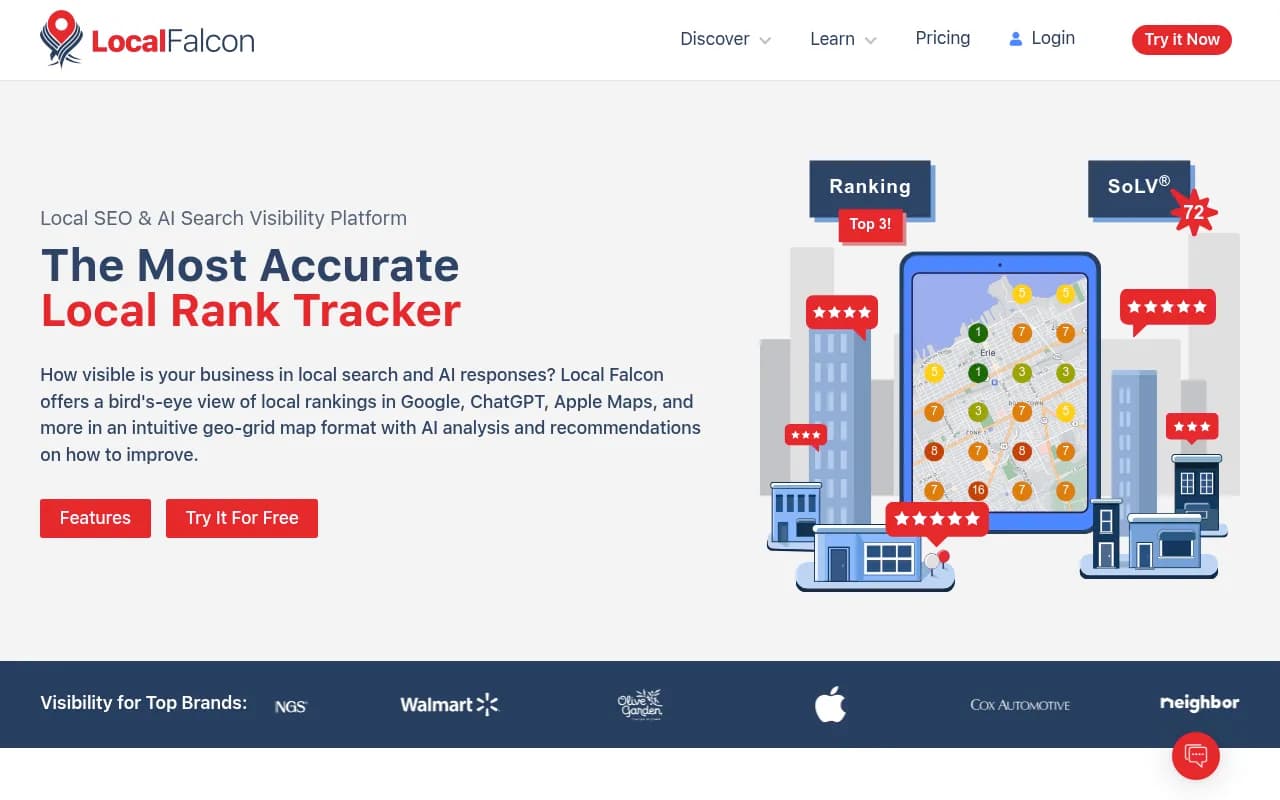
If your concern is the classic local pack, tools such as BrightLocal and Local Falcon cover map rankings, which AI answers often draw from.
For a wider look at what's out there, the GEO software directory at bestgeosoftware.com and the rank tracker listings at ai-rank-tools.com are good places to compare.
Reading the results
A few patterns to look for once you have a month of data:
- Mentioned in branded prompts but absent from unbranded ones means AI knows you but doesn't recommend you. Work on third-party mentions, reviews, and location pages.
- Strong in one neighborhood and weak in the next suggests your content or listings are concentrated. Add neighborhood-specific pages and listings.
- Cited domains that aren't yours (directories, marketplaces, booking sites) tell you where to get listed or reviewed.
- Competitor appears consistently in qualification prompts, such as "accepts [insurance]" or "open Sundays". Check whether your pages state that information in plain text.
Keep a changelog next to your results. Note every time you edit prompts, a platform ships an update, or you publish major content. It saves you from false conclusions later.
Common mistakes
- Pasting keyword lists in as prompts. People don't talk to AI that way.
- Tracking only "best [service] near me". "Near me" depends on the searcher's location, so test with explicit places instead.
- Rewriting prompts every month. You lose your trendline.
- Reporting one blended score. Split by branded, unbranded, neighborhood, and engine.
- Ignoring Google AI Overviews. They cite far more sources than ChatGPT per answer, so they're often where smaller local players get a look in.
A one-hour starter checklist
- List your locations and 3-6 neighborhoods or landmarks each.
- Pull 10 top local queries from Search Console and 10 questions from calls and reviews.
- Fill the templates above for your industry.
- Tag each prompt with service, place, intent, and branded or not.
- Cut to 20-40 prompts. Lock the wording.
- Pick 2-3 engines and run weekly for 30 days.
- Review by group, not by prompt.
If you'd rather have specialists build and maintain the set alongside your local content and citations, an agency like 1001 SEO Media handles this kind of AI search work, but the method above is entirely doable in-house.
Start with one location and one industry template. Get a month of clean data. Then copy the structure to the next location, changing only the neighborhoods and the constraints.