Key takeaways
- Google AI Overviews appear in roughly 50% of all Google searches today, and organic click-through rates for affected queries have dropped by as much as 61% since mid-2024.
- You can check your brand's AI Overview visibility manually (by searching Google directly) or at scale using dedicated monitoring tools.
- Being cited in an AI Overview is a strong proxy for brand authority -- Google's AI only pulls from sources it considers credible.
- The metrics that matter have shifted: it's no longer about keyword rankings alone, but about brand mention rate, citation frequency, and share of AI-generated answers.
- Monitoring is just the start. The brands winning in AI search are the ones using gap analysis to find what they're missing, then creating content specifically designed to earn citations.
Why Google AI Overviews changed everything
Search used to be a race for the top blue link. You optimized a page, it climbed the rankings, and people clicked it. That model isn't dead, but it's been seriously disrupted.
Google AI Overviews now sit above the traditional results for a huge slice of queries. A user asks a question, gets a full synthesized answer with sources cited inline, and often doesn't need to scroll further. According to McKinsey, about 50% of Google searches already surface AI summaries, with that figure expected to reach 75% by 2028.
The knock-on effect is real. One study found organic click-through rates for informational queries featuring AI Overviews fell 61% since mid-2024. If your brand isn't one of the cited sources, you're not just losing ranking position -- you're being skipped entirely.
The good news: citations in AI Overviews are winnable. Google's AI pulls from content it considers authoritative, trustworthy, and directly relevant to the query. That's a content and credibility problem, which means it's solvable.
What "AI Overview visibility" actually means
Before you can track it, you need to know what you're measuring. AI Overview visibility isn't a single number. It's a combination of:
- Mention rate: How often your brand name appears in AI-generated answers for your target queries
- Citation rate: How often a specific page on your site is linked as a source within an Overview
- Share of voice: Your brand's presence relative to competitors across a set of relevant prompts
- Sentiment: Whether mentions are positive, neutral, or negative in context
Traditional SEO metrics (keyword position, impressions, clicks) still matter, but they don't capture any of this. A brand could rank #3 for a keyword while being completely absent from the AI Overview that sits above it.
The shift looks something like this:
| Metric | Traditional SEO | AI Overview visibility |
|---|---|---|
| Primary goal | Rank for keywords | Get cited in AI answers |
| What you track | SERP position, CTR | Mention rate, citation frequency |
| Success signal | Page 1 ranking | Named in the AI summary |
| Content format | Keyword-optimized pages | Authoritative, answer-ready content |
| Competitive view | Rank vs. competitors | Share of AI citations vs. competitors |
| Update frequency | Weekly rank checks | Per-query, per-model monitoring |
Method 1: Manual spot-checking (free, limited)
The simplest way to see if Google cites your brand is to search for it yourself. Open an incognito browser window (to avoid personalization), type in a query your customers would realistically ask, and look at the AI Overview that appears.
A few things to keep in mind:
- AI Overviews don't appear for every query. They're most common for informational and comparison searches.
- Results vary by location, device, and even time of day. What you see in one session may differ from what a customer in another city sees.
- You can't manually check hundreds of queries. This approach is useful for a quick sanity check, not systematic monitoring.
To do a basic audit manually:
- Open Chrome in incognito mode
- Search for 5-10 queries your target customers use (e.g., "best [product category] for [use case]", "how to choose [your product type]", "[your brand] vs [competitor]")
- Note whether an AI Overview appears, and if so, whether your brand or pages are cited
- Screenshot the results for reference
This gives you a rough sense of where you stand. But it won't scale, and it won't tell you how your visibility changes over time.
Method 2: Google Search Console (free, partial signal)
Google Search Console doesn't directly label AI Overview traffic, but it gives you useful indirect signals.
Look for queries where your impressions are high but your CTR is unusually low. This pattern often indicates an AI Overview is answering the query before users reach your result. If you were previously getting clicks for a query and suddenly see a CTR drop without a ranking change, an AI Overview has likely taken over that real estate.
GSC also shows which pages get impressions for specific queries. If a page is getting impressions but near-zero clicks, it may be appearing as a cited source in an AI Overview (users see it referenced but don't click through). Cross-referencing this with manual checks can confirm whether you're being cited.
Limitations: GSC doesn't tell you whether you're cited or not, what the AI Overview says about you, or how your visibility compares to competitors. It's a useful signal, not a complete picture.
Method 3: Dedicated AI visibility monitoring tools
For consistent, scalable monitoring across many queries, you need purpose-built tools. These platforms run your target prompts through Google (and often other AI engines) on a regular schedule, record whether your brand appears in the AI Overview, and track changes over time.
Here's how the main options compare:
| Tool | Google AI Overviews | Other LLMs | Content gap analysis | Content generation | Crawler logs | Pricing |
|---|---|---|---|---|---|---|
| Promptwatch | Yes | 10 models | Yes | Yes (AI agent) | Yes | From $99/mo |
| Otterly.AI | Yes | Yes | Limited | No | No | From ~$49/mo |
| Semrush | Yes | Limited | No | No | No | From $139/mo |
| LLMrefs | Yes | Yes | No | No | No | From $29/mo |
| Peec AI | Yes | Yes | No | No | No | From $49/mo |
| SE Ranking | Yes | Limited | No | No | No | From $65/mo |
| Profound | Yes | Yes | Limited | No | No | Higher pricing |
Promptwatch
Promptwatch monitors Google AI Overviews alongside nine other AI engines (ChatGPT, Perplexity, Claude, Gemini, Grok, DeepSeek, Copilot, Meta AI, Mistral). What separates it from most monitoring tools is what happens after you see the data: it shows you exactly which prompts competitors are cited for that you're not, then helps you create content designed to close those gaps. The built-in AI writing agent generates articles grounded in citation data from 880M+ analyzed citations, so the content it produces is engineered to earn AI mentions, not just rank in traditional search.

Otterly.AI
Otterly.AI is a solid monitoring-focused option that tracks brand mentions across AI Overviews and several LLMs. It's more accessible for smaller teams and gives you a clear view of where you appear. It doesn't offer content generation or crawler log access, so you'll need separate tools to act on what you find.
Otterly.AI

Semrush
Semrush added AI Overview tracking to its existing SEO suite. If you're already a Semrush user, it's worth checking what's available within your plan. The limitation is that it uses fixed prompt sets rather than letting you define your own, and it doesn't offer AI traffic attribution.
LLMrefs
LLMrefs is a straightforward tracker that covers multiple AI engines including Google AI Overviews. It's on the more affordable end and gives you brand mention data without much additional analysis. Good for teams that just need the raw visibility numbers.
LLMrefs
Peec AI
Peec AI tracks brand visibility across ChatGPT, Perplexity, Claude, and Google AI Overviews. Clean interface, reasonable pricing. Like most monitoring tools, it stops at showing you the data rather than helping you act on it.

SE Ranking
SE Ranking's AI Overview tracking sits within a broader SEO platform. If you're managing traditional SEO alongside AI visibility, the consolidated view can be useful. Coverage of non-Google AI engines is more limited.
What metrics to actually track
Once you have a monitoring setup in place, here's what to watch:
Brand mention rate: Out of all the AI Overviews triggered by your target queries, what percentage include your brand name? This is your headline visibility number.
Citation rate: How often is a specific page on your site linked as a source? This tells you which content is earning trust from Google's AI.
Share of voice: Compare your mention rate to competitors across the same query set. You might have a 20% mention rate that looks decent until you realize your main competitor has 60%.
Query coverage: Which of your target queries trigger an AI Overview at all? Not every query does. Knowing which ones do helps you prioritize.
Sentiment in context: When your brand is mentioned, what's the surrounding context? A mention that says "Brand X is expensive compared to alternatives" is very different from "Brand X is the go-to choice for..."
Trend over time: Is your visibility improving, declining, or flat? Monthly snapshots let you see whether content changes are having an effect.
Why you're not being cited (and how to fix it)
If you're monitoring and finding that your brand rarely appears in AI Overviews, the cause is almost always one of these:
Your content doesn't directly answer the question. Google's AI pulls from pages that give clear, direct answers. If your content is vague, heavily promotional, or buries the answer in paragraphs of preamble, it won't get cited.
You're missing coverage for key topics. There are probably queries in your space where competitors are being cited and you have no relevant content at all. This is the "answer gap" problem. Tools like Promptwatch's Answer Gap Analysis show you exactly which prompts competitors are visible for that you're not.
Your E-E-A-T signals are weak. Google's AI prioritizes content that demonstrates experience, expertise, authoritativeness, and trustworthiness. Author credentials, original research, specific data points, and external references all help.
AI crawlers can't access your content properly. If your pages have crawl errors, are blocked by robots.txt, or rely on JavaScript rendering that AI bots can't handle, they won't be considered as sources regardless of how good the content is. Monitoring AI crawler logs (a feature in Promptwatch's Professional and Business plans) can surface these issues.
Your content format isn't AI-friendly. AI Overviews tend to pull from content with clear structure: headers that match question formats, concise definitions, numbered lists, and direct factual statements. Dense walls of text are harder for AI to extract clean answers from.
A practical monitoring workflow
Here's a realistic monthly routine for a marketing team tracking AI Overview visibility:
Week 1: Run your prompt set. Use your monitoring tool to check visibility across your target queries. Record your mention rate, citation rate, and share of voice.
Week 2: Competitor comparison. Look at which queries your competitors are cited for that you're not. These are your priority gaps.
Week 3: Content audit. For each gap query, check whether you have relevant content. If not, it needs to be created. If you do, check whether it directly answers the question and has clear structure.
Week 4: Publish and track. Create or update content to address the gaps. Note the date so you can measure whether visibility improves in the following month's check.
Repeat. AI visibility isn't a one-time fix -- it's an ongoing cycle of monitoring, identifying gaps, and publishing content that earns citations.
Tools worth knowing about
Beyond the main platforms, a few other tools are worth mentioning depending on your setup:
Conductor tracks brand authority and citations across AI search engines and integrates with broader content workflows.
Profound is a strong enterprise option with coverage across multiple AI engines. Pricing is higher, and it's more monitoring-focused than optimization-focused.
Profound

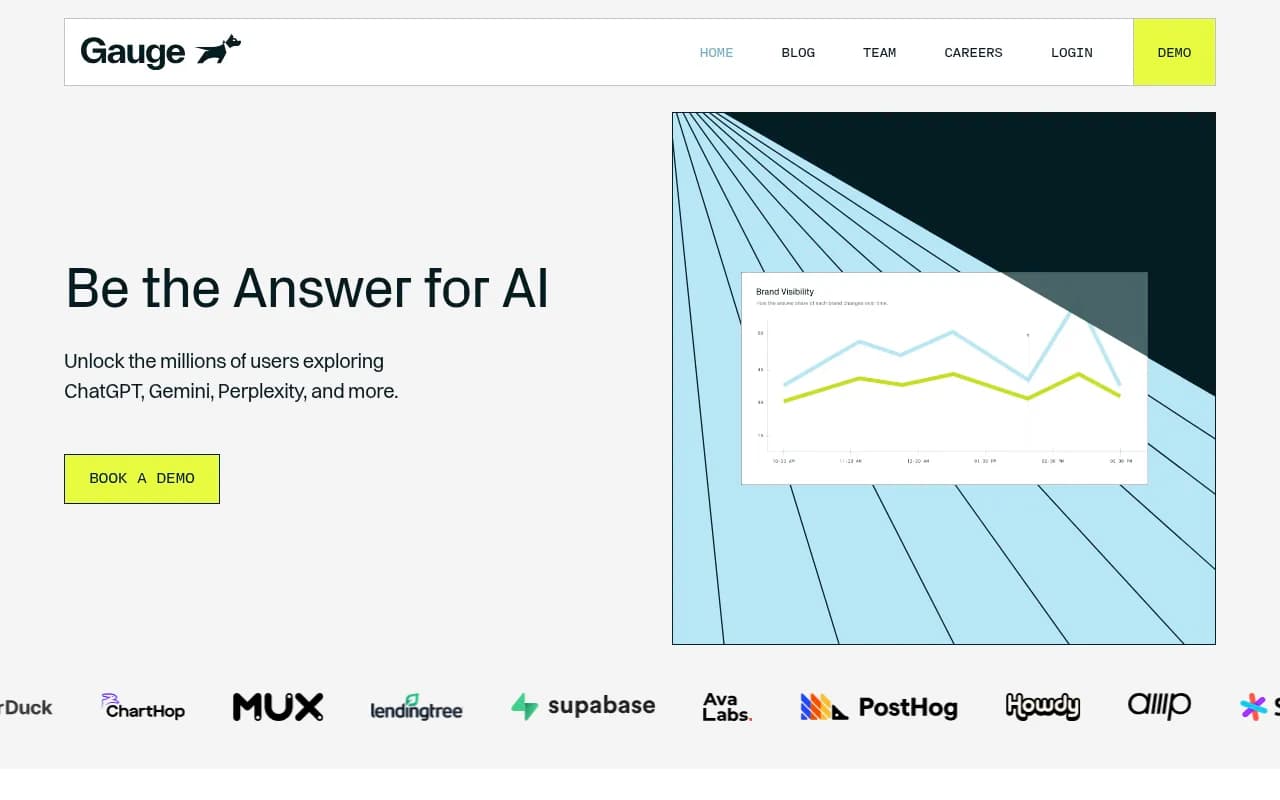
Gauge tracks brand mentions across AI engines with a focus on making the data actionable for marketing teams.
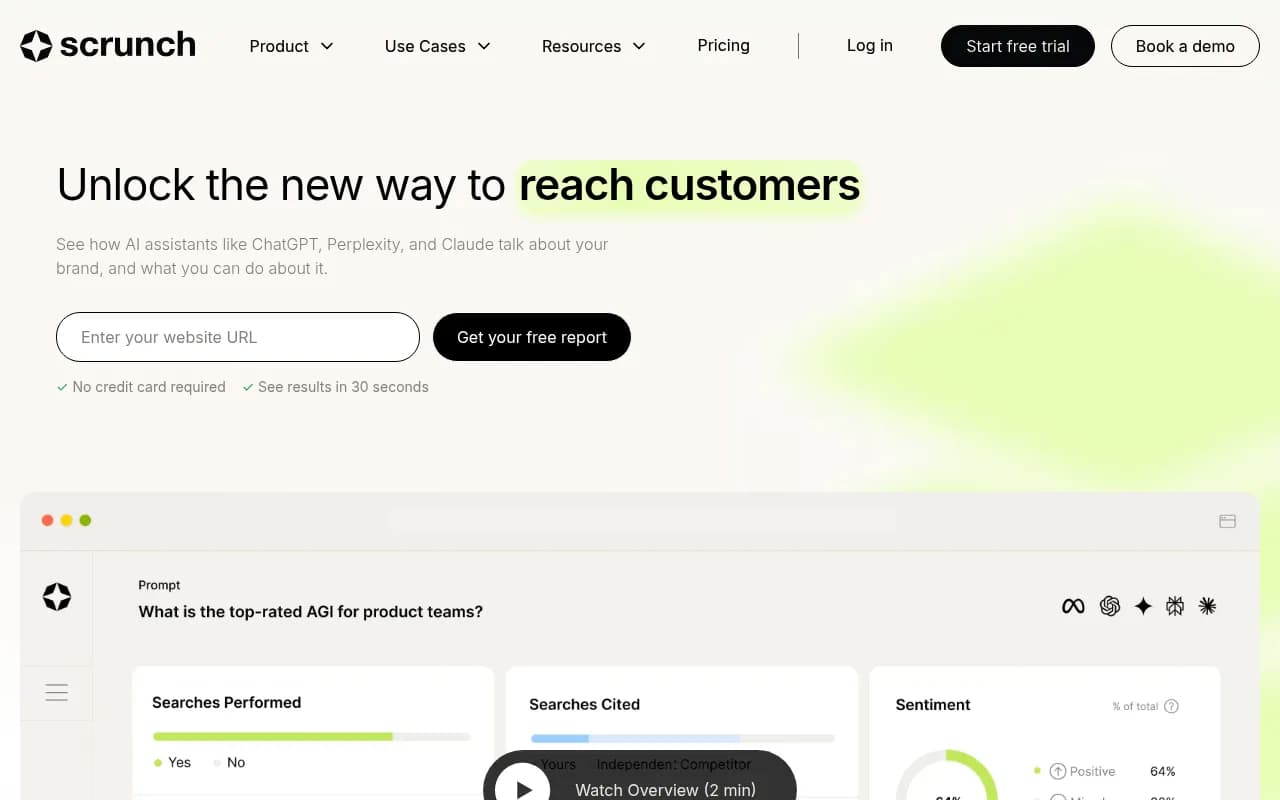
Scrunch AI offers AI-powered SEO tracking with visibility data across multiple platforms.
The bigger picture
Checking your brand visibility in Google AI Overviews isn't a one-off audit. It's a new category of ongoing marketing work, similar to how rank tracking became standard practice a decade ago.
The brands that will win in AI search are the ones that treat this seriously now, while most competitors are still ignoring it. That means setting up proper monitoring, understanding which queries matter most, identifying where you're invisible, and systematically creating content that earns citations.
The tools exist to do all of this. The question is whether you're using them.