Key takeaways
- AI search visibility is a citation problem, not a content volume problem -- you don't need more content, you need the right content structured correctly
- Most brands are invisible in AI search because they're missing specific question-answer patterns that LLMs look for, not because their content is bad
- A focused 30-day sprint targeting answer gaps, technical structure, and topical authority can meaningfully move the needle
- You don't need to rebuild your content strategy -- you need to audit what's missing and fill those specific gaps
- Tracking matters: without measuring which pages get cited by which AI models, you're flying blind
If you've noticed your organic traffic getting squeezed by AI Overviews, or you've searched for your brand in ChatGPT and found a competitor mentioned instead, you're not alone. The shift to AI-generated answers has been fast and unforgiving. But here's the thing most people get wrong: they assume the fix requires a complete content overhaul.
It doesn't.
What's actually happening is that AI models are pulling from a relatively small pool of well-structured, authoritative content that directly answers specific questions. Your existing content might be good -- it just might not be formatted or positioned in a way that LLMs can easily extract and cite. That's a fixable problem, and you can make real progress in 30 days.
This guide walks through a practical sprint: what to do in week one, what to build in weeks two and three, and how to measure results by day 30.
Week 1: Diagnose before you create anything
The worst thing you can do is start writing new content before you know what's actually missing. Week one is entirely about understanding where you stand.
Find your citation gaps
The core question is: which prompts are AI models answering with your competitors' content instead of yours? This is the answer gap problem. Someone searches "best [your category] for [use case]" in Perplexity or ChatGPT, and a competitor shows up. You don't. Why?
Usually it's one of three reasons:
- You don't have a page that directly addresses that question
- You have a page but it's structured in a way that's hard for LLMs to parse
- You're not seen as authoritative enough on that specific topic
Tools like Promptwatch have an Answer Gap Analysis feature that shows you exactly which prompts competitors are visible for but you're not -- down to the specific content your site is missing.

For a more manual approach, run 20-30 prompts that your target customers would realistically ask in ChatGPT, Perplexity, and Google AI Overviews. Screenshot the responses. Note which brands appear and which don't. This is your baseline.
Audit your existing content structure
AI models don't read content the way humans do. They're looking for clear, extractable answers. Run a quick audit of your top 20 pages and ask:
- Does each page have a clear, direct answer to a specific question in the first 100 words?
- Are headings written as questions or clear topic statements?
- Is there a summary or TL;DR near the top?
- Does the page cover a topic completely, or does it skim across multiple topics?
Tools like Screaming Frog can help you crawl your site and flag structural issues quickly.
Check your technical baseline
AI crawlers behave differently from Googlebot. They may visit your pages more frequently, struggle with JavaScript-heavy rendering, or skip pages that load slowly. Before creating anything new, make sure the content you already have is actually being read by AI crawlers.
Look for:
- Pages returning errors to crawlers
- JavaScript-rendered content that bots can't see
- Missing or thin meta descriptions (which LLMs sometimes use as context)
- Pages blocked in robots.txt that shouldn't be
Google Search Console is your starting point here.
Week 2: Fix what you have before adding what's new
This is the highest-leverage week. You're not creating new content yet -- you're restructuring existing content so AI models can actually use it.
Reformat your best pages for AI extraction
Pick your 10 most important pages -- the ones covering your core topics, products, or services. For each one, make these changes:
Add a direct answer at the top. If the page is about "how to do X," the first paragraph should answer that question in 2-3 sentences. Don't bury the answer after three paragraphs of context.
Use question-based subheadings. Instead of "Our Approach," write "How does [your company] approach [topic]?" LLMs are much better at extracting answers when the question is explicitly stated.
Add a FAQ section. This is one of the most reliable ways to get cited. A well-structured FAQ with clear question-answer pairs gives AI models exactly what they need. Aim for 5-8 questions per page, covering the things your customers actually ask.
Include specific, citable facts. Vague claims don't get cited. Specific data points, named methodologies, and concrete recommendations do. If you have proprietary data or research, surface it prominently.
Build topical depth, not breadth
One insight from the r/b2bmarketing community that keeps coming up: AI visibility is a citation problem, not a content volume problem. Having 200 thin articles doesn't help. Having 20 deeply comprehensive articles on your core topics does.
Look at your content clusters. Are there topics where you have one surface-level post but competitors have five interconnected pieces covering every angle? That's where you're losing citations. You don't need to create 50 new articles -- you need to identify 3-5 topics where you can go deeper than anyone else.
Fix heading hierarchy and structured data
This is the technical fix that most people skip because it feels boring. It matters.
Heading hierarchy (H1 → H2 → H3) helps AI models understand the structure of your content. A page where headings jump around or where everything is bolded text with no actual heading tags is much harder for LLMs to parse.
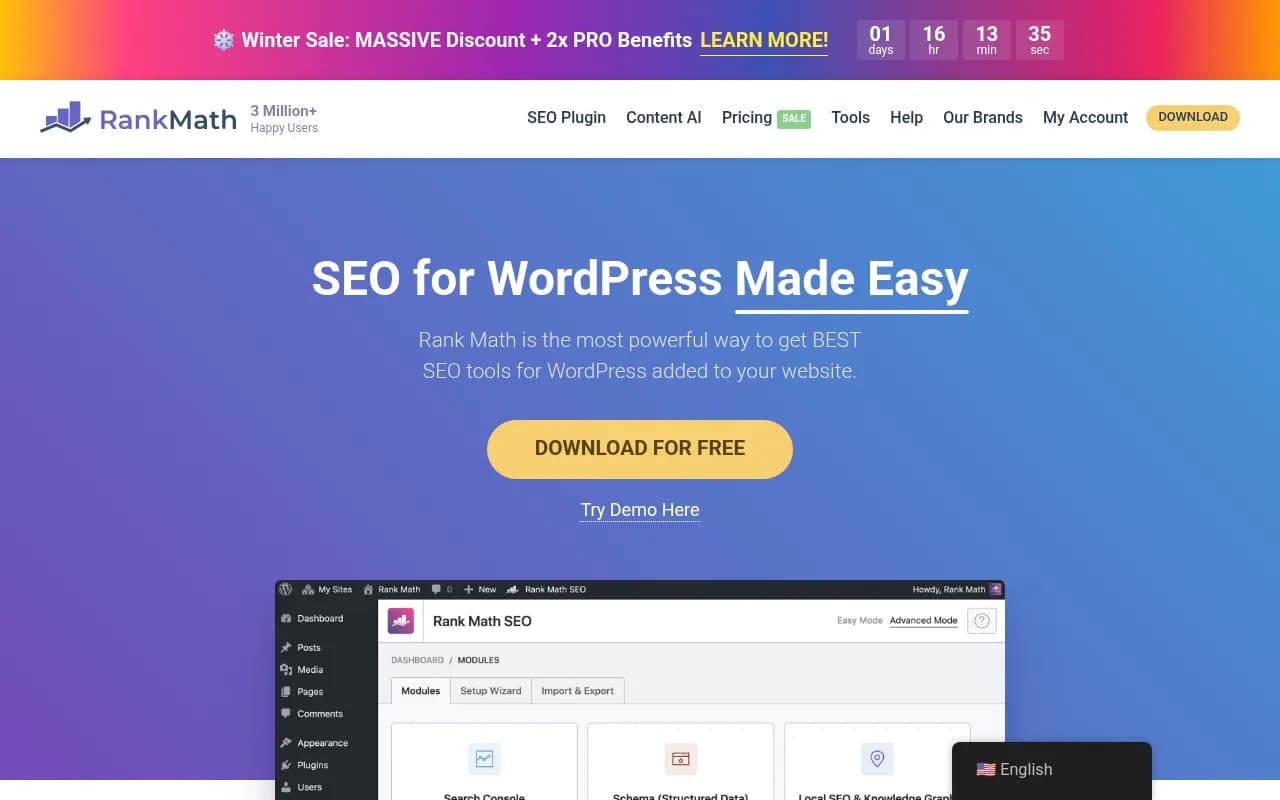
Schema markup -- especially FAQ schema, HowTo schema, and Article schema -- gives AI models explicit signals about what your content contains. If you're on WordPress, plugins like Yoast SEO or Rank Math make this straightforward.

Week 3: Fill the gaps with targeted new content
Now you know what's missing. Now you create.
Prioritize by prompt volume and competition
Not all gaps are equal. Some prompts get asked thousands of times a day; others are niche. Some are dominated by Wikipedia and major publications you'll never outrank; others have weak competition where a well-structured piece could break through.
Before writing anything, score your gaps by:
- How often is this type of question asked?
- How strong is the current competition in AI responses?
- How directly does this topic connect to your product or service?
Focus on high-volume, winnable prompts that are directly relevant to what you sell. A B2B SaaS company doesn't need to rank for every industry question -- just the ones where their target customers are making decisions.
Tools like Promptwatch include prompt volume estimates and difficulty scores, which takes a lot of the guesswork out of this prioritization step.
Write for citation, not just for ranking
This is the mindset shift that matters most. Traditional SEO content is written to rank -- it's optimized for keywords, internal linking, and dwell time. Content written for AI citation is different. It's written to be quoted.
What gets cited:
- Direct, confident answers to specific questions
- Comparisons that help users make decisions ("X vs Y" formats)
- Step-by-step processes with clear numbered steps
- Original data, statistics, or research
- Expert opinions with clear attribution
What doesn't get cited:
- Generic overviews that don't take a position
- Content that lists options without recommending any
- Walls of text with no clear structure
- Content that's clearly promotional rather than informational
A useful test: read your article and ask "would ChatGPT quote this sentence in a response?" If the answer is no, rewrite it until it is.
Target comparison and "best of" prompts
These are the prompts where AI visibility translates most directly to purchase intent. "Best project management software for remote teams," "ChatGPT vs Perplexity for research," "top accounting tools for freelancers" -- these are the queries where someone is actively deciding what to buy.
If you're not appearing in these responses, you're missing the highest-value part of the funnel. Create dedicated comparison pages and "best of" listicles that are genuinely helpful (not just promotional), and structure them so AI models can extract your recommendations clearly.
Tools like MarketMuse can help you identify the subtopics and questions you need to cover to be considered authoritative on a given topic.
Week 4: Measure, iterate, and close the loop
By week four, some of your changes will already be showing results. AI models can pick up new content surprisingly fast -- sometimes within days of a page being crawled.
Set up proper tracking
This is where most people drop the ball. They make changes but have no way to know if those changes worked. You need to track:
- Which of your pages are being cited by which AI models
- How often your brand is mentioned in AI responses to your target prompts
- Whether AI-driven traffic is actually converting
For AI-specific tracking, tools like Promptwatch give you page-level citation data across 10+ AI models, so you can see exactly which pages are being cited and by which engines. That's the data you need to know what's working.
For traffic attribution, connect your analytics to understand how much of your traffic is coming from AI referrals. Perplexity and some other AI engines do pass referral data -- make sure you're capturing it.
Run a 30-day comparison
Go back to the 20-30 prompts you tested in week one. Run them again. Compare the results. Are you appearing where you weren't before? Are competitors still dominating certain responses?
This comparison tells you two things: what's working (double down on it) and what's still broken (investigate why).
Common reasons a page still isn't getting cited after optimization:
- The AI crawler hasn't re-crawled it yet (check crawler logs if available)
- The content is still too thin or too generic
- A competitor has a significantly stronger page on the same topic
- The page has technical issues preventing proper crawling
Comparison of tools for AI visibility tracking
Here's a quick overview of how the main tools in this space compare for the tasks covered in this guide:
| Tool | Gap analysis | Content generation | Crawler logs | Citation tracking | Prompt volume data |
|---|---|---|---|---|---|
| Promptwatch | Yes | Yes (built-in) | Yes | Yes (page-level) | Yes |
| Otterly.AI | Limited | No | No | Basic | No |
| Peec AI | No | No | No | Basic | No |
| AthenaHQ | Limited | No | No | Yes | No |
| Profound | Limited | No | No | Yes | No |
| Semrush | No | Partial | No | Limited | No |
| MarketMuse | No | Partial | No | No | No |
Otterly.AI



Profound

What to do after day 30
A 30-day sprint gets you moving, but AI visibility is an ongoing process. The models update, competitors adapt, and new prompts emerge constantly.
The brands that win long-term treat AI visibility as a continuous loop: find new gaps, create targeted content, track what gets cited, repeat. That's very different from the old SEO model of "publish and wait."
A few things to build into your regular workflow after the sprint:
- Run your target prompts weekly, not just monthly
- Set up alerts for when your brand appears (or stops appearing) in AI responses
- Track which new pages are getting crawled by AI bots
- Review competitor citations monthly to spot new gaps before they become entrenched
The 30-day plan above isn't a one-time fix -- it's a way to build the muscle and the systems to keep improving. Most brands that start this process find that the first 30 days are the hardest, and then it becomes a manageable part of their content operations.
The good news: you don't need to rebuild everything. You need to be smarter about what you already have, fill the specific gaps that matter, and track the results closely enough to know what's actually working.
That's it. No content strategy overhaul required.