Key takeaways
- LLM Pulse tracks brand visibility across ChatGPT, Perplexity, and Google AI Overviews, but its limitations around content optimization, AI crawler logs, and traffic attribution push many teams to look elsewhere.
- Most alternatives fall into two camps: monitoring-only dashboards (Peec AI, Otterly.AI, Rankshift) and full-stack optimization platforms (Promptwatch, Profound).
- Promptwatch is the only platform in this comparison rated as a "Leader" across all GEO categories — it goes beyond tracking to help you find content gaps, generate AI-optimized content, and measure traffic impact.
- Budget matters: options range from free tiers (Otterly.AI, Rankshift) to enterprise contracts (Profound, Evertune).
- The right choice depends on whether you need to just watch your AI visibility or actually improve it.
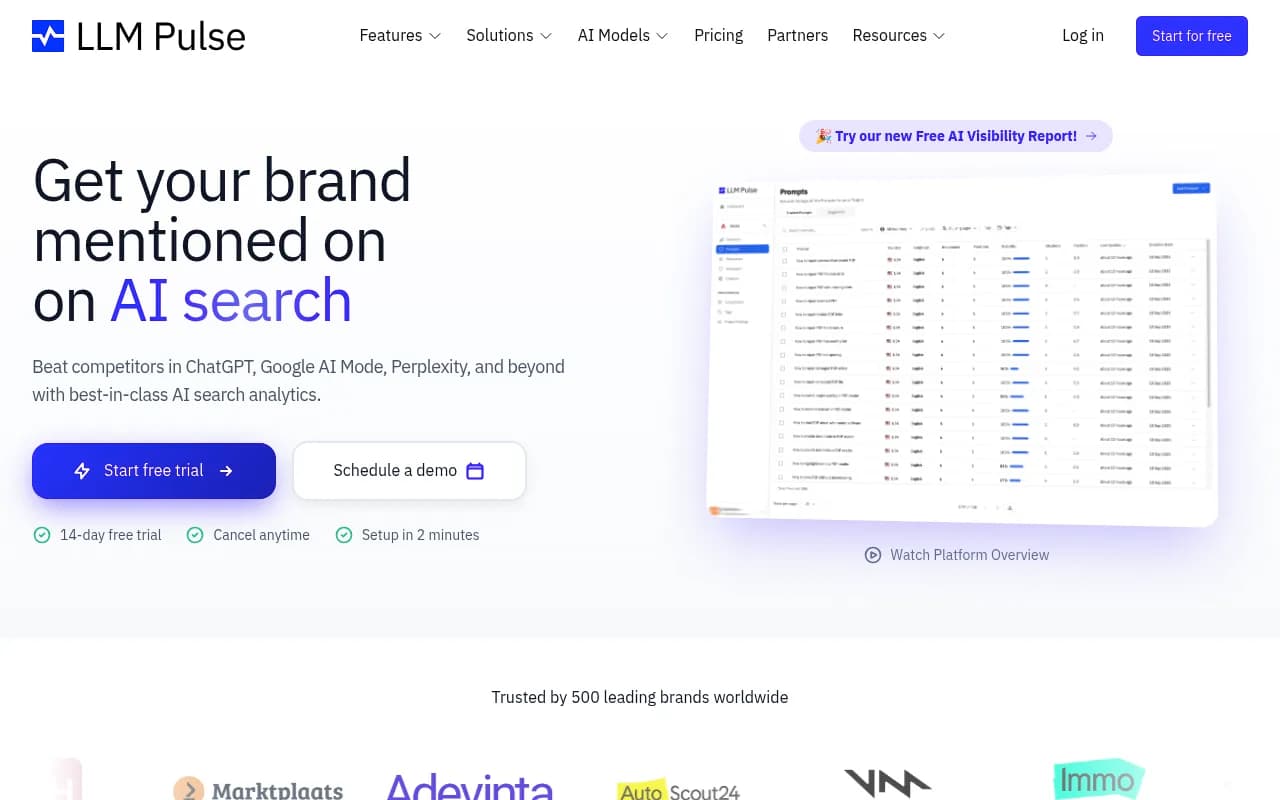
LLM Pulse has carved out a decent niche. It tracks how brands appear in AI-generated answers, covers five major models on its base plan, and includes brand sentiment analysis that most competitors skip. For teams that want clean dashboards and unlimited seats without paying enterprise prices, it's a reasonable starting point.
But "reasonable starting point" is exactly the problem for teams that have outgrown it. LLM Pulse doesn't help you fix what it finds. There's no content generation, no crawler log analysis, no answer gap analysis that tells you which prompts your competitors are winning but you're not. You get the data. What you do with it is entirely up to you.
That gap is why so many teams end up searching for alternatives. This guide covers the best options in 2026 — what each one actually does well, where it falls short, and who it's best suited for.
What LLM Pulse does (and where it stops)
LLM Pulse monitors brand mentions across ChatGPT, Perplexity, Google AI Overviews, Gemini, and Claude. Its standout features include brand sentiment scoring, unlimited team seats (a genuine differentiator), and app store tracking. Pricing starts at €49/month.
Where it stops: LLM Pulse is a monitoring tool. It shows you what's happening in AI search but doesn't help you change it. No content generation, no crawler logs, no prompt gap analysis, no traffic attribution. If your goal is to understand your AI visibility, LLM Pulse works. If your goal is to improve it, you'll need something else.
The best LLM Pulse alternatives in 2026
1. Promptwatch — best for teams that want to actually improve AI visibility
Promptwatch is the most complete platform in this space. The core difference from LLM Pulse (and most other tools) is that it's built around an action loop: find gaps, create content, track results.
The Answer Gap Analysis shows you exactly which prompts competitors are visible for but you're not. That's not a vague "you should create more content" suggestion — it shows the specific questions AI models are answering where your brand is absent. The built-in AI writing agent then generates articles, listicles, and comparisons grounded in real citation data (880M+ citations analyzed), so the content it produces is engineered to get cited by ChatGPT, Claude, Perplexity, and others — not generic SEO filler.
On top of that: real-time AI crawler logs (which pages ChatGPT, Claude, and Perplexity are actually reading on your site), prompt volume and difficulty scoring, query fan-outs, ChatGPT Shopping tracking, Reddit and YouTube citation insights, and traffic attribution via GSC integration or server log analysis.
It monitors 10 AI models: ChatGPT, Perplexity, Google AI Overviews, Google AI Mode, Claude, Gemini, Meta/Llama, DeepSeek, Grok, Mistral, and Copilot. Pricing starts at $99/month (Essential), $249/month (Professional), and $579/month (Business). A free trial is available.
Best for: marketing and SEO teams that want to close the loop between AI visibility data and actual content and revenue outcomes.

2. Peec AI — best for agencies pitching AI visibility to clients
Peec AI is a VC-backed platform ($29M raised) with a clear agency focus. Its workspace model lets agencies create separate environments for each client, which makes it easier to pitch and report on AI visibility without mixing data. It covers ChatGPT, Perplexity, and Claude on the base plan, with additional models available as add-ons.
Pricing starts at €85/month. The agency pitch workspaces are genuinely useful if you're managing multiple brands, but Peec AI is fundamentally a monitoring tool — there's no content generation or gap analysis. You're paying for clean reporting infrastructure, not optimization capability.
Best for: agencies that need clean client-facing dashboards and are comfortable doing the content work themselves.

3. Rankshift — best free-tier option for getting started
Rankshift offers a 30-day free trial with no credit card required, which makes it one of the easiest tools to evaluate. It tracks brand visibility across ChatGPT, Perplexity, and AI search more broadly, with a clean interface and solid baseline monitoring.
Like most tools in this category, Rankshift is monitoring-focused. It doesn't generate content or analyze crawler logs. But if you're a smaller team that wants to dip a toe into AI visibility tracking before committing budget, the free trial is a low-risk starting point.
Best for: small teams or individuals who want to test AI visibility tracking without upfront cost.

4. Omnia — best for teams that want slightly broader AI coverage than LLM Pulse
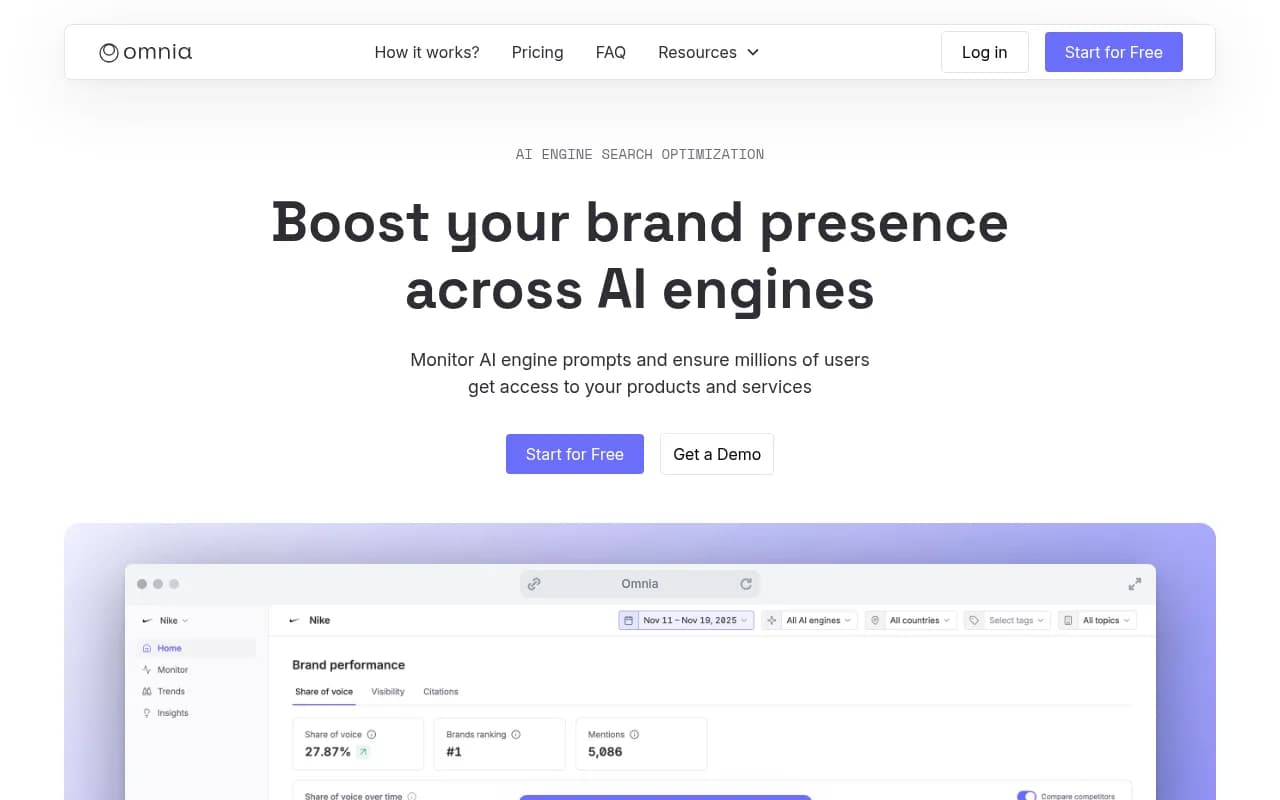
Omnia positions itself as a natural upgrade from LLM Pulse, scoring slightly higher on AI model coverage while maintaining similar analytics and usability. If LLM Pulse's coverage feels limiting but you don't need the full feature set of a platform like Promptwatch, Omnia is worth evaluating.
It's a monitoring-first tool, so the same caveats apply: you'll see what's happening in AI search, but you won't get help fixing it. The value proposition is essentially "LLM Pulse, but more."
Best for: teams happy with LLM Pulse's approach but wanting broader model coverage.
5. Profound — best for enterprise teams with compliance requirements
Profound is the enterprise-grade option in this space. It tracks brand presence across 10+ AI platforms including ChatGPT, Claude, Gemini, and Perplexity, and it's one of the few platforms with SOC 2 Type II and HIPAA compliance — a hard requirement for healthcare, finance, and other regulated industries.
The Conversation Explorer feature lets you see the full context of AI conversations where your brand appears, which is more granular than most tools offer. Pricing starts at $99/month for the Starter plan, but that only covers ChatGPT. Full multi-model coverage requires higher tiers.
The main limitation: Profound is expensive relative to what you get at lower tiers, and it doesn't include content generation or gap analysis. You're paying for enterprise-grade monitoring infrastructure.
Best for: enterprise marketing teams in regulated industries that need compliance certifications and detailed conversation-level data.
Profound

6. Otterly.AI — best budget entry point
Otterly.AI starts at $29/month and covers four AI models on the base plan (with add-ons available). It integrates with Semrush, which is useful if you're already in that ecosystem. There's also a free GEO tools section that's worth bookmarking even if you don't subscribe.
It's a monitoring-only tool with no content generation, no crawler logs, and no traffic attribution. But at $29/month, it's one of the cheapest ways to get structured AI visibility data.
Best for: budget-conscious teams or individuals who want basic AI monitoring without committing to a higher-priced platform.
Otterly.AI

7. Scrunch AI — best for teams that want a clean mid-market option
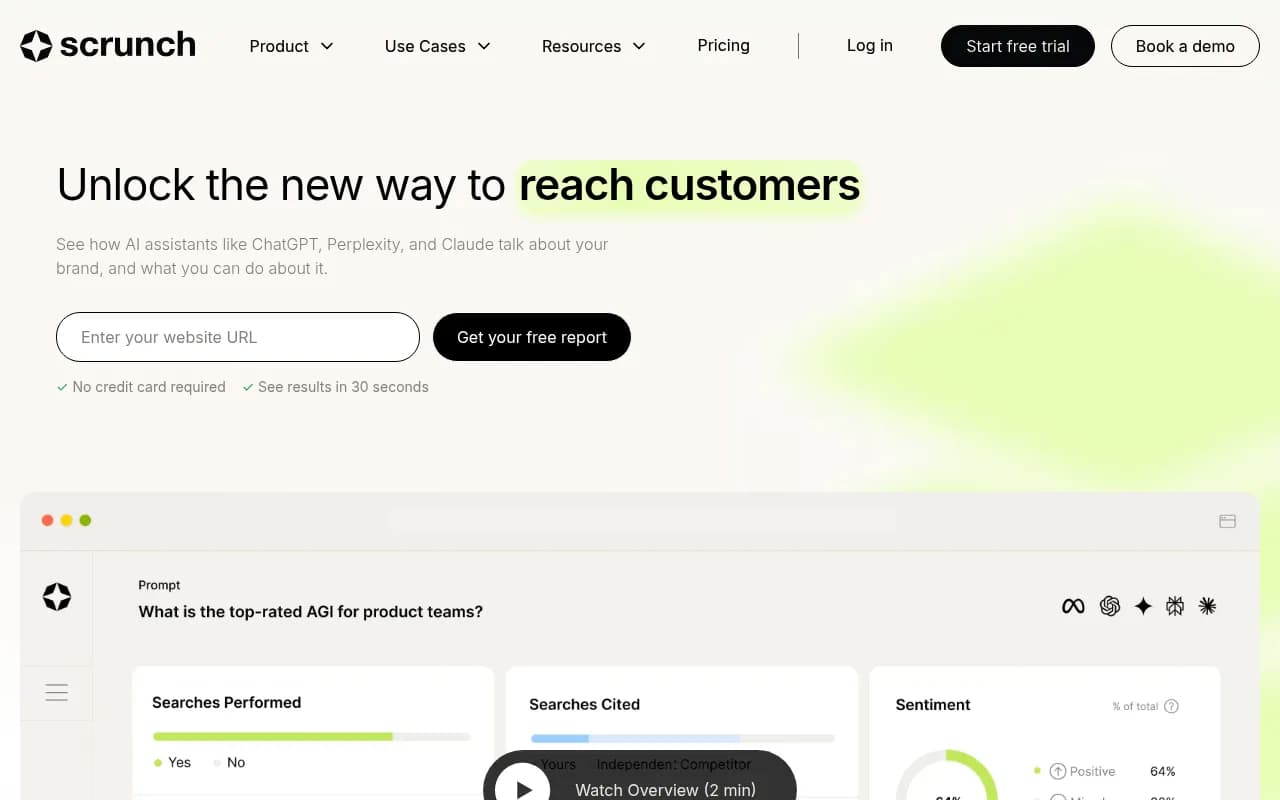
Scrunch AI sits in the middle of the market — more capable than the budget options, less expensive than Profound. It tracks brand mentions across LLMs and provides visibility scoring, but like most tools in this tier, it stops at monitoring. No content generation, no crawler logs.
Best for: mid-market teams that want more than the budget tools offer but aren't ready for enterprise pricing.
8. AthenaHQ — best for teams focused on prompt strategy
AthenaHQ has a stronger focus on prompt strategy and competitive intelligence than most monitoring tools. It helps you understand which prompts matter in your category and how competitors are positioned for them. That's more actionable than raw mention counts.
The limitation is that AthenaHQ is still monitoring-oriented — it doesn't generate content or close the loop with traffic attribution. But if prompt intelligence is your primary need, it's worth a look.
Best for: teams that want to build a prompt strategy before investing in content creation.

9. SE Visible — best for teams already using SE Ranking
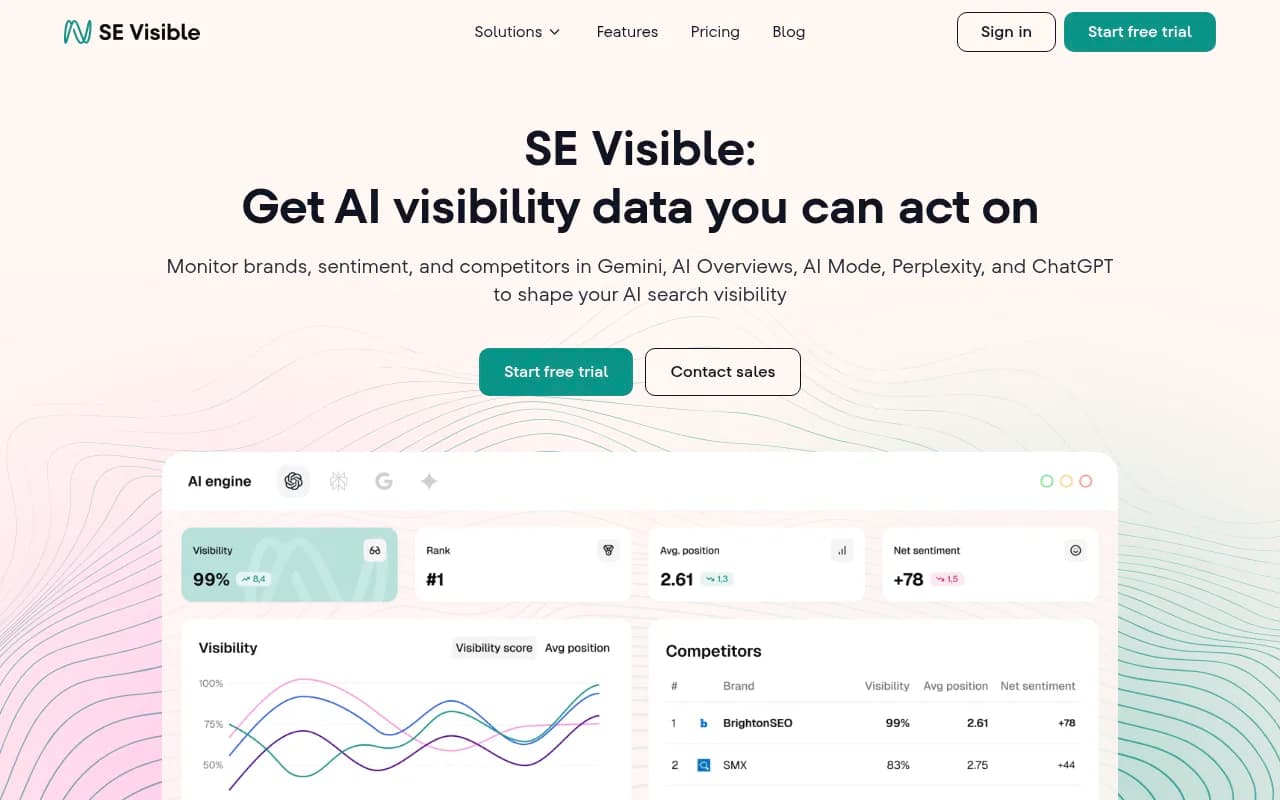
SE Visible is SE Ranking's AI visibility module. If you're already paying for SE Ranking, adding AI mode tracking through SE Visible is a logical extension. It covers AI Mode tracking and provides structured data on how your brand appears in AI-generated answers.
The catch: SE Visible is a monitoring add-on, not a standalone optimization platform. It's best understood as a complement to SE Ranking's traditional SEO tools rather than a replacement for a dedicated AI visibility platform.
Best for: existing SE Ranking customers who want to add AI visibility monitoring without switching tools.
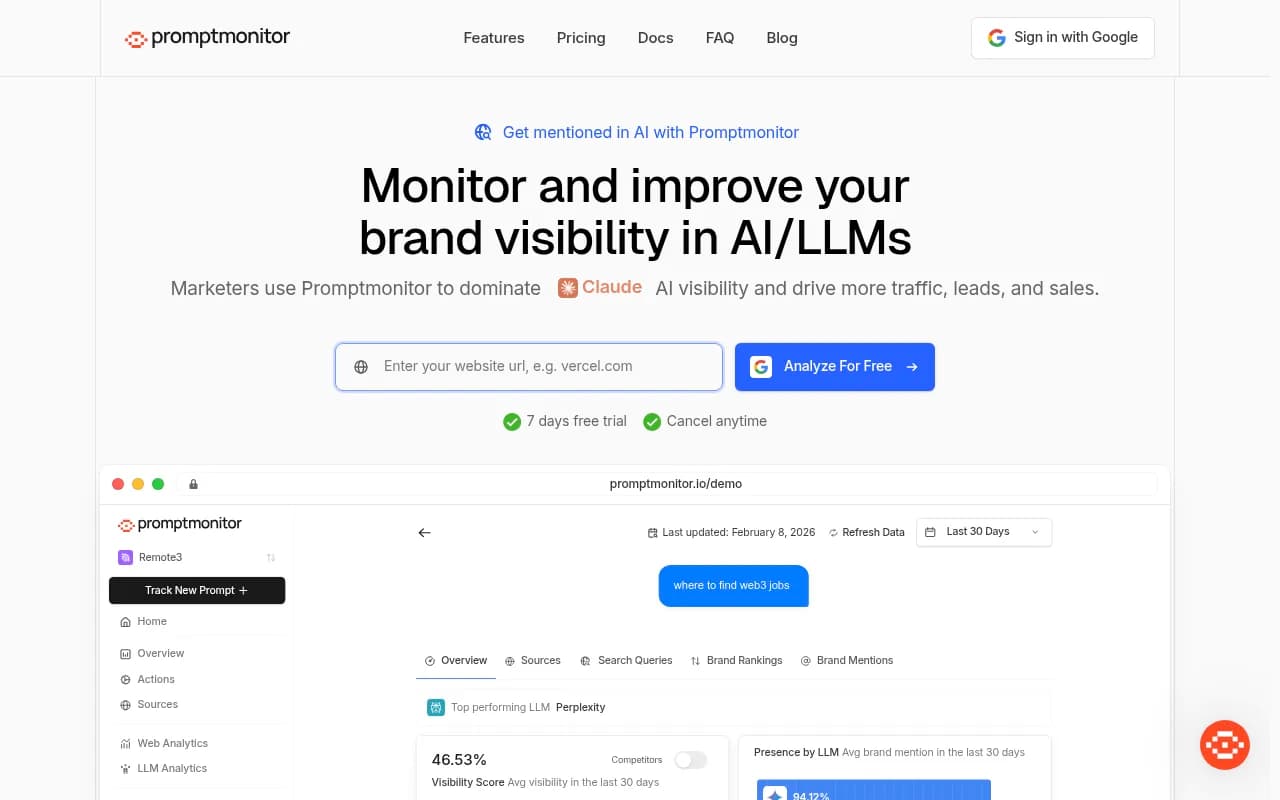
10. Promptmonitor — best for publisher outreach
Promptmonitor takes a slightly different angle: alongside standard AI visibility monitoring, it extracts publisher contact information from the sources AI models cite. If your strategy involves outreach to the publications that influence AI recommendations, that's a genuinely useful feature most tools ignore.
It covers 8+ AI models and includes AI crawler analytics. Pricing starts at $29/month.
Best for: teams with an active publisher outreach or digital PR strategy who want to connect AI citation data to outreach workflows.
Comparison table
| Tool | Starting price | AI models | Content generation | Crawler logs | Traffic attribution | Best for |
|---|---|---|---|---|---|---|
| Promptwatch | $99/mo | 10 | Yes | Yes | Yes | Full-stack optimization |
| LLM Pulse | €49/mo | 5 (10+ Enterprise) | No | No | No | Monitoring with sentiment |
| Peec AI | €85/mo | 3+ add-ons | No | No | No | Agency client reporting |
| Rankshift | Free trial | 3+ | No | No | No | Budget/getting started |
| Omnia | Varies | 5+ | No | No | No | Broader coverage than LLM Pulse |
| Profound | $99/mo | 10+ | No | No | No | Enterprise/compliance |
| Otterly.AI | $29/mo | 4+ add-ons | No | No | No | Budget entry point |
| Scrunch AI | Mid-market | Multiple | No | No | No | Mid-market monitoring |
| AthenaHQ | Varies | Multiple | No | No | No | Prompt strategy |
| SE Visible | SE Ranking add-on | Multiple | No | No | No | SE Ranking users |
| Promptmonitor | $29/mo | 8+ | No | No | No | Publisher outreach |
How to choose the right LLM Pulse alternative
If you want to monitor and optimize (not just watch)
The honest answer is that most tools in this category are monitoring dashboards. They show you data. Promptwatch is the exception — it's built around the idea that visibility data is only useful if you can act on it. The Answer Gap Analysis, AI content generation, and traffic attribution close the loop in a way no other tool in this comparison does.
If your goal is to improve your AI visibility rather than just track it, Promptwatch is the logical choice.
If budget is the primary constraint
Otterly.AI at $29/month or Rankshift's free trial are the lowest-risk entry points. You won't get optimization capabilities, but you'll get structured monitoring data that's better than nothing.
If you're an agency managing multiple clients
Peec AI's workspace model is purpose-built for this. The client-facing reporting infrastructure is cleaner than most alternatives, and the $29M in funding suggests the product roadmap is well-resourced.
If you're in a regulated industry
Profound is the only platform in this comparison with SOC 2 Type II and HIPAA compliance. For healthcare or finance teams, that's not optional — it's a hard requirement that narrows the field immediately.
If you're already in the SE Ranking ecosystem
SE Visible is the path of least resistance. Adding AI visibility monitoring to an existing SE Ranking subscription is simpler than onboarding a new platform, and the integration means your traditional SEO and AI visibility data live in the same place.
The monitoring-only problem
It's worth being direct about something: the majority of LLM Pulse alternatives are monitoring-only tools. They show you whether your brand appears in AI answers, how often, and for which prompts. That's genuinely useful data.
But knowing you're invisible in AI search and knowing what to do about it are different problems. Most tools solve the first one and leave you to figure out the second.
The gap between "we can see we're not appearing for these prompts" and "we know exactly what content to create and we've created it" is where most teams get stuck. Platforms like Promptwatch that include answer gap analysis, AI-optimized content generation, and traffic attribution are trying to bridge that gap. Whether you need that full loop depends on your team's capacity and ambition — but it's worth knowing it exists before you commit to a monitoring-only tool.
Final recommendation
For most teams in 2026, the choice comes down to this: do you want to watch your AI visibility, or do you want to improve it?
If watching is enough for now, LLM Pulse is fine, and so are Otterly.AI, Rankshift, or Peec AI depending on your budget and use case. They're all competent monitoring tools.
If improving is the goal, Promptwatch is the only platform in this comparison that covers the full cycle: finding gaps, generating content engineered for AI citation, and tracking whether that content actually moves the needle on traffic and revenue.