Key takeaways
- Scrunch AI is a solid enterprise GEO tool, but it's primarily a monitoring platform — it shows you data without helping you act on it.
- Most alternatives fall into the same trap: dashboards that track visibility but leave content gaps unfilled.
- Promptwatch is the only platform in this comparison rated "Leader" across all GEO categories, because it closes the loop from gap analysis to content creation to traffic attribution.
- Profound and AthenaHQ are strong for enterprise monitoring; Peec AI is good for simple, fast setup; Search Party suits agencies with custom workflow needs.
- If you're a B2B marketer who needs to show AI visibility ROI, not just screenshots of dashboards, the tool you pick matters a lot.
Why B2B marketers are rethinking Scrunch AI
Scrunch AI built a real following among enterprise marketing teams. It covers multiple LLMs, has decent content audit features, and the reporting looks clean in a board deck. So why are so many teams looking for alternatives in 2026?
A few reasons come up repeatedly. The price point is high for what you get if you're not a large enterprise. The platform is strong on monitoring but weak on telling you what to actually do next. And as the GEO space has matured, the gap between "we can see our visibility score" and "we can improve our visibility score" has become the real differentiator.
B2B marketers in particular feel this. You're not just tracking a brand name — you're trying to get cited when buyers ask ChatGPT or Perplexity questions like "what's the best ABM platform for mid-market SaaS" or "which CRM integrates with Salesforce and HubSpot." Those are high-intent, bottom-of-funnel queries. Being invisible there costs pipeline, not just impressions.
So the question isn't just "which tool tracks more AI engines." It's "which tool helps me actually show up in the answers that matter."
The tools compared
Here's a quick overview before we go deeper:
| Tool | Best for | Starting price | AI engines covered | Content generation | Crawler logs |
|---|---|---|---|---|---|
| Promptwatch | End-to-end GEO: track, fix, and prove ROI | $99/mo | 10+ (ChatGPT, Perplexity, Claude, Gemini, Grok, DeepSeek, Copilot, Meta AI, Google AI Overviews, Google AI Mode) | Yes (built-in AI writing agent) | Yes |
| Profound | Enterprise AI visibility dashboards | Custom (enterprise) | 9+ | No | No |
| Peec AI | Simple, fast AI visibility setup | ~$49/mo | ChatGPT, Perplexity, Claude, Gemini | No | No |
| AthenaHQ | GEO strategy for growth teams | Custom | ChatGPT, Perplexity, Google AI Overviews | Limited | No |
| Search Party | Agency-led custom GEO workflows | Custom | Varies | No | No |
| Otterly.AI | Lightweight brand monitoring | Free tier + paid | ChatGPT, Perplexity, Google AI Overviews | No | No |
| LLM Pulse | Global brands, 115+ languages | From ~$49/mo | ChatGPT, Perplexity, Gemini, others | No | No |
| Scrunch AI | Enterprise content audits and GEO | Custom (enterprise) | Multiple LLMs | Limited | No |
Promptwatch — the action-oriented alternative
Most GEO tools are essentially dashboards. They show you a visibility score, maybe a list of prompts where competitors appear and you don't, and then... leave you to figure out what to do with that information.
Promptwatch is built differently. The core idea is a three-step loop: find the gaps, create content that fills them, then track whether it worked.
The Answer Gap Analysis is where this starts. It shows you the specific prompts where competitors are getting cited by ChatGPT, Claude, Perplexity, or other AI engines — but your brand isn't. Not just "you're missing visibility in this topic area," but the actual questions and angles your site isn't answering. That specificity is what makes it actionable.
From there, the built-in AI writing agent generates articles, listicles, and comparison pages grounded in citation data from over 880 million citations analyzed. This isn't generic content — it's built around what AI models actually cite, which is a fundamentally different brief than a standard SEO content brief.
Then you close the loop. Page-level tracking shows which specific pages are being cited, by which models, and how often. Traffic attribution (via a code snippet, Google Search Console integration, or server log analysis) connects AI visibility to actual sessions and revenue.
A few other things worth knowing: Promptwatch has real-time AI crawler logs — you can see when ChatGPT, Claude, or Perplexity crawled your site, which pages they read, and whether they hit errors. Most competitors don't have this at all. It also tracks Reddit and YouTube as citation sources, which matter because AI models frequently pull from those channels. And it covers ChatGPT Shopping, which is increasingly relevant for B2B SaaS brands that appear in product recommendation contexts.
Pricing starts at $99/month for one site and 50 prompts. The Professional plan at $249/month adds crawler logs, state/city tracking, and 15 AI-generated articles per month.

Profound — best for executive-level AI dashboards
Profound is the tool that tends to win in large enterprise procurement processes. The dashboards are polished, the data coverage across AI engines is broad, and it integrates well with the kind of reporting workflows that VP-level stakeholders expect.
For B2B marketers at companies with dedicated SEO or digital intelligence teams, Profound does the monitoring job well. You can track brand mentions across ChatGPT, Perplexity, Google AI Overviews, and several others, and the competitive benchmarking is solid.
The limitation is that Profound stops at the monitoring layer. There's no content gap analysis that tells you what to write, no built-in content generation, and no Reddit or YouTube citation tracking. If your team has the bandwidth to take the data and act on it independently, that's fine. If you need the platform to help you close the loop, you'll hit a wall.
Pricing is enterprise-tier and custom — expect to be in a sales conversation before you see numbers.
Profound

Peec AI — best for fast, simple setup
Peec AI is the tool you reach for when you want to get AI visibility monitoring running in an afternoon without a procurement process. The interface is clean, the onboarding is fast, and the core data — brand mentions across ChatGPT, Perplexity, Claude, and Gemini — is reliable.
For B2B marketers at smaller companies or those just starting to think about GEO, Peec AI is a reasonable entry point. It won't overwhelm you with features you don't need yet.
The trade-off is depth. There's no content generation, no crawler logs, no prompt volume or difficulty scoring, and no traffic attribution. You'll know whether you're being mentioned, but not why you're not being mentioned more, and not what to do about it.

AthenaHQ — best for GEO strategy teams
AthenaHQ positions itself as a GEO strategy platform rather than just a tracker. It has decent prompt analysis features and some content optimization guidance, which puts it a step above pure monitoring tools.
For B2B teams that want to build a structured GEO program — mapping prompts to buyer journey stages, identifying topic clusters, tracking competitive positioning — AthenaHQ gives you more of a framework than Peec AI or Otterly.AI would.
That said, it's still primarily a monitoring and analysis tool. Content generation is limited, there are no crawler logs, and the traffic attribution story is thin. It's a good middle ground between "basic tracker" and "full optimization platform," but it's not the full loop.

Search Party — best for agencies with custom workflow needs
Search Party takes a different approach. Rather than a self-serve SaaS dashboard, it's more of an AI automation consultancy that builds custom GEO workflows for clients. If your agency has specific reporting requirements, unusual data integrations, or a need for bespoke prompt tracking setups, Search Party can accommodate that.
The downside for most B2B marketing teams is that it's not a plug-and-play tool. You're buying a service relationship, not software. Prompt metrics are limited compared to platforms like Promptwatch, and there's no content gap analysis or built-in content generation.
For agencies managing multiple client GEO programs with complex requirements, it's worth a conversation. For in-house B2B marketing teams, the self-serve alternatives will likely serve you better.
Search Party
Otterly.AI — best for lightweight brand monitoring
Otterly.AI is the tool that comes up most often in "I just want to know if ChatGPT is mentioning my brand" conversations. It covers ChatGPT, Perplexity, and Google AI Overviews, the setup is quick, and there's a free tier that lets you test the waters.
For B2B marketers who need a simple sanity check on AI visibility — or who want to show leadership a basic dashboard without a major budget commitment — Otterly.AI works. It's honest about what it is: a monitoring tool, not an optimization platform.
No content generation, no crawler logs, no traffic attribution. But if you just need the monitoring layer and you're handling strategy and content elsewhere, it's a reasonable lightweight option.
Otterly.AI

LLM Pulse — best for global brands
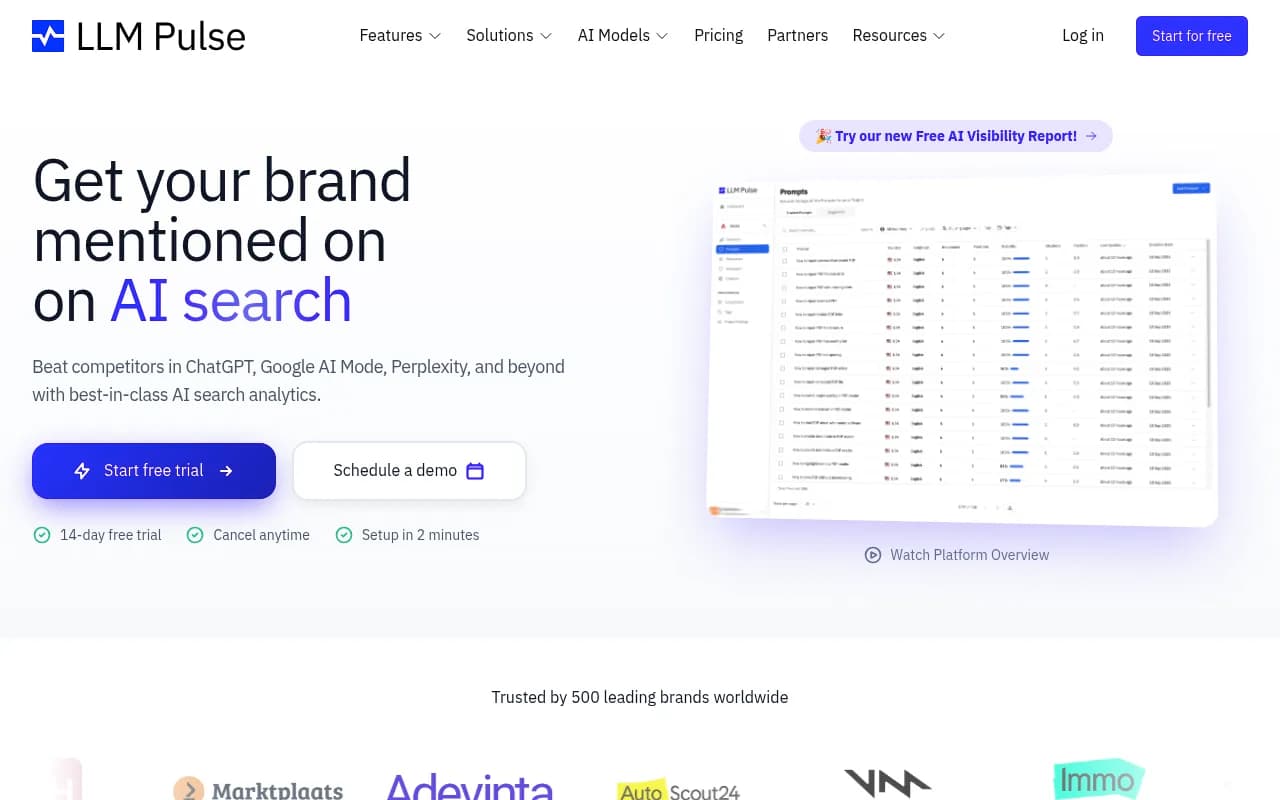
LLM Pulse stands out for one specific reason: language coverage. If your B2B brand operates across multiple markets and you need to track AI visibility in French, German, Spanish, Japanese, or dozens of other languages, LLM Pulse's 115+ language support is genuinely useful.
Most GEO tools are built with English-first assumptions. For global B2B marketers, that's a real gap. LLM Pulse fills it reasonably well at the monitoring level.
The platform doesn't have content generation or deep optimization features, so it works best as a monitoring layer for international teams rather than a full GEO program tool.
Other tools worth knowing about
A few more platforms come up in B2B GEO conversations that are worth a quick mention:
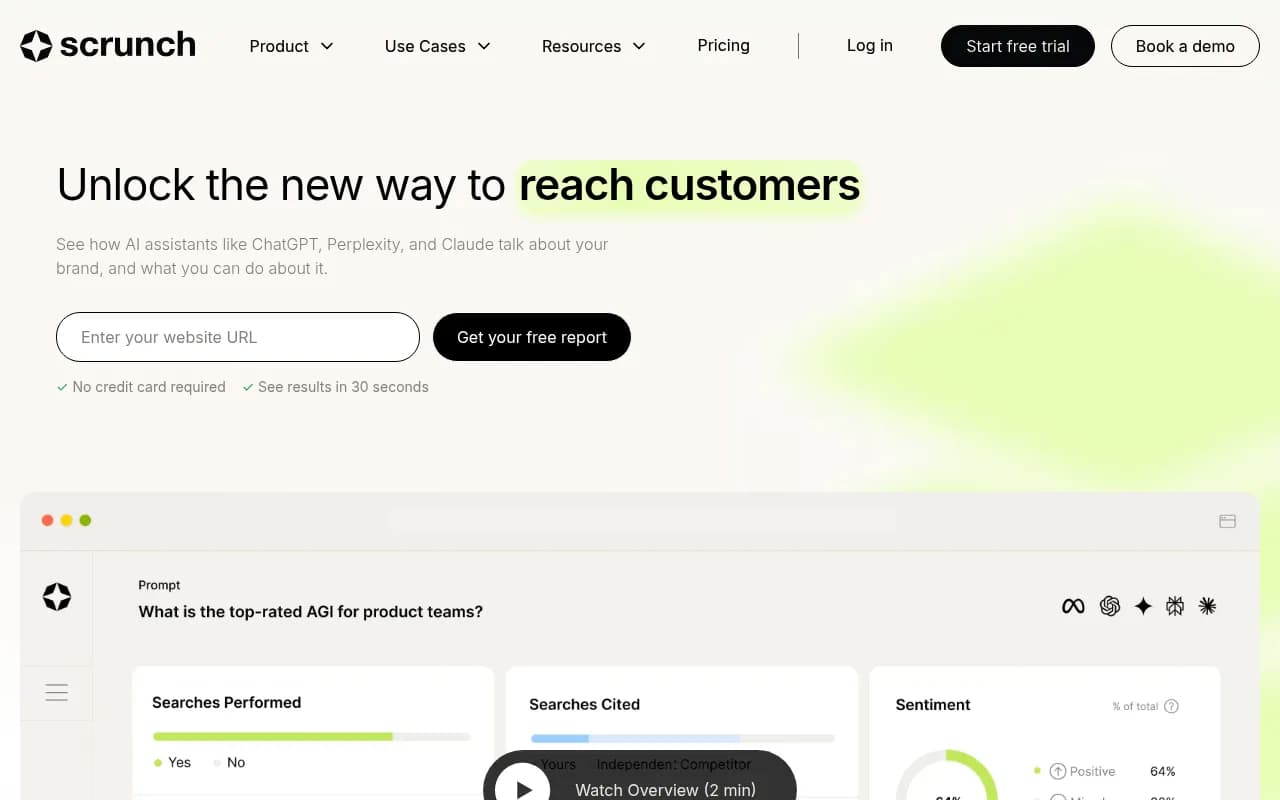
Scrunch AI (the tool you're evaluating alternatives to) is genuinely strong for enterprise content audits and has good LLM coverage. If budget isn't a constraint and you have a team to act on the data, it's a credible option. The gap is in actionability — like most of its competitors, it monitors well but doesn't help you fix what it finds.
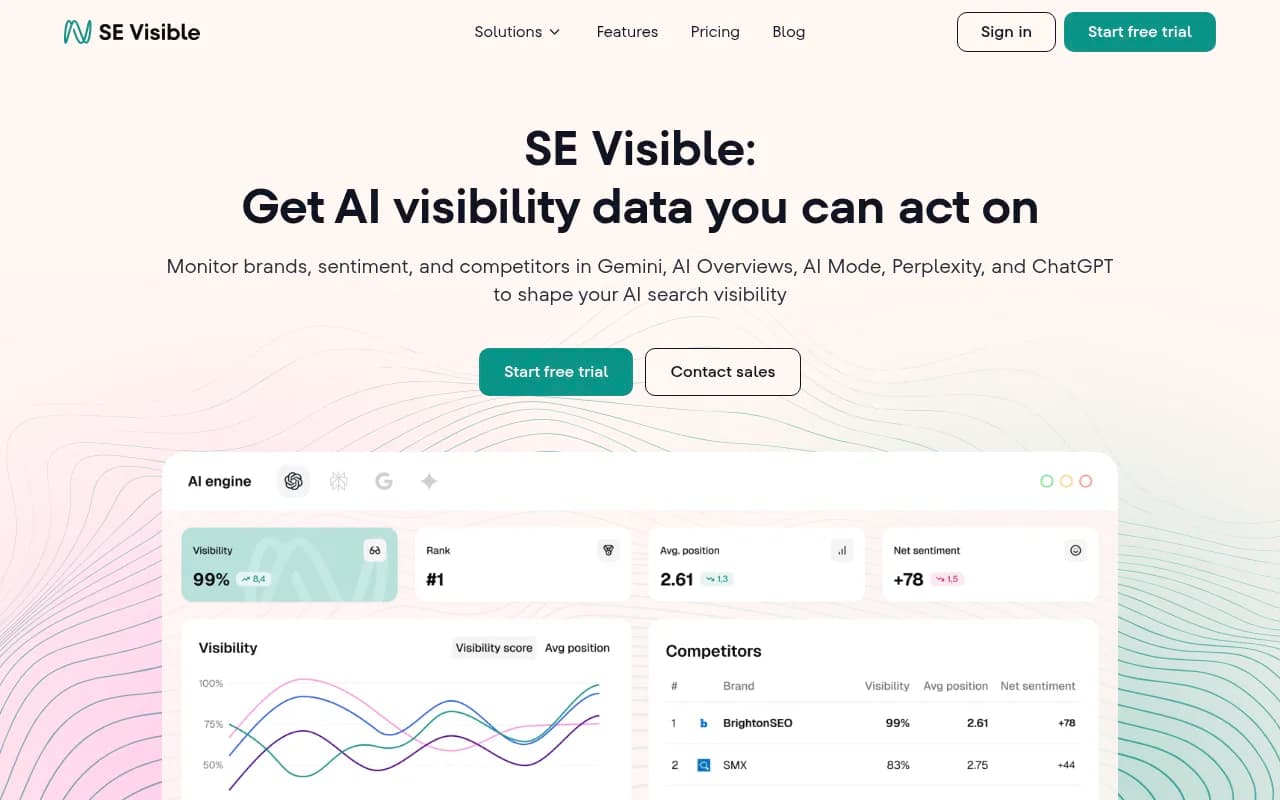
SE Visible (SE Ranking's AI visibility module) is worth considering if you're already an SE Ranking customer. It integrates AI visibility tracking into an existing SEO workflow, which reduces tool sprawl. The depth of GEO-specific features is limited compared to dedicated platforms.
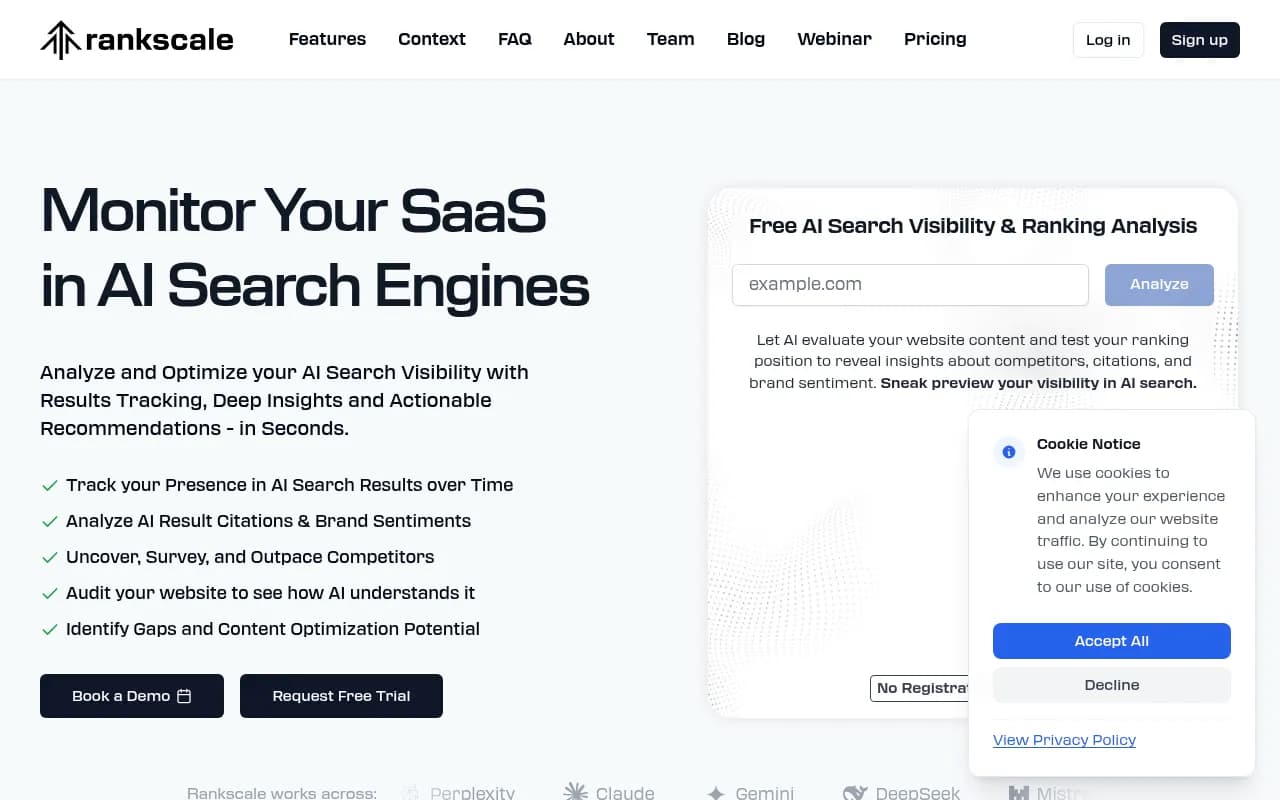
Rankscale is an agency-focused option with decent page-level AI search analytics. It's more granular than Peec AI but less comprehensive than Promptwatch or Profound.
How to choose: a practical framework for B2B marketers
The right tool depends on where you are in your GEO journey and what you actually need to do with the data.
If you're just starting out and need to understand your current AI visibility baseline, Peec AI or Otterly.AI will get you there quickly and cheaply. Don't over-invest in tooling before you know what questions you're trying to answer.
If you're at the stage where you've seen the data and now need to act on it — filling content gaps, generating pages that AI models will cite, proving ROI to leadership — Promptwatch is the most complete option. The combination of Answer Gap Analysis, AI content generation grounded in citation data, and traffic attribution is the only full loop available in the market right now.
If you're in a large enterprise where executive dashboards and governance matter as much as optimization, Profound is worth evaluating alongside Promptwatch. The two serve slightly different organizational needs.
If you're an agency managing GEO programs for multiple clients, look at Promptwatch's agency/enterprise tier or Search Party depending on how custom your workflow requirements are.
One thing to watch out for: tools that lead with "we track X AI engines" as their primary differentiator. Engine coverage is table stakes in 2026. The real question is what the platform does with that data — and most tools still don't have a good answer to that.
The monitoring-only trap
It's worth naming this directly, because it affects most of the tools in this category.
Monitoring-only platforms create a specific kind of frustration. You can see that your competitor appears in ChatGPT's answer to "best project management software for enterprise" and you don't. You can see your visibility score is 23% while theirs is 61%. And then... you close the tab and go figure out what to do about it in a separate workflow, with separate tools, without any connection back to the data that surfaced the problem.
This is the gap that separates platforms like Promptwatch from the rest of the field. The Answer Gap Analysis doesn't just show you where you're invisible — it shows you the specific content your site is missing. The AI writing agent generates that content. The page-level tracking shows whether it worked. That's a complete workflow, not a dashboard.
For B2B marketers who are accountable for pipeline, not just impressions, that distinction matters. Visibility scores don't close deals. Content that gets cited in the AI answers your buyers are reading does.
Final take
Scrunch AI is a legitimate enterprise GEO platform, but it's not the right fit for every B2B marketing team — and in 2026, the market has enough mature alternatives that you have real choices.
For most B2B marketing teams, the decision comes down to this: if you need monitoring plus optimization plus ROI proof in one platform, Promptwatch is the strongest option available. If you need enterprise-grade dashboards for executive reporting and have a separate content team to act on the data, Profound is worth evaluating. If you're early-stage or budget-constrained, Peec AI or Otterly.AI will get you started without overcommitting.
The GEO platforms that will matter in 2026 and beyond are the ones that connect AI visibility to revenue — not just the ones that show you a score.