Key takeaways
- Google AI Mode and tools like ChatGPT now answer queries directly, meaning brands cited in AI responses get significantly more clicks than those that aren't -- one study found 35% more organic clicks for cited brands.
- Smaller brands can compete by focusing on specificity: narrow topics, real expertise, and formats AI models actually prefer to cite.
- The biggest wins come from answer-gap content, not volume. One well-placed article answering a specific question can outperform ten generic blog posts.
- Tracking your AI visibility doesn't require an enterprise contract -- several affordable tools can show you where you're appearing (and where you're not).
- The fundamentals haven't disappeared. Technical SEO, crawlability, and genuine expertise still matter -- AI models pull from the same web.
If you've watched your organic traffic flatten or drop in 2026, you're not imagining things. Google AI Mode rolled out broadly after the May 2026 update and changed how B2B buyers in particular research products before ever contacting a vendor. Instead of clicking through to ten blue links, they get a synthesized answer -- and if your brand isn't part of that answer, you might as well not exist for that query.
The uncomfortable truth is that brands cited in AI Overviews earn 35% more organic clicks and 91% more paid clicks compared to brands that aren't cited at all, according to Rise at Seven's analysis of AI Mode behavior. Being in the answer reverses the CTR penalty that AI search was supposed to create.
But here's the thing most content about this topic gets wrong: you don't need a massive content budget to show up. You need the right content. There's a real difference.
Here's what actually works for smaller brands in 2026.
1. Stop chasing volume and start chasing specificity
The single biggest mistake smaller brands make is trying to compete on broad, high-volume topics where enterprise players with 50-person content teams already dominate. You're not going to out-publish HubSpot or Semrush. You don't need to.
AI models -- whether ChatGPT, Perplexity, or Google's AI Mode -- are synthesizing answers from multiple sources. They're not just pulling from the top-ranked page. They're looking for the most specific, authoritative answer to a specific question. That's where smaller brands can win.
Instead of writing "What is content marketing," write "How B2B SaaS companies in regulated industries should approach content marketing without a dedicated team." The more specific the question, the fewer credible answers exist, and the more likely your content gets cited.
Tools like AnswerThePublic and AlsoAsked can surface the long-tail, question-based queries where you actually have a shot.
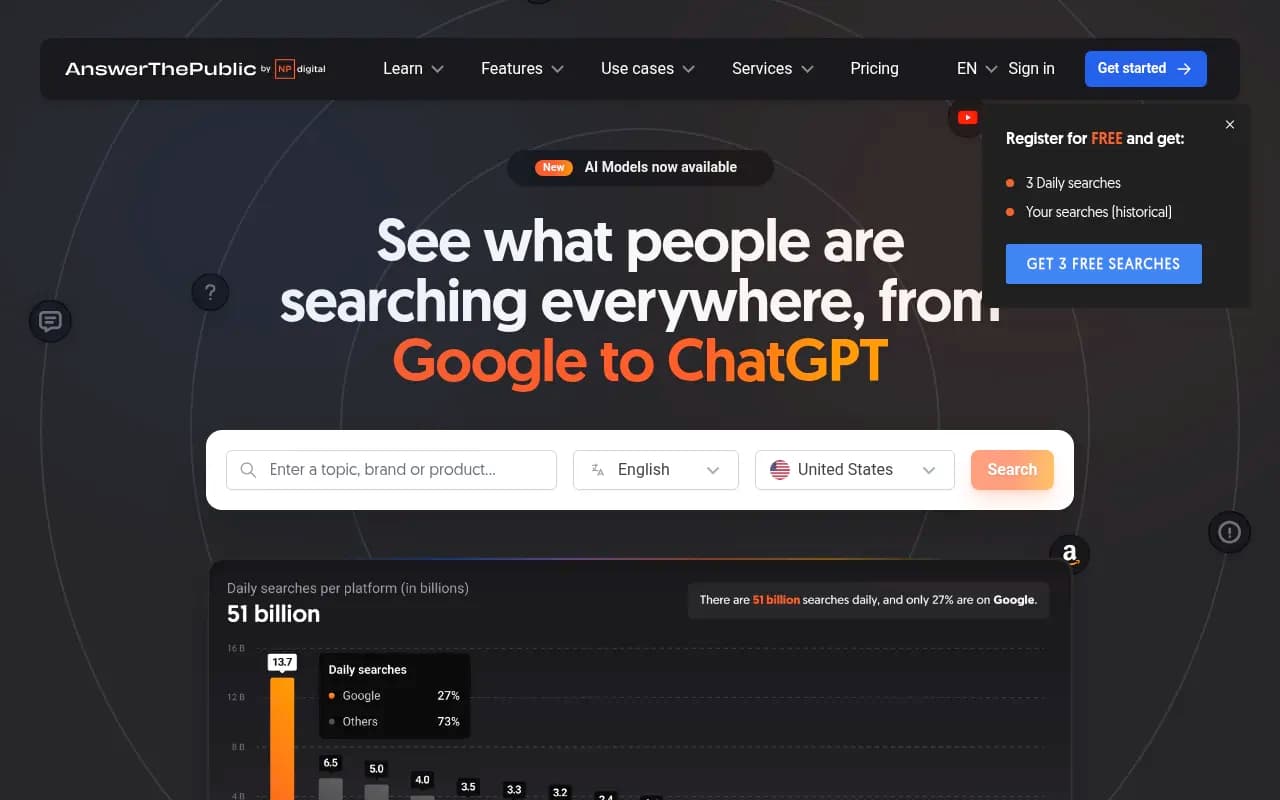
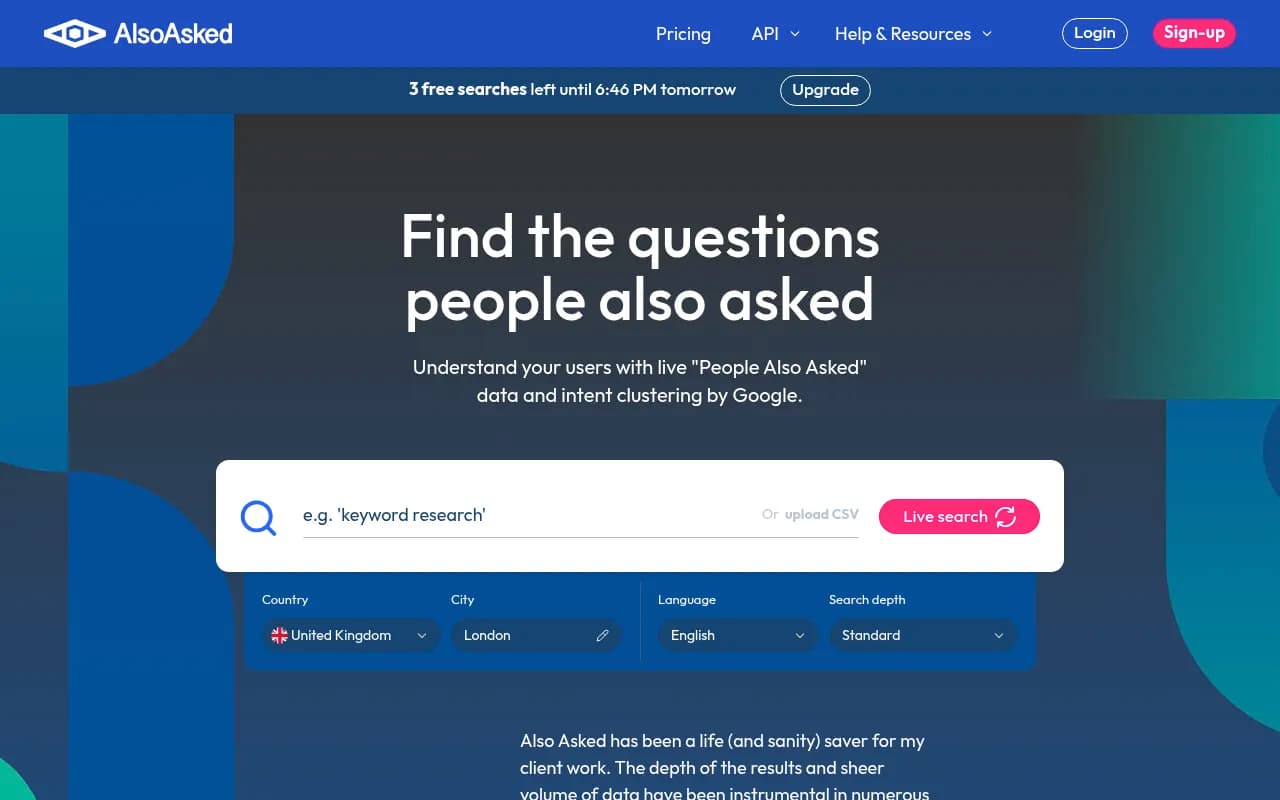
The practical move: pick 10-15 very specific questions your customers actually ask, ones where you have genuine expertise, and build dedicated pages around each one. Not blog posts stuffed with keywords -- actual answers written by people who know the subject.
2. Format your content the way AI models want to read it
This one is underrated. AI models don't read content the way humans do. They're looking for clear, extractable answers. That means your formatting choices directly affect whether you get cited.
What works:
- Clear H2/H3 headings that match the question being asked
- Short, direct answers in the first paragraph (before any context or preamble)
- Numbered lists and structured steps for process-based content
- Definition-style sentences for concept-based content ("X is Y that does Z")
- FAQ sections at the bottom of pages, written as actual questions and answers
What doesn't work: long introductions that bury the answer, walls of text with no structure, and content that hedges everything instead of taking a clear position.
Barry Schwartz and other SEO practitioners have noted in 2026 discussions that most "AI optimization" still depends on traditional search discovery and ranking. AI models pull from pages that Google already trusts. So the formatting advice above serves double duty -- it helps both traditional rankings and AI citation likelihood.
3. Build topical depth in one area instead of spreading thin
Topical authority still matters in 2026, even if HubSpot's well-publicized traffic decline made some people question it. The lesson from HubSpot isn't that topical authority is dead -- it's that publishing thousands of shallow articles on every topic doesn't build real authority anymore.
For smaller brands, this is actually good news. You can build genuine topical depth in a narrow area without a huge team.
Pick one topic cluster where you have real expertise and real data. Cover it thoroughly: the main concept, the common questions, the edge cases, the comparisons, the mistakes people make. When AI models see that your site has deep, consistent, credible coverage of a specific topic, you become a more reliable citation source for that topic.
A regional B2B software company that publishes 20 genuinely useful articles about procurement automation in manufacturing will outperform a generalist agency that publishes 200 thin articles across 50 topics. The math is different now.
4. Get your technical foundation right (AI crawlers care)
This is the part smaller brands often skip because it feels unglamorous. But AI crawlers -- the bots that ChatGPT, Perplexity, Claude, and others send to index the web -- have their own quirks, and they can't cite content they can't read.
Common issues that block AI citation:
- JavaScript-rendered content that bots can't parse
- Slow page load times that cause crawler timeouts
- Robots.txt rules that accidentally block AI crawlers (GPTBot, ClaudeBot, PerplexityBot)
- Thin or duplicate content that signals low quality
- Missing or broken structured data
Check your robots.txt file right now. Many brands unknowingly block AI crawlers with overly broad rules. GPTBot and PerplexityBot need explicit permission to crawl, and if they're blocked, you simply won't be cited -- no matter how good your content is.
Tools like Screaming Frog SEO Spider can audit your site for crawlability issues quickly, even on a small budget.
For structured data, make sure your key pages have proper schema markup -- especially FAQ schema, HowTo schema, and Article schema. These give AI models clearer signals about what your content is and what questions it answers.
5. Use answer-gap analysis to find what AI models want but can't find on your site
This is where the real leverage is for smaller brands. Instead of guessing what to write, you can find the specific questions where AI models are currently giving incomplete or competitor-sourced answers -- and fill those gaps yourself.
The process:
- Identify 20-30 prompts your target customers might type into ChatGPT or Perplexity
- Run those prompts and look at the responses -- who's being cited? What's missing?
- Look for questions where the AI gives a vague or generic answer, or where your competitors are cited but you're not
- Build content specifically designed to answer those gaps
This is more targeted than traditional keyword research because you're working backward from what AI models are actually saying, not from search volume estimates.
Promptwatch automates this process with its Answer Gap Analysis feature, which shows you exactly which prompts competitors are visible for that you're not -- and what content your site is missing. For smaller teams without time to manually test dozens of prompts, this kind of tooling can compress weeks of research into hours.

Even without a dedicated tool, you can do a manual version of this by testing prompts yourself and keeping a spreadsheet of gaps. It's slower, but the logic is the same.
6. Earn citations on third-party pages AI models already trust
One of the most underappreciated tactics for AI visibility is getting mentioned on the pages AI models already cite heavily. Reddit threads, industry publications, YouTube videos, comparison listicles, and niche directories all show up in AI responses regularly.
This isn't link building in the traditional sense. It's about being present in the information ecosystem that AI models draw from.
Practical moves:
- Participate genuinely in relevant Reddit communities. Not spam -- actual helpful answers that mention your product or expertise where it's relevant.
- Get listed on comparison sites and "best of" listicles in your category. These pages get cited constantly in AI responses.
- Publish data, research, or original findings that other sites will reference. Even small studies with real numbers get picked up.
- Do podcast interviews or contribute to industry newsletters. AI models pull from a wider range of sources than most people realize.
The goal is to build a citation footprint across the web, not just on your own domain. AI models synthesize from multiple sources, so appearing in five different trusted places matters more than dominating one.
7. Focus on bottom-of-funnel queries first
This is counterintuitive advice for most content marketers, but it's especially true for smaller brands with limited budgets: start with bottom-of-funnel queries, not top-of-funnel awareness content.
Why? Because bottom-of-funnel queries ("best [category] software for [specific use case]", "[your brand] vs [competitor]", "how to [specific task] with [your product type]") are where purchase decisions actually happen. They're also where AI Mode is having the biggest impact on B2B buyer behavior -- Google's AI Mode update specifically changed how buyers research software before contacting sales.
Top-of-funnel content ("what is X") is expensive to rank for, slow to convert, and increasingly answered by AI without sending any traffic. Bottom-of-funnel content is more specific, easier to rank for, and directly tied to revenue.
For a smaller brand, five excellent comparison and use-case pages will drive more pipeline than fifty generic educational articles. Build those first.
8. Track your AI visibility so you know what's working
You can't improve what you can't measure. The challenge is that AI search visibility is genuinely harder to measure than traditional SEO -- clicks don't always match visibility, and prompt data isn't fully transparent.
But you don't have to fly blind. Several tools now track brand mentions across AI engines at price points that work for smaller teams.
| Tool | Best for | AI engines covered | Starting price |
|---|---|---|---|
| Promptwatch | Full optimization loop (tracking + content gaps + generation) | 10+ engines | $99/mo |
| Otterly.AI | Basic monitoring | ChatGPT, Perplexity, AI Overviews | Lower tier |
| LLM Pulse | Lightweight brand tracking | ChatGPT, Perplexity, Gemini | Affordable |
| Peec AI | Marketing team monitoring | Multiple LLMs | Mid-range |
| Rankshift | Brand visibility tracking | ChatGPT, Perplexity | Affordable |
Otterly.AI

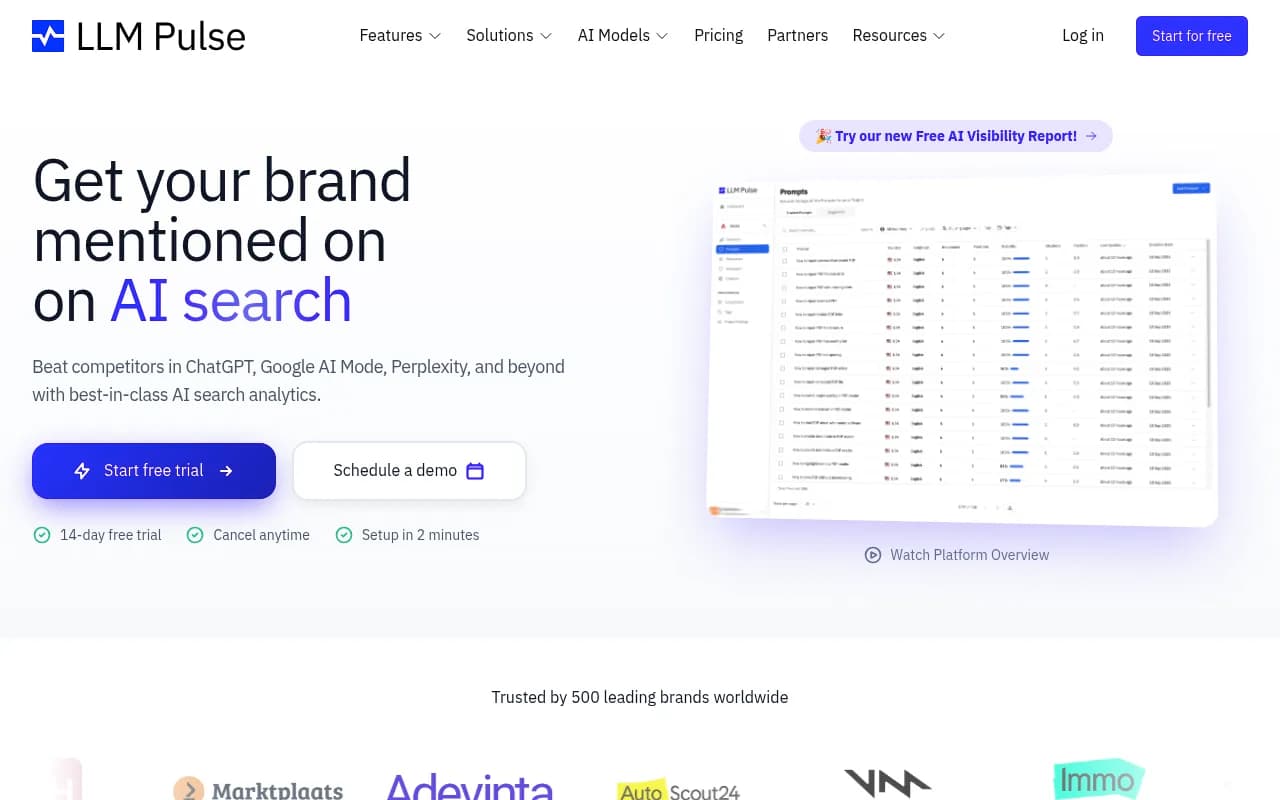


At minimum, you should be manually testing your most important prompts in ChatGPT, Perplexity, and Google AI Mode once a month. Note which competitors are cited, what sources are referenced, and whether your brand appears. That baseline alone will tell you where to focus.
The more sophisticated move is using a tool that tracks this automatically and shows you trends over time -- because AI model behavior changes, and what works today may need adjustment in three months.
What still doesn't change
Before you pivot your entire strategy, it's worth being clear about what hasn't changed. Barry Schwartz, who covers Google algorithm updates as closely as anyone, made the point in a late 2025 discussion that most "AI optimization" still depends on traditional search discovery and ranking. AI models pull from pages that Google (and Bing) already trust.
That means:
- Links still matter. There's no durable replacement signal yet.
- E-E-A-T signals (experience, expertise, authoritativeness, trustworthiness) still matter. AI models prefer citing credible sources.
- Technical SEO still matters. If Google can't crawl it, AI models probably can't either.
- Publishing garbage at scale still doesn't work. It never did.
The brands winning in AI Mode in 2026 aren't doing something completely different from good SEO. They're doing good SEO with a clearer understanding of how AI models consume and cite content.
Putting it together: a realistic plan for smaller brands
If you're working with a limited budget and a small team, here's a practical sequence:
- Audit your robots.txt and make sure AI crawlers aren't blocked (free, takes 30 minutes)
- Test 20 prompts relevant to your business in ChatGPT and Perplexity -- note who's cited and what's missing (free, takes a few hours)
- Pick one narrow topic where you have genuine expertise and build 8-10 specific, well-structured pages around it (requires time, not money)
- Get listed on 3-5 comparison or "best of" pages in your category (outreach, not paid)
- Set up basic AI visibility tracking so you can see changes over time
None of this requires a six-figure content budget. It requires clarity about where you can actually win, and the discipline to build real answers instead of filler content.
The brands that will struggle in AI Mode are the ones still trying to win through volume. The ones that will do well are the ones that know something specific and say it clearly.
That's an advantage smaller brands can actually have.