Key takeaways
- Peec AI is a monitoring-first platform: it tracks how often your brand appears in AI-generated answers across ChatGPT, Perplexity, and similar engines, with daily prompt-level data.
- Wellows goes further into the action layer, combining citation tracking with outreach workflows and content recommendations designed to earn more citations.
- Neither tool is a clear "best" for every team — the right choice depends on whether you need data or execution.
- Both tools sit in the monitoring-heavy end of the GEO market; teams that want to close the loop from tracking to content creation may need to look at platforms with built-in content generation.
- A third option worth knowing: Promptwatch covers monitoring, content gap analysis, and AI content generation in one platform — the only tool in a recent 12-platform comparison rated as a "Leader" across all categories.
What this comparison is actually about
AI search visibility is a real problem now. When someone asks ChatGPT or Perplexity for a software recommendation, a product comparison, or a service provider, your brand either shows up or it doesn't. And unlike Google, there's no rank position to chase — just citations, mentions, and the sources AI models decide to trust.
Peec AI and Wellows are two tools that have built products around this problem. They overlap in some areas and diverge sharply in others. This guide breaks down what each one actually does, where they're genuinely useful, and where they leave you wanting more.
What Peec AI does
Peec AI is built around daily prompt monitoring. You define the prompts that matter to your brand — things like "best project management software for remote teams" or "top CRM for B2B startups" — and Peec AI runs those prompts across AI engines on a regular cadence, then reports back on whether your brand appeared, what position it was mentioned in, and which sources were cited.

The core value proposition is visibility tracking at the prompt level. You get a dashboard showing your brand's share of voice across AI answers, citation trends over time, and a comparison against competitors. For B2B marketing teams that want to understand how they're performing in AI search, this is genuinely useful data.
Where Peec AI shines:
- Clean, prompt-level tracking with daily refresh
- Competitor comparison built into the core workflow
- Citation source analysis (which URLs are being cited in AI answers)
- Sentiment analysis on how your brand is described when it does appear
Where it gets limited: Peec AI tells you what's happening but doesn't help you change it. You can see that a competitor is being cited for a prompt you care about, but the tool doesn't help you figure out what content to create or how to earn that citation. The gap between insight and action is real.
What Wellows does
Wellows positions itself as an AI visibility platform with a stronger lean toward execution. Beyond tracking citations, it builds outreach workflows into the product — the idea being that once you know which sources AI models are citing, you can go after those sources directly (guest posts, link placements, PR mentions) to improve your own citation rate.
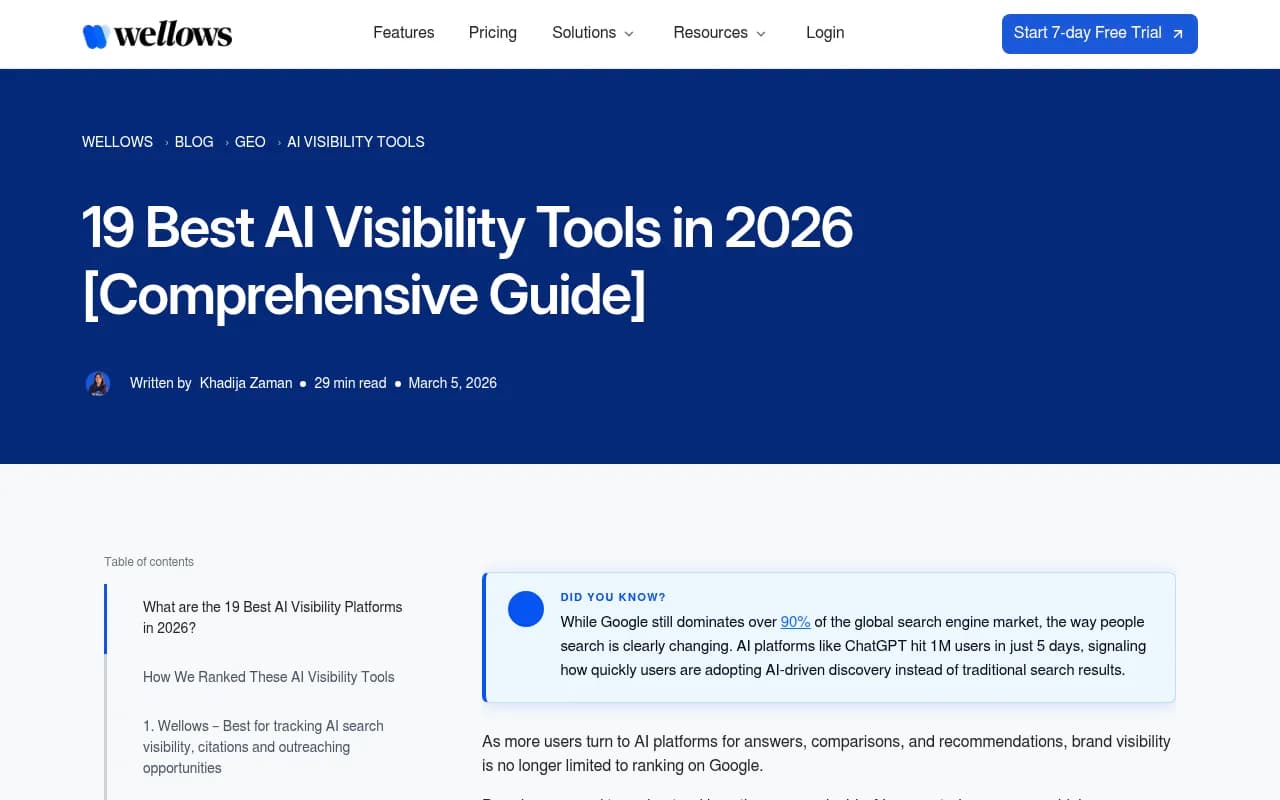
The citation outreach angle is what differentiates Wellows from a pure monitoring tool. If AI models are consistently citing a particular industry blog or comparison site, Wellows surfaces that and gives you a path to getting your brand mentioned there. That's a meaningful step beyond just watching your numbers.
Wellows also covers the standard monitoring features: prompt visibility, AI citation tracking across ChatGPT, Perplexity, Google AI Overviews, and Gemini, and competitor benchmarking.
Where Wellows shines:
- Citation source intelligence tied to outreach workflows
- Content and PR recommendations based on what AI models are actually citing
- Solid multi-model coverage
- Good for teams that have an outreach or link-building motion already in place
Where it gets limited: The outreach workflow is only useful if you have the bandwidth to execute it. For smaller teams or those without a dedicated content/PR function, the recommendations can feel like homework you don't have time to do. And like Peec AI, Wellows doesn't generate content for you — it points you toward gaps without filling them.
Head-to-head comparison
| Feature | Peec AI | Wellows |
|---|---|---|
| Daily prompt monitoring | Yes | Yes |
| Multi-model tracking | Yes | Yes |
| Citation source analysis | Yes | Yes |
| Competitor benchmarking | Yes | Yes |
| Sentiment analysis | Yes | Limited |
| Citation outreach workflows | No | Yes |
| Content gap analysis | Limited | Partial |
| AI content generation | No | No |
| Crawler / agent logs | No | No |
| Prompt volume / difficulty scoring | No | No |
| Reddit & YouTube citation tracking | No | No |
| Traffic attribution | No | No |
| Free trial | Yes | Yes |
| Best for | B2B monitoring teams | Teams with outreach capacity |
The real difference: monitoring vs. action
Both tools are fundamentally monitoring platforms. Peec AI is honest about that — it's a tracker, and a good one. Wellows tries to bridge into action through outreach workflows, which is a meaningful step forward, but it still doesn't close the full loop.
The gap that neither tool fills is content creation. The most common outcome after using either platform is: "We're not being cited for these prompts, our competitors are, and we need to create content that addresses this." At that point, you're back to your content team, a separate brief, and a process that may or may not connect back to the visibility data you started with.
This is the core limitation of monitoring-only tools in 2026. The category has matured enough that tracking your AI visibility is table stakes. The question is what you do with that information.
Who should use Peec AI
Peec AI makes sense for teams that:
- Want clean, reliable daily data on AI search visibility without a lot of setup complexity
- Are in a reporting or analytics role and need to show stakeholders how brand visibility is trending in AI search
- Already have content and outreach teams who can act on the data independently
- Are comparing themselves against specific competitors and want prompt-level granularity
It's a solid mid-market option. The interface is clean, the data is actionable in the sense that it tells you where you stand, and the pricing is reasonable for what you get.
Who should use Wellows
Wellows makes more sense for teams that:
- Have an existing outreach or PR motion and want to direct it toward AI citation sources
- Want to understand not just whether they're cited, but which third-party sources are driving citations for competitors
- Are willing to invest time in the outreach recommendations the platform surfaces
- Need a tool that bridges monitoring and distribution strategy
If you're a content marketing team that already does link building or PR outreach, Wellows gives you a smarter way to prioritize those efforts based on what AI models are actually reading.
What both tools are missing
There's a broader point worth making here. Both Peec AI and Wellows track citations well. But neither helps you:
- Understand which prompts have the highest volume or are easiest to win
- Generate content specifically engineered to fill the gaps AI models are exposing
- Monitor AI crawler activity on your own site (which pages are being read, how often, what errors they're hitting)
- Connect AI visibility to actual website traffic and revenue
- Track Reddit threads and YouTube videos that are influencing AI recommendations
These aren't minor gaps. For teams that want to actually move their AI visibility numbers, monitoring alone isn't enough. You need the full loop: find the gaps, create content that addresses them, and track whether that content starts getting cited.
Promptwatch is the platform that comes closest to covering that full loop. It combines prompt monitoring, answer gap analysis, AI content generation, crawler logs, and traffic attribution in one place. Worth knowing about if you're evaluating this space seriously.

Other tools worth considering
If you're evaluating Peec AI and Wellows, a few other platforms are worth putting on your list:
Otterly.AI is a lightweight monitoring option with a lower price point. Good for smaller teams that just want basic brand tracking across ChatGPT and Perplexity without a lot of complexity.
Otterly.AI

Profound is the enterprise end of the market. More prompt capacity, more models, more reporting depth. If you're a large brand with serious AI visibility needs and budget to match, Profound is worth a look.
Profound

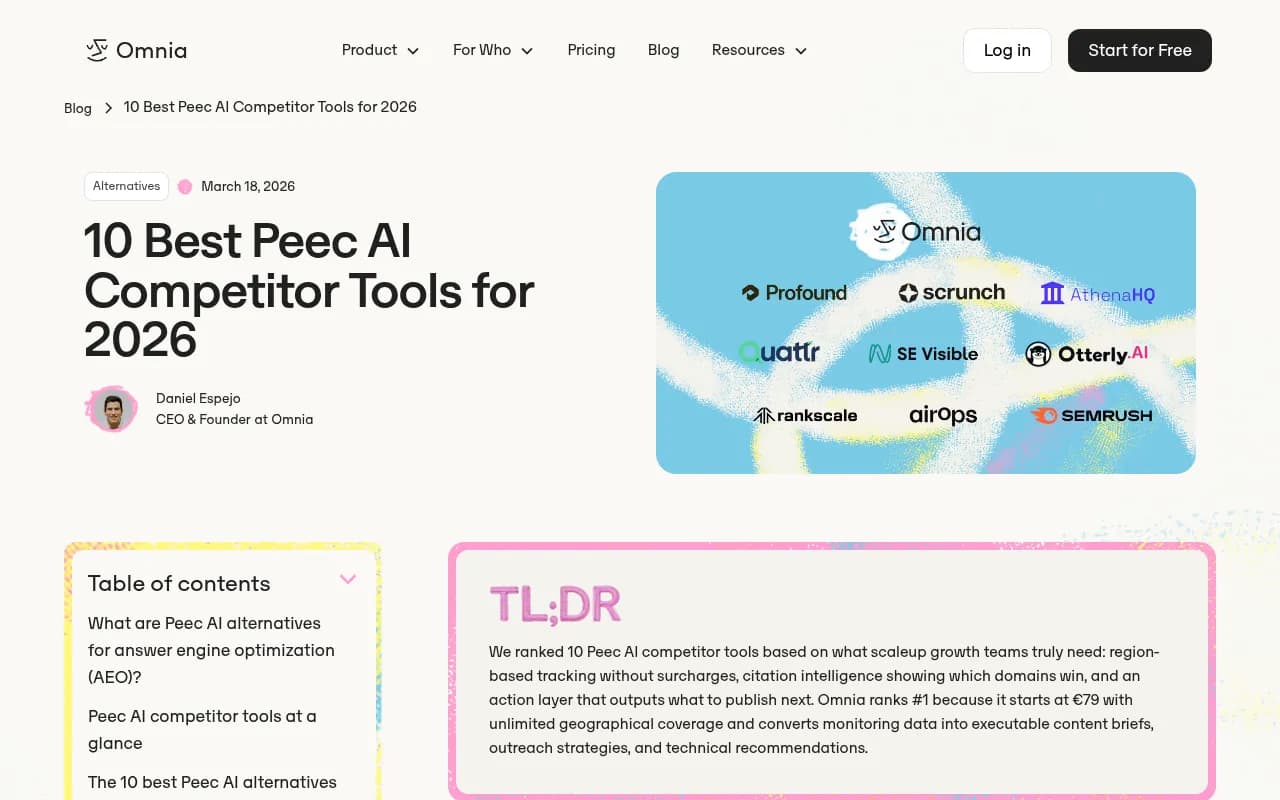
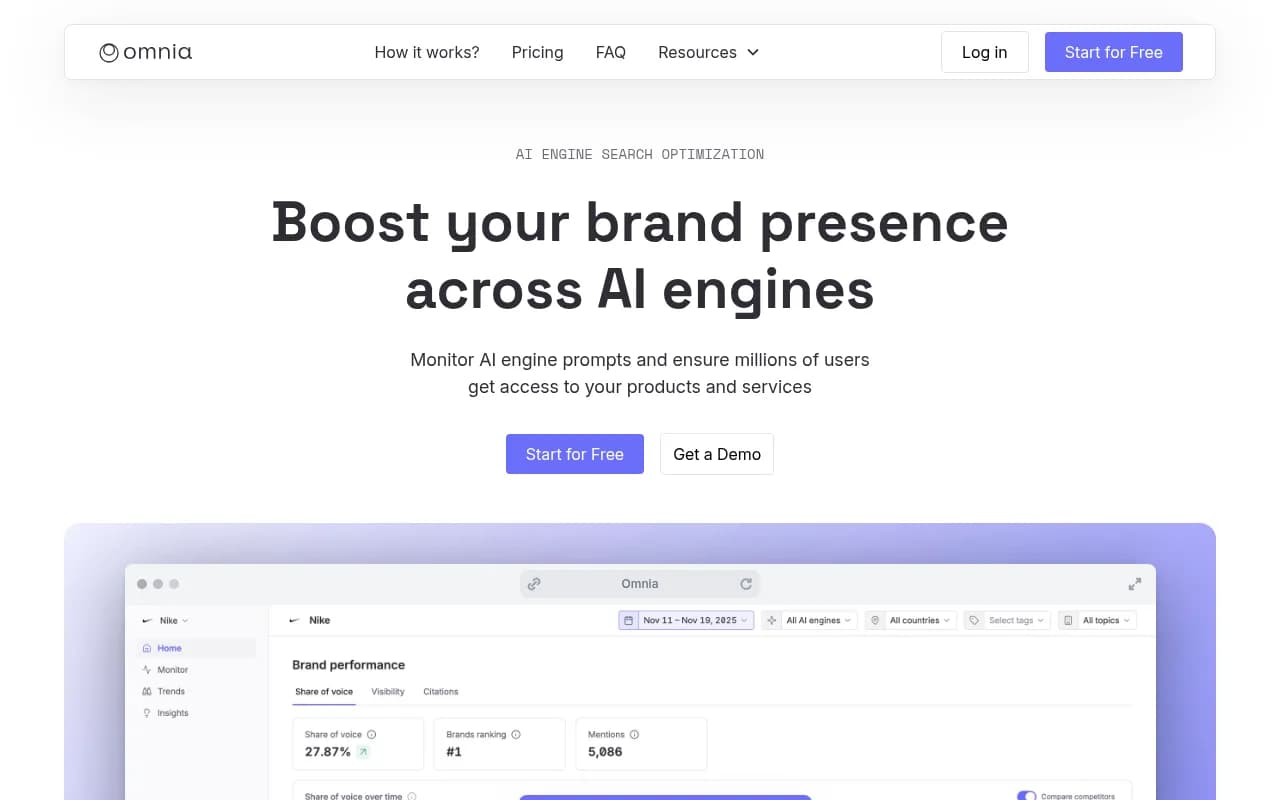
Omnia takes a different angle, focusing on share-of-voice metrics and citation intelligence tied to prioritized actions. It's positioned at scaleups that need more than basic monitoring but aren't quite at enterprise scale.
AthenaHQ is another monitoring-focused platform with good competitor analysis features. Like Peec AI, it's strong on tracking but doesn't help you create content.

How to choose
The honest answer is that your choice between Peec AI and Wellows comes down to one question: do you have an outreach team?
If yes, Wellows gives you something Peec AI doesn't — a path from citation data to distribution action. The outreach workflow is genuinely useful if you have someone to run it.
If no, Peec AI's cleaner monitoring interface and solid competitor benchmarking will serve you better without the overhead of features you won't use.
Either way, be clear-eyed about what you're buying. Both tools will tell you where you stand in AI search. Neither will fix it for you. If closing that gap is the priority, you'll want a platform that goes further.
| Team type | Recommended tool |
|---|---|
| Analytics/reporting focus, no outreach team | Peec AI |
| Content/PR team with outreach capacity | Wellows |
| Enterprise with large prompt volume | Profound |
| Small team, budget-conscious | Otterly.AI |
| Want monitoring + content generation in one | Promptwatch |
| Scaleup needing share-of-voice metrics | Omnia |
The AI search visibility category is moving fast. Tools that were "good enough" six months ago are already being outpaced by platforms that do more than track. Whatever you choose, make sure you're picking something that helps you act on the data — not just collect it.