Key takeaways
- Traditional SEO tools like RankIQ, GrowthBar, Scalenut, and Surfer SEO still help you rank in Google, but AI search (ChatGPT, Perplexity, Gemini) requires a different approach.
- Surfer SEO is the most capable of the four for content optimization depth, but it's also the most expensive and complex for solo bloggers.
- RankIQ is the best fit for bloggers who want a simple, fast path to Google rankings with minimal learning curve.
- GrowthBar works well if you want AI writing and SEO in one affordable package.
- Scalenut is the most ambitious of the four, with GEO readiness features that start to address AI search visibility.
- None of these tools fully solve the AI search visibility problem on their own -- for that, you need a dedicated platform.
Search has split in two. There's the Google you've always known, and then there's the AI layer -- ChatGPT, Perplexity, Gemini, Google AI Overviews -- where millions of people now get answers without clicking a single link. For bloggers, this creates a real dilemma: which tools actually help you show up in both places?
The four tools most bloggers are comparing right now are RankIQ, GrowthBar, Scalenut, and Surfer SEO. They all promise to help you write better content that ranks. But they were built in different eras, for different problems, and their usefulness in 2026 varies a lot depending on what you actually need.
This guide breaks them down honestly -- what each does well, where each falls short, and how to think about AI search visibility on top of traditional SEO.
What bloggers actually need from an SEO tool in 2026
Before comparing the tools, it's worth being clear about what the job actually is.
For most bloggers, the core workflow is: find keywords worth targeting, write content that covers the topic well, optimize it so Google understands it, and then publish and track results. That's been the loop for years.
In 2026, there's a new layer. AI search engines are now answering questions directly, and the sources they cite are not always the ones ranking #1 on Google. Reddit threads, YouTube videos, authoritative blog posts, and well-structured FAQ content all get pulled into AI responses. If your blog isn't being cited by ChatGPT or Perplexity, you're invisible to a growing chunk of your potential audience.
So the question isn't just "does this tool help me rank on Google?" It's also "does this tool help me become a source that AI engines trust and cite?"
Most of the tools in this comparison were built for the first question. A few are starting to address the second.

RankIQ: built for bloggers, laser-focused on Google

RankIQ is the most blogger-specific tool in this comparison. It was designed by a blogger, for bloggers, and that focus shows in every part of the product.
The core feature is a curated keyword library organized by niche. Instead of dumping thousands of keywords on you and leaving you to figure out which ones are worth targeting, RankIQ pre-filters for low-competition keywords that have real traffic potential. For food bloggers, personal finance bloggers, travel bloggers -- there are libraries built specifically for those niches.
The content optimizer is similarly stripped down. You paste in your draft, and RankIQ tells you which topics and phrases you're missing based on what's ranking. It's not the most sophisticated NLP analysis you'll find, but it's fast and easy to act on.
Where RankIQ struggles: it doesn't do keyword research beyond its curated libraries, it has no backlink analysis, and it has essentially no features for AI search visibility. If your goal is to show up in ChatGPT or Perplexity responses, RankIQ won't help you get there. It's a Google-first tool, full stop.
Pricing sits around $49/month, which makes it one of the more affordable options here. For a hobby blogger or someone just starting out who wants to rank on Google without a steep learning curve, it's genuinely good. For anyone serious about AI search, it's not enough on its own.
GrowthBar: AI writing meets SEO research
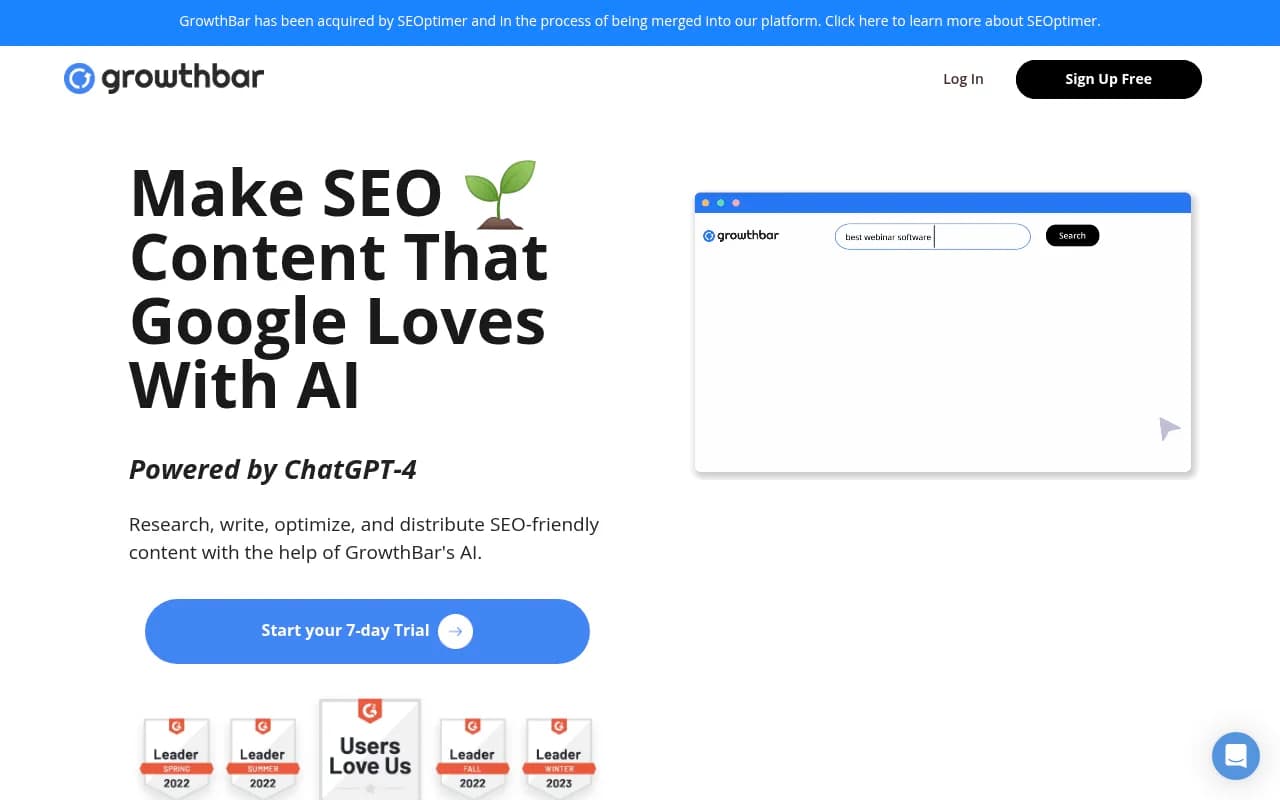
GrowthBar started as a Chrome extension and has grown into a full SEO content platform. The pitch is that it combines keyword research, competitor analysis, and AI writing in one place -- which is a reasonable value proposition for bloggers who don't want to juggle five different tools.
The AI writing features are more developed than most people expect. You can generate full blog post outlines, introductions, and even complete drafts using GrowthBar's built-in AI. The quality is decent for a first draft, though you'll still need to edit heavily for anything that requires real expertise or a distinct voice.
On the SEO side, GrowthBar pulls data from Google Search Console and shows you keyword rankings, search volume, and competitor traffic estimates. It's not as deep as Ahrefs or Semrush, but for a blogger who doesn't need enterprise-grade data, it covers the basics.
The content optimizer is functional but not as sophisticated as Surfer SEO or Scalenut. It gives you a word count target and a list of keywords to include, but the guidance is fairly surface-level compared to the more advanced tools.
GrowthBar has started adding some AI search features, but they're early-stage. There's no meaningful tracking of how your content performs in ChatGPT or Perplexity responses.
Pricing starts around $29/month for the basic plan, making it one of the more accessible options. It's a solid choice for bloggers who want AI writing assistance bundled with basic SEO research, but don't expect it to solve your AI search visibility problem.
Scalenut: the most ambitious of the four

Scalenut has been moving fast. What started as an AI writing tool has evolved into a more complete SEO and content marketing platform, and in 2026, it's the only tool in this comparison that explicitly talks about GEO readiness and AI visibility as part of its feature set.
The core workflow in Scalenut goes: keyword planning, content brief generation, AI-assisted writing, and optimization. The keyword clustering feature is genuinely useful -- it groups related keywords into topic clusters, which helps you plan content that covers a subject comprehensively rather than writing isolated posts.
The content optimizer uses NLP to analyze top-ranking pages and tell you what topics, entities, and phrases your content needs to include. It's comparable to Surfer SEO in this regard, though Surfer's analysis tends to be slightly more detailed.
The GEO readiness angle is interesting. Scalenut has started incorporating guidance around structuring content for AI search -- things like clear question-and-answer formatting, entity coverage, and citation-friendly writing. It's not a full AI visibility platform, but it's further along this path than RankIQ or GrowthBar.
The downside is complexity. Scalenut has a lot of features, and the interface can feel overwhelming if you just want to write a blog post and optimize it quickly. There's a learning curve.
Pricing starts around $39/month for the basic plan. For bloggers who are thinking seriously about both Google rankings and AI search visibility, Scalenut is the most forward-looking option in this group.
Surfer SEO: the content optimization standard
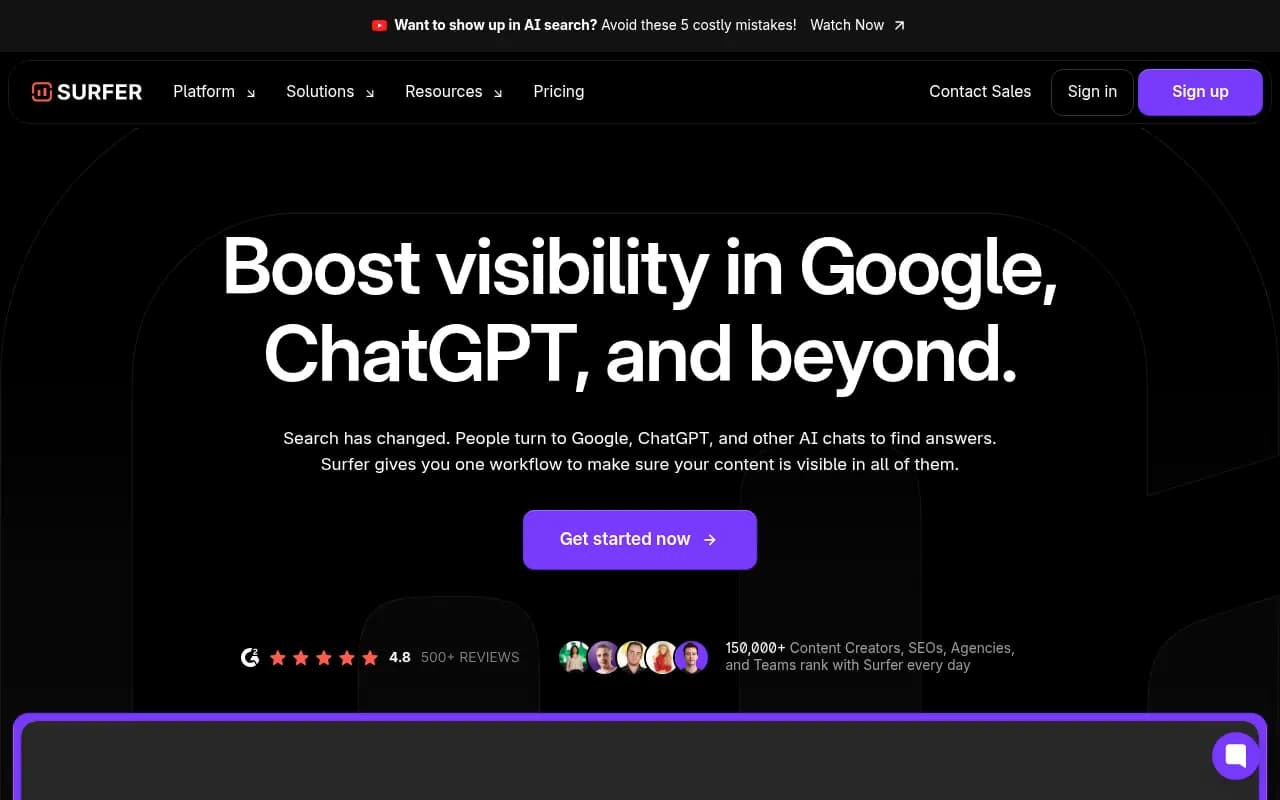
Surfer SEO is the tool that most SEO professionals reach for when they need serious content optimization. The Content Editor is its flagship feature: you type or paste your content, and Surfer gives you a real-time score based on how well you're covering the topic compared to the top-ranking pages for your target keyword.
The analysis is thorough. Surfer looks at word count, heading structure, NLP entities, keyword density, and the specific terms that appear across top-ranking competitors. The Content Score updates as you write, which makes the optimization process feel more like a conversation than a checklist.
Surfer also has a keyword research tool, a content audit feature for existing posts, and integrations with Google Docs and WordPress. The Google Docs integration in particular is popular with bloggers who don't want to write inside yet another platform.
In 2026, Surfer has added some AI writing features through its AI article generation tool, which can produce a full draft based on your keyword and outline. The quality is reasonable, though it produces fairly generic content that needs significant editing to stand out.
Where Surfer falls short for bloggers: it's expensive. The basic plan starts around $89/month, which is a lot for a solo blogger. And like the others, it doesn't have meaningful AI search visibility features. It will help you write content that ranks on Google, but it won't tell you whether ChatGPT is citing your posts or why Perplexity is recommending a competitor instead of you.
That said, in a comparison of SEO content optimization tools published by Rankability in late 2025, Surfer was rated as one of the top three tools for price-to-value alongside Clearscope and Rankability itself -- which suggests it's earning its price tag for teams that use it seriously.
Head-to-head comparison
| Feature | RankIQ | GrowthBar | Scalenut | Surfer SEO |
|---|---|---|---|---|
| Starting price | ~$49/mo | ~$29/mo | ~$39/mo | ~$89/mo |
| Keyword research | Curated libraries only | Basic | Keyword clustering | Moderate |
| Content optimizer | Basic | Basic | Advanced (NLP) | Advanced (NLP) |
| AI writing | No | Yes | Yes | Yes (limited) |
| Backlink analysis | No | No | No | No |
| GEO/AI search features | None | Minimal | Early-stage | None |
| Best for | Niche bloggers | Budget all-in-one | Growing blogs | Serious content teams |
| Learning curve | Low | Low | Medium | Medium |
| Google Docs integration | No | No | No | Yes |
The gap none of them fully close
Here's the honest truth: all four of these tools are primarily built for Google. They help you write content that ranks in traditional search results. That's still valuable -- Google isn't going anywhere -- but it's increasingly incomplete.
AI search engines like ChatGPT, Perplexity, and Google AI Overviews are now handling a significant share of informational queries. The way they decide what to cite is different from how Google ranks pages. It's not just about keyword optimization. It's about whether your content is structured as a clear, authoritative answer, whether your domain is trusted by AI crawlers, whether you're being mentioned in the right external sources, and whether your content covers the specific angles AI models are looking for.
None of RankIQ, GrowthBar, Scalenut, or Surfer SEO give you visibility into any of that. You can't see whether ChatGPT is citing your blog. You can't see which of your posts Perplexity is pulling from. You can't identify the specific content gaps that are keeping you out of AI responses.
For bloggers who are serious about AI search visibility, a dedicated platform is needed on top of these content tools. Promptwatch is the most complete option here -- it tracks how your content performs across ChatGPT, Perplexity, Gemini, Claude, and seven other AI engines, shows you exactly which pages are being cited, identifies the gaps in your content that AI models are exposing, and generates content briefs to fill those gaps.

The combination that makes sense for most bloggers in 2026: one of the four tools above for content creation and Google optimization, plus a dedicated AI visibility platform to understand and improve how you appear in AI search.
Which tool should you actually use?
The right answer depends on where you are and what you're optimizing for.
If you're a hobbyist or early-stage blogger who wants to rank on Google without a steep learning curve, RankIQ is the most accessible option. The curated keyword libraries remove a lot of the guesswork, and the price is reasonable.
If you want AI writing assistance bundled with basic SEO research and you're on a tight budget, GrowthBar gives you the most features per dollar. It's not the deepest tool, but it covers the basics.
If you're a growing blog that's thinking seriously about content strategy and wants the most forward-looking tool in this group, Scalenut is worth the investment. The keyword clustering and GEO readiness features put it ahead of the others for bloggers who are thinking beyond just Google.
If content quality and optimization depth matter most to you -- and you're willing to pay for it -- Surfer SEO is the standard. The Content Editor is genuinely the best in this comparison for helping you write content that competes for Google rankings.
And if AI search visibility is a priority, layer in a dedicated tracking and optimization tool. The four tools above won't tell you what's happening in AI search. For that, you need something built specifically for the problem.
A few tools worth knowing about
Beyond the four main tools in this comparison, a few others are worth mentioning depending on your specific needs.
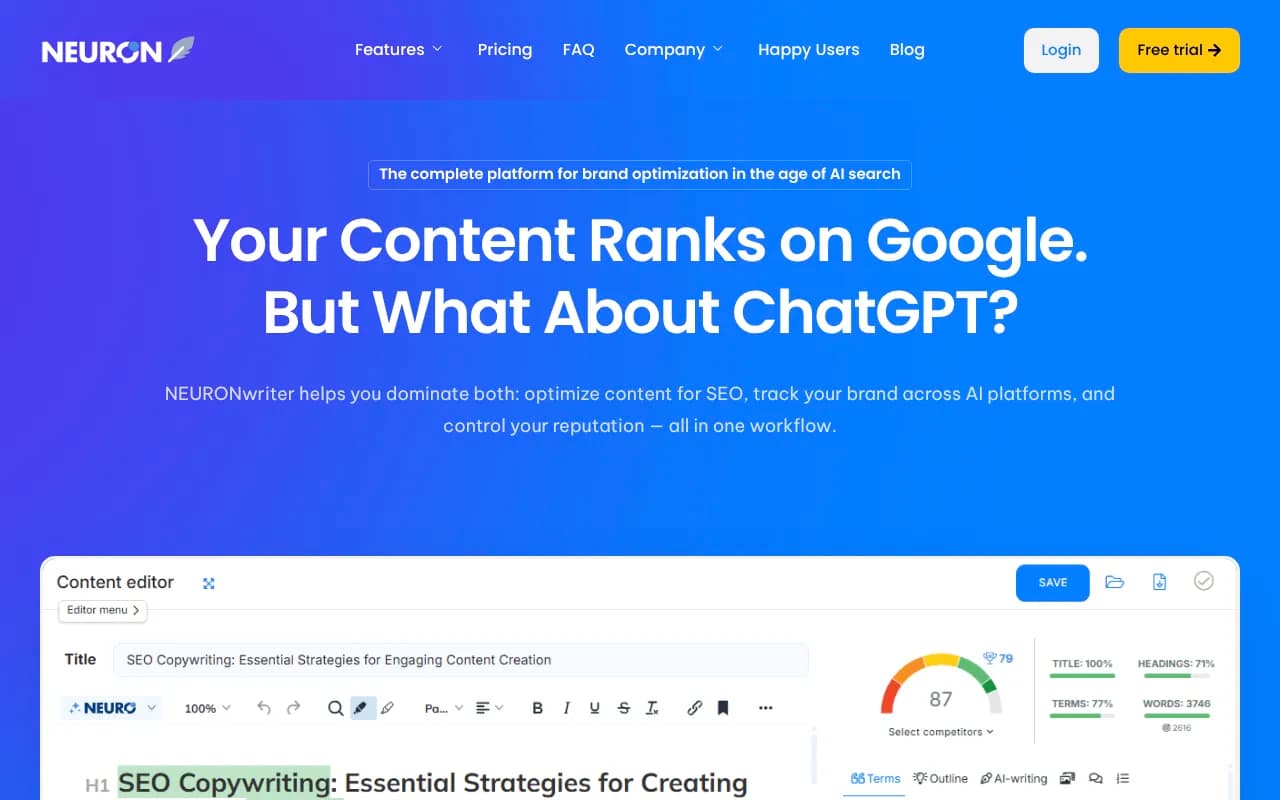
If you want a more affordable content optimization alternative to Surfer, NeuronWriter is worth a look -- it uses similar NLP analysis at a lower price point.
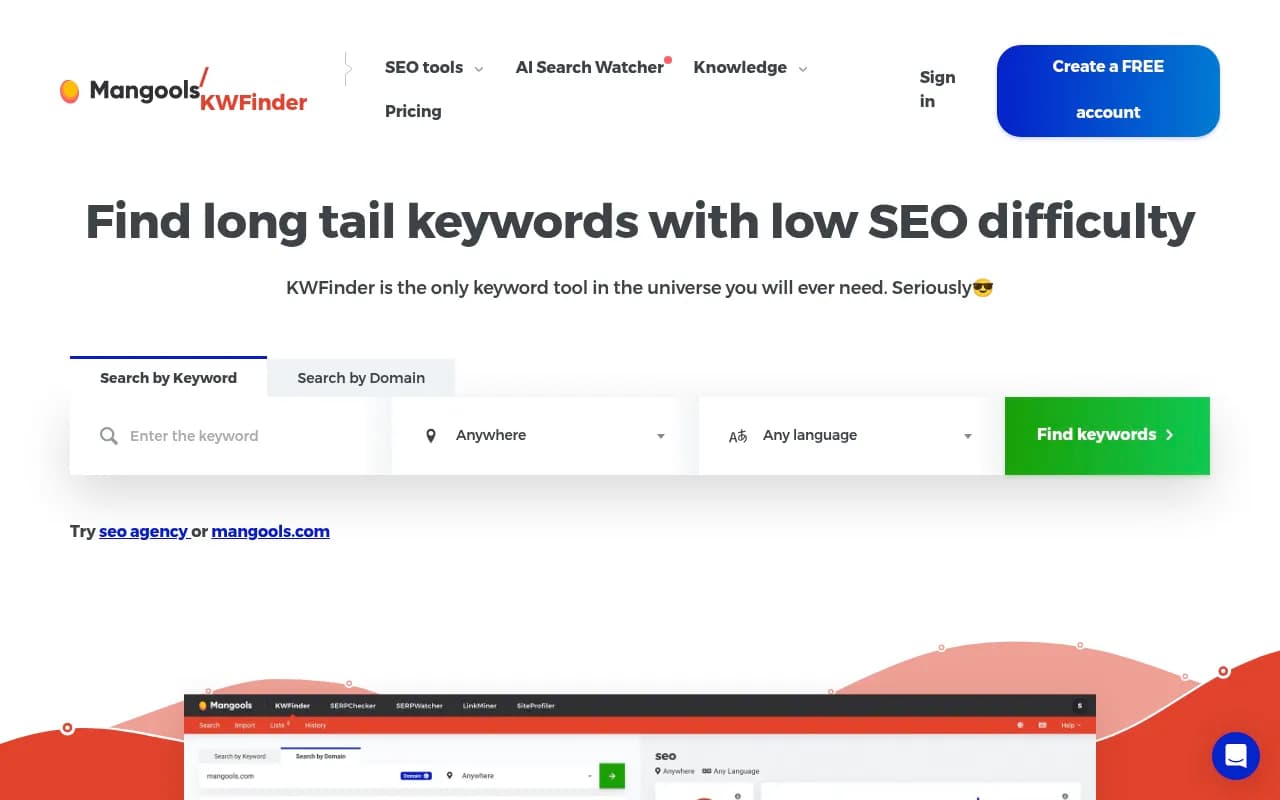
For keyword research specifically, tools like Mangools KWFinder or Keysearch offer solid data at blogger-friendly prices without the full content optimization suite.
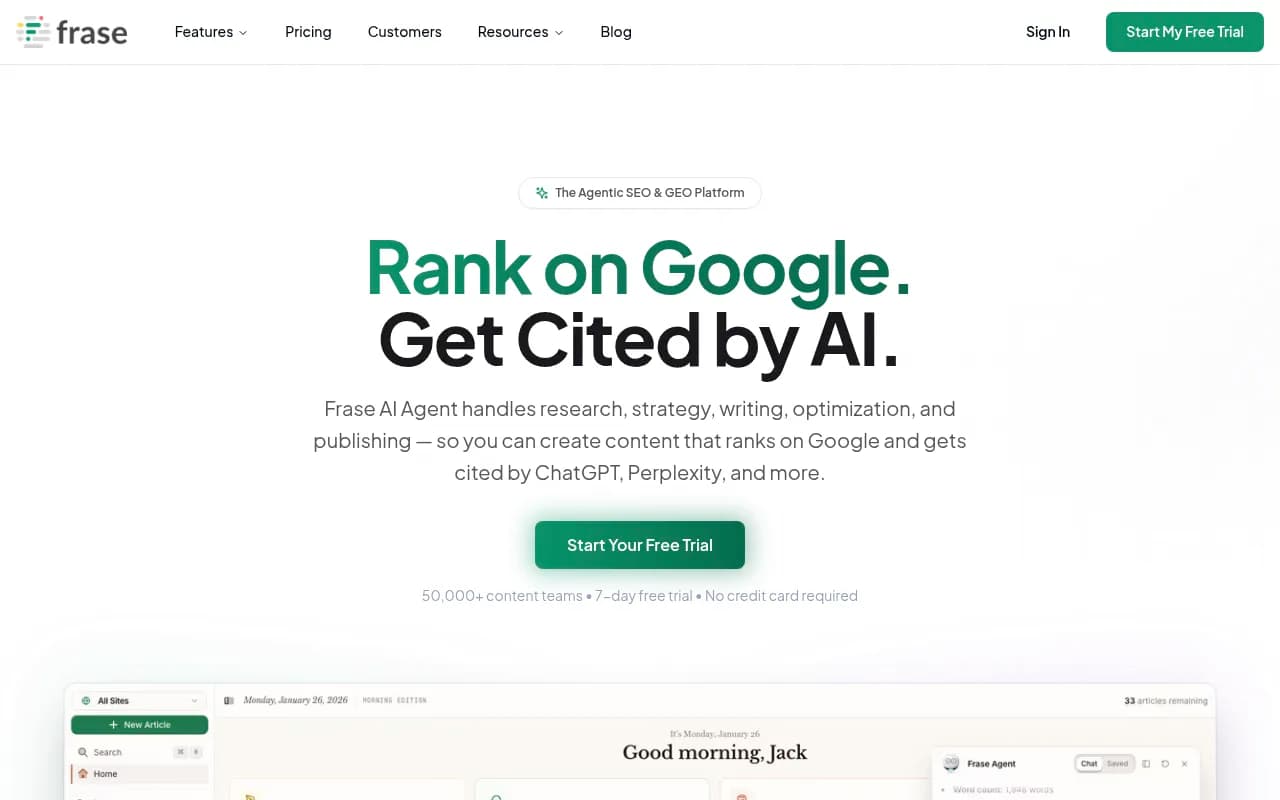
And if you want to go deeper on AI-generated content at scale, Scalenut and GrowthBar both have competition from tools like Frase, which focuses specifically on research-backed content briefs.
The bottom line
In 2026, "best SEO tool for bloggers" is a question with two parts. The first part -- which tool helps me rank on Google -- has clear answers: Surfer SEO for optimization depth, Scalenut for strategic planning, GrowthBar for budget-friendly AI writing, and RankIQ for simplicity.
The second part -- which tool helps me show up in AI search -- is where all four fall short. AI search visibility requires tracking, gap analysis, and content specifically engineered to answer the questions AI models are already exposing. That's a different problem, and it needs a different tool.
The bloggers who will win in AI search over the next few years are the ones who treat Google optimization and AI visibility as separate but complementary disciplines, and build a stack that addresses both.