Key takeaways
- Most AI visibility platforms stop at monitoring -- they show you where you're invisible but don't help you fix it
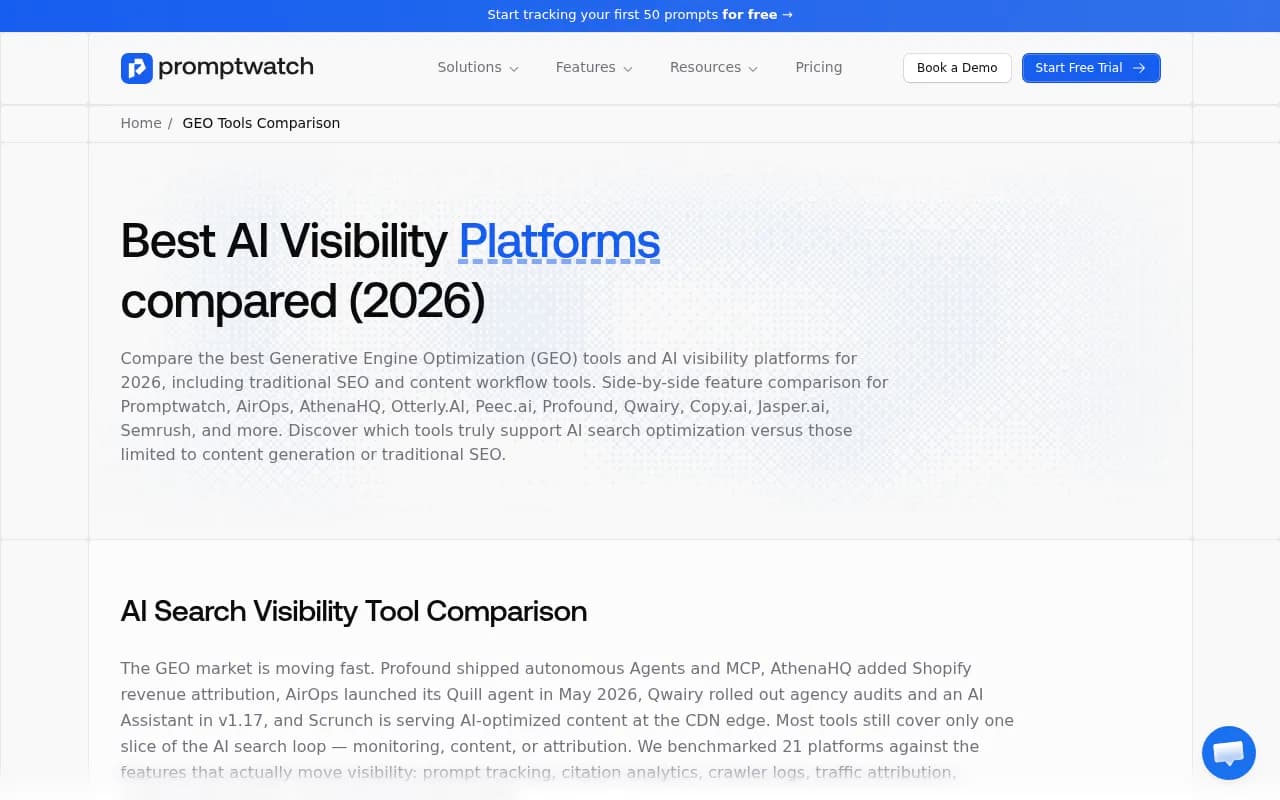
- Promptwatch is the only platform in this comparison with a complete loop: gap analysis, AI content generation, citation tracking, and crawler logs in one place
- AirOps has the strongest standalone content engine but lacks native citation monitoring and crawler intelligence
- Atomic AGI covers 12 generative engines (more than any other tool here) but its content capabilities are limited
- Searchable combines monitoring with content generation, but its data depth and prompt intelligence lag behind Promptwatch
- If LLM citations are your primary goal, the platform you choose needs to do more than track -- it needs to tell you why you're not being cited and help you create content that fixes it
Getting cited by ChatGPT, Perplexity, or Google AI Overviews isn't like ranking in Google. There's no keyword density trick. No backlink formula. AI models cite sources because those sources answer specific questions better than anything else available. That means the platforms built to help you win in AI search need to do two things well: show you exactly what's missing, and help you create content that fills those gaps.
That's a harder problem than it sounds. Most tools in this space do one or the other. A few claim to do both. This comparison looks at four platforms -- Searchable, Promptwatch, Atomic AGI, and AirOps -- and cuts through the marketing to figure out which one actually has the content engine built for LLM citations in 2026.
What "built for LLM citations" actually means
Before comparing platforms, it's worth being specific about what we're evaluating. A platform built for LLM citations needs to handle at least four things:
- Prompt tracking: Which queries are AI models answering, and are you appearing in those answers?
- Citation analysis: Which specific pages or domains are being cited, and why?
- Gap identification: Where are competitors getting cited that you're not?
- Content creation: Can the platform help you produce content that addresses those gaps -- content that AI models will actually want to cite?
Most platforms handle one or two of these. The question is which handles all four, and how well.
The four platforms at a glance
| Platform | Prompt tracking | Citation analysis | Content generation | Crawler logs | AI models covered | Starting price |
|---|---|---|---|---|---|---|
| Promptwatch | Yes | Yes (page-level) | Yes (AI Content Agents) | Yes | 10+ | $99/mo |
| Searchable | Yes | Basic | Yes | No | ~5 | Not public |
| Atomic AGI | Yes | Yes | Limited | No | 12 | Not public |
| AirOps | No (monitoring) | No | Yes (Quill agent) | No | N/A | Custom |
Promptwatch
Promptwatch is the platform this site is built on, so full disclosure upfront. That said, the reason it's positioned first here isn't bias -- it's that it's the only platform in this comparison that closes the full loop from discovery to content to citation tracking.

The core workflow is: find which prompts competitors are visible for that you're not (Answer Gap Analysis), generate content specifically designed to fill those gaps (Content Agents), then track whether that content starts getting cited (page-level visibility tracking and AI crawler logs).
That last part -- the crawler logs -- is something most competitors don't have at all. Promptwatch's Agent Analytics shows you in real time when AI crawlers like GPTBot or ClaudeBot hit your pages, which pages they read, any errors they encounter, and when a crawled page moves to an actual citation. That's the kind of feedback loop that lets you iterate on content strategy based on what AI models are actually doing, not what you assume they're doing.
A few specifics worth knowing:
- Tracks 10+ AI models including ChatGPT, Perplexity, Google AI Overviews, Claude, Gemini, DeepSeek, Grok, Copilot, Meta AI, and Mistral
- Page-level tracking shows which of your pages are being cited, how often, and by which model
- Reddit and YouTube insights surface discussions that influence AI recommendations
- ChatGPT Shopping tracking for brands in e-commerce
- Prompt volume estimates and difficulty scores help prioritize which gaps to close first
- Traffic attribution connects AI visibility to actual revenue
The content generation isn't generic AI writing. Content Agents use real prompt data, citation data, competitor analysis, brand guidance, and uploaded knowledge-base files to generate articles, listicles, and comparisons that are specifically engineered to answer the gaps AI models are exposing. That distinction matters -- you're not just producing content, you're producing content grounded in what AI models are already looking for.
Pricing starts at $99/month for one site and 50 prompts. The Professional plan at $249/month adds crawler logs, city/state tracking, and 150 prompts. Business at $579/month covers five sites and 350 prompts.
Searchable
Searchable positions itself as an AI Search Visibility Platform with built-in content generation -- which puts it in the same general category as Promptwatch. The combination of monitoring and content creation in one tool is the right idea.
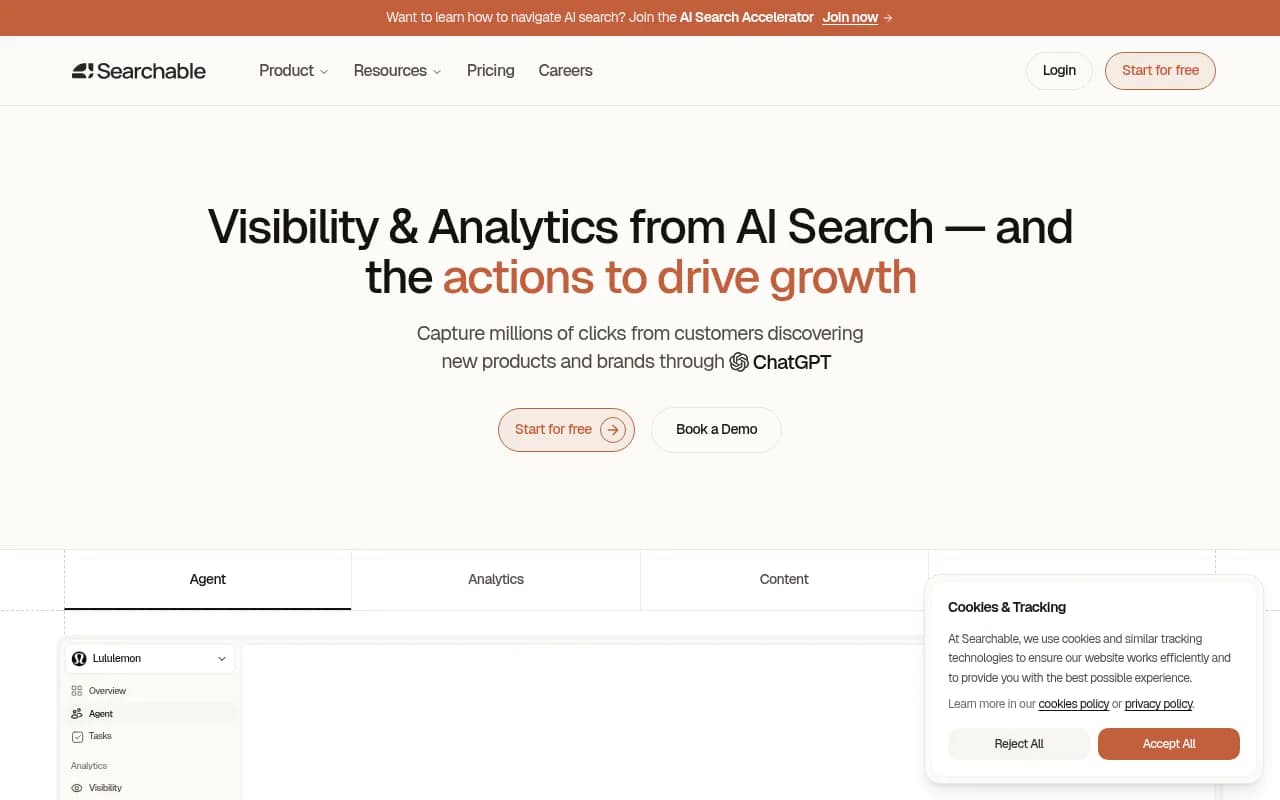
Where Searchable falls short is depth. Its prompt intelligence -- the data that tells you which queries matter, how competitive they are, and which ones you can realistically win -- is less developed than Promptwatch's. Without strong prompt volume data and difficulty scoring, content generation becomes less targeted. You're creating content to fill gaps, but you're not necessarily prioritizing the gaps worth filling.
Searchable also lacks AI crawler logs. You can see that you're not being cited, but you can't see whether AI crawlers are even visiting your pages, encountering errors, or ignoring certain content types. That makes diagnosing citation problems harder.
For teams that want a simpler, combined monitoring-and-content tool and don't need the depth of crawler intelligence or prompt metrics, Searchable is worth evaluating. But for teams serious about systematically improving LLM citation rates, the data layer isn't quite there.
Atomic AGI
Atomic AGI (built by Omnius) has one genuinely impressive differentiator: it tracks 12 generative engines, more than any other platform in this comparison. If breadth of AI model coverage is your primary concern -- especially for GDPR-compliant tracking across European markets -- Atomic AGI deserves serious consideration.
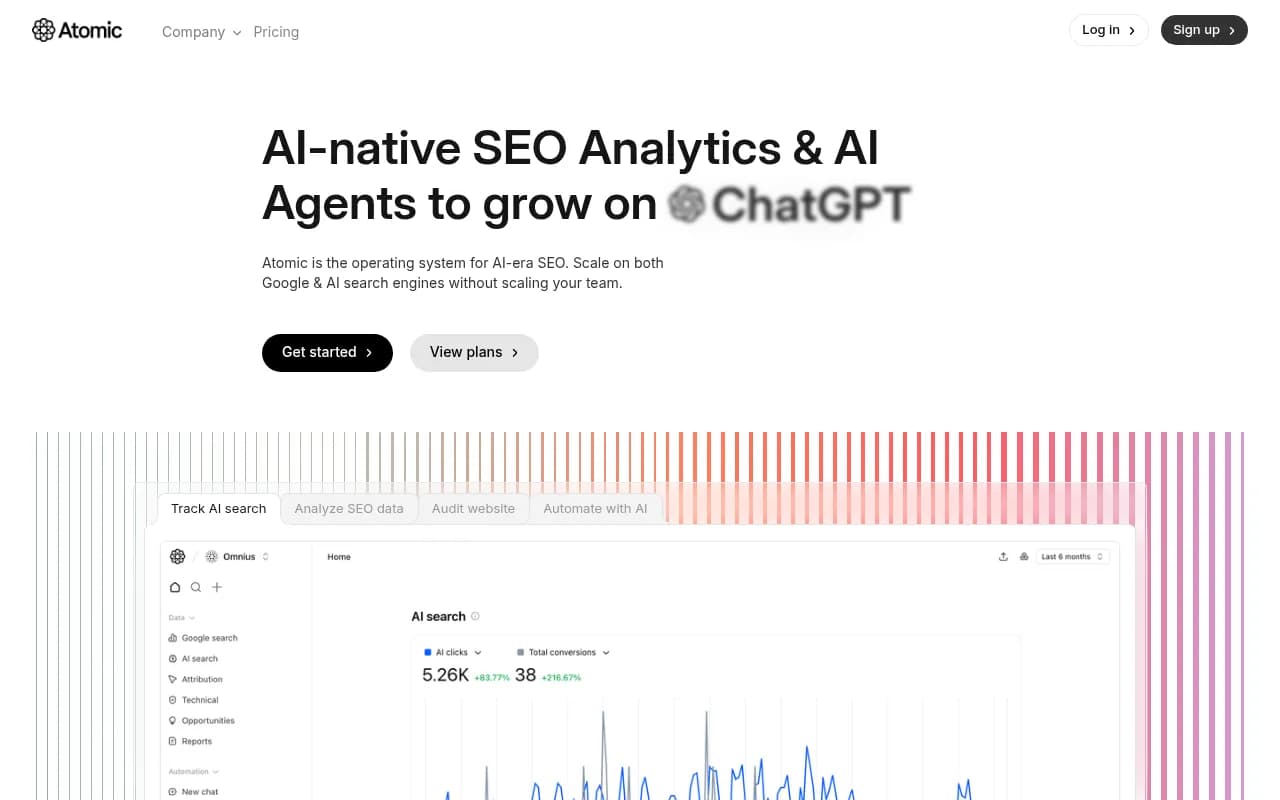
The platform's unified dashboard aggregates visibility data across those 12 engines, and historical data makes trend analysis and planning more grounded. For teams that need to show stakeholders how AI visibility is changing over time, that's useful.
The limitation is on the content side. Atomic AGI's content capabilities are limited compared to Promptwatch or AirOps. It's primarily a monitoring and tracking tool. You can see where you're missing from AI responses, but the platform doesn't help you create content to fix it. That means you're still doing the hard work of content strategy and production elsewhere, then hoping the results show up in the dashboard.
For brands that already have strong content operations and just need comprehensive multi-engine monitoring, Atomic AGI fills that role well. For brands that need the full loop -- find gaps, create content, track results -- it's only part of the solution.
AirOps
AirOps is the most interesting case in this comparison because it comes from the opposite direction. Where Searchable and Atomic AGI are primarily monitoring tools with some content features, AirOps is primarily a content engine with some visibility features.
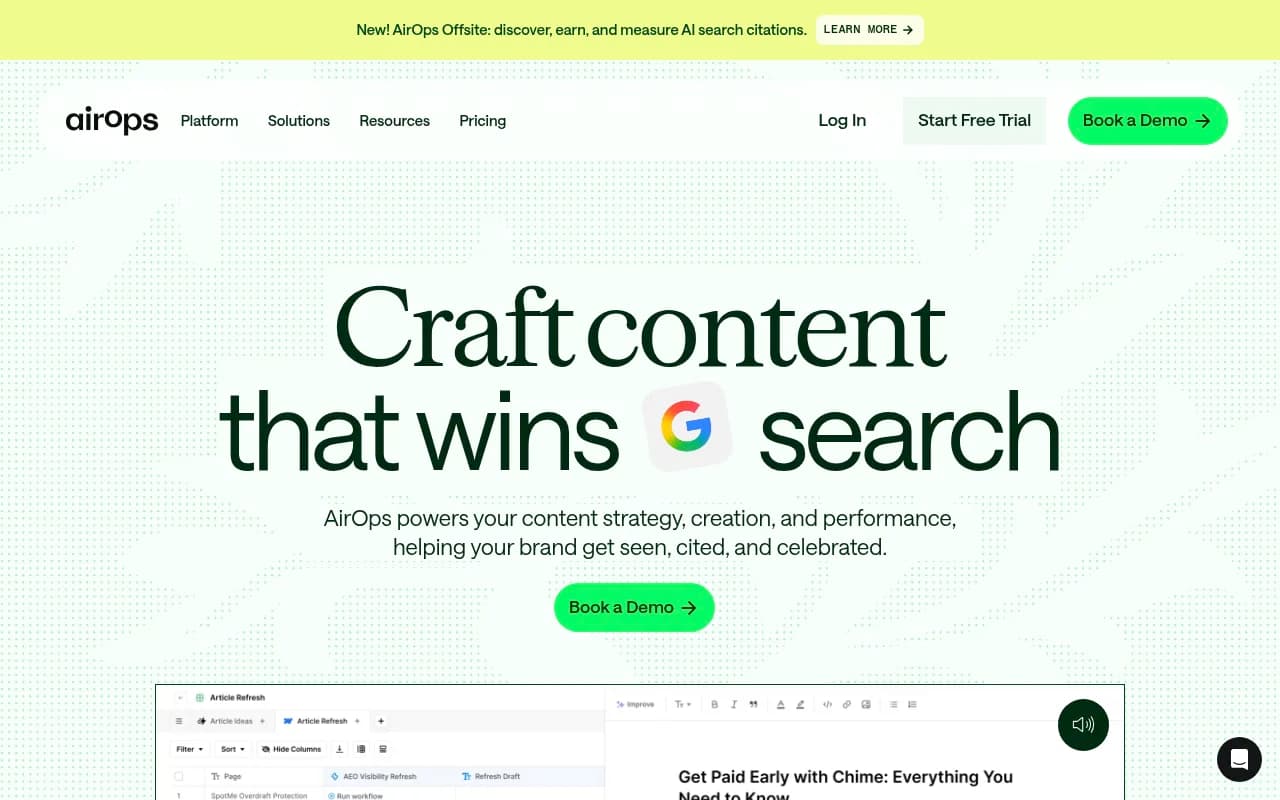
The Quill agent, launched in May 2026, is AirOps's flagship content capability. It's designed to generate content at scale for AI search visibility -- articles, comparisons, and structured content that AI models are more likely to cite. AirOps also published "The 2026 State of AI Search," a data-backed report on how brands stay visible in AI search, which signals genuine investment in understanding the space.
What AirOps lacks is native citation monitoring and crawler intelligence. It doesn't track which prompts AI models are answering, which sources they're citing, or whether your content is being crawled and cited after you publish it. That's a significant gap if your goal is to close the loop between content production and citation outcomes.
AirOps makes more sense as a content production layer that sits alongside a monitoring tool, rather than as a standalone AI citation platform. Teams that already have visibility data from another source and want a powerful content engine to act on it could combine AirOps with a monitoring tool -- but that adds cost and complexity.
Head-to-head: content engine quality
The content engine is where these platforms diverge most sharply. Here's how they compare on the dimensions that matter for LLM citation optimization:
| Capability | Promptwatch | Searchable | Atomic AGI | AirOps |
|---|---|---|---|---|
| Content generation | Yes | Yes | No | Yes (Quill) |
| Grounded in real prompt data | Yes | Partial | N/A | Partial |
| Competitor citation analysis feeds content | Yes | No | No | No |
| Brand guidance / knowledge-base upload | Yes | Unknown | N/A | Yes |
| Content brief generation | Yes | Unknown | No | Yes |
| Post-publish citation tracking | Yes | Basic | Yes | No |
| Crawler log feedback loop | Yes | No | No | No |
The crawler log feedback loop is the differentiator that's hardest to replicate. When you publish content and can see exactly when GPTBot crawls it, whether it encounters errors, and when that crawl converts to a citation, you can iterate. You learn which content structures AI models prefer, which topics they return to, and which pages they ignore. Without that data, content optimization for LLM citations is largely guesswork.
Which platform for which team
If you want the full loop in one platform: Promptwatch. It's the only option here that handles gap analysis, content generation grounded in real citation data, and post-publish tracking with crawler logs. The pricing is accessible for marketing teams ($99-$579/month), and the data depth -- 4.5 billion citations and prompts processed -- is hard to match.
If you need maximum AI model coverage for monitoring: Atomic AGI's 12-engine tracking is genuinely broader than most competitors. Pair it with a content tool if you need to act on what you find.
If you have strong existing content operations and need a content engine: AirOps's Quill agent is worth evaluating, especially if you already have visibility data from another source. Just know you'll need to connect the dots yourself.
If you want a simpler combined tool: Searchable is a reasonable starting point for smaller teams, though the data depth and crawler intelligence are limited compared to Promptwatch.
The monitoring-only trap
One pattern worth calling out: most platforms in the AI visibility space are monitoring-only dashboards. They show you that you're not being cited. They show you that competitors are. Then they stop.
That's useful data, but it doesn't move the needle. The gap between "knowing you're invisible" and "becoming visible" is content -- specifically, content that answers the exact questions AI models are already trying to answer but can't find good sources for.
The platforms that close that gap are the ones worth investing in. In this comparison, Promptwatch does it most completely. AirOps does the content half well. Searchable tries to do both but doesn't go deep enough on either. Atomic AGI does the monitoring half broadly but doesn't touch content.
A note on prompt data quality
One thing that doesn't show up in feature comparison tables but matters a lot in practice: how platforms collect their data.
Promptwatch tracks how AI search engines behave in real user interfaces, not just through API calls. This matters because the citations and recommendations users actually see can differ from what the API returns. If a platform is only querying APIs, it may be measuring a different thing than what your customers experience when they search in ChatGPT or Perplexity.
This is worth asking any vendor directly: are you tracking real user-facing responses, or API outputs? The answer affects how reliable the citation data is.
Bottom line
The question in the title -- which platform's content engine is actually built for LLM citations -- has a fairly clear answer in 2026. AirOps has the strongest standalone content engine. But a content engine without citation feedback is just a writing tool. Promptwatch has both the content engine and the citation feedback loop, which is what makes it an optimization platform rather than just a tracker or a writer.
If your goal is to systematically improve how often AI models cite your brand, the platform you choose needs to show you what's missing, help you create content that fills those gaps, and then confirm that the content is actually getting crawled and cited. That's the loop. Right now, only one platform in this comparison closes it.