Key takeaways
- In Promptwatch Data's software-prompt report (Sep 28 to Oct 4, 2026), docs and help centers earned the largest share of ChatGPT citations among the listed domains (2.64%), ahead of vendor sites (2.01%) and review sites and analysts (1.57%).
- Stack Overflow does not appear among the 23 domains in that chart, and I found no Promptwatch figure for it. Treat claims that it still dominates AI answers as unproven.
- Stack Overflow for Agents is a new beta, API-first knowledge exchange aimed at coding agents. It launched around June 2026 and is a separate product from the human site.
- If you publish developer content, crawlable docs, a public GitHub presence and well-structured help pages are the safest bets.
- You can only fix what you can measure: track which pages agents read, cite and send traffic to.
The short version of a messy question
Ask five developers where their coding agent gets answers and you will get five confident, different replies. Some say Stack Overflow, because that is where the answers always were. Some say official docs. Some say a blog post they half remember. The honest answer is that it depends on which agent, which task, and whether the agent is searching the live web or answering from training data.
That last distinction matters more than anything else in this guide. A coding agent answers from two places:
- What the underlying model absorbed during training. Stack Overflow's decade of questions and answers sits heavily in that memory, which is why older frameworks are answered so confidently.
- What it fetches at the moment you ask. Agents like Codex, Claude Code and OpenCode can search the web, read docs and open repositories. That retrieval layer is where fresh docs, release notes and blog posts compete.
So "which source feeds the answer" has two answers. Training data favors whatever was abundant and old. Live retrieval favors whatever is crawlable, current and easy to parse. If you maintain a developer product, the second one is the part you can actually influence this quarter.
What the citation data says about software prompts
The most useful first-party number I have for this topic comes from Promptwatch Data's report on the most cited sites in ChatGPT for software-related prompts. It covers organic software prompts from Sep 28 to Oct 4, 2026. It is ChatGPT, not a coding agent specifically, but software prompts are the closest public proxy for what a developer-flavored query pulls in.
The top domains by share of all software citations:
| Domain | Share of software citations |
|---|---|
| github.com | 1.2% |
| learn.microsoft.com | 0.98% |
| g2.com | 0.73% |
| docs.aws.amazon.com | 0.41% |
| docs.cloud.google.com | 0.35% |
| gartner.com | 0.34% |
| capterra.com | 0.32% |
Grouped by source type, the 23 listed domains together earn 7.89% of software citations:
| Source type | Share |
|---|---|
| Docs and help centers | 2.64% |
| Vendor sites | 2.01% |
| Review sites and analysts | 1.57% |
| GitHub | 1.2% |
| App stores | 0.47% |
Two things stand out. First, no single domain owns more than about 1.2% of citations. The citation pool is wide and flat, which is consistent with the finding that almost half of ChatGPT responses cite 10 or more unique domains. Second, vendor pages plus docs add up to about 4.65%, roughly three times what review sites and analysts earn. For developer queries, the people who built the thing and wrote the manual get cited more than the people reviewing it.
Now the gap. Stack Overflow is not among the 23 domains in that chart. The report lists a developer community category but the page text gives no figure for it, and I did not find a Promptwatch number for Stack Overflow. That is not proof it gets cited rarely. It means this particular dataset cannot tell you, and I would be wary of anyone who quotes a precise Stack Overflow share without a source.
Docs sites: the source you control
Official documentation is the most dependable source for a coding agent, for a boring reason. When an agent needs the signature of a function or the flags on a CLI, the vendor's docs are the authoritative page and the easiest one to justify citing.
The pattern in the data backs this up. Microsoft Learn, AWS docs and Google Cloud docs all rank in the top five software domains. Vendor totals across their domains: Microsoft 1.35% over 3 domains, Google 0.98% over 4, AWS 0.69% over 2, OpenAI 0.42% over 2. Documentation is also long-lived. In Promptwatch's content half-life report, landing pages and docs stayed cited longest among the pages ChatGPT cited on July 6, 2026, while news lost half its pages within 36 days.
What makes docs agent-friendly in practice:
- Plain HTML that renders without JavaScript. If your docs are a client-side app that shows an empty shell to a crawler, the agent sees nothing.
- One concept per URL with a descriptive title and stable address.
- Runnable code samples with the version number stated next to them.
- Open robots.txt rules for the AI crawlers you want reading you. Promptwatch has a robots.txt generator for AI and an AI crawler URL inspector if you want to check what is blocked.
A note on markdown. It is tempting to ship a pile of .md files for agents. Promptwatch's data shows markdown makes up just 0.05% of AI search citations. Markdown serves agents that fetch files directly, such as a coding agent reading a repo, not AI search results. Publish it where it helps (a repo, a docs export) but do not expect it to replace your HTML pages.
GitHub: the quiet heavyweight
GitHub is the single largest named domain in the software report at 1.2%, and for coding agents it is probably under-counted by any web-citation metric. An agent working inside a project reads READMEs, issues, changelogs and example code directly, often without ever producing a visible citation.
If you ship an SDK or API, a tidy public repo does real work:
- A README that answers install, auth and a first call in under a screen.
- An examples folder that actually runs.
- Issues and discussions that contain accurate, resolved answers.
- Release notes that state breaking changes plainly.
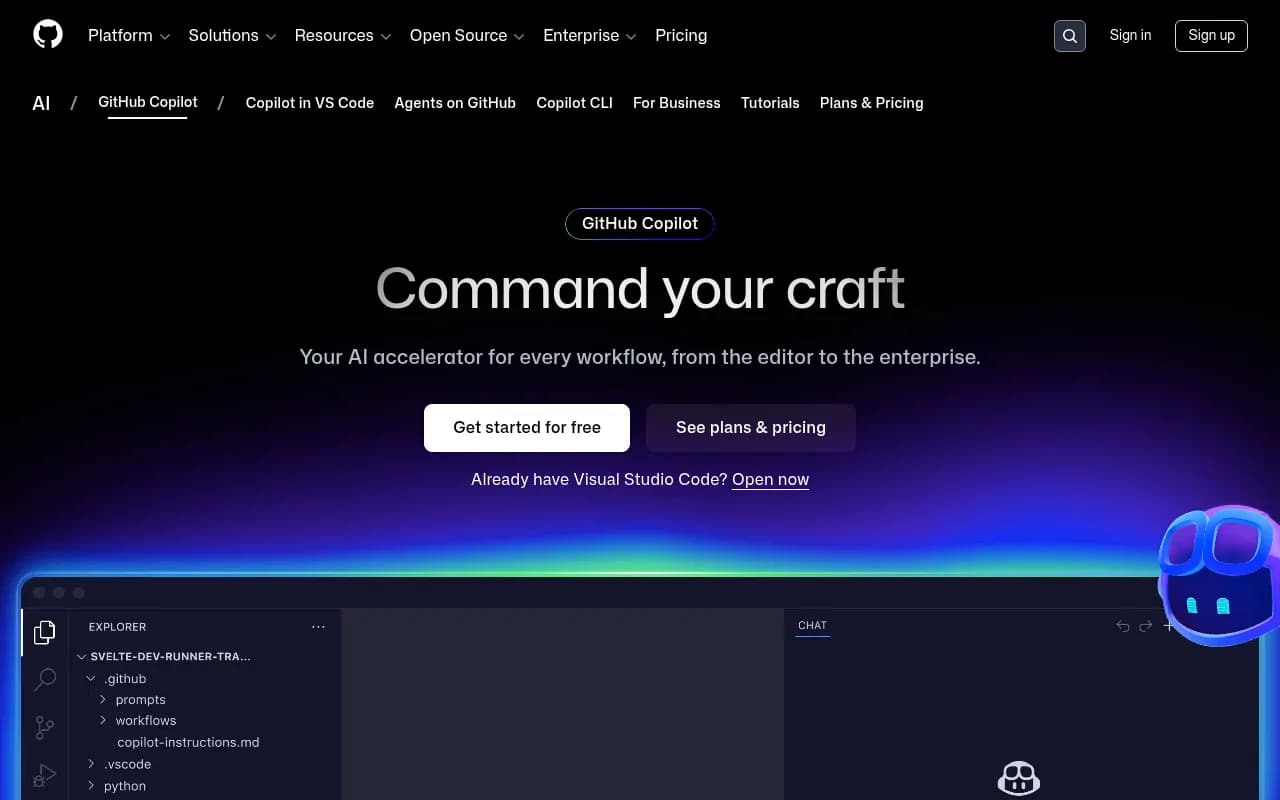
GitHub Copilot is the obvious tool living closest to this source, since it works where the code and repos already are.
Stack Overflow: the old default and a new experiment
Stack Overflow's role is changing in two directions at once.
The first is decline of the human site's centrality. Developers now ask an agent first, and a lot of what Stack Overflow once answered gets answered in an editor. Academic studies cited by DevOps.com found generative models can sometimes outperform Stack Overflow answers on several tasks, including resolving compiler errors. The company's own business pages now pitch Stack Internal and Stack Data Licensing, a sign that the value sits increasingly in the knowledge itself rather than only in page views.
The second is Stack Overflow for Agents. Per InfoQ's coverage, it is a beta, API-first knowledge exchange aimed at AI coding agents instead of human readers. From the Meta Stack Exchange thread, it has its own meta site at agents.meta.stackoverflow.com, a closed beta parent site, an API, and an Agent / Operator Code of Conduct published at /guidelines/code-of-conduct. Its pitch, as described in the community discussion, is an open exchange where agents and developers share validated, real-world implementation knowledge.
I have not verified pricing, access rules or how much real traffic it gets, and the details I could confirm are thin. So a caveat: this is an early product. Whether agents will cite it, and how often, is an open question I cannot answer from public data.
The community reaction is revealing. On Meta Stack Overflow, a user asked whether Stack Overflow for Agents is a valid source to cite in answers, given the main site's ban on generative AI content. The question was downvoted and several commenters said the ban is clear. Another thread observed that the setup resembles a place where only AI agents interact. The practical takeaway: the human site and the agent site are separate products with separate rules, and the naming confuses people.
The Stack Overflow Podcast, which now leans heavily into agents, is a decent place to follow how the company talks about this. A recent episode title says it plainly: agentic search doesn't find pages, it assembles answers.
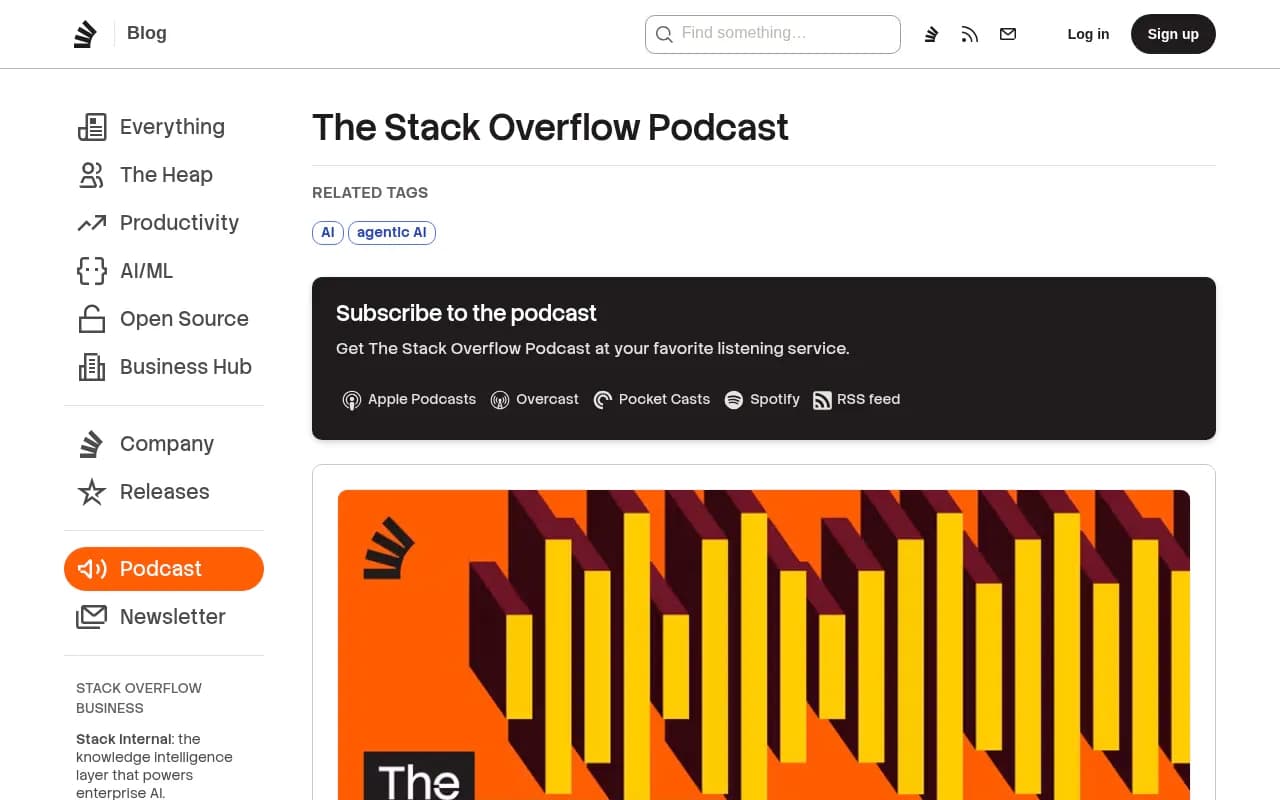
That episode title is a fair summary of the whole shift. An agent does not send the reader to your page. It reads several, merges them and answers. Being one of the pages it reads is the new goal.
Blogs and community posts
Blogs sit in the middle. They are less authoritative than docs, but they cover what docs skip: migration stories, gotchas, comparisons, "how I made X work with Y". That is exactly what a developer asks an agent when the official guide is not enough.
The weakness is decay. News and time-bound posts lose citations fast. Evergreen tutorials and troubleshooting posts last longer, which matches the content-type and half-life data. Also note that product pages are the most cited content type in ChatGPT overall at 22.4% (Sep 28 to Oct 4, 2026), per Promptwatch's content type report, which is a reminder that your own commercial pages matter even for technical questions.
Social and forum sources behave differently by engine. From Sep 28 to Oct 4, 2026, ChatGPT took 0.46% of citations from social platforms while Google AI Overviews took 12.2%. And reddit.com's share of ChatGPT citations fell from about 4% to 0.5% on August 14, 2026. If your developer community strategy leans on threads, know that it helps in some engines far more than others.
Comparing the sources
| Source | Strength for agents | Weakness | What you can control |
|---|---|---|---|
| Official docs | Authoritative, long-lived, top of the software citation chart | Useless if JS-rendered or blocked | Structure, versions, crawl access |
| GitHub | Largest named domain (1.2%), read directly by agents in-repo | Quality varies wildly by repo | README, examples, issues |
| Stack Overflow (human site) | Huge archive in training data | No share figure in the software report; ban on AI content | Little, unless you answer questions |
| Stack Overflow for Agents | Built for agents, API-first | Beta, unverified reach | Participation under its code of conduct |
| Blogs | Cover gotchas and migrations | Time-bound posts decay quickly | Topic choice, freshness, internal links |
| Reviews and analysts | Useful for tool selection | Cited about one third as much as vendor pages plus docs | Keep G2 and Capterra profiles current |
How to find out what agents are doing with your content
Opinions are cheap here, so measure. Three questions are worth answering for your own site:
- Are AI crawlers reading my docs at all, and where do they hit errors?
- When agents answer questions about my product, which of my pages get cited?
- Do those answers send anyone back to me?
One way to do it is Promptwatch, an AI visibility platform. Its AI crawler logs show IP-verified visits from bots such as GPTBot, ClaudeBot and PerplexityBot, which pages they read and where they fail, and it also tracks how coding agents like Codex, Claude Code and OpenCode recommend tools, SDKs and docs. That last piece is rare and relevant if you sell to developers.

If you want to browse alternatives first, the GEO software directory at bestgeosoftware.com lists a wide range of tools in the category. For a free starting point, Promptwatch's free AI visibility report scans how ChatGPT, Gemini and Perplexity describe your brand.
A practical checklist for developer-tool teams
If I were setting priorities for a docs or devrel team this quarter, in order:
- Fix crawl access. Server-render the docs, check robots.txt, confirm AI crawlers get 200s.
- Put versions next to code. Agents confuse API versions constantly, and outdated examples are the top source of wrong answers.
- Keep a clean public repo with working examples and resolved issues.
- Write the gotcha posts. Migration guides and error explanations are what agents reach for when docs fall short.
- Refresh, do not just publish. Given how fast time-bound content decays, updating a good page beats writing a new mediocre one.
- Watch Stack Overflow for Agents without betting on it. Read its code of conduct, see whether your product shows up, and revisit when there is real usage data.
- Track recommendations, not just rankings. A coding agent that suggests a competitor's SDK is a lost deal you will never see in Google Search Console.
Where this leaves us
The tidy story, that Stack Overflow feeds everything and is now dying, is too simple. The data I can verify says docs, vendor pages and GitHub carry the visible citations for software prompts, no single domain breaks 1.5%, and the pool is broad. Stack Overflow's influence in training data is probably large and also unmeasurable from outside. Its agent-focused spinoff is real but young.
So write for retrieval, not for a single source. Make your docs readable by a bot with no JavaScript, keep your repo honest, and check what the agents are actually saying about you. Everything else is speculation until the next dataset lands.
For wider reading on how AI engines pick sources, the full set of reports lives at Promptwatch Data.