Key takeaways
- Most AI content writing tools in 2025-2026 optimized for volume, not outcomes -- they made it easy to publish but impossible to prove impact.
- The core failure pattern: no connection between content output and traffic, rankings, or revenue attribution.
- Tools that survived and thrived added SEO grounding, performance tracking, or AI search visibility features on top of generation.
- If you're using an AI writing tool today, the question to ask is: "Can this show me what changed after I published?"
- The shift toward AI search (ChatGPT, Perplexity, Claude) has made the results gap even more painful -- content that doesn't get cited by AI engines is invisible in a way traditional analytics can't even measure.
There's a specific kind of frustration that hit a lot of marketing teams in 2025. You'd signed up for an AI writing tool, watched it generate a 2,000-word article in 45 seconds, published it, and then... nothing. No dashboard. No rank movement. No traffic spike. Just a growing content library that felt productive but couldn't justify its own existence.
This is the AI content writing tool graveyard. Not tools that shut down or went bankrupt -- tools that kept running, kept generating, and kept failing to answer the one question every marketing manager eventually asks: "Is any of this actually working?"
Here's a look at the patterns, the specific tools that fell into this trap, and what the tools that survived did differently.
Why "content at scale" became a liability
The pitch was irresistible. Feed in a keyword, get a polished article. Do it 50 times a day. Dominate your niche. The problem is that Google's Helpful Content updates in 2024 and 2025 specifically targeted this playbook, and AI search engines like ChatGPT and Perplexity added a new layer of complexity: they don't just rank pages, they decide which sources to cite. Volume without credibility became worse than useless -- it became a signal of low quality.
Tools that only generated content, without helping you understand whether that content was getting found, cited, or clicked, left users flying blind. And the blind spots got bigger as AI search grew.
The 10 tools that couldn't show results
1. Article Forge
Article Forge built its entire identity around one-click article generation at scale. The output was technically coherent -- grammatically fine, topically relevant, structurally predictable. What it couldn't do was tell you anything about what happened after you hit publish.

No rank tracking. No content gap analysis. No connection to search performance data. For teams running content operations at volume, this created a warehouse problem: you had inventory, but no way to know which SKUs were selling. When Google's quality signals tightened, Article Forge users often saw their entire content libraries devalued simultaneously, with no diagnostic tools to understand why.
2. Rytr
Rytr is genuinely good at what it does -- structured, fast, affordable AI writing for short-form content. The issue is what it doesn't do. There's no SEO research layer, no performance tracking, no way to know if the content you're generating is targeting prompts people actually search for.
For individual creators and small teams, Rytr remains useful. But for anyone trying to build a content strategy that compounds over time, the absence of any feedback loop made it a tool for activity, not results.
3. Writesonic (pre-2025 version)
Writesonic has actually evolved significantly -- the current version has added more SEO features and integrations. But the 2024-era Writesonic that many teams adopted was primarily a generation tool. Teams used it to produce blog posts, landing pages, and ad copy at speed, without any built-in mechanism to validate whether those assets were performing.

The gap showed up in quarterly reviews. Content teams could show impressive output numbers but struggled to connect them to organic traffic growth or lead generation. Writesonic has since added more optimization features, but it's worth noting the version most teams adopted in the scale-up era lacked them entirely.
4. Copy.ai
Copy.ai's strength is short-form copywriting -- social posts, email subject lines, ad variations. It's fast and the output quality is solid. The problem is that many teams tried to use it as a full content strategy tool, generating long-form articles and blog posts without any SEO grounding.

The result was content that read well but targeted no particular search intent, ranked for nothing, and generated no measurable traffic. Copy.ai isn't really a graveyard tool -- it's a misapplied tool. But the pattern of using it beyond its actual scope was common enough to earn it a spot here.
5. Autoblogging.ai
This one is more squarely in graveyard territory. Autoblogging.ai automated the entire content pipeline -- keyword to published post, with minimal human involvement. The appeal was obvious. The problem was that "automated" and "effective" turned out to be very different things.
Sites running Autoblogging.ai at scale saw initial traffic gains followed by sharp drops as Google's quality signals caught up. More importantly, there was no analytics layer to catch the decline early or understand which content was dragging performance down. Users often discovered the problem months after it started.
6. ContentBot
ContentBot positioned itself as an AI content automation platform with custom workflows and bulk generation. The workflow angle was genuinely interesting -- you could build pipelines that moved from brief to draft to publish. What you couldn't do was close the loop with performance data.
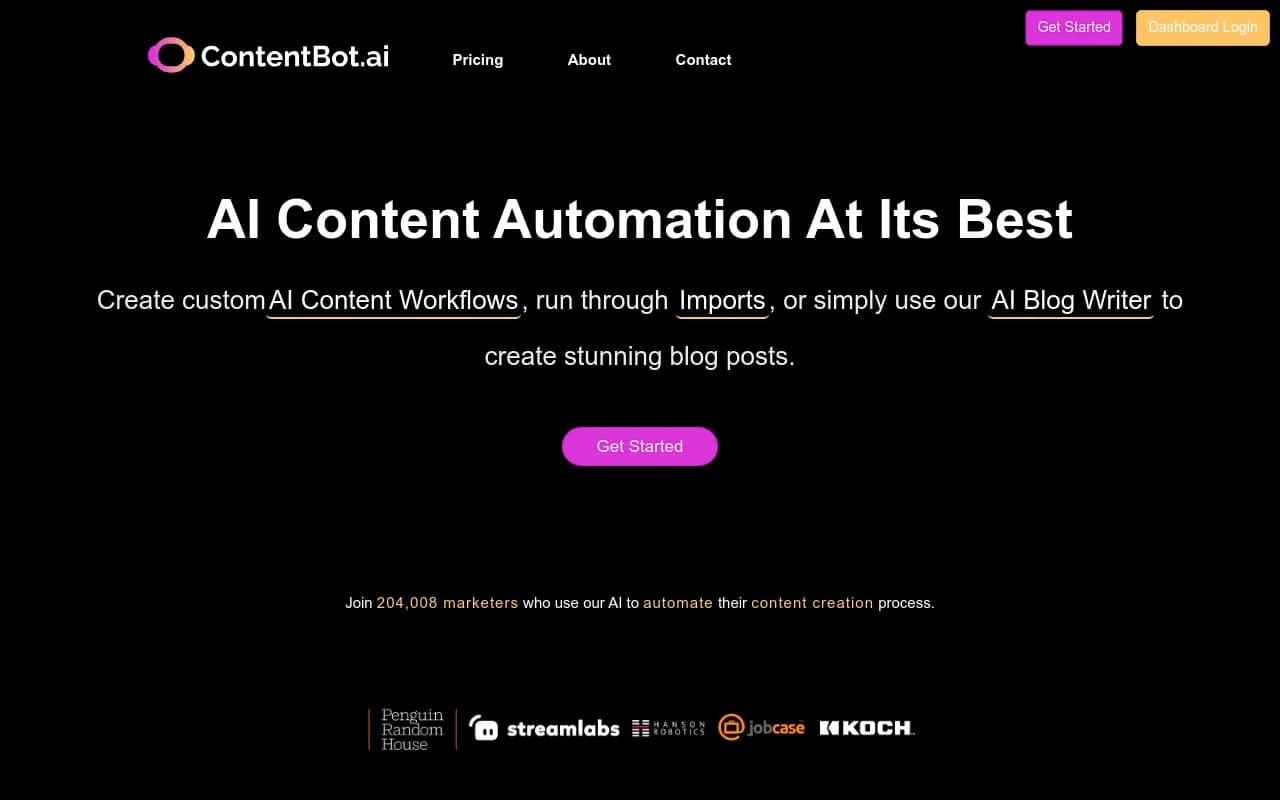
Bulk generation without bulk measurement is just bulk waste. Teams using ContentBot for high-volume content operations had no way to prioritize which topics to double down on or which to abandon. Every piece of content was treated equally because there was no data to treat them differently.
7. Jasper (early positioning)
This one requires some nuance. Jasper is not a dead tool -- it's a serious enterprise platform that has invested heavily in adding marketing intelligence features. But the early Jasper that tens of thousands of teams adopted in 2023-2024 was primarily a writing assistant with brand voice features.
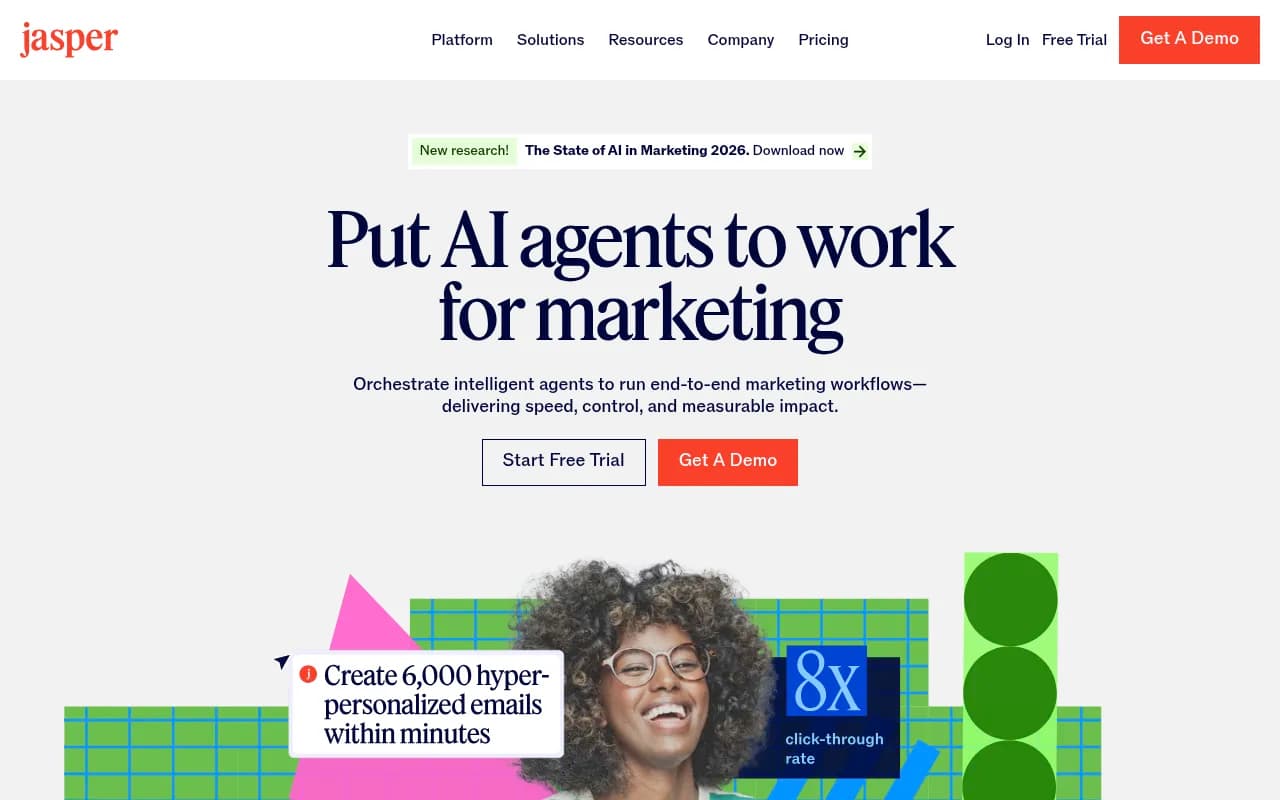
The promise was consistency at scale. The gap was the same as every other tool on this list: no direct connection between content output and measurable outcomes. Jasper has since added campaign management and analytics features, but teams that adopted it in the generation-first era often built workflows that were hard to retrofit with measurement.
8. Koala AI
Koala AI generates SEO-optimized articles with real-time data integration -- it's actually better than many tools at grounding content in search intent. But "SEO-optimized" in traditional terms doesn't automatically mean "visible in AI search."
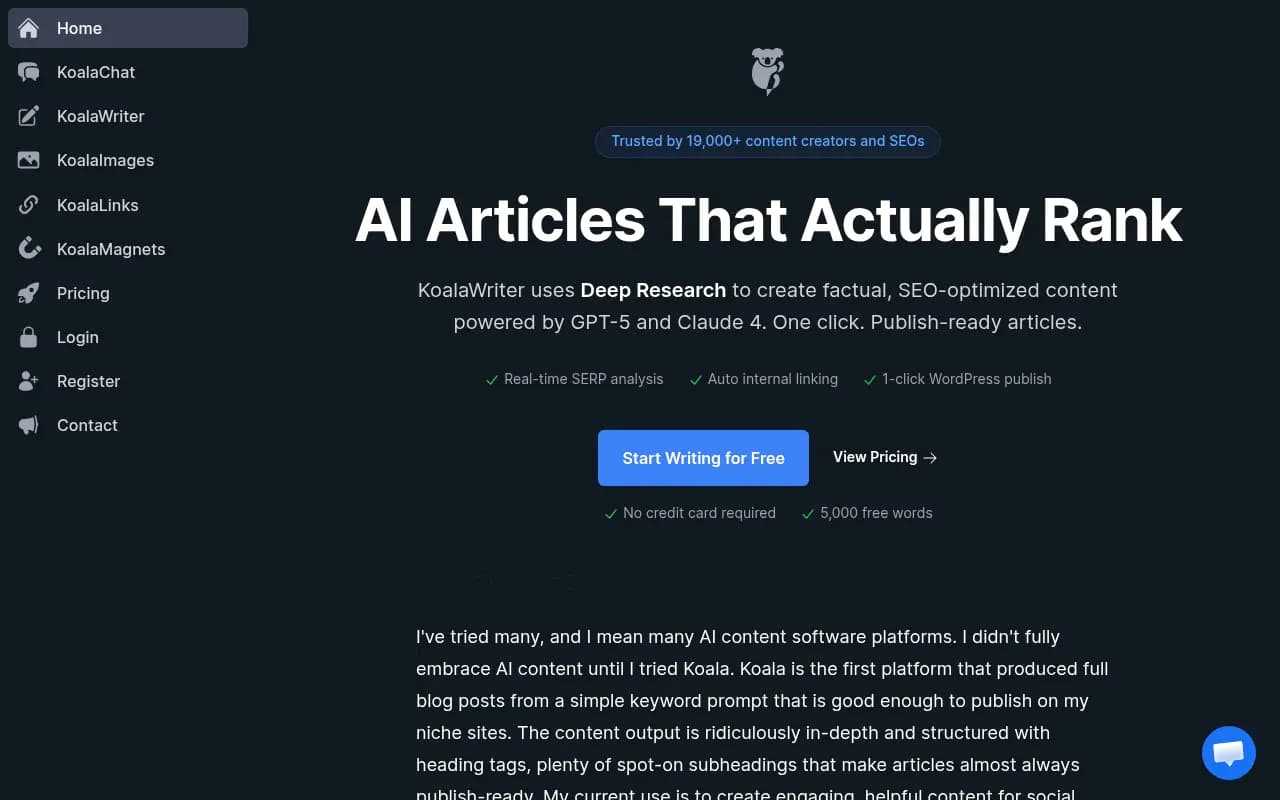
This is where the results gap gets interesting in 2025-2026. A tool can optimize perfectly for Google's traditional ranking signals and still be invisible in ChatGPT, Perplexity, or Claude's responses. Koala AI, like most content generation tools, has no mechanism for tracking AI search visibility -- which means teams using it have no idea whether their content is getting cited by the AI engines that are increasingly driving discovery.
9. Scalenut
Scalenut combines content research, briefing, and AI writing in one platform. It's more sophisticated than pure generation tools, and it does include some SEO optimization features. But its results tracking is limited to traditional SEO metrics.

In a world where a significant portion of search queries now get answered by AI engines without a click, tracking traditional rankings tells only part of the story. Teams using Scalenut to optimize for Google rankings may be winning on one scoreboard while losing on another they can't see.
10. Zimmwriter
Zimmwriter takes a different approach -- it lets you use your own API keys to generate unlimited content at cost. For high-volume content operations, the economics are genuinely attractive. The results problem is structural: it's a pure generation tool with no optimization, tracking, or performance feedback built in.
Teams using Zimmwriter are essentially running a content factory with no quality control metrics. You can produce thousands of articles, but without any data layer, you're making editorial decisions based on intuition rather than evidence.
The common failure pattern
Looking across these tools, the failure mode is consistent. It's not that the content was bad (though sometimes it was). It's that there was no feedback loop.
Good content strategy works like a cycle: you publish, you measure, you learn what's working, you do more of that. Every tool in this list broke the cycle at the measurement step. They made the "publish" part faster and cheaper, but left the "measure and learn" part entirely to the user -- who often had no idea which metrics to track or how to connect them back to content decisions.
The tools that survived and grew in 2025-2026 added at least one of these:
- SEO research grounding before generation (so you're targeting real search intent)
- Performance tracking after publication (so you know what's working)
- AI search visibility monitoring (so you know if your content is being cited by ChatGPT, Perplexity, etc.)
| Tool | Generation quality | SEO grounding | Performance tracking | AI search visibility |
|---|---|---|---|---|
| Article Forge | Medium | None | None | None |
| Rytr | Good | None | None | None |
| Writesonic | Good | Partial | Partial | None |
| Copy.ai | Good | None | None | None |
| Autoblogging.ai | Medium | Basic | None | None |
| ContentBot | Medium | None | None | None |
| Jasper | Very good | Partial | Partial | None |
| Koala AI | Good | Good | None | None |
| Scalenut | Good | Good | Traditional only | None |
| Zimmwriter | Good | None | None | None |
What the AI search shift changed
Here's the thing that makes the results gap worse in 2026 than it was in 2024: AI search engines have become a primary discovery channel for a lot of queries. When someone asks ChatGPT or Perplexity for a recommendation, the AI cites specific sources. If your content isn't in those citations, you're invisible -- and traditional rank tracking won't tell you that.
This means the measurement problem has two layers now. You need to know whether your content ranks in Google, and you need to know whether it gets cited by AI engines. Most content generation tools address neither.
For teams serious about closing this loop, platforms like Promptwatch exist specifically to track AI search visibility -- which pages are being cited, by which models, and how often. That kind of data is what turns content generation from a cost center into a measurable growth channel.

The tools that will define content marketing in 2026 and beyond aren't the ones that generate the most words. They're the ones that connect those words to outcomes -- in traditional search, in AI search, and ultimately in revenue.
What to look for in a content tool today
If you're evaluating AI writing tools right now, here are the questions worth asking before you commit:
- Does it show you which topics have real search demand before you write?
- Does it track what happens to your content after you publish?
- Does it have any visibility into AI search citations, not just Google rankings?
- Can it tell you which of your existing pages are underperforming and why?
- Does it connect content output to traffic, leads, or revenue in any way?
If the answer to most of these is no, you're buying a faster typewriter. That might be exactly what you need -- but go in with eyes open about what you're not getting.
The graveyard isn't full of bad tools. It's full of tools that solved the wrong problem: they made content creation faster without making content results clearer. In a market where AI is both generating content and deciding which content to surface, that's a gap that compounds over time.
The teams winning in 2026 are the ones who figured out that the bottleneck was never writing speed. It was always knowing what to write, and knowing whether it worked.