Key takeaways
- Most AI visibility tools are monitoring dashboards -- they show you where you're invisible but don't help you fix it. Solo marketers need tools that close the loop.
- Price matters a lot at the solo level. Several capable tools start under $100/month; a few enterprise platforms charge 5-10x that for features you won't use alone.
- The most important question to ask any tool: does it cover the AI engines your audience actually uses, and does it tell you why you're not being cited?
- A handful of platforms (Promptwatch, Otterly.AI, LLMrefs, Profound) have meaningfully different feature sets. Most others are variations on the same basic monitoring loop.
- For solo marketers, the best investment is a tool that combines prompt tracking, content gap analysis, and at least some guidance on what to create next.
If you're a solo marketer in 2026, you've probably noticed that AI search isn't a future trend anymore -- it's where a meaningful chunk of your audience is already going. ChatGPT, Perplexity, Google AI Overviews, Claude. People are asking these tools for product recommendations, service comparisons, and "best of" lists. And if your brand isn't showing up in those answers, you're losing ground to competitors who figured this out earlier.
The problem: there are now dozens of tools claiming to solve this. Some are genuinely useful. Some are monitoring dashboards dressed up as optimization platforms. And a few are frankly not worth your time or money as a solo operator.
This guide cuts through that. I've looked at 12 platforms specifically through the lens of a solo marketer -- someone without a team of analysts, without an enterprise budget, and without hours to spend configuring complex dashboards. The ranking criteria: value for money, ease of getting started, and whether the tool actually helps you do something with what it finds.
What "AI visibility" actually means (and why it's different from SEO)
Traditional SEO is about ranking in Google's blue links. AI visibility is about whether ChatGPT, Perplexity, Claude, or Gemini cite your content when someone asks a relevant question. The mechanics are different. AI models don't rank pages -- they synthesize answers from sources they've been trained on or can retrieve. Getting cited requires being a credible, well-structured source on topics the model cares about.
Manual testing -- typing prompts into ChatGPT and checking if your brand shows up -- doesn't scale. AI responses shift with phrasing changes, vary by geography, and change over time. You can't track a trend from a single data point.
That's the core job of an AI visibility tool: run prompts at scale, track citations consistently, and show you where you're winning and where you're not.
The better tools go further. They tell you which prompts your competitors are visible for that you're not, what content you'd need to create to close those gaps, and whether your new content is actually getting picked up. That's the difference between a monitoring tool and an optimization platform.
The 12 platforms, ranked
1. Promptwatch
Promptwatch is the most complete option here for solo marketers who are serious about AI visibility -- not just tracking it, but improving it.

The core loop is what sets it apart. First, Answer Gap Analysis shows you the specific prompts where competitors are being cited and you're not. Second, a built-in AI writing agent generates content grounded in actual citation data -- not generic SEO filler, but articles and comparisons designed to get picked up by ChatGPT, Claude, Perplexity, and others. Third, page-level tracking shows whether your new content is actually getting cited.
For a solo marketer, the Essential plan at $99/month covers one site, 50 prompts, and 5 articles per month. That's enough to run a real optimization program without needing a team. The Professional plan ($249/month) adds crawler logs -- real-time data on which AI bots are hitting your site, which pages they're reading, and what errors they're hitting. That's a feature most competitors don't have at all.
Promptwatch monitors 10 AI models: ChatGPT, Perplexity, Google AI Overviews, Google AI Mode, Claude, Gemini, Meta/Llama, DeepSeek, Grok, and Mistral. It also tracks Reddit and YouTube as citation sources -- a channel that directly influences AI recommendations and that most tools ignore entirely.
The one honest caveat: if you genuinely only want a monitoring dashboard and have no interest in content creation, there are cheaper options. But for most solo marketers, the content gap analysis alone justifies the price.
2. Otterly.AI
Otterly.AI is one of the cleaner monitoring tools in this space. The interface is straightforward, setup is fast, and it covers the major AI engines reasonably well.
Otterly.AI

Where it falls short for solo marketers: it's primarily a monitoring dashboard. You can see where you're visible and where you're not, but there's no content gap analysis, no writing tools, and no crawler log data. You'll know you have a problem; you'll need to figure out the solution yourself.
That said, if your main need is tracking brand mentions across ChatGPT, Perplexity, and Google AI Overviews -- and you already have a content workflow -- Otterly.AI is a reasonable, lower-cost option.
3. LLMrefs
LLMrefs covers 9+ AI search engines and has a clean interface that solo marketers can get up and running with quickly.
LLMrefs
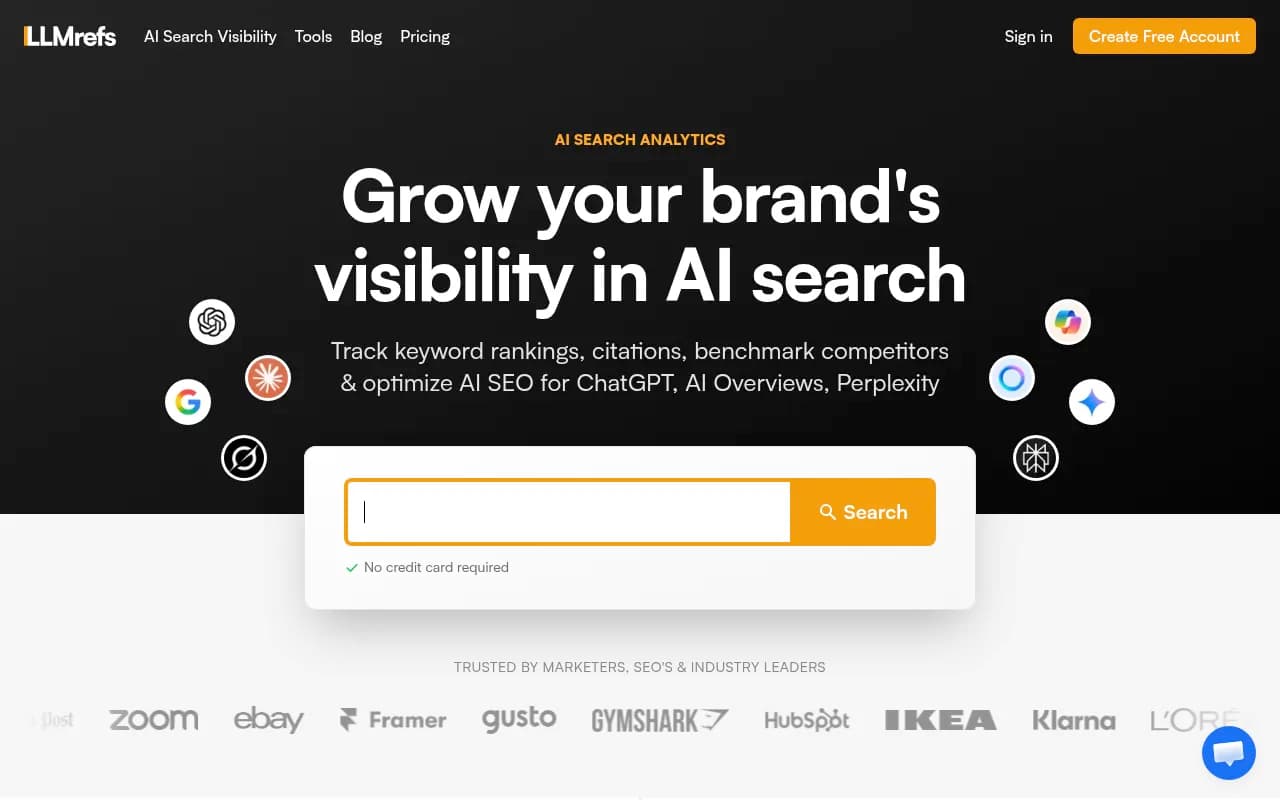
The prompt tracking is solid. You can monitor brand mentions, see which competitors are showing up alongside you, and track changes over time. It's a good monitoring tool. Like Otterly.AI, it doesn't have built-in content generation or gap analysis -- it shows you the data and leaves the "what now" to you.
For solo marketers on a tighter budget who want reliable tracking without the full optimization stack, LLMrefs is worth a look.
4. Profound
Profound is a strong platform, particularly for agencies and teams. For solo marketers, it's worth knowing about but comes with some caveats.
Profound

The feature set is genuinely impressive: multi-engine tracking, competitive intelligence, and solid prompt coverage. The pricing, however, is aimed at teams and agencies rather than individual operators. If you're a solo marketer managing multiple clients, Profound's agency mode makes more sense. If you're managing one brand, the cost-to-value ratio tilts toward tools like Promptwatch.
5. Peec AI
Peec AI is a clean, focused AI search visibility tracker that works well for teams and solo marketers who want straightforward monitoring without a lot of configuration overhead.

It covers the main AI engines and gives you brand mention tracking and competitive comparisons. The interface is accessible. Like most monitoring-focused tools, it doesn't have content generation or gap analysis built in -- but it does what it promises cleanly.
6. AthenaHQ
AthenaHQ has good prompt tracking and a solid competitive intelligence layer. It's monitoring-focused, which means it's strong on showing you the landscape but doesn't help you change it.

For solo marketers who want a clear picture of their AI visibility position and are comfortable taking that data into their own content workflow, AthenaHQ works. The UI is clean and the data is actionable in the sense that it tells you where to focus -- just not what to write.
7. Scrunch AI
Scrunch AI tracks brand mentions across LLMs and has some competitive analysis features. It's positioned more toward mid-market teams than solo operators.
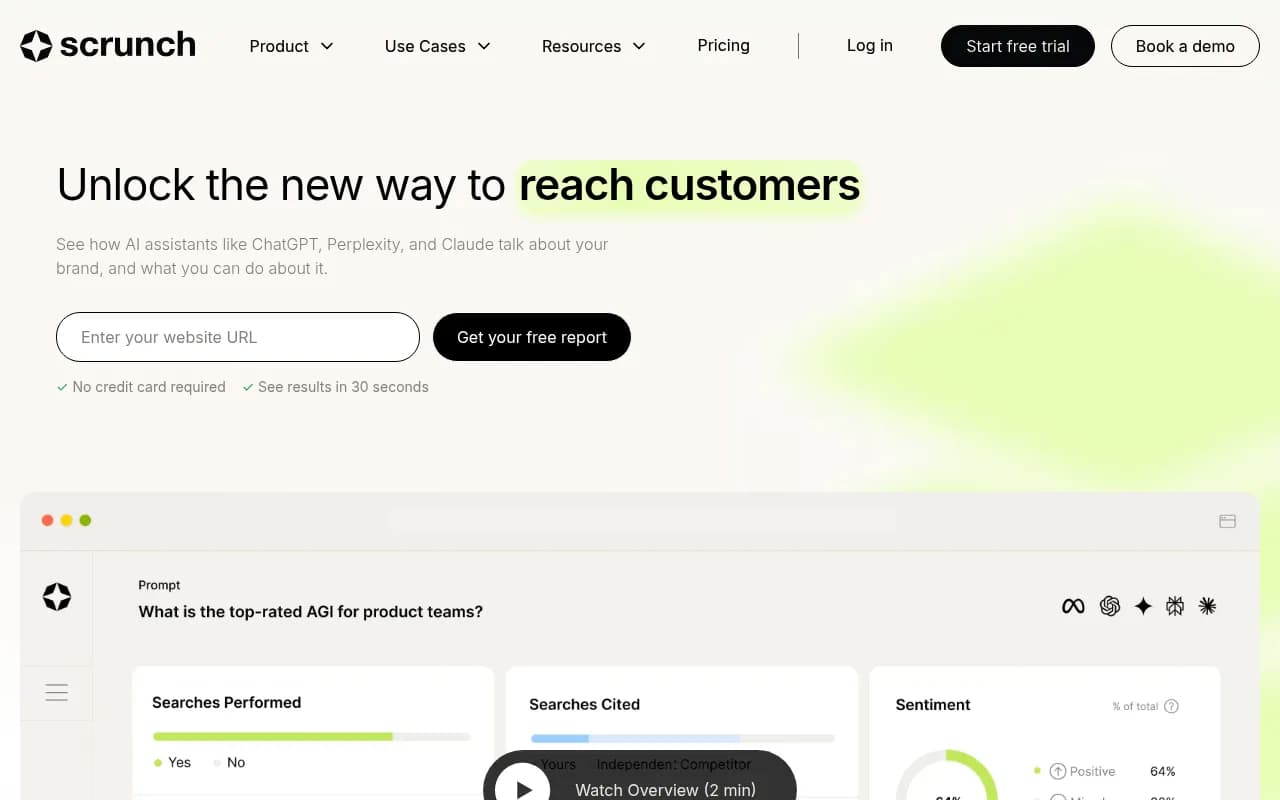
The platform is capable, but the pricing and feature set are calibrated for organizations with more resources. A solo marketer could use it, but you'd likely be paying for features you won't touch.
8. Semrush
Semrush has added AI visibility features to its existing SEO platform, which makes it worth mentioning for solo marketers who are already paying for it.
The honest assessment: Semrush's AI search features are a useful add-on if you're already a subscriber, but they're not a reason to subscribe. The AI visibility tracking uses fixed prompts rather than custom ones, and there's no AI traffic attribution. If you're starting fresh and AI visibility is your primary goal, a dedicated platform will serve you better.
9. Ahrefs
Similar story to Semrush. Ahrefs has added Brand Radar for AI visibility tracking, and it's a reasonable starting point if you're already in the Ahrefs ecosystem.
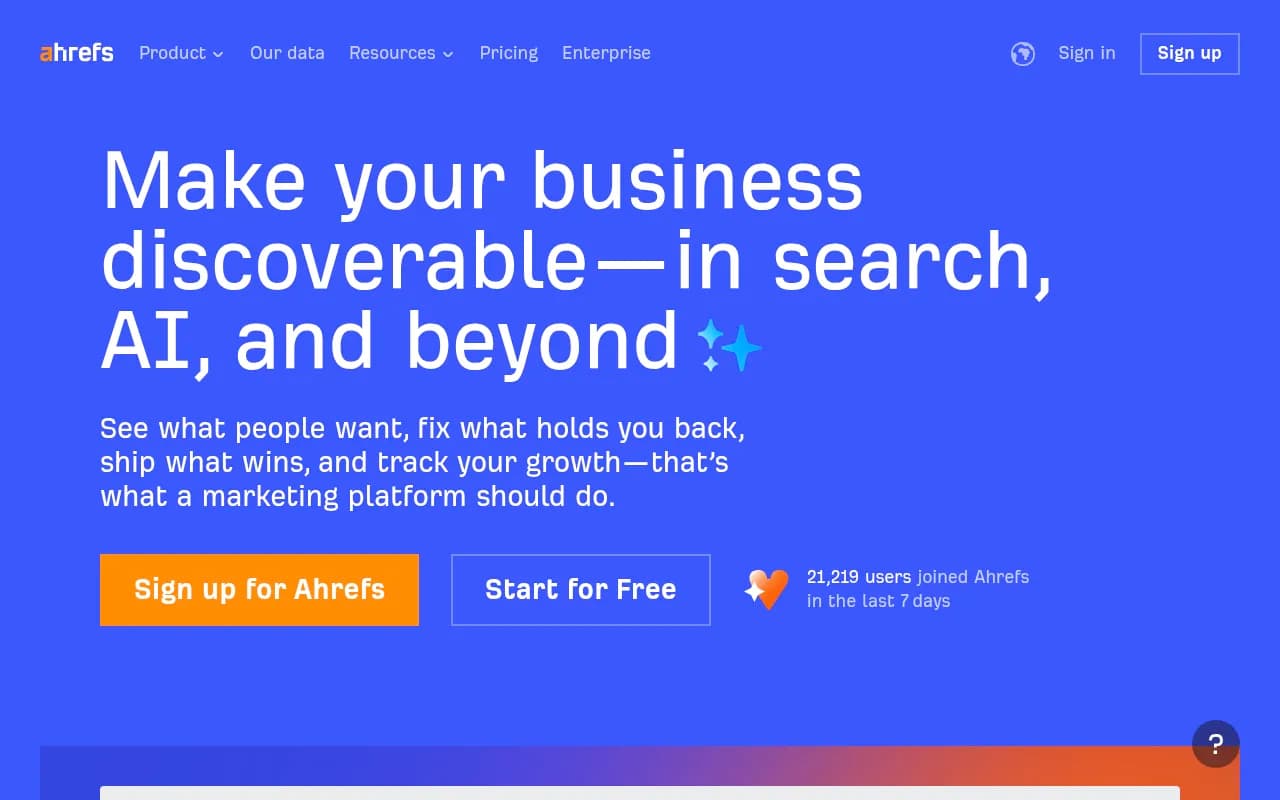
The limitations: fixed prompts (you can't customize what you track), no AI traffic attribution, and no content generation. It's better than nothing, but it's not built for AI visibility as a primary use case.
10. Rankshift
Rankshift is a focused AI visibility tracker covering ChatGPT, Perplexity, and AI search engines. It's aimed at marketers who want clean, simple tracking without a lot of complexity.

For solo marketers who want a lightweight entry point into AI visibility monitoring, Rankshift is accessible. The feature set is narrower than the top-tier platforms, but the simplicity is a genuine advantage if you're just getting started.
11. LLM Pulse
LLM Pulse tracks brand visibility across ChatGPT, Perplexity, and other AI engines. It's a newer entrant with a clean interface and straightforward setup.
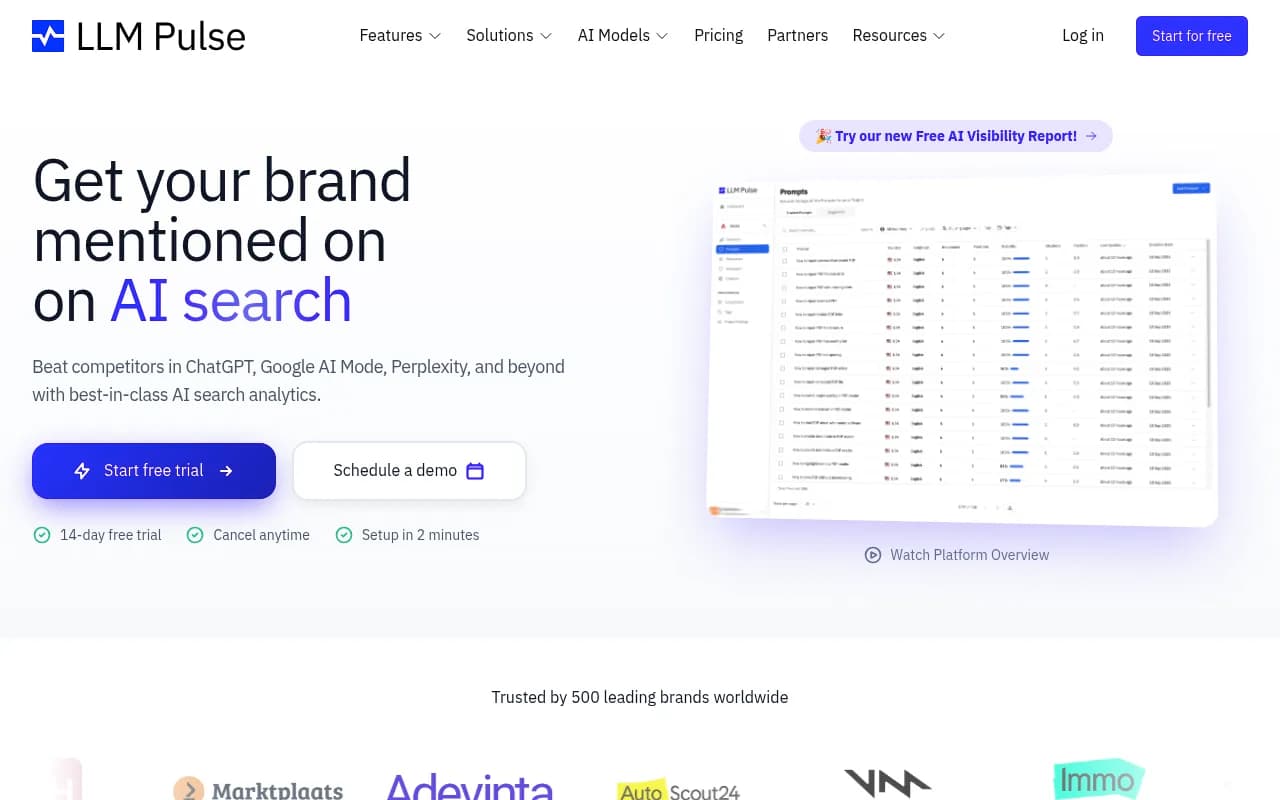
It does the monitoring basics well. For solo marketers who want to dip their toes in without committing to a more expensive platform, it's a reasonable starting point. The depth of competitive analysis and prompt coverage is more limited than the top-tier options.
12. Goodie AI
Goodie AI is a basic AI search visibility monitor. It covers the fundamentals -- brand mention tracking across a handful of AI engines -- but doesn't go much further.
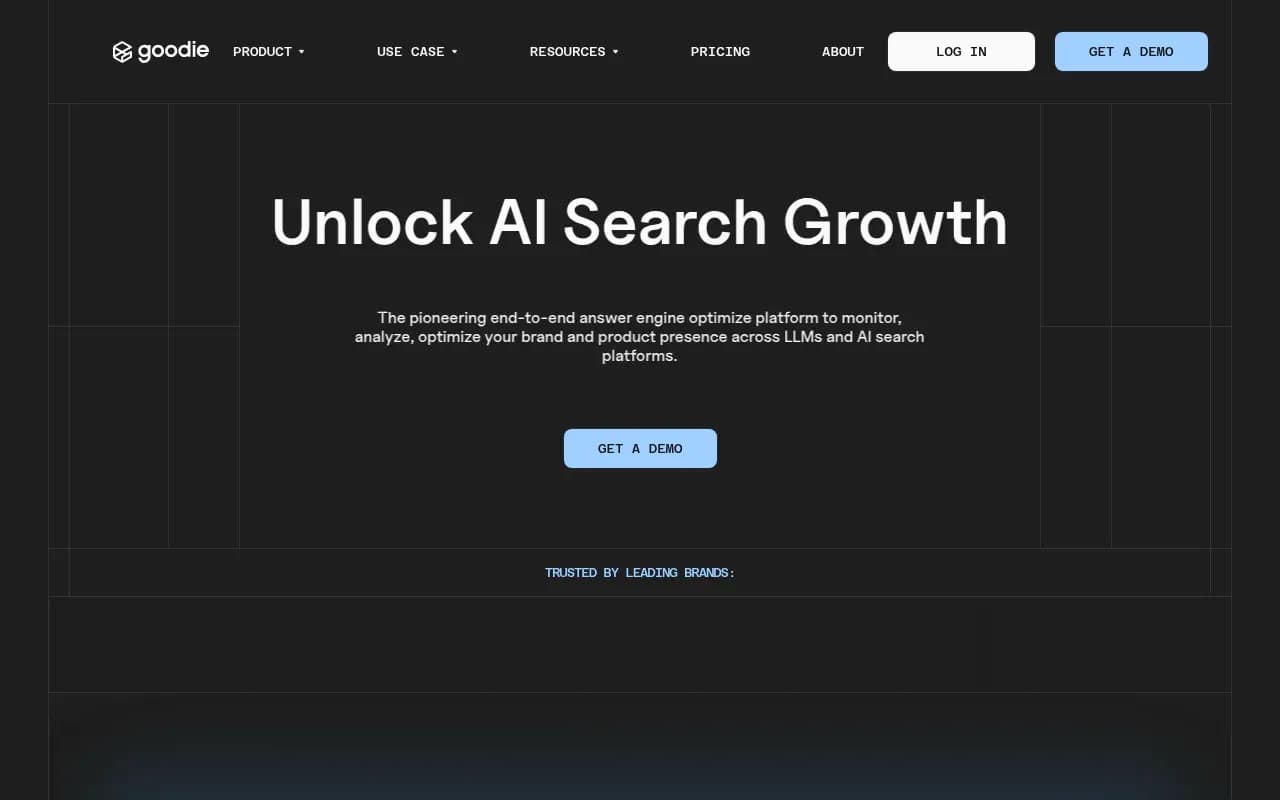
It's the most entry-level option on this list. If you're completely new to AI visibility and want to understand what you're dealing with before investing in a proper platform, Goodie AI can serve as a first look. Don't expect it to replace a real tool.
Feature comparison table
| Platform | Engines covered | Custom prompts | Content gap analysis | Built-in content generation | Crawler logs | Pricing (solo tier) |
|---|---|---|---|---|---|---|
| Promptwatch | 10 | Yes | Yes | Yes | Yes (Pro+) | $99/mo |
| Otterly.AI | 3-5 | Yes | No | No | No | ~$49/mo |
| LLMrefs | 9+ | Yes | No | No | No | ~$49/mo |
| Profound | 9+ | Yes | Limited | No | No | Higher (team pricing) |
| Peec AI | 5+ | Yes | No | No | No | ~$49/mo |
| AthenaHQ | 5+ | Yes | No | No | No | Mid-range |
| Scrunch AI | 5+ | Yes | No | No | No | Mid-range |
| Semrush | 3-4 | Fixed only | No | No | No | Bundled with SEO plan |
| Ahrefs | 3-4 | Fixed only | No | No | No | Bundled with SEO plan |
| Rankshift | 3-4 | Yes | No | No | No | ~$29/mo |
| LLM Pulse | 3-4 | Yes | No | No | No | ~$29/mo |
| Goodie AI | 2-3 | Limited | No | No | No | Free/low cost |
How to choose the right tool for your situation
The right answer depends on what you're actually trying to do.
If you want to understand your current AI visibility position and nothing else: Otterly.AI, LLMrefs, or Peec AI will do the job at a reasonable price. Set up your prompts, watch the data, and use it to inform your content strategy manually.
If you want to actively improve your AI visibility: You need a tool with content gap analysis and some form of content guidance. Promptwatch is the clearest option here -- the gap analysis tells you exactly which prompts to target, and the writing tools help you create content that's actually calibrated to get cited. For a solo marketer, having that workflow in one place saves a lot of time.
If you're already paying for Semrush or Ahrefs: Use their AI features as a starting point, but don't mistake them for a dedicated AI visibility platform. The fixed prompts and lack of attribution mean you'll hit the ceiling quickly.
If budget is the primary constraint: Start with Rankshift or LLM Pulse to get baseline data, then upgrade once you have a clearer picture of what you're trying to track and fix.
The question most solo marketers don't ask
Most people evaluating these tools focus on which AI engines are covered and what the dashboard looks like. Those matter. But the more important question is: what happens after you see the data?
Monitoring tools show you a problem. Optimization platforms help you solve it. For a solo marketer without a content team or an SEO agency on retainer, the gap between "I can see I'm not being cited" and "I know what to do about it" is where most AI visibility programs stall.
The tools that close that gap -- by showing you exactly what content to create and then helping you create it -- are worth paying more for. The ones that stop at the dashboard are only useful if you already know what to do next.
That's the real distinction in this market in 2026. Not which tool has the prettiest interface or the most AI engines on a features list, but which one actually moves the needle on your visibility.
A note on the broader market
The AI visibility tool space has exploded in the past 18 months. There are now well over 50 platforms claiming to track your brand in AI search. Most of them are variations on the same monitoring loop: run prompts, count mentions, show a graph.
A smaller number -- Promptwatch most clearly among them -- are building toward something more like a full optimization workflow. That's the direction the market is heading, and it's where solo marketers should be looking. Tracking your invisibility is only useful if it leads somewhere.
The good news: you don't need an enterprise budget to get started. The Essential tier at Promptwatch, or a monitoring tool like Otterly.AI or LLMrefs, is enough to build a real picture of your AI visibility position. Start there, understand what you're dealing with, and then decide how much of the optimization workflow you want to bring in-house.
The brands that figure this out in 2026 will have a meaningful head start on the ones that wait until AI search is too crowded to ignore.