Summary
- Content older than 30 days sees a 40% drop in AI citations across ChatGPT, Perplexity, and Claude
- AI systems favor fresh content because they're trained to surface current, accurate information
- Citation decay happens faster than traditional SEO ranking drops -- you can lose AI visibility while Google rankings stay stable
- Regular content refreshes (every 30-90 days) restore citation rates and prevent visibility loss
- A systematic refresh process beats reactive updates: audit high-value pages quarterly, prioritize by traffic potential, update facts and examples, republish with new timestamps
What citation decay looks like in practice
I updated a three-year-old post last month. Added recent examples, refreshed the data, fixed outdated screenshots. Nothing major. Within two weeks, it started appearing in ChatGPT responses. Perplexity cited it. Google's AI Overviews pulled from it. The piece had been invisible to AI systems for months.
This isn't anecdotal. Content updated within 30 days gets cited by ChatGPT at 3.2x the rate of older pieces. Pages refreshed within that window dominate AI citations across all major models.
Citation decay is the gradual loss of AI visibility as your content ages. A page can perform well in traditional search for months, then quietly disappear from AI-generated responses. You keep the Google rankings. The traffic just stops coming because users never click through -- they get their answer from the AI summary instead.
The 30-day cliff: when AI engines stop citing you
Based on observed citation patterns across 1.2 million ChatGPT responses, content updated within the last 30-90 days is cited significantly more often than older pages. The drop-off is sharp:
- 0-30 days old: Peak citation rate, especially for time-sensitive queries
- 31-90 days old: Citation rate holds but starts declining
- 90+ days old: 40% citation drop compared to fresh content
- 1+ year old: Twice as likely to lose citations to competitors
ChatGPT shows the steepest preference for freshness -- a 40% citation drop for content older than 30 days. Perplexity weights recency heavily in its ranking algorithm. Google AI Overviews pulls from pages with recent update timestamps.
This creates a visibility problem traditional SEO tools miss entirely. Your rankings stay stable. Your impressions hold. But clicks fall because AI summaries answer the query without sending users to your site.
Why AI systems favor fresh content
AI models are trained to surface accurate, current information. When a user asks a question, the model evaluates candidate sources based on multiple signals -- and recency is a primary factor.
Three reasons freshness matters to AI engines:
Training data cutoffs create blind spots
Most AI models have a knowledge cutoff date. ChatGPT's training data ends at a specific point. When users ask about events, products, or trends after that date, the model relies entirely on retrieved content from the web. Older pages signal outdated information.
Query Deserves Freshness (QDF) applies to AI search
Google's QDF algorithm boosts recent content for queries where timeliness matters -- breaking news, product releases, trending topics. AI systems apply similar logic. A query about "best project management tools in 2026" triggers a freshness preference. Content from 2024 gets deprioritized even if the information is still accurate.
Factual accuracy correlates with update frequency
AI models learn that pages updated regularly tend to have fewer factual errors. A blog post from 2022 is more likely to contain outdated statistics, deprecated features, or incorrect pricing than one updated last month. The model hedges by favoring recent content.
How citation decay differs from traditional SEO decay
Traditional content decay shows up as ranking drops in Google. You track positions, see a page drift from #3 to #12, and know you need to update it. AI citation decay is harder to spot.
| Traditional SEO decay | AI citation decay |
|---|---|
| Gradual ranking decline over months | Sharp drop after 30-90 days |
| Visible in rank tracking tools | Invisible without AI monitoring |
| Traffic drops follow ranking drops | Traffic drops while rankings hold |
| Competitors outrank you | Competitors get cited instead |
| Recoverable with on-page updates | Requires content refresh + republish |
The correlation between Google rankings and AI citations is real but imperfect. When your Google visibility falls, AI citations tend to fall too. But the reverse isn't always true. You can lose AI visibility while maintaining strong traditional rankings.
This matters because AI search is growing fast. Gartner predicts traditional search engine volume will drop 25% by 2026. The AI search engine market hit $16 billion in 2024 and is projected to reach $21 billion in 2026. Organic click-through rates for queries with Google AI Overviews have fallen 61% since mid-2024.

What causes citation decay (beyond age alone)
Freshness triggers the initial drop, but other factors accelerate it:
Competitors publish better coverage
A page that ranked well two years ago may have been the best answer available at the time. Competitors have since published more comprehensive guides, added comparison tables, embedded tool cards, and included recent examples. AI models cite the better resource.
Facts and examples become outdated
Statistics from 2023 signal stale content. Screenshots showing old interfaces hurt credibility. Mentions of deprecated features or discontinued products make the entire page feel unreliable.
Search intent shifts over time
What users want from a query changes. A guide to "remote work tools" written in 2020 focused on video conferencing basics. The same query in 2026 assumes video conferencing and asks about async collaboration, AI meeting assistants, and hybrid team coordination. The old content no longer matches intent.
Technical signals degrade
AI crawlers (ChatGPT, Perplexity, Claude) visit your site to index content. If they encounter errors, slow load times, or broken structured data, they deprioritize your pages. Crawler logs show when AI bots stop visiting -- a leading indicator of citation decay.
Third-party citations disappear
AI models weight external signals. If your page was cited on Reddit, quoted in industry reports, or linked from high-authority domains, those citations boost your visibility. Over time, those discussions fade. New conversations cite newer content.
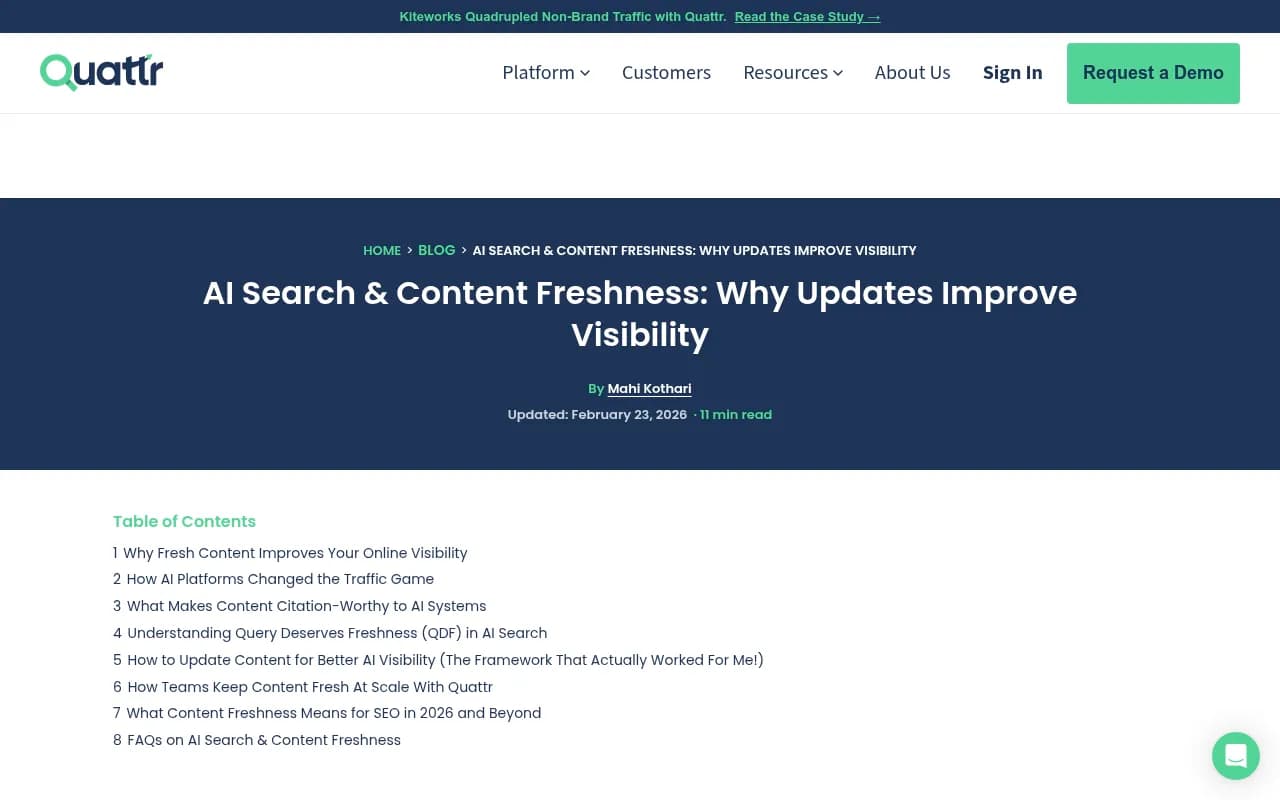
How to detect citation decay before it costs you traffic
Most teams don't notice citation decay until traffic drops 20-30%. By then, you've lost weeks or months of visibility. Early detection requires monitoring AI citations directly.
Track citation rates across AI models
Tools like Promptwatch monitor how often your brand, products, or pages get cited in AI responses. You define a set of prompts relevant to your business -- queries your target audience actually asks -- and track citation frequency over time.
A citation rate drop signals decay before traffic falls. If you're cited in 40% of responses one month and 25% the next, you know something changed.
Monitor AI crawler logs
AI models send bots to crawl your site: ChatGPT's GPTBot, Perplexity's PerplexityBot, Claude's ClaudeBot. Crawler logs show which pages they visit, how often they return, and any errors they encounter. A drop in crawl frequency means the model is losing interest in your content.
Compare AI visibility to traditional rankings
If your Google rankings hold but AI citations drop, you're experiencing pure citation decay. If both fall together, you have a broader content quality problem. The diagnosis determines the fix.
Audit high-value pages quarterly
Don't wait for drops. Review your top 20 traffic-driving pages every 90 days. Check publish dates, update timestamps, factual accuracy, and competitor coverage. Flag pages approaching the 90-day mark for refresh.
The content refresh framework that prevents citation decay
Reactive updates -- fixing pages after traffic drops -- cost you visibility and revenue. A systematic refresh process keeps citation rates stable.
Step 1: Prioritize pages by traffic potential
Not every page deserves immediate attention. Focus on:
- High-traffic pages (top 20% of your site)
- Pages targeting high-value keywords
- Content approaching 90 days since last update
- Pages with declining citation rates
Use traffic data, keyword rankings, and AI citation metrics to build a priority list.
Step 2: Update facts, examples, and screenshots
Refresh the content substance:
- Replace outdated statistics with current data
- Add examples from the last 6-12 months
- Update screenshots showing old interfaces
- Remove references to deprecated features or discontinued products
- Add new tools, techniques, or approaches that emerged since the original publish date
Step 3: Expand thin sections and add comparison tables
AI models favor comprehensive coverage. If competitors added comparison tables, tool embeds, or deeper analysis, match or exceed that depth. Tables make information scannable -- a key factor in AI citation decisions.
Step 4: Optimize for AI retrieval
Structure content so AI models can extract answers easily:
- Use clear H2/H3 headings that match common query patterns
- Front-load key information in the first 30% of the article (44% of ChatGPT citations come from the first third of content)
- Include bulleted lists and numbered steps
- Add schema markup for structured data
- Embed tool cards using [tool:slug] syntax where relevant
Step 5: Republish with a new timestamp
Update the publish date or add a "Last updated" timestamp. This signals freshness to both AI crawlers and users. Some CMS platforms update timestamps automatically on save; others require manual changes.
Step 6: Promote the updated content
Don't assume AI models will re-crawl immediately. Share the updated post on social media, send it to your email list, and link to it from newer content. External signals (shares, links, engagement) tell AI systems the page is active and relevant.
Tools that help you stay ahead of citation decay
Manual monitoring doesn't scale. These platforms automate detection and optimization:
AI visibility tracking: Promptwatch tracks citations across ChatGPT, Perplexity, Claude, Gemini, and other AI models. It shows which prompts you rank for, citation frequency over time, and competitor visibility. The platform also provides crawler logs, answer gap analysis, and an AI writing agent to help you create content that ranks.

Traditional SEO + AI monitoring: Ahrefs now includes AI search tracking alongside traditional rank monitoring. Semrush offers basic AI visibility features but uses fixed prompts instead of custom tracking.

Content refresh automation: AirOps identifies decaying content and helps you refresh it at scale. Frase optimizes content for both traditional SEO and AI search.
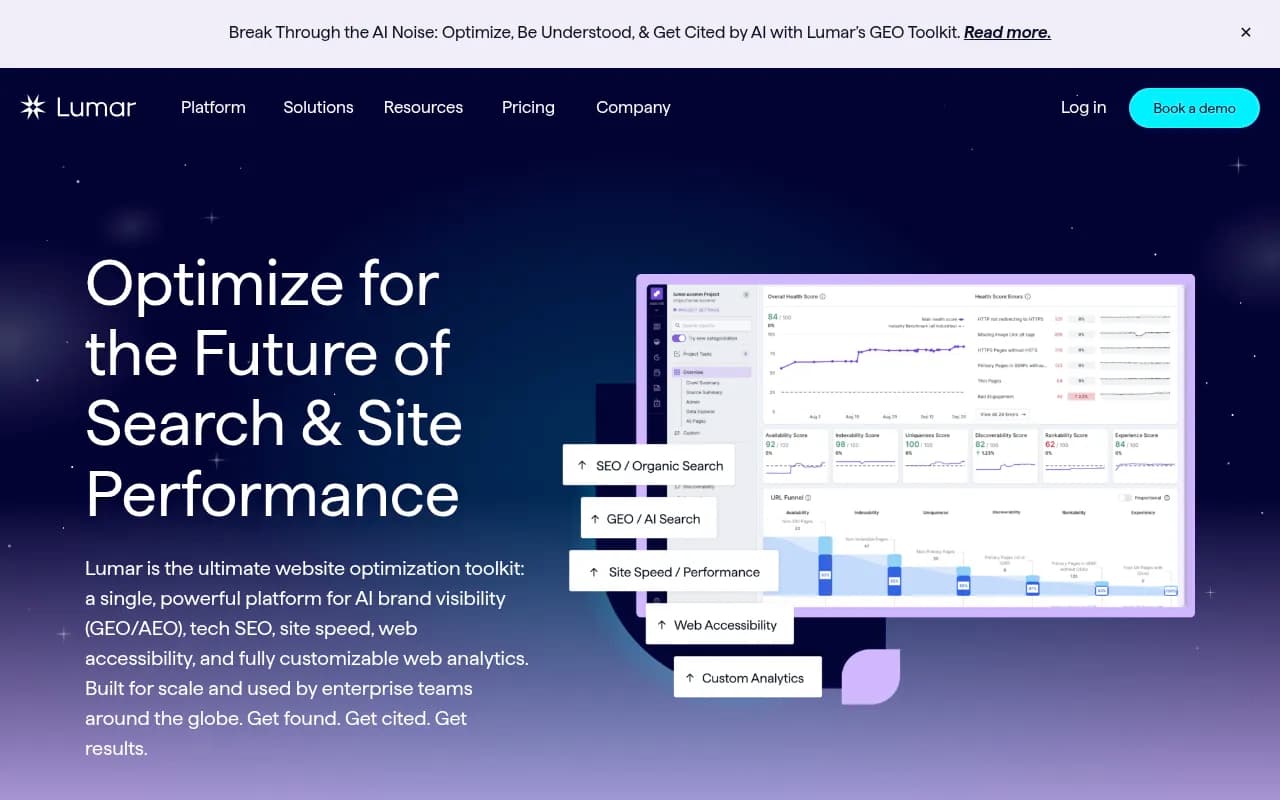
Crawler log analysis: Most AI visibility platforms include crawler logs, but you can also monitor them directly through server logs or tools like Lumar.
How often should you refresh content?
The ideal refresh frequency depends on your niche, competition, and content type:
| Content type | Recommended refresh frequency |
|---|---|
| News, trends, breaking topics | Weekly or as events unfold |
| Product reviews, tool comparisons | Every 30-60 days |
| How-to guides, tutorials | Every 90 days |
| Evergreen explainers | Every 6-12 months |
| Industry reports, research | Annually or when new data is available |
High-competition topics require more frequent updates. If competitors refresh monthly, you need to match that pace to maintain citations.
What happens if you ignore citation decay
The cost of inaction compounds over time:
- Traffic declines while rankings hold: You lose clicks to AI summaries without understanding why
- Competitors take your citations: Newer content from competitors gets cited instead, even if your information is still accurate
- Recovery takes longer: A page that's been stale for 12 months requires more work to restore than one refreshed quarterly
- Brand authority erodes: Consistent absence from AI responses signals irrelevance to your audience
By 2027, AI search is projected to capture 48% of total search traffic. By 2028, 75%. Citation decay isn't a minor optimization problem -- it's an existential threat to organic visibility.
The citation decay prevention checklist
Use this checklist to build a sustainable refresh process:
- Set up AI citation tracking for your top 50 prompts
- Monitor AI crawler logs for your high-value pages
- Audit your top 20 traffic-driving pages quarterly
- Prioritize refreshes based on traffic potential and decay signals
- Update facts, examples, and screenshots in each refresh
- Add comparison tables and tool embeds where relevant
- Republish with updated timestamps
- Promote refreshed content to trigger re-crawls
- Track citation rate changes after each update
- Adjust refresh frequency based on results
Why this matters more in 2026 than ever before
AI search adoption is accelerating. 60% of searches now end without a click. 80% of consumers rely on zero-click results for at least 40% of their searches. By 2026, 65% of global searches will be zero-click.
Citation decay directly impacts your ability to capture that remaining click-through traffic. If AI models don't cite you, users never see your brand. If they do cite you but your content feels stale, they choose a competitor.
The brands winning in AI search are the ones treating freshness as a core content strategy, not an occasional maintenance task. They refresh systematically, monitor citations closely, and optimize for AI retrieval from the start.
Citation decay is predictable, measurable, and preventable. The question is whether you'll address it before or after your traffic falls.