Key Takeaways
- AI search models (ChatGPT, Perplexity, Claude, Google AI Overviews) don't crawl backlinks the way traditional search engines do—they evaluate authority through entity relationships, topical consistency, and source credibility
- Traditional link metrics like Domain Authority and PageRank still influence Google's traditional search results, but they're increasingly irrelevant for AI-generated answers
- The new visibility currency is mentions, co-citations, and being recognized as a trusted entity across the web's knowledge ecosystem
- Tools like Promptwatch help you track where AI models cite you and identify content gaps that prevent visibility

The Link Building Playbook Just Got Rewritten
For two decades, the SEO playbook was simple: build backlinks, watch your rankings climb. Domain Authority became the scoreboard. Link farms, guest post exchanges, and PR campaigns all chased the same goal—convince Google's algorithm that your site deserved to rank.
That playbook still works for traditional Google search. But in 2026, traditional Google search is no longer the only game.
ChatGPT processes billions of queries. Perplexity answers questions Google never sees. Claude synthesizes research papers. Google's own AI Overviews now dominate the SERP for informational queries, pushing the "10 blue links" below the fold.
And here's the uncomfortable truth: these AI systems don't evaluate authority the way PageRank does. They don't crawl your backlink profile and calculate a score. They evaluate whether you're a known entity with consistent, credible information across the sources they trust.
Backlinks still matter—but they're no longer sufficient. The win condition expanded.
How AI Search Models Actually Evaluate Authority
Entity Recognition Over Link Metrics
Traditional search engines like Google built authority models around links because links were the web's voting system. If 100 sites linked to you, you were probably important.
AI models approach authority differently. They're trained on massive text corpora—Wikipedia, news archives, academic papers, Reddit discussions, documentation sites. During training, they learn which entities (brands, people, concepts) appear frequently in authoritative contexts and which attributes consistently associate with those entities.
When ChatGPT answers "What are the best project management tools for remote teams?", it's not crawling your backlink profile in real time. It's pattern-matching: which entities appear repeatedly in contexts related to project management, remote work, and software recommendations? Which entities co-occur with positive sentiment and credible sources?
This is entity-based evaluation, not link-based evaluation. Your brand needs to be understood as a "known thing" with consistent attributes across the web.
Topical Consistency and Depth
AI models also evaluate topical authority—how deeply and consistently you cover a subject area.
If your site publishes 200 articles about email marketing, automation workflows, deliverability best practices, and compliance regulations, AI models infer that you're an authority on email marketing. If you publish one article about email marketing and 199 articles about random topics, you're not.
This is why niche sites often punch above their weight in AI search results. A site that goes deep on one topic builds stronger entity associations than a generalist site that goes wide.
Traditional SEO rewarded breadth (more pages = more rankings). AI search rewards depth (more expertise = more trust).
Source Credibility Signals
AI models also evaluate where information appears, not just how many links point to it.
A mention in a peer-reviewed journal, a citation in a government report, or a reference in a major news outlet carries more weight than 100 backlinks from low-quality blogs. AI models learn during training which sources are consistently accurate and which sources are frequently contradicted or corrected.
This is why digital PR matters more than ever. A single feature in TechCrunch or The Wall Street Journal can do more for your AI visibility than 1,000 directory links.

What Actually Drives AI Search Visibility in 2026
Mentions and Co-Citations
The new currency of authority is mentions—being referenced, discussed, and cited across the web, even without a backlink.
When Reddit users discuss "best CRM software" and repeatedly mention your brand, AI models notice. When industry blogs compare tools and include you in the analysis, AI models notice. When podcasts interview your CEO and transcripts appear online, AI models notice.
Co-citations matter too. If your brand consistently appears alongside established authorities in your space, AI models infer that you belong in that category. If you're mentioned in the same breath as Salesforce, HubSpot, and Zoho, you're probably a CRM.
This is why community engagement and thought leadership matter. You need to be part of the conversation, not just linked to.
Structured Data and Entity Markup
AI models also rely on structured data to understand entities and their attributes.
Schema markup, Knowledge Graph entries, Wikidata records, and other structured data sources help AI models disambiguate entities (is "Apple" the fruit or the company?) and extract factual attributes (founding year, headquarters, product categories).
If your brand lacks structured data, AI models have a harder time understanding who you are and what you do. Implementing schema markup (Organization, Product, Review, FAQ) is table stakes for AI visibility.
Content That Answers Real Questions
AI models prioritize content that directly answers user questions with clear, factual information.
Traditional SEO often optimized for keywords and rankings. AI search optimizes for answers. If a user asks "How do I set up two-factor authentication in Slack?", AI models want a page that explains the exact steps, not a 2,000-word blog post about the importance of security.
This is why documentation, how-to guides, and FAQ pages often outperform marketing content in AI search results. They provide direct answers without fluff.
Tools like Frase and Clearscope help you identify the questions users ask and structure content to answer them.

Reddit, YouTube, and Community Platforms
AI models increasingly cite Reddit threads, YouTube videos, and other community platforms because these sources contain real user experiences and unfiltered opinions.
If your brand isn't part of these conversations, you're invisible to AI models that prioritize community-driven content.
This is a massive shift. Traditional SEO largely ignored Reddit and YouTube (except for video SEO). AI search treats them as first-class sources.
The Link Building Strategies That Still Work (And Why)
Digital PR and Media Mentions
Earning coverage in authoritative publications remains one of the highest-leverage activities for AI visibility.
A feature in TechCrunch, Forbes, or The New York Times signals to AI models that your brand is newsworthy and credible. These mentions often include entity context (what you do, who you serve, why you matter) that helps AI models understand your positioning.
Digital PR also generates secondary mentions—other sites reference the original article, podcasts discuss it, social media amplifies it. This creates a ripple effect of entity recognition.
Thought Leadership and Expert Contributions
Publishing expert content on third-party platforms (guest posts, contributed articles, podcast interviews) builds entity authority without requiring backlinks.
When your CEO is quoted in industry reports, when your team publishes research papers, when your engineers answer questions on Stack Overflow—all of these activities signal expertise to AI models.
This is why personal branding matters. AI models recognize individual experts, not just companies. Building your team's visibility builds your brand's visibility.
Strategic Partnerships and Co-Marketing
Partnering with complementary brands creates co-citation opportunities that strengthen entity associations.
If you're a marketing automation platform and you partner with a CRM, AI models learn that you belong in the same ecosystem. Joint webinars, co-branded content, and integration partnerships all generate mentions that reinforce your positioning.
Community Engagement and User-Generated Content
Participating in communities where your audience gathers (Reddit, industry forums, Slack groups, Discord servers) creates organic mentions and builds brand recognition.
AI models cite Reddit threads and forum discussions because they contain authentic user experiences. If your brand is part of those discussions—answering questions, solving problems, sharing insights—you become part of the knowledge base AI models reference.
This requires a shift in mindset. Traditional link building was transactional (I give you a link, you give me a link). Community engagement is relational (I provide value, the community recognizes me).
What Doesn't Work Anymore (And Why You Should Stop)
Link Farms and PBNs
Private blog networks and link farms were always risky, but in 2026 they're structurally incompatible with how AI models evaluate authority.
AI models don't just count links—they evaluate source credibility. A network of low-quality sites linking to each other doesn't signal authority; it signals manipulation.
Google's traditional algorithm can still be gamed with clever link schemes. AI models trained on the open web are harder to fool.
Generic Guest Posting for Links
Guest posting solely for backlinks (low-quality articles on random blogs with a link back to your site) no longer moves the needle.
AI models don't weight these links heavily because the source sites lack authority and the content lacks depth. You're better off publishing one expert article on a high-authority site than 10 generic posts on low-authority blogs.
Directory Submissions and Link Exchanges
Bulk directory submissions and reciprocal link exchanges were always low-value tactics. In the AI search era, they're completely irrelevant.
AI models don't discover your brand through directory listings. They discover your brand through mentions in authoritative sources, community discussions, and structured data.
How to Track AI Search Visibility (Because Traditional Metrics Don't Work)
The Problem with Traditional SEO Metrics
Traditional SEO metrics—organic traffic, average position, Domain Authority—don't measure AI search visibility.
You can rank #1 in Google and still be invisible in ChatGPT. You can have a DA of 70 and never get cited by Perplexity. Traditional metrics measure traditional search performance, not AI search performance.
This is why tools like Promptwatch exist—to track what AI models actually say about your brand.
What to Measure Instead
| Metric | What it measures | Why it matters |
|---|---|---|
| Citation frequency | How often AI models cite your brand or content | Direct measure of AI visibility |
| Mention context | What prompts trigger citations of your brand | Reveals which topics you own |
| Competitor comparison | How your visibility compares to competitors | Identifies gaps and opportunities |
| Source diversity | Which pages/domains AI models cite | Shows what content resonates |
| Prompt volume | How many users ask questions in your category | Reveals market demand |
Tools like Rankshift, Omnia, and TrackMyBusiness offer basic AI visibility tracking, but Promptwatch goes further by showing you exactly which prompts competitors rank for but you don't—then helping you create content to close those gaps.

The Action Loop: Find Gaps, Create Content, Track Results
The most effective approach to AI search optimization follows a simple loop:
- Find the gaps: Use Answer Gap Analysis to identify prompts where competitors are cited but you're not. See exactly what content your site is missing.
- Create content that ranks in AI: Generate articles, guides, and comparisons grounded in real citation data, prompt volumes, and competitor analysis. This isn't generic SEO content—it's content engineered to get cited by AI models.
- Track the results: Monitor your visibility scores as AI models start citing your new content. Connect visibility to actual traffic and revenue.
This is the difference between monitoring ("here's what's happening") and optimization ("here's how to fix it"). Most AI visibility tools stop at step one. Promptwatch closes the loop.
The Future of Authority Building in an AI-First World
From Link Graphs to Knowledge Graphs
The web is transitioning from a link graph (who links to whom) to a knowledge graph (who knows what about whom).
Traditional search engines navigated the link graph. AI models navigate the knowledge graph—a structured representation of entities, attributes, and relationships.
Building authority in this world means ensuring your brand is accurately represented in the knowledge graph. That requires structured data, consistent entity mentions, and topical depth.
From Rankings to Recommendations
AI search is also shifting from rankings (here are 10 results, pick one) to recommendations (here's the answer, trust me).
When ChatGPT recommends a tool, it's not showing you a list of 10 options ranked by relevance. It's making a direct recommendation based on its understanding of your needs and the tool's capabilities.
This is a higher bar. You don't just need to rank—you need to be the right answer for the right context.
From Optimization to Reputation
Ultimately, AI search rewards reputation over optimization.
You can't trick an AI model into citing you the way you could trick Google into ranking you. AI models synthesize information from thousands of sources and make judgments about credibility, expertise, and trustworthiness.
Building reputation requires consistent effort over time: publishing expert content, earning media coverage, participating in communities, solving real problems for real users.
The good news: reputation is defensible. Once you're recognized as an authority, it's hard for competitors to displace you. The bad news: there are no shortcuts.
Comparison: Traditional SEO vs AI Search Optimization
| Dimension | Traditional SEO | AI Search Optimization |
|---|---|---|
| Authority signal | Backlinks and Domain Authority | Entity recognition and mentions |
| Content strategy | Keyword targeting and rankings | Question answering and topical depth |
| Success metric | Organic traffic and SERP position | Citation frequency and mention context |
| Optimization focus | On-page SEO and link building | Structured data and community engagement |
| Timeframe | 3-6 months to see results | Ongoing, reputation-based |
| Competitive advantage | Link acquisition and technical SEO | Thought leadership and expertise |
Practical Steps to Adapt Your Strategy
Audit Your Current Visibility
Start by understanding where you stand today. Use AI visibility tracking tools to see:
- Which AI models cite your brand (and which don't)
- What prompts trigger citations of your brand
- How your visibility compares to competitors
- Which pages AI models reference most often
This baseline tells you where to focus.
Implement Structured Data
Add schema markup to your key pages: Organization, Product, Review, FAQ, HowTo. Claim and optimize your Knowledge Graph entries on Google, Wikidata, and other structured data sources.
This helps AI models understand who you are and what you do.
Create Answer-First Content
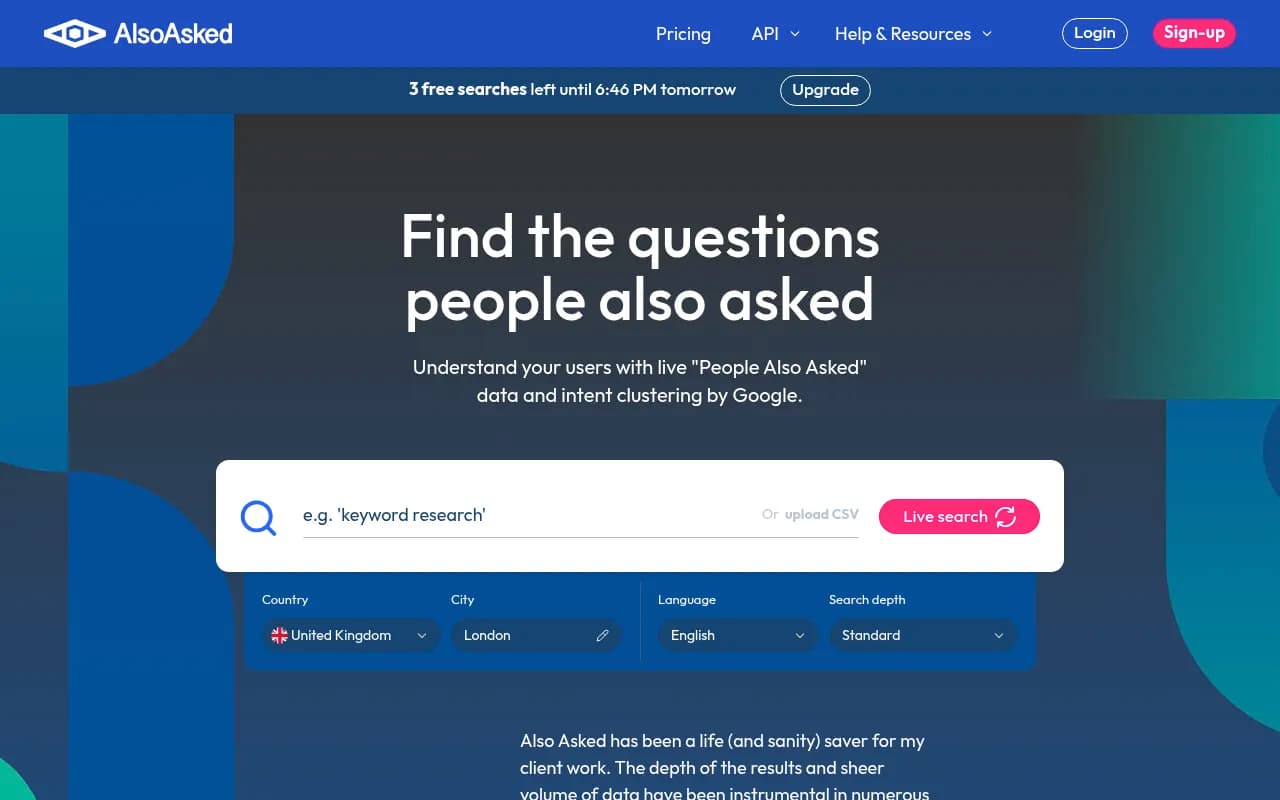
Shift your content strategy from keyword targeting to question answering. Identify the questions your audience asks (use tools like AnswerThePublic or AlsoAsked) and create content that directly answers them.
Prioritize clarity over cleverness. AI models prefer straightforward answers to creative storytelling.
Engage in Community Platforms
Join Reddit communities, industry forums, and Slack groups where your audience gathers. Answer questions, share insights, and build relationships.
Don't spam links—provide value. AI models cite community discussions because they contain authentic expertise.
Invest in Digital PR
Earn coverage in authoritative publications. Pitch stories, share research, offer expert commentary. A single feature in a top-tier outlet can generate months of AI visibility.
Track and Iterate
AI search optimization is not a one-time project. Track your visibility over time, identify new gaps as they emerge, and continuously create content to fill them.
The brands that win in AI search are the ones that treat it as an ongoing discipline, not a campaign.
The Bottom Line
Backlinks aren't dead. They still influence Google's traditional search results, and they still signal authority in certain contexts.
But the rules changed. AI search models evaluate authority through entity recognition, topical depth, source credibility, and community reputation—not just link metrics.
The brands that adapt fastest will win. The brands that cling to old playbooks will fade.
If you're serious about AI search visibility, start by understanding where you stand today. Tools like Promptwatch show you exactly where AI models cite you, where competitors beat you, and what content you need to create to close the gap.
The future of authority building isn't about links. It's about being known, trusted, and cited by the systems that answer your customers' questions.