Key takeaways
- AirOps is a no-code AI workflow platform built for content production at scale — not a full GTM or AI visibility tool
- It works best for teams that need to produce high volumes of templated content (product pages, location pages, programmatic SEO)
- The main gaps: limited brand governance, template rigidity, no lead enrichment, and weak AI search visibility monitoring on lower tiers
- Pricing jumps sharply from Solo to Pro ($2,000/mo), which catches many teams off guard
- If your primary need is understanding and improving how AI search engines cite your brand, you'll need a dedicated platform alongside AirOps — or instead of it
AirOps has gone through a few identity shifts since it launched, but by 2026 it has settled into a clear position: a no-code content engineering platform that helps marketing and SEO teams build AI-powered workflows at scale. Companies like Webflow, Ramp, and Carta use it. It has real traction and a growing community.
But "real traction" doesn't mean it's the right fit for every team. After reviewing hands-on assessments, user feedback, and the platform's own positioning at AirOps Next 2026 (where 250+ marketing leaders gathered to discuss AI search), a clearer picture emerges of where AirOps genuinely delivers and where it leaves teams frustrated.
This is that picture.
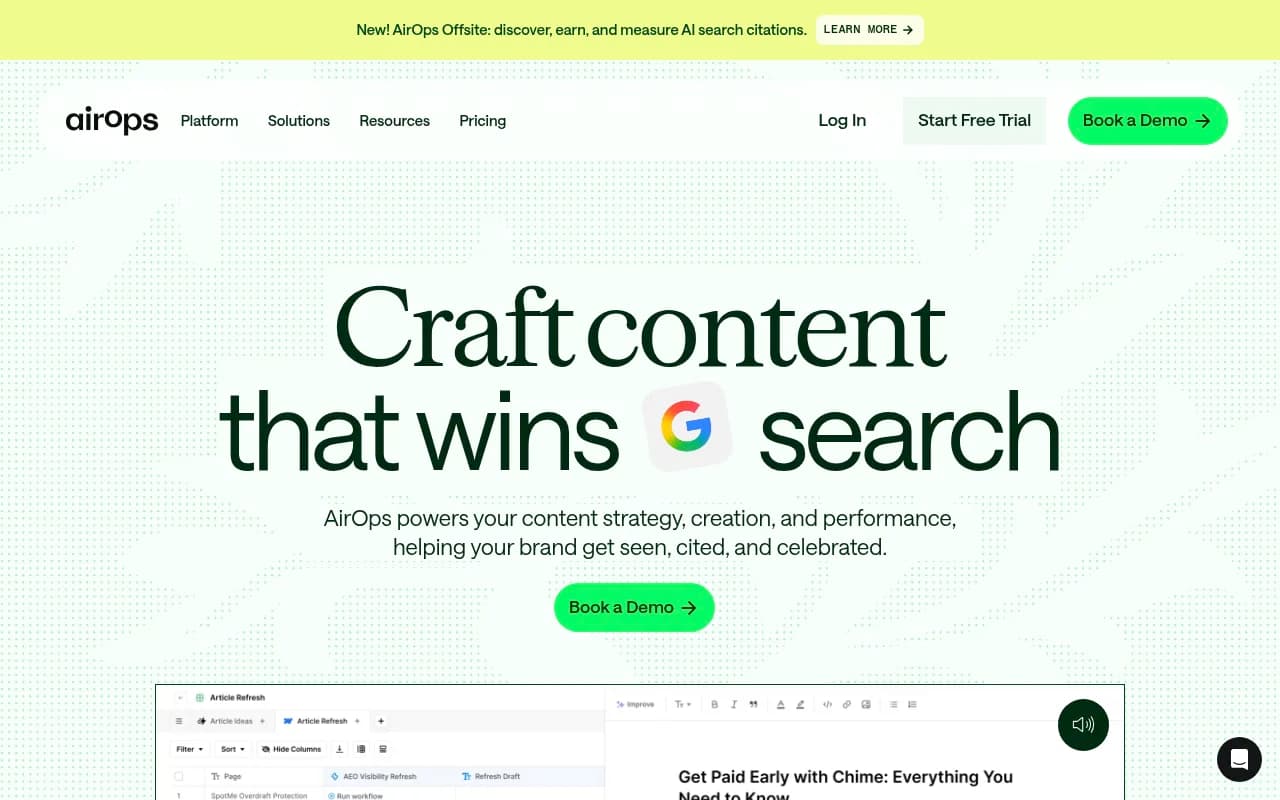
What AirOps actually is
At its core, AirOps is a workflow builder. You connect data sources, AI models, and CMS platforms into automated pipelines. Think of it as a content assembly line: you design the steps, AirOps runs them at scale.
The primary use cases are:
- Programmatic content production (product descriptions, location pages, data-driven articles)
- Content refreshes across large existing libraries
- SEO brief generation and content planning
- Answer Engine Optimization (AEO) diagnostics — though this is limited on lower tiers
It's not a CRM. It's not a sales intelligence tool. It's not a full AI visibility monitoring platform. Teams that go in expecting any of those things tend to leave disappointed.
Where AirOps genuinely gets it right
Workflow automation for content at scale
This is AirOps's strongest suit. The drag-and-drop workflow builder lets non-technical users build multi-step content pipelines without writing code. You can pull in data from a spreadsheet, run it through an AI model with a custom prompt, apply brand guidelines, and push the output to WordPress or Webflow — all in one automated flow.
For teams producing hundreds or thousands of similar content pieces, this is genuinely useful. The Pro plan handles up to 75,000 tasks per month, which is serious throughput for any content operation.
Grids for content planning
The Grids feature is a spreadsheet-style interface where you can plan, brief, and execute content at the row level. Each row can trigger an AI workflow. It's a practical way to manage large content projects without switching between tools constantly.
The caveat: performance slows noticeably on large datasets (100+ rows), which is a real limitation if you're running enterprise-scale programmatic SEO campaigns.
Brand Kits
AirOps lets you define tone guidelines, writing samples, and formatting rules that get applied across all your AI outputs. This is a meaningful feature — generic AI content is one of the biggest complaints from marketing teams, and having a structured way to enforce brand voice helps.
The limitation is that brand kits are restricted on lower tiers (one kit on Solo), and the knowledge base integration is limited. Teams with complex brand guidelines or multiple sub-brands will hit the ceiling quickly.
CMS publishing integrations
Direct publishing to WordPress and Webflow is a genuine time-saver. For teams on those platforms, removing the copy-paste step from the workflow is meaningful. The downside is that CMS support is narrow — no Shopify, no custom CMS options. If you're not on WordPress or Webflow, you're exporting manually.
AEO diagnostics (with caveats)
AirOps has leaned into Answer Engine Optimization in 2026, and the platform includes diagnostic tools to assess how your content performs in AI search. This is a legitimate capability — but it's gated. On the Solo plan, you only get ChatGPT visibility. Multi-engine monitoring (Perplexity, Google AI Overviews, etc.) requires the Pro plan at $2,000/month.
That's a steep jump for a feature that's increasingly table stakes.
Where AirOps falls apart
Template rigidity at scale
The most consistent complaint from teams that have moved away from AirOps is that the template-based model works well until it doesn't. When your content needs get more complex — custom editorial workflows, nuanced brand guidelines, multi-stage review processes — the tool starts fighting you.
Programmatic SEO for product pages? AirOps handles it well. Long-form thought leadership with multiple stakeholder reviews and compliance sign-offs? You'll be stitching together workarounds.
The pricing cliff
The pricing structure is where AirOps loses a lot of potential customers. The Solo plan is accessible, but the jump to Pro at $2,000/month is significant. Many of the features that make AirOps genuinely useful for AI visibility — multi-engine monitoring, advanced workflows, higher task limits — are locked behind that Pro tier.
Teams that sign up for Solo expecting a path to AI search monitoring often find they need to either commit to Pro or look elsewhere.
| Plan | Price | AI Search Engines | Tasks/Month | Brand Kits |
|---|---|---|---|---|
| Solo | Lower tier | ChatGPT only | Limited | 1 |
| Pro | ~$2,000/mo | Multi-engine | Up to 75,000 | Multiple |
No GTM capabilities
AirOps is a content tool. There's no lead enrichment, no buying intent signals, no outbound sequence builder, no native CRM sync below the Pro tier. If you're a RevOps or GTM team looking for a unified platform, AirOps isn't it.
This isn't a criticism exactly — AirOps doesn't claim to be those things — but it matters for teams that were hoping to consolidate their stack.
Workflow fragmentation
AirOps handles generation well. It doesn't connect cleanly to the full content pipeline: planning, briefing, review, publishing, optimization, and performance tracking. Teams end up stitching together multiple tools to cover what they need. That's friction, and it adds up.
Limited AI visibility depth
This is the most significant gap for teams focused on AI search in 2026. AirOps can tell you something about how your content performs in AI search, but it's not built as a monitoring and optimization platform. You won't get page-level citation tracking, crawler logs showing which AI agents are hitting your site, or prompt-level visibility data across multiple models.
For teams where AI search visibility is a strategic priority — not just a nice-to-have — AirOps's monitoring capabilities are too thin. A dedicated platform like Promptwatch is built specifically for this: tracking citations across 10+ AI models, showing which pages are being cited and why, and helping you close the gaps with content that actually gets referenced.

AirOps vs. the alternatives: a quick comparison
The market for AI content and visibility tools has expanded significantly. Here's how AirOps stacks up against some of the alternatives content teams commonly evaluate:
| Tool | Best for | Content generation | AI visibility monitoring | Workflow automation |
|---|---|---|---|---|
| AirOps | Programmatic content at scale | Strong | Limited (ChatGPT only on Solo) | Strong |
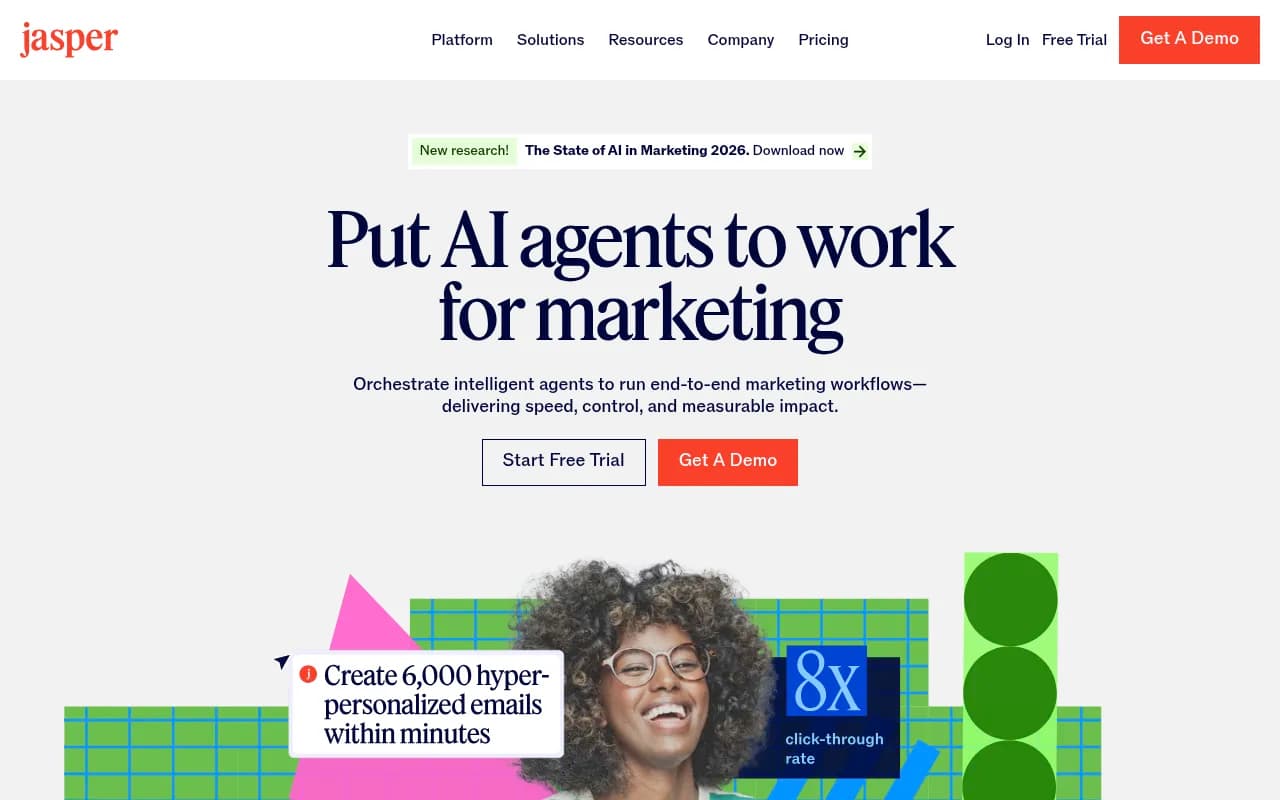
| Jasper | Brand-consistent marketing copy | Strong | Minimal | Moderate |
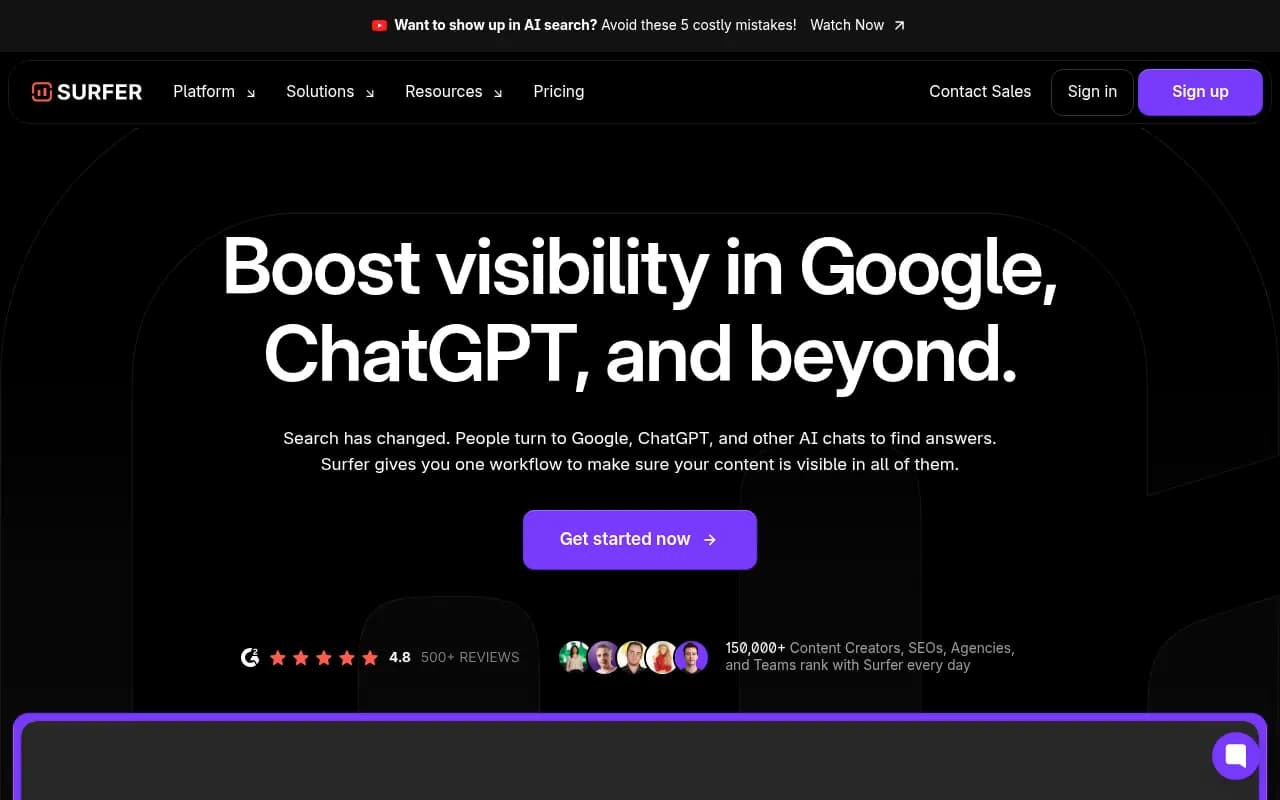
| Surfer SEO | SEO content optimization | Moderate | Minimal | Moderate |
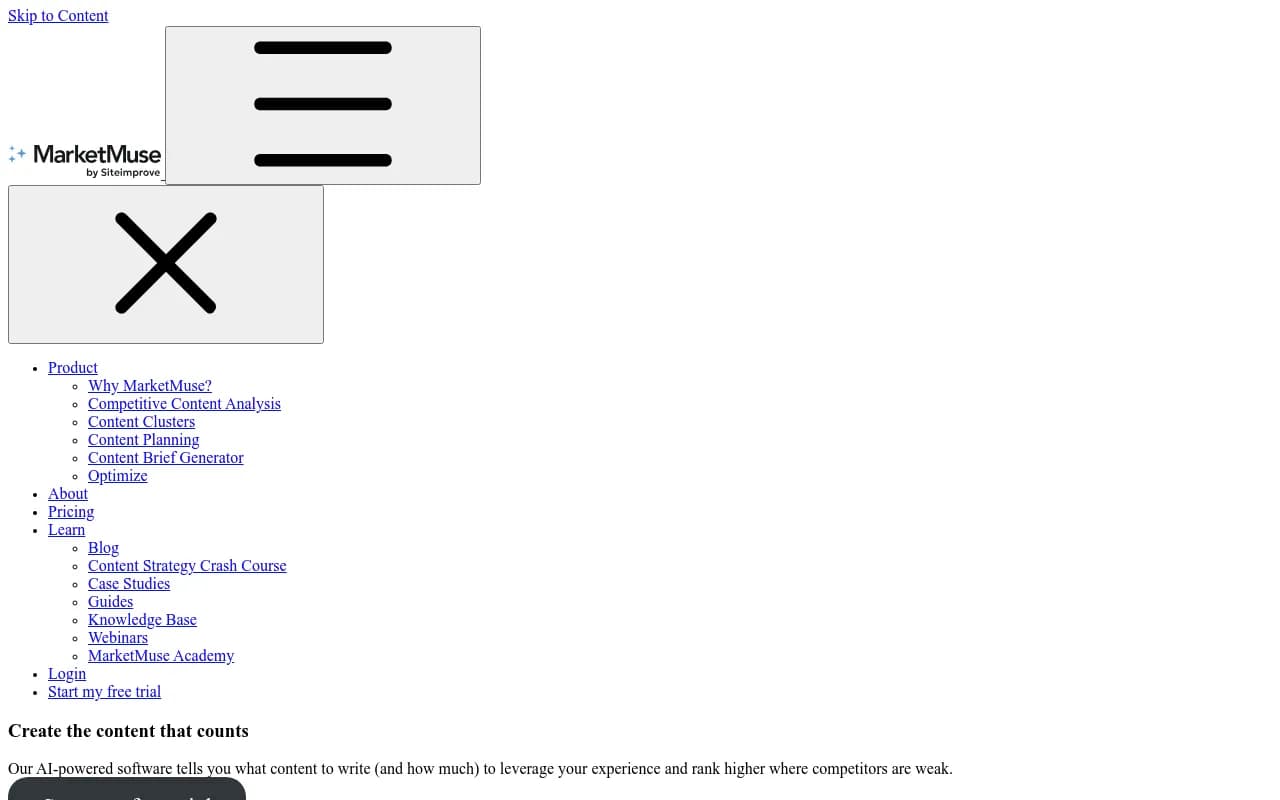
| MarketMuse | Content strategy and topic modeling | Moderate | Minimal | Moderate |
| Promptwatch | AI search visibility and GEO | Content briefs | Comprehensive (10+ models) | Gap analysis |
| Search Atlas | SEO automation and publishing | Strong | Moderate | Strong |

Who should use AirOps
AirOps is genuinely the right tool for a specific type of team. If you match this profile, it's worth serious consideration:
- You need to produce high volumes of templated content (product pages, location pages, data-driven articles)
- Your content formats are relatively standardized — not heavily editorial
- You're on WordPress or Webflow
- You have a clear SEO strategy and need to execute it at scale, not figure out the strategy itself
- You can justify the Pro plan if multi-engine AI visibility is important to you
If you're primarily trying to understand how AI search engines perceive and cite your brand, AirOps is the wrong starting point. That's a monitoring and optimization problem, not a content production problem.
Who should look elsewhere
- Teams that need editorial flexibility and complex review workflows
- RevOps and GTM teams expecting a unified platform
- Brands focused on AI search visibility across multiple models (ChatGPT, Perplexity, Google AI Overviews, Claude, etc.)
- Teams on Shopify or custom CMS platforms
- Anyone who needs lead enrichment, CRM sync, or outbound capabilities
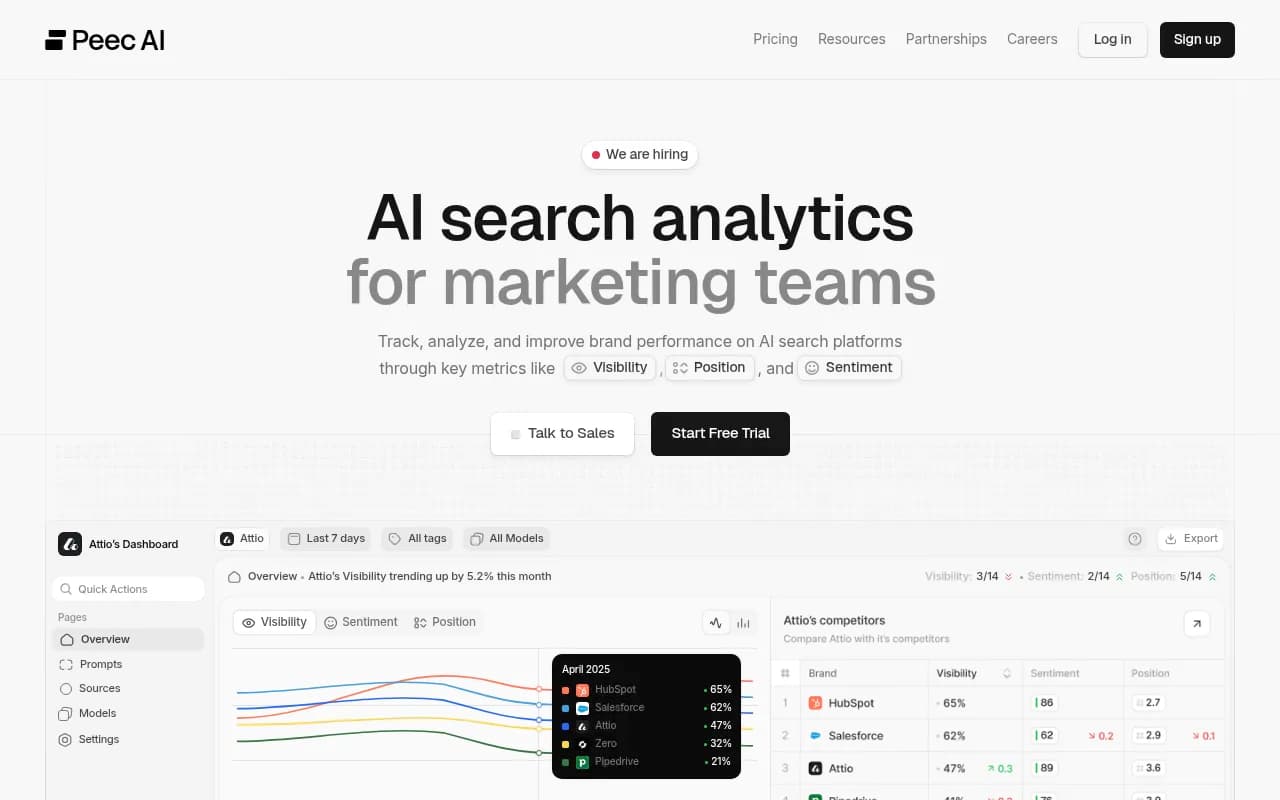
For the AI visibility use case specifically, tools built around that problem from the ground up will serve you better. The monitoring-only tools (like Otterly.AI or Peec.ai) give you data but leave you stuck. Platforms that combine tracking with content gap analysis and optimization — showing you not just where you're invisible but what to do about it — are more useful.
Otterly.AI

The AEO angle: what AirOps Next 2026 revealed
At AirOps Next 2026, the company shared findings from 250+ marketing leaders on AI search behavior. The headline: buyers are increasingly delegating discovery to AI search engines and agents. This is real, and AirOps is right to take it seriously.
The platform's AEO features — diagnostics, content recommendations, workflow automation for AEO-focused content — are a genuine response to this shift. But the execution is still catching up to the ambition. Multi-engine monitoring behind a $2,000/month paywall means most teams can't actually use the feature that matters most.
The direction is right. The current implementation has gaps.
Final assessment
AirOps is a solid content engineering platform with a clear use case and real customers who get value from it. The workflow builder is genuinely good. The Grids feature is practical. The brand kit system, while limited, is better than nothing.
The problems are real too. Template rigidity frustrates teams with complex needs. The pricing structure creates a cliff between Solo and Pro. AI visibility monitoring is thin compared to dedicated platforms. And the tool doesn't pretend to be a GTM platform, which means teams expecting that will be disappointed.
The honest verdict: if you need to produce a lot of standardized content quickly and you're on WordPress or Webflow, AirOps is worth evaluating. If AI search visibility is your primary concern, build that capability separately — or find a platform where it's the core product, not an add-on.
Content teams in 2026 are dealing with two distinct problems: producing enough content, and making sure that content gets cited by AI search engines. AirOps addresses the first reasonably well. The second problem requires a different kind of tool.