Key takeaways
- Brandlight describes itself as enterprise only. Its own comparison page says startups, SMBs and agencies serving small clients are told no on the first call.
- The product is built around a dedicated strategist, analyst and customer success lead, plus a query set Brandlight builds and maintains. Mid-market teams often pay for capacity they will not use.
- Pricing claims conflict. One rival says custom quote only, another says entry starts around $199/month. Treat both as unverified and ask for a written quote.
- The real question for mid-market teams is whether you need monitoring or execution. Plenty of tools report a score. Fewer help you publish the fix.
- Verify every price on the vendor's own site. Most numbers in this guide come from third-party roundups.
What Brandlight actually is
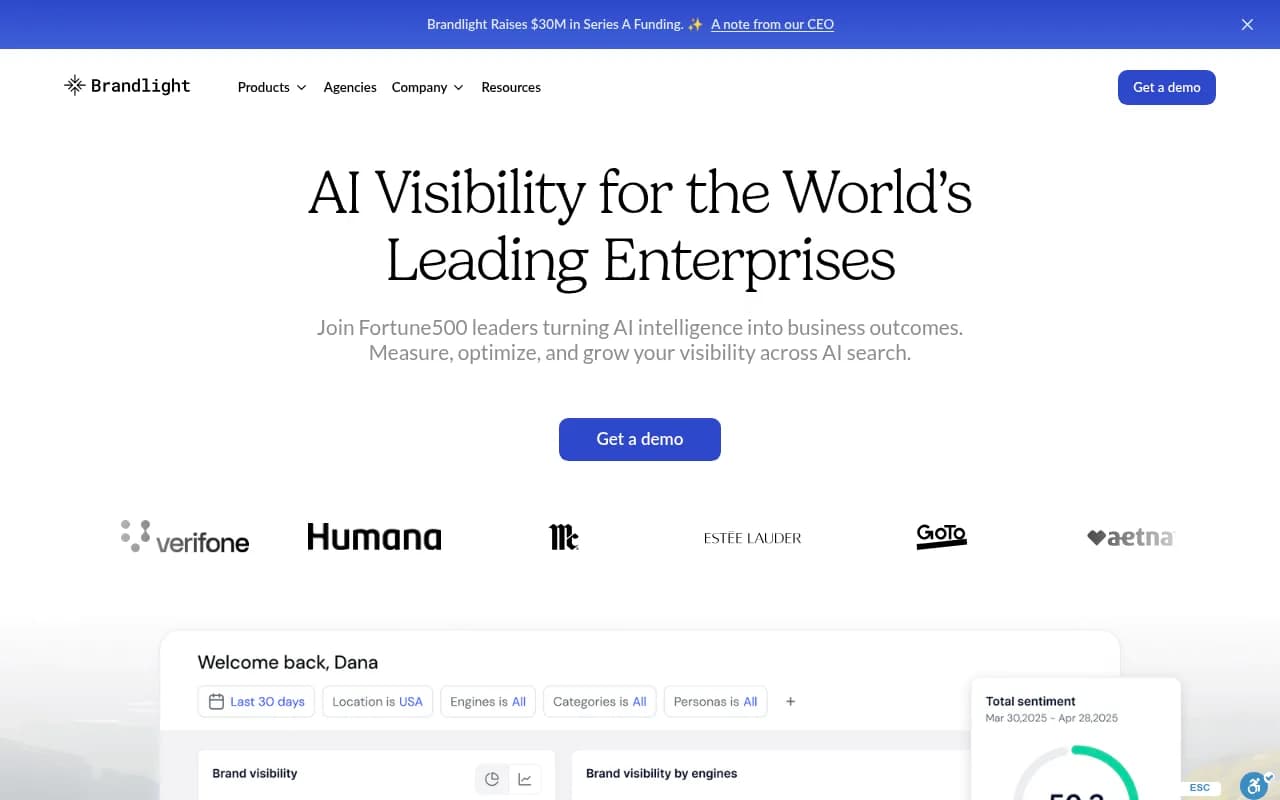
Brandlight tracks how AI engines describe and recommend your brand. According to LLM Pulse, a competitor, it covers ChatGPT, Gemini, Perplexity, Copilot and Grok, with sentiment, citations, technical health audits and a multi-brand command center. It has also launched an AI ads capability for ChatGPT Ads, working with a select group of early customers.
None of that is unusual. What stands out is the service model. Brandlight's own comparison with Profound describes a query set it builds from licensed AI-panel data and owns, plus a strategist, an analyst and a CS lead who run the program with you. That is closer to a managed service wrapped around a data layer than a self-serve tool.
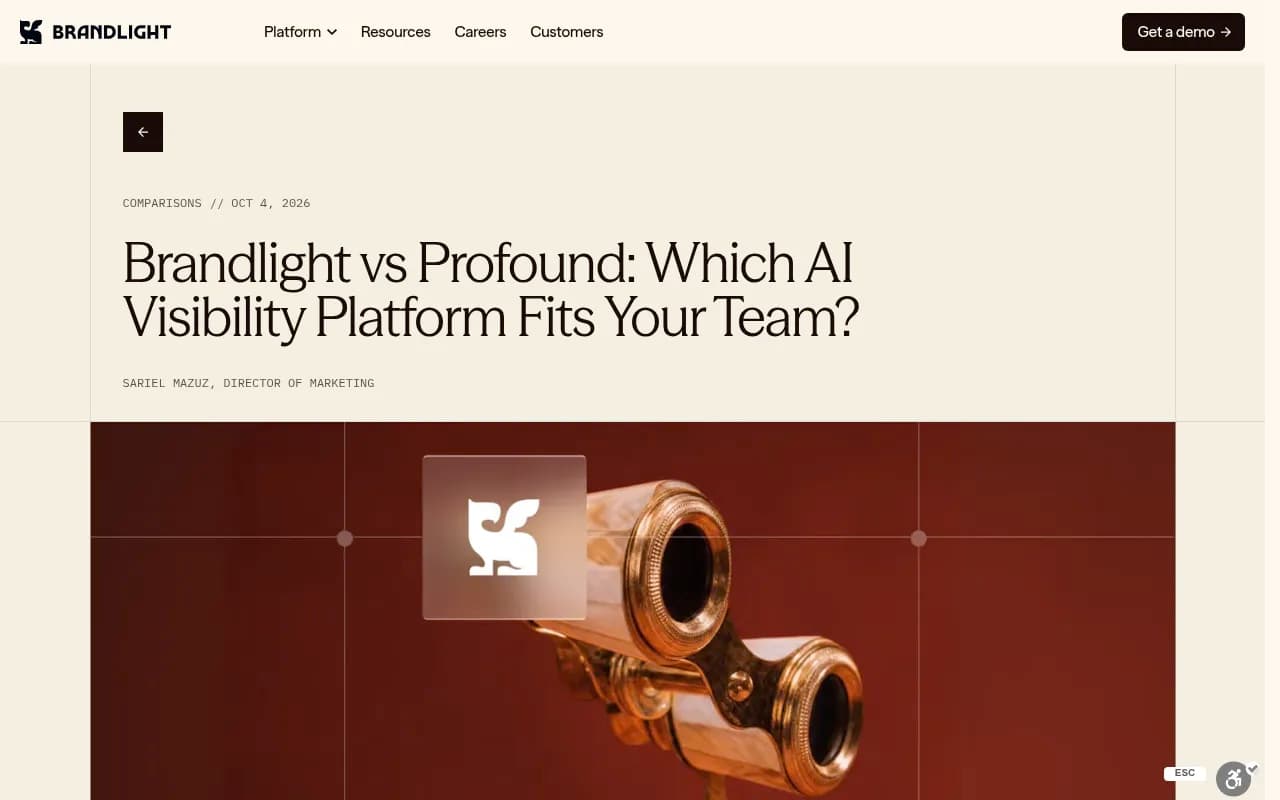
To be fair, this is marketing from the vendor itself, so read it as a statement of intent, not an independent review. I could not find any independent analyst data on Brandlight, which is worth knowing before you spend a quarter evaluating it.
What enterprise only really means
Brandlight is unusually blunt about it. The comparison page says it is enterprise only, and that startups, SMBs and small-client agencies hear no on the first call. I actually respect that. It saves everyone time. But it also tells mid-market teams something specific.
Governance is the product
Brandlight argues that enterprise buyers want an executive sponsor, a named owner per workstream and controlled distribution of the data. The page puts it bluntly: the last thing a brand organization wants is everyone in the tool doing whatever they like, with a direct line to the brand president. If you have a legal review step, regulated claims or a portfolio of brands, that is a real feature. If you are a six-person marketing team where the SEO lead also writes the briefs, it is overhead.
Sales-led onboarding
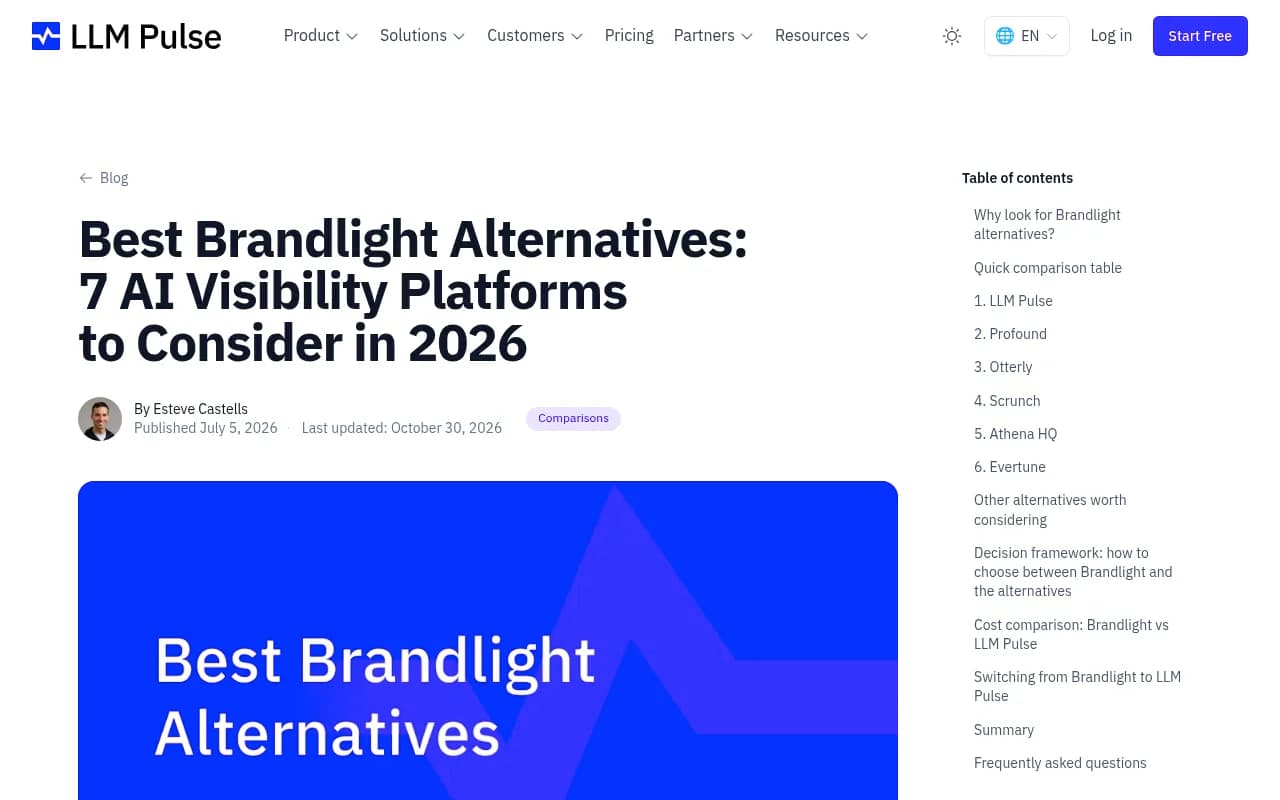
LLM Pulse lists four recurring complaints: custom-quote pricing, enterprise-only positioning, sales-led onboarding with no self-serve checkout, and thin public detail on methodology and data sources. Again, LLM Pulse sells a rival product, so weigh that accordingly. One source says Brandlight advertises a team trial, while LLM Pulse's table says no free trial. Those conflict, and I could not resolve it.
The pricing confusion
Mentionova says entry pricing is around $199/month and that comparable monitoring runs $20 to $99/month elsewhere. LLM Pulse says custom quote only. Both cannot be right. If you are budgeting, ask for a written quote and a contract term before you invest evaluation time.
Who Brandlight fits, and who it does not
| Situation | Brandlight fit |
|---|---|
| Fortune 500 brand with multiple business units | Strong |
| Regulated industry needing governed access | Strong |
| Team that wants a strategist to run the program | Strong |
| Mid-market team that wants self-serve setup this week | Weak |
| Agency managing 5 to 50 small clients | Not a fit by its own account |
| 1 or 2 people who need a number to justify budget | Weak |
Brandlight's own page makes the last point itself. If you are one or two people who need a number this week for a budget request, it suggests starting with a cheaper monitoring tool and coming back when the constraint is execution rather than measurement. That is decent advice, and it applies to most mid-market teams too.
The question that matters more than the vendor
Before comparing tools, decide what your constraint is.
- Measurement. You do not know where you stand. A monitoring tool is enough.
- Diagnosis. You know you are invisible on certain prompts but not why. You need citation data, crawler visibility and content gap analysis.
- Execution. You know the gaps. Nobody has time to write and publish the pages that close them.
Monitoring-only tools solve the first. Enterprise service models like Brandlight solve the third by adding humans. Mid-market teams usually need a platform that does the second and third with software, because they cannot hire three specialists to sit alongside the dashboard.
Also keep in mind how different the engines are. According to Promptwatch's average sources per response data, ChatGPT cites about 5 sources per web-search answer, while Google AI Overviews and Perplexity cite about 10. ChatGPT has the fewest slots, so focused pages that fully answer one long-tail prompt are more likely to win one. Any tool you choose should let you see these engines separately instead of blending them into one score.
Where to go instead
Here is a practical shortlist for mid-market teams. Prices below come from LLM Pulse's roundup unless noted. Verify each on the vendor's site.
Promptwatch
Promptwatch is the option I would put first for teams that need to act, not just watch. It monitors the real interfaces of ChatGPT, Google AI Overviews, Google AI Mode, Gemini, Perplexity, Copilot and others, then traces where answers come from using citation data and IP-verified AI crawler logs. From there, the Action Board prioritizes what to fix, and the Content Agent writes and publishes pages to WordPress, Webflow or Framer. Page tracking and visitor analytics then show whether the new page got crawled, cited and clicked.

The mid-market angle is pricing and self-serve access. Essential is $95/month, Professional is $245/month and Business is $579/month, all with unlimited team seats, with a 7-day free trial on monthly billing. Confirm current numbers at promptwatch.com/pricing. The Content Agent, faster-than-daily tracking, state and city tracking and Fact Check start at Business. Agencies have their own Kick-off, Growth and Scale plans.
If you want the head-to-head view, see Promptwatch vs Profound and Promptwatch vs Brandlight. You can also start with the free AI visibility report to see how ChatGPT, Gemini and Perplexity describe you before paying anything.
Profound
LLM Pulse calls Profound the closest direct Brandlight competitor, and Brandlight's own page says Profound serves everyone from self-serve to large accounts. It offers a 7-day trial and custom enterprise pricing. Good if you want the enterprise category but with more self-serve control, including editing and adding prompts yourself.
Profound

Scrunch
Orchly describes Scrunch as aimed at mid-market and enterprise teams that care about how AI crawlers read their site. LLM Pulse lists a $250/month Starter plan billed annually with a 7-day trial. It combines visibility tracking, page audits and agent traffic.

LLM Pulse
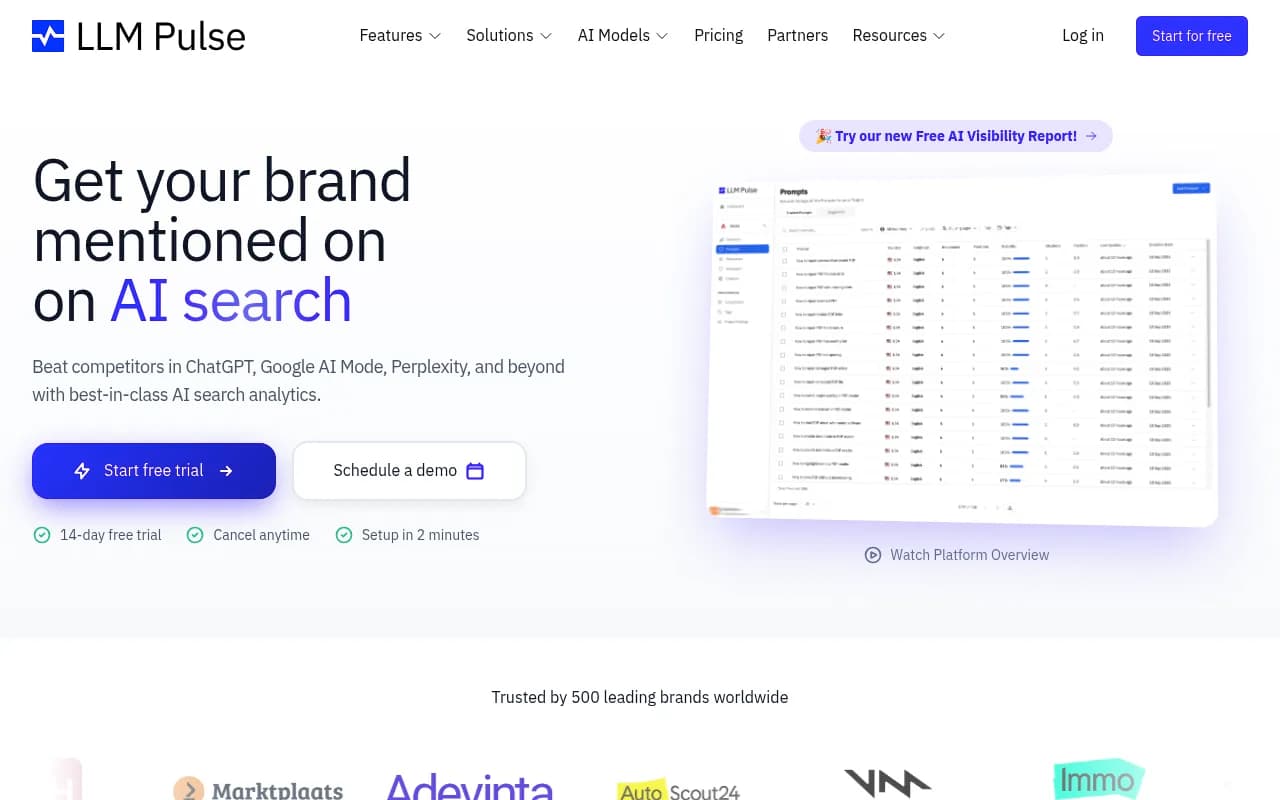
LLM Pulse lists €49/month for 50 prompts, €99 for 150 and €299 for 450. It covers ChatGPT, Perplexity, Gemini, AI Mode and AI Overviews, with Claude, Copilot and Grok as paid add-ons, plus white-label, API and an MCP server. It is a rival that wrote the main source article for this guide, so double-check its claims.
Otterly.AI
Listed at $29/month with a trial. Suited to solo operators and very small teams that need a baseline pulse check, which is exactly the use case Brandlight itself says to start with.
Otterly.AI

AthenaHQ
LLM Pulse lists a free Essential plan and a Starter plan at $295/month. A reasonable option if you want to try monitoring with little commitment.

Evertune
Listed at $800/month Pro with no trial. It focuses on statistical analysis of how AI describes a brand, which suits teams that care about measurement rigor over execution.
Bluefish
A LinkedIn roundup calls Bluefish Brandlight's closest enterprise peer, aimed at Fortune 500 teams that also want AI ads. If you are leaving Brandlight because of enterprise positioning, Bluefish will not solve that.
Mentionova
Positioned on daily briefs with ranked actions and a content production system. I could not find pricing or a trial for it, so it is hard to evaluate on cost. Note that it also authored one of the sources here and argues strongly for itself.
Comparison table
| Tool | Starting price (as reported) | Trial | Best for |
|---|---|---|---|
| Brandlight | Custom quote or ~$199/mo (conflicting) | Conflicting reports | Fortune 500, governed rollouts |
| Promptwatch | $95/mo Essential; $245 Professional; $579 Business | 7-day trial on monthly billing | Mid-market teams that want to fix gaps, not just see them |
| Profound | Enterprise custom | 7 days | Closest enterprise-style alternative |
| Scrunch | $250/mo Starter, annual | 7 days | Crawler readability and page audits |
| LLM Pulse | From EUR 49/mo | Check site | Budget-friendly multi-engine tracking |
| Otterly.AI | $29/mo | Yes | Solo operators |
| AthenaHQ | Free plan; $295/mo Starter | Free plan | Trying monitoring cheaply |
| Evertune | $800/mo Pro | No | Statistical brand analysis |
How to choose in a week
Step 1: write down your constraint
Is it measurement, diagnosis or execution? Be honest. Most teams say measurement and then discover three weeks later that nobody has time to act on the dashboard.
Step 2: set a prompt budget
List the 50 to 150 prompts that actually matter to your pipeline. Tools that price per prompt get expensive fast, so know the number before you talk to sales.
Step 3: check what the tool shows beyond mentions
Ask to see citation sources, crawler logs and traffic attribution. A mention without a citation usually means a content or crawlability problem, and a tool that cannot separate the two will leave you guessing. Promptwatch's citations vs mentions guide explains the difference.
Step 4: ask who does the work
Brandlight answers this with people. Others answer with agents and workflows. Neither is wrong. Pick based on your headcount and budget, not on a demo.
Step 5: trial two tools on the same prompts
Run the same 30 prompts in two platforms for seven days. Compare the data and, more importantly, compare what each tells you to do next.
Mistakes I see mid-market teams make
- Buying on logos. Enterprise customers lists tell you little about whether the onboarding fits a team of five.
- Trusting competitor-written comparisons. Almost every Brandlight alternatives article is written by a vendor that ranks itself first, including the ones used for this guide.
- Chasing a single visibility score. Read coverage, position, sentiment and citations separately. They point to different problems.
- Ignoring crawl access. If AI bots cannot read your pages, no amount of content fixes it.
For wider category browsing, the GEO software directory at bestgeosoftware.com lists more options.
What I would do
If I were running a mid-market marketing team, I would not spend a quarter in enterprise procurement for a tool that says upfront it is built for someone else. I would run a seven-day trial of a platform that covers monitoring, diagnosis and content execution, confirm real pricing on the vendor's site, and keep a cheap monitor like Otterly as a baseline. Then revisit enterprise options only if governance and multi-brand management become the actual bottleneck.
For teams that want help beyond tooling, an agency like 1001 SEO Media runs GEO programs on Promptwatch for clients who would rather outsource the execution than build a team around it.
Verify every price in this guide on the vendor's own site before you decide. The ones above are as good as the roundups they came from.