Key takeaways
- MCP (Model Context Protocol) is an open standard that lets AI assistants connect to external tools and data sources -- think of it as a universal adapter for AI workflows.
- For marketing teams, MCP matters because it enables AI agents to pull live data, run multi-step workflows, and take action across platforms without manual handoffs.
- AI search (ChatGPT, Perplexity, Google AI Overviews, etc.) now influences how customers discover brands -- and most marketing teams have no visibility into it.
- An "AI Search MCP" isn't a single product -- it's the combination of protocol infrastructure and AI visibility tooling that lets teams monitor, analyze, and optimize their presence in AI-generated answers.
- Tools like Promptwatch are already built around this action loop: find where you're invisible, create content that gets cited, track the results.
The problem with how marketing teams currently work
Ask most marketing teams how their brand appears in ChatGPT or Perplexity, and you'll get a blank stare. They can tell you their Google rankings, their organic traffic, their email open rates. But what does Claude say when someone asks for the best project management tool in their category? No idea.
That's not a niche concern anymore. ChatGPT hit 800 million weekly active users in 2025. Google's AI Mode has over 100 million monthly active users. Perplexity has quietly built a base of 60 million monthly users. These aren't early adopters -- they're your customers, doing research and making purchasing decisions based on AI-generated answers.
Meanwhile, zero-click searches now account for nearly 60% of all Google queries. When AI Overviews appear, organic click-through rates for the top-ranking page drop by 58% according to Ahrefs data. The traffic that used to flow predictably to your blog posts and landing pages is being intercepted, summarized, and redistributed by AI systems that your current marketing stack can't even see.
This is the gap that AI search tooling -- and specifically the infrastructure around MCP -- is starting to close.
What MCP actually is (without the hype)
MCP stands for Model Context Protocol. Anthropic developed it and open-sourced it in late 2024. The simplest way to think about it: MCP is plumbing for AI.
Before MCP, if you wanted an AI assistant to pull data from your CRM, check your analytics dashboard, and then draft a report, you'd need custom integrations for each connection. Every tool required its own one-off API work. It was expensive, brittle, and didn't scale.
MCP changes that by creating a standard format for how AI models interact with external software. Developers define which actions their software can perform using the MCP spec -- what data each action touches, what parameters it accepts, what it returns. AI systems can then chain those actions together to complete multi-step workflows.
As AdExchanger put it in their March 2026 explainer, MCP lets AI string together actions like "pull a report," "create an audience," "send a message," and "launch a campaign" -- all in one workflow, without a human manually moving data between systems.
For marketing teams, the practical implications are significant. An AI assistant with MCP access can check your actual calendar availability when scheduling a campaign review. It can fetch a customer's live order status from your CRM. It can pull your current keyword rankings, compare them against competitor visibility in AI search, and generate a brief for your content team -- all in one session, with live data, not cached snapshots.
What "AI Search MCP" means for marketing specifically
The phrase "AI Search MCP" isn't an official product category yet -- but it describes something real: the combination of MCP-enabled AI infrastructure and AI search visibility tooling that lets marketing teams actually operate in the new search environment.
Here's what that looks like in practice:
Monitoring where your brand appears in AI answers
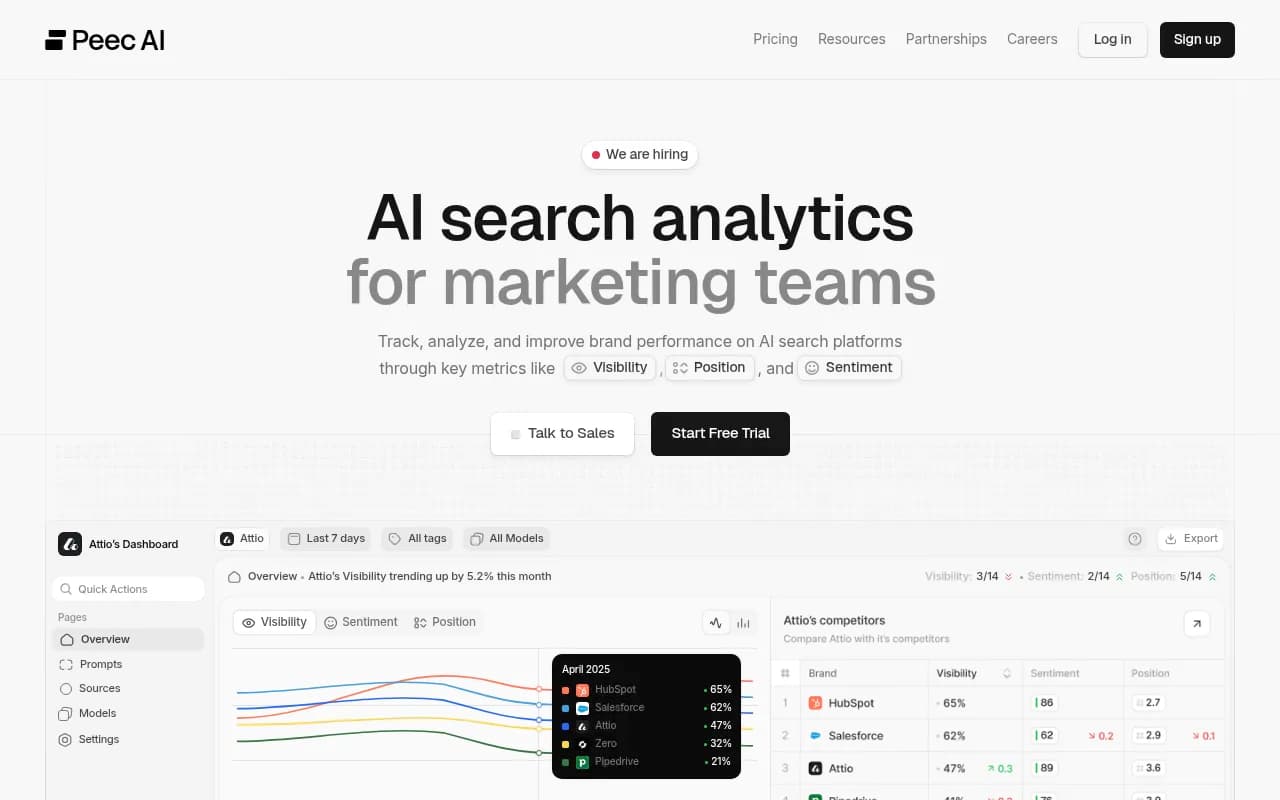
The first layer is basic visibility. When someone asks ChatGPT "what's the best email marketing tool for e-commerce?" -- does your brand appear? In what context? With what sentiment? Are competitors being recommended instead of you?
Most marketing teams have never answered these questions systematically. Tools designed for AI search monitoring can run these queries at scale, across multiple AI models, and surface the patterns.

Otterly.AI

Identifying the content gaps that are costing you citations
Monitoring tells you where you're invisible. The more useful question is why -- and what to do about it.
AI models cite content that directly answers the questions users are asking. If your website doesn't have a clear, authoritative answer to "how does [your product] compare to [competitor]?" or "what's the best [your category] for [specific use case]?" -- you won't appear. The AI will cite someone who does.
Answer gap analysis tools identify exactly which prompts competitors are being cited for that you're not. That's the specific content your site is missing.
Creating content engineered for AI citation
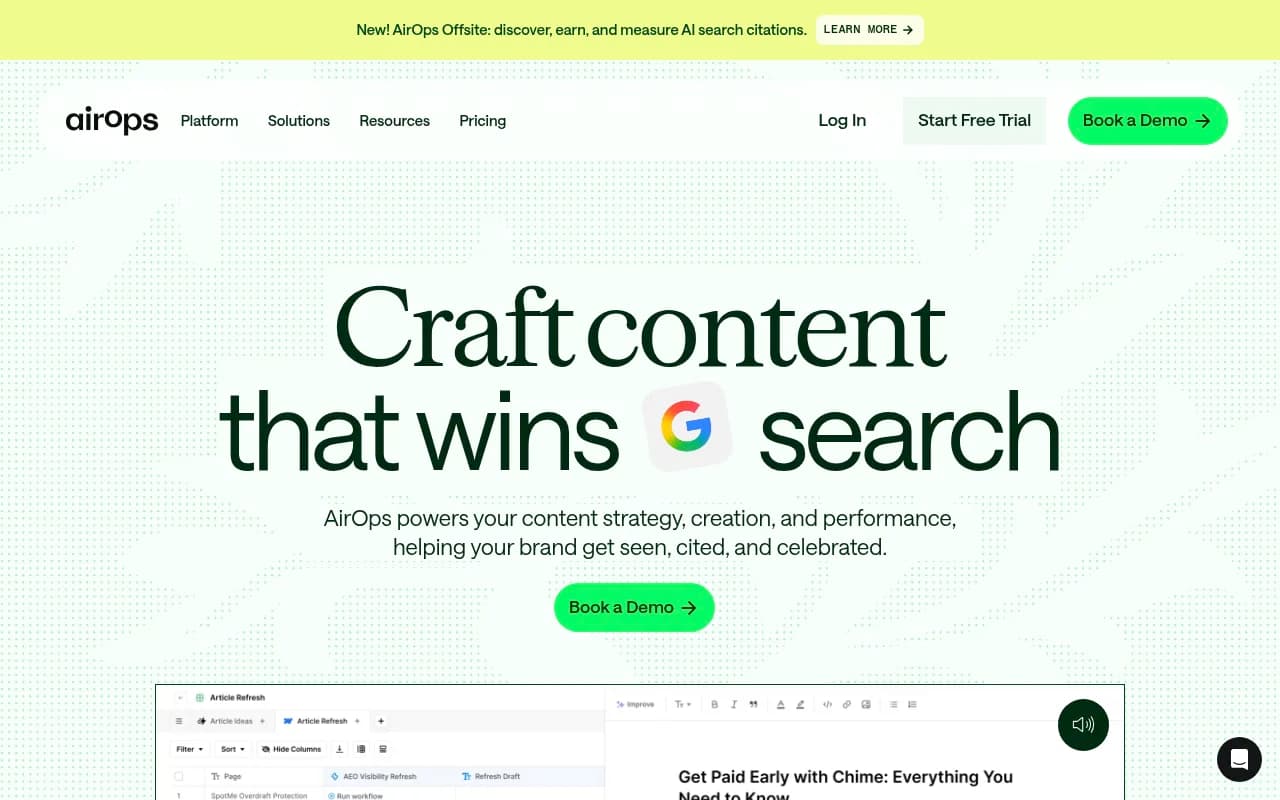
This is where MCP-style connectivity becomes genuinely powerful. An AI writing agent with access to your brand guidelines, your existing content, competitor citation data, and prompt volume estimates can generate articles that are specifically designed to get cited -- not generic SEO filler, but content built around the actual questions AI models are trying to answer.
The difference between content that ranks in traditional search and content that gets cited in AI answers is real. AI models favor direct, structured, authoritative responses. They cite sources that clearly answer the question without burying the answer in preamble.
Tracking the results and connecting them to revenue
The loop closes when you can see your visibility scores improving and connect that improvement to actual traffic and revenue. Which pages are being cited? By which models? How often? And when someone arrives at your site from an AI referral, what do they do?
This is harder than it sounds. AI traffic attribution requires either a code snippet, server log analysis, or integration with Google Search Console -- because AI referrals don't always show up cleanly in standard analytics.
Why this matters more in 2026 than it did last year
The shift isn't just about AI search growing. It's about where in the customer journey AI search is now operating.
As Marcel Digital noted in their March 2026 analysis, AI-driven search is compressing the early stages of the buyer journey. Users used to visit five or six websites to research a category. Now they ask ChatGPT once and get a synthesized answer. The individual visits to your educational content -- the ones that fed your retargeting pools and attribution chains -- are disappearing.
That doesn't mean your content is worthless. It means your content needs to be good enough that AI models cite it rather than synthesize around it. The influence still happens -- it just happens indirectly, through the AI's answer rather than through a direct visit.
Marketing teams that understand this are already restructuring their content strategies around what AI models want to cite: direct answers, structured data, clear entity relationships, authoritative sourcing.
The tools that are actually useful right now
The market for AI search tooling is crowded and moving fast. Here's an honest breakdown of what different tool categories actually do:
| Category | What it does | What it doesn't do |
|---|---|---|
| AI visibility monitoring | Tracks brand mentions across ChatGPT, Perplexity, Claude, etc. | Tells you how to fix gaps or create better content |
| Answer gap analysis | Shows which prompts competitors rank for that you don't | Usually requires a separate content tool to act on the data |
| AI content generation | Creates articles, comparisons, listicles for AI citation | Varies wildly in quality and citation-awareness |
| AI traffic attribution | Connects AI referrals to actual sessions and revenue | Often requires technical setup (server logs, GSC integration) |
| MCP-enabled AI agents | Automates multi-step workflows across your marketing stack | Still early; requires developer setup for most teams |
The most useful platforms in 2026 are the ones that cover more than one of these categories -- because the value is in the loop, not any single step.
Promptwatch covers the full loop: visibility monitoring across 10 AI models, answer gap analysis that shows exactly which content is missing, an AI writing agent that generates citation-optimized content, and traffic attribution that connects AI visibility to actual revenue. It's one of the few platforms that doesn't just show you data and leave you stuck.
Profound


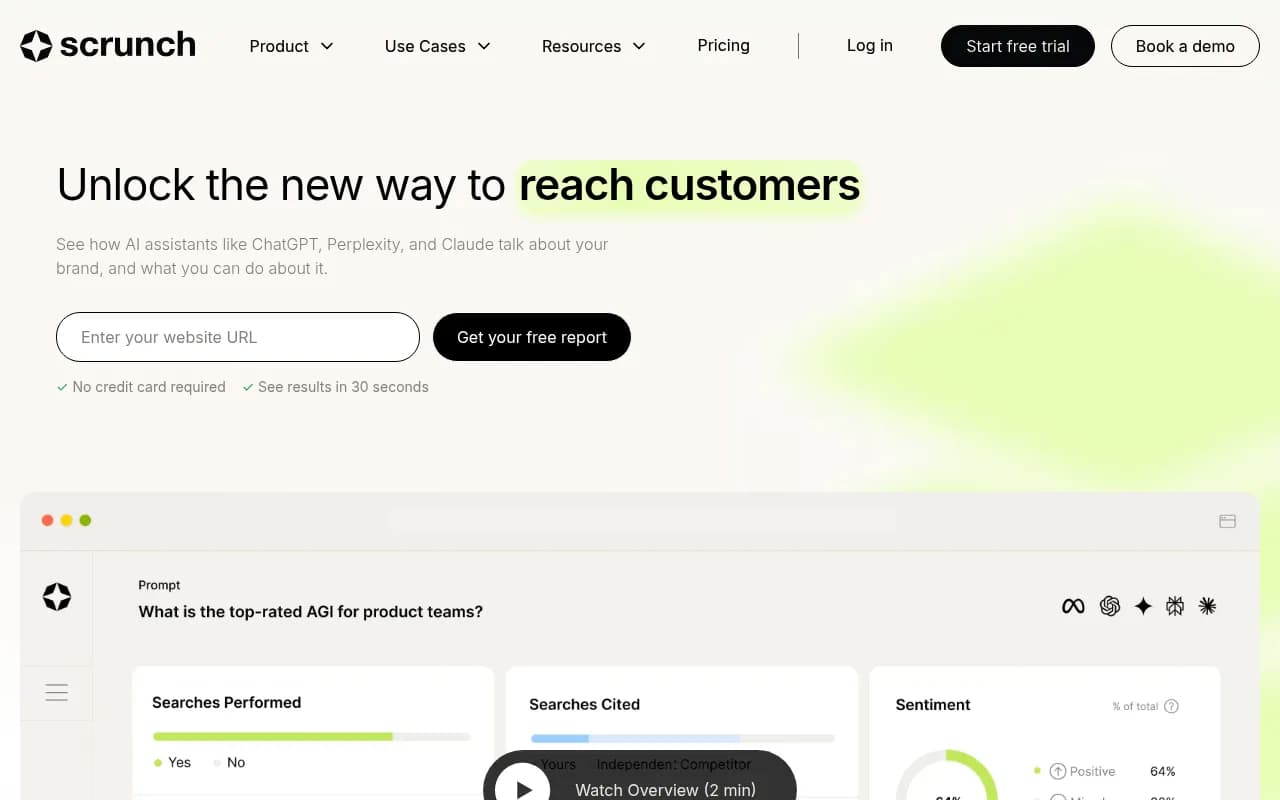
For teams that want to start with monitoring only before committing to a full platform:

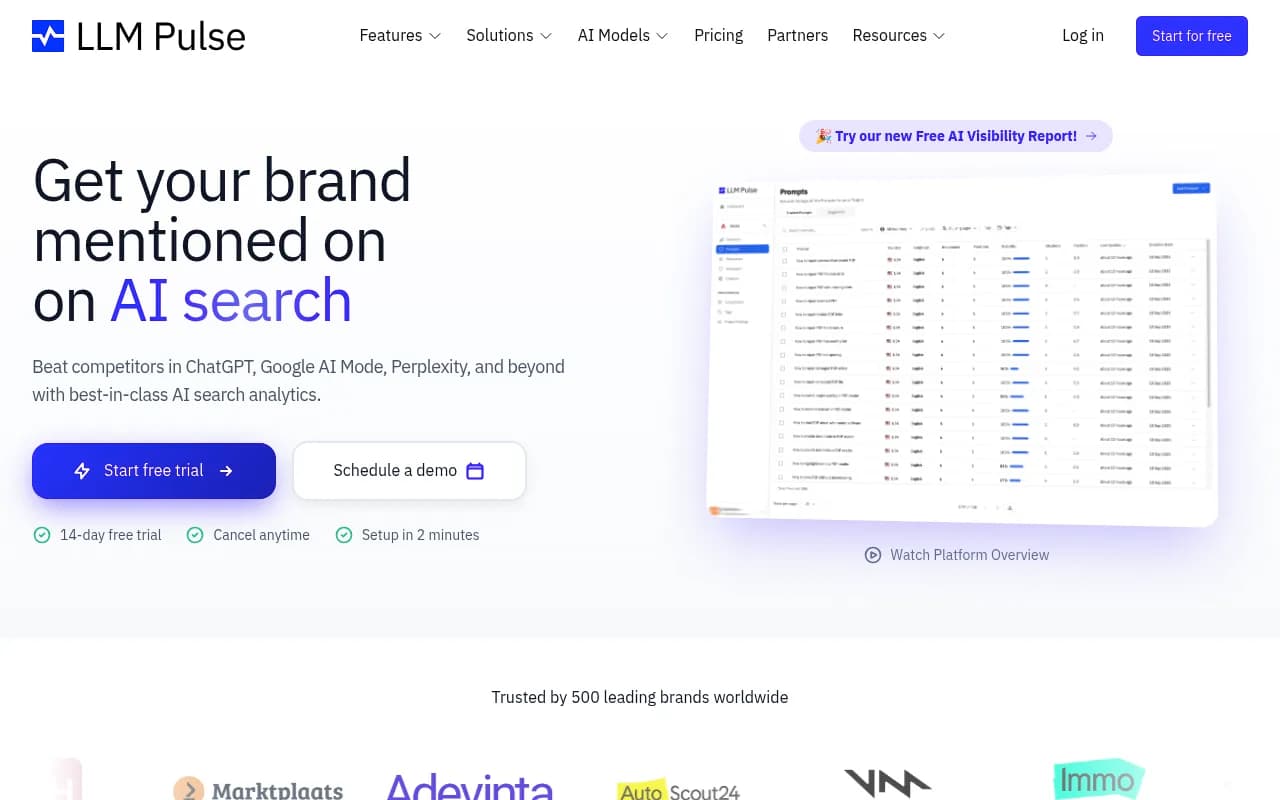
What a practical AI search MCP workflow looks like
Here's how a marketing team might actually use this infrastructure in 2026:
Week 1: Establish a baseline. Run your core product and category prompts across ChatGPT, Perplexity, Claude, and Google AI Overviews. Document where you appear, where competitors appear, and what the AI says about your brand when it does mention you.
Week 2: Identify the gaps. Use answer gap analysis to find the specific prompts where competitors are being cited and you're not. Prioritize by prompt volume and commercial intent -- not every gap is worth closing.
Week 3: Create targeted content. For each high-priority gap, create content that directly answers the question. This usually means a dedicated page or article, not a buried FAQ. Structure matters: clear headings, direct answers, specific claims with sources.
Week 4: Monitor and iterate. Track whether your new content starts getting cited. This takes time -- AI models don't re-index instantly -- but you should see movement within 4-8 weeks for well-optimized content.
The MCP layer comes in when you want to automate parts of this workflow: having an AI agent pull your latest visibility data, compare it against competitors, flag new gaps, and draft content briefs -- without a human doing each step manually.
The honest state of MCP for marketing teams right now
MCP is real and the 2026 roadmap from Anthropic (presented by co-creator David Soria Parra) points toward more sophisticated agent capabilities, better memory across sessions, and industry-specific protocols built on top of the base standard.
But for most marketing teams today, MCP is still mostly a developer concern. You're not going to open a dashboard and click "enable MCP." You're going to use platforms that have already built MCP-compatible integrations into their products -- or you're going to work with a developer to connect your AI tools to your data sources using the protocol.
The practical near-term value for marketing teams isn't in building MCP servers from scratch. It's in using platforms that have already done that work -- tools that can pull live data from your analytics, your CRM, your content management system, and your AI visibility dashboard, and let an AI agent reason across all of it.
That's the direction the market is moving. Teams that understand the underlying architecture will be better positioned to evaluate tools, ask the right questions of vendors, and avoid buying monitoring dashboards that show you data but don't help you do anything with it.
What to do this week
If you haven't audited your brand's AI visibility yet, that's the starting point. Query ChatGPT, Perplexity, and Google AI Overviews with the prompts your customers actually use. See what comes back. See who's being recommended instead of you.
Then decide whether you want to track this manually (time-consuming, inconsistent) or with tooling (faster, more systematic, easier to act on).
The Forbes Agency Council piece from March 2026 put it plainly: most marketing teams have never tested how their company appears in AI-generated answers, and very few have acted to improve it. That gap is an opportunity -- but it closes as more teams wake up to it.
The teams that move now, build the content, and establish AI citation authority will be harder to displace later. The ones that wait will be playing catch-up in a landscape where AI models already have strong associations with their competitors.