Key takeaways
- No single team owns AI visibility end to end. The work splits by content type: product and landing pages lean brand, listicles, how-tos and docs lean content and SEO, and reviews or social cut across teams.
- Name one accountable owner, then share the execution. Without that, AI visibility becomes everyone's side project and nobody's metric.
- Per GNW Consulting and Demand Metric's Q1 2026 survey, 92% of B2B teams are experimenting with or operationalizing GEO, but only 34% trust the visibility data. Measurement is the weak spot.
- Which channels matter depends on the engine. Social presence barely registers in ChatGPT but is a real source for Google AI Overviews.
- In most teams, SEO is the sensible default owner of measurement and technical access, with content and brand as named contributors.
Why this question is suddenly urgent
Two years ago, nobody asked who owned AI visibility because it barely existed as a line item. Now it does. GNW Consulting and Demand Metric's State of GEO in B2B Marketing surveyed 225 B2B marketing and revenue leaders in Q1 2026. Of those, 92% were experimenting with GEO (48%) or operationalizing it (44%). Enterprises were further along: 60% had operationalized it versus 34% of SMBs.
The same report says GEO is being absorbed into existing teams before it is formalized as a dedicated function. That matches what I see. Somebody in SEO starts checking ChatGPT answers, somebody in content gets asked to "write for AI," and brand wonders why the model describes the company with last year's positioning. Three people, three half-owned problems.
There is money in it too. Adobe, which closed its Semrush acquisition in April 2026, says in a sponsored WSJ piece that Semrush research found AI search visitors convert 4.4 times better than organic search visitors. It's sponsored content, so treat the number as directional. But it explains why finance and the CMO now care who is responsible.
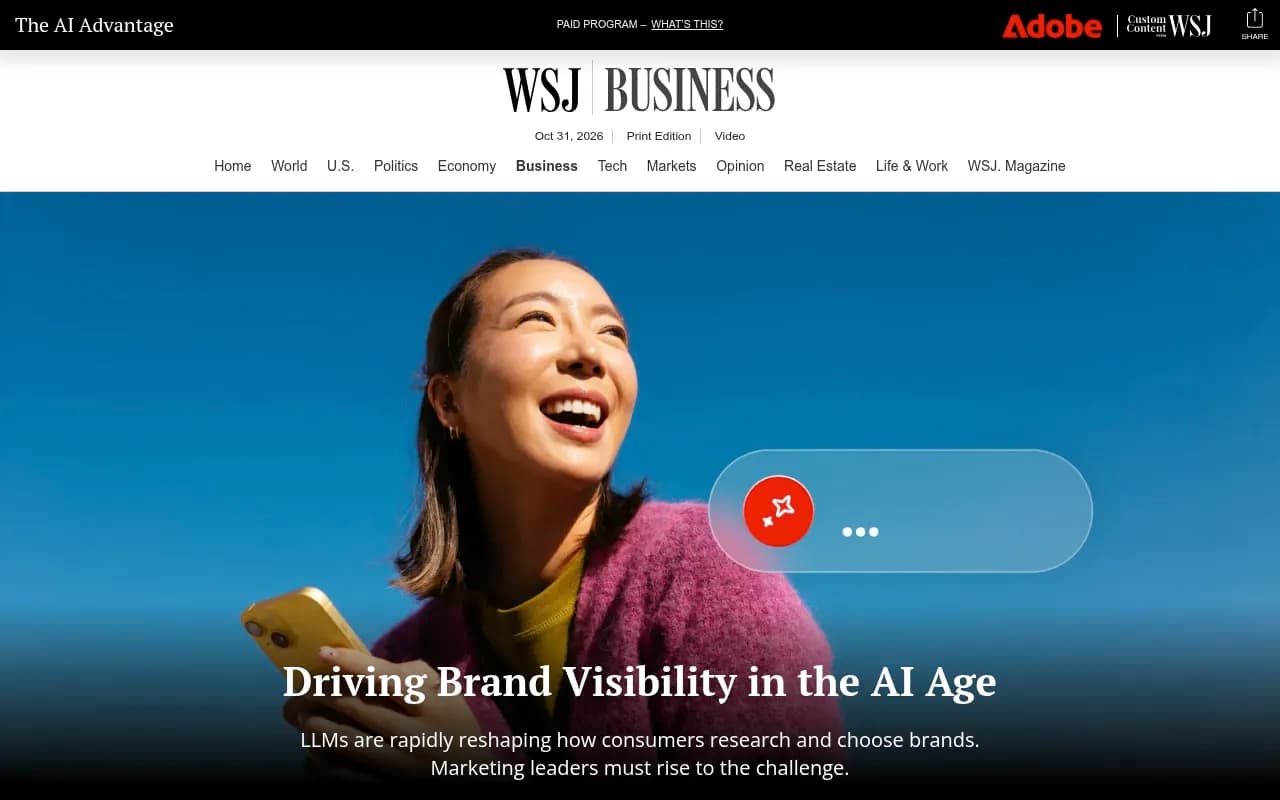
The Adobe interview makes one point that matters for this debate: winning AI visibility takes consistent signals across first-party (owned) and third-party properties. Owned and third-party signals live in different departments. That alone tells you one team can't do it.
Why the usual answer, "SEO owns it," is only partly right
SEO is the default because the skills overlap. SEOs understand crawling, indexing, structured data, content gaps and measurement. They already live in dashboards. If you forced me to pick a single owner, I'd pick SEO too.
But look at what AI engines actually cite. Promptwatch Data's report on ChatGPT citation share by content type (Sep 28 to Oct 4, 2026) shows:
- Product pages: 22.4% of classified citations
- Landing pages: 16.8%
- Listicles: 13.6%
- How-tos: 8.7%
- Documentation: 7.5%
- General articles: 6.1%
- Comparisons: 5.9%
- News: 5.7%
So about 39% of citations go to pages describing what a company sells. Who owns your product pages? Usually product marketing or brand, not SEO. The editorial formats add up to roughly 43%, and that is where content and SEO do real work. Splitting ownership by content type is more honest than splitting it by job title.
Ownership by the work, not the department
Here is the split I'd start from.
| Work area | What AI engines reward | Natural owner | Supporting teams |
|---|---|---|---|
| Product and landing pages | Clear claims, specs, pricing, proof | Product marketing / brand | SEO for structure, content for copy |
| Listicles, comparisons, how-tos | Useful, specific, up-to-date articles | Content | SEO for prompt research |
| Documentation and help centers | Accurate, crawlable, current | Product / support | SEO for technical access |
| Reviews and third-party listings | Volume and sentiment | Brand / PR / customer marketing | Content |
| Social and community presence | Varies a lot by engine | Brand / social | Content |
| Crawler access and site health | Pages AI bots can read | SEO / web | Engineering |
| Measurement and reporting | Visibility, citations, traffic | SEO or marketing ops | Everyone |
The measurement row is the one people skip. It is also where the survey data is bleakest.
Product and landing pages
For branded prompts, Promptwatch Data shows product pages at 23.3% of citations and landing pages at 22.8%. When someone asks an AI "what does [your company] do," these pages answer. If your positioning is vague or outdated, the model will repeat it. That is a brand problem with a measurable output.
Editorial content
For commercial prompts, product pages (26.0%), landing pages (20.6%), listicles (15.0%) and comparisons (7.9%) add up to almost 70% of citations. Informational prompts shift toward how-tos (10.7%), docs (8.5%) and articles (7.7%). Content teams own the how-to and comparison supply. SEO tells them which prompts to chase.
Content also ages differently by type. According to Promptwatch's content half-life report, landing pages and docs stay cited for months while news loses half its cited pages within about 36 days. That affects who needs a refresh schedule: product marketing for landing pages, the content team for anything time-sensitive.
Social and community
This is where I'd push back on lazy advice. Per Promptwatch's social media citations report (Sep 28 to Oct 4, 2026):
| Engine | Share of citations from social platforms | Biggest social source |
|---|---|---|
| ChatGPT | 0.46% | LinkedIn (~0.3%) |
| Perplexity | 2.7% | LinkedIn and Reddit (0.86% each) |
| Google AI Overviews | 12.2% | YouTube (4.28%) |
Reddit's share of ChatGPT citations collapsed in August (Reddit citations are dropping in ChatGPT). Yet in AI Overviews, Facebook (2.38%), Reddit (2.15%) and Instagram (1.61%) still earn citations. So the social team's value to AI visibility depends entirely on which engine matters to your buyers. If you sell to B2B buyers who live in ChatGPT, a heavy community investment may be the wrong bet. If AI Overviews drives your traffic, YouTube and Facebook are worth a conversation.
Technical access
Nobody gets cited if bots can't read the page. This is clearly SEO and engineering territory. Promptwatch's AI crawler traffic report shows how much weekly crawler activity comes from OpenAI, Anthropic, Google, Perplexity and Mistral, and one data point from it is striking: Meta-WebIndexer went from about 2% to nearly 38% of tracked AI crawler requests between mid-July and August 9, 2026 (Meta-WebIndexer data). Someone has to read crawler logs and robots.txt rules regularly. That person is not on the brand team.
The measurement trust gap
Here is the stat I keep coming back to. In the GNW and Demand Metric survey, 73% of respondents track AI referral traffic at least occasionally, but only 34% trust the GEO visibility data. A 39-point gap.
That gap is an ownership problem as much as a tooling problem. When nobody owns the numbers, nobody defends the methodology, and the dashboard becomes a thing people screenshot in QBRs and then ignore. The same report says execution gaps, not budget alone, are the main brake on progress, and that ownership, workflow design, tooling and prioritization are what marketing ops needs to define.
My take: give measurement to one person. Usually the SEO lead or marketing ops. They decide which prompts count, which brand aliases count as a mention, how often the data is reviewed, and what "good" looks like.
Three org models that actually work
I found no hard survey data on what percentage of companies put AI visibility under SEO versus content versus brand, so I won't pretend there's a benchmark. These are patterns, not statistics.
Model 1: SEO-led hub
The SEO lead is accountable. They run prompt research, measurement and the technical backlog, and brief content and brand on what to fix. Best for mid-size teams with a competent SEO function and a content team that takes direction well.
Risk: SEO ends up asking brand for changes it has no authority to demand.
Model 2: Content-led
The head of content owns AI visibility as an extension of editorial planning. Content already owns the listicles, comparisons and how-tos that make up a large share of citations. Works when content is strong and SEO is thin.
Risk: technical access and measurement get neglected.
Model 3: Brand-led with an SEO engine room
Brand or product marketing is accountable, because AI answers describe the brand and the brand team owns positioning. SEO runs the instrumentation. Common in larger enterprises where brand has real budget and executive attention.
Risk: slow cycles. Brand teams don't usually ship weekly.
A simple RACI to start with
| Task | SEO | Content | Brand / PMM | Web / Eng | Marketing ops |
|---|---|---|---|---|---|
| Define tracked prompts and competitors | A/R | C | C | I | |
| Weekly visibility reporting | R | I | I | A | |
| Product and landing page messaging | C | C | A/R | ||
| Listicles, comparisons, how-tos | C | A/R | C | ||
| Docs and help center accuracy | C | C | A/R | ||
| Crawler access, robots, rendering | A | R | |||
| Reviews, PR, third-party mentions | C | C | A/R | ||
| Content refresh cadence | C | A/R | R |
A = accountable, R = responsible, C = consulted, I = informed. Adjust it. The point is that every row has exactly one A.
Tools each team will actually touch
Tool choice follows the ownership split. A few examples across the categories.
Visibility tracking and optimization
The owner of measurement needs a platform that shows how the brand appears across engines, which pages get cited, and what to fix. Promptwatch covers tracking, crawler logs, AI traffic attribution and content creation in one place, which is useful when SEO, content and brand all need to look at the same data.

Other trackers worth a look include Profound for enterprise monitoring, and lighter options such as Otterly.AI and Peec AI.
Profound

Otterly.AI


SEO suites are adding AI features too. Semrush is the obvious one, given the Adobe acquisition, and Ahrefs has Brand Radar.

If you want to compare more options, the GEO software directory at bestgeosoftware.com lists a wider range.
Content production
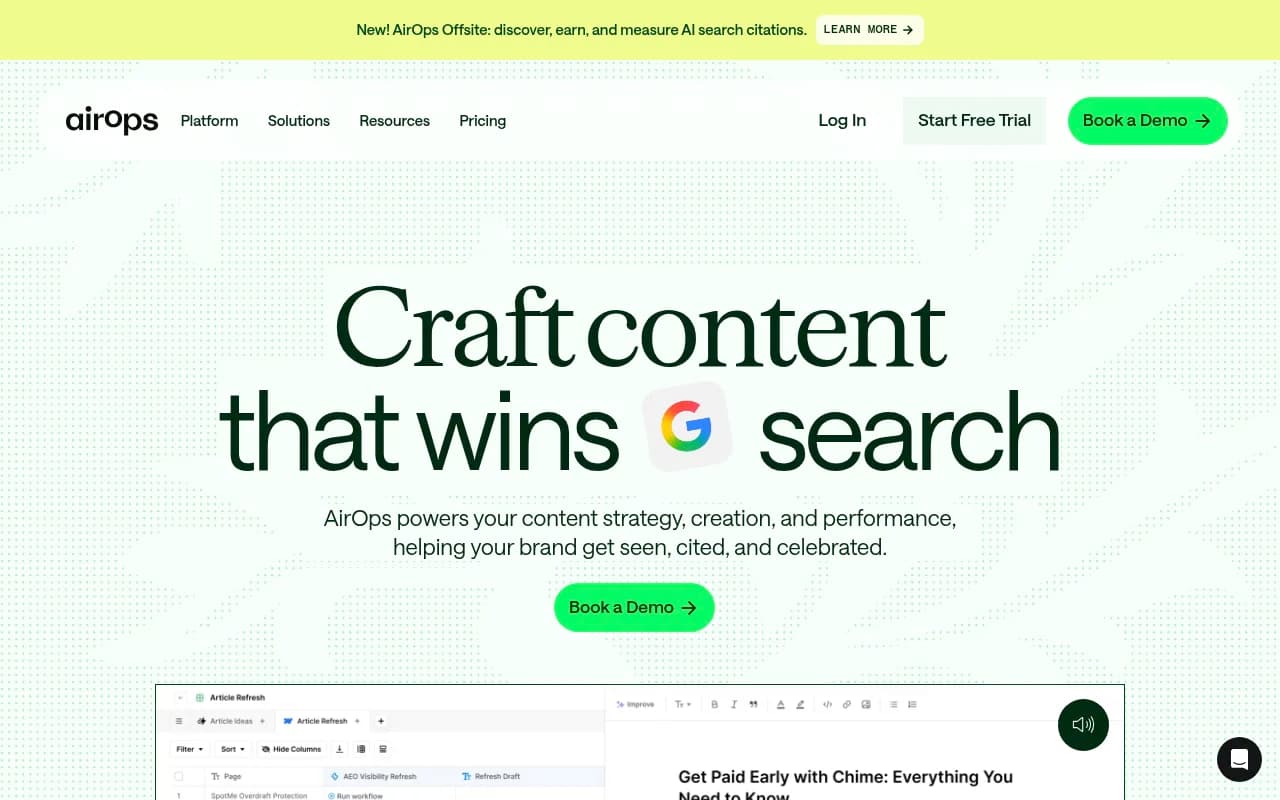
Content teams need research and optimization tooling that matches the formats AI engines cite. Clearscope and MarketMuse help on topical coverage, and AirOps focuses on content engineering for AI search.

Technical and measurement
SEO and web teams will live in Google Search Console and a crawler like Screaming Frog, plus analytics for AI referral traffic.
Shared metrics so teams stop arguing
Departments fight over ownership when they're measured on different things. Pick a small shared set:
- Visibility and share of voice across a fixed prompt set
- Citation rate for your own pages
- AI referral sessions and conversions
- Accuracy of how engines describe your brand
- Sentiment in answers
Read them together. Low share of voice points at coverage, which is content and SEO. Mentions without citations to your own site point at content quality or crawlability. Weak sentiment points at reputation, which is brand and PR. The metric tells you which team to pull in.
Do you need a new hire or an agency?
Probably not a new department. The GNW data says most companies are absorbing GEO into existing teams, and I think that's right for now. Hire when one person is spending most of their week on prompt research, reporting and technical triage. Before that, a part-time owner with clear authority beats a full-time owner with none.
If you lack the in-house skills, an outside partner can run the measurement and technical slice while your content and brand teams keep the pieces only they can do. 1001 SEO Media works this way, combining technical SEO, content and AI search optimization for teams that want one accountable partner. Be careful with any "best AI SEO agency" list, though. Many are published by an agency on the list, and Optimist's own roundup admits as much.
How to decide in one afternoon
- List the 20 or so prompts your buyers actually ask. Run them and see which page types are cited.
- Map each cited page type to the team that owns it today.
- Pick one accountable owner for measurement. Usually SEO or marketing ops.
- Assign one A per row in the RACI above.
- Agree on five shared metrics and a monthly review.
- Revisit in a quarter. If the owner has no authority over the pages that matter, move the A.
The structure matters less than the clarity. A mediocre org chart with one named owner per task will beat a perfect one nobody enforces. And skip the question of who "owns AI." Ask who owns each page type, each metric and each fix, and the answer gets a lot less political.