Key takeaways
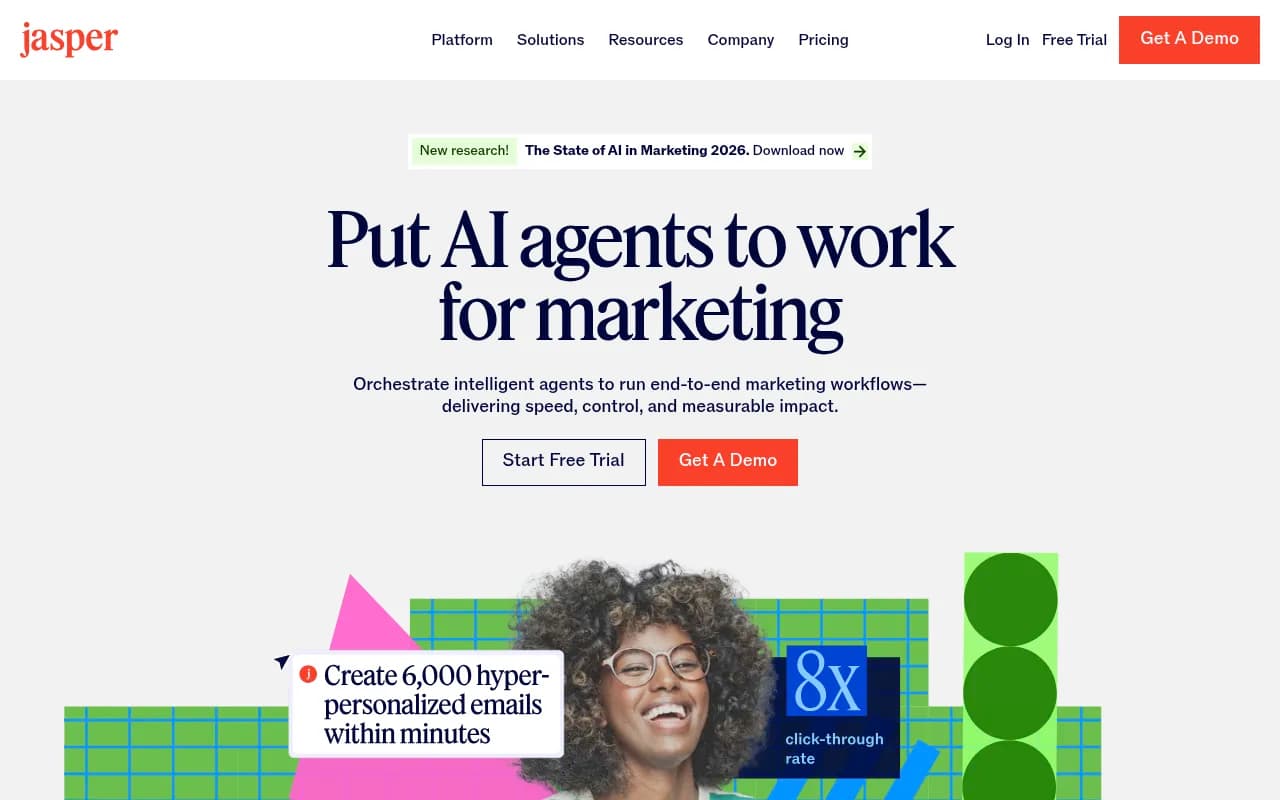
- Most AI content tools (Jasper, Copy.ai, Writesonic, etc.) are generation-only: they produce content but have zero visibility into whether AI search engines ever cite it.
- "Content working" means something different in 2026 — it's not just Google rankings, it's whether ChatGPT, Perplexity, Claude, and Gemini surface your pages when users ask relevant questions.
- AI detection tools are largely unreliable (best accuracy is ~82%, with 3-12% false positive rates), so chasing a "human score" is the wrong goal anyway.
- The tools that can actually close the loop combine content generation with AI visibility tracking — a small but growing category.
- Knowing which prompts your competitors appear in (but you don't) is the most actionable starting point for fixing your AI content strategy.
There's a quiet irony at the center of most AI content workflows in 2026. You open Jasper or Writesonic or Copy.ai, generate a 1,500-word article, publish it, and then... nothing. You have no idea if any AI model has ever read it, cited it, or recommended your brand to a single user.
The tools that create the content have no mechanism to tell you if it's working. And "working" has a completely different definition now than it did two years ago.
What "working" actually means in 2026
In 2023, content worked if it ranked on page one of Google. In 2024, the conversation shifted to AI Overviews. By 2026, the question is broader: does your content get cited by the AI models that millions of people are using as their primary research tool?
When someone asks ChatGPT "what's the best project management software for remote teams?" or asks Perplexity "which CRM is best for B2B SaaS companies?" — your content either shows up in the answer or it doesn't. That's a citation. And most content teams have no idea whether they're getting them.
Google rankings still matter. But they're no longer the whole picture. A page can sit at position 3 on Google and never appear in a single AI-generated answer. Another page might rank on page two but get cited constantly by Claude or Perplexity because it's structured in a way those models find easy to parse and trust.
The gap between "published content" and "cited content" is where most AI writing tools completely fail their users.
Why AI content tools don't track their own output
The reason is simple: generation and distribution are separate problems, and most tools only solve the first one.
Tools like Jasper, Copy.ai, Writesonic, and Rytr are built around a text-in, text-out model. You give them a brief, they give you a draft. Their job ends at the publish button. They're not connected to AI search engines. They don't query ChatGPT to see if your article is being cited. They don't monitor Perplexity's responses for your brand name. They have no crawler logs, no citation data, no visibility scores.


This isn't a criticism of those tools exactly — they do what they say they do. The problem is that many content teams treat publishing as the finish line, when it's actually the starting line.
There's also a related confusion: some teams try to use AI detection tools as a proxy for quality. If the content "passes" as human-written, the thinking goes, it must be good. This is wrong in two directions at once.
The AI detection problem (and why it's a distraction)
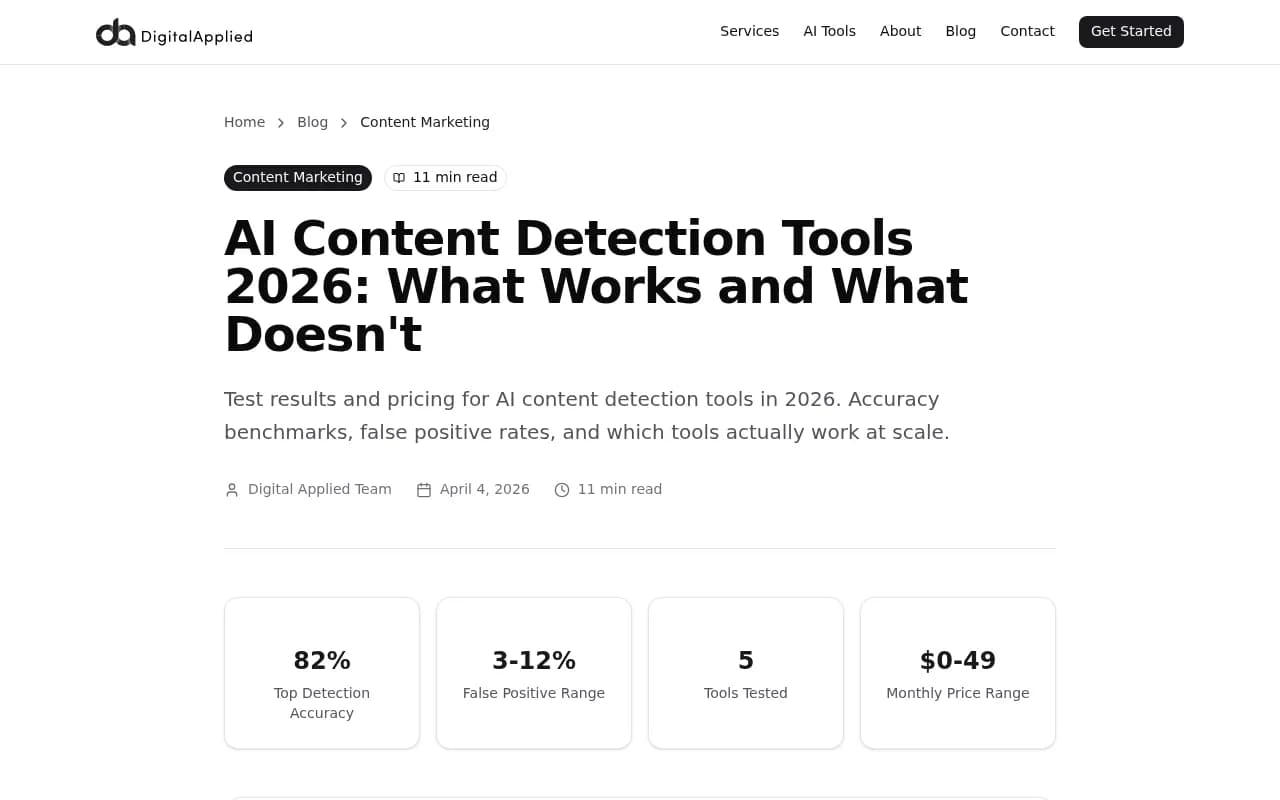
AI detection tools are in a rough spot in 2026. According to benchmark testing across GPT-5.4, Claude Opus 4.6, and Gemini 3.1 outputs, even the best detectors miss 15-30% of AI-generated content. The leading tool, Originality.ai, tops out at around 82% accuracy. False positive rates run from 3% to 12% — meaning human-written content gets flagged as AI-generated at a meaningful rate, with non-native English writers disproportionately affected.
MIT Sloan's teaching technology team has been direct about this: AI detectors don't work reliably enough to make high-stakes decisions from. OpenAI shut down their own detection tool because of poor accuracy. Turnitin disabled its AI detection feature from January 2026 onward.
More importantly for content marketers: Google has repeatedly stated it evaluates content quality, not AI authorship. Passing an AI detection test tells you nothing about whether your content will get cited by an LLM. A perfectly "human-sounding" article can still be invisible in AI search if it lacks the right structure, authority signals, or topical depth.
Chasing a human score is the wrong game. The right game is understanding whether your content is actually appearing in AI-generated answers.
The tools that actually close the loop
A small number of platforms are starting to bridge the gap between content creation and AI visibility measurement. They vary significantly in how complete their loop is.
Generation-only tools (no visibility tracking)
These tools write content but have no way to tell you if it's working in AI search:
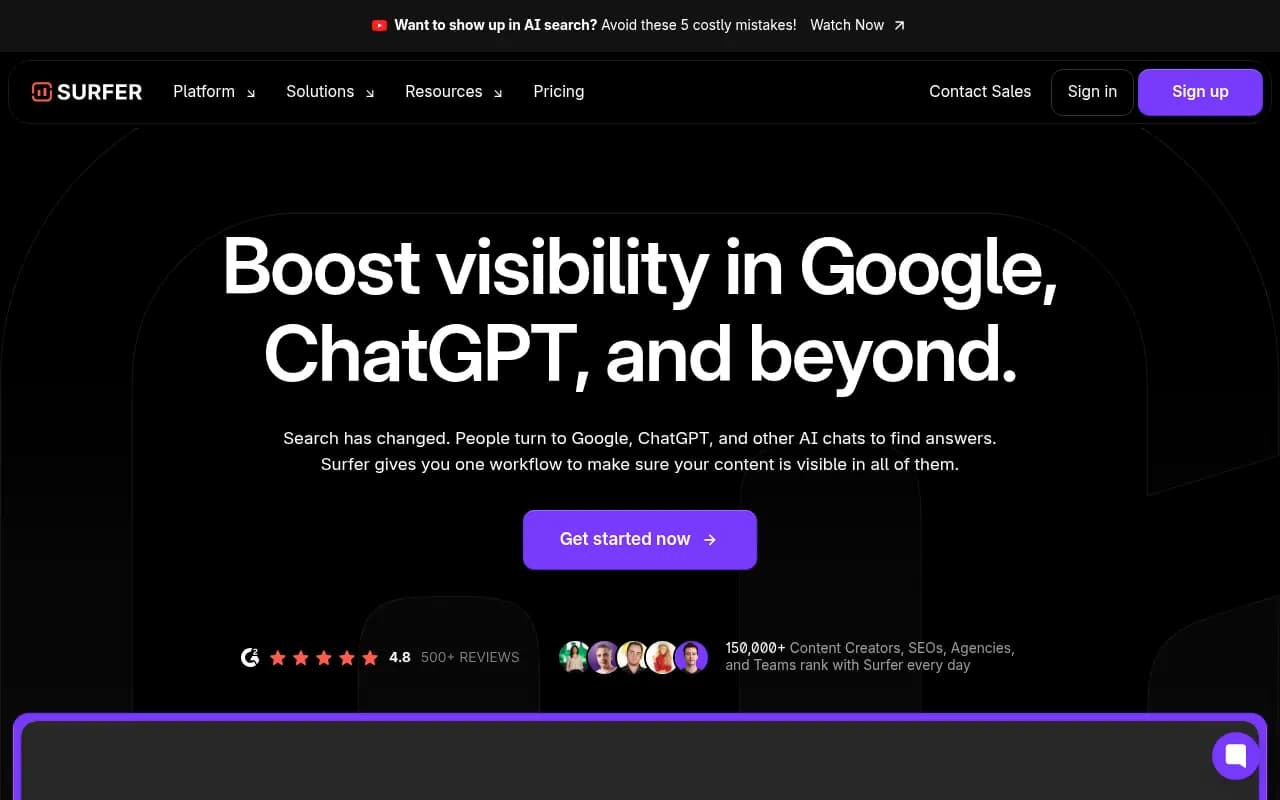
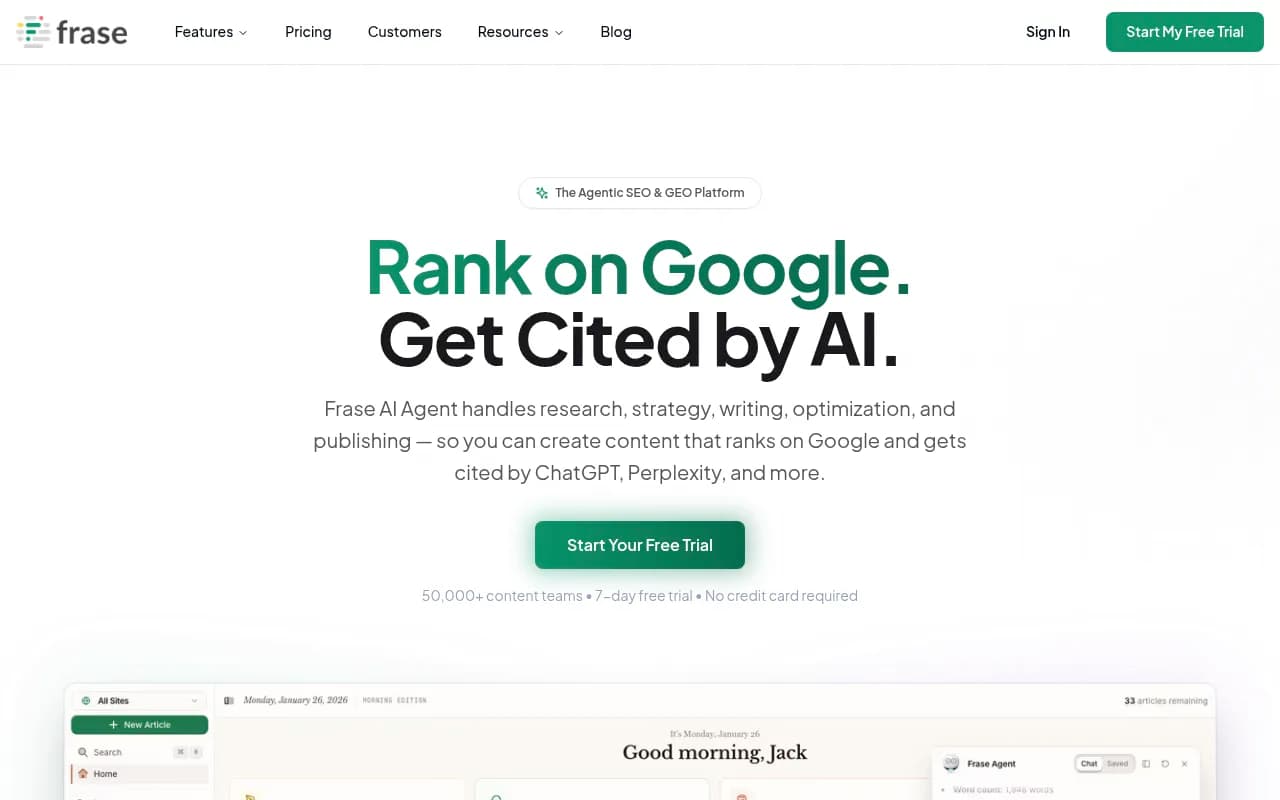
Surfer SEO and Frase are more sophisticated than pure AI writers — they optimize for traditional SEO signals like keyword density and topical coverage. But they're still optimizing for Google rankings, not AI citations. There's overlap, but it's not the same thing.
Visibility-only tools (no content generation)
These tools track where you appear in AI-generated answers but don't help you create content to fill the gaps:
Otterly.AI



Otterly.AI, Peec.ai, and Rankshift can show you your AI visibility scores and track brand mentions across ChatGPT, Perplexity, and other models. That's genuinely useful data. But if you find out you're invisible for a high-value prompt, you're on your own to figure out what to do about it.
Tools that attempt to close the loop
This is the category that's actually solving the problem — platforms that combine visibility tracking with content creation guidance.
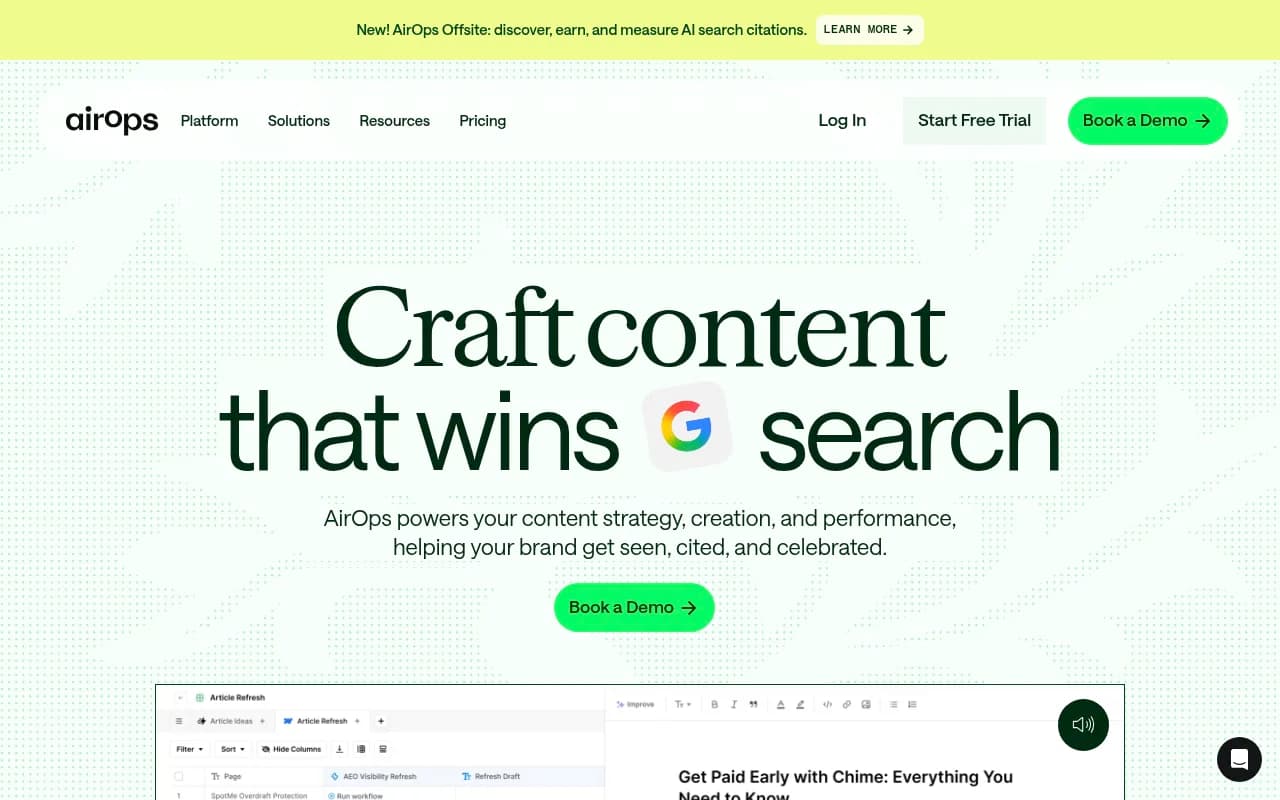
AirOps is one of the more interesting players here. It's positioned as a content engineering platform specifically for AI search visibility, combining content production with citation data. Worth evaluating if you're running a content-heavy operation.
Search Atlas takes a similar approach — AI-powered content automation that's connected to optimization signals, not just keyword targets.
And then there's Promptwatch, which is probably the most complete implementation of this idea right now. The core workflow is: find the prompts where competitors appear but you don't (Answer Gap Analysis), generate content specifically engineered to get cited by AI models (using data from 880M+ analyzed citations), then track whether your visibility scores actually improve after publishing. It also surfaces which of your existing pages are being cited, how often, and by which models — so you can see what's already working and double down.

The distinction matters. Most tools show you a dashboard. Promptwatch shows you a dashboard and then helps you do something about what's on it.
What the comparison actually looks like
| Tool | Content generation | AI visibility tracking | Citation data | Content gap analysis | Traffic attribution |
|---|---|---|---|---|---|
| Jasper / Copy.ai | Yes | No | No | No | No |
| Surfer SEO / Frase | Yes (SEO-focused) | No | No | No | No |
| Otterly.AI / Peec.ai | No | Yes (basic) | No | No | No |
| Rankshift | No | Yes | No | No | No |
| AirOps | Yes | Partial | Partial | No | No |
| Search Atlas | Yes | Yes | Partial | Partial | No |
| Promptwatch | Yes | Yes | Yes (880M+ citations) | Yes | Yes |
The table makes the gap obvious. Most tools live in one column. The ones that span multiple columns are the ones worth paying attention to.
Why this gap exists (and why it's closing)
The generation tools came first. They were built when "AI content" meant "faster blog posts for Google." The tracking tools came second, built in response to the rise of ChatGPT and Perplexity as search interfaces. The integration of both is still relatively new.
Part of the challenge is technical. To know whether your content is getting cited, you need to actually query AI models at scale, parse their responses, match citations to your pages, and do this continuously as models update. That's a different infrastructure problem than generating text.
Part of it is also a market awareness issue. Many content teams still don't think of "AI citation visibility" as a metric they should care about. They're measuring organic traffic, rankings, and engagement — all traditional SEO metrics. Those still matter, but they're incomplete.
The teams that are ahead of this are the ones asking a different question: not "did we publish content?" but "is our content being recommended by AI?"
What to actually do about it
If you're running a content operation in 2026 and you want to know whether your AI content is working, here's a practical starting point:
Start by auditing your AI visibility. Pick 10-15 prompts that are relevant to your business — questions your customers would ask an AI assistant when researching your product category. Query ChatGPT, Perplexity, and Claude manually and see if your brand or content appears. If you're invisible, that's your baseline.
Then identify the gap. Look at which competitors appear in those answers. What content do they have that you don't? What topics, angles, or formats are AI models pulling from? This is the content gap — and it's more specific and actionable than a traditional keyword gap.
Create content that's structured for AI citation. This means clear, direct answers to specific questions. It means citing sources and data. It means structured headings that make it easy for a model to parse your content and extract a relevant snippet. Generic AI-generated filler won't cut it — the content needs to actually answer the question better than what's already out there.
Track the results. After publishing, monitor whether your visibility scores change. Which models start citing you? For which prompts? This is where tools like Promptwatch earn their keep — the feedback loop is what turns a content strategy into an optimization cycle rather than a one-way publishing exercise.
The uncomfortable truth about AI content tools
Most AI writing tools are solving a problem that's no longer the hardest one. Generating content is easy now. Anyone can produce 50 articles a month with a decent AI writer. The hard problem is making sure that content actually reaches people — including the AI models that are increasingly the first stop in any research process.
A tool that writes content but can't tell you if it's working is like a printing press with no distribution network. You're producing output, but you don't know if anyone's reading it.
The tools that will matter most in the next 12-18 months are the ones that treat content generation and AI visibility as one connected workflow, not two separate products. That category is still small, but it's growing fast — and the teams that adopt it early will have a meaningful advantage over those still measuring success by word count and publish frequency alone.