Key takeaways
- Writesonic is primarily a content creation tool with GEO features bolted on — it can generate content and track basic AI mentions, but it wasn't built around the optimization loop that GEO actually requires.
- Dedicated GEO platforms like Promptwatch, Profound, and Scrunch AI offer deeper tracking, competitor heatmaps, and (in Promptwatch's case) a full content generation and optimization workflow.
- If your goal is to appear in ChatGPT, Perplexity, Google AI Overviews, and similar engines, you need a tool that closes the loop: find gaps, create content, track results.
- Writesonic makes sense if you're primarily a content team that wants basic AI visibility as a bonus feature. It makes less sense if AI search visibility is a core business priority.
What Writesonic actually does (and where it stops)
Writesonic started as an AI writing tool — blog posts, ad copy, landing pages, that kind of thing. Over the past year or so, it added a "GEO" layer that tracks brand mentions across a handful of AI engines and surfaces some basic citation data.
That's a meaningful addition. But the architecture of the product still reflects its origins. The core value proposition is content generation, and the GEO features sit on top of that rather than driving it.

Concretely, here's what Writesonic GEO does:
- Tracks brand mentions across ChatGPT, Claude, Perplexity, Gemini, and Google AI Overviews
- Shows citation sources and basic sentiment
- Suggests related prompts based on your brand
- Generates content using its existing AI writing tools
What it doesn't do well:
- No AI crawler logs (you can't see which pages AI bots are actually reading)
- No prompt volume or difficulty scoring — you're guessing which prompts are worth targeting
- No Reddit or YouTube citation tracking (both of which heavily influence AI recommendations)
- Weekly monitoring cadence on most plans, which is slow compared to dedicated tools
- No traffic attribution — you can't connect AI visibility to actual revenue
The honest summary: Writesonic GEO is fine for content teams that want a rough sense of AI visibility without switching tools. It's not built for teams where GEO is a primary growth channel.
The GEO vs SEO distinction (and why it matters for tool selection)
Before comparing platforms, it's worth being clear about what GEO actually requires — because most SEO tools (and content tools with GEO add-ons) don't fully address it.
| Traditional SEO | GEO | |
|---|---|---|
| Goal | Rank on Google's blue links | Get cited in AI-generated answers |
| Feedback signal | Rankings, organic traffic | AI mention frequency, citation sources |
| Content format | Keyword-optimized pages | Entity-rich, structured, authoritative content |
| Tracking tool | Search Console, rank trackers | AI visibility platforms |
| Optimization loop | Write → rank → iterate | Find gaps → create → track citations |
The key difference is the feedback loop. SEO tools tell you where you rank. GEO tools need to tell you why you're not being cited and what to create to fix it. Most tools — including Writesonic GEO — handle the first part but not the second.
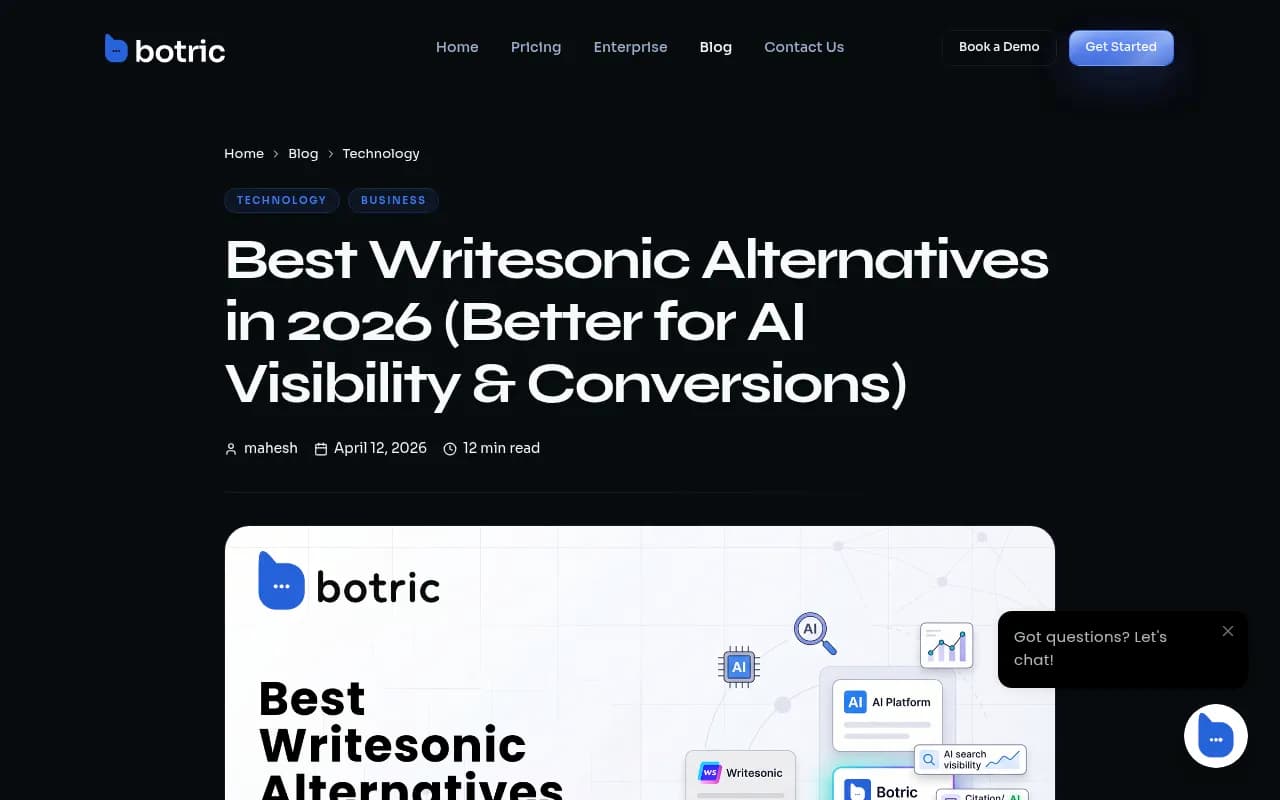
The main contenders: a full comparison
Here's how the major GEO and AI visibility platforms stack up in 2026.
| Platform | AI engines tracked | Content generation | Crawler logs | Prompt volume data | Reddit/YouTube tracking | Traffic attribution | Starting price |
|---|---|---|---|---|---|---|---|
| Promptwatch | 10+ | Yes (built-in AI writer) | Yes | Yes | Yes | Yes (GSC, snippet, logs) | $99/mo |
| Writesonic GEO | 5 | Yes (core product) | No | No | No | No | ~$99/mo |
| Profound | 9+ | No | No | Limited | No | Limited | ~$500/mo+ |
| Scrunch AI | Multiple | No | No | No | No | No | ~$300/mo |
| Peec AI | 3 | No | No | No | No | No | ~$49/mo |
| SE Ranking | 3 | Limited | No | No | No | No | ~$65/mo |
| Semrush | Google-focused | Yes (ContentShake) | No | No | No | Limited | ~$140/mo |
| Otterly.AI | 3 | No | No | No | No | No | ~$29/mo |
A few notes on this table:
- "Content generation" here means content engineered for AI citations, not just generic AI writing. Writesonic generates content, but it's not grounded in citation data or prompt gap analysis the way Promptwatch's writing agent is.
- Profound and Scrunch AI are strong monitoring tools but stop short of telling you what to do next.
- Peec AI and Otterly.AI are entry-level options — fine for basic tracking, not for teams that need to act on the data.
Promptwatch: the platform built around the full optimization loop
Promptwatch takes a different approach from every other tool on this list. Most platforms show you data. Promptwatch is built around what you do with it.

The workflow looks like this:
- Answer Gap Analysis shows you which prompts your competitors appear in but you don't. You see the exact topics and questions AI models want to answer but can't find on your site.
- The built-in AI writing agent generates articles, listicles, and comparisons grounded in 880M+ analyzed citations, prompt volumes, and competitor data. This isn't generic content — it's engineered to get cited.
- Page-level tracking shows which pages are being cited, by which models, and how often. Traffic attribution (via GSC integration, a code snippet, or server log analysis) connects visibility to actual revenue.
On top of that, Promptwatch covers features most competitors don't touch: AI crawler logs that show which pages ChatGPT and Perplexity are actually reading, Reddit and YouTube citation tracking, ChatGPT Shopping monitoring, and prompt volume/difficulty scoring so you can prioritize the right queries.
It monitors 10 AI engines: ChatGPT, Perplexity, Google AI Overviews, Google AI Mode, Claude, Gemini, Meta/Llama, DeepSeek, Grok, Mistral, and Copilot.
Pricing starts at $99/month (Essential: 1 site, 50 prompts, 5 articles). The Professional plan at $249/month adds crawler logs, city/state tracking, and 15 articles per month.
Profound: strong enterprise monitoring, but stops at the data
Profound

Profound is genuinely good at what it does. It tracks brand visibility across 9+ AI engines with solid depth, and its "why did we appear?" analysis is useful for enterprise teams trying to understand the signals that drive citations.
Where it falls short: Profound is a monitoring platform. It doesn't generate content, doesn't have crawler logs, and doesn't close the loop between visibility data and content creation. For a platform that starts around $500/month, that gap is noticeable.
Best for: Enterprise marketing teams that need governance, deep reporting, and stakeholder-friendly dashboards — and have a separate content team to act on the insights.
Scrunch AI: clean monitoring, limited action
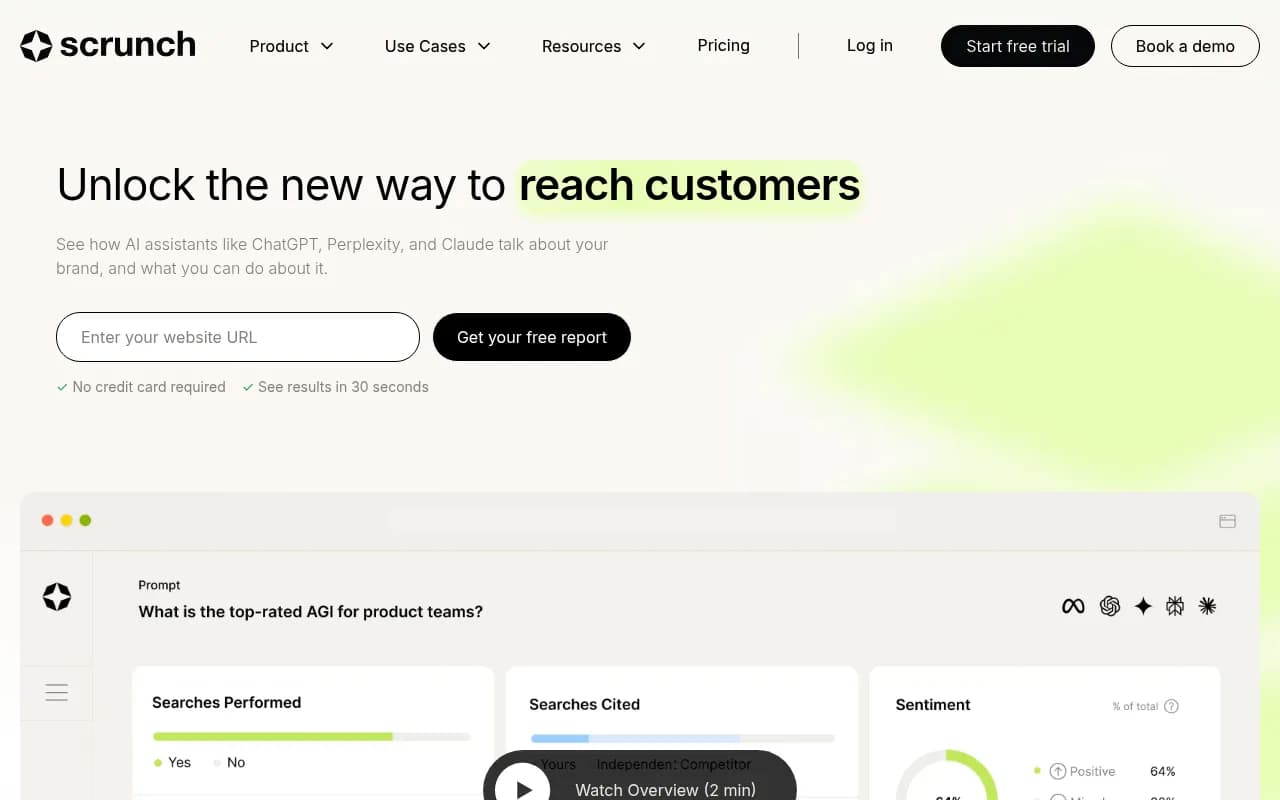
Scrunch AI is one of the cleaner monitoring tools in the market. It covers multiple AI engines, tracks competitor visibility, and produces reports that are easy to share with stakeholders. Several users note it's particularly good for week-over-week visibility narratives.
The limitation is the same as Profound's: it shows you what's happening, not what to do about it. No content generation, no crawler logs, no traffic attribution. At ~$300/month entry, it's priced for teams that already have a content workflow and just need the visibility data.
Peec AI: entry-level tracking, nothing more

Peec AI tracks brand mentions across ChatGPT, Perplexity, and Claude. It's simple, affordable (~$49/month), and reasonably easy to set up. For a small team that just wants to know whether they're showing up in AI answers, it works.
For anything beyond basic monitoring — competitor analysis, content optimization, traffic attribution — it's not the right tool.
SE Ranking: traditional SEO platform with AI visibility as an add-on
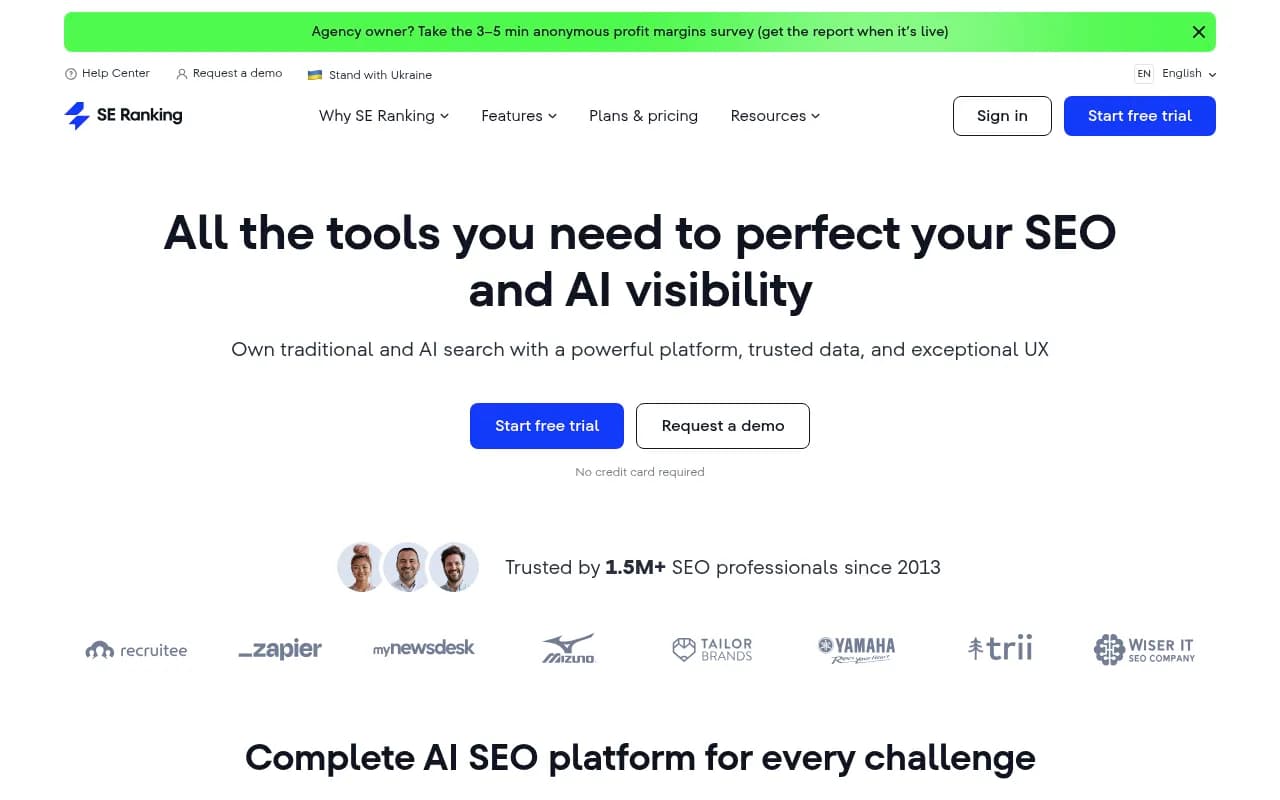
SE Ranking is a solid all-in-one SEO platform. Its AI visibility features (tracking mentions across ChatGPT, Perplexity, and Gemini) are a recent addition and work reasonably well for teams already using it for traditional SEO.
The daily tracking cadence is a genuine advantage over Writesonic's weekly monitoring. But SE Ranking's AI visibility features are clearly secondary to its core SEO offering — there's no content gap analysis, no crawler logs, and no way to connect AI visibility to revenue.
Semrush: the SEO incumbent trying to catch up
Semrush has added AI visibility features, but they're built on fixed prompt sets rather than dynamic tracking. You can't customize the prompts to match how your actual customers search, which limits the usefulness of the data. There's also no AI traffic attribution.
That said, if your team is already deep in the Semrush ecosystem for traditional SEO, the AI features are a reasonable starting point. Just don't expect it to replace a dedicated GEO platform.
Otterly.AI: the cheapest entry point
Otterly.AI

Otterly.AI starts at ~$29/month and tracks brand mentions across ChatGPT, Perplexity, and Google AI Overviews. It's the most affordable option on this list and works fine for teams that just want a basic pulse check on AI visibility.
No content generation, no crawler logs, no competitor gap analysis. Pure monitoring.
How to choose: a decision framework
The right tool depends on what you're actually trying to accomplish.
You want to understand your current AI visibility (basic monitoring, no action needed yet): Otterly.AI or Peec AI are fine starting points at low cost.
You're already using SE Ranking or Semrush for SEO and want AI visibility as an add-on: stick with what you have and use the built-in AI features. They're not deep, but they're free within your existing subscription.
You need enterprise-grade monitoring with governance and reporting: Profound or Scrunch AI are the strongest options, though both require a separate content workflow.
You want to actually improve your AI visibility — find gaps, create content, track results, connect to revenue: Promptwatch is the only platform that covers the full loop. The Answer Gap Analysis, built-in writing agent, crawler logs, and traffic attribution work together in a way no other tool on this list replicates.
You're primarily a content team that wants basic AI visibility data alongside your writing workflow: Writesonic GEO is a reasonable choice. Just go in knowing the GEO features are shallow.
The core problem with "monitoring-only" tools
This is worth saying directly: most GEO tools in 2026 are dashboards. They show you that you're invisible in AI answers, then leave you to figure out what to do about it.
That's a real problem because the action is the hard part. Knowing you don't appear in ChatGPT's answer to "best project management tools for agencies" doesn't tell you what content to create, which angle to take, or whether the prompt is even worth targeting.
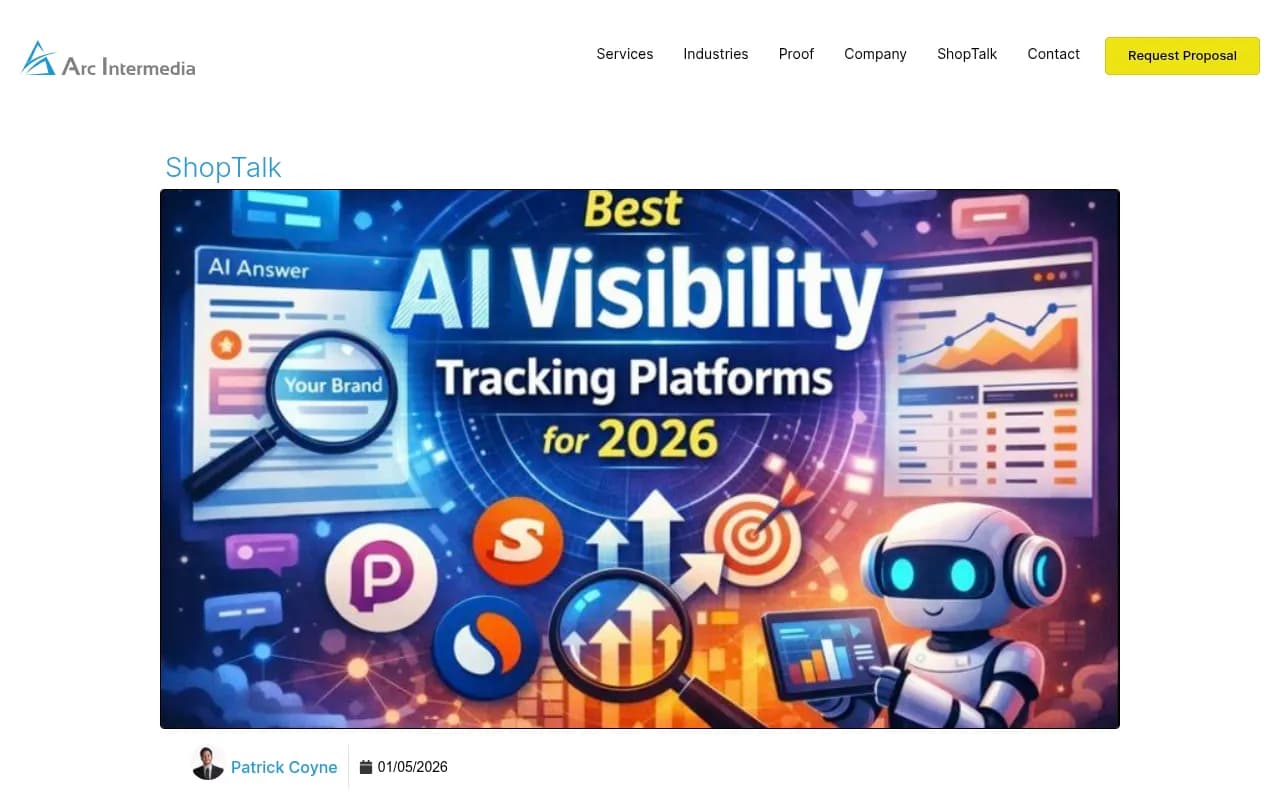
The platforms that are going to matter in 2026 are the ones that close this loop. Promptwatch's Answer Gap Analysis identifies the specific prompts where competitors are visible and you're not, then the writing agent creates content grounded in citation data to fill those gaps, and the tracking layer shows whether it worked. That's a fundamentally different product from a monitoring dashboard.
Writesonic sits in an interesting middle ground: it has both content generation and basic AI visibility tracking, but neither is as deep as the dedicated alternatives. If you need strong content generation, there are better writing tools. If you need strong GEO, there are better GEO tools.
Bottom line
Writesonic GEO is a reasonable choice for content teams that want AI visibility data without adding another tool to their stack. It tracks five AI engines, surfaces citation data, and generates content — all in one place.
But if AI search visibility is a growth priority for your business in 2026, it's not the right foundation. The monitoring is too shallow, the tracking cadence is too slow, and there's no way to connect visibility to revenue.
The platforms worth serious consideration are Promptwatch (if you want the full optimization loop), Profound or Scrunch AI (if you need enterprise monitoring depth), or Peec AI / Otterly.AI (if you're just starting out and want basic coverage at low cost).
The market has moved fast. The question is no longer whether to track AI visibility — it's whether your tool helps you do something about it.