Summary
- HockeyStack -- Best all-around alternative with AI-powered insights and GTM agents that automate optimization. Combines attribution, buyer journey tracking, and content generation in one platform.
- Factors.ai -- Top choice for demand gen teams that need intent signal tracking across website, ads, G2, and CRM. Strong ABM capabilities and lower price point than Dreamdata.
- CaliberMind -- Enterprise-grade platform built for Fortune 500 companies with complex data environments. Strongest data unification capabilities but highest price tag.
- Adobe Marketo Measure -- Best for existing Marketo customers who need enterprise attribution. Deep integration with Adobe ecosystem but expensive and requires sales engagement.
- Ruler Analytics -- Most affordable option for SMBs running multi-channel campaigns. Tracks calls, forms, and live chat with straightforward closed-loop attribution.
Why look for Dreamdata alternatives?
Dreamdata built a solid B2B attribution platform, but teams hit walls. The free tier caps at 1,000 sessions monthly -- you burn through that in days if you're running real campaigns. Pricing jumps to $599/month for Growth, then $1,499/month for Pro. That's steep when you're still figuring out if attribution will actually change how you allocate budget.
The bigger issue: Dreamdata focuses heavily on visualization and journey mapping, but some teams need more action-oriented tools. You can see every touchpoint in a buying journey, but then what? If you're looking for platforms that help you act on attribution data -- building audiences, triggering campaigns, generating content that ranks in AI search -- you'll want alternatives with deeper activation capabilities.
Other common reasons to explore options: integration gaps with your specific stack, need for more granular attribution models, wanting AI-powered recommendations instead of just dashboards, or simply needing a platform that fits a tighter budget without sacrificing core functionality.
HockeyStack
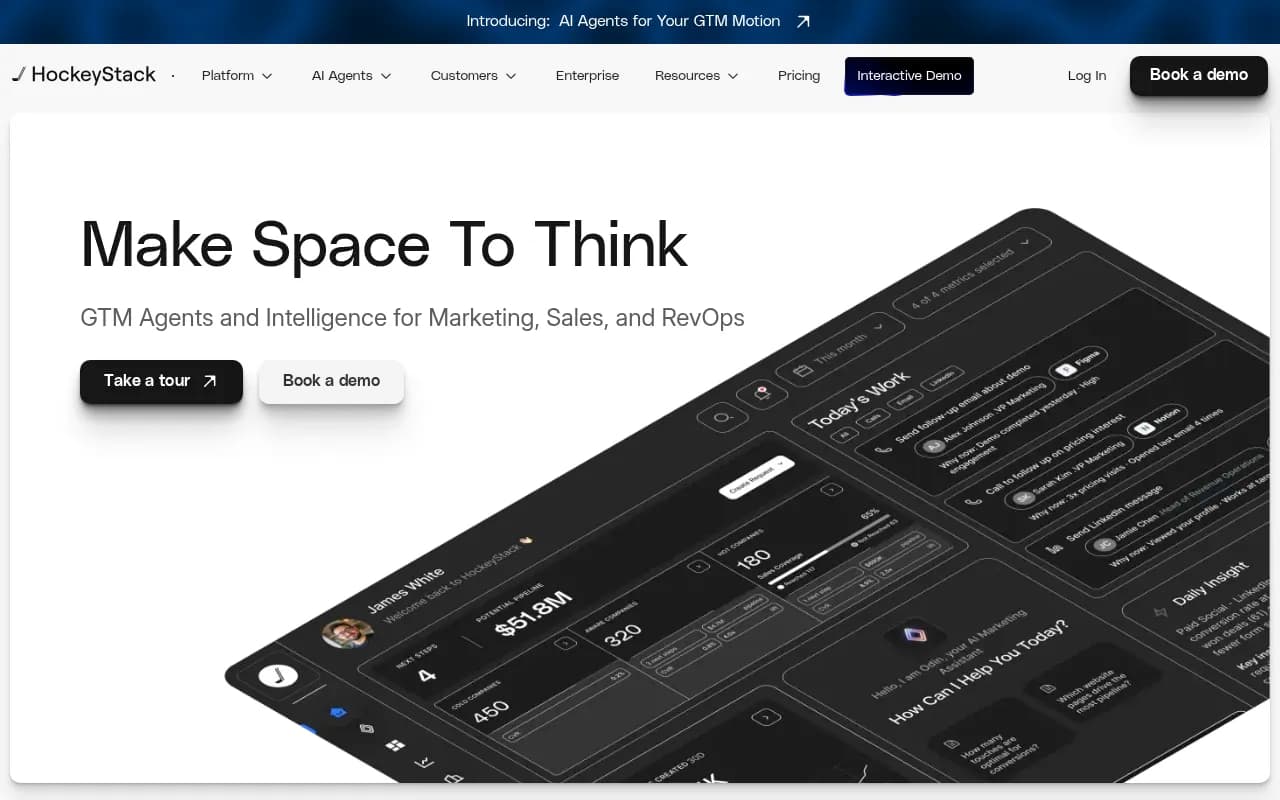
HockeyStack positions itself as an "AI GTM platform" rather than just attribution software, and that distinction matters. Where Dreamdata shows you the customer journey, HockeyStack shows you the journey and then tells you what to do about it.
The core difference is the AI analyst layer. Odin, their conversational AI, lets you ask questions in plain English and get visual answers with recommendations. "Which campaigns drove the most pipeline last quarter?" or "Why did our conversion rate drop in November?" -- you get charts, breakdowns, and suggested next steps without building custom reports.
Attribution-wise, HockeyStack covers the same ground as Dreamdata: multi-touch models, buyer journey timelines, account-level tracking. But it adds GTM agents that automate actions based on your data. One agent might identify high-intent accounts and automatically sync them to your ad platforms for retargeting. Another might trigger email sequences when specific engagement thresholds are hit. This moves beyond "here's what happened" into "here's what we're doing about it."
The Blueprints feature analyzes your closed-won deals to surface the ideal touchpoint mix for each segment. It's pattern recognition applied to your actual conversion data -- which campaigns, content types, and channels correlate with deals that close. Then you can build workflows to replicate those patterns for new prospects.
Pricing isn't public, but HockeyStack typically costs less than Dreamdata's Pro tier while offering more activation capabilities. The trade-off: setup is more involved because you're configuring agents and workflows, not just connecting data sources.
Best for: Marketing ops teams that want attribution plus automation. If you're tired of staring at dashboards without knowing what action to take, HockeyStack's AI agents bridge that gap.
Factors.ai
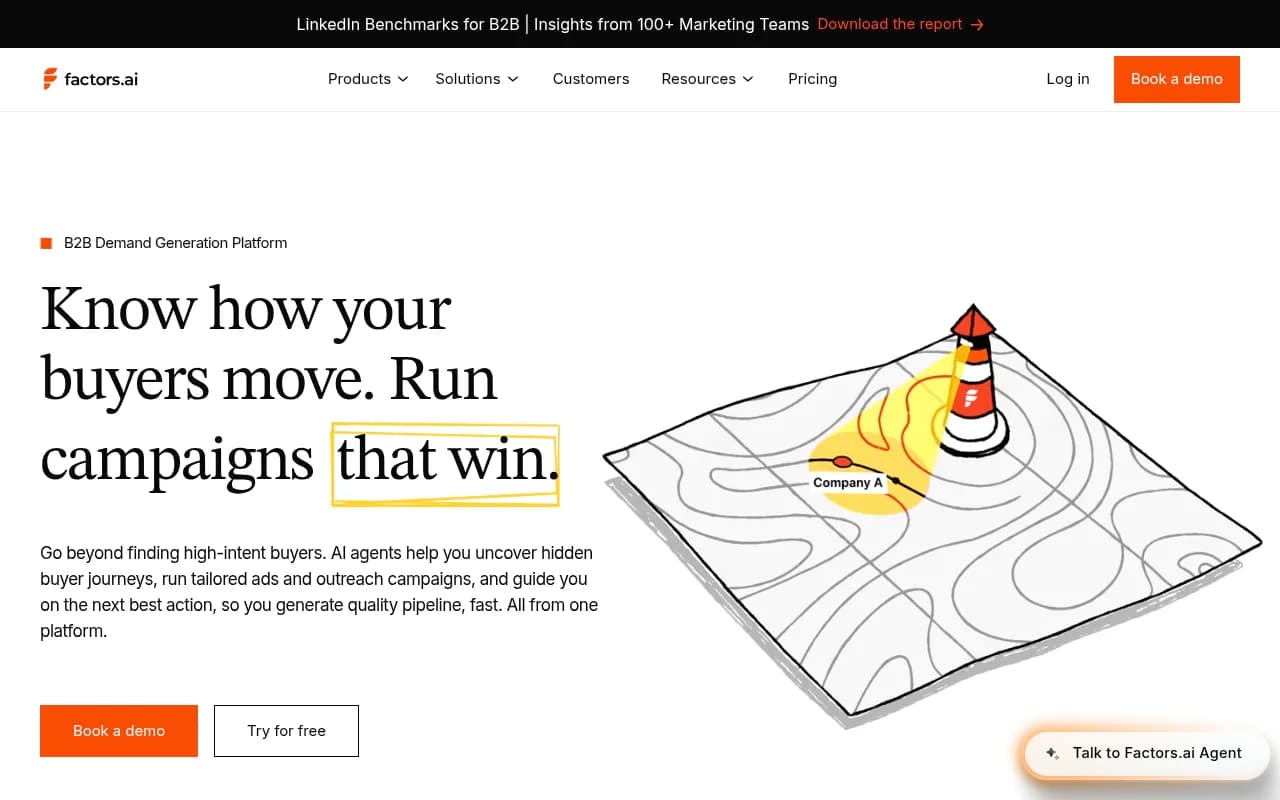
Factors.ai built its platform around one core insight: attribution is useless if you can't identify accounts before they convert. So they start with intent signal capture -- website visits, ad engagement, G2 page views, content downloads -- and use that to spot high-intent accounts early.
The platform tracks anonymous website visitors and matches them to companies using IP data and behavioral fingerprinting. You see which accounts are researching your product, which pages they're reading, how often they return. Then Factors.ai scores accounts based on fit (firmographics) and intent (engagement patterns).
Once you've identified target accounts, the ABM campaign tools let you run coordinated plays across LinkedIn, Google, and email. You're not just tracking attribution after the fact -- you're using intent data to trigger campaigns while accounts are still in research mode. The attribution layer shows which touchpoints moved accounts through stages, but the real value is acting on signals before competitors notice the same accounts.
Factors.ai also surfaces G2 intent data, which most attribution platforms ignore entirely. If a prospect is comparing your product to competitors on G2, that's a buying signal worth knowing about. The platform captures those visits and feeds them into your account scoring.
Pricing starts at $5,000/year for the Basic plan, significantly cheaper than Dreamdata's annual cost. The Growth plan at $15,000/year is the sweet spot -- includes ABM campaigns, G2 tracking, and full attribution. Enterprise pricing goes higher but still undercuts most competitors.
The downside: Factors.ai's attribution models are less sophisticated than Dreamdata's. You get standard multi-touch options (first-touch, last-touch, linear, time-decay) but not custom weighting or AI-powered models. If you need deep attribution science, look elsewhere. If you need to identify and engage high-intent accounts fast, Factors.ai delivers.
Best for: Demand gen teams running ABM campaigns who need intent signal tracking and campaign activation, not just post-conversion attribution.
CaliberMind
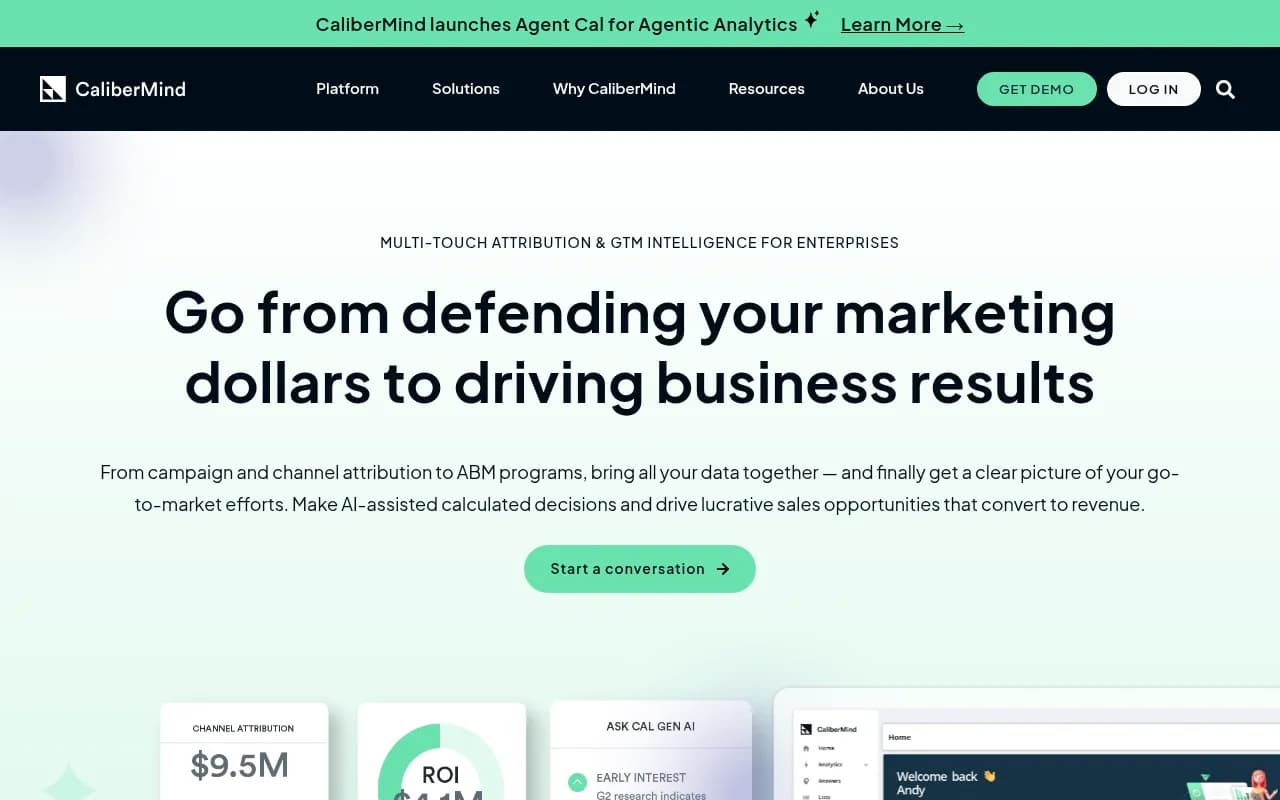
CaliberMind targets Fortune 500 companies with complex data environments -- multiple CRMs, marketing automation platforms, data warehouses, and legacy systems that don't talk to each other. Their core strength is data unification at enterprise scale.
Where Dreamdata connects your standard stack (CRM, marketing automation, ad platforms), CaliberMind handles messier scenarios. Multiple Salesforce instances across regions. Marketo + Eloqua + Pardot running simultaneously in different divisions. Custom data warehouses with years of historical data. CaliberMind's data layer normalizes all of it into a unified account and contact model.
The attribution engine supports every standard model plus custom weighting based on your specific sales cycle. You can assign different credit to touchpoints based on stage progression, deal size, product line, or any other dimension in your data. This level of customization matters when you're a $500M company with multiple business units that operate differently.
CaliberMind also emphasizes proving marketing's impact to executive leadership. The platform includes pre-built executive dashboards that translate attribution data into business language -- pipeline influenced, revenue attributed, ROI by channel. These aren't marketer dashboards; they're built for CFOs and CEOs who want to see marketing's contribution to the bottom line.
The trade-off is complexity and cost. CaliberMind requires a dedicated implementation team and typically takes 2-3 months to fully deploy. Pricing is custom but expect $50K-$150K+ annually depending on data volume and complexity. This isn't a platform you sign up for and start using next week.
If you're a mid-market company with a straightforward stack, CaliberMind is overkill. If you're an enterprise with fragmented data and need bulletproof attribution that survives board-level scrutiny, it's the strongest option.
Best for: Enterprise marketing teams at large B2B companies with complex data environments, multiple business units, and executive stakeholders who demand rigorous ROI proof.
Adobe Marketo Measure
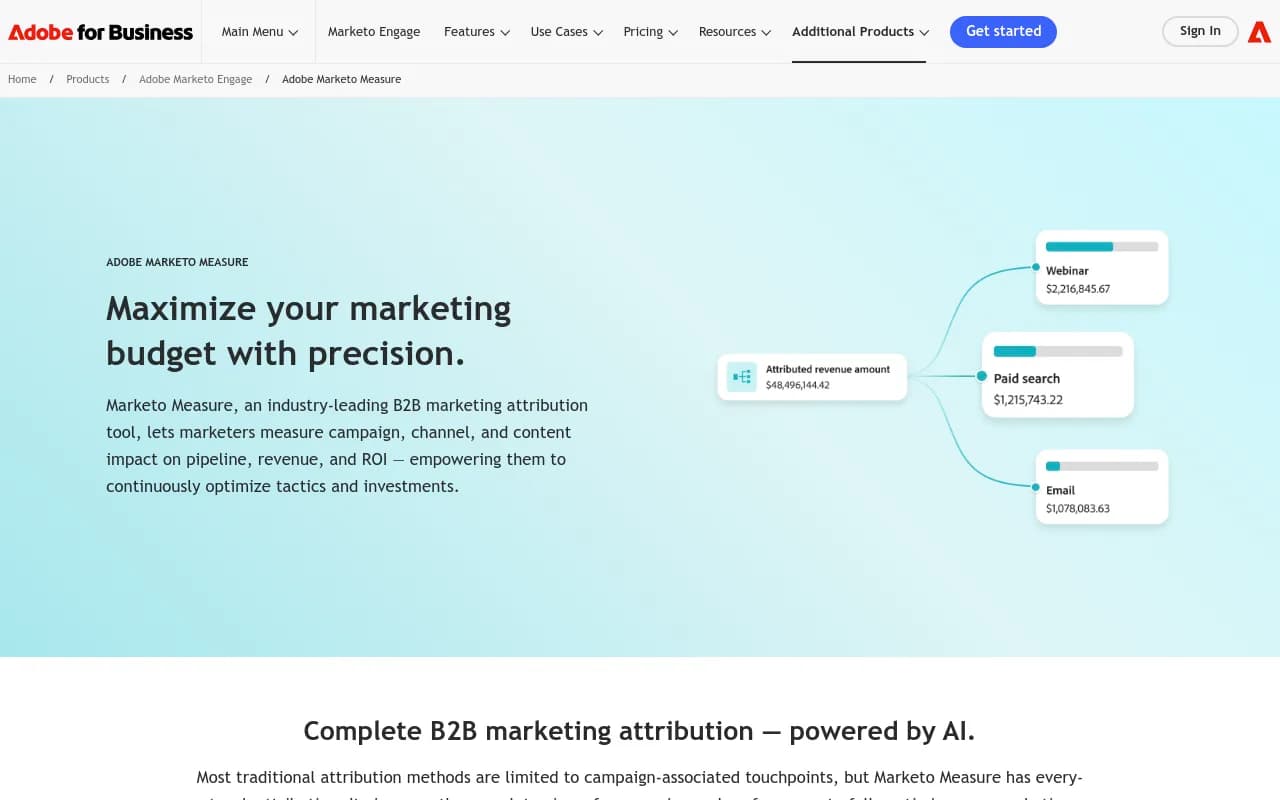
Adobe Marketo Measure (formerly Bizible) is the enterprise attribution standard if you're already in the Adobe/Marketo ecosystem. It's built specifically for B2B companies with long sales cycles, multiple stakeholders, and complex buying committees.
The platform tracks every touchpoint across marketing and sales channels -- online and offline -- and attributes revenue using customizable multi-touch models. You can weight touchpoints differently based on stage, channel, or custom criteria. The attribution logic is sophisticated enough to handle scenarios like multiple opportunities from the same account or deals that span 12+ months.
Marketo Measure's strength is integration depth with Marketo Engage and Salesforce. If you're running Marketo for marketing automation and Salesforce for CRM, Marketo Measure sits in the middle and connects everything. Campaign data flows automatically, attribution updates in real-time, and you can trigger Marketo programs based on attribution insights.
The platform also handles offline touchpoints better than most competitors. Trade show visits, direct mail, sales calls, webinars -- all tracked and attributed alongside digital channels. This matters for enterprise B2B where offline interactions still drive significant pipeline.
The downsides are significant. First, pricing: expect $30K-$100K+ annually depending on deal size. There's no self-service option; you go through Adobe's sales team. Second, implementation takes months and requires Adobe consultants or a certified partner. Third, if you're not using Marketo Engage, much of the value disappears. Marketo Measure technically works with other marketing automation platforms, but the integration is shallow.
Compared to Dreamdata, Marketo Measure offers more sophisticated attribution models and better offline tracking, but it's 3-5x more expensive and requires an enterprise sales cycle to even get pricing.
Best for: Large enterprises already using Marketo Engage and Salesforce who need enterprise-grade attribution and have the budget for Adobe's pricing model.
Ruler Analytics
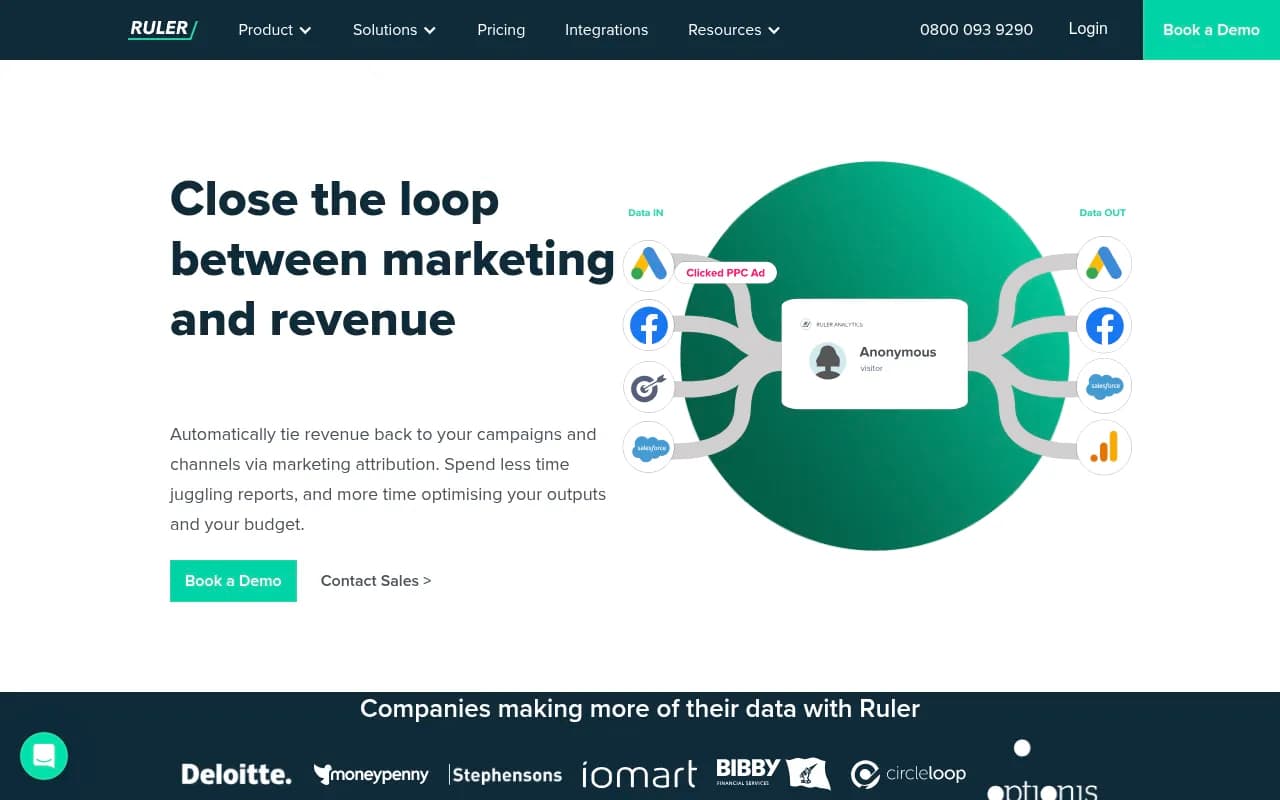
Ruler Analytics takes a different approach than most attribution platforms: start with conversion tracking (calls, forms, live chat), then work backward to attribute revenue. This makes it particularly strong for B2B companies where phone calls drive a significant portion of conversions.
The platform tracks every marketing touchpoint -- clicks, page views, content downloads -- and stores that data against anonymous visitors. When someone converts (fills a form, calls your number, starts a live chat), Ruler matches the conversion to their full journey history. Then it pushes that data into your CRM and analytics tools.
The closed-loop attribution works like this: a visitor clicks a Google ad, reads three blog posts, downloads a guide, then calls your sales number two weeks later. Ruler captures all of that, ties it to the phone call, and when that lead closes in your CRM, it attributes revenue back to the original Google ad and every touchpoint in between.
Call tracking is where Ruler shines. Dynamic number insertion shows different phone numbers based on traffic source, so you know exactly which campaigns drive calls. Call recording and quality scoring help sales teams improve conversion rates. And unlike most attribution platforms that treat calls as a black box, Ruler tracks call outcomes -- did it book a meeting, qualify as a lead, or go nowhere?
Pricing is transparent and affordable compared to enterprise platforms. Plans start at £179/month for 5,000 visits, scaling to £584/month for 50,000 visits. No per-seat fees. This makes Ruler accessible for mid-market companies that can't justify Dreamdata's $599-$1,499/month pricing.
The limitations: Ruler's attribution models are simpler than Dreamdata's. You get first-touch, last-touch, and linear models, but not AI-powered or custom weighting options. The platform also lacks advanced features like buyer journey visualization or predictive analytics. It's straightforward closed-loop attribution, not a full GTM intelligence platform.
Best for: SMBs and mid-market B2B companies that rely heavily on phone calls and want affordable, straightforward attribution without enterprise complexity.
Hyros
Hyros built its reputation in the direct-response and e-commerce world, but B2B companies are adopting it for one reason: it tracks ad performance more accurately than platform pixels.
The core problem Hyros solves: Facebook and Google's native tracking miss conversions. iOS privacy changes, ad blockers, cross-device journeys -- all of it breaks pixel tracking. Hyros uses AI attribution to track every sale back to the first ad click, even when pixels fail. Then it feeds that accurate data back to ad platforms so their algorithms optimize on real conversions, not partial data.
For B2B teams running paid ads, this matters. You're spending $50K-$200K/month on Meta and Google, but the platforms only see 60-70% of conversions. You're optimizing campaigns on incomplete data. Hyros closes that gap with server-side tracking and AI-powered attribution that reconstructs customer journeys even when tracking breaks.
The platform also includes AIR (AI Remarketing), which automatically builds and syncs audiences to ad platforms based on behavior and conversion likelihood. High-intent accounts that visited your pricing page three times but didn't convert? AIR creates a custom audience and pushes it to Meta for retargeting. No manual list building.
Hyros is less focused on full-funnel attribution and more focused on ad optimization. You won't get the buyer journey timelines or executive dashboards that Dreamdata offers. But if your primary goal is scaling paid ads profitably, Hyros delivers better ROAS data than any other platform.
Pricing starts at $379/month for up to $50K/month ad spend, scaling to $799/month for $150K/month spend. The mid-tier plan includes the AIR agent. Enterprise pricing is custom. Compared to Dreamdata, Hyros is cheaper at lower spend levels but costs more as you scale.
The trade-off: Hyros is built for performance marketers who live in ad platforms, not marketing ops teams who need full-stack attribution across all channels. If you're running significant paid media and need accurate ROAS data, Hyros is the strongest option. If you need attribution across organic, email, events, and sales touchpoints, look elsewhere.
Best for: Performance marketing teams spending $50K+/month on paid ads who need accurate conversion tracking and automated audience optimization.
Demandbase One
Demandbase One is an account-based marketing platform first, attribution platform second. It's designed for enterprise B2B companies running coordinated ABM programs across marketing, sales, and customer success.
The platform identifies target accounts using intent data, firmographics, and engagement signals, then orchestrates personalized campaigns across advertising, web, email, and sales outreach. Attribution is built in, but it's one component of a larger ABM system.
Where Dreamdata focuses on mapping customer journeys and attributing revenue, Demandbase focuses on engaging buying groups within target accounts. The platform tracks not just individual contacts but entire buying committees -- who's involved, what roles they play, how engaged each person is. This buying group intelligence matters for enterprise deals where 6-10 people influence purchase decisions.
Demandbase's attribution shows which campaigns and channels moved accounts through stages, but the real value is the activation layer. You can trigger personalized web experiences when target accounts visit your site, sync high-intent accounts to ad platforms for ABM campaigns, and alert sales reps when buying group engagement spikes.
The platform also includes advertising capabilities -- display ads, LinkedIn ads, account-based retargeting -- all managed within Demandbase. This makes it a full ABM suite rather than just an analytics tool.
Pricing is enterprise-level: typically $18K-$300K+ annually depending on account volume and modules. There's no self-service option; you go through Demandbase's sales team. Implementation takes 2-3 months with dedicated onboarding.
Compared to Dreamdata, Demandbase offers more ABM capabilities and buying group intelligence, but it's 3-10x more expensive and requires enterprise-level commitment. If you're running a full ABM motion with dedicated resources, Demandbase makes sense. If you just need attribution and journey tracking, it's overkill.
Best for: Enterprise B2B companies running full-scale ABM programs who need buying group intelligence, personalized engagement, and attribution in one platform.
Cometly
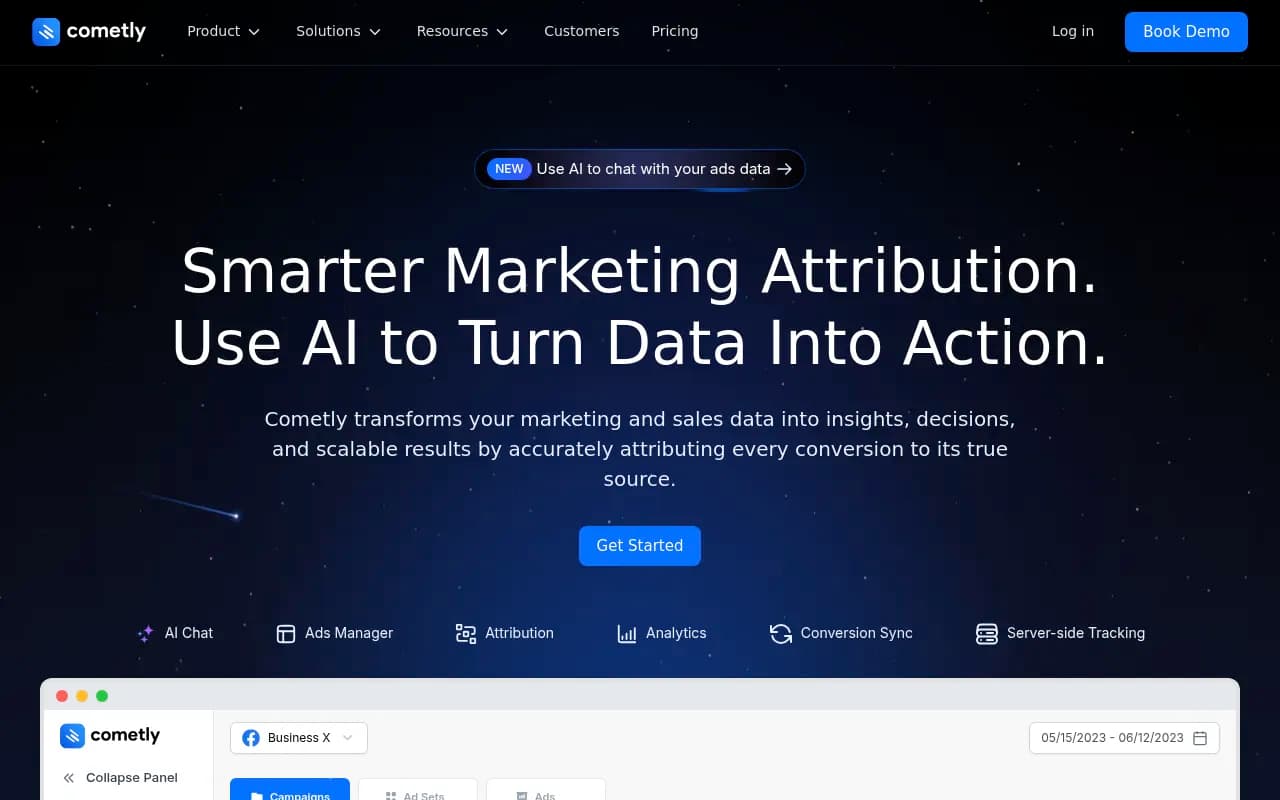
Cometly is a marketing attribution platform built for performance marketers who need accurate tracking without the complexity of enterprise tools. It sits between affordable options like Ruler Analytics and sophisticated platforms like Dreamdata.
The platform uses server-side tracking to capture conversions that pixels miss, then attributes revenue using multi-touch models. You connect your ad platforms (Meta, Google, TikTok), CRM, and analytics tools, and Cometly maps the full customer journey from first click to closed sale.
Cometly's strength is ease of setup. Most attribution platforms require weeks of implementation and technical resources. Cometly promises setup in under an hour with pre-built integrations for 100+ tools. You're not configuring complex data pipelines; you're connecting APIs and letting Cometly handle the rest.
The attribution models include first-touch, last-touch, linear, time-decay, and position-based. You can switch between models to see how credit allocation changes, but you can't build custom models or apply AI-powered weighting. This is standard multi-touch attribution, not cutting-edge science.
Cometly also includes Ads Manager, a unified dashboard for tracking campaign performance across platforms. You see spend, conversions, ROAS, and attribution data in one view instead of jumping between Meta Ads Manager, Google Ads, and your CRM. For small teams managing multiple ad accounts, this saves significant time.
Pricing starts at $250/month for the Starter plan, scaling to $500-$700/month for Professional and $999+/month for Business. There's a 14-day free trial. Compared to Dreamdata's $599/month Growth plan, Cometly is cheaper at the low end but costs more as you scale.
The limitations: Cometly lacks advanced features like buyer journey visualization, predictive analytics, or AI-powered recommendations. It's straightforward attribution and ad tracking, not a full GTM intelligence platform. If you need sophisticated analysis or executive reporting, look elsewhere. If you need accurate tracking and simple attribution without enterprise complexity, Cometly delivers.
Best for: Small to mid-sized performance marketing teams running paid ads who need accurate attribution without enterprise pricing or complexity.
HubSpot Marketing Hub
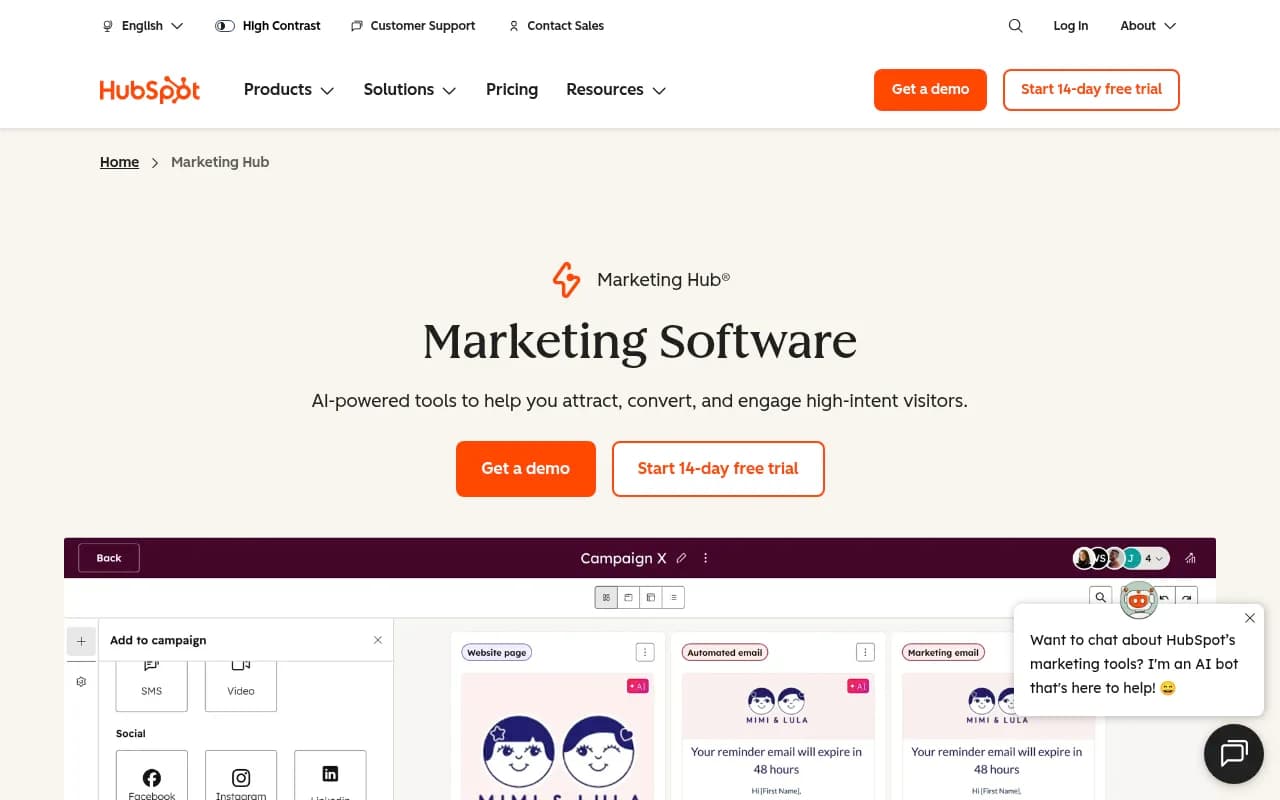
HubSpot Marketing Hub isn't a dedicated attribution platform -- it's an all-in-one marketing suite that includes attribution as one feature among many. But for companies already using HubSpot or considering it, the built-in attribution capabilities might eliminate the need for a separate tool.
HubSpot tracks every interaction with your brand -- email opens, page views, form submissions, ad clicks, social engagement -- and stores it in a unified contact timeline. The attribution reports show which campaigns, channels, and content drive conversions using standard multi-touch models (first-touch, last-touch, linear).
The advantage of HubSpot's approach: attribution data lives in the same platform as your marketing execution. You see which blog posts drive conversions, then create more content on those topics. You identify which email campaigns generate pipeline, then build similar campaigns. The feedback loop is immediate because you're not jumping between an attribution tool and your marketing tools.
HubSpot also includes Revenue Attribution reports (Professional tier and above) that connect marketing activities to closed revenue. You can see which campaigns influenced deals, how much pipeline each channel generated, and ROI by marketing activity. This is closed-loop attribution built into your marketing automation platform.
The limitations are significant compared to dedicated attribution platforms. HubSpot's attribution models are basic -- no custom weighting, no AI-powered models, no sophisticated buyer journey analysis. The reports are useful for understanding broad trends but lack the depth that Dreamdata or CaliberMind provide.
Pricing starts at $15/month per seat for Starter, but attribution features require Professional ($890/month for 3 seats) or Enterprise ($3,600/month for 5 seats). If you're already paying for HubSpot Professional or Enterprise, the attribution capabilities are included. If you're buying HubSpot primarily for attribution, you're overpaying.
Best for: Companies already using HubSpot who want basic attribution without adding another tool to their stack. Not recommended if attribution is your primary need.
How to choose the right Dreamdata alternative
Start with your primary use case. If you're a performance marketer spending heavily on paid ads and need accurate ROAS data, Hyros or Cometly will serve you better than full-stack platforms. If you're running ABM programs and need buying group intelligence, HockeyStack or Demandbase make sense. If you just need to prove marketing ROI to leadership without complex implementation, Ruler Analytics or Factors.ai deliver faster value.
Budget matters, but don't optimize purely on price. A $250/month tool that gives you 70% of what you need is better than a $1,500/month platform you can't fully utilize. Conversely, if you're an enterprise with $10M+ in revenue and complex attribution needs, paying for CaliberMind or Marketo Measure might be cheaper than building a custom solution.
Integration depth is critical. Check whether each platform connects natively to your CRM, marketing automation, ad platforms, and analytics tools. Pre-built integrations save weeks of implementation time and reduce ongoing maintenance.
Finally, consider whether you need attribution alone or attribution plus activation. Platforms like HockeyStack and Factors.ai help you act on attribution insights by building audiences, triggering campaigns, and automating workflows. Pure attribution platforms like Ruler Analytics and Cometly show you what happened but leave the "what next" to you.
For most B2B teams, HockeyStack offers the best balance of attribution depth, activation capabilities, and reasonable pricing. If you need something simpler and more affordable, start with Factors.ai or Ruler Analytics. If you're enterprise-scale with complex needs, CaliberMind or Marketo Measure are worth the investment.