Key Takeaways
- Contentful is the closest enterprise-grade alternative with similar AI features and personalization capabilities, though at a higher price point starting around $300/mo vs Kontent.ai's usage-based pricing
- Sanity offers the most developer control with TypeScript-based configuration and real-time collaboration, best for teams that want to code everything from scratch
- Storyblok delivers the best visual editing experience with 582% ROI and strong Figma integration, ideal for marketing teams that need speed without developer bottlenecks
- Strapi is the top open-source choice with instant API generation and complete customization freedom, perfect for cost-conscious teams comfortable with self-hosting
- Payload combines Next.js native architecture with code-first flexibility, making it the strongest option for modern JavaScript teams building on Next.js
Kontent.ai has built a solid reputation as an enterprise headless CMS with AI-powered content tools and reliable infrastructure. But it's not the only option -- and depending on your team's priorities (developer flexibility, visual editing, budget, open-source requirements, or specific framework support), you might find a better fit elsewhere.
Common reasons teams look beyond Kontent.ai: usage-based pricing can get expensive at scale, the platform skews toward enterprise customers (smaller teams sometimes feel underserved), and some developers want more low-level control over content modeling and APIs. Others simply need stronger visual editing tools for non-technical users or prefer open-source solutions they can self-host.
Here's how the leading alternatives stack up.
Contentful
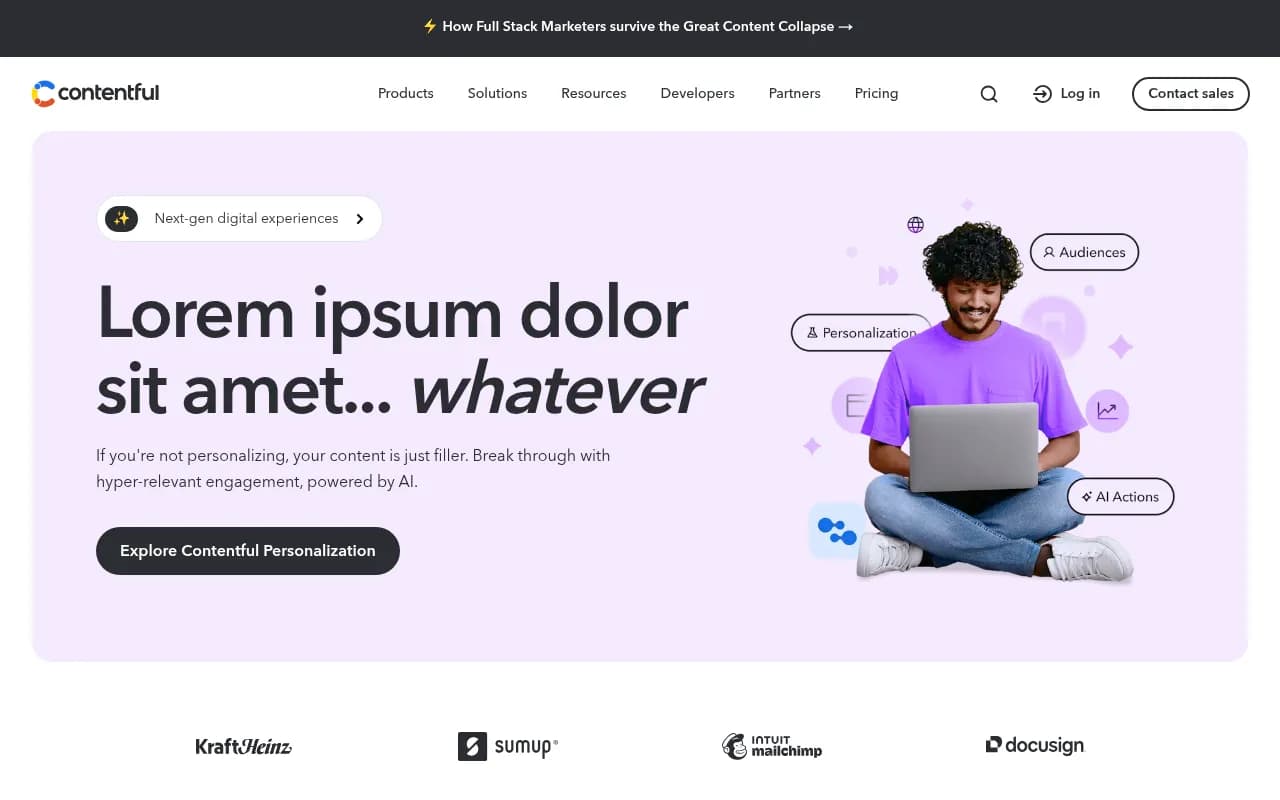
Contentful is the most direct enterprise competitor to Kontent.ai. Both platforms target large organizations with complex content operations, multi-channel publishing needs, and teams that want AI-powered workflows. Contentful positions itself as a full Digital Experience Platform (DXP) rather than just a CMS, which means it bundles content management with personalization, analytics, and optimization tools.
What it does better than Kontent.ai:
- Personalization engine: Contentful's no-code personalization tools let marketers create audience segments and tailor content without developer help. Kontent.ai has personalization features, but Contentful's are more mature and easier for non-technical users.
- Composable architecture: Contentful emphasizes modularity -- you can plug in best-of-breed tools for commerce, search, analytics, and more. This matters if you're building a complex digital ecosystem.
- AI content generation: Both platforms have AI writing assistants, but Contentful's are tightly integrated with its personalization engine, so you can generate variations for different audiences automatically.
- Brand trust: Used by Kraft Heinz, SumUp, Mailchimp, and Docusign. The customer list is longer and includes more household names than Kontent.ai.
Trade-offs:
- Price: Contentful starts around $300/mo for the Basic plan and scales quickly into custom enterprise pricing. Kontent.ai's usage-based model can be cheaper for smaller projects, though both get expensive at scale.
- Complexity: Contentful's DXP positioning means more features, but also a steeper learning curve. Teams report longer onboarding times compared to simpler headless CMS options.
- Developer experience: Some developers find Contentful's APIs less intuitive than newer platforms like Sanity or Payload. The GraphQL implementation works but isn't as elegant.
Best for: Enterprise marketing teams that need personalization at scale, brands managing content across dozens of channels, and organizations willing to pay premium prices for a proven platform with deep integrations.
Sanity
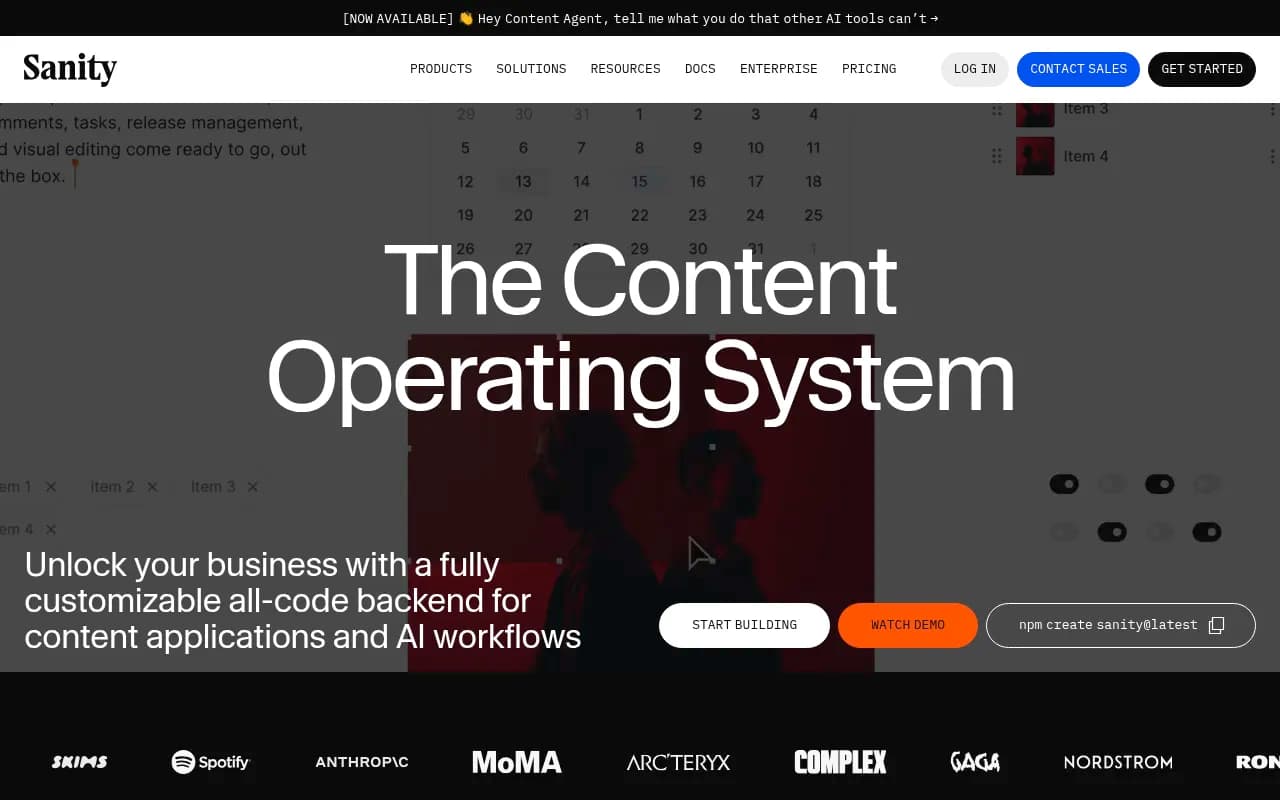
Sanity takes a radically different approach: everything is code. Instead of clicking through a UI to define content models, you write TypeScript configuration files. Instead of a traditional admin panel, you get a real-time collaborative editing environment called Sanity Studio that you can customize down to individual field components.
What it does better than Kontent.ai:
- Developer control: Sanity's TypeScript-based schema gives you complete control over content structure, validation rules, and custom field types. Kontent.ai has a visual content modeling UI, which is easier for non-developers but less flexible.
- Real-time collaboration: Multiple users can edit the same document simultaneously with live updates. Kontent.ai has collaboration features, but Sanity's real-time sync is smoother.
- Portable Text: Sanity's structured rich text format (Portable Text) is easier to work with than traditional HTML or Markdown. You can render the same content differently across platforms without parsing HTML.
- Serverless functions: Sanity includes built-in serverless functions for custom API endpoints, webhooks, and background jobs. Kontent.ai requires external services for similar functionality.
- Pricing transparency: Free tier is generous (3 users, 10k documents, 500k API requests/mo). Growth plan starts at $15/user/month. Kontent.ai's usage-based pricing is harder to predict.
Trade-offs:
- Learning curve: If your content team isn't comfortable with code, Sanity is a non-starter. Kontent.ai's visual UI is much more accessible to marketers and editors.
- No built-in AI tools: Sanity doesn't include AI writing assistants or content generation features out of the box. You'd need to integrate OpenAI or similar services yourself.
- Smaller ecosystem: Fewer pre-built integrations compared to Contentful or Kontent.ai. You'll build more custom connectors.
Best for: Developer-led teams that want maximum flexibility, agencies building custom solutions for clients, and projects where content structure is complex or frequently changing. Not suitable for teams without strong technical resources.
Storyblok
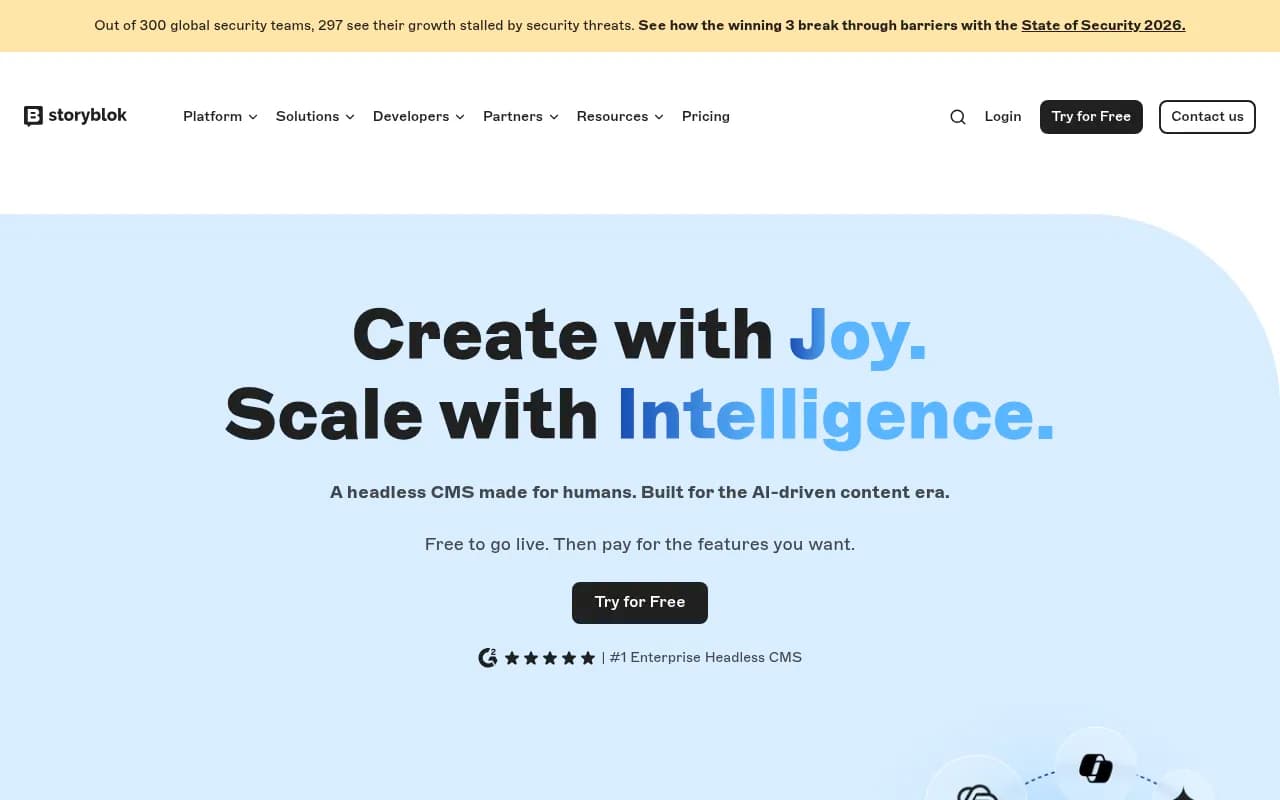
Storyblok's killer feature is its visual editor -- marketers can see exactly how content will look on the live site while they're editing it, with real-time previews that update as they type. This bridges the gap between developers (who build components) and content teams (who assemble pages from those components).
What it does better than Kontent.ai:
- Visual editing: Storyblok's live preview is the best in the industry. Content editors see their changes instantly in the context of the actual website design. Kontent.ai has preview features, but they're not as seamless.
- Component-based approach: Developers build reusable components (hero sections, product cards, testimonials, etc.), then marketers drag and drop them to build pages. This speeds up page creation dramatically.
- Figma integration: Import designs from Figma directly into Storyblok components. This tightens the design-to-development workflow.
- ROI: Forrester study showed 582% ROI over three years. Customers report 50% faster content production and 2-month timelines to build 16 global sites (Oatly case study).
- Pricing: Free starter plan forever. Growth plan starts at $90.75/mo (annual billing) or $99/mo (monthly). More predictable than Kontent.ai's usage-based model.
Trade-offs:
- Less enterprise-focused: Storyblok's customer base skews toward mid-market companies and agencies. Kontent.ai and Contentful have stronger enterprise security and compliance features.
- AI features: Storyblok has AI-powered workflows and content generation, but they're newer and less mature than Kontent.ai's.
- API flexibility: Storyblok's API is solid but less customizable than Sanity's or Payload's code-first approaches.
Best for: Marketing teams that need to move fast without waiting on developers, agencies managing multiple client sites, and brands that prioritize visual editing over deep technical customization.
Contentstack
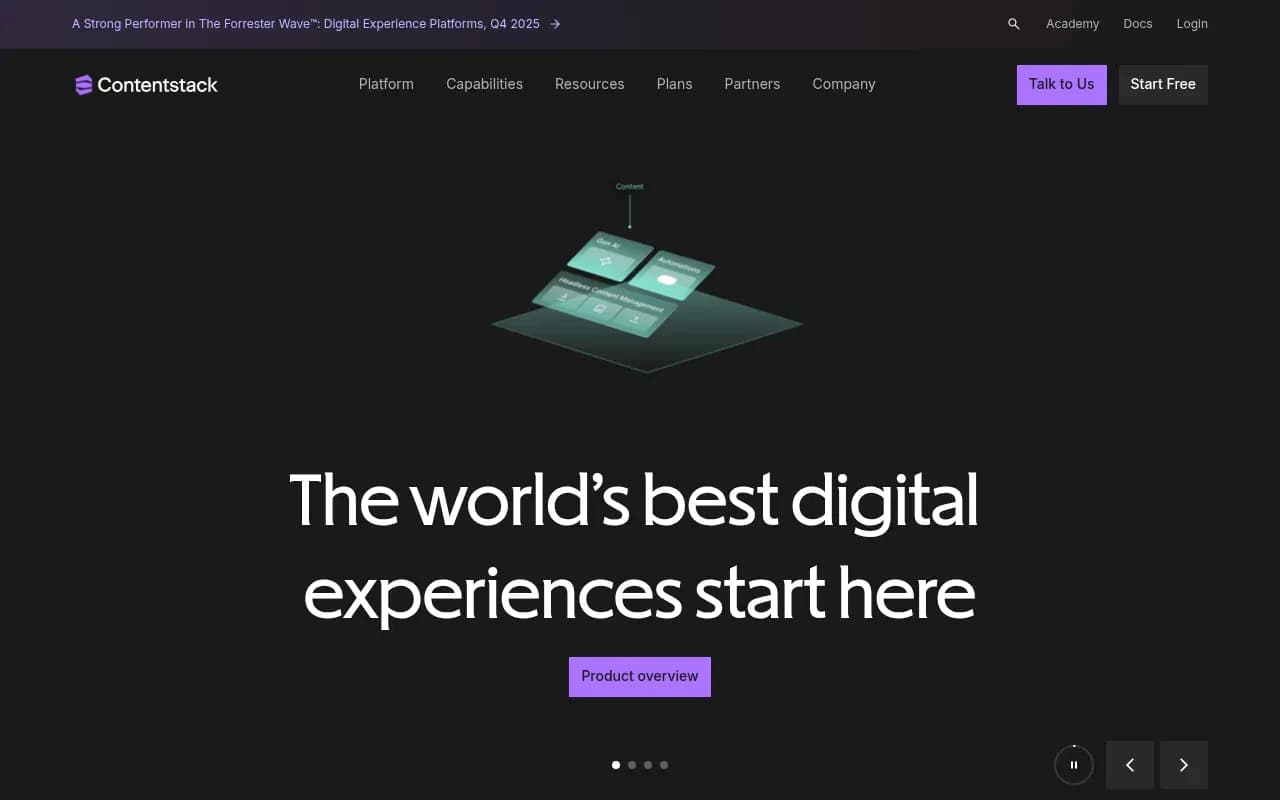
Contentstack positions itself as an "adaptive digital experience platform" that combines content management with real-time customer data and AI-powered personalization. It's built for large enterprises that need to deliver personalized experiences across dozens of channels and touchpoints.
What it does better than Kontent.ai:
- Personalization at scale: Contentstack's personalization engine uses real-time customer data to adapt content on the fly. This goes beyond Kontent.ai's AI content tools -- it's about serving different content to different users based on behavior, location, and preferences.
- Enterprise security: Used by Walmart, ASICS, Alaska Airlines, and other Fortune 500 companies. SOC 2 compliant, GDPR ready, and built for regulated industries.
- Multi-channel orchestration: Contentstack excels at managing content across web, mobile apps, IoT devices, and digital signage from a single hub. Kontent.ai does multi-channel, but Contentstack's tooling is more mature.
- Forrester recognition: Named a Strong Performer in The Forrester Wave for Digital Experience Platforms (Q4 2025).
Trade-offs:
- Price: Starts at $995/mo for the Growth plan, $4,500/mo for Scale, and custom enterprise pricing beyond that. This is significantly more expensive than Kontent.ai's entry-level pricing.
- Complexity: Contentstack's feature set is massive, which means longer implementation times and steeper learning curves. Teams report 3-6 month onboarding periods.
- Overkill for simple projects: If you just need a headless CMS for a marketing site or blog, Contentstack's DXP capabilities are unnecessary overhead.
Best for: Large enterprises with complex personalization requirements, brands managing content across many channels and regions, and organizations that need enterprise-grade security and compliance.
Strapi
Strapi is the leading open-source headless CMS. It's built on Node.js, generates REST and GraphQL APIs automatically, and gives you complete control over your content structure and hosting environment. Used by Toyota, Amazon, and Tesco.
What it does better than Kontent.ai:
- Open source: MIT license means you own the code, can modify anything, and aren't locked into a vendor. Kontent.ai is a proprietary SaaS platform.
- Cost: Free to self-host. Strapi Cloud starts at $15/mo (yearly billing) or $18/mo (monthly). Enterprise Edition has custom pricing but is still cheaper than Kontent.ai for most use cases.
- Instant API generation: Define a content type, and Strapi generates REST and GraphQL endpoints automatically. No manual API building required.
- Plugin ecosystem: 100+ community plugins for everything from SEO to e-commerce to AI integrations. You can also build custom plugins.
- Self-hosting flexibility: Deploy anywhere -- AWS, Google Cloud, Azure, DigitalOcean, or your own servers. Kontent.ai is SaaS-only.
Trade-offs:
- No built-in AI tools: Strapi doesn't include AI writing assistants or content generation features. You'd integrate OpenAI or similar services yourself.
- Self-hosting responsibility: If you self-host, you're responsible for security, backups, scaling, and uptime. Kontent.ai handles all infrastructure.
- Less enterprise polish: Strapi's admin UI is functional but not as refined as Kontent.ai's or Contentful's. Enterprise features like advanced workflows and governance are available but require configuration.
- Smaller support team: Community support is strong, but paid support isn't as comprehensive as enterprise platforms.
Best for: Development teams comfortable with self-hosting, startups and agencies on tight budgets, and organizations that need full control over their CMS codebase and infrastructure.
Payload
Payload is a TypeScript-based, open-source headless CMS built natively for Next.js. It's designed for developers who want to skip building admin panels and focus on frontend experiences. Used by Microsoft, Sonos, and thousands of developers.
What it does better than Kontent.ai:
- Next.js native: Payload is built on Next.js 15, which means it shares the same routing, server components, and deployment model as your frontend. Kontent.ai is framework-agnostic, which is flexible but less integrated.
- Code-first schema: Define your content models in TypeScript. This gives you type safety, version control, and the ability to generate admin UIs automatically. Kontent.ai uses a visual content modeling UI.
- Local development: Run Payload locally with full admin panel and API access. No internet connection required. Kontent.ai is cloud-only.
- Open source: MIT license. Free to self-host or use Payload Cloud (free personal plan, $35/mo standard, $199/mo pro).
- Built-in auth and file storage: Payload includes user authentication, role-based access control, and file uploads out of the box. Kontent.ai requires external services for some of these.
Trade-offs:
- Next.js only: If you're not using Next.js, Payload isn't an option. Kontent.ai works with any frontend framework.
- No AI features: Payload doesn't include AI writing tools or content generation. You'd build these yourself.
- Smaller ecosystem: Fewer integrations and plugins compared to established platforms like Kontent.ai or Contentful.
- Self-hosting complexity: Like Strapi, self-hosting means you're responsible for infrastructure. Payload Cloud simplifies this but adds cost.
Best for: Next.js teams that want a CMS that feels like part of their codebase, developers who prefer TypeScript over visual configuration, and projects where local development and type safety are priorities.
Agility CMS
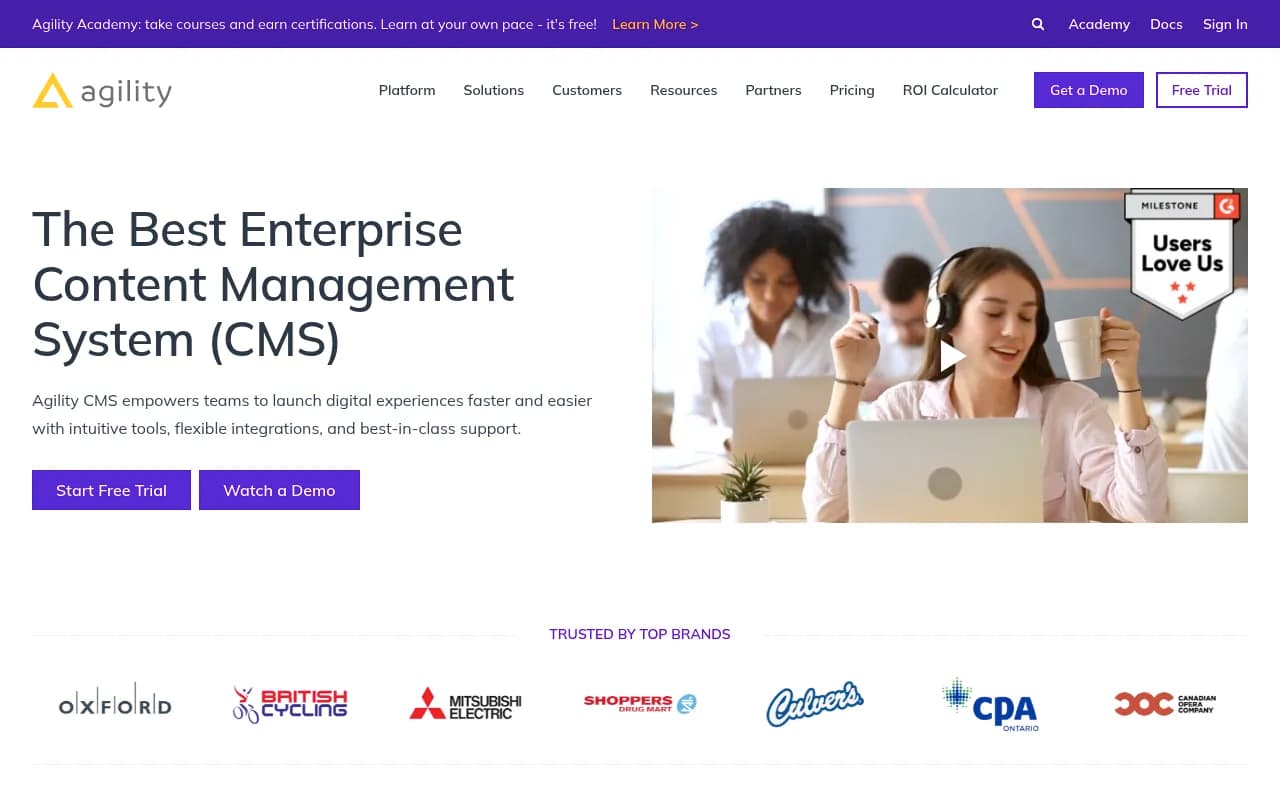
Agility CMS is a composable headless CMS with 20+ years of history serving enterprise customers. It's trusted by Scotiabank, Cineplex, and Shoppers Drug Mart for mission-critical digital experiences.
What it does better than Kontent.ai:
- Proven stability: 99.95% guaranteed uptime and 20+ years of continuous operation. Kontent.ai is newer (founded 2017) and doesn't offer uptime guarantees publicly.
- Enterprise security: SOC 2 compliant, GovRAMP registered, and trusted by government agencies and financial institutions. Kontent.ai has strong security but less public certification.
- Support quality: Agility CMS is known for responsive, expert support that acts as an extension of your team. Customers consistently rate support higher than competitors.
- Page management: Agility's page management tools are more intuitive for non-technical users than Kontent.ai's content item approach.
Trade-offs:
- Price: Starts at $1,249/mo for the Starter plan (up to 10 users), $2,499/mo for Pro. This is significantly more expensive than Kontent.ai's entry-level pricing.
- Older architecture: Agility CMS has modernized over the years, but its core architecture is older than newer platforms like Sanity or Payload. Some developers find the APIs less elegant.
- Smaller ecosystem: Fewer integrations and community resources compared to Contentful or Strapi.
Best for: Enterprise teams that prioritize stability and support over cutting-edge features, organizations in regulated industries (finance, healthcare, government), and brands that need guaranteed uptime for business-critical sites.
Prismic
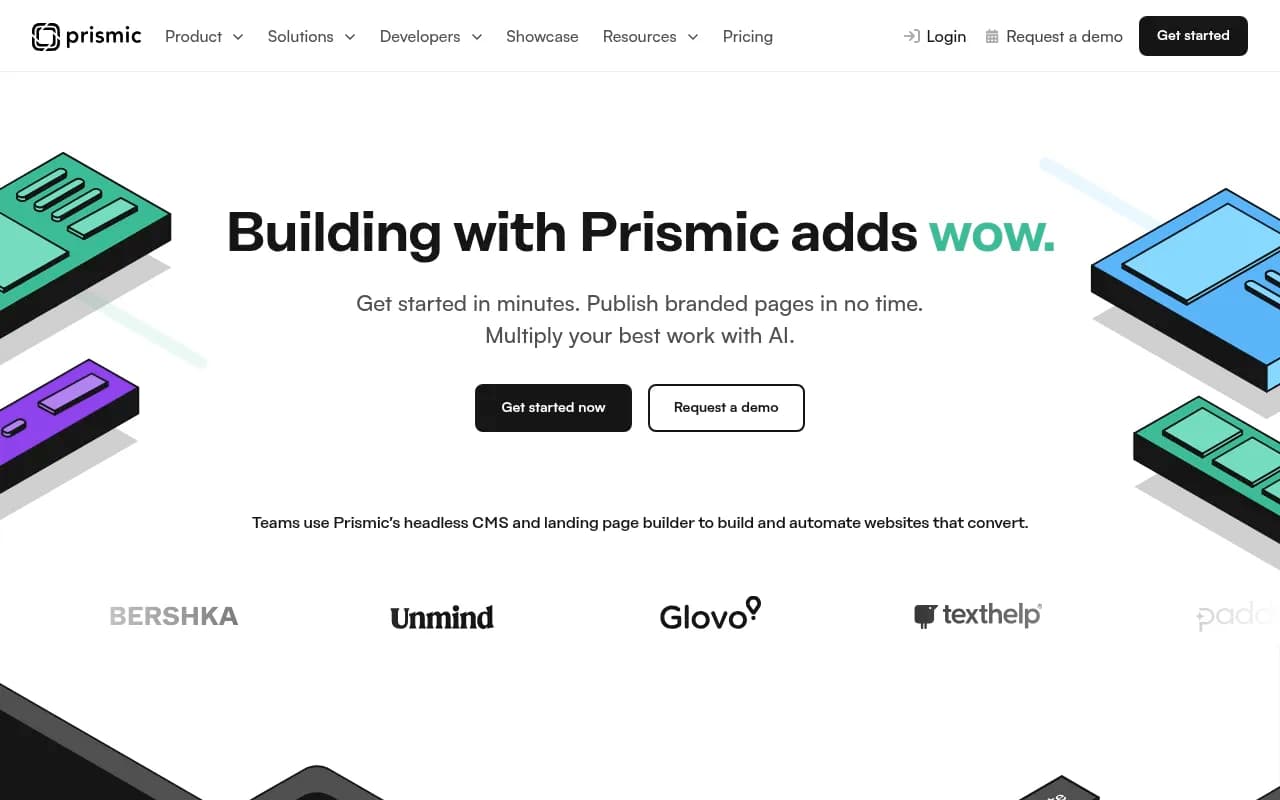
Prismic is a headless CMS with a visual page builder designed specifically for modern JavaScript frameworks like Next.js, Nuxt, and SvelteKit. It focuses on enabling marketers to create on-brand pages fast while giving developers full control over components.
What it does better than Kontent.ai:
- Framework-specific integrations: Deep, official integrations with Next.js, Nuxt, and SvelteKit. Documentation and examples are framework-specific, not generic. Kontent.ai supports these frameworks but without the same depth.
- Visual page builder: Marketers assemble pages from pre-approved components without touching code. Similar to Storyblok's approach but with tighter framework integration.
- AI-enhanced content: Prismic includes AI tools for content creation and optimization, though not as comprehensive as Kontent.ai's.
- Pricing: Free plan available. Paid plans start at $10/user/month (billed annually). Much cheaper than Kontent.ai for small teams.
- ABM and personalization: Tools for account-based marketing and geo-targeted content. Kontent.ai has personalization features but not as focused on ABM.
Trade-offs:
- Framework lock-in: Prismic's strength (deep framework integration) is also a limitation. If you want to switch from Next.js to something else, you'll have more work to do than with a framework-agnostic CMS like Kontent.ai.
- Less enterprise-focused: Prismic's customer base skews toward mid-market companies and agencies. Enterprise features like advanced governance and compliance are less mature.
- Smaller content modeling flexibility: Prismic's content modeling is simpler than Kontent.ai's or Contentful's. This is fine for most projects but limiting for complex content structures.
Best for: Next.js, Nuxt, or SvelteKit teams that want a CMS built specifically for their framework, marketing teams that need to launch landing pages fast, and agencies managing multiple client sites on similar tech stacks.
How to Choose: Decision Framework
Choose Contentful if: You need enterprise-grade personalization, are building a complex digital ecosystem with many integrations, and have the budget for premium pricing ($300+/mo).
Choose Sanity if: Your team is developer-led, you need maximum flexibility in content modeling, and you're comfortable with a code-first approach. Not suitable for non-technical content teams.
Choose Storyblok if: Visual editing is your top priority, you want marketers to build pages independently, and you need fast time-to-market. Best for marketing-led organizations.
Choose Contentstack if: You're a large enterprise with complex personalization requirements across many channels, need top-tier security and compliance, and can afford $1,000+/mo pricing.
Choose Strapi if: You want open-source flexibility, need to control costs, and have the technical resources to self-host and maintain infrastructure.
Choose Payload if: You're building on Next.js, prefer TypeScript and code-first configuration, and want a CMS that feels like part of your codebase rather than a separate service.
Choose Agility CMS if: Stability and support are your top priorities, you're in a regulated industry, and you need guaranteed uptime for business-critical applications.
Choose Prismic if: You're using Next.js, Nuxt, or SvelteKit and want a CMS built specifically for your framework, with strong visual editing for marketers.
Stick with Kontent.ai if: You value its AI-powered content tools, prefer usage-based pricing over fixed monthly costs, and need a balance between developer flexibility and content team usability without the complexity of full DXP platforms.
The right choice depends on your team's technical capabilities, budget, and priorities. Most teams will find a better fit in one of these alternatives based on their specific needs -- whether that's developer control (Sanity, Payload), visual editing (Storyblok, Prismic), enterprise features (Contentful, Contentstack), or open-source flexibility (Strapi).