Key Takeaways
- HubSpot Marketing Hub: Best all-in-one platform for small to mid-sized teams that need marketing automation, CRM, and AI tools in one place. Starts at $15/mo per seat with a generous free tier.
- 6sense: Enterprise ABM platform with the most sophisticated intent data and predictive analytics. Expect $50K-$500K+/year—built for large teams with complex buying committees.
- Demandbase One: Strong account-based platform that unifies advertising, sales intelligence, and buying group tracking. Custom pricing typically $18K-$300K+/year.
- Metadata.io: Best for performance marketers who want AI to run and optimize paid campaigns across LinkedIn, Google, Meta, and Reddit. From $20K/year—less expensive than full ABM suites.
- ZoomInfo Marketing: Combines real-time buyer signals with automated multi-channel execution. Seat-based pricing around $75/month per user—good middle ground between affordability and sophistication.
SalesboxAI positions itself as a unified AI GTM platform that combines advertising, first-party intent data, and orchestration with purpose-built AI agents. But it's not the only option. Some teams need more mature ecosystems, others want lower price points, and many are looking for platforms that integrate better with their existing stack. Here's what else is out there.
HubSpot Marketing Hub
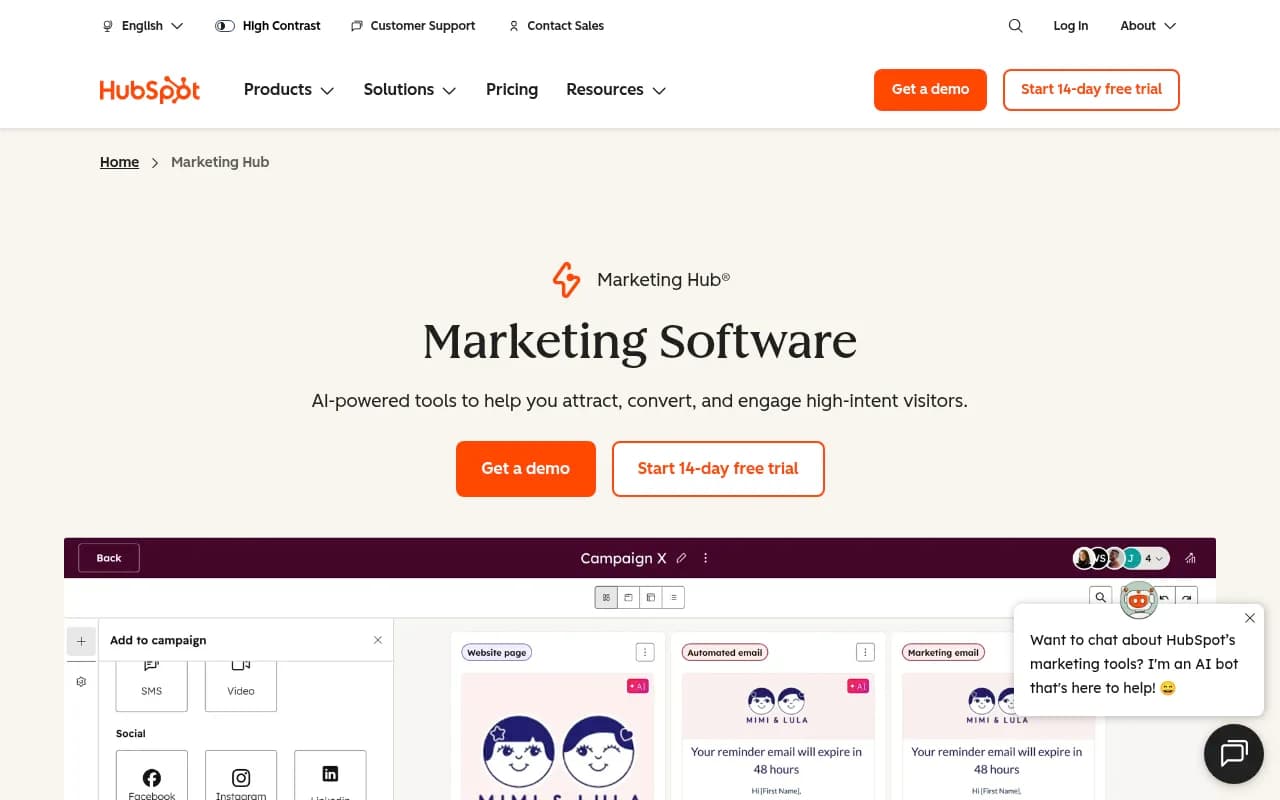
HubSpot Marketing Hub is the most accessible alternative if you're looking for an all-in-one marketing platform that doesn't require enterprise budgets or six-month implementations. It's not a pure GTM advertising platform like SalesboxAI—it's broader. You get email marketing, social media management, landing pages, forms, workflows, and AI-powered content tools all in one place.
The big difference: HubSpot is built for inbound marketing first, with advertising and ABM features layered on top. SalesboxAI is purpose-built for outbound GTM motions with AI agents that detect intent and engage prospects. HubSpot's AI features (Breeze Customer Agent, content generation, form shortening) are solid but less specialized for B2B advertising orchestration.
Where HubSpot wins: it's a complete platform. You're not stitching together advertising, CRM, email, and analytics from different vendors. Everything lives in one system, which means cleaner data and easier reporting. The free tier is genuinely useful (forms, email marketing, basic CRM), and paid plans start at $15/month per seat—dramatically cheaper than enterprise ABM platforms.
Where it falls short: HubSpot's intent data and account-based targeting aren't as sophisticated as dedicated ABM platforms. If you're running complex multi-touch campaigns across buying committees, you'll hit limitations. The advertising features are decent but not as AI-driven or autonomous as SalesboxAI's agents.
Pricing: Free tier available. Starter from $15/mo per seat, Professional from $890/mo (3 seats), Enterprise from $3,600/mo (5 seats). Much more affordable than SalesboxAI or enterprise ABM platforms.
Best for: Small to mid-sized B2B teams that want an all-in-one platform with marketing automation, CRM, and AI features without enterprise complexity or cost. Not ideal if your primary need is sophisticated GTM advertising orchestration.
6sense
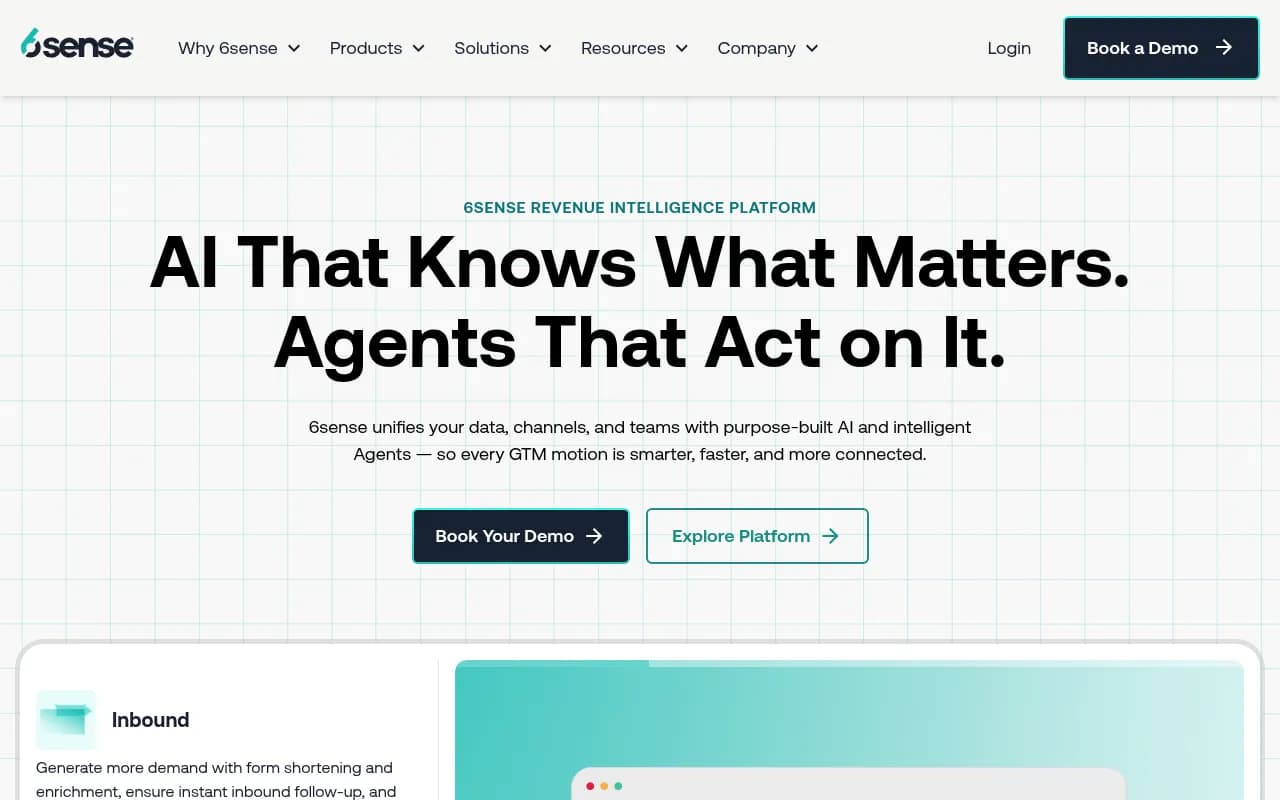
6sense is the enterprise standard for account-based marketing and predictive intelligence. If SalesboxAI is a unified GTM platform with AI agents, 6sense is a full-scale revenue intelligence system that uses AI to identify in-market accounts, predict buying stages, and orchestrate engagement across your entire go-to-market motion.
The core difference: 6sense is built around its proprietary intent data and predictive models. It ingests signals from billions of data points to tell you which accounts are researching solutions, where they are in the buying journey, and which buying committee members are engaged. SalesboxAI focuses on AI-powered advertising execution and first-party intent; 6sense goes deeper into third-party intent, account scoring, and revenue attribution.
6sense's advertising capabilities are strong—multi-channel display, programmatic, email—but the real value is in the intelligence layer. You're not just running ads; you're targeting accounts that 6sense has identified as high-intent based on research behavior, competitive analysis, and engagement patterns. The platform also includes conversational AI (6sense Conversational Email) and deep integrations with Salesforce, Marketo, and other enterprise tools.
Where 6sense wins: unmatched intent data and predictive analytics. If you're selling to large enterprises with long sales cycles and complex buying committees, 6sense gives you visibility that other platforms can't match. The account-level insights are incredibly detailed—you see which topics accounts are researching, which competitors they're evaluating, and when they're likely to make a decision.
Where it falls short: cost and complexity. 6sense is expensive—small deployments start around $50K/year and enterprise deals can hit $500K+. Implementation takes months, and you need a dedicated team to manage it. It's overkill if you're a small team or don't have the budget for enterprise ABM.
Pricing: Custom pricing. Small deployments (2,000-5,000 accounts): $50K-$120K/year. Mid-market (5,000-15,000 accounts): $120K-$250K/year. Enterprise (15,000+ accounts): $250K-$500K+/year. Annual contracts, no self-serve option.
Best for: Enterprise B2B teams with complex sales cycles, large deal sizes, and the budget to invest in sophisticated intent data and predictive analytics. Not a fit for small teams or companies that need quick, affordable GTM advertising execution.
Adobe Marketo Engage
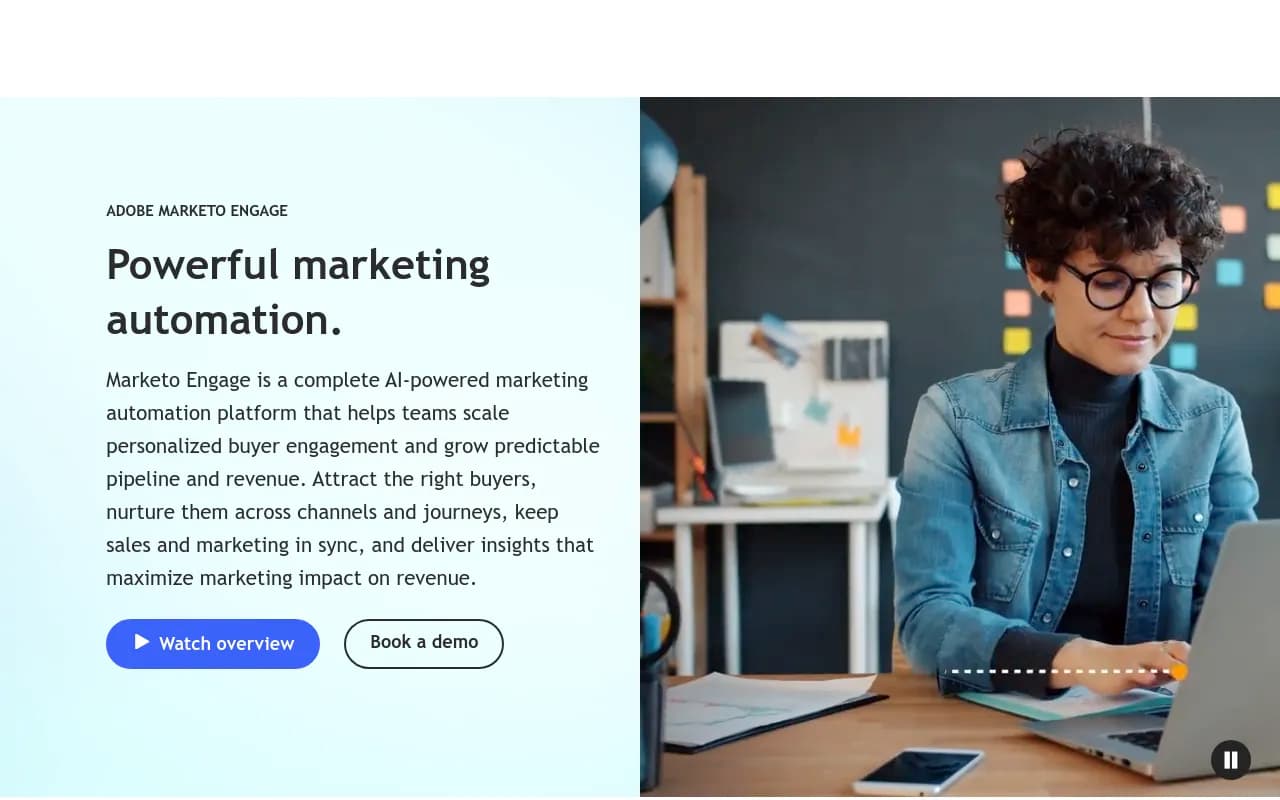
Marketo Engage is the enterprise marketing automation platform that's been around longer than most of its competitors. It's not a GTM advertising platform in the way SalesboxAI is—it's a full marketing automation suite with campaign orchestration, lead management, email marketing, and analytics. But it includes AI-powered features and integrates with advertising platforms to support ABM strategies.
The key difference: Marketo is built for marketing operations at scale. You're managing complex multi-step campaigns, lead scoring models, and revenue attribution across thousands of contacts. SalesboxAI is more focused on AI-driven advertising execution and intent-based engagement. Marketo gives you the infrastructure to run sophisticated marketing programs; SalesboxAI gives you AI agents that automate outreach and booking.
Marketo's AI features (Adobe Sensei) include predictive content, send-time optimization, and dynamic personalization. The platform excels at workflow automation—you can build intricate nurture programs that respond to engagement signals and move prospects through the funnel. It also integrates deeply with Salesforce and the broader Adobe Experience Cloud.
Where Marketo wins: maturity and flexibility. It's been the enterprise standard for years, so integrations are robust, documentation is extensive, and there's a large ecosystem of consultants and agencies. If you're running complex marketing operations with multiple product lines, regions, and personas, Marketo can handle it.
Where it falls short: steep learning curve and high cost. Marketo is not intuitive—expect a long ramp-up period and ongoing need for specialized admins. The AI features are solid but not as autonomous or advertising-focused as SalesboxAI's agents. And pricing starts around $1,000-$2,000/month for 10K contacts, scaling to $10K+/month for enterprise deployments.
Pricing: Custom pricing—starts around $1,000-$2,000/mo for 10K contacts, scales to $10,000+/mo for enterprise. Annual contracts required. Add-ons (Dynamic Chat, Marketo Measure) priced separately.
Best for: Large enterprises with dedicated marketing ops teams that need a mature, flexible platform for complex campaign orchestration and lead management. Not ideal if you want quick setup, intuitive UI, or AI-first advertising automation.
Demandbase One
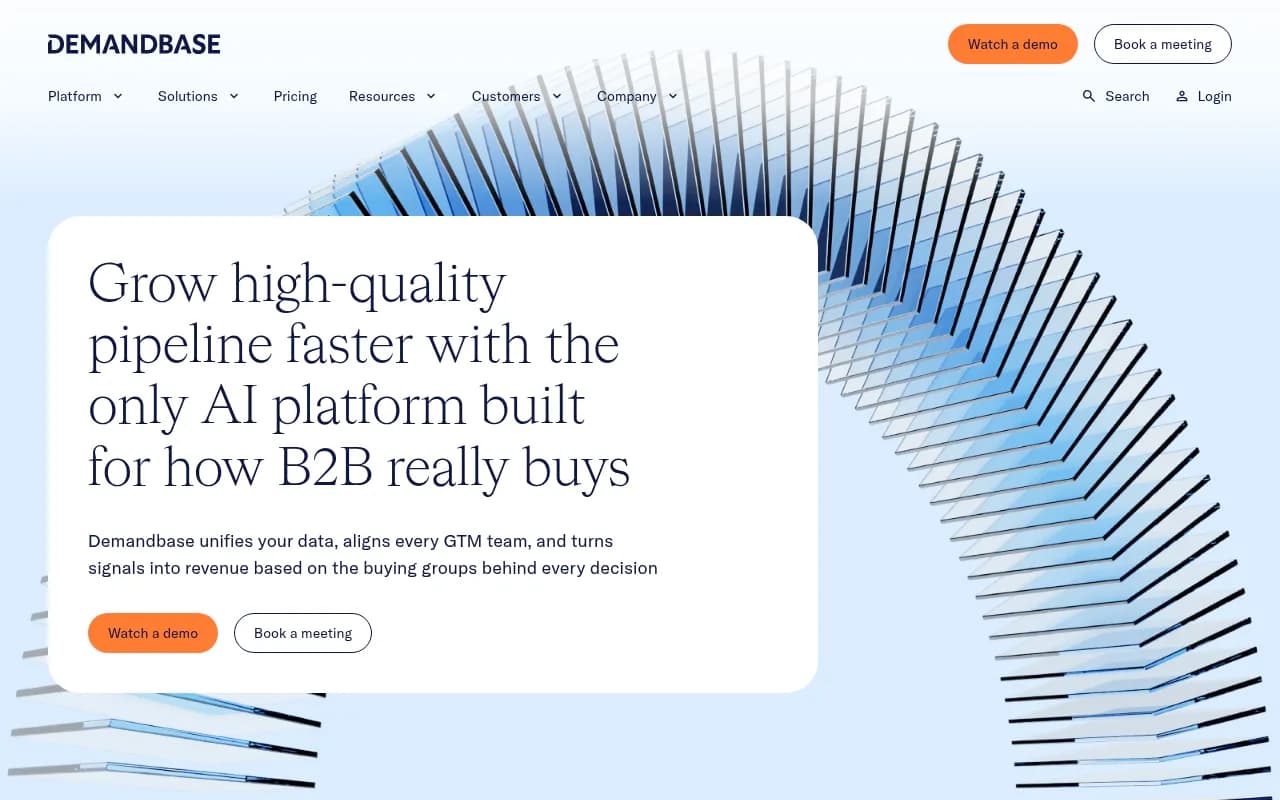
Demandbase One is a unified ABM platform that combines advertising, sales intelligence, and account-based orchestration in one system. Like SalesboxAI, it's built around the idea of unifying your GTM motion—but Demandbase focuses heavily on buying groups and account-level engagement rather than individual contacts.
The core difference: Demandbase's strength is in identifying and engaging entire buying committees, not just individual leads. Its "buying group" model maps out all the stakeholders involved in a purchase decision and tracks engagement across the group. SalesboxAI's AI agents focus on detecting intent and automating outreach; Demandbase focuses on orchestrating campaigns across multiple decision-makers within target accounts.
Demandbase's advertising capabilities are strong—display, programmatic, LinkedIn, Meta—and it includes AI-driven optimization (Pipeline AI) that automates next-best actions based on account signals. The platform also offers deep sales intelligence features, including account insights, engagement tracking, and CRM integrations.
Where Demandbase wins: buying group visibility and account-based orchestration. If you're selling to enterprises where 5-10 people influence the buying decision, Demandbase gives you a clear view of who's engaged, who's missing, and how to reach them. The platform is also strong on attribution—you can track how ABM efforts contribute to pipeline and revenue.
Where it falls short: cost and complexity. Demandbase is an enterprise platform with enterprise pricing—typically $18K-$300K+/year depending on account volume and modules. Implementation is involved, and you need a team that understands ABM strategy. It's not a quick-start solution.
Pricing: Custom enterprise pricing (typically $18K-$300K+/year based on account volume and modules). No public pricing or free trial.
Best for: Mid-sized to enterprise B2B companies that sell to buying committees and need a unified platform for account-based advertising, sales intelligence, and orchestration. Not a fit for small teams or companies that don't have the budget for enterprise ABM.
ZoomInfo Marketing
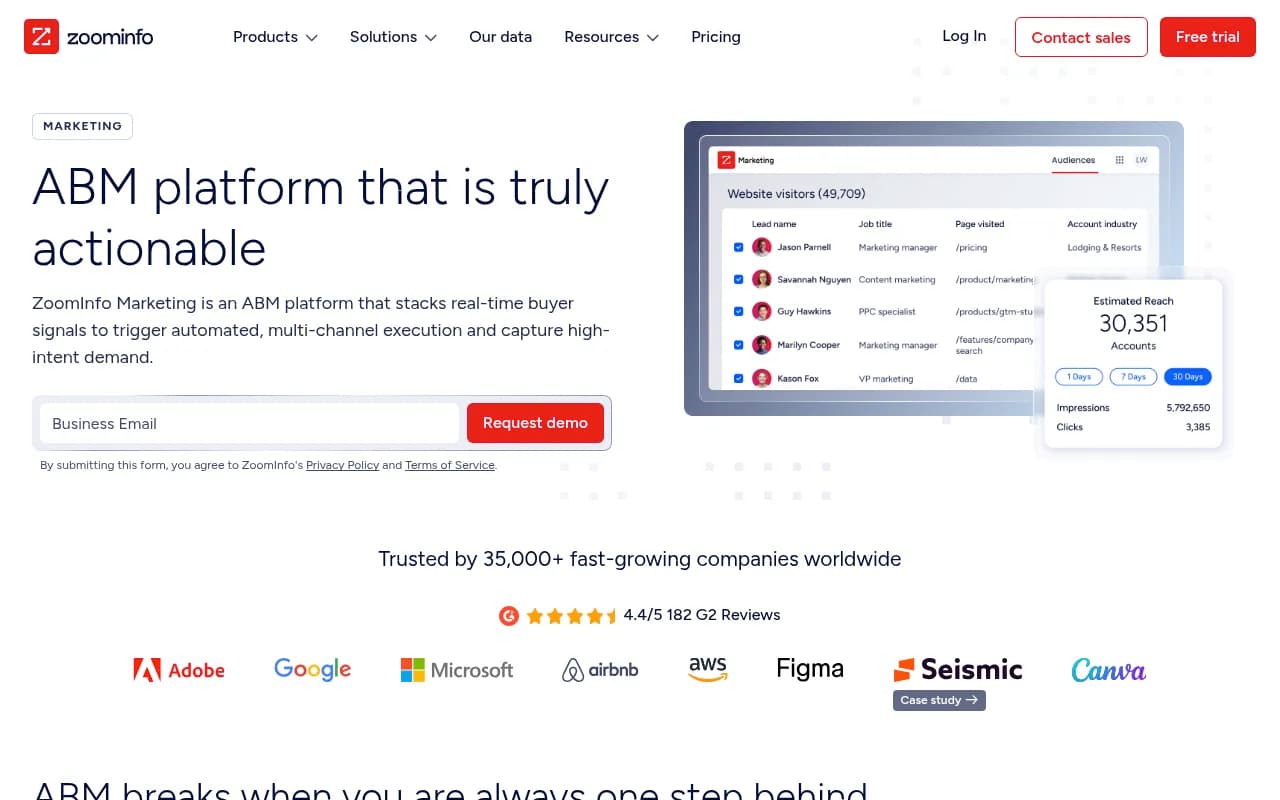
ZoomInfo Marketing is an ABM platform that combines real-time buyer intent signals with automated multi-channel execution. It's part of the broader ZoomInfo ecosystem, which means you get access to ZoomInfo's massive B2B contact database and intent data alongside your advertising and campaign tools.
The key difference: ZoomInfo Marketing is built on top of ZoomInfo's core data platform. You're not just running ads—you're targeting accounts and contacts that ZoomInfo has identified as high-intent based on research behavior, website visits, and engagement signals. SalesboxAI focuses on first-party intent and AI agents; ZoomInfo combines first-party and third-party intent with a huge contact database.
The platform uses AI signal stacking to identify when multiple buying signals align (e.g., website visits + content downloads + job changes), then automatically triggers campaigns across email, display ads, LinkedIn, and Meta. It's less about autonomous AI agents and more about rules-based automation tied to intent signals.
Where ZoomInfo Marketing wins: data depth and multi-channel execution. If you're already using ZoomInfo for sales intelligence, adding the marketing platform gives you a unified view of accounts and contacts. The intent data is strong, and the ability to automatically launch campaigns when signals spike is valuable.
Where it falls short: it's not as AI-autonomous as SalesboxAI's agent-driven approach. You're still building campaigns and setting rules; the platform executes based on those rules. It's also seat-based pricing, which can get expensive as your team grows.
Pricing: Seat-based pricing starting around $75/month per user. Pro plan ~$3,500/year, Unlimited plan ~$3,000/year. Annual contracts typical. Custom enterprise pricing available.
Best for: B2B teams that want to combine ZoomInfo's contact data and intent signals with automated ABM campaigns. Good middle ground between affordability and sophistication. Not ideal if you want fully autonomous AI agents or don't need ZoomInfo's contact database.
Terminus (DemandScience)
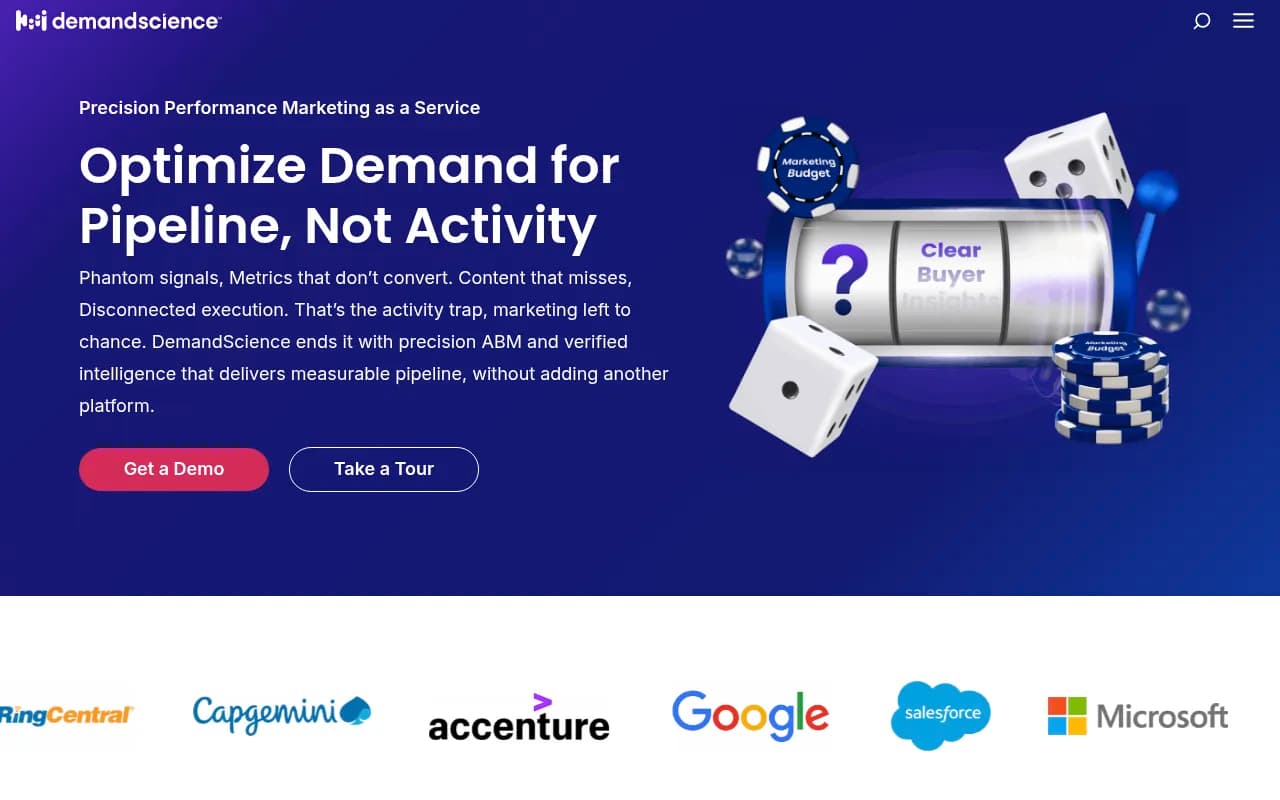
Terminus (now part of DemandScience) is a performance marketing platform that combines verified buyer intelligence with expert campaign management. Unlike SalesboxAI's AI-first approach, Terminus leans heavily on human expertise—you get a team of campaign managers who build and optimize your programs alongside the platform's automation.
The core difference: Terminus is "marketing as a service" rather than pure software. You're not just buying a platform; you're buying a team that runs your campaigns. The platform (called Ionic) provides buyer intelligence and orchestration, but the Labs team handles execution—content syndication, display ads, email campaigns, event marketing, and more.
This model works well if you don't have a large in-house marketing team or if you want experts to manage the tactical execution while you focus on strategy. SalesboxAI gives you AI agents that automate outreach; Terminus gives you human experts who manage campaigns on your behalf.
Where Terminus wins: expert execution and verified buyer data. The DemandScience network includes millions of verified B2B contacts, and the Labs team has deep experience running campaigns across industries. If you want measurable pipeline (not just activity metrics) and don't want to manage campaigns yourself, Terminus delivers.
Where it falls short: less control and higher cost. You're relying on the Labs team to execute, which means less hands-on control over creative, messaging, and optimization. Pricing is also on the higher end—typically $50K-$300K+/year depending on campaign scope.
Pricing: Custom pricing—typically $50K-$300K+ annually depending on account volume, campaign types, and service level. 21-day free trial available for Central platform.
Best for: B2B teams that want expert-managed campaigns and verified buyer intelligence without building a large in-house team. Not ideal if you want full control over campaign execution or prefer a self-serve platform.
RollWorks (AdRoll ABM)
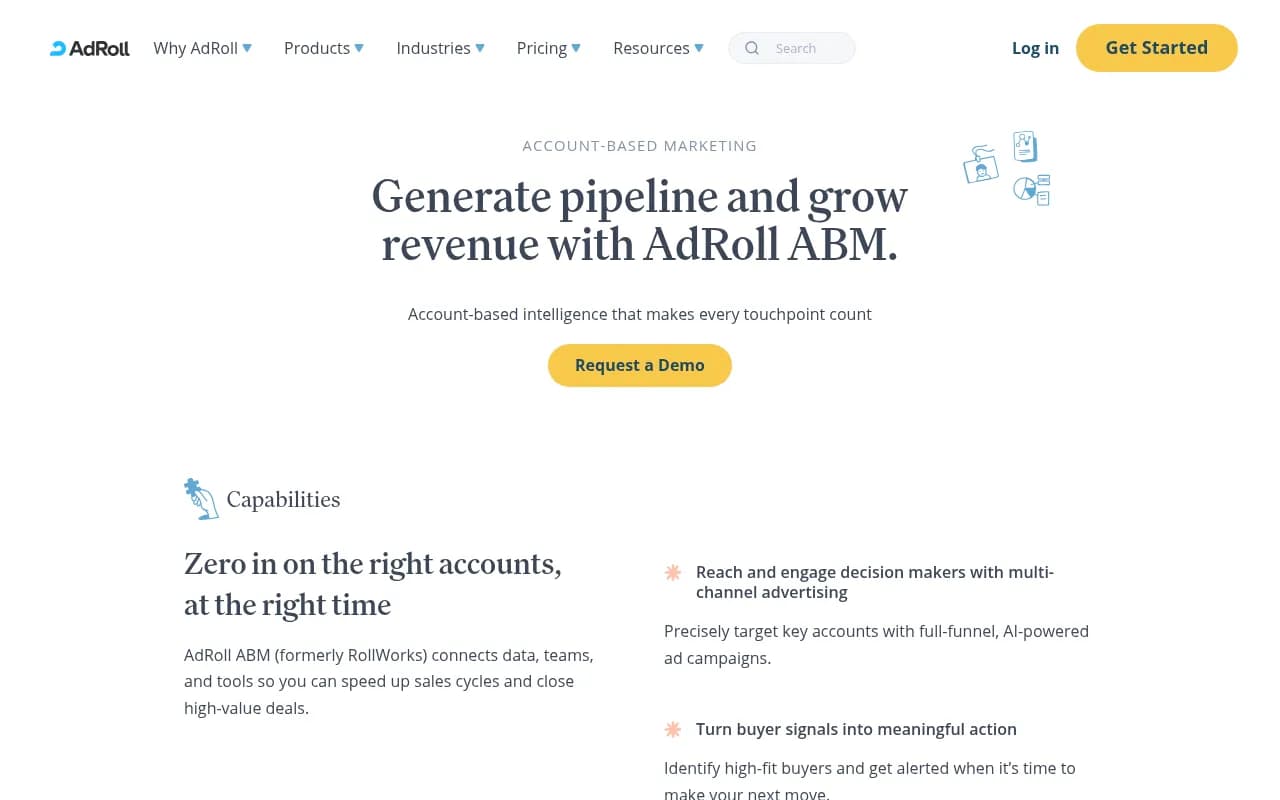
RollWorks (now AdRoll ABM) is an account-based marketing platform that combines buyer intelligence with multi-channel advertising. It's built on AdRoll's advertising infrastructure, which means strong capabilities in display, social, and retargeting ads. The platform uses AI to identify high-fit accounts, surface buying signals, and automate campaign execution.
The key difference: RollWorks is more advertising-focused than full ABM suites like 6sense or Demandbase. It's built for teams that want to run targeted ad campaigns and track account engagement, but don't need the full sales intelligence and orchestration layers of enterprise platforms. SalesboxAI includes AI agents for outreach and engagement; RollWorks focuses on advertising and account identification.
The platform includes account-based advertising (display, social, video), buyer intent signals, CRM integrations, and analytics. It's easier to implement than enterprise ABM platforms and more affordable—custom pricing typically starts around $1,000/month.
Where RollWorks wins: advertising execution and ease of use. If your primary need is running targeted ad campaigns to specific accounts and tracking engagement, RollWorks delivers without enterprise complexity. The platform is intuitive, implementation is fast, and you get dedicated ABM strategist support at higher tiers.
Where it falls short: less sophisticated intent data and orchestration compared to 6sense or Demandbase. The buyer intelligence is solid but not as deep. And if you need advanced features like buying group tracking or predictive analytics, you'll hit limitations.
Pricing: Custom pricing starting around $1,000/month. Higher tiers ($3K-$10K+/month) include more accounts, advanced features, and dedicated ABM strategist support. Annual contracts standard.
Best for: Mid-sized B2B teams that want to run account-based advertising campaigns without enterprise complexity or cost. Good fit if advertising is your primary GTM channel. Not ideal if you need deep intent data or full ABM orchestration.
Metadata.io
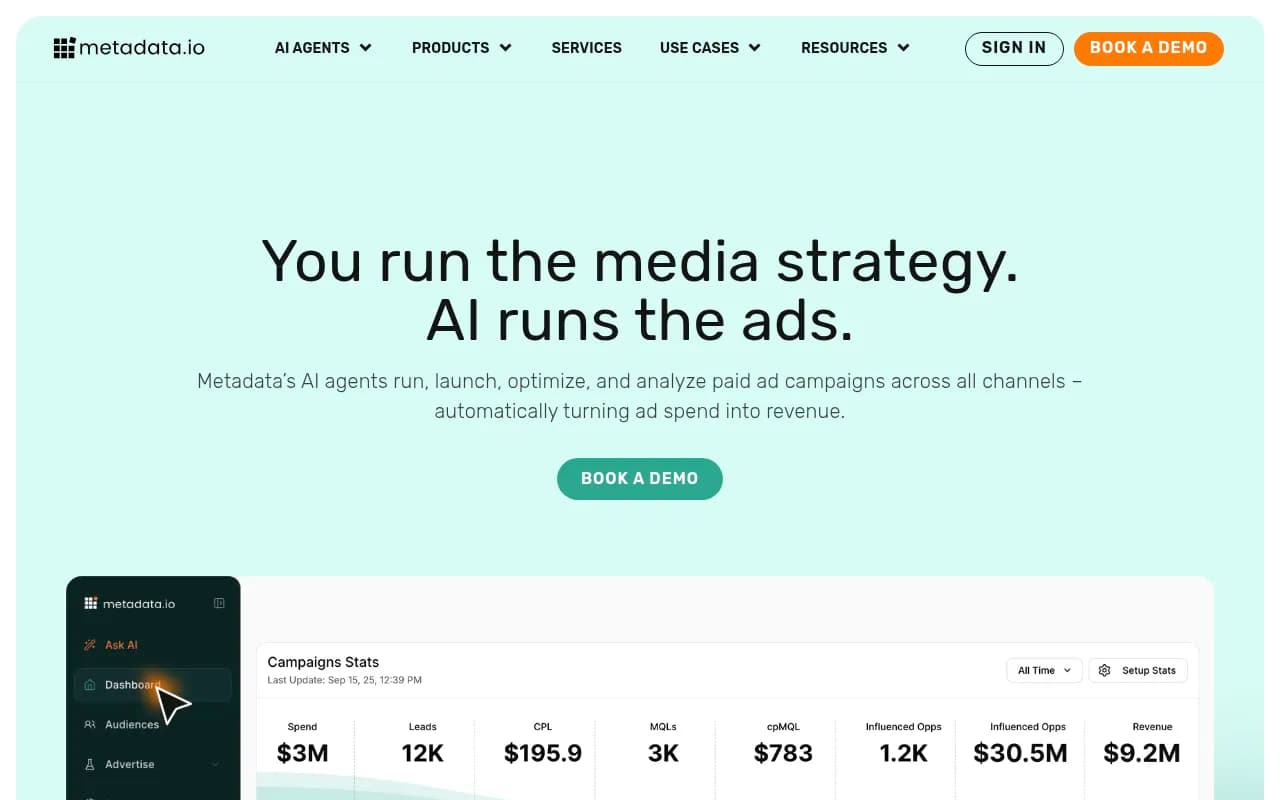
Metadata.io is an AI-driven B2B marketing automation platform that runs, optimizes, and analyzes paid ad campaigns across LinkedIn, Google, Meta, Reddit, and more. Unlike full ABM platforms, Metadata is laser-focused on performance marketing—turning ad spend into revenue through AI-powered targeting, bidding, and creative testing.
The core difference: Metadata is built for demand gen teams and performance marketers who want AI to handle the tactical execution of paid campaigns. You set the strategy (target accounts, budget, goals), and Metadata's AI agents (Bid Agent, Analyst Agent) optimize in real time. SalesboxAI includes advertising as part of a broader GTM platform; Metadata is all about making paid ads work harder.
The platform automates campaign creation, audience targeting, bid optimization, creative testing, and budget allocation. It connects to your CRM and marketing automation tools to optimize toward revenue metrics (pipeline, opportunities, closed deals) rather than just clicks and leads. This is a big deal—most ad platforms optimize for engagement; Metadata optimizes for actual business outcomes.
Where Metadata wins: AI-driven performance marketing at scale. If you're running paid campaigns across multiple channels and want to stop manually tweaking bids and budgets, Metadata delivers. The platform runs thousands of experiments simultaneously and adjusts in real time based on what's driving pipeline. It's also more affordable than full ABM suites—starting around $20K/year.
Where it falls short: it's not a full GTM platform. You don't get intent data, sales intelligence, or orchestration features. Metadata is purpose-built for paid advertising, so if you need broader ABM capabilities, you'll need to stack it with other tools.
Pricing: From $20,000/year (Spotlight plan)—Enterprise pricing available.
Best for: Performance marketers and demand gen teams that run significant paid ad budgets across LinkedIn, Google, Meta, and Reddit. Best fit if you want AI to optimize campaigns toward revenue metrics. Not ideal if you need a full ABM platform with intent data and sales intelligence.
How to Choose the Right SalesboxAI Alternative
The right platform depends on what you're actually trying to solve:
- Need an all-in-one platform with CRM, email, and marketing automation? HubSpot Marketing Hub is the most accessible option with a generous free tier and affordable paid plans.
- Selling to large enterprises with complex buying committees? 6sense or Demandbase One give you the intent data and buying group visibility you need—but expect enterprise pricing and implementation timelines.
- Want AI to run and optimize your paid ad campaigns? Metadata.io is purpose-built for performance marketing and more affordable than full ABM suites.
- Need expert-managed campaigns with verified buyer data? Terminus (DemandScience) gives you a team that handles execution alongside the platform.
- Looking for account-based advertising without enterprise complexity? RollWorks (AdRoll ABM) is easier to implement and more affordable than 6sense or Demandbase.
- Already using ZoomInfo for sales intelligence? ZoomInfo Marketing extends that data into automated ABM campaigns—good middle ground on pricing and sophistication.
- Need mature marketing automation for complex operations? Adobe Marketo Engage is the enterprise standard, but expect a steep learning curve and high cost.
SalesboxAI's unified approach—combining advertising, intent data, and AI agents in one platform—is compelling if you want everything integrated. But most teams will find that specialized platforms or more mature ecosystems better fit their specific needs, budgets, and existing tech stacks. The key is understanding whether you need a full GTM platform, a performance marketing tool, or an enterprise ABM suite—and picking accordingly.