Key takeaways
- Most AI visibility tools are monitoring dashboards — they show you where you're invisible but don't help you fix it
- The tools worth paying for combine tracking with content gap analysis, optimization guidance, or built-in content generation
- Platform coverage matters: look for tools that monitor ChatGPT, Perplexity, Claude, Gemini, and Google AI Overviews at minimum
- Price ranges vary wildly ($0 to $500+/month) — the most expensive options aren't always the most actionable
- If you're serious about ranking in AI search, you need a tool that closes the loop between finding gaps and publishing content that fills them
There's a category of software that's grown faster than almost anything else in marketing tech over the past two years: AI search visibility tools. Over $31 million has flowed into this segment, and new platforms seem to launch every week.
The problem is that most of them do the same thing. They run queries against ChatGPT or Perplexity, check whether your brand shows up, and hand you a dashboard. That's useful, but it's not enough. Knowing you're invisible doesn't make you visible.
This guide focuses on the tools that go further — the ones that tell you why you're missing from AI responses and give you a path to fix it.
What to look for in an AI visibility tool
Before getting into the list, it's worth being clear about what separates a genuinely useful tool from a glorified mention counter.
The features that matter most:
- LLM coverage: Does it monitor ChatGPT, Perplexity, Claude, Gemini, Google AI Overviews, and ideally Grok, DeepSeek, and Copilot too?
- Prompt intelligence: Can you see which prompts your competitors rank for that you don't? Volume and difficulty estimates?
- Content gap analysis: Does it show you what content is missing, not just that you're missing?
- Citation tracking: Which URLs are AI models actually citing? Which sources are they pulling from?
- Content optimization or generation: Can it help you create content that's more likely to get cited?
- Traffic attribution: Can you connect AI visibility to actual website visits and revenue?
- Crawler logs: Does it show you when AI bots are crawling your site and what they're reading?
Most tools check one or two of these boxes. A handful check most of them.
The 10 best AI search visibility tools in 2026
1. Promptwatch
Promptwatch is the most complete platform in this category right now. It's the only tool in a recent 12-platform comparison that was rated a "Leader" across every evaluation category — and the reason is straightforward: it's built around taking action, not just watching.
The core loop works like this. First, Answer Gap Analysis shows you exactly which prompts your competitors are visible for that you're not. You see the specific content your site is missing. Then, a built-in AI writing agent generates articles, listicles, and comparisons grounded in real citation data from over 880 million citations analyzed. Then you track whether your new content actually gets cited, with page-level visibility scores and traffic attribution via GSC integration, code snippet, or server log analysis.
On top of that: real-time AI crawler logs (so you can see when ChatGPT or Perplexity bots visit your site and what errors they hit), prompt volume and difficulty scoring, Reddit and YouTube citation tracking, ChatGPT Shopping monitoring, and competitor heatmaps across 10 AI models.
Pricing starts at $99/month for the Essential plan (1 site, 50 prompts, 5 articles), $249/month for Professional (2 sites, 150 prompts, crawler logs), and $579/month for Business (5 sites, 350 prompts, 30 articles). Free trial available.

2. Profound
Profound is one of the more established enterprise options, having raised $58.5 million in funding. It monitors brand mentions across 9+ AI search engines and has solid competitive benchmarking features. The depth of data is impressive, and it's a reasonable choice for large brands with dedicated analytics teams.
The main limitation: it's primarily a monitoring platform. You get detailed visibility into where you stand, but the path from "we're not mentioned here" to "now we are" requires work outside the tool. At $499/month, that's a meaningful gap compared to platforms that include optimization features.
Profound

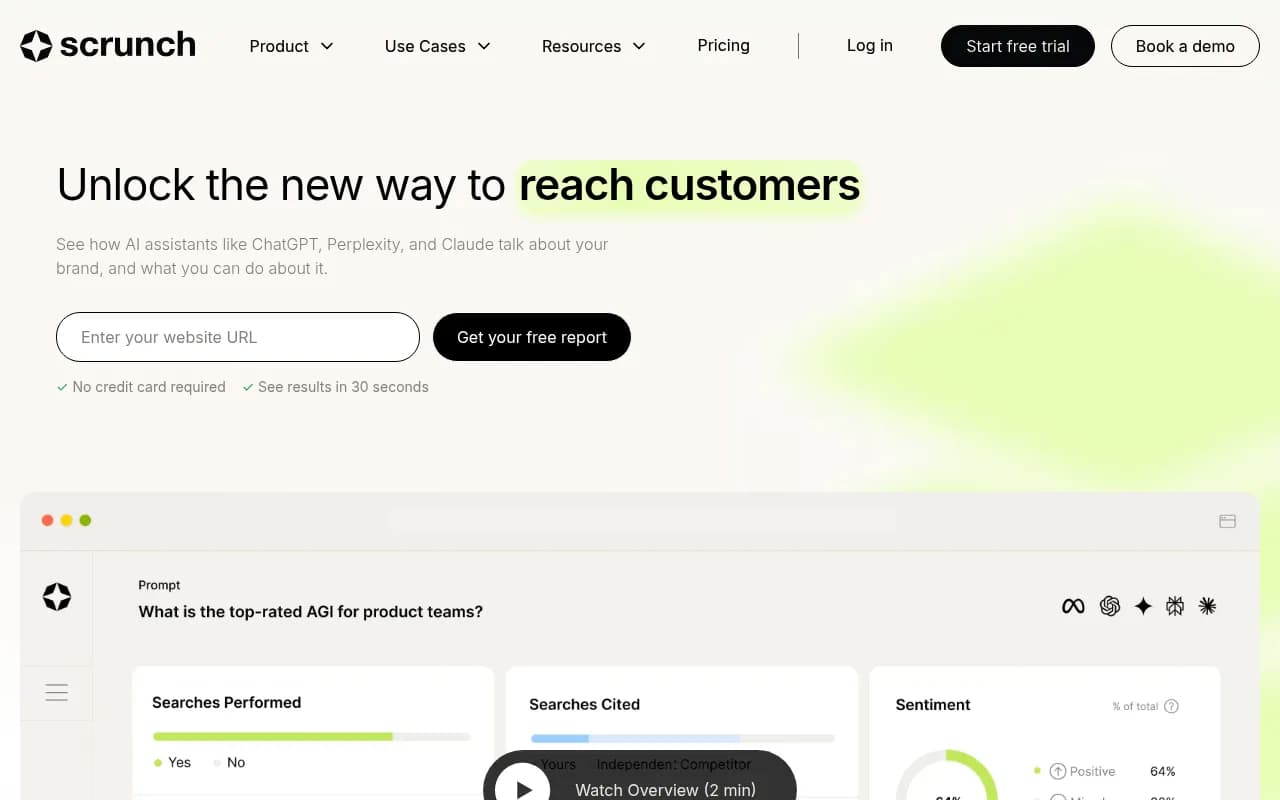
3. Scrunch AI
Scrunch AI sits in an interesting middle ground — $300/month, $19 million in funding, and a feature set that goes deeper than basic monitoring. It tracks brand mentions across LLMs, provides competitive analysis, and has some content optimization guidance built in.
It's a solid choice for mid-market brands that want more than a mention counter but aren't ready for enterprise pricing. The platform has been around long enough to have real data depth, which matters in a category where some newer tools are still building their citation databases.
4. AthenaHQ
AthenaHQ focuses on tracking and optimizing brand visibility across AI search engines. It has a clean interface and good prompt tracking capabilities. The platform is monitoring-focused, which means it's better at telling you where you stand than helping you improve — but it does this well.
Worth considering if your primary need is competitive benchmarking and you have a content team that can act on the data independently.

5. Peec AI
Peec AI is one of the better value options in this space. At $99/month with $1.9 million in funding, it tracks brand visibility across ChatGPT, Perplexity, and Claude with solid monitoring capabilities. Rankability's analysis of 30+ tools flagged it as one of three standout options for price-to-value.
It's a good fit for smaller teams or agencies that need reliable tracking without the overhead of a full optimization platform. The feature set is honest about what it is: a tracker, not an optimizer.

6. Otterly.AI
Otterly.AI covers ChatGPT, Perplexity, and Google AI Overviews with brand mention tracking and some competitive analysis. It's been one of the more popular entry points into AI visibility monitoring, partly because of its accessible pricing and clean UX.
The honest assessment: it's a monitoring tool. It doesn't have content gap analysis, crawler logs, or content generation. For teams just getting started with AI visibility, it's a reasonable starting point. For teams that want to actually move the needle, you'll likely outgrow it.
Otterly.AI

7. LLMrefs
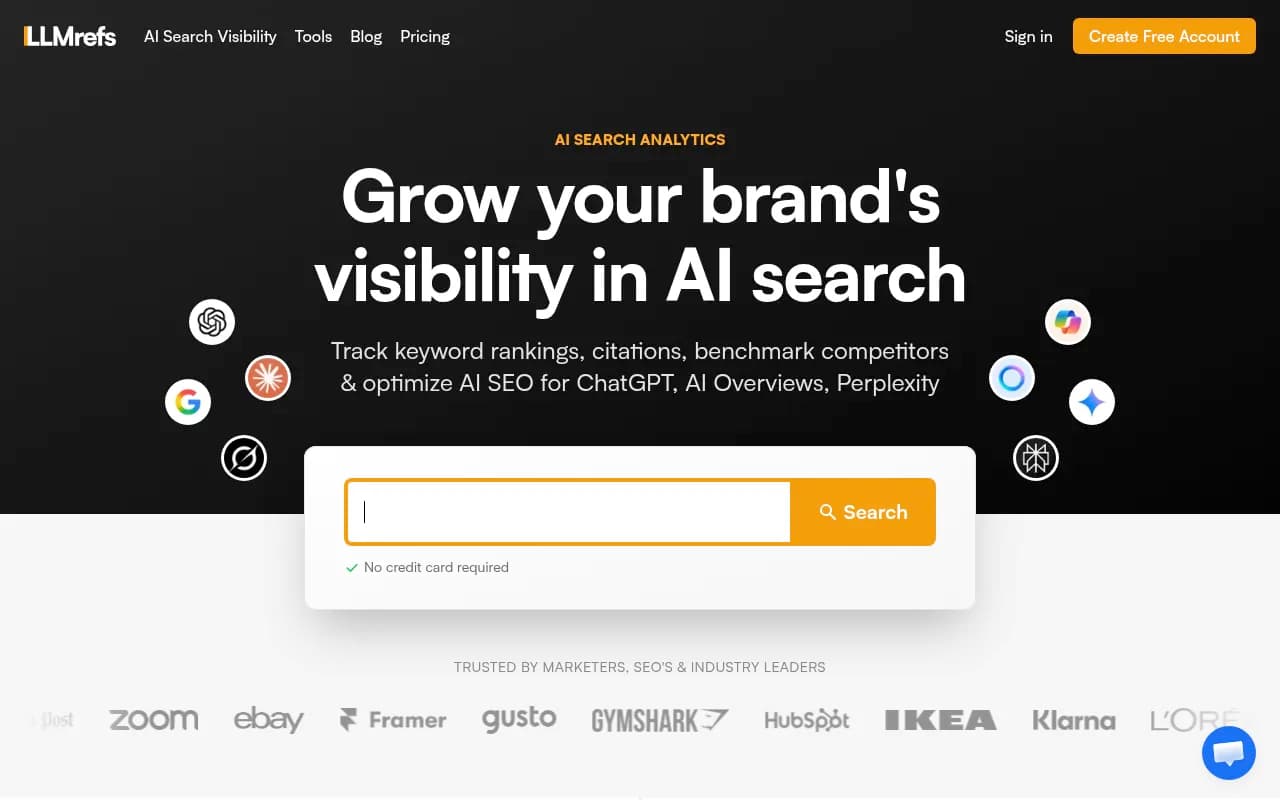
LLMrefs tracks brand visibility across ChatGPT, Perplexity, and 9 other AI search engines at $79/month. It's bootstrapped, which means no VC-funded feature bloat, and it focuses on doing the core monitoring job well.
If budget is a real constraint and you need basic cross-platform tracking, LLMrefs is worth a look. It won't help you optimize, but it will tell you where you stand.
LLMrefs
8. Evertune
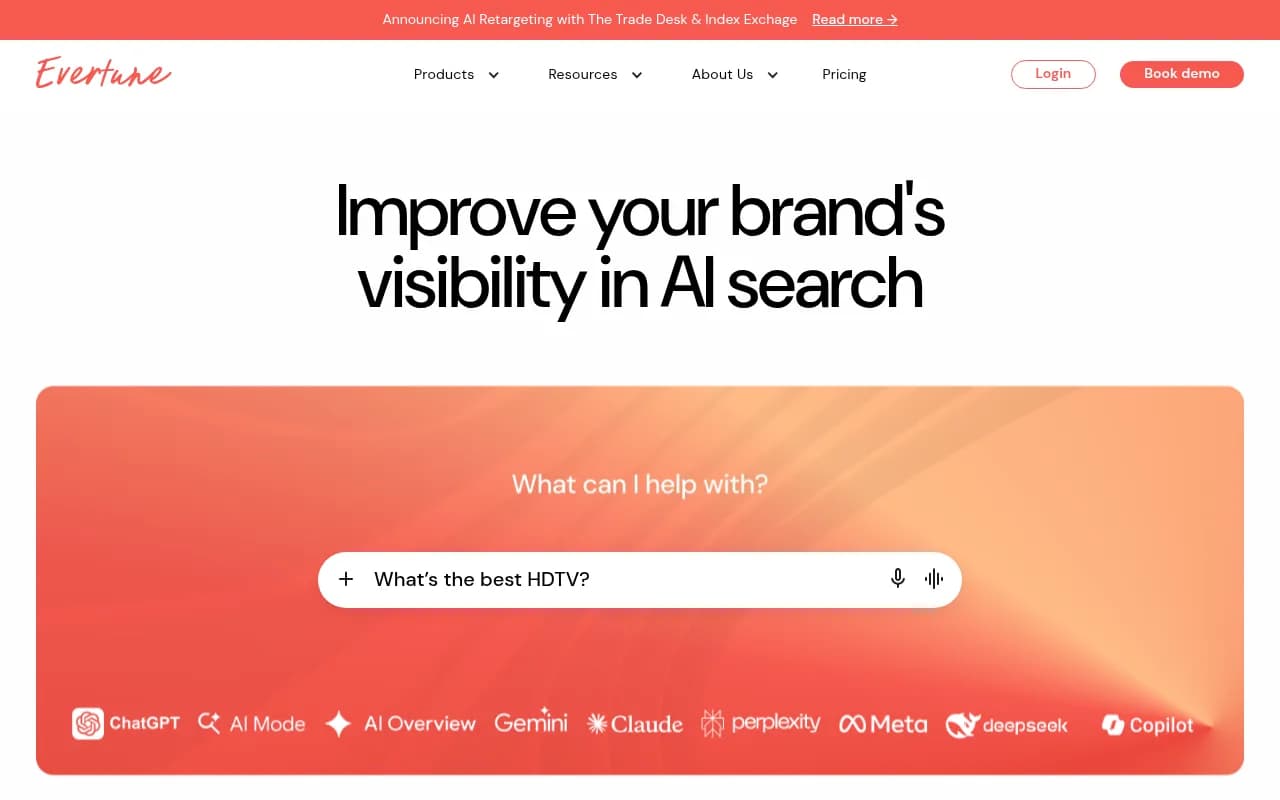
Evertune is the enterprise GEO platform that gets mentioned most often in the Fortune 500 context. It analyzes over 1 million AI responses monthly per brand and was founded by early team members of The Trade Desk. The platform has raised $19 million and focuses on providing GEO insights at scale.
It's genuinely impressive for large brands with complex multi-product visibility needs. The price point and sales process reflect the enterprise positioning — this isn't a self-serve tool you spin up in an afternoon.
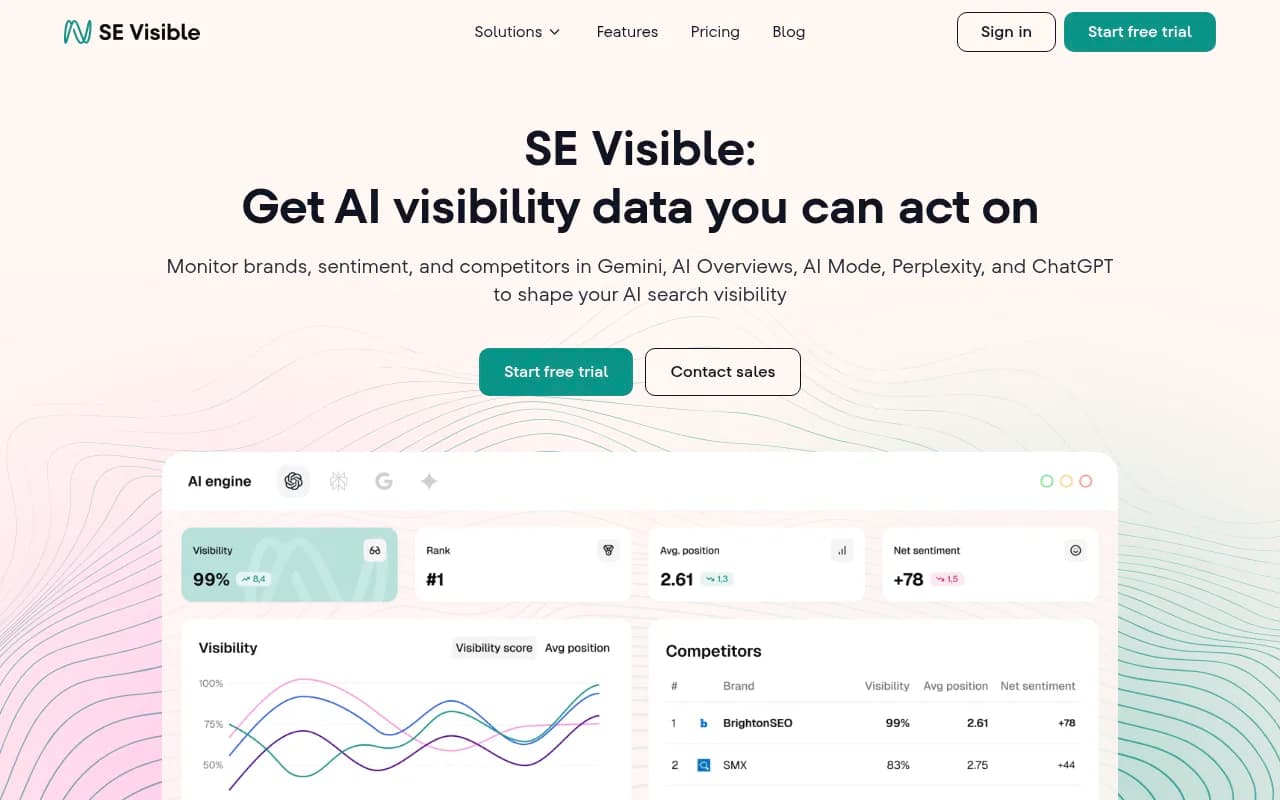
9. SE Visible (by SE Ranking)
SE Ranking's AI visibility product tracks brand mentions across AI search engines and integrates with their broader SEO platform. If you're already using SE Ranking for traditional SEO, the AI visibility layer is a natural addition — you get a unified view of your search presence without managing multiple tools.
The limitation is the same as most monitoring-first tools: it shows you where you're mentioned but doesn't have the optimization loop to help you improve systematically.
10. Rankability
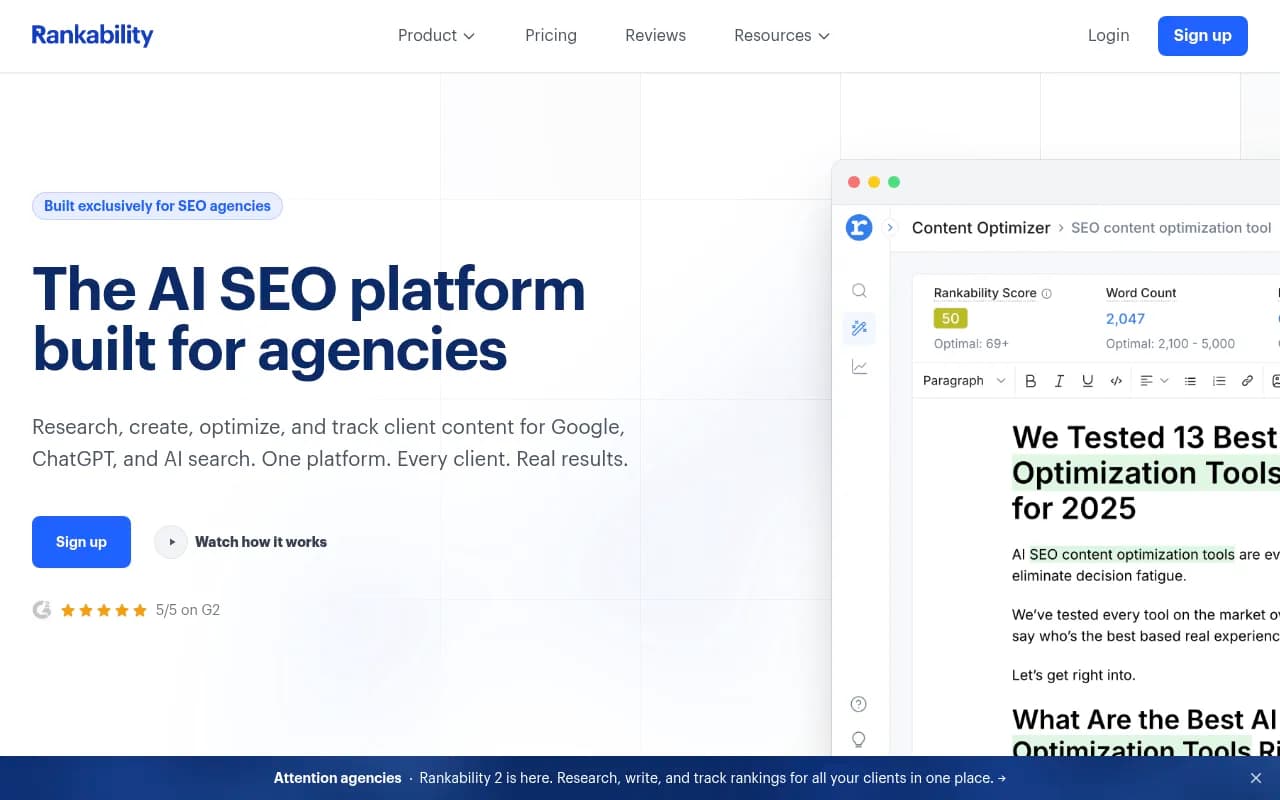
Rankability takes a slightly different angle — it's agency-focused and combines Google SEO tracking with AI search optimization. At $149/month, it's positioned as a practical tool for agencies managing multiple clients who need to report on both traditional and AI search performance.
The Reporter product specifically has gotten positive attention for its price-to-value ratio in the agency context.
Head-to-head comparison
| Tool | Starting price | AI models covered | Content gap analysis | Content generation | Crawler logs | Best for |
|---|---|---|---|---|---|---|
| Promptwatch | $99/mo | 10 (ChatGPT, Claude, Perplexity, Gemini, Grok, DeepSeek, Copilot, Meta AI, Mistral, Google AIO) | Yes | Yes (AI writing agent) | Yes | Teams that want to rank, not just track |
| Profound | $499/mo | 9+ | Limited | No | No | Enterprise monitoring |
| Scrunch AI | $300/mo | Multiple | Partial | No | No | Mid-market brands |
| AthenaHQ | Custom | Multiple | No | No | No | Competitive benchmarking |
| Peec AI | $99/mo | ChatGPT, Perplexity, Claude | No | No | No | Budget-conscious tracking |
| Otterly.AI | Custom | ChatGPT, Perplexity, Google AIO | No | No | No | Getting started |
| LLMrefs | $79/mo | 9+ | No | No | No | Minimal-budget tracking |
| Evertune | Enterprise | Multiple | Partial | No | No | Fortune 500 brands |
| SE Visible | Bundled | Multiple | No | No | No | SE Ranking users |
| Rankability | $149/mo | Multiple | Partial | No | No | Agencies |
The monitoring-only problem
Here's the thing that doesn't get said enough in these roundups: most of these tools have the same fundamental limitation. They're dashboards. They show you a number going up or down, and then you're on your own to figure out what to do about it.
That's fine if you have a content team that knows how to interpret AI citation data and translate it into publishing decisions. Most teams don't. They need the tool to close the loop — to say "here's the prompt you're missing, here's what the AI wants to see, here's a draft article that addresses it."
That's the gap that separates monitoring tools from optimization platforms. And right now, very few tools in this category have crossed that line.
The ones that come closest are Promptwatch (which has the most complete action loop, from gap analysis through content generation to traffic attribution) and to a lesser extent Scrunch AI and Profound (which have some optimization guidance but still require significant manual work to act on).
How to choose the right tool for your situation
A few honest recommendations based on team size and goals:
If you're a solo marketer or small team with a tight budget: Start with LLMrefs or Peec AI. Get a baseline understanding of where you stand across AI models. Don't overthink it.
If you're a mid-size marketing team that wants to actually improve visibility: Promptwatch is the clearest choice. The gap analysis and content generation features mean you can move from "we're not mentioned" to "we published something that gets cited" without needing a separate workflow.
If you're an agency managing multiple clients: Rankability's Reporter product is worth evaluating for the price point. Promptwatch also has agency and enterprise plans with multi-site support.
If you're an enterprise brand with a dedicated analytics team: Profound or Evertune give you the data depth for complex reporting needs. Just know that the optimization work still happens outside the tool.
What's actually changing in AI search
One thing worth understanding before you invest in any of these tools: AI search visibility is not a static target. The models update constantly. What gets cited today might not get cited next month. A prompt that drives 10,000 queries today might be answered differently by ChatGPT after its next training update.
This is why the tools that track citation changes over time, monitor AI crawler activity, and help you publish new content regularly are more valuable than point-in-time snapshots. You're not trying to win a ranking once — you're trying to maintain presence in a system that's continuously changing.
The platforms that understand this have built continuous monitoring, not just audits. That's the right mental model for AI search in 2026.
Bottom line
The AI visibility tool market has matured enough that you can find solid monitoring at almost any price point. What's still rare is a platform that takes you from "here's where you're invisible" to "here's what to do about it" and then "here's proof it worked."
That's the standard worth holding these tools to. A dashboard that shows you a visibility score is a starting point, not a solution.