Key takeaways
- Most GEO tools are monitoring dashboards -- they show you visibility data but leave you to figure out what to do with it
- The tools that actually move the needle combine tracking, gap analysis, and content generation in one workflow
- Promptwatch is the only platform in 2026 rated as a "Leader" across all GEO categories, including the only one with AI crawler logs, content agents, and ChatGPT Shopping tracking
- Profound and AthenaHQ are strong for enterprise monitoring but lack content optimization features
- Peec AI and Otterly.AI work fine for basic tracking but hit a ceiling fast when you need to act on the data
- The right tool depends on whether you need to monitor, optimize, or both -- this guide breaks down which is which
There's a version of this guide that just lists tools alphabetically with bullet points of features. This isn't that.
The real question when evaluating GEO tools in 2026 isn't "does it track ChatGPT?" -- almost all of them do now. The question is: what happens after you see the data? Do you get a dashboard full of red numbers and no clear path forward, or do you get a workflow that takes you from "we're invisible here" to "we published content that fixed it"?
That gap -- between monitoring and optimization -- is where most tools fall short. I've broken this list into tiers based on that distinction, then ranked within each tier.
What makes a GEO tool actually useful in 2026
Before the list, a quick framework. GEO tools generally do some combination of three things:
- Track where your brand appears (or doesn't) in AI-generated answers
- Identify what content gaps are causing you to lose visibility
- Help you create or optimize content to close those gaps
Most tools do #1. A few do #1 and #2. Very few do all three. The tools that do all three are the ones worth paying for.
A second thing to watch: whether the tool tracks AI engines through their user-facing interfaces or just via API calls. This matters because what ChatGPT shows a real user in its interface -- including citations, shopping recommendations, and follow-up suggestions -- can differ from what you get hitting the API directly. Tools that only use API access miss a real slice of what's actually happening.
The 10 best GEO tools in 2026
1. Promptwatch -- best overall for AI visibility and optimization
Promptwatch is the tool that comes up whenever someone asks "which GEO platform actually helps you do something." It's the only platform in a 2026 comparison of 12 GEO tools to be rated a "Leader" across every category -- and the reason is the action loop it's built around.
The workflow goes: find the gaps (Answer Gap Analysis shows you exactly which prompts competitors rank for that you don't), create content to close them (Content Agents generate articles, listicles, and briefs grounded in real prompt data and citation analysis), then track whether it worked (page-level tracking shows which pages AI models are citing, how often, and which models).
What separates Promptwatch from the monitoring-only crowd is the AI Crawler Logs feature. You get real-time logs of when ChatGPT, Claude, Perplexity, and other AI crawlers hit your site -- which pages they read, errors they hit, and when a crawled page moves to an actual citation. Most competitors don't have this at all.
Other things worth noting: it tracks 10 AI models including Google AI Overviews, Google AI Mode, Grok, DeepSeek, and Mistral; it has ChatGPT Shopping tracking for ecommerce brands; Reddit and YouTube citation tracking; and multi-language/multi-region support. Pricing starts at $99/month for the Essential plan.

2. Profound -- best for enterprise AI search analytics
Profound is one of the more established names in the space and has strong data depth. It covers 9+ AI search engines, offers search volume estimates for prompts (which most tools don't), and tracks ChatGPT Shopping. The analytics are genuinely detailed.
The limitation is cost -- Profound uses custom pricing that puts it out of reach for most SMBs and mid-market teams -- and it's primarily a monitoring and analytics tool. There's no content generation, no content briefs, and no crawler logs. You get excellent data on where you stand; you're on your own to act on it.
Profound

3. AthenaHQ -- best for structured brand monitoring
AthenaHQ has a clean interface and solid multi-model tracking. It's monitoring-focused, which means it does that job well: you can see share of voice across AI engines, track competitor visibility, and get prompt-level breakdowns.
What it doesn't have is the optimization layer. No content generation, no gap analysis tied to actionable briefs, no crawler logs. For teams that already have a content workflow and just need reliable AI visibility data to feed into it, AthenaHQ is a reasonable choice. For teams that need the full loop, it's a starting point, not a destination.

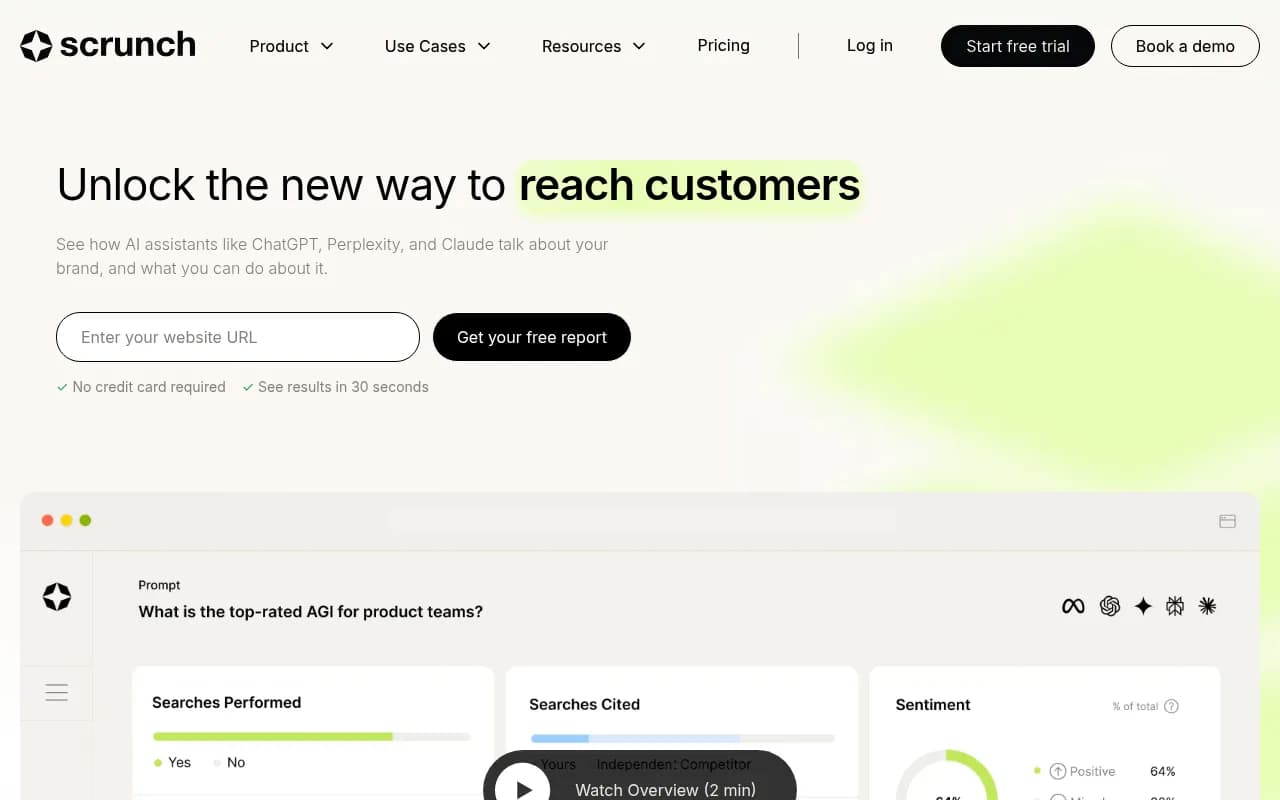
4. Scrunch AI -- best for AEO/GEO combined tracking
Scrunch AI positions itself as the most complete AEO/GEO tool and covers a solid range of AI engines. It has decent prompt tracking and some content optimization features that put it a step above pure monitoring tools.
The interface is well-designed and the coverage is broad. Where it falls short relative to Promptwatch is in the depth of the action layer -- content agents, crawler logs, and traffic attribution aren't as developed. It's a strong mid-tier option, particularly for teams that want AEO and GEO in one place without enterprise pricing.
5. Peec AI -- best for straightforward visibility tracking
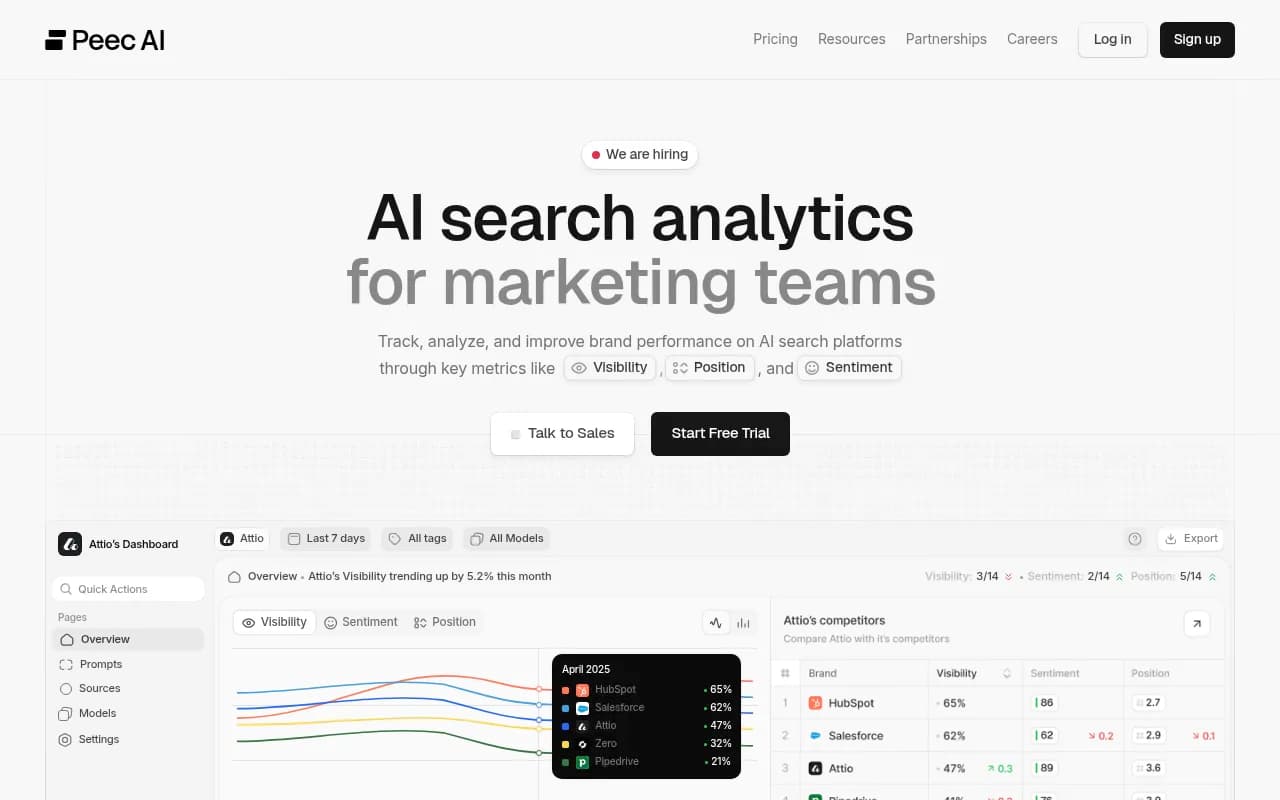
Peec AI is clean, fast, and focused. It tracks brand mentions across ChatGPT, Perplexity, Google AI Overviews, and a handful of other models. The UI is approachable and onboarding is quick.
The honest assessment: it's a monitoring tool. There's no content generation, no crawler logs, no visitor analytics. For a solo marketer or small team that needs to answer "are we showing up in AI search?" without a lot of complexity, Peec AI gets the job done. For anyone who needs to move from awareness to action, it hits a ceiling.
6. Otterly.AI -- best for quick brand mention monitoring
Otterly.AI covers ChatGPT, Perplexity, and Google AI Overviews and is one of the simpler tools to get running. It's genuinely useful for monitoring brand mentions and tracking sentiment in AI responses.
Like Peec AI, it's monitoring-only. No content tools, no crawler data, no traffic attribution. The value proposition is simplicity and speed -- you can set it up in minutes and start seeing data. That's worth something, especially for teams that are just starting to think about AI visibility.
Otterly.AI

7. SE Ranking -- best for hybrid SEO/GEO workflows
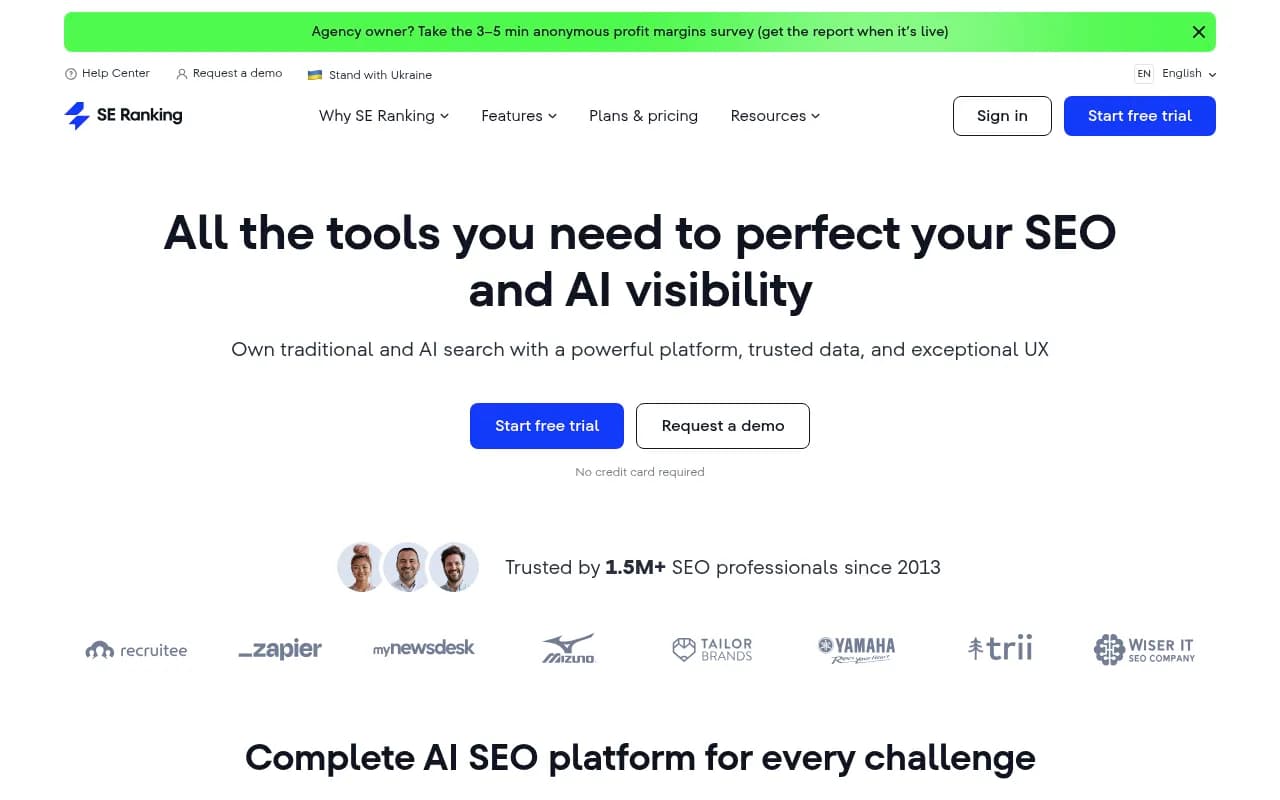
SE Ranking has been building out its AI visibility features and now covers ChatGPT, Perplexity, Google AI Overviews, Gemini, Claude, Copilot, and Grok. The advantage here is that it sits inside a full SEO platform -- you get rank tracking, site audits, keyword research, and AI visibility in one place.
If your team is already using SE Ranking for traditional SEO, adding AI tracking is a natural extension. If you're starting fresh and AI visibility is the primary goal, it's worth comparing the depth of its GEO features against dedicated platforms.
8. Semrush (AI Toolkit) -- best for teams already in the Semrush ecosystem
Semrush added AI visibility tracking through its AI Toolkit add-on. It covers AI Overviews, ChatGPT, Gemini, and Copilot, and the share-of-voice reporting is solid.
The catch: the AI Toolkit is an add-on on top of an already expensive base subscription, and the prompts are fixed rather than custom. You can't define your own prompt set, which limits how precisely you can track your specific competitive landscape. For teams deeply embedded in Semrush who want to add AI monitoring without switching platforms, it works. For teams building a GEO stack from scratch, there are better options.
9. LLMrefs -- best for multi-model keyword tracking on a budget
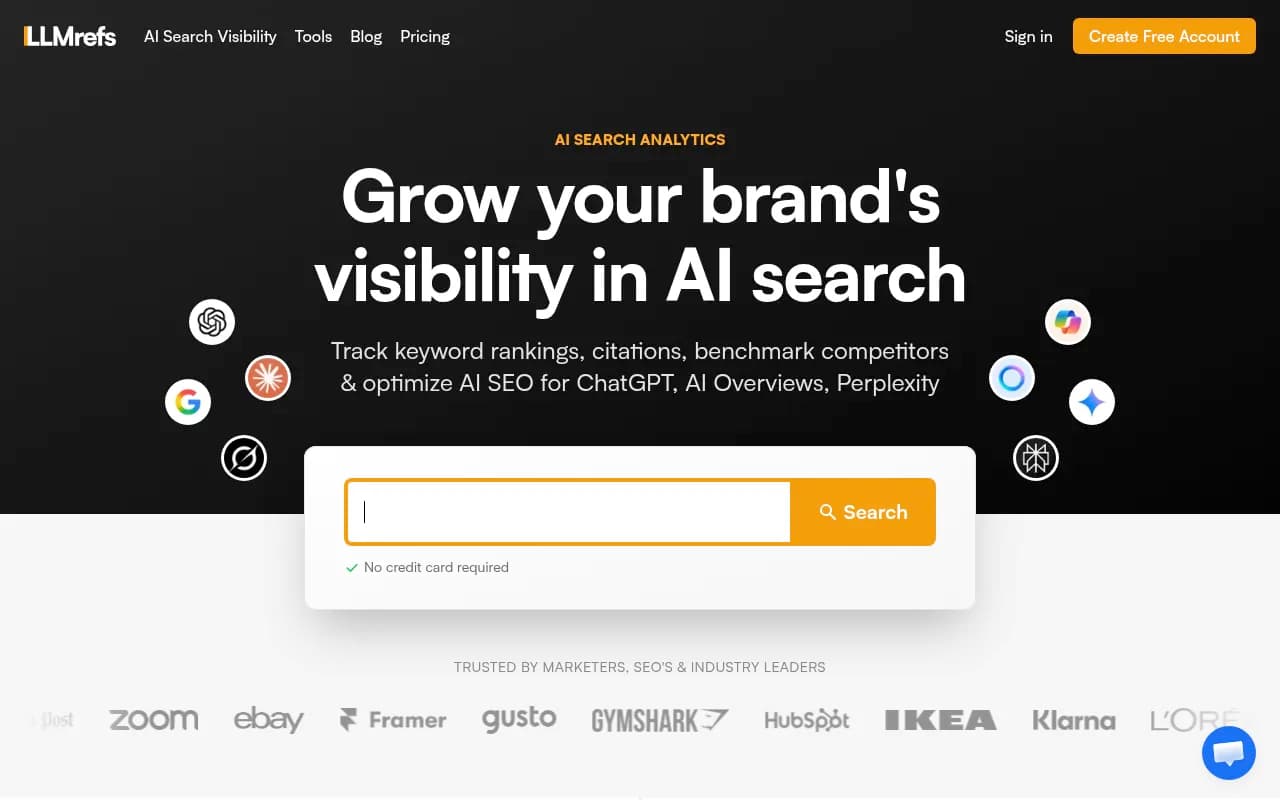
LLMrefs tracks brand visibility across ChatGPT, Perplexity, and 9 other AI search engines, with a scoring system (LLMrefs Score) that gives you a comparable metric across models. It has real-time keyword tracking and multi-model comparison.
Pricing starts free and scales to $79/month, which makes it one of the more accessible options on this list. The trade-off is limited trend analysis and no content generation. It's a solid choice for teams that need broad model coverage without a big budget.
LLMrefs
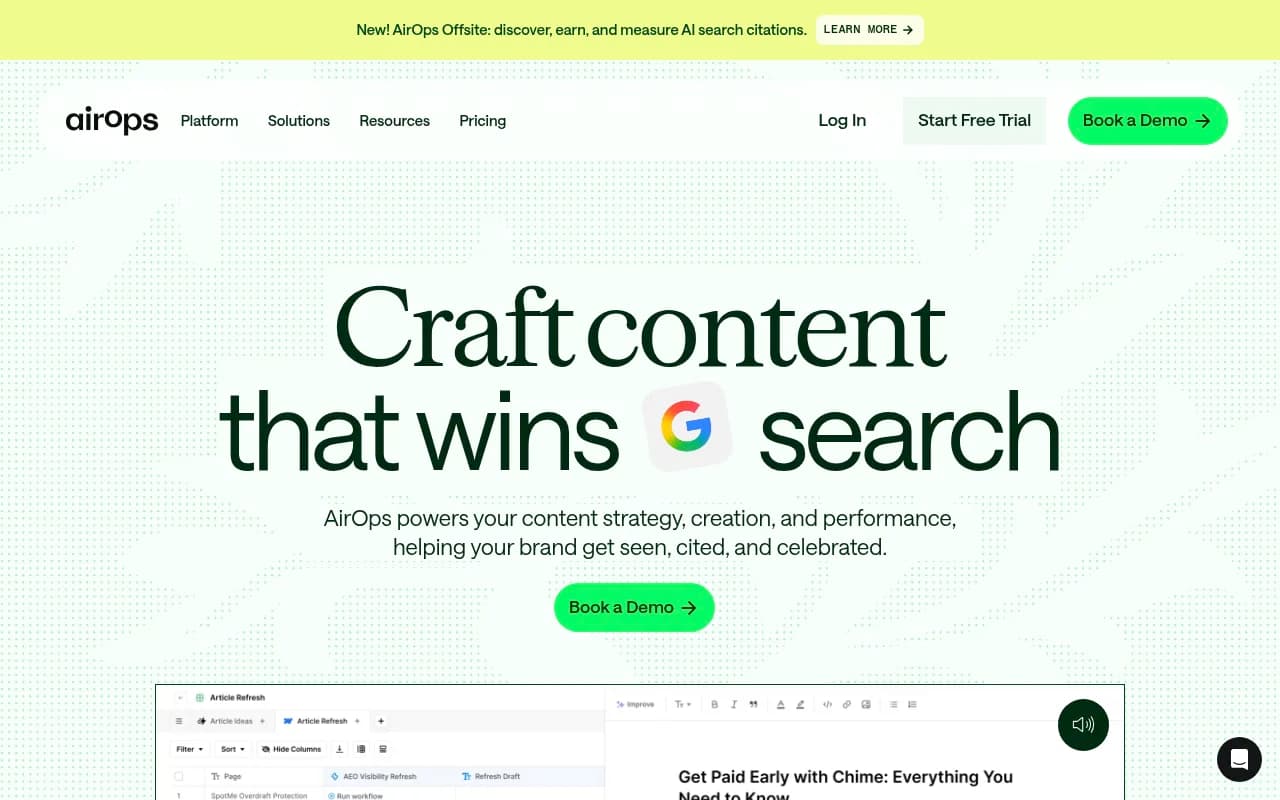
10. AirOps -- best for content engineering workflows
AirOps takes a different angle than most tools on this list. It's less about tracking visibility and more about building the content workflows that improve it. You can build AI-powered content pipelines, generate briefs, and automate content production at scale.
If your gap is execution -- you know what content you need but can't produce it fast enough -- AirOps is worth a look. It's not a GEO tracker in the traditional sense, but it's a strong complement to a monitoring tool. Pair it with visibility data from a platform like Promptwatch and you have a complete workflow.
How the tools compare
| Tool | Tracks AI engines | Content generation | Crawler logs | Prompt volume data | ChatGPT Shopping | Starting price |
|---|---|---|---|---|---|---|
| Promptwatch | 10 models | Yes (Content Agents) | Yes | Yes | Yes | $99/mo |
| Profound | 9+ models | No | No | Yes | Yes | Custom |
| AthenaHQ | Multiple | No | No | Limited | No | Custom |
| Scrunch AI | Multiple | Partial | No | No | No | Varies |
| Peec AI | Multiple | No | No | No | No | Varies |
| Otterly.AI | 3+ models | No | No | No | No | Varies |
| SE Ranking | 7 models | No | No | No | No | $129/mo |
| Semrush AI Toolkit | 4 models | No | No | No | No | Add-on |
| LLMrefs | 11 models | No | No | No | No | Free–$79/mo |
| AirOps | N/A | Yes | No | No | No | Varies |
The monitoring-only trap
Here's something worth saying directly: a lot of teams buy a GEO tool, see that their visibility score is low, and then... wait. They check the dashboard weekly, watch the numbers, and hope something changes.
It doesn't change. AI models cite sources that answer questions well. If your site doesn't have content that answers the questions people are asking in AI search, no amount of monitoring will fix that.
The tools that break this cycle are the ones that show you what content is missing and help you create it. That's the core reason Promptwatch sits at the top of this list -- it's the only platform that closes the loop from "here's where you're invisible" to "here's the content that will fix it" to "here's proof it worked."
The monitoring-only tools aren't useless. Knowing where you stand is the first step. But if you're paying for a GEO platform and your visibility isn't improving, the tool might not be the problem -- the missing action layer is.
Which tool should you actually use?
A few honest recommendations based on situation:
If you're a marketing team or agency that wants to move from invisible to cited in AI search, Promptwatch is the clearest path. The combination of gap analysis, content generation, and crawler logs means you're not just watching the problem -- you're fixing it.
If you're at an enterprise with a dedicated analytics team and existing content workflows, Profound gives you the deepest data. You'll need to bring your own content execution.
If you're just starting out and need to understand your baseline before investing in a full platform, LLMrefs or Otterly.AI let you get started without a big commitment.
If you're already paying for Semrush or SE Ranking and want to add AI visibility without switching tools, the built-in AI features in those platforms are a reasonable starting point -- just understand their limitations.
The GEO category is moving fast. Tools that were monitoring-only six months ago are adding content features. New entrants are showing up every few weeks. But the fundamental question -- does this tool help me rank, or just tell me that I don't? -- is still the right one to ask.