Key takeaways
- AI content writing tools generate text fast, but they have no visibility into whether AI search engines actually cite that content -- you're flying blind on ROI.
- GEO (Generative Engine Optimization) platforms track how AI models like ChatGPT, Perplexity, and Claude respond to prompts relevant to your brand, so you can see what's working and what isn't.
- The real problem isn't choosing one over the other -- it's using content tools without any feedback loop. Content without citation tracking is just publishing into a void.
- A small number of platforms now combine content generation with citation tracking, closing the loop between "we published something" and "AI models are actually recommending us."
- Budget spent on AI content that never gets cited by AI search engines is budget wasted. The fix is measuring before you scale.
The content production trap
There's a pattern playing out across marketing teams right now. Someone gets access to an AI writing tool, realizes they can produce 10x the content in half the time, and immediately starts scaling. Blog posts, comparison pages, listicles, FAQs -- all churned out at a pace that would have been impossible two years ago.
And then... nothing changes. Traffic stays flat. Leads don't move. The content sits there.
The problem isn't the content quality (though that's often an issue too). The problem is that nobody checked whether the content was actually doing anything in the channels that matter in 2026. Specifically: AI search.
When someone asks ChatGPT "what's the best project management tool for remote teams" or asks Perplexity "which CRM is best for B2B sales," those models pull from a set of sources they've determined are authoritative and relevant. If your content isn't in that set, it doesn't matter how much of it you've published.
According to a CoSchedule survey, 29% of marketers say AI content saturation is their biggest concern for 2026 -- ranking higher than ROI pressure, budget cuts, or measurement challenges. That number makes sense. Everyone is producing more content. The question is whether any of it is being cited.
What AI content writing tools actually do (and don't do)
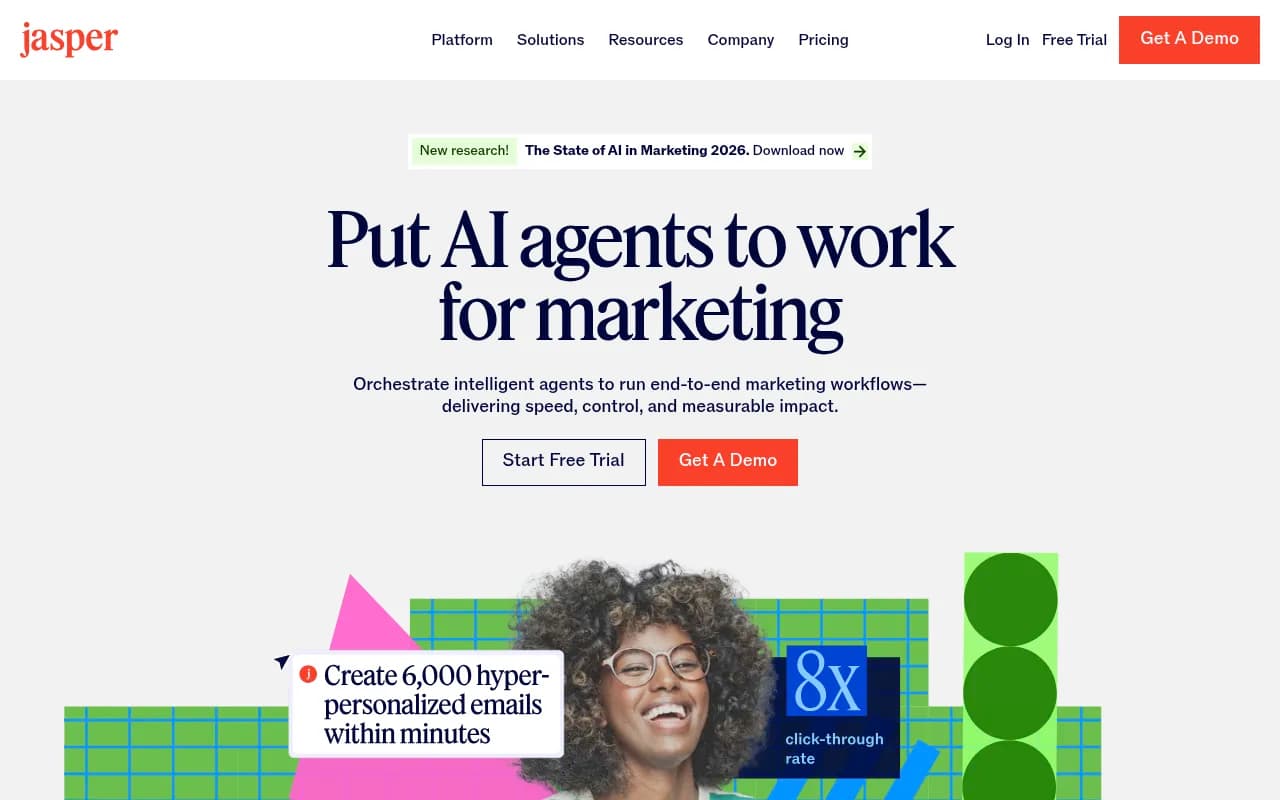
AI writing tools -- Jasper, Writesonic, Copy.ai, Frase, Surfer SEO, and dozens of others -- are genuinely useful for one thing: producing text faster than a human can.

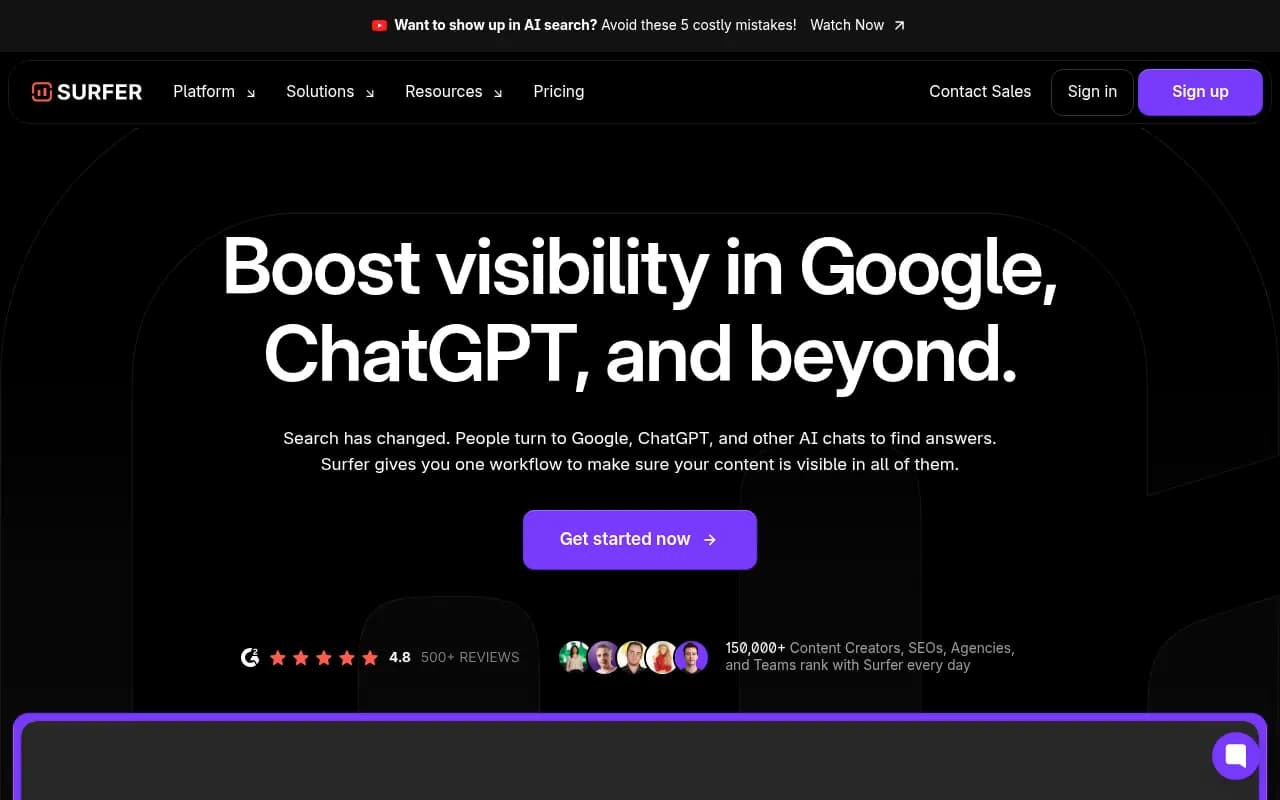
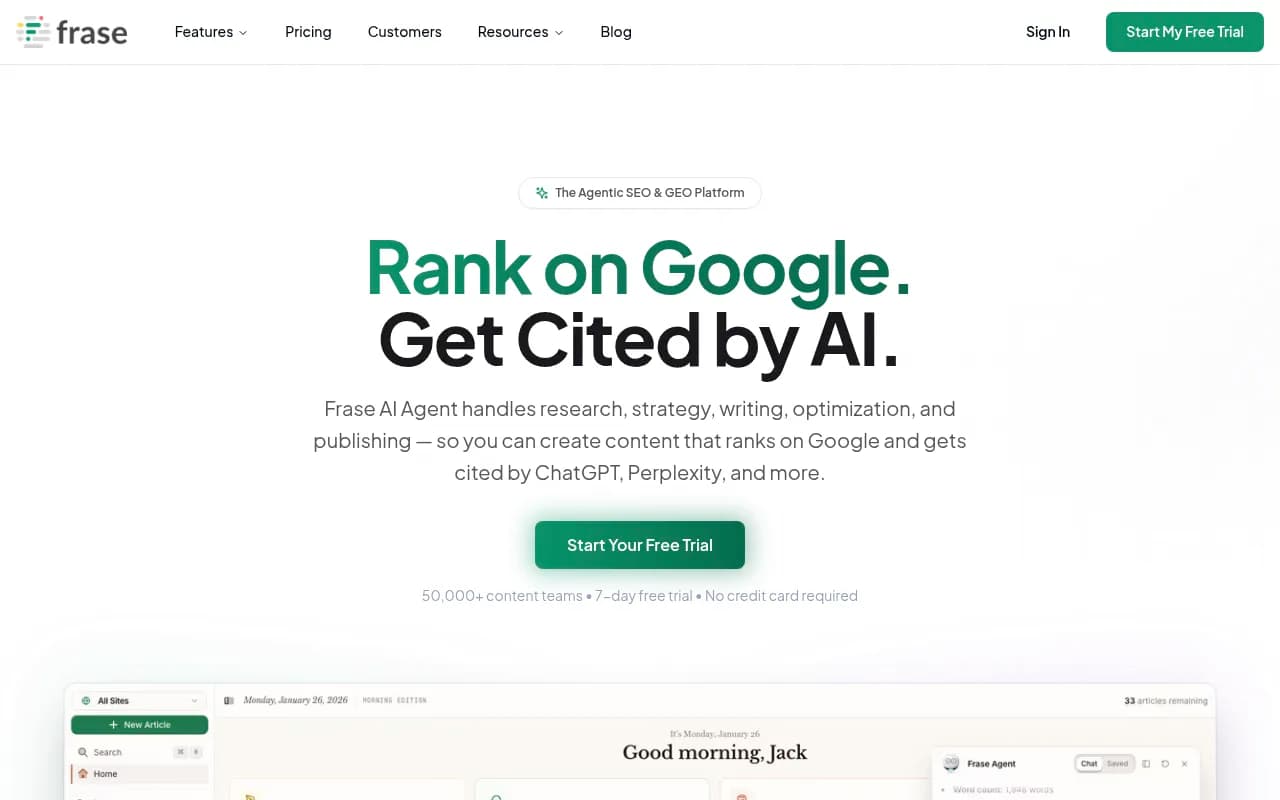
The better ones go further. Surfer SEO optimizes content against top-ranking pages. Frase pulls in SERP data to help you structure content around what's already working. MarketMuse maps topical authority gaps. These are real capabilities that improve the odds your content ranks in Google.
But here's what none of them tell you: whether ChatGPT, Claude, Perplexity, or Gemini will cite your content when someone asks a relevant question.
That's not a minor gap. AI search is now a primary discovery channel for a significant portion of the buying journey, especially in B2B. When someone asks an AI assistant which tools to evaluate, which vendors to trust, or which approach to take -- the AI's answer shapes the shortlist. If you're not in that answer, you're not on the shortlist.
AI writing tools were built for a world where Google was the primary arbiter of content quality. That world still exists, but it's no longer the whole picture.
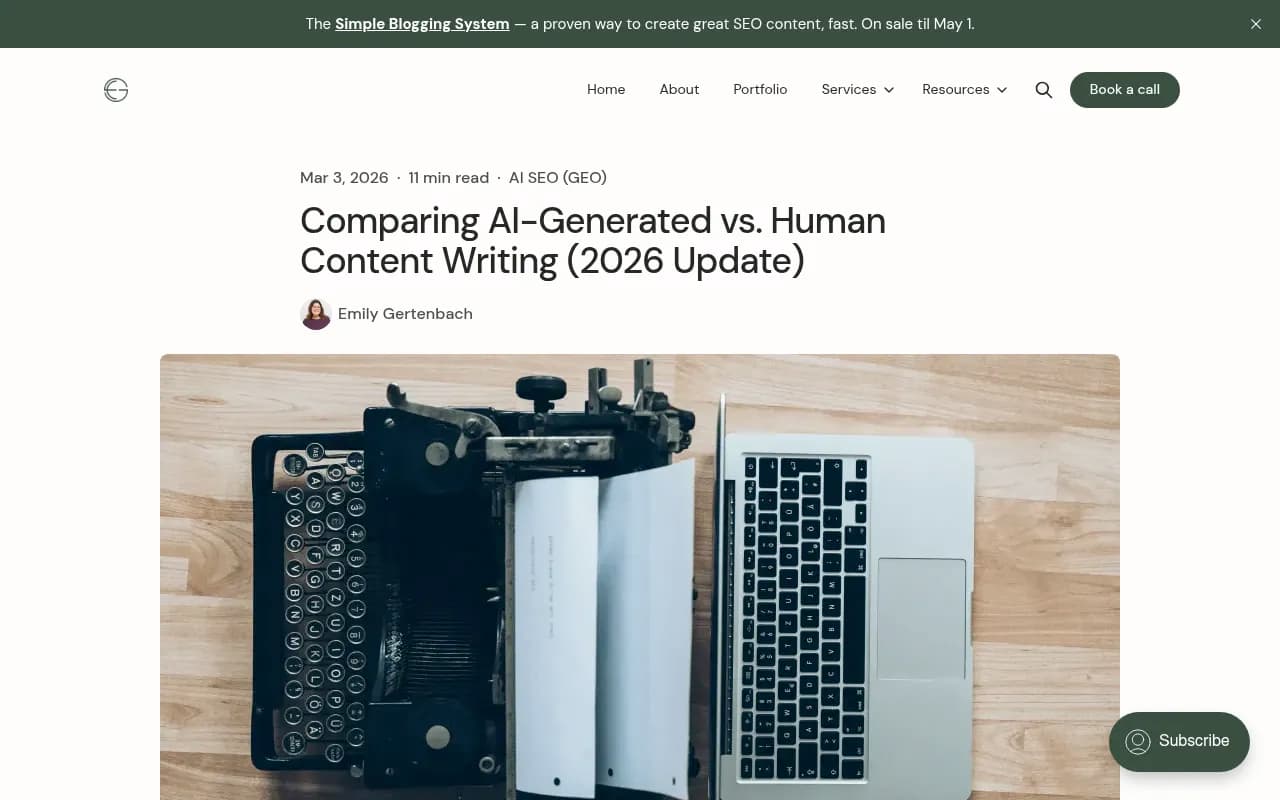
A 2026 review of AI-generated vs. human content noted that neither standalone AI writing tool would serve a website well for SEO in the long term -- the content tends toward the generic, which is exactly what AI search engines deprioritize when selecting citations.
What GEO platforms actually do
GEO (Generative Engine Optimization) platforms track how AI models respond to prompts relevant to your brand and industry. Instead of asking "where do I rank on Google for this keyword," they ask "when someone asks ChatGPT about this topic, does my brand appear in the answer?"
That's a fundamentally different question, and it requires a fundamentally different kind of tool.
A GEO platform like Promptwatch monitors AI responses across models like ChatGPT, Perplexity, Claude, Gemini, Grok, and others. It shows you which prompts your competitors appear in that you don't, which pages on your site are being cited, and how your visibility changes over time.

The monitoring piece is table stakes. What separates useful GEO platforms from dashboards that just show you data is whether they help you act on it.
Promptwatch's Answer Gap Analysis, for example, shows you the specific prompts where competitors are visible and you aren't -- and then the built-in content generation tools help you create content designed to fill those gaps. The content isn't generic AI output; it's grounded in citation data from 880M+ analyzed citations, so it's built around what AI models actually want to reference.
That's the loop: find the gap, create content to fill it, track whether AI models start citing you. Most content tools skip steps one and three entirely.
The comparison that matters
Here's how the two categories stack up on the dimensions that actually matter for AI search visibility:
| Capability | AI content writing tools | GEO platforms |
|---|---|---|
| Generate content fast | Yes | Some (Promptwatch, Searchable, AirOps) |
| Optimize for Google rankings | Yes (most) | Partial |
| Track AI model citations | No | Yes |
| Show competitor AI visibility | No | Yes |
| Identify content gaps for AI search | No | Yes (Promptwatch, Profound, AthenaHQ) |
| Monitor AI crawler activity | No | Some (Promptwatch) |
| Connect content to revenue | No | Some (Promptwatch, Analyze AI) |
| Reddit/YouTube citation tracking | No | Promptwatch only |
The right-hand column isn't uniformly good either. Many GEO platforms are monitoring-only -- they show you the data but leave you to figure out what to do with it. Otterly.AI, Peec AI, and similar tools are useful for tracking but don't help you create content that improves your position.
Otterly.AI


Profound


Why generating content without citation tracking wastes budget
Let's make this concrete. Say you spend $3,000/month on an AI content platform and produce 40 articles. Without citation tracking, you have no idea:
- Whether any of those articles are being cited by ChatGPT or Perplexity
- Which topics AI models are actually pulling from in your category
- Whether your competitors are dominating AI responses for the prompts that matter to your buyers
- Which of your 40 articles is doing any work at all in AI search
You might get lucky. Some of the content might happen to cover the right topics in the right way and get cited. But "might get lucky" is not a content strategy.
The alternative is to know, before you publish, which topics have the highest prompt volume in your category, which competitors are currently visible for those prompts, and what kind of content AI models tend to cite. Then you publish with intent, track whether it works, and iterate.
That's not a revolutionary idea -- it's just applying the same logic that SEO teams have used for years (keyword research, rank tracking, iteration) to the AI search channel. The tools just need to catch up.
Tools that try to bridge the gap
A few platforms are attempting to combine content generation with AI visibility tracking, which is the right direction.
Promptwatch is the most complete version of this. The platform tracks visibility across 10 AI models, identifies content gaps through Answer Gap Analysis, generates content grounded in citation data, and then tracks whether that content improves your visibility. It also monitors AI crawler logs -- which pages ChatGPT and Perplexity are actually reading on your site -- which is something most competitors don't offer at all.
AirOps takes a content engineering approach, building content pipelines designed specifically for AI search visibility rather than traditional SEO.
Search Atlas combines AI content generation with rank tracking across both Google and AI search engines.

Frase sits closer to the traditional SEO content tool end but has been adding AI search features.
Addlly AI focuses on GEO content and citation optimization, with an agent-driven approach to content creation.

None of these are perfect, and the category is moving fast. But the direction is clear: the tools that will matter are the ones that close the loop between content creation and citation tracking.
How to think about your current stack
If you're using an AI content tool and a separate GEO platform, the question is whether they're actually connected. Can you see which pieces of content you've published are getting cited? Can you identify which topics to write about next based on where competitors are visible in AI responses?
If the answer is no, you have two separate tools that don't inform each other. That's better than nothing, but it's not a strategy.
The practical approach for most teams:
-
Start by auditing your current AI visibility. Tools like Promptwatch, Profound, or AthenaHQ can show you where you stand across AI models for your most important prompts.
-
Identify the gaps -- specifically, prompts where competitors appear and you don't. These are your highest-priority content opportunities.
-
Create content designed to fill those gaps, with structure and specificity that AI models tend to cite (clear answers, cited sources, concrete data points).
-
Track whether your visibility improves after publishing. If it does, you have a repeatable process. If it doesn't, you have data to iterate on.
Step 4 is where most teams fall down. They publish and move on. The teams that are winning in AI search are the ones treating it like a channel with measurable outcomes, not a content volume game.
The content saturation problem
The 29% of marketers worried about AI content saturation aren't wrong to be worried. When every brand can produce 40 articles a month, the differentiator isn't volume -- it's whether the content actually gets cited.
AI models are getting better at filtering out generic content. They cite sources that are specific, authoritative, and directly relevant to the query. Content that's optimized for keyword density but says nothing distinctive is increasingly invisible in AI responses.
This is actually good news for teams that are willing to be strategic. The bar for getting cited isn't just "publish more" -- it's "publish the right things, structured the right way, on the topics AI models are actively pulling from." That's a winnable game if you have the data to play it.
The teams that will struggle are the ones scaling content production without any feedback loop. They'll publish more and more into a void, spending budget on content that never gets cited, and wonder why AI search isn't driving results.
The bottom line
AI content writing tools are useful. They make content production faster and, in the hands of a skilled team, can produce genuinely good output. But they're input tools -- they help you create, not measure.
GEO platforms are measurement tools -- they show you what's working in AI search, where the gaps are, and how your visibility changes over time. The best ones also help you act on that data by generating content grounded in citation intelligence.
Using content tools without citation tracking in 2026 is like running paid ads without conversion tracking. You're spending money, you're producing output, but you have no idea what's working. The fix isn't complicated -- it's just adding the measurement layer that most teams are currently skipping.
If you're not tracking which of your content gets cited by AI models, you're not optimizing for AI search. You're just publishing.