Key takeaways
- AI Mode passed 1 billion monthly users and AI Overviews reached 2.5 billion at Google I/O in May 2026. Tracking only classic SERPs now misses most of the surface area.
- ChatGPT changed how it retrieves and cites. It started using the site: operator at scale on August 8, Reddit citations collapsed on August 14, and in early October ChatGPT referrals started disappearing from GA4.
- A fixed keyword list is no longer a rank tracker. You need prompt sets, query fan-outs, citation tracking, and crawler data.
- Do not read a ChatGPT traffic drop in GA4 as audience loss until you have checked Direct traffic on the same pages.
- Pick tools by what you will do with the data. Plain monitoring is cheap. Tools that tell you what to fix cost more but save more time.
Why rank tracking looks different in Q4 2026
Two years ago, rank tracking meant a keyword, a position, and a date. That model still works for the ten blue links. It tells you almost nothing about whether ChatGPT recommends you or whether AI Mode names your brand in a comparison.
Three things happened this year that broke the old workflow.
- Google's AI surfaces became the default experience for a large share of searches.
- ChatGPT changed its retrieval and citation behavior several times in a few months.
- The measurement layer, mainly GA4 referrals, got noisier right when teams needed it most.
I would argue the third one is the most dangerous, because it makes people draw the wrong conclusions from a chart they trust.
What changed in Google AI Mode and AI Overviews
The scale jump
At I/O on May 19, 2026, Google said AI Mode reached 1 billion monthly users and AI Overviews 2.5 billion. Google also described the two surfaces converging into one AI search experience, with conversational handoff between them. A Core Update followed on May 21, so teams had a UI shift and an algorithm shift to untangle in the same week.
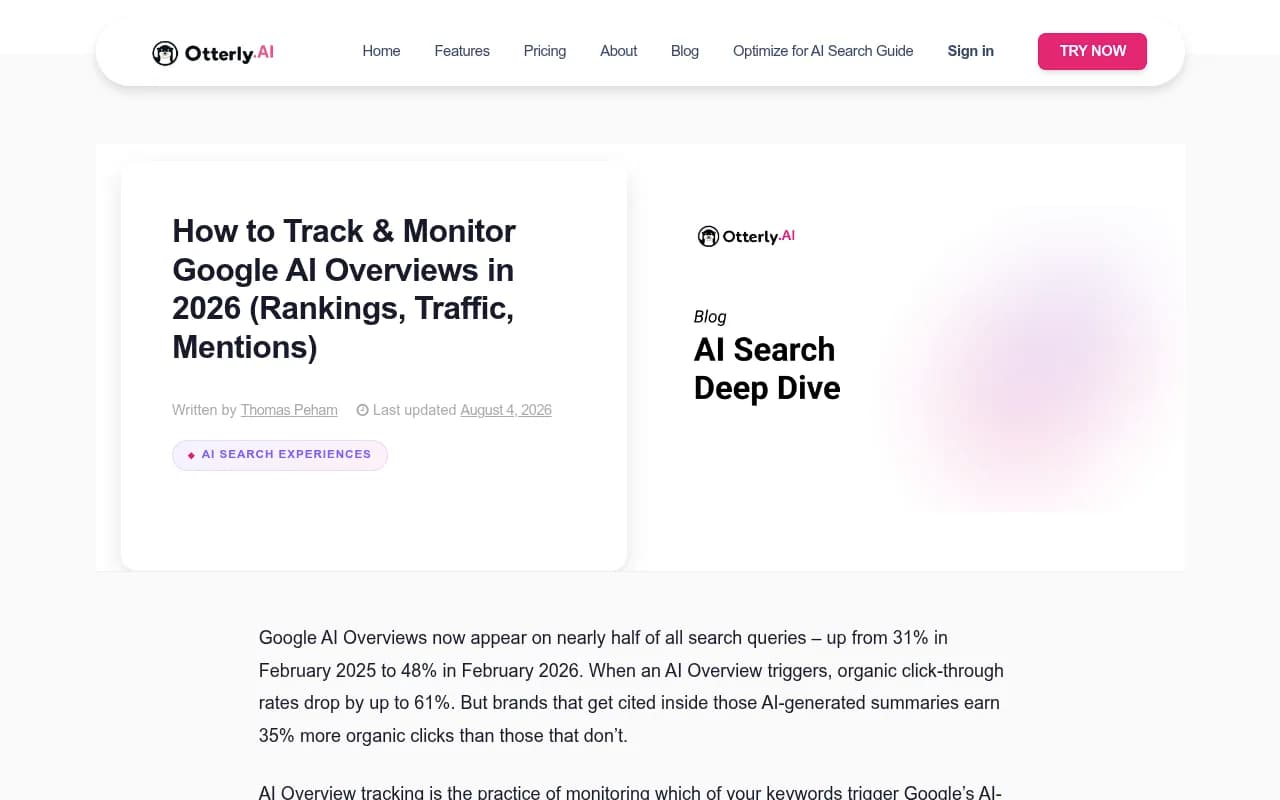
Otterly.AI's tracking guide reports AI Overviews appearing on 48% of queries in February 2026, up from 31% a year earlier. It also cites Seer Interactive data showing organic CTR falling from 1.76% to 0.61% when an AI Overview shows. Treat those as one vendor's compilation of third-party studies, but the direction is consistent with what most SEO teams see.
Why AI Mode and AI Overviews need separate tracking
The two surfaces behave differently. A KIME comparison, citing a 2025 Search Engine Land study, puts brand mention rates at roughly 90% in AI Mode versus about 43% in AI Overviews. I would not hold those figures too tightly, since they come from an older study, but the gap explains why a brand can look fine in one and invisible in the other.
| Surface | What it is | Brand mention rate (per KIME) | What to watch |
|---|---|---|---|
| Google AI Mode | Conversational, multi-turn answers powered by Gemini | ~90% | Brand mentions, product discovery, follow-up prompts |
| Google AI Overviews | AI summary above the organic results | ~43% | Trigger rate, citations, CTR decay |
| ChatGPT | Standalone assistant with search | Varies by query | Citations, recommendations, decision-stage research |
The October 15 link changes
On October 15, 2026, Google announced more inline links in AI Mode and AI Overviews, placed higher in responses. It also described a test that puts one or two official pages in a section above the answer for task-oriented queries, expanded news carousels, thumbnails on related-article links, and clickable creator names on video results. Two of the five items are tests, and Google published no click data for any of them.
For rank tracking, that means link position inside the answer is now a metric worth recording. A citation at the end of a paragraph and a link woven into the first sentence are not the same thing.
What Google says about eligibility
Google's guidance, as summarized by EPR, is plain: a page must be indexed and snippet-eligible to be a supporting link, and no special markup or files are required. Query fan-out rewards pages that cover neighboring questions. That makes Search Console and URL Inspection part of your AI tracking stack, not just your SEO stack.
What changed in ChatGPT
Retrieval got more aggressive
Promptwatch Data shows that on August 8, 2026, ChatGPT Search started using the site: operator at scale. The share of fan-out queries using it jumped from about 0.37% to 16.8% overnight, and searches per response rose from roughly 1.08 to 1.83. The extra site: searches appear to be added on top of the generic ones.
Two practical consequences. Keyword-to-fan-out mappings built before August 8 are stale. And your own domain is now a more direct retrieval surface, so crawl and indexing gaps cost you answers.
Citations moved away from social
Reddit's share of ChatGPT citations fell from about 4% to 0.5% on August 14, according to Promptwatch's Reddit citations data. The follow-up social media citations report (Sep 28 to Oct 4, 2026) shows ChatGPT drawing only 0.46% of its citations from social platforms, while Google AI Overviews drew 12.2%, about 26 times as much.
So the same Reddit or YouTube strategy produces very different results depending on the engine. In that report, YouTube led AI Overviews' social citations at 4.28%, Facebook reached 2.38%, and LinkedIn was the top social platform in ChatGPT at 0.3%.
What ChatGPT cites now
Promptwatch's content type report (Sep 28 to Oct 4, 2026) found product pages at 22.4% of ChatGPT citations, landing pages at 16.8%, listicles at 13.6%, and how-tos at 8.7%. For commercial prompts, product and landing pages alone made up almost half of citations. Branded prompts cited reviews at 5.6%, more than three times their share overall.
Pages also age differently. Promptwatch's content half-life data shows news pages losing half their citations in about five weeks, while landing pages and docs keep most of theirs for months. If you track citations weekly, a news-heavy strategy will look like constant churn.
Also worth knowing: almost half of ChatGPT responses cite 10 or more unique domains. Being one of ten sources is a different goal than being the answer.
The referral tracking problem
In the week of October 9, ChatGPT-attributed sessions in GA4 fell sharply across several industry dashboards. Per the reporting collected by Mintec, LLM Pulse saw roughly 46% fewer ChatGPT-attributed sessions over October 9 to 11, Graphite saw drops between 22% and 57%, and Adobe saw Direct traffic rise by about 26,000 visits a day on pages where ChatGPT fell by about 31,000. Profound reported the share of ChatGPT answers with a tagged source link fell from about 98% to 66% in a week.
The pattern points at tagging, not audience loss. Total traffic held steady, and Claude and Perplexity referrals did not move. I could not independently verify these figures, and OpenAI's release notes did not mention a change, so treat the cause as likely but unconfirmed.
What to do about it:
- Annotate the date in GA4 before anyone reports a ChatGPT collapse.
- Compare ChatGPT and Direct on the same landing pages, including your homepage.
- Set up UTM-tagged links wherever you control the link, and use a tool that can count utm_source=chatgpt.com visits as ChatGPT.
- Look at server-side signals such as AI crawler logs, which do not depend on a referrer.
What a modern AI rank tracker needs to do
A tool that checks your brand against 50 fixed prompts once a week is a snapshot. Given how fast ChatGPT's behavior changed this year, the minimum bar is higher.
- Collect answers from real interfaces, not only APIs, because user-facing citations can differ from API output.
- Run prompts daily, with a faster cadence available for launches.
- Show query fan-outs, so you can see which searches the model actually ran.
- Record citations and their order, not just mentions.
- Separate AI Mode, AI Overviews, ChatGPT, Perplexity, and Gemini.
- Connect visibility to traffic and crawler activity, so you can tell an access problem from a content problem.
- Freeze a core prompt set so trends are comparable, then add new prompts separately.
EPR's advice to run a frozen prompt set every two weeks is a reasonable floor. Daily is better if your budget allows.
Tools worth comparing in Q4 2026
The market splits roughly into monitors, SEO suites with AI add-ons, and platforms that also help you act. Pricing below comes from vendor pages and comparison articles, and changes often, so verify before buying.
| Tool | Type | AI Mode coverage | Starting price (as listed by source) | Notes |
|---|---|---|---|---|
| Promptwatch | End-to-end GEO platform | Yes, real UI | $95/mo (Essential) | Crawler logs, visitor analytics, content agent, Action Board |
| Otterly.AI | Prompt monitor | Add-on | $29/mo | Cheap entry point, citations and share of voice |
| Peec AI | Prompt monitor | Yes | EUR 85/mo | Conversational visibility tracking |
| Profound | Enterprise monitoring | Enterprise tier | From $99/mo per KIME | Broad engine coverage, enterprise focus |
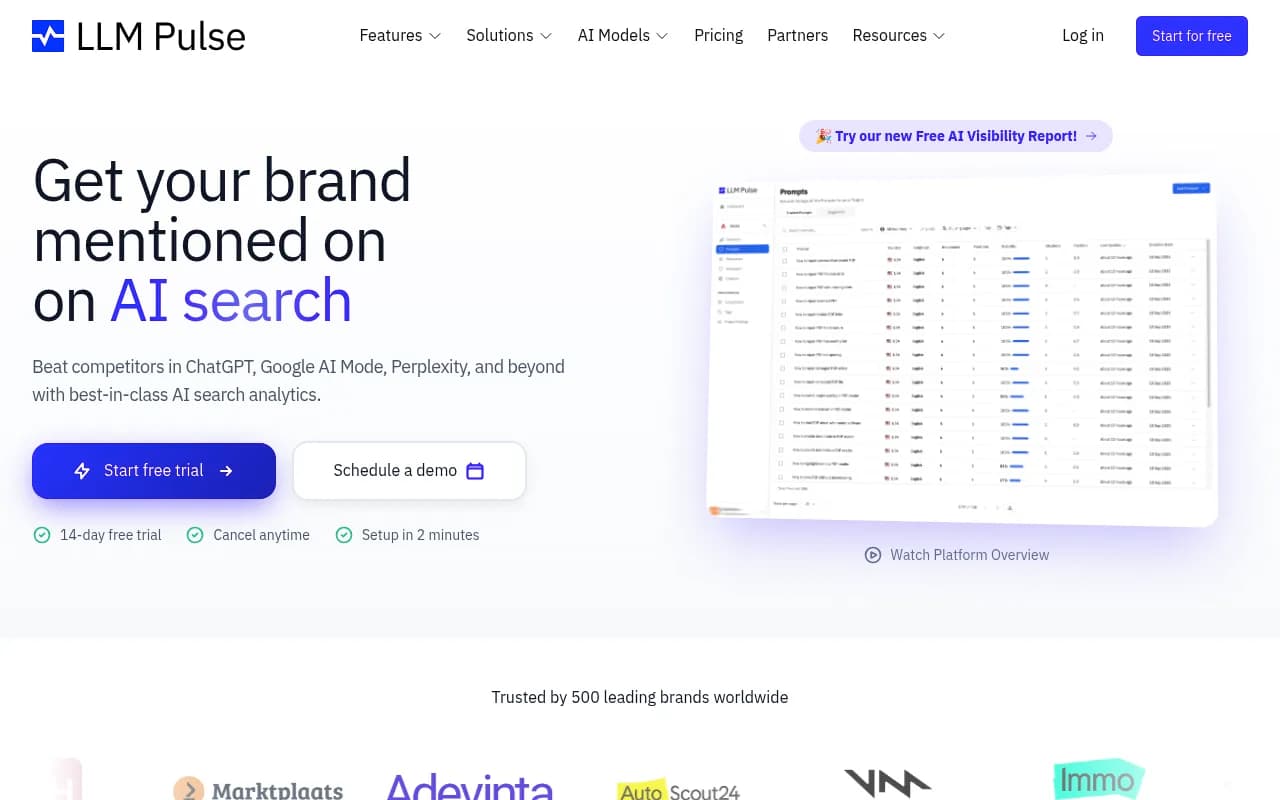
| LLM Pulse | Brand recommendation tracking | Limited | EUR 49/mo | Sentiment and recommendations |
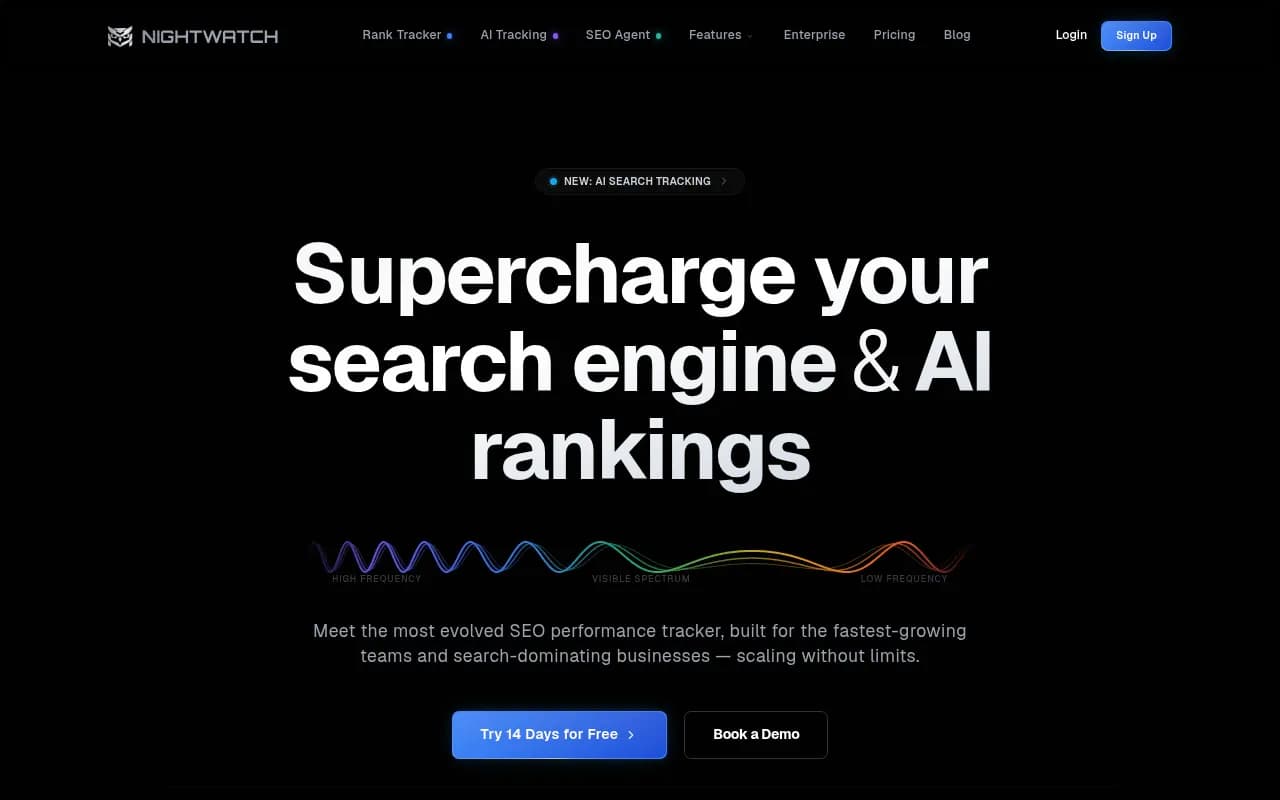
| Nightwatch | Rank tracker plus AI | Add-on | $39/mo plus AI add-on | Good for teams already tracking classic rankings |
| Semrush | SEO suite | Via AI toolkit | Suite pricing | Convenient if you already pay for it |
Promptwatch
Promptwatch is the option I would look at first if you want to do something with the data. It tracks ChatGPT, Google AI Overviews, Google AI Mode, Gemini, Perplexity, Copilot, Meta AI and more through their actual interfaces, with query fan-outs, citation tracking and Brand Narrative. The part that matters for this quarter's changes is the measurement side: IP-verified AI crawler logs and visitor analytics that do not rely on GA4 referrers, plus an optional setting that counts utm_source=chatgpt.com visits as ChatGPT traffic. Plans start at $95 per month, and the Content Agent and faster-than-daily tracking begin on Business at $579. Confirm current pricing at promptwatch.com/pricing, or start with the free AI visibility report.

Otterly.AI
Otterly.AI is the low-cost monitor. Its Google AI Overviews guide is useful reading even if you never buy it, and the $29 starting price makes it an easy trial. It is monitoring only, so you will need other tools for crawler data and traffic.
Otterly.AI

Peec AI, Profound and LLM Pulse
Peec AI suits SaaS and e-commerce teams that want clean prompt-level reports. Profound targets large brands with enterprise needs. LLM Pulse leans toward recommendations and sentiment, and it was one of the sources that measured the October GA4 drop.

Profound

SEO suites and classic trackers
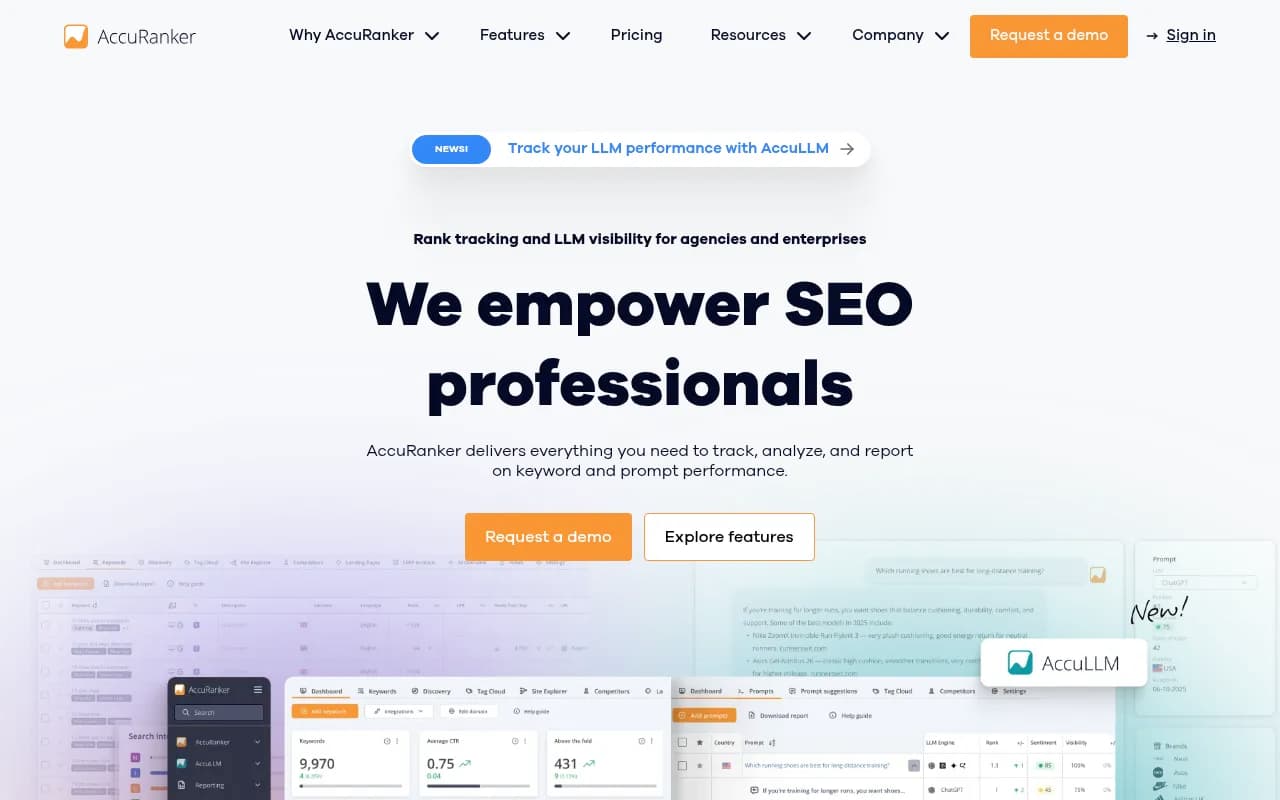
If your team lives in an existing suite, the add-ons are convenient but usually shallower, with fixed prompt sets and little crawler data. Semrush and Ahrefs Brand Radar are the usual candidates, and AccuRanker or Nightwatch cover classic position tracking.

For a wider view of the category, the GEO software directory lists dozens more.
A practical Q4 tracking setup
Here is a setup that fits most teams without a big budget.
- Freeze a core prompt set. Pick 30 to 100 prompts across branded, commercial and informational intent. Do not edit them mid-quarter.
- Track by surface. Report AI Mode, AI Overviews and ChatGPT separately. Averaging them hides the differences described above.
- Record citation position and link placement. Especially after Google's October 15 inline link changes.
- Rebuild your fan-out map. Anything built before August 8 predates ChatGPT's site: shift.
- Check crawler access. If ChatGPT is running site: searches against your domain, blocked or erroring bots cost you directly. The AI crawler URL inspector is a quick free check.
- Fix attribution. Annotate October 8 to 9 in GA4, compare ChatGPT with Direct on the same pages, and tag links you control.
- Match content to engine. Product and landing pages for ChatGPT commercial prompts. YouTube, Facebook and Instagram presence for Google. Do not count on Reddit for ChatGPT.
- Audit the official-page test. If you offer a task such as booking or applying, make sure the page that does it is clear, indexed and snippet-eligible.
What I would not do
Do not rewrite your GEO strategy because a GA4 line fell in the second week of October. Do not treat any single surface's mention rate as a benchmark for another. And do not buy a tool on the strength of its dashboard alone. Ask whether it shows you the fan-outs, the citations and the crawler activity, because those are the things that changed this year.
If you would rather hand the work to specialists, an agency such as 1001 SEO Media runs GEO programs built on the same kind of tracking described here.
Frequently asked questions
Is AI Mode or AI Overviews more important to track?
Both, separately. AI Overviews reach more people by volume (2.5 billion monthly users per Google), while AI Mode shows brands more often in the figures KIME cites. They answer different questions.
Why did my ChatGPT traffic drop in October 2026?
Probably tagging, not demand. Several vendors measured the same drop in the week of October 9 while total traffic held and Direct rose on the same pages. Check Direct before concluding anything.
How often should I run prompts?
Daily if your tool allows it, and no less than every two weeks with a frozen prompt set. ChatGPT changed fan-out behavior overnight on August 8, so long gaps can hide a shift for weeks.
Do I need special markup to appear in AI Overviews?
No. Google says pages must be indexed and snippet-eligible, and that no AI-specific markup or files are required.