Key takeaways
- Most AI visibility tools are prompt trackers. They tell you whether your brand was mentioned, not why, and not what to do next. Pay for tools that connect tracking to action.
- Ask every vendor how they collect data. Real user-interface monitoring and API sampling can produce different answers.
- Engine coverage is where cheap plans get expensive. Many entry plans include 3 to 4 engines and charge extra for the rest.
- Judge tools on trends across many prompts, not single snapshots. Citation behavior moves by engine and by month.
- Most comparison articles on this topic are written by vendors ranking themselves. Verify prices on the vendor's own page.
Why a skeptic's shortlist
The category went from a handful of startups to hundreds of listed products in about two years. Our own directory has well over 100 entries that claim to track brand mentions in ChatGPT, Perplexity, Gemini and Google AI Overviews. Most do roughly the same thing: they send a list of prompts to a few engines, record whether your brand appears, and draw a chart.
That is useful for about a month. Then you look at the chart and ask the obvious question: so what do I do now?
I also want to be upfront about the source material. Many of the "best AI visibility tools" roundups online are written by vendors. One ranks itself "Editor's Pick", another ranks its own product third overall and first for its own niche. They are not useless, and some of the pricing detail is handy, but treat every number as a claim to verify on the vendor's pricing page. Prices in this guide are approximate and came from third-party roundups unless stated.
What you are actually buying
An AI visibility tool sends prompts to AI engines, records the answers, and reports on mentions, position, sentiment and cited sources. That is the baseline. Three things separate tools worth paying for from the rest.
Data collection method
Some tools query the engines' APIs. Others monitor the actual consumer interface. These can differ, because what a user sees in ChatGPT or AI Overviews, including citations and shopping results, is not always what the API returns. Promptwatch collects from real user interfaces, and it is the question to put to every other vendor. If the answer is vague, assume API sampling.
Engine-by-engine reporting
Citation behavior is not uniform. According to Promptwatch Data on average sources per response, ChatGPT cites about 5 sources per web-search answer, Google AI Overviews about 10, and Perplexity almost exactly 10 every day. Copilot swung from under 2 to nearly 17 within weeks before settling low. A tool that blends all engines into one score hides these differences. You want per-engine tracking and monthly trends for the unstable ones.
Prompts that match how AI searches
ChatGPT does not search with your full prompt. It fans out into shorter web queries. Promptwatch's query fanout data shows average query length fell from about 117 characters in December to the high 80s in February and March, and fan-outs changed in steps tied to ChatGPT behavior changes. A prompt set you built last quarter may be stale. Good tools show you the fan-outs and help you refresh prompts.
What things cost in 2026
Third-party roundups put the market into rough tiers.
| Tier | Typical monthly price | What you get | Examples |
|---|---|---|---|
| Entry | $17 to $100 | 15 to 50 prompts, 3 to 6 engines | Otterly.AI, Rankscale, Peec AI Starter |
| Mid-market and agency | $150 to $800 | 100 to 700 prompts, API, reporting connectors | Peec AI Pro, Scrunch, AthenaHQ, Goodie, Evertune |
| Enterprise | About $2,000 a month and up | Custom prompts, SSO, services | Profound, Brandlight, Bluefish, BrightEdge |
The prices vary between sources. One roundup lists Profound as enterprise-only custom pricing, another shows a $99 starting figure. That inconsistency is itself the lesson: check the vendor page.
The shortlist
Here is how I would sort the options. I am grouping by what you need, not by a fake ranking.
If you want measurement and action in one place
Promptwatch is the one I would start with if the goal is revenue and not just a dashboard. It does the tracking, but the parts that matter for a skeptic are the ones most competitors lack: IP-verified AI crawler logs showing which bots hit which pages and what errors they met, visitor analytics that tie AI traffic to conversions, and an Action Board plus Content Agent that turn gaps into planned, written and published content, then check whether the page got crawled and cited.

It also covers channels many trackers skip: Reddit, YouTube and LinkedIn citations, ChatGPT shopping results, and sponsored placements in AI answers. Pricing runs from a free Explore tier to Essential at $95 a month, Professional at $245 and Business at $579, with agency plans from $199. Confirm on promptwatch.com/pricing.
The case for paying: Crisp reported 2x higher conversion from AI traffic than traditional channels, and TreeHouse (Pararius) grew AI search to about 25% of organic conversions after fixing crawler access. Those are vendor-published results, so weigh them accordingly, but they show the type of outcome that comes from acting on data.
If you only need a cheap monitor
Otterly.AI is the common recommendation at about $29 a month for a Lite plan, with a GEO audit and unlimited seats on every plan according to the roundups. It is a fair entry point for a small team that wants to see where it stands.
Otterly.AI

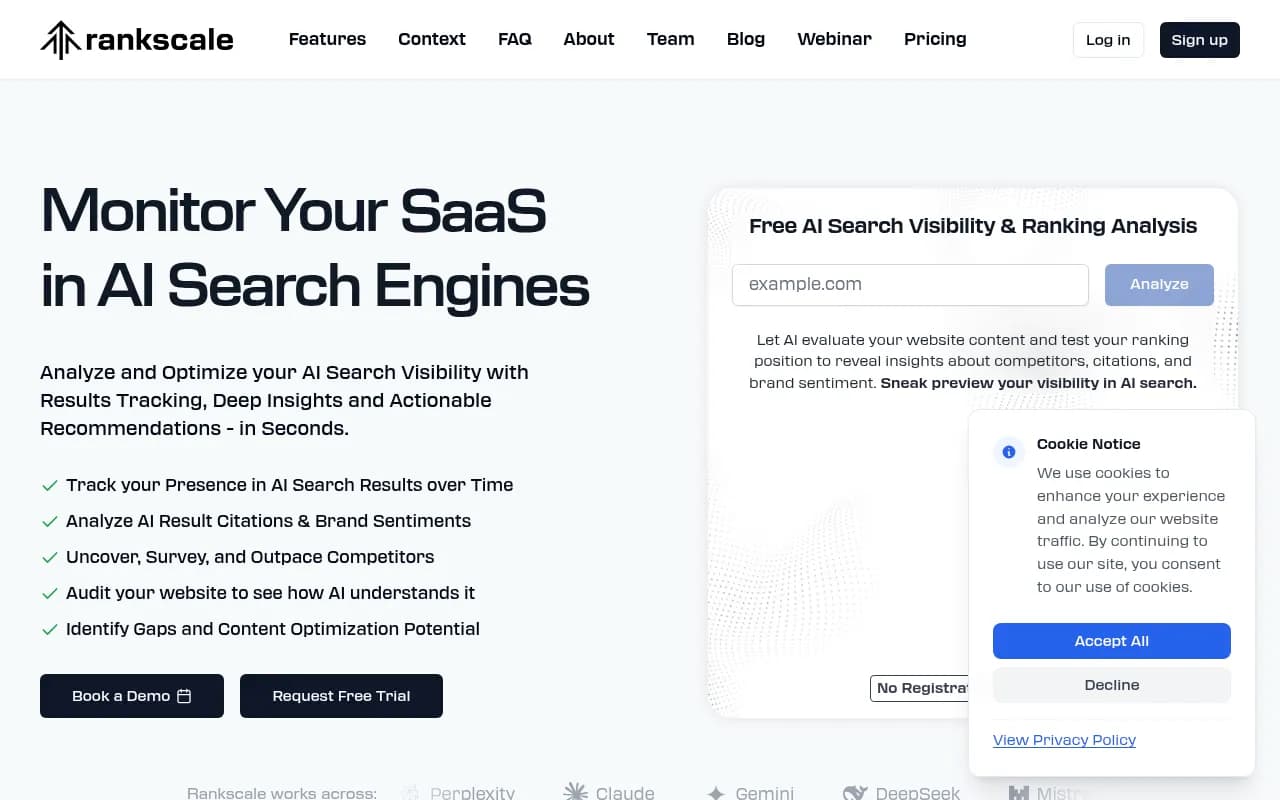
Rankscale sits at the low end for engine count, with 17+ engines listed in one roundup, from around $17 to $20 a month on annual billing. It suits agencies that need breadth.
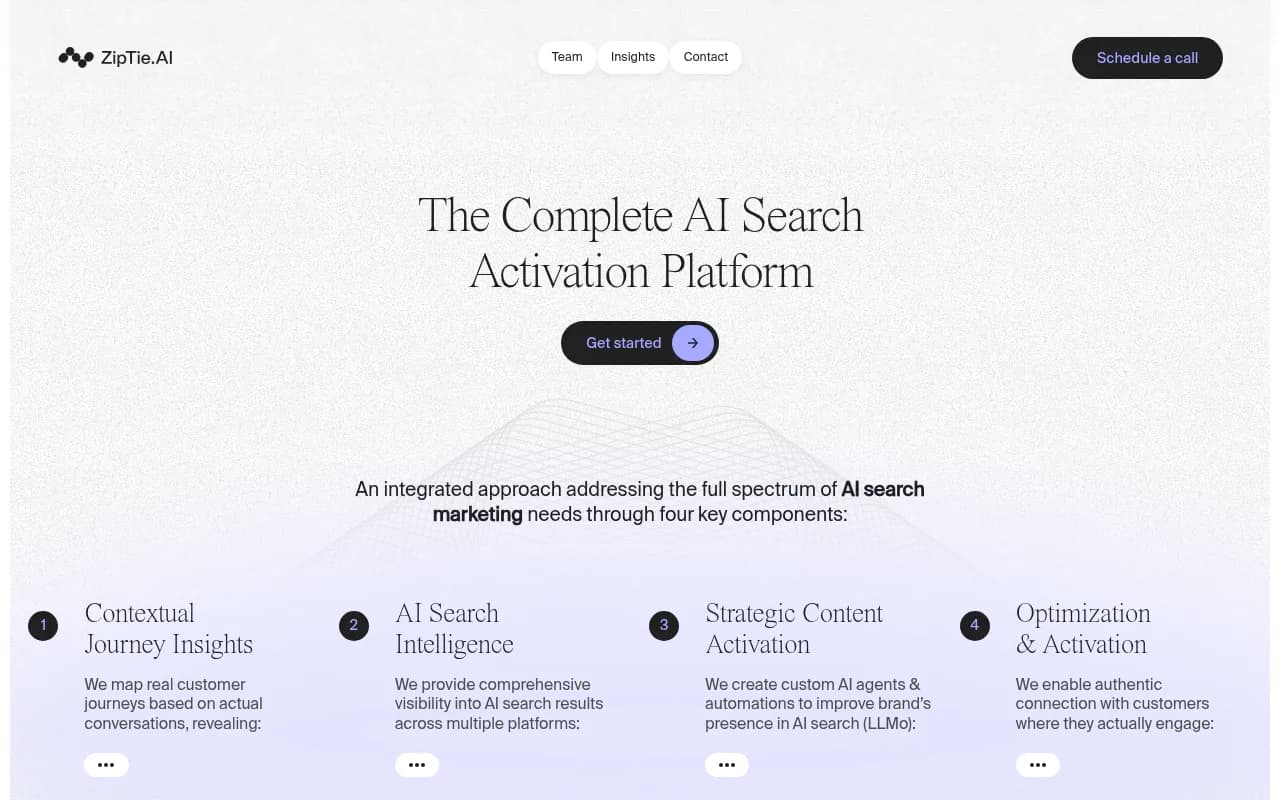
ZipTie is worth a look if you want screenshot proof of what an AI actually displayed, which is handy before a client conversation.
Knowatoa has a free plan and focuses on how AI characterizes your brand, not only whether it appears. User reviews are sparse, so test before paying.
These tools are honest about what they are. They measure. Do not expect them to fix anything.
If you are already in an SEO suite
Semrush's AI toolkit and Ahrefs Brand Radar are the obvious add-ons. Roundups put Semrush at roughly $99 to $199 a month depending on how it is packaged, and Brand Radar at around $199 a month standalone.
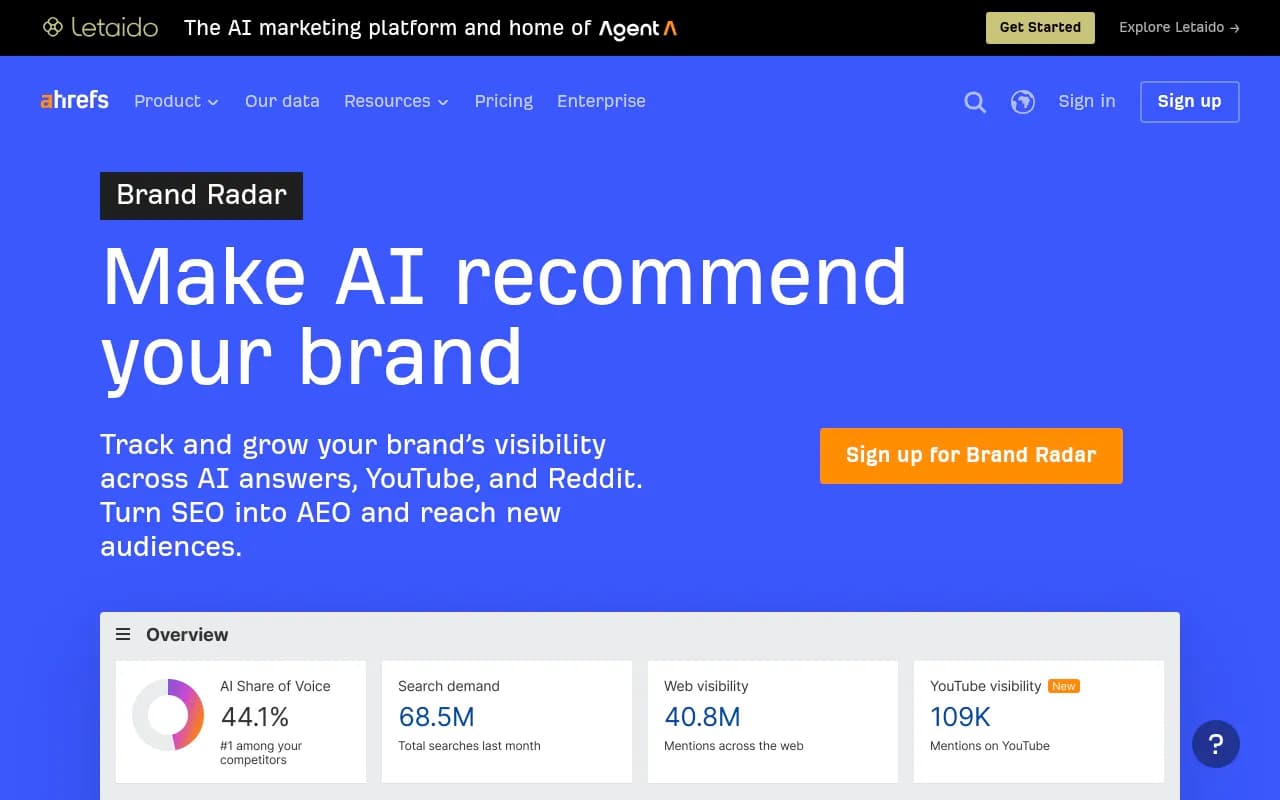
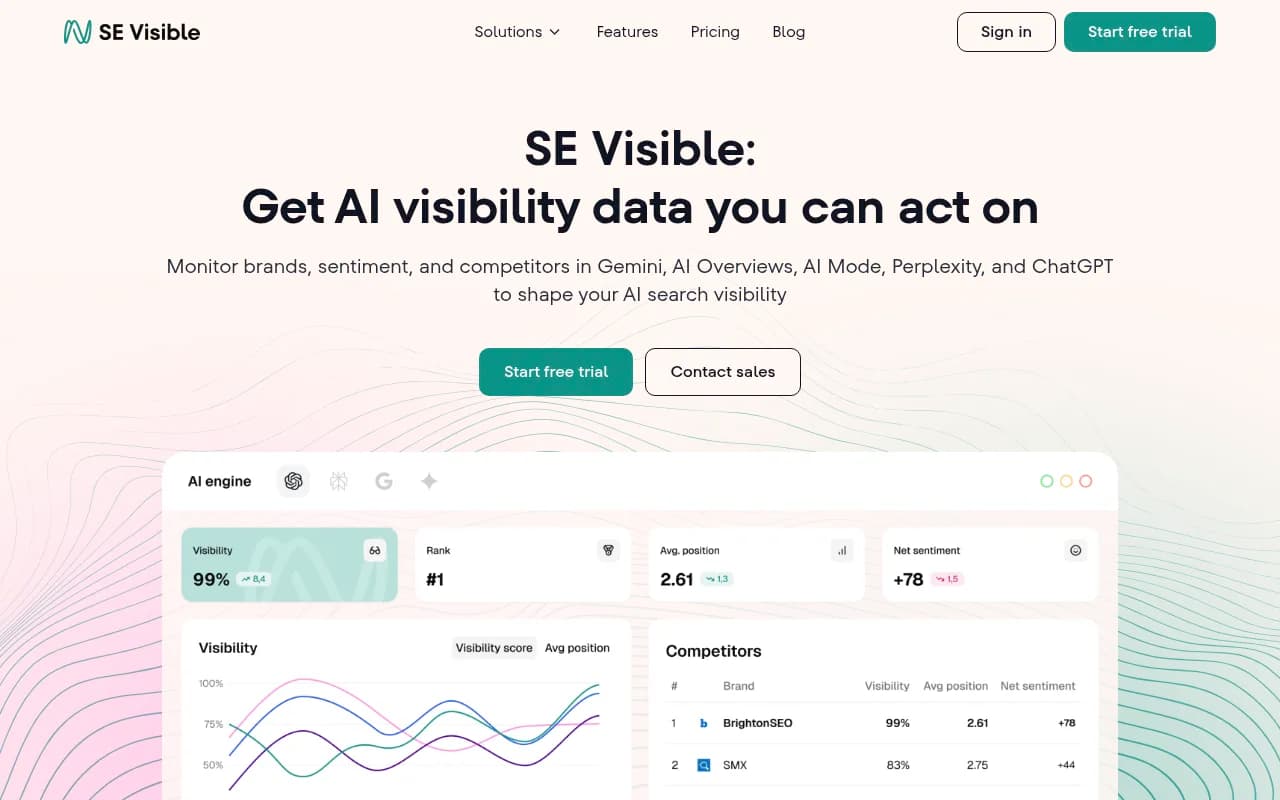
The upside is one login. The downside is shallower AI-specific data and typically no crawler logs or AI traffic attribution. SE Ranking's SE Visible is similar: fine if you already use SE Ranking, expensive standalone for what it does.
If you are mid-market or an agency
Peec AI is clean and popular with agencies, with Starter near $95 a month, but extra models cost more and it measures without creating content.

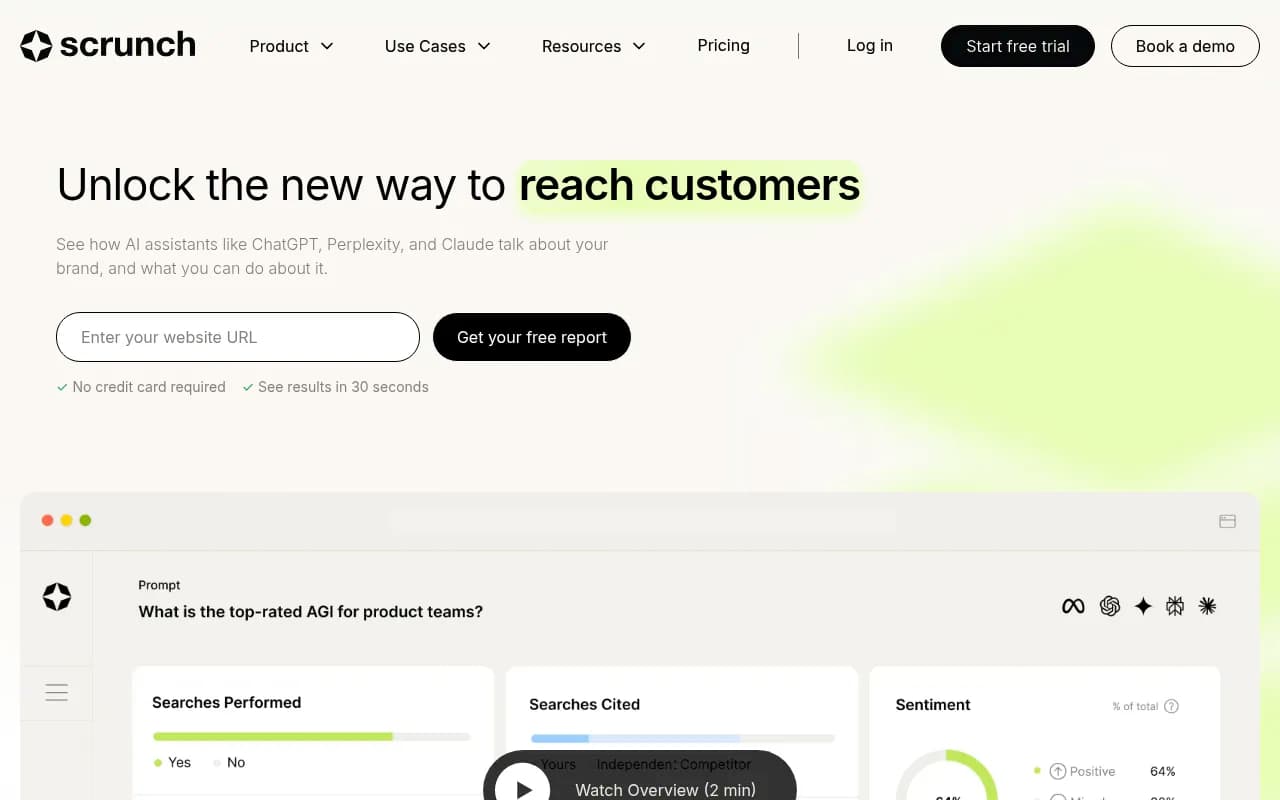
Scrunch pitches an agent-ready site layer, from roughly $250 to $300 a month.
AthenaHQ has a free tier and broad engine coverage, with paid plans around $295.

Goodie targets e-commerce and AI shopping at about $399, though our catalog notes it does little beyond monitoring.
If you are enterprise
Profound leads this segment with broad engine coverage and server-level tracking.
Profound

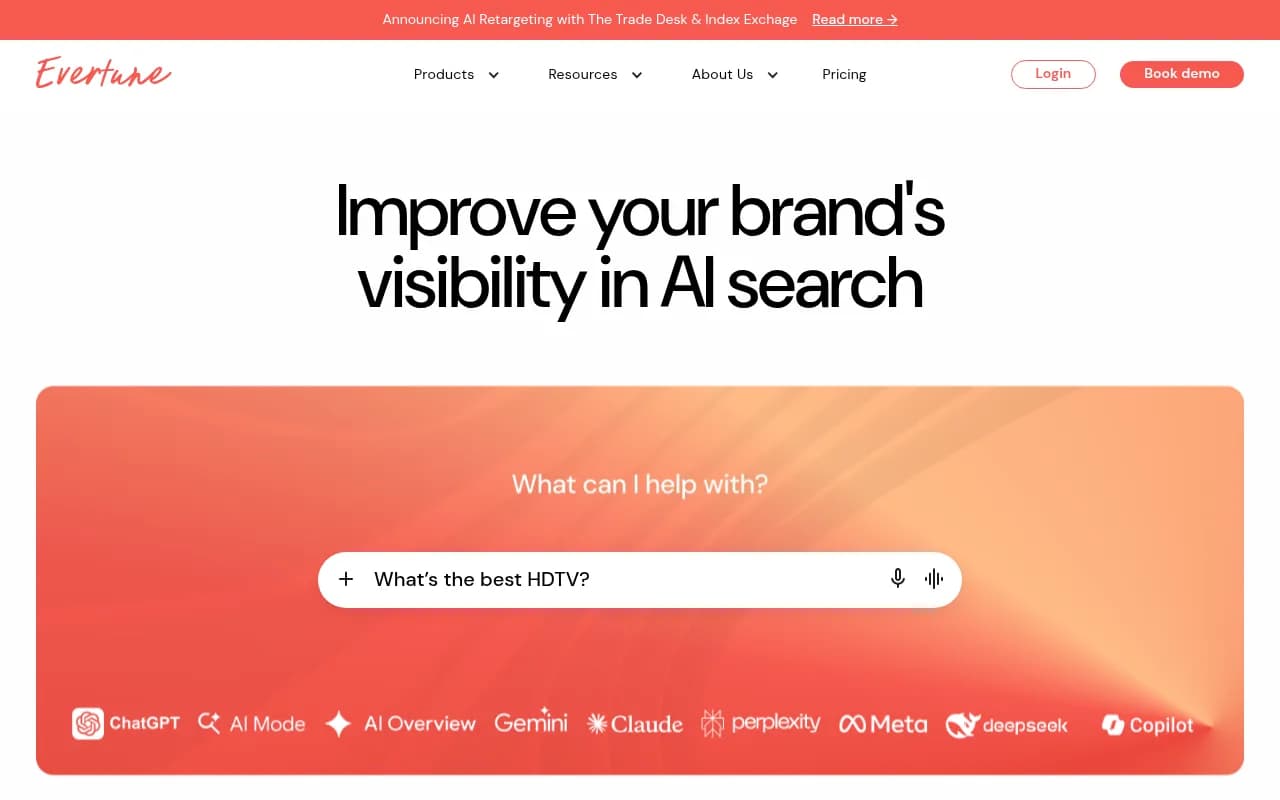
Evertune is the pick if statistical rigor matters most, with up to 100 samples per prompt and model, from around $800 a month.
BrightEdge, Conductor and seoClarity belong here when governance and compliance drive the purchase.
Side-by-side comparison
| Tool | Rough starting price | Strength | Main catch |
|---|---|---|---|
| Promptwatch | Free tier, then $95/mo | Tracking plus crawler logs, traffic, content agent | More to learn than a simple tracker |
| Otterly.AI | About $29/mo | Cheap, GEO audit | Monitoring only, extra engines cost more |
| Rankscale | About $17 to $20/mo annual | Many engines | Light on action |
| Peec AI | About $95/mo | Clean UX, agency plans | Add-on models, no content creation |
| Semrush AI | About $99 to $199/mo | One suite | Shallow AI data |
| Ahrefs Brand Radar | About $199/mo | Market research | Extra cost on top of Ahrefs |
| Scrunch | About $250 to $300/mo | Agent-ready site layer | Pricey for monitoring |
| Evertune | About $800/mo | Statistical depth | Expensive |
| Profound | Custom | Enterprise scale | Cost |
Questions that expose weak tools
I would ask these on every demo.
- Do you monitor the real user interface or call APIs?
- Which engines are included in the price, and which cost extra?
- Do you report each engine separately?
- Can I see the actual searches the model ran, not just my prompt?
- Can you show which AI crawlers visited my pages and whether they hit errors?
- Does the tool connect to traffic and conversions?
- What happens after I find a gap? Who writes the fix?
A tool that cannot answer questions 5 to 7 is a tracker. That might be fine. Just do not pay tracker money for a tracker that pretends to be more.
Mistakes I see repeatedly
Paying for prompts you will never read
A 400-prompt plan is useless if nobody looks at it. Start with 50 to 100 prompts that map to real buying questions.
Treating one answer as a rank
AI answers are unstable. One response being different tomorrow tells you nothing. Watch share of voice and trends.
Ignoring the source pages
Mentions are the symptom. Citations are the cause. Knowing which pages and which third-party sites get cited tells you where to work. For software prompts, Promptwatch Data shows documentation and help centers earning the largest citation share in ChatGPT for Sep 28 to Oct 4, 2026, with GitHub, Microsoft's docs and G2 leading. That is the kind of detail a pure mention counter will not give you.
Buying on a vendor's own ranking
If the roundup is published by a vendor, discount it. Use it for pricing hints, then verify.
A simple buying process
- Define 50 to 100 prompts from real customer questions and your search data.
- Shortlist three tools: one cheap monitor, one suite add-on if you already use one, and one action-oriented platform.
- Run them in parallel for two weeks on the same prompts and compare where they disagree.
- Check crawler visibility and traffic attribution. These decide whether you can prove revenue.
- Pick on what happens after the insight, not on the chart.
If you want to browse beyond this list, the directory at bestgeosoftware.com covers more GEO tools, and the research hub at Promptwatch Data is useful for sanity-checking what any vendor tells you about AI citation behavior.
Bottom line
Pay for a cheap tracker if you only need to know where you stand. Pay for an optimization platform if you need to change the answer. Skip anything that cannot say how it collects data. For most teams that want AI search to produce revenue, I would trial Promptwatch next to one budget monitor and let your own data decide.