Key takeaways
- AI drafts are a starting point. What makes a page worth citing is something the model could not have produced: your numbers, your tests, your screenshots, your opinions.
- Google says its generative AI features rest on core Search ranking and quality systems, and its guide tells site owners to create valuable, non-commodity content.
- ChatGPT cites pages that describe what a company sells and pages with concrete facts. Product pages take 22.4% of citations and landing pages 16.8% (Promptwatch Data, Sep 28 to Oct 4, 2026).
- Original data comes from five places: surveys, product or customer data, experiments, interviews, and public data you reanalyze. You do not need a research department for any of them.
- Build the workflow in order: collect first, draft second, edit for voice third, then measure whether AI engines pick the page up.
Why commodity content stopped working
For about three years the question was whether AI could write the article. It can. That is exactly the problem. When every competitor can produce a competent 1,500-word explainer in four minutes, competence stops being a differentiator.
Google is direct about this. Its guide to optimizing for generative AI features on Google Search says SEO fundamentals still apply, because AI Overviews and AI Mode are built on core ranking and quality systems. It lists a section called "Create valuable, non-commodity content for your audience." I could only confirm the heading from my research, not the body text, so read the page itself before quoting specifics. But the heading alone tells you what the guidance is pointing at.
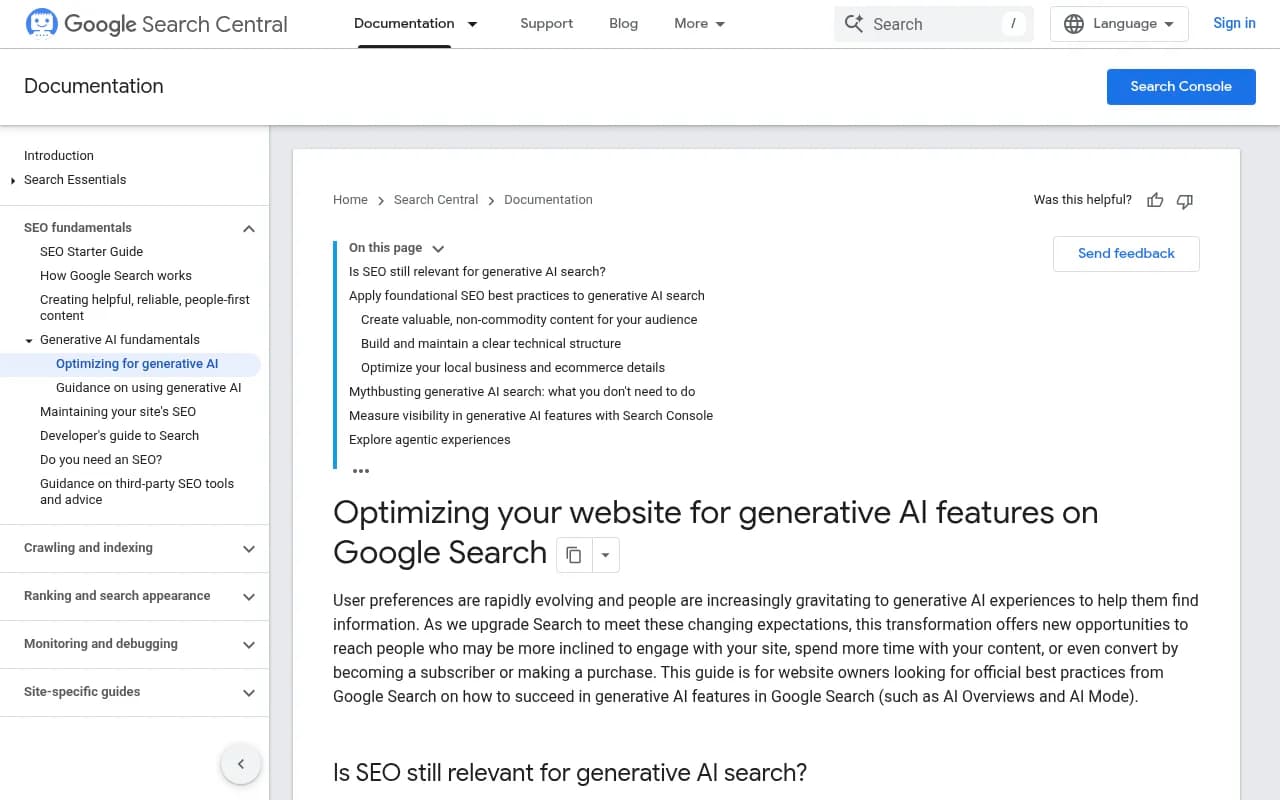
Two mechanisms from that guide matter for how you plan content. The first is grounding: the system pulls pages from the Search index and links to the ones that support the answer. The second is query fan-out, where one question becomes several concurrent related searches. Google's own example is "how to fix a lawn that's full of weeds" fanning out to herbicides, chemical-free removal, and prevention.
The practical consequence: a page that merely restates what ten other pages say gives the system no reason to choose it. A page with a number, a test result, or a firsthand observation that the others lack does.
What counts as original data and experience
People overcomplicate this. Original does not mean a 40-page research report. It means information that did not exist on the web before you published it, or a perspective that only someone who did the work could have.
| Type | Example | Effort | Citation value |
|---|---|---|---|
| First-party product data | Aggregated usage stats, support ticket themes | Low | High |
| Survey results | 200 customers asked about one decision | Medium | High |
| Experiments | A/B test of two headline styles, with results | Medium | High |
| Documented process | Screenshots and timings from doing the task | Low | Medium |
| Expert interviews | Direct quotes from named practitioners | Medium | Medium |
| Reanalysis of public data | A new cut of government or industry datasets | Medium | Medium |
| Opinion with reasoning | A stated position and why you hold it | Low | Lower alone, strong paired with data |
The low-effort rows are underused. Most companies sit on data they never publish: conversion rates by segment, the questions sales hears every week, how long onboarding really takes.
Step 1: Collect before you prompt
The most common mistake is opening a chat window and typing the topic. You get the average of the internet back. Reverse the order.
Build an evidence file first
Before drafting, gather what only you have:
- Two or three numbers from your own systems, with the date range and sample size
- One thing that surprised you or contradicted the standard advice
- A real example, ideally with a screenshot, from doing the task
- A quote from a customer, a colleague, or yourself
- One opinion you would defend in a meeting
Paste that into the prompt as source material and instruct the model to use only those facts for claims. It will still fill gaps with plausible filler, so check every number against your file.
Tools for gathering the raw material
Surveys are the fastest route to numbers nobody else has. SurveyMonkey handles a quick customer or audience poll, and Qualtrics suits larger research programs.
For questions people actually ask, AlsoAsked and AnswerThePublic show real queries, and GummySearch surfaces pain points from Reddit audiences. These tell you what to answer with your data.
If your data lives in a warehouse or a BI tool, you probably have publishable findings already. Metabase and Tableau make it easy to cut an internal dataset into charts you can embed.
For SEO teams specifically, running real experiments gives you citable results. SearchPilot and SplitSignal test the effect of on-page changes, and SEO Testing is a lighter option for smaller sites.

Step 2: Draft with AI, but constrain it
Once the evidence file exists, AI is genuinely useful for structure, first drafts, and reformatting. The trick is giving it a narrow job.
A prompt pattern that works:
You are drafting a section of an article. Use ONLY the facts below.
If a claim needs a number I did not provide, write [NEED DATA] instead.
Keep sentences varied. No generic intros.

FACTS:
- Our onboarding survey (n=212, Aug 2026): 61% finished setup in under a day
- Surprise: teams that skipped the template took longer, not shorter
- Quote from support lead: "Nobody reads the docs until step four fails"
The [NEED DATA] marker is the useful part. It turns hallucinated filler into a visible to-do list.
General assistants like ChatGPT and Claude both handle this well. Claude tends to cope better with long source documents, which helps when your evidence file is big. Dedicated writing platforms such as Frase, MarketMuse, and Clearscope help with research briefs and coverage, but none of them can supply the data. That part stays with you.


Step 3: Edit for experience and voice
This is the step that separates a page that reads like a person wrote it. Several of the sources I reviewed say the same thing in different words. Impact Plus recommends real authors with real bios, cited sources, first-person examples, and original data. A Forbes Agency Council piece from July 2026 lists including firsthand perspective, writing the way people talk, and reading aloud for rhythm.
Those are fine as far as they go, but here is what I would actually do in an edit pass:
- Add the thing you only know from doing it. "We tried X and it failed because Y" beats any explainer paragraph.
- Replace every vague claim with a specific one. "Many teams see improvements" becomes "Of 212 respondents, 61% finished setup in a day."
- Cut the throat-clearing opener and the tidy conclusion. Models love both.
- Read it aloud. If you would never say a sentence to a colleague, rewrite it.
- Add a byline with a real bio that states why this person is qualified to write the piece.
A note on humanizer tools
Search results for this topic are crowded with advice to run text through an AI humanizer so detectors do not flag it. One Quora answer I found recommends exactly that, plus a paid tool. I would skip it. Rewording sentence rhythm does not add information, and information is the only thing that makes a page worth citing. A paraphrased generic article is still a generic article.
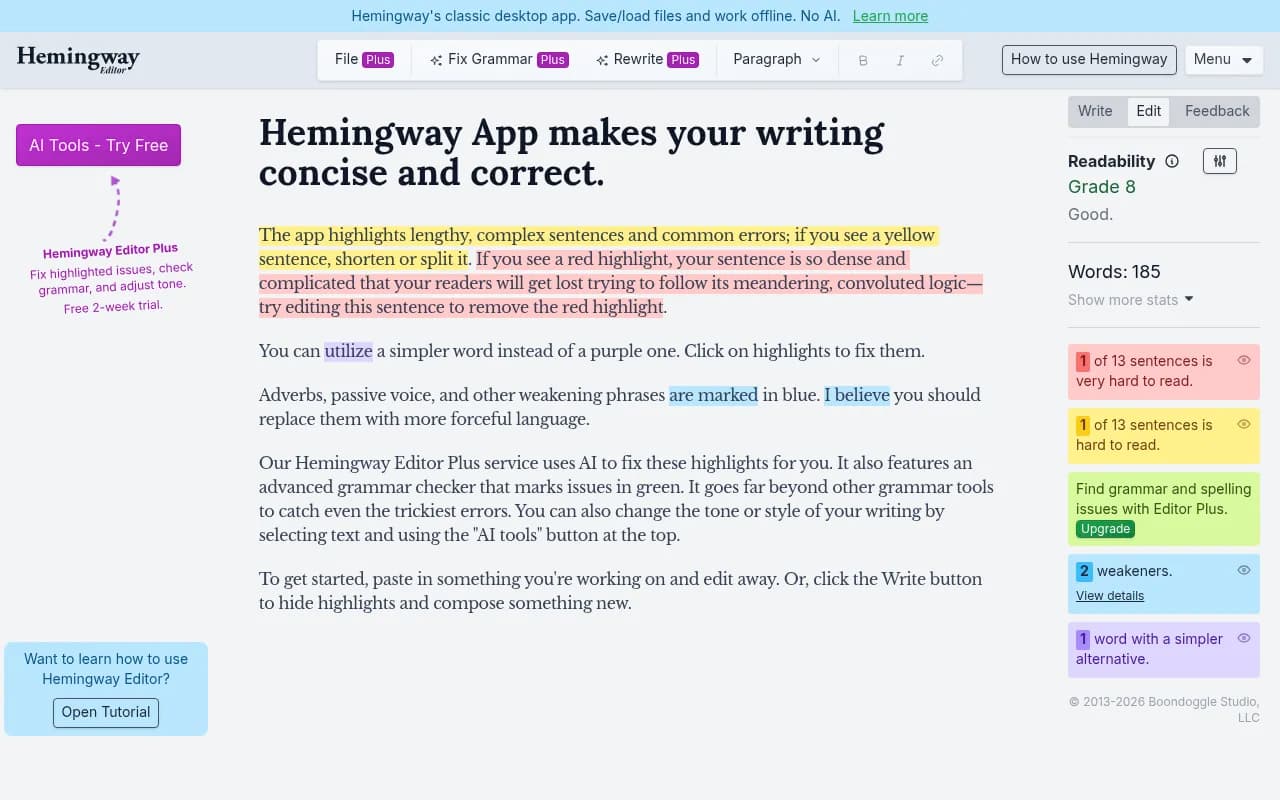
Editing tools that help with clarity are another matter. Hemingway Editor and Grammarly catch bloat and awkward phrasing without pretending to be a detection workaround.

Capture experience while it is fresh
Much of the hard part is getting what is in an expert's head onto the page. Voice dictation helps: talk through the process for five minutes, then edit the transcript. Wispr Flow is built for that, and Loom works when a screen recording is the better record of what you did.
Step 4: Match the format to what AI engines cite
Original data does not help if it is buried in the wrong page type. Promptwatch Data on which content types ChatGPT cites most (Sep 28 to Oct 4, 2026) shows where citations land:
| Content type | Share of ChatGPT citations |
|---|---|
| Product pages | 22.4% |
| Landing pages | 16.8% |
| Listicles | 13.6% |
| How-to guides | 8.7% |
| Documentation | 7.5% |
| General articles | 6.1% |
| Comparisons | 5.9% |
| News | 5.7% |
A few things follow from this. About 39% of citations go to pages describing what a company sells, so your own product and landing pages need real facts, specs, and prices, not marketing fog. The report's advice is to keep those complete and factual because ChatGPT quotes them directly. For branded prompts, reviews take 5.6% of citations, more than three times their share overall, so collecting reviews on trusted third-party sites matters. Trustpilot is one place to do that.
Shelf life matters too. Promptwatch's content half-life report found that among pages ChatGPT cited on July 6, 2026, landing pages and docs stayed cited longest, while news lost half its pages within 36 days. If you publish a data study as a news-style post, expect it to fade. Put the findings on a durable page and update it.
There is a flip side. Original research gets cited for the number, not the prose. State the headline finding in a plain sentence near the top, label the method (sample size, dates, source), and include a simple chart. Models and readers both quote what is easy to quote.
Step 5: Make the data easy to find and crawl
Two technical points get skipped. First, the page has to be readable: if your charts are images with no text equivalent, the numbers are invisible. Put key figures in HTML text or a table. Second, check that AI crawlers can reach the page at all. Promptwatch's AI crawler traffic data tracks weekly verified requests from OpenAI, Anthropic, Google, Perplexity, and Mistral, and it is worth knowing which of them hit your site.
A crawler like Screaming Frog can verify that pages are indexable and linked, and Google Search Console shows how Google sees them. Google's own guide covers measuring visibility there.
If the page is a JavaScript-heavy build, a prerendering service such as Prerender.io solves the case where bots see an empty shell.
Step 6: Measure whether it worked
Publishing original data is a bet. You need to know if it pays off, and traditional rank tracking only tells part of the story. You want to see whether AI engines cite the page, for which prompts, and whether that sends visits.
Promptwatch is one option for this. It tracks your pages across ChatGPT, AI Overviews, Perplexity, and others, shows which of your pages get cited, and logs AI crawler visits, so you can compare a data-rich page against a generic one. It also has a Content Agent for drafting against visibility gaps, though the original data still has to come from you.

Other trackers cover parts of this, including Otterly.AI, Peec AI, and Profound. Most are monitoring-focused, so check whether they show crawler activity and traffic, not just mentions. For a wider look, the GEO software directory at bestgeosoftware.com lists the field.
Otterly.AI


Profound

| Question | What to check | Where |
|---|---|---|
| Is the page getting crawled? | AI crawler logs | A visibility platform or server logs |
| Is it getting cited? | Citations by prompt | AI visibility tracker |
| Is it ranking in Google? | Queries and positions | Search Console |
| Is it driving visits? | AI referral traffic | Analytics |
A realistic weekly workflow
For a small team, here is a cadence that does not require extra headcount:
- Monday: pick one topic and pull two or three numbers from your own data or a quick survey.
- Tuesday: write the evidence file and get a quote from someone who did the work.
- Wednesday: draft with AI using only that material, flagging gaps.
- Thursday: edit by hand, add the firsthand detail, check every figure.
- Friday: publish, add the key stats as text, and log the page in your tracker.
One well-evidenced page a week will beat five generic ones. I would stake a lot on that.
Common mistakes
- Publishing stats with no method. A number without a sample size or date looks invented.
- Letting the model invent the "data." Check everything against the source file.
- Hiding the finding. Put it in the first few paragraphs and in a table.
- Treating a study as one-and-done. Refresh the figures yearly and note the update date.
- Anonymous authorship. Real names with real credentials are a trust signal.
Where to go from here
Start small. Pick the one dataset your company already owns that competitors cannot copy, turn it into a single page with a clear headline finding, and track whether AI engines pick it up over the next month. For help deciding which tools fit your stack, the directory at surferstack.com covers writing, research, and SEO tools side by side. And if you would rather have specialists run the content and GEO side, 1001 SEO Media does that work.