Key takeaways
- AirOps is a workflow-first AI content platform, not a writing assistant. It shines for teams that already have mature content operations and need to scale execution.
- G2 reviewers rate it 4.6/5 across 111+ reviews, but 54+ of those reviews mention learning difficulties and 21+ flag pricing as too steep for the ROI.
- The platform has genuine strengths in content refresh pipelines, multi-step AI workflows, and brand voice consistency at scale.
- It is not built for AI visibility monitoring. If your goal is understanding how AI search engines like ChatGPT or Perplexity are recommending your brand, you need a different tool.
- Several alternatives exist depending on what you actually need: content generation, AI visibility tracking, or both.
What AirOps actually is (and isn't)
There's a lot of confusion about what AirOps does, partly because the product has rebranded a few times and partly because "AI content tool" means different things to different people.
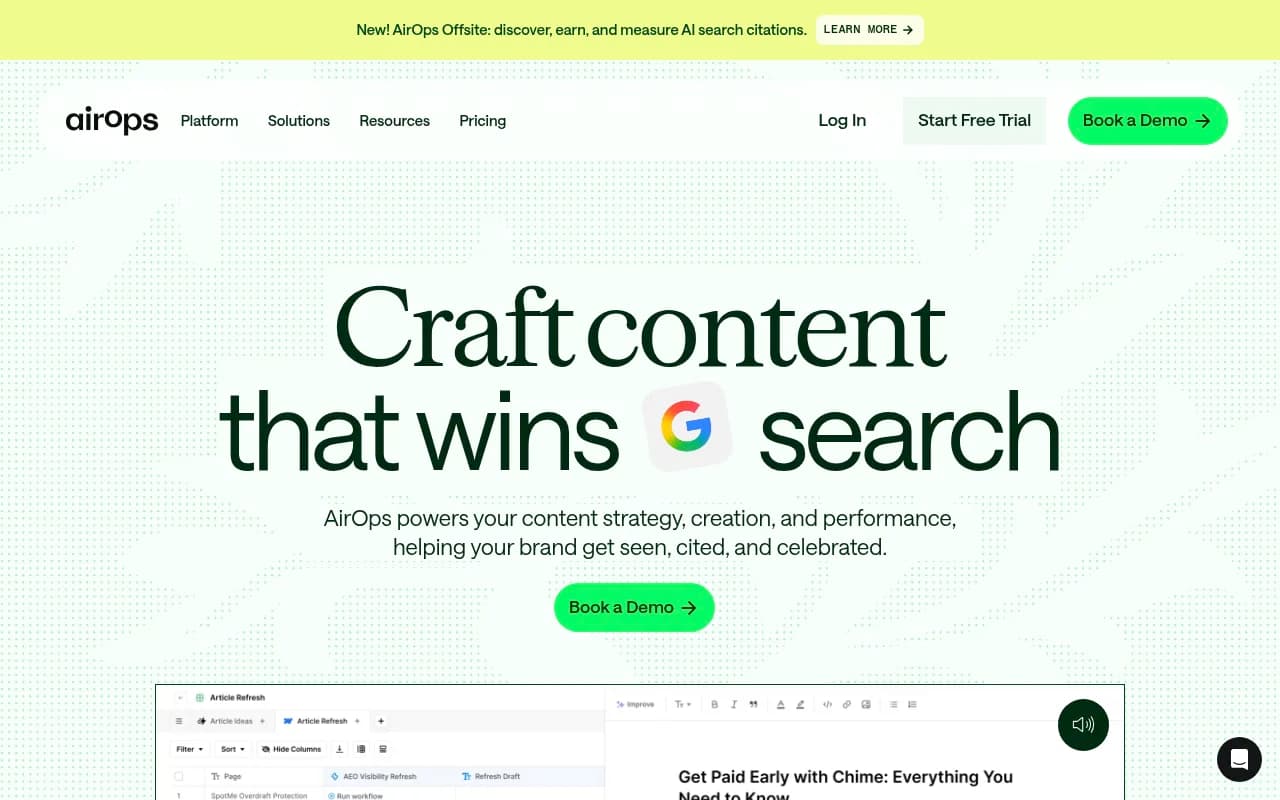
AirOps is a workflow platform. You build multi-step pipelines that chain together AI models, data sources, and publishing actions. Think of it less like a writing assistant and more like a content operations layer -- you define the logic, connect the inputs, and let it run at scale.
That's genuinely useful for certain teams. If you're managing a backlog of 500 product pages that need refreshing, or running a content program across dozens of client accounts, the ability to build repeatable, configurable pipelines is valuable. Webflow, Ramp, and Carta are among its known customers, which tells you something about the target market: well-resourced teams with real content infrastructure.
But that framing also reveals what AirOps is not. It's not a lightweight writing tool you open on a Tuesday afternoon and get value from immediately. It's not an AI visibility monitor. And it's not a lead enrichment or GTM automation platform, despite some surface-level overlap with that category.
What real users say after 12 months
The praise is genuine
G2 reviewers consistently highlight a few things that AirOps does well:
Users praise the customizability of workflows. You can build pipelines that reflect your actual editorial process, not a generic template someone else designed. That matters when brand voice and content quality are non-negotiable.
Several practitioners note that AirOps handles content refresh at scale better than most alternatives. One Reddit user reported that after using AirOps suggestions to tweak 12 articles that were "almost showing up in AI results," 7 of them ended up being featured. That's a real outcome.
The GTM engineering community -- people who think in systems and workflows -- tends to like it. Octave HQ's review describes it as a "workflow-first approach that gives GTM engineers control at every generation step," which is accurate. If you're the type of person who builds Zapier automations before breakfast, AirOps will feel natural.
The frustrations are consistent
Here's where it gets more complicated. Across G2, Reddit, and practitioner analyses, the same complaints come up repeatedly -- and they don't just come from negative reviews. Many 4-star and 5-star reviewers flag the same issues.
54+ out of 111 G2 reviews mention learning difficulties. That's not a small minority. The platform assumes you already understand content strategy, SERP analysis, and editorial operations. If you're bringing those skills, the setup investment pays off. If you're not, you'll spend weeks configuring something before you see any output.
21+ reviews cite pricing as too steep for the ROI. The pricing structure has significant jumps between tiers, and the lower tiers don't include features like CRM sync or GTM automation. SyncGTM's analysis describes "steep pricing jumps between tiers" and "a significant learning curve that delays time-to-value" as the biggest downsides.
The platform also won't improve your content strategy -- it will just execute it faster. If your existing content approach isn't working, AirOps will help you produce mediocre content at higher volume. That's not a knock on the tool specifically, but it's worth being honest about.
Where AirOps falls short for AI search visibility
This is probably the most important gap to understand in 2026.
AirOps helps you create content. It does not help you understand how AI search engines are responding to that content. Those are different problems.
If you want to know whether ChatGPT is recommending your brand when someone asks about your product category, AirOps can't tell you. If you want to see which competitors are being cited in Perplexity responses, AirOps has no answer. If you want to track whether the content you just published is being picked up by AI crawlers, you're looking at the wrong tool.
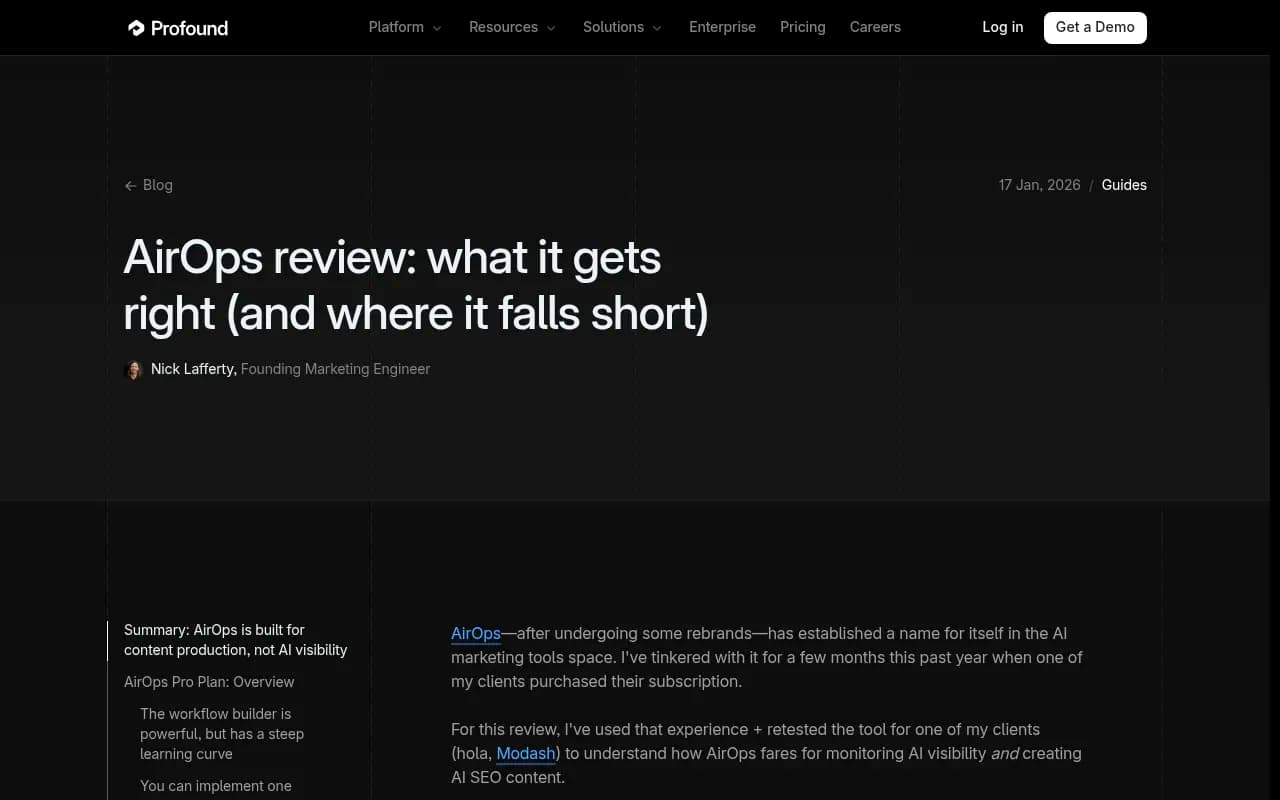
This matters because AI search visibility has become a real business concern. Profound's review of AirOps makes this explicit: "AirOps offers content workflows but falls short on AI visibility monitoring." That's a fair characterization.
For teams that need both content production and AI visibility tracking, AirOps covers one half of the equation. You'll need something else for the other half.
AirOps pricing: what it actually costs
AirOps doesn't publish a simple pricing page, which is itself a signal. Based on available information and practitioner analyses, the pricing structure has meaningful tier jumps that catch buyers off guard.
The lower tiers are limited enough that many teams find themselves needing to upgrade quickly after onboarding. Features like CRM sync and GTM automation are gated to higher tiers. And because the platform requires significant setup before delivering value, the cost of the first few months often feels front-loaded.
Slate's analysis describes the pricing as having "hidden costs" -- not in the sense of undisclosed fees, but in the sense that the operational investment (time, configuration, training) adds to the total cost of ownership in ways that aren't obvious from the pricing page.

The ROI question is real. For teams that are a good fit -- large content backlogs, mature editorial processes, budget to match -- the numbers can work. For teams that are still figuring out their content strategy, the math is harder to justify.
Who should use AirOps (and who shouldn't)
Good fit
- SEO managers with large content refresh backlogs (hundreds of URLs)
- Content teams with established editorial workflows that need to scale output
- Agencies managing multiple client SEO campaigns where repeatable processes matter
- GTM engineers who think in systems and want fine-grained control over AI pipelines
Not a good fit
- Teams looking for quick wins or a lightweight tool they can use immediately
- Brands that need AI visibility monitoring (tracking mentions in ChatGPT, Perplexity, etc.)
- GTM or sales teams needing lead enrichment, outbound prospecting, or CRM sync at lower price points
- Teams without a proven content strategy -- AirOps will scale what you have, not fix it
Alternatives worth considering in 2026
The "why many are looking for alternatives" part of this review comes down to a few distinct needs. Here's how to think about it.
If you need AI content generation with less setup friction
Tools like Jasper and Writer offer AI content pipelines with faster time-to-value. They're not as configurable as AirOps, but they don't require the same setup investment.

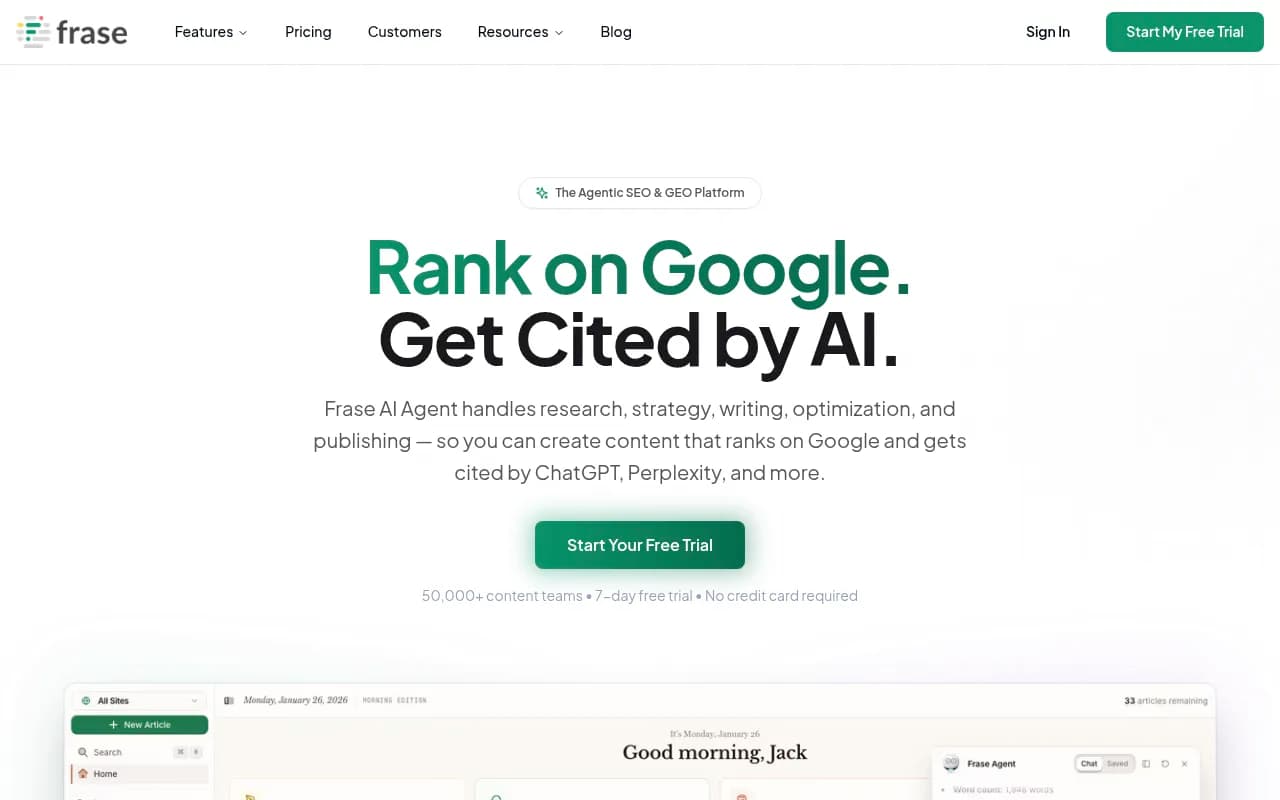
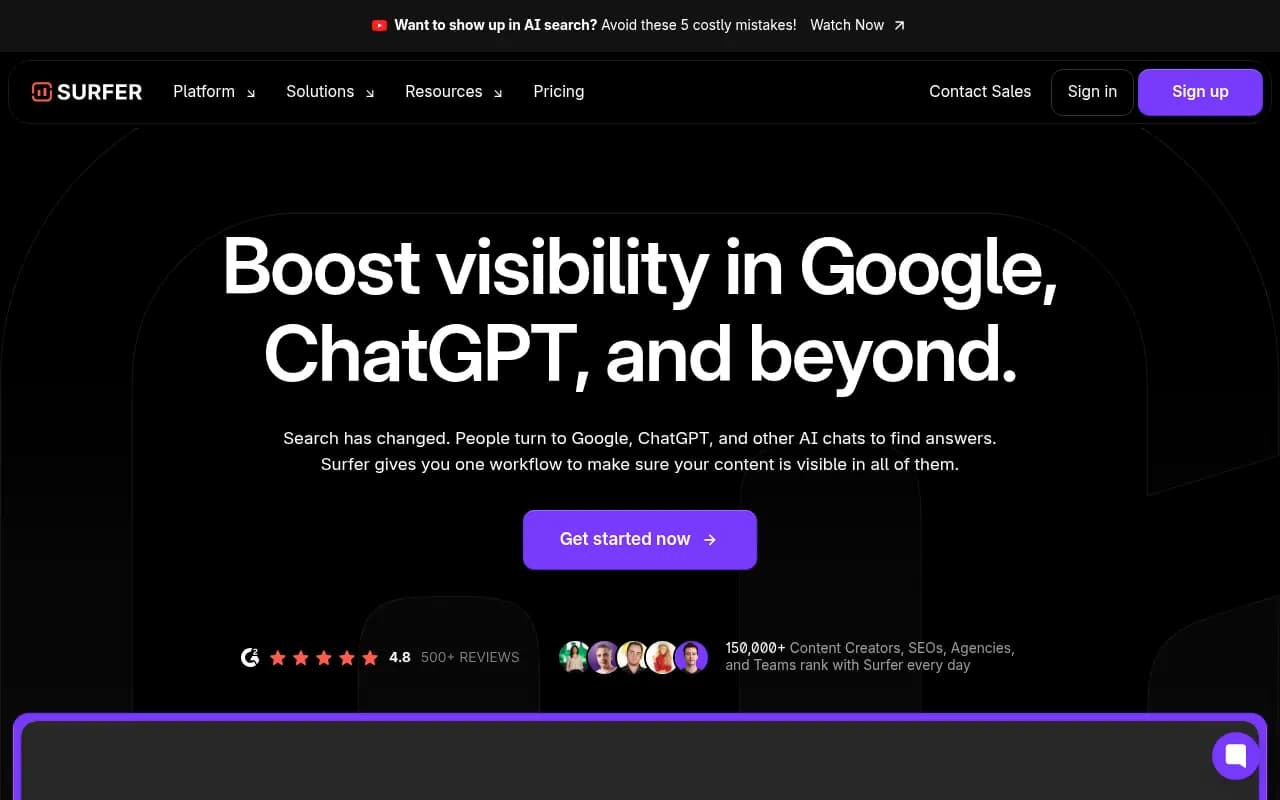
Frase and Surfer SEO are worth looking at if your primary need is content optimization for search -- they're more opinionated about the process, which can be a feature if you don't want to build everything from scratch.
If you need AI search visibility monitoring
This is where AirOps has no real answer, and where the market has developed quickly. Several platforms now track how AI engines like ChatGPT, Perplexity, and Google AI Overviews respond to prompts about your brand and competitors.
Promptwatch goes further than most -- it tracks AI visibility across 10 models, identifies gaps in your content (specifically which prompts competitors are visible for that you're not), and generates content to close those gaps. It's the difference between knowing you have a problem and having a path to fix it.

Profound focuses on enterprise AI visibility monitoring with strong answer engine insights.
Profound

Otterly.AI is a lighter-weight option for teams that primarily want to track brand mentions across ChatGPT, Perplexity, and Google AI Overviews.
Otterly.AI

If you need both content production and AI visibility
This is the honest gap in the market. Most tools do one or the other well. AirOps does content production well but misses on visibility. Most visibility trackers show you data but don't help you create content to fix what they find.
The platforms that are starting to bridge this gap are worth watching. Promptwatch's Content Agents, for example, generate articles and briefs grounded in real prompt data and citation analysis -- so the content you create is targeted at the specific gaps AI models are exposing. That's a different approach than AirOps's workflow-first model.
Search Atlas is another option that combines AI-powered content automation with some visibility tracking.

Feature comparison: AirOps vs key alternatives
| Tool | Content generation | AI visibility monitoring | Workflow automation | Pricing transparency | Best for |
|---|---|---|---|---|---|
| AirOps | Strong | None | Strong | Low | Content ops teams with mature workflows |
| Promptwatch | Yes (Content Agents) | Strong (10 models) | Yes | Clear tiers | Teams that need to track and fix AI visibility |
| Jasper | Strong | None | Moderate | Clear | Marketing teams wanting fast content output |
| Profound | Limited | Strong | Limited | Enterprise | Enterprise AI visibility monitoring |
| Surfer SEO | Strong | Limited | Limited | Clear | Content optimization for traditional + AI search |
| Otterly.AI | None | Moderate | None | Clear | Basic AI brand mention tracking |
| Search Atlas | Strong | Moderate | Strong | Clear | Combined SEO + content automation |
The bottom line
AirOps is a real product that does real things well. The 4.6/5 G2 rating isn't manufactured -- teams with the right profile get genuine value from it.
But the "right profile" is narrower than the marketing suggests. You need process maturity, budget to match the tier you actually need, and patience for a setup phase that can take weeks before you see output. And you need to be clear-eyed that AirOps is a content production platform, not an AI visibility platform. Those are different problems.
If your bottleneck is content execution at scale and you have the infrastructure to support it, AirOps deserves a serious evaluation. If your bottleneck is understanding how AI search engines are treating your brand -- and what to do about it -- you're looking at the wrong tool.
The good news is that the alternatives have gotten much better. Whether you need lighter content generation, AI visibility tracking, or something that bridges both, there are now options that didn't exist 18 months ago. The market has moved fast, and so has the competition.