Key takeaways
- The core question isn't "which tool monitors AI visibility" -- it's "which tool helps you fix it and prove the fix worked"
- AirOps is a strong content engineering platform but leans heavily on workflow automation rather than citation-level proof
- Atomic AGI tracks LLM traffic well but lacks built-in content generation and deep citation attribution
- Searchable combines monitoring with content generation but has limited depth on prompt intelligence and competitor analysis
- Promptwatch is the only platform in this comparison that closes the full loop: gap analysis, AI-native content generation, citation tracking, crawler logs, and traffic attribution in one place
The promise sounds simple: publish the right content, get cited by ChatGPT, Perplexity, and Google AI Overviews, watch traffic grow. The reality is messier. Most teams publish content, see no change in AI visibility, and have no idea why. The tools they're using show dashboards full of numbers but can't answer the one question that matters: did this article actually get cited?
That's the real test for any "content engineering" platform in 2026. Not whether it can generate an article. Not whether it tracks brand mentions. Whether it can show you a clear line from "we published this" to "AI models are now citing this."
This comparison looks at four platforms that sit at the intersection of content creation and AI visibility: AirOps, Promptwatch, Searchable, and Atomic AGI. They're not identical products -- they come at the problem from different angles -- but they're all competing for the same budget line and the same job title's attention.
What "content engineering for AI search" actually means
Before comparing tools, it's worth being precise about what the category requires.
AI search engines don't rank pages the way Google does. They retrieve content that answers a specific prompt, then synthesize a response. Getting cited means your content needs to be:
- Discoverable by AI crawlers (technical)
- Topically relevant to the prompts people actually ask (strategic)
- Structured in a way that's easy to extract and quote (editorial)
- Fresh enough that models trust it (operational)
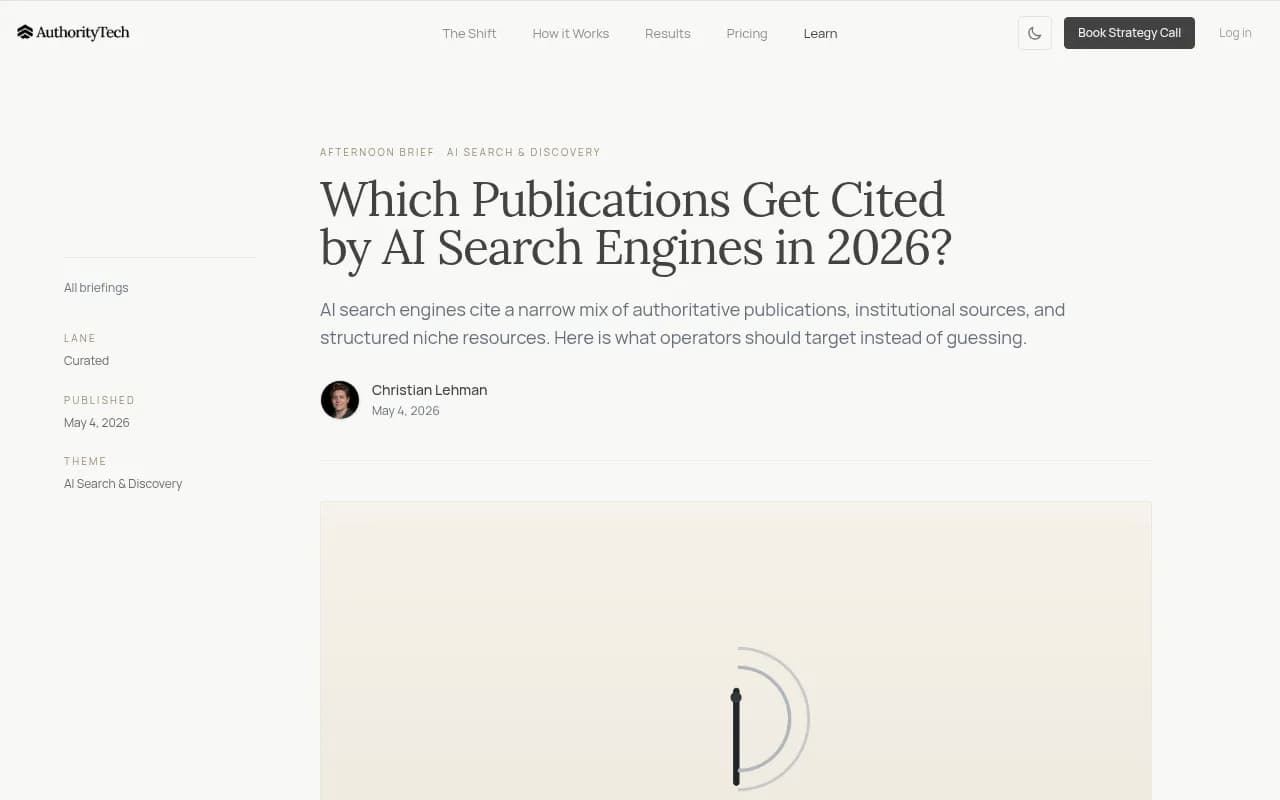
A July 2025 study analyzing 366,000+ citations found that only 9% referenced news sources, and those concentrated among a small number of outlets. Wikipedia alone accounts for roughly 17% of all AI citations. The implication: AI engines prefer sources that are easy to trust, easy to parse, and easy to corroborate.
That means a content engineering platform needs to do more than write articles. It needs to know which prompts are worth targeting, what content gaps exist, how to structure content for extraction, and then actually confirm that the content got cited. Most tools handle one or two of these. Few handle all four.
The four platforms, honestly assessed
AirOps
AirOps started as an AI workflow builder and has evolved into what it calls a "content engineering" platform. The pitch is that you can build automated pipelines that research, draft, optimize, and publish content at scale -- all connected to your CMS and data sources.
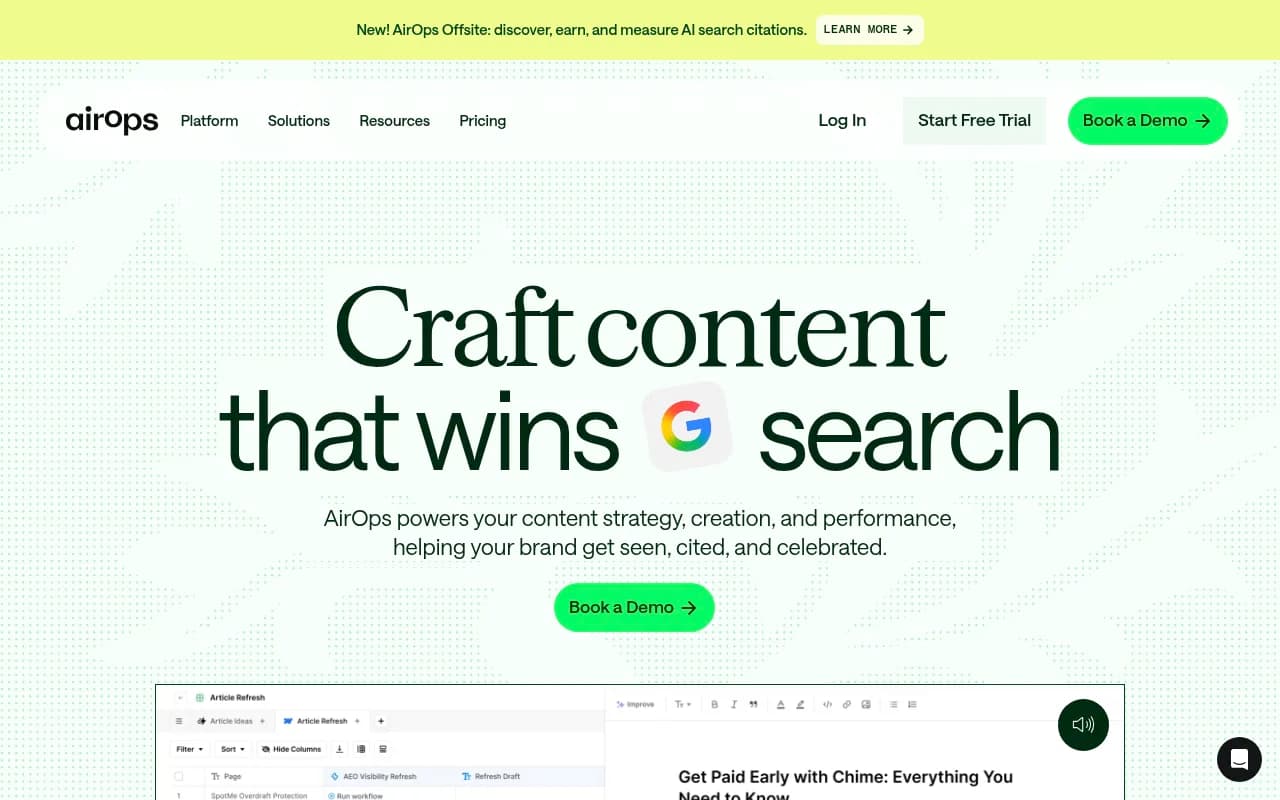
The strengths are real. AirOps has solid workflow flexibility, good integrations, and a genuine focus on AI search metrics. Their own research (the 2026 State of AI Search report) found that only 30% of brands stay visible from one AI answer to the next -- which is a useful data point and shows they're thinking seriously about the problem.
Where AirOps gets complicated is attribution. The platform helps you create content optimized for AI search, but proving that a specific article is now being cited by ChatGPT or Perplexity requires piecing together data from multiple places. There's no native citation tracking that closes the loop from "we published this" to "this is being cited." You're largely inferring impact from traffic changes and visibility score shifts.
AirOps is best for teams that already have a content operation and want to add AI-search optimization as a layer. It's less suited for teams that need to start from scratch on understanding where their gaps are.
Atomic AGI
Atomic AGI (atomicagi.com) positions itself as an AI-native SEO platform combining multi-engine tracking with workflow automation. It tracks traffic and performance coming from LLM search engines including ChatGPT, Perplexity, and Gemini -- which is genuinely useful and not something every tool does well.
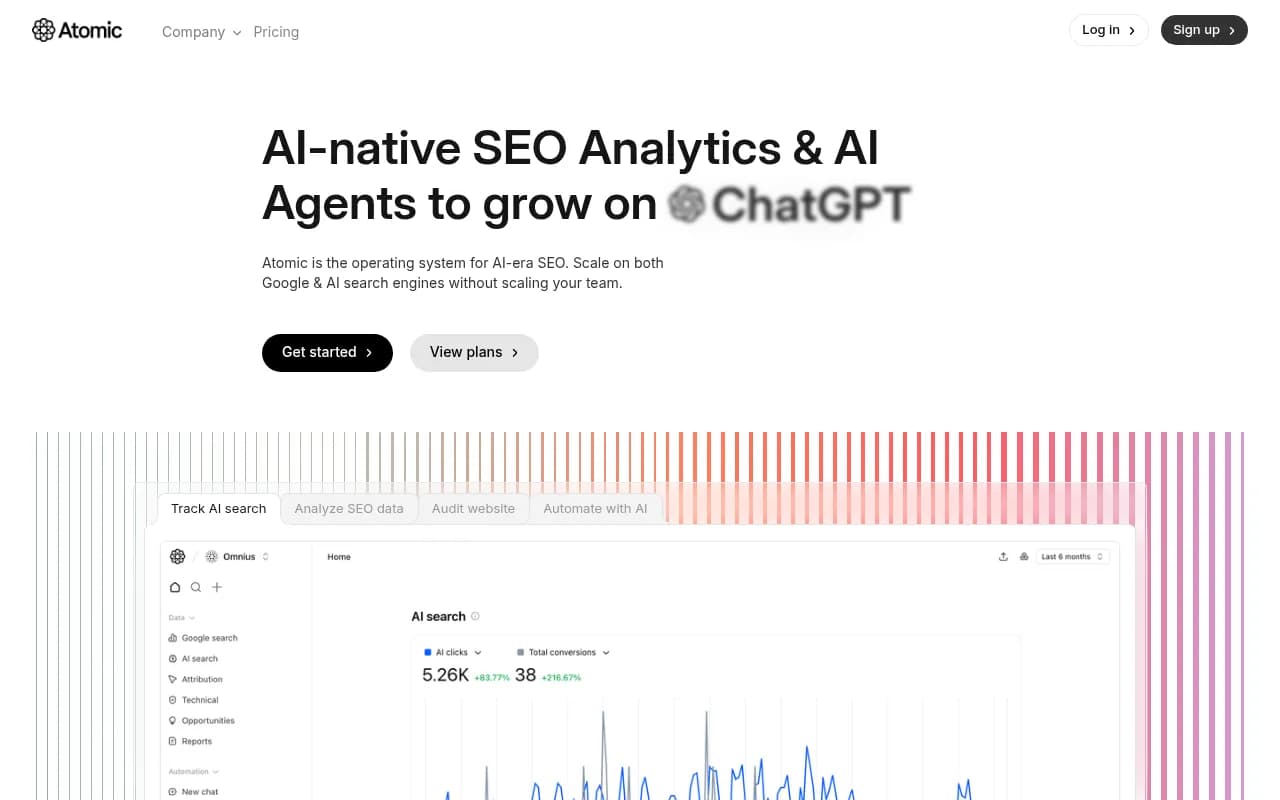
The traffic attribution angle is Atomic's clearest differentiator. If you want to know how much of your organic traffic is coming from AI search engines specifically, Atomic gives you that visibility. That's a real capability gap in traditional analytics tools.
The gap is on the content creation side. Atomic doesn't have a built-in AI writing agent that generates content grounded in citation data. You can track what's working, but you're on your own to figure out what to write next and how to write it. For teams that already have strong content production capacity, that's fine. For teams that need the full loop, it's a missing piece.
There's also limited depth on prompt intelligence -- volume estimates, difficulty scores, query fan-outs -- which makes it harder to prioritize which content gaps to close first.
Searchable
Searchable sits in an interesting middle position: it combines AI search visibility monitoring with content generation capabilities, which puts it closer to a full-loop platform than pure monitoring tools.
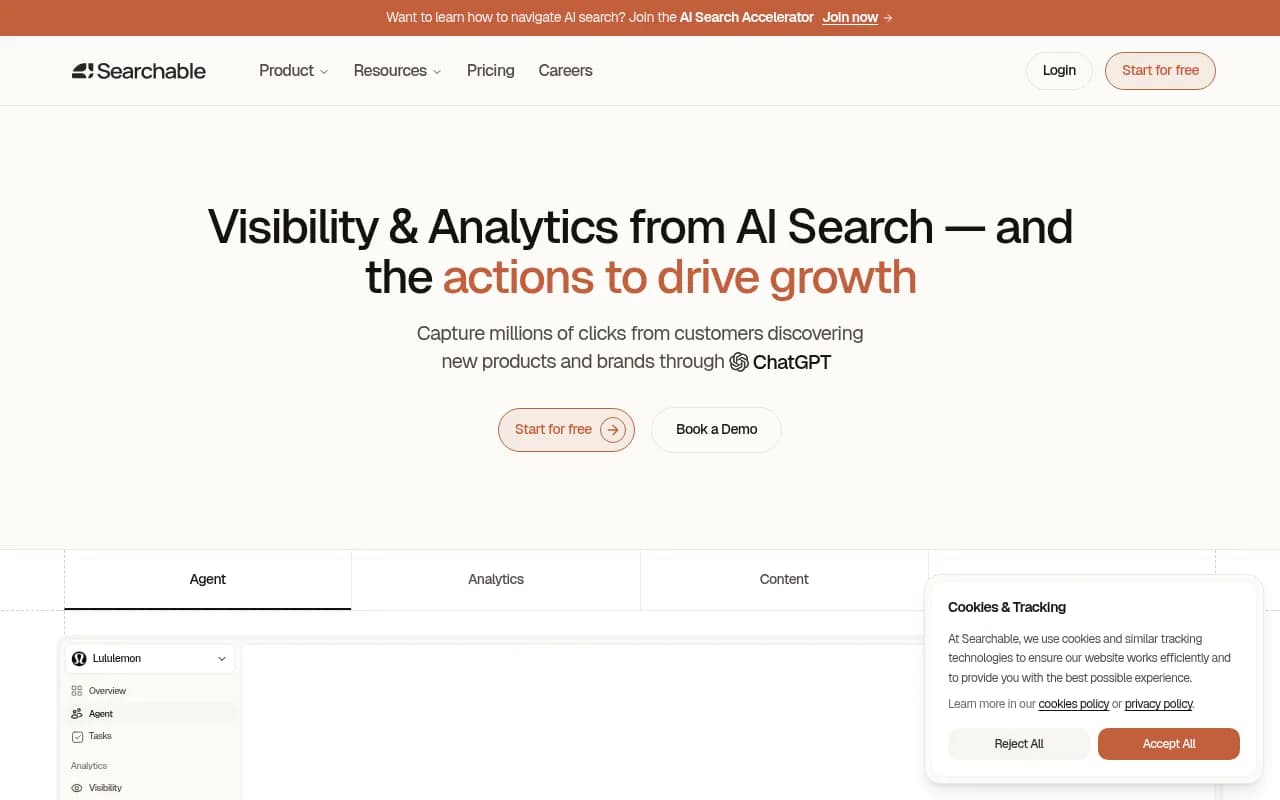
The content generation piece is meaningful. Searchable doesn't just show you where you're invisible -- it helps you create content to address those gaps. That's the right instinct, and it separates Searchable from monitoring-only tools like Otterly.AI or Peec.ai.
The limitations show up in depth. Prompt intelligence (volume estimates, difficulty scoring, query fan-outs) is thinner than you'd want for serious prioritization. Competitor analysis -- specifically, seeing which prompts competitors are visible for that you're not -- is less granular. And citation-level proof that specific articles are being cited by specific AI models is harder to surface. You get visibility scores, but the page-level attribution that would let you say "this article is being cited by Claude 3.5 in responses to this prompt" isn't fully there.
Searchable is a reasonable choice for teams that want monitoring plus basic content support without a large budget. It's not the right tool if you need to prove ROI at the article level.
Promptwatch
Promptwatch is the platform that most directly addresses the "prove it" problem. The architecture is built around a loop: find gaps, create content, track results.

The Answer Gap Analysis shows exactly which prompts competitors are visible for that you're not -- not as a vague category, but as specific questions your content doesn't answer. That's the starting point for content decisions that aren't just guesswork.
The built-in AI writing agent generates content grounded in actual citation data (880M+ citations analyzed), prompt volumes, and competitor visibility. This isn't generic SEO content -- it's structured around what AI models actually cite and why. The difference matters: an article written to rank in Google and an article written to get cited by Perplexity are not the same document.
Then the tracking closes the loop. Page-level citation tracking shows which specific pages are being cited, how often, and by which AI models. AI Crawler Logs show when ChatGPT, Claude, and Perplexity are actually crawling your pages -- which pages they read, errors they encounter, how often they return. Traffic attribution (via code snippet, GSC integration, or server log analysis) connects AI visibility to actual sessions and revenue.
That combination -- gap analysis, AI-native content generation, page-level citation tracking, crawler logs, and traffic attribution -- is what makes Promptwatch the only platform in this comparison that can actually answer "did this article get cited, and did it drive results?"
Feature comparison
| Capability | AirOps | Atomic AGI | Searchable | Promptwatch |
|---|---|---|---|---|
| AI visibility monitoring | Yes | Yes | Yes | Yes (10 models) |
| Prompt volume & difficulty scoring | Partial | Partial | Limited | Yes |
| Answer gap analysis (vs competitors) | Limited | No | Partial | Yes |
| Built-in AI content generation | Yes (workflow) | No | Yes (basic) | Yes (citation-grounded) |
| Page-level citation tracking | No | Partial | No | Yes |
| AI crawler logs | No | No | No | Yes |
| Traffic attribution to AI search | No | Yes | No | Yes |
| Reddit & YouTube citation insights | No | No | No | Yes |
| ChatGPT Shopping tracking | No | No | No | Yes |
| Multi-model coverage | Partial | Yes | Partial | Yes (10 models) |
| Competitor heatmaps | No | No | No | Yes |
| Closes the full content loop | No | No | No | Yes |
The attribution problem nobody wants to talk about
Here's the uncomfortable truth about most AI visibility tools: they show you a visibility score going up, and you're supposed to trust that the content you published caused it. That's not proof. That's correlation at best.
The only way to actually prove that an article is getting cited is to track citations at the page level -- to see which URL is appearing in which AI model's response to which prompt, and how that changes over time after you publish new content.
AirOps research found that only 20% of brands remain visible across five consecutive runs of the same prompt. That level of volatility means a visibility score that goes from 34% to 41% could be noise. Without page-level citation data, you can't tell.
This is where the gap between monitoring platforms and optimization platforms becomes most visible. Monitoring tells you your score. Optimization tells you which article moved the needle and why.
Who should use which platform
The right choice depends on what your team actually needs right now.
If you have a mature content operation and need workflow automation to scale AI-optimized content production, AirOps is worth evaluating. It's flexible, integrates well, and the team clearly understands AI search. Just know you'll need to build your own attribution story.
If your primary need is understanding how much traffic is coming from AI search engines specifically, Atomic AGI's traffic attribution is genuinely strong. It's a good fit for analytics-heavy teams that already know what content to create.
If you want a single tool that covers monitoring and basic content generation at a lower price point, Searchable is a reasonable starting point. It won't give you deep attribution, but it's better than pure monitoring tools.
If you need to close the full loop -- find gaps, generate content that's actually engineered to get cited, track which articles are being cited by which models, and connect that to revenue -- Promptwatch is the only platform in this comparison that does all of it. The crawler logs alone are something most competitors don't offer at all. The page-level citation tracking is what turns "our visibility score improved" into "this specific article is now being cited by Perplexity in responses to this prompt."
For marketing teams that need to justify the investment in AI search optimization, that difference is the whole game.
Pricing context
| Platform | Entry price | What you get |
|---|---|---|
| AirOps | Custom / contact sales | Workflow builder, content pipelines, AI search optimization |
| Atomic AGI | Varies (contact for pricing) | LLM traffic tracking, multi-engine monitoring |
| Searchable | Varies | Monitoring + basic content generation |
| Promptwatch | $99/mo (Essential) | 1 site, 50 prompts, 5 articles; $249/mo (Professional) adds crawler logs, 150 prompts, 15 articles |
Promptwatch's pricing is transparent and tiered -- $99/mo for Essential, $249/mo for Professional (which adds crawler logs and city/state tracking), $579/mo for Business (5 sites, 350 prompts, 30 articles). A free trial is available. AirOps and Atomic AGI require contacting sales for pricing, which makes direct comparison harder.
The bottom line
The content engineering category is real, but most tools in it are still solving half the problem. They either help you create content or help you track visibility -- rarely both, and almost never with the attribution depth to prove causation.
If the question is "which platform can actually prove that the articles it helps you create are getting cited by AI models," the honest answer in 2026 is Promptwatch. The combination of Answer Gap Analysis, citation-grounded content generation, page-level tracking, AI crawler logs, and traffic attribution is a complete system. The others have meaningful strengths in specific areas, but none of them close the loop the same way.
That said, the right tool is the one your team will actually use. If AirOps fits your existing workflow better, the workflow automation is genuinely good. If Atomic AGI's traffic attribution answers the specific question your leadership is asking, that's a real value. But if you're building a case for AI search investment and need to show results, you need a platform that can connect the content you publish to the citations you earn.