Key takeaways
- Most AI writing tools under $300/month are good at generating content but have no way to measure whether that content actually performs in search.
- A handful of tools — particularly those combining SEO optimization with AI writing — can at least tell you if your content is ranking in traditional search.
- For AI search visibility specifically (ChatGPT, Perplexity, Google AI Overviews), almost no writing tool tracks this natively. You need a separate platform for that.
- The best budget setups in 2026 pair an AI writing tool with a visibility layer — either an SEO optimizer or an AI search tracker.
- Price alone is a poor guide. A $49/month tool that helps you rank beats a $9/month tool that generates content nobody ever finds.
There's a question nobody asks when they sign up for an AI writing tool: "How will I know if this content is working?"
You get the output. You publish it. And then... you wait. Maybe you check Google Search Console a few weeks later. Maybe you don't. The writing tool itself has no idea whether its output ever got read, ranked, or cited anywhere.
That's fine for some use cases. If you're writing internal docs, email drafts, or social captions, you don't need a feedback loop. But if you're producing content to drive traffic — blog posts, landing pages, comparison articles, product descriptions — then publishing into a void is a real problem.
This guide covers the best AI writing tools under $300/month in 2026, with honest notes on which ones actually help you verify results and which ones just hand you a document and wish you luck.
What "verifying results" actually means
Before getting into tools, it's worth being specific about what verification looks like.
There are three levels:
-
Content quality signals: Does the tool tell you whether the content is readable, original, or optimized? Things like readability scores, plagiarism checks, SEO scoring. Most tools do at least some of this.
-
Traditional search performance: Does the content rank on Google? This requires rank tracking — either built into the tool or via an integration. A smaller number of tools offer this.
-
AI search visibility: Is the content being cited by ChatGPT, Perplexity, Claude, or Google AI Overviews? Almost no AI writing tool tracks this natively. It's a separate problem that requires a separate tool.
Most of what you'll find under $300/month covers level one reasonably well. Level two is hit or miss. Level three is essentially absent from writing tools — it's handled by dedicated AI visibility platforms.
Keep that in mind as we go through the options.
The tools: what they do and what they don't
Claude — best for quality writing, zero built-in tracking
Claude produces the most natural-sounding AI writing available right now. The 200,000-token context window means you can feed it an entire research brief and get a coherent long-form article back. It handles nuance well and rarely produces the kind of stiff, listicle-brained output that makes AI content obvious.
What it doesn't do: anything related to SEO, ranking, or performance. There are no templates, no keyword tools, no rank tracking. Claude is a writing engine. What you do with the output is entirely up to you.
At $20/month for the Pro plan, it's one of the cheapest options here — and genuinely one of the best for raw writing quality.

Jasper — best all-in-one platform for teams
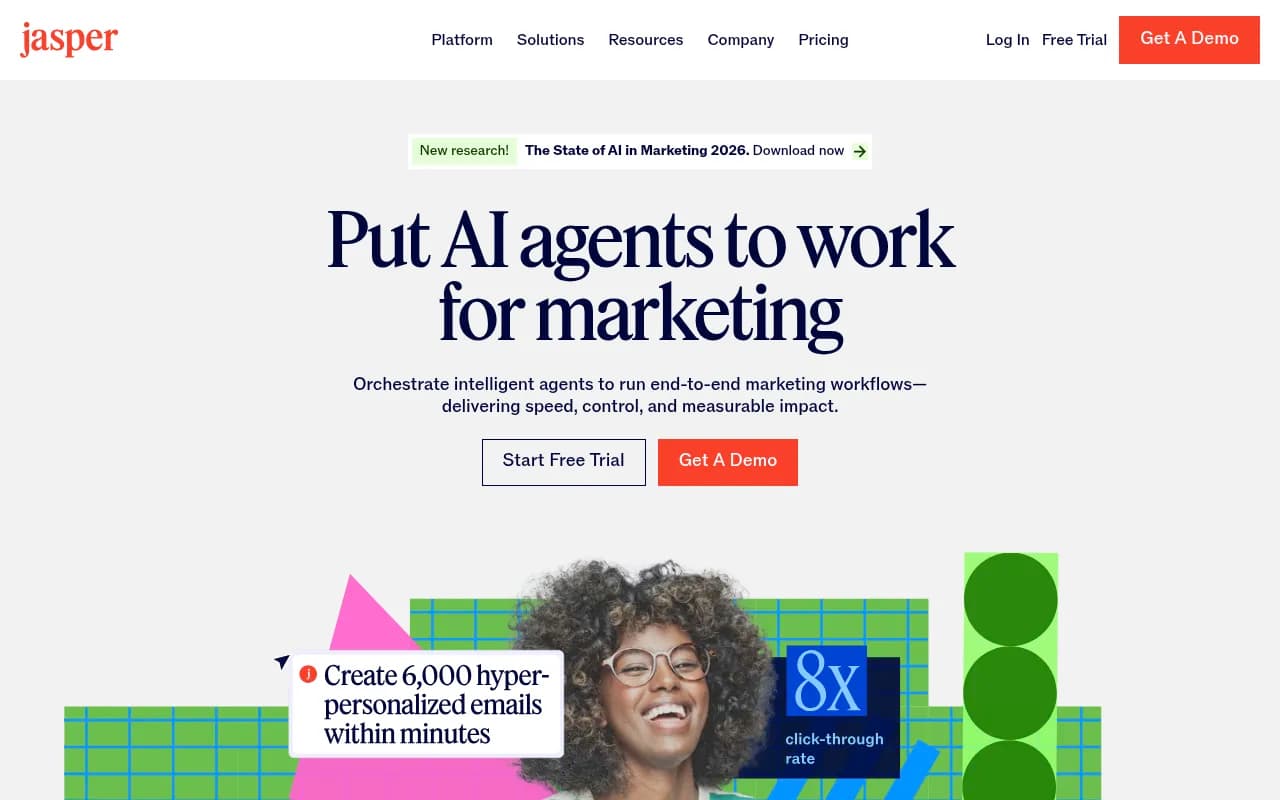
Jasper is the most feature-complete AI writing platform in this price range. It has 50+ templates, brand voice training, team collaboration, approval workflows, and a Chrome extension. For a marketing team producing high volumes of content across multiple formats, it's hard to beat.
The built-in plagiarism checker is useful. The SEO mode (which integrates with Surfer SEO) gives you some signal on whether content is optimized. But Jasper itself doesn't track rankings or tell you whether your published content is performing.
Pricing starts at $49/month for the Creator plan. Business plans run higher, but you can stay under $300/month for most team configurations.
Writesonic — solid mid-range option with some SEO features
Writesonic sits in a useful middle ground: it's cheaper than Jasper, more feature-rich than a bare API wrapper, and has enough SEO-oriented features to be useful for content marketers. The AI article writer can generate reasonably well-structured blog posts, and there's basic keyword optimization built in.
It won't tell you how your content ranks after publishing, but it at least helps you optimize before you hit publish.

Copy.ai — fast and good for marketing copy
Copy.ai is built for marketing copy: ads, emails, product descriptions, landing page sections. It's fast, the output quality is decent, and the workflow tools make it easy to run content operations at scale.
It's not really a long-form content tool, and there's no performance tracking. But for teams that need high-volume short-form copy, it's one of the better options under $300/month.

Rytr — cheapest option that's actually usable
At $9/month for unlimited writing, Rytr is genuinely hard to dismiss. It handles blog posts, social media copy, email drafts, and product descriptions. The output isn't as polished as Claude or Jasper, but for high-volume, lower-stakes content, it gets the job done.
No SEO features, no tracking, no performance data. But at $9/month, you're not paying for any of that.
Surfer SEO — the closest thing to a writing tool that verifies results
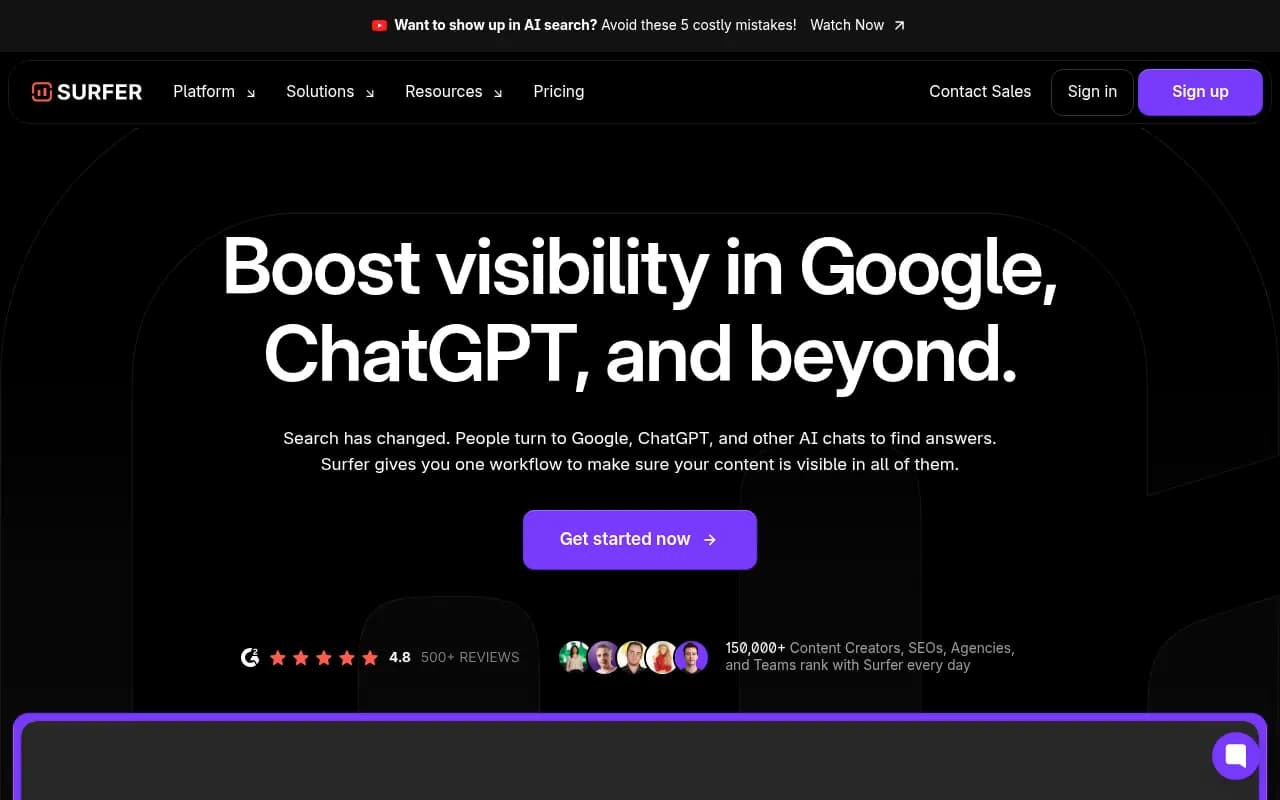
Surfer isn't primarily a writing tool — it's an SEO content optimizer — but it has AI writing built in, and it's the strongest option in this list for actually connecting content to search performance.
The Content Editor scores your article against top-ranking pages in real time. The SERP Analyzer shows you what's ranking and why. And if you use Surfer's rank tracking, you can see whether the content you optimized actually moved up in Google.
That's a real feedback loop, even if it's limited to traditional search. It won't tell you if ChatGPT is citing your article, but it will tell you if Google is ranking it.
Plans start around $89/month and go up from there, but you can get meaningful functionality well under $300/month.
Frase — good for research-driven content
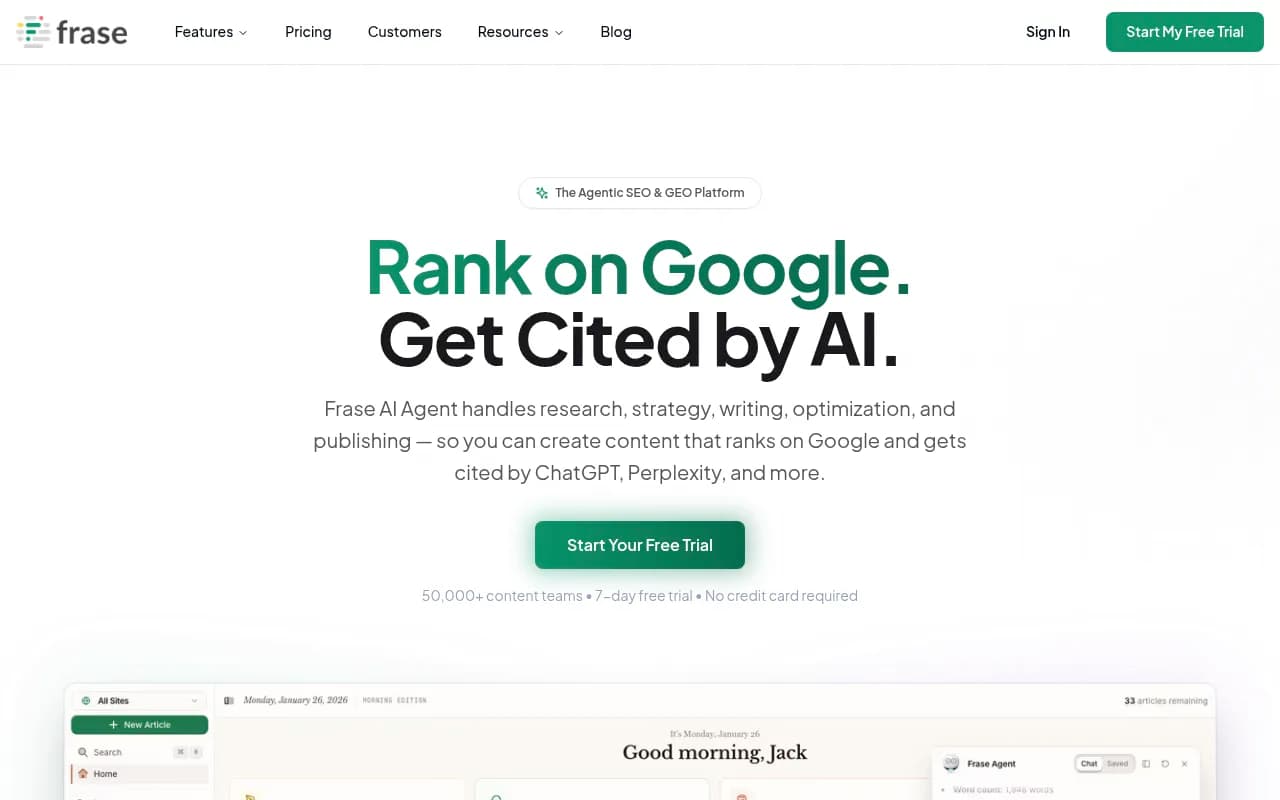
Frase combines AI writing with content research and SEO optimization. The research workflow is genuinely useful: it pulls in top-ranking pages, extracts key topics, and helps you build a brief before you write. The AI writer then generates content based on that research.
Like Surfer, it gives you optimization signals before publishing. Unlike Surfer, the rank tracking is less developed.
Grammarly — best for editing and polish
Grammarly isn't a content generator, but it belongs in this list because it's the best tool for making AI-generated content actually readable. The AI suggestions go beyond grammar — they catch tone issues, clarity problems, and sentences that technically parse but don't quite land.
The Business plan ($15/member/month) includes team features and a style guide. For teams editing AI output at scale, it's worth the cost.

Koala AI — WordPress-native content generation
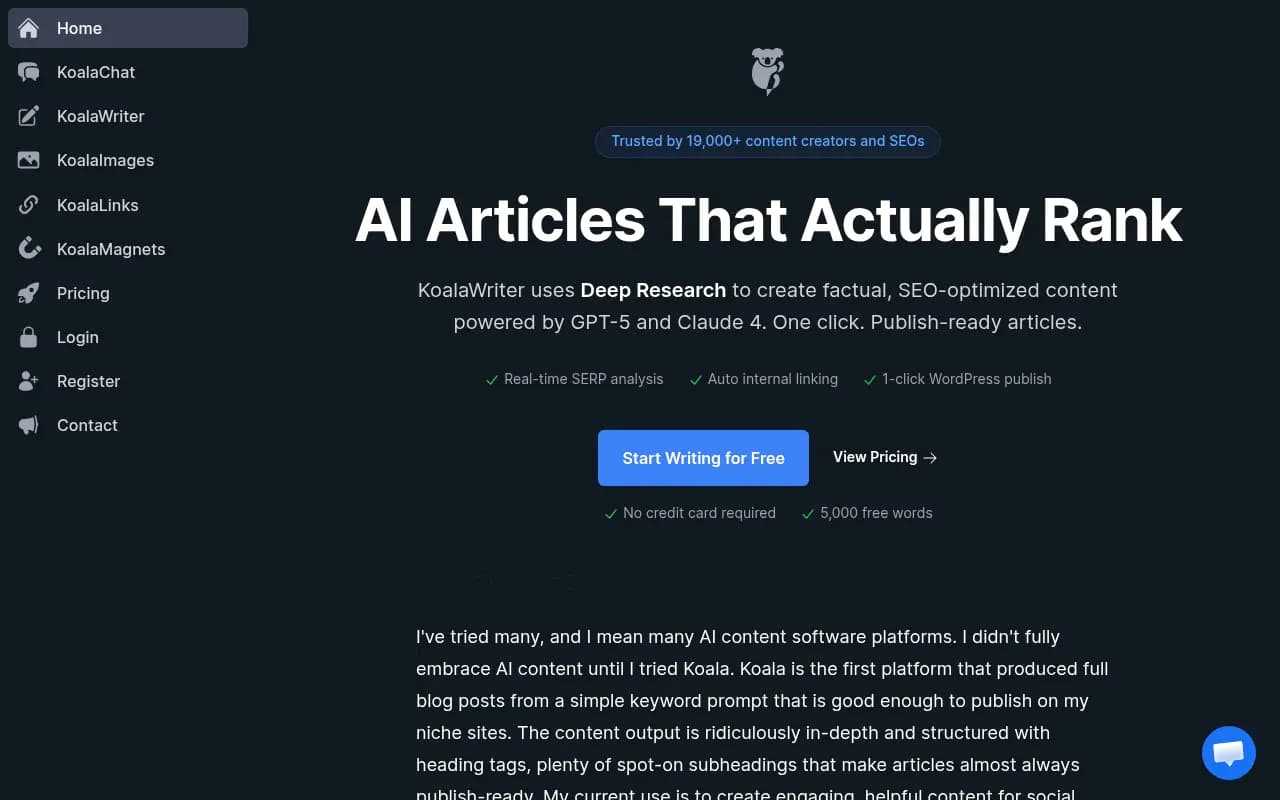
Koala AI is worth mentioning for WordPress publishers specifically. It integrates directly with WordPress, generates SEO-optimized articles, and handles internal linking reasonably well. The $49/month plan covers most small-to-medium publishing operations.
The main limitation: no real performance tracking. You'll know the content is published, but not whether it's ranking.
Anyword — the one that actually predicts performance
Anyword is the most interesting tool in this list from a "verifying results" perspective. It uses predictive performance scoring to estimate how well copy will perform before you publish. The scores are based on training data from real campaigns, so they're not just readability metrics — they're attempting to predict actual engagement.
This isn't the same as rank tracking, but it's a genuine attempt to close the feedback loop at the content level. For ad copy and landing pages especially, it's more useful than most alternatives.
Comparison table
| Tool | Price/month | Best for | SEO optimization | Performance tracking | AI search visibility |
|---|---|---|---|---|---|
| Claude | $20 | Long-form quality writing | None | None | None |
| Jasper | From $49 | Marketing teams, multi-format | Basic (via Surfer integration) | None | None |
| Writesonic | From $16 | Blog content, mid-range teams | Basic built-in | None | None |
| Copy.ai | From $36 | Marketing copy, short-form | None | None | None |
| Rytr | $9 | Budget freelancers, high volume | None | None | None |
| Surfer SEO | From $89 | SEO-optimized long-form | Strong | Rank tracking (Google) | None |
| Frase | From $45 | Research-driven content | Moderate | Limited | None |
| Grammarly | From $12 | Editing AI-generated content | None | None | None |
| Koala AI | From $49 | WordPress publishers | Basic | None | None |
| Anyword | From $49 | Ad copy with performance prediction | None | Predictive scoring | None |
The gap nobody talks about: AI search visibility
Here's what the table above makes obvious: none of these tools track whether your content is being cited in AI search engines.
This matters more than it used to. A growing share of search queries now get answered directly by ChatGPT, Perplexity, Claude, or Google AI Overviews — without the user ever clicking through to your site. If your content isn't being cited in those responses, you're invisible to a significant portion of your potential audience.
Traditional rank tracking (Google positions) doesn't capture this. An article can rank #3 on Google and never appear in a single AI-generated response. The reverse is also true: AI models sometimes cite pages that don't rank particularly well in traditional search.
To track this, you need a dedicated AI visibility platform. Promptwatch is the most complete option — it monitors 10 AI models, shows you which prompts your competitors are visible for but you're not, and has an AI writing agent that generates content specifically engineered to get cited. It's the only platform that connects the content creation step to the AI visibility tracking step in a single workflow.

For teams running AI writing tools under $300/month, the practical setup is: use one of the writing tools above to generate content, then use an AI visibility tracker to see whether that content is actually showing up in AI responses. The writing tool handles production; the visibility platform handles verification.
How to pick the right tool for your situation
The right choice depends on what you're actually trying to accomplish.
If you're a solo writer or freelancer who needs quality output fast, Claude at $20/month is hard to beat. The writing is good enough that you spend less time editing, which matters when time is your constraint.
If you're running a content marketing operation for a brand and SEO performance is the primary goal, Surfer SEO is the most defensible choice. The optimization features are genuinely useful, and the rank tracking gives you something concrete to report on.
If you're a marketing team producing high volumes of copy across multiple formats — ads, emails, blog posts, social — Jasper's template library and collaboration features justify the higher price.
If budget is the primary constraint and you just need to produce content, Rytr at $9/month works. The output quality is lower, but it's functional.
And if you're serious about AI search visibility — not just traditional SEO — you need to add a tracking layer on top of whatever writing tool you choose. The writing tools in this list don't solve that problem.
A note on the "cheapest" trap
One thing worth saying directly: the cheapest AI writing tool is rarely the best value.
A $9/month tool that generates content nobody reads is more expensive than a $89/month tool that helps you rank. The cost that matters is cost per result — per ranking page, per cited article, per lead generated.
The tools that come closest to justifying their cost are the ones that either optimize content before publishing (Surfer, Frase, Anyword) or help you understand what's working after publishing (rank tracking, AI visibility monitoring). Pure generation tools — tools that just produce text and hand it back to you — are the hardest to justify at any price, because you have no way to know if the investment is paying off.
That's the real question to ask when evaluating any AI writing tool: not "how much does it cost?" but "how will I know if it's working?"
Most tools under $300/month don't have a great answer to that. The ones that do are worth paying more for.