Key takeaways
- Most AI search visibility tools are monitoring dashboards — they show you where you're invisible but don't help you fix it.
- Solo marketers need platforms that close the loop: find gaps, generate content, and track what changes.
- The best tools for action-oriented solo marketers combine prompt tracking, content generation, and citation analytics in one workflow.
- Pricing matters more when you're a team of one — several strong options exist under $250/month.
- AI-referred traffic converts at roughly 14.2% compared to 2.8% for traditional search, according to RankScience — which means even a small improvement in AI visibility can have a disproportionate revenue impact.
If you're a solo marketer in 2026, you've probably noticed something frustrating: the tools that track your AI search visibility are great at telling you what's wrong and terrible at helping you fix it. You get a dashboard full of charts showing your brand isn't appearing in ChatGPT or Perplexity for the prompts that matter, and then... nothing. No next step. No content brief. No way to close the gap.
That's the core problem this guide addresses. Not "what are the best AI search platforms" in the abstract, but specifically: which ones are actually useful when you're working alone, don't have an agency budget, and need to move from insight to action without handing off to a team of writers and strategists?
The answer is a shorter list than you'd think.

Why most AI visibility tools fail solo marketers
The AI search monitoring space has exploded. There are now dozens of platforms that will track how often your brand appears in ChatGPT, Perplexity, Gemini, and Google AI Overviews. Some of them are genuinely good at that narrow task.
But tracking is not optimizing. And for a solo marketer, the distinction matters enormously.
When you're working alone, you don't have time to export a CSV of visibility gaps, hand it to a content strategist, wait for briefs, brief a writer, review drafts, and then wait six weeks to see if any of it moved the needle. You need a platform that compresses that cycle. Ideally one that shows you the gap, helps you create the content to fill it, and then tells you when AI models start citing that content.
Most platforms stop at step one. A few reach step two. Very few close the full loop.
The other issue is cost. Enterprise-grade platforms like Profound or Evertune are built for Fortune 500 marketing teams with dedicated GEO budgets. That's not you. You need something that's powerful enough to matter but priced for a single seat.
The platforms worth your time
Promptwatch — the full action loop in one place
Promptwatch is the most complete option for solo marketers who want to go beyond monitoring. It's used by 1,480+ brands and agencies, but its pricing structure (starting at $99/month) makes it accessible for individual practitioners too.
What makes it different from most tools is that it's built around a three-step cycle: find gaps, create content, track results. The Answer Gap Analysis shows you exactly which prompts your competitors are being cited for that you're not. That's not a vague "you're missing coverage in this topic cluster" — it's specific prompts, with visibility scores and competitor data attached.
From there, Content Agents generate articles, listicles, and briefs grounded in that prompt data. This isn't generic AI writing — it's content engineered around the specific questions AI models are already answering from competitor sources. Then page-level tracking shows you when your new content gets crawled, cited, and by which models.
For a solo marketer, the AI Crawler Logs feature is particularly valuable. It shows you in real time which pages AI crawlers are reading, which ones they're ignoring, and what errors they're hitting. Most competitors don't offer this at all.

Otterly.AI — solid monitoring, limited action
Otterly.AI is a clean, well-designed monitoring tool. It tracks your brand mentions across ChatGPT, Perplexity, and Google AI Overviews, and the interface is genuinely easy to use. For a solo marketer who just wants to know where they stand, it's a reasonable starting point.
The limitation is that it stops at monitoring. There's no content generation, no gap analysis tied to actionable briefs, and no crawler logs. You'll know you have a problem, but you'll need to solve it elsewhere.
Otterly.AI

AthenaHQ — strong tracking, weak on action
AthenaHQ has built a reputation for solid AI search tracking. The prompt coverage is good and the competitor comparison features are useful. But like Otterly.AI, it's primarily a monitoring platform. If you're a solo marketer who already has a content workflow and just needs better visibility data to feed into it, AthenaHQ works. If you need the platform to help you act on what it finds, you'll hit a wall.

Peec AI — lightweight and affordable
Peec AI is worth mentioning for marketers on tighter budgets. It tracks AI search visibility across the major models and gives you a reasonable view of where your brand stands. It's not going to generate content or walk you through fixing gaps, but it's cheaper than most alternatives and does the monitoring job competently.

Search Atlas — SEO + AI search in one workflow
Search Atlas takes a different approach: it combines traditional SEO tooling with AI search optimization. For a solo marketer who's still managing Google rankings alongside AI visibility, this kind of consolidation is genuinely useful. You're not maintaining two separate platforms and two separate workflows.
The AI search features aren't as deep as dedicated GEO platforms, but the integration with content creation and technical SEO makes it a strong all-rounder for someone managing everything alone.

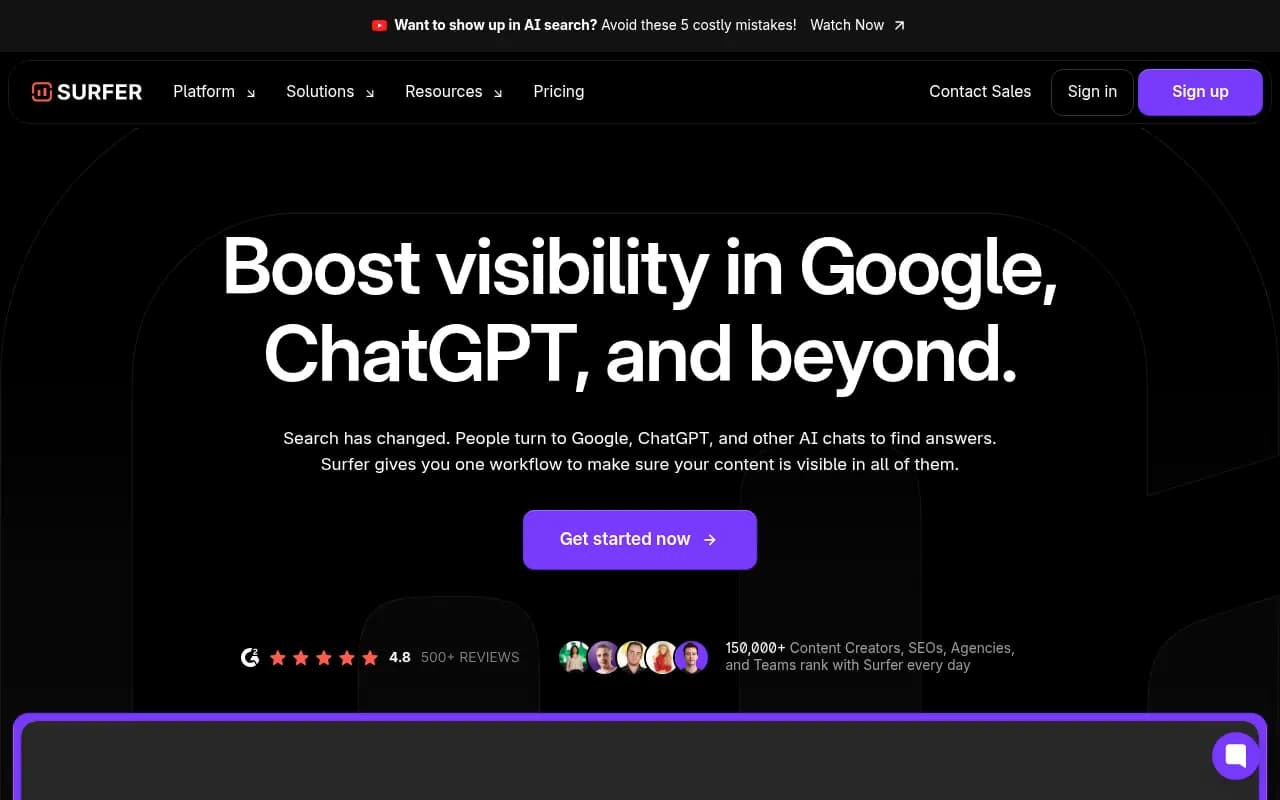
Surfer SEO — content optimization that feeds AI visibility
Surfer SEO isn't an AI search monitoring tool, but it belongs in this list because of what it does for content quality. AI models cite well-structured, comprehensive content. Surfer's content editor helps you write that kind of content by analyzing what's already ranking and what topics are missing from your drafts.
For a solo marketer, Surfer works well as the content optimization layer in a stack that includes a dedicated AI visibility tracker.
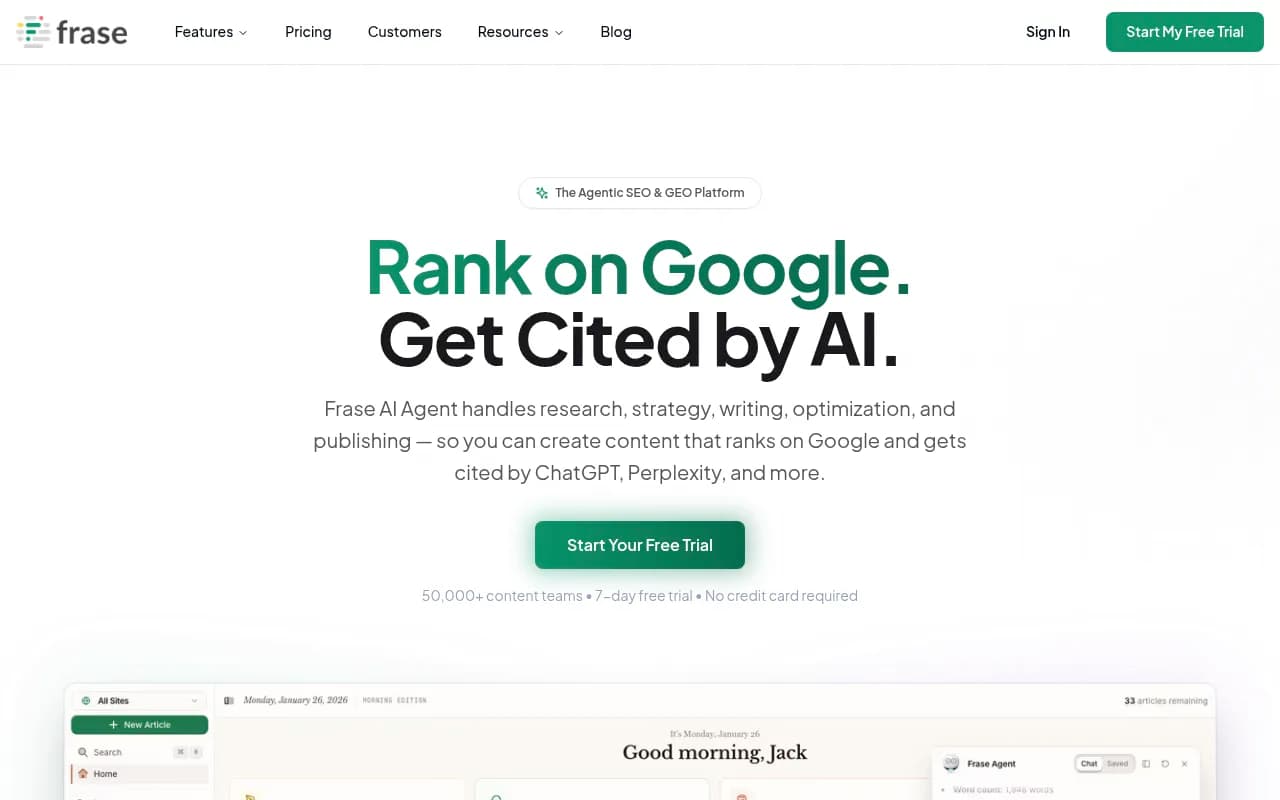
Frase — research-to-draft for AI-friendly content
Frase is similar to Surfer in that it's a content tool rather than a visibility tracker. Where it shines is in the research phase: it pulls together what's being said about a topic across the web and helps you structure a response that's more complete than what's currently out there. That comprehensiveness is exactly what AI models reward when deciding what to cite.
Comparison table
| Platform | AI visibility tracking | Content generation | Crawler logs | Prompt gap analysis | Starting price |
|---|---|---|---|---|---|
| Promptwatch | Yes (10 models) | Yes (Content Agents) | Yes | Yes | $99/mo |
| Otterly.AI | Yes | No | No | No | ~$49/mo |
| AthenaHQ | Yes | No | No | Limited | Custom |
| Peec AI | Yes | No | No | No | ~$49/mo |
| Search Atlas | Yes (limited) | Yes | No | Limited | ~$99/mo |
| Surfer SEO | No | Content optimization | No | No | ~$89/mo |
| Frase | No | Yes (research-based) | No | No | ~$45/mo |
What a practical solo marketer workflow actually looks like
Here's the honest version of how to use these tools without burning your entire week on AI visibility work.
Step 1: Pick one tracking platform and commit to it. The temptation is to trial five tools simultaneously. Don't. Pick one that covers monitoring and ideally some form of gap analysis. Promptwatch covers both, which is why it's the practical default for someone who wants to minimize tool sprawl.
Step 2: Run a gap analysis monthly, not weekly. AI model citations don't shift overnight. A monthly review of which prompts you're missing is enough to build a content priority list without creating busywork.
Step 3: Use content tools to fill the gaps you find. Whether that's Promptwatch's Content Agents, Frase for research-heavy pieces, or Surfer for optimization, the key is connecting what you find in your gap analysis directly to what you write next. Don't let the gap analysis become a document that sits in a folder.
Step 4: Track which new pages get cited. This is where most solo marketers give up too early. It takes time for AI models to crawl and start citing new content. Crawler logs (available in Promptwatch's Professional plan) show you when that's happening so you know whether to wait or iterate.
Step 5: Double down on what's working. When a page starts getting cited consistently, look at what made it work. Was it the format? The depth? The specific questions it answered? Then replicate that pattern.
The "Answer Economy" context you need
Yotpo's VP of Growth Marketing published research this year showing that AI-referred traffic converts at approximately 14.2% compared to 2.8% for traditional search. That number should reframe how you think about AI visibility investment.
You don't need to dominate AI search across every topic to see a meaningful revenue impact. A handful of high-intent prompts where your brand gets cited consistently can outperform a much larger traditional SEO effort. For a solo marketer, that's actually good news: you don't need to scale content production to enterprise levels. You need to be precise about which prompts matter and strategic about filling those specific gaps.
This is also why the monitoring-only tools are a trap for solo marketers. If you're spending time tracking visibility without a clear path to improving it, you're generating anxiety, not results.
Tools to avoid (or use with clear expectations)
A few tools in this space are worth naming specifically because they're popular but mismatched for solo marketers who want to act:
Profound is a strong enterprise platform, but it's priced and designed for larger teams. The feature depth is real, but so is the cost and the learning curve.
Evertune is explicitly positioned at Fortune 500 brands. If that's not you, it's not the right fit.
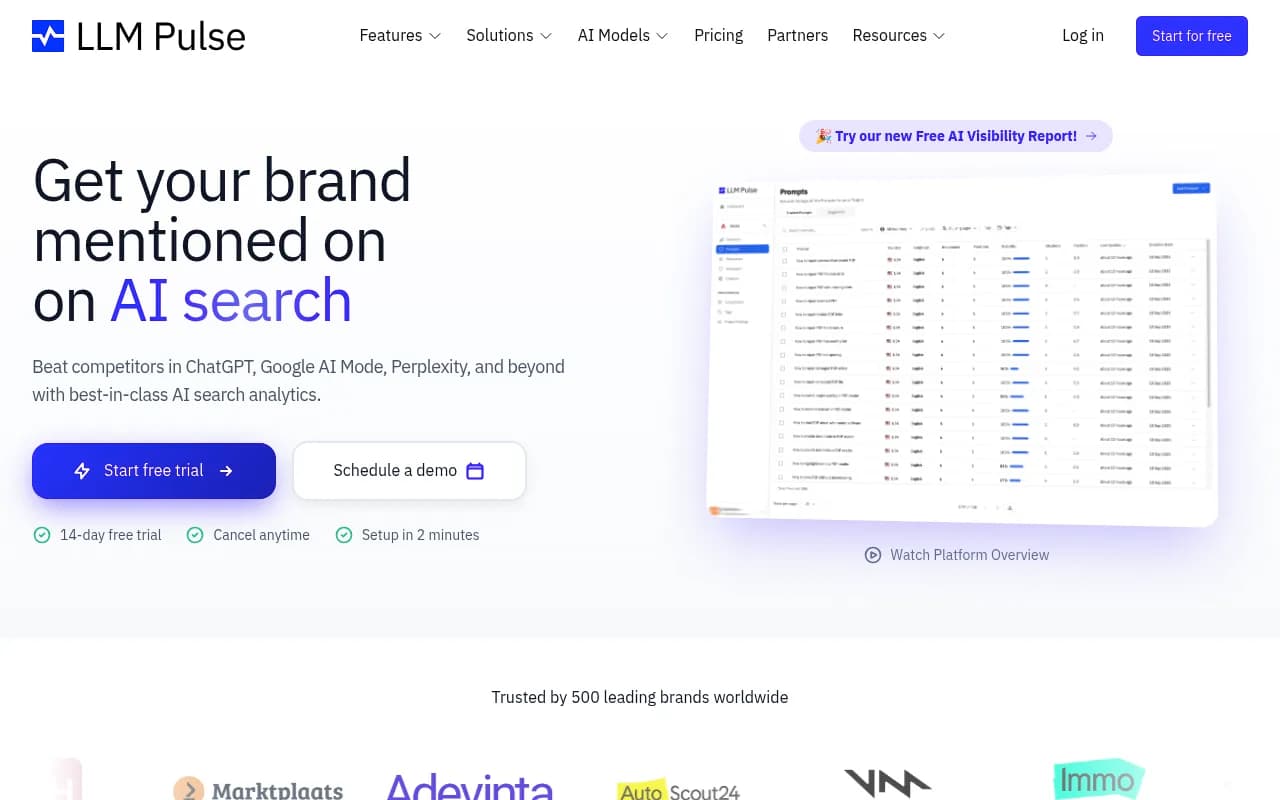
Basic monitoring tools like Promptmonitor, LLM Pulse, or TrackMyBusiness are fine for getting a quick read on where you stand, but they're not going to move the needle on their own. Use them as a starting point, not a destination.
Profound

The stack I'd actually recommend for a solo marketer
If I were setting up a lean AI search visibility stack from scratch in 2026, it would look like this:
- Promptwatch for the full loop: gap analysis, content generation, crawler monitoring, and citation tracking. At $99/month for the Essential plan or $249/month for Professional (which adds crawler logs and more prompts), it's the most efficient single tool for someone who needs to both understand and act.
- Surfer SEO or Frase as a content quality layer if you're writing a lot of content and want more granular optimization guidance than Promptwatch's Content Agents provide.
- Google Search Console for free, to cross-reference traditional search performance alongside AI visibility trends.
That's it. Three tools, two of which you might already have. The goal isn't to build a comprehensive analytics stack — it's to have a clear line from "I don't appear for this prompt" to "I published content that addresses it" to "AI models are now citing me for it."
One thing most guides won't tell you
The biggest mistake solo marketers make with AI search visibility isn't picking the wrong tool. It's treating AI visibility as a separate workstream from their existing content strategy.
The prompts AI models answer are the same questions your customers are asking. The content that gets cited is the content that most directly and comprehensively answers those questions. If you're already creating good content, you're probably closer to AI visibility than you think — you just need to know which specific gaps to fill and how to structure content so AI models can parse and cite it.
The platforms in this guide are most valuable when they're accelerating a content strategy you already have, not replacing the need to think carefully about what your audience actually needs to know.
Start there, then let the tools tell you where to go next.