Key takeaways
- AirOps is primarily a content execution and workflow automation platform — not a dedicated AI visibility tracker
- If your priority is monitoring how your brand appears in ChatGPT, Perplexity, and Google AI Overviews, you need a purpose-built GEO tool
- The best alternatives split into two camps: monitoring-first tools (great for tracking, limited for acting) and full-cycle platforms that find gaps, generate content, and track results
- Promptwatch is the only platform in this comparison rated as a "Leader" across all GEO categories, covering monitoring, content generation, crawler logs, and traffic attribution
- Your choice should depend on whether you need to see your AI visibility problem or actually fix it
AirOps has built a real following among content teams that want to automate writing workflows and ship content at scale. It's genuinely useful for that. But if you've landed here, you're probably asking a different question: "Which tool will actually help me show up in ChatGPT, Perplexity, and Google AI Overviews?"
That's a fair question, because AirOps isn't really a GEO (Generative Engine Optimization) platform. It's a content engineering tool that has added AI search features. The distinction matters when you're trying to close specific visibility gaps against competitors who are already getting cited by AI models.
This guide covers the best alternatives depending on what you actually need — whether that's pure monitoring, content optimization, or a full-cycle platform that takes you from gap analysis to published content to tracked results.
What AirOps actually does (and where it falls short)
AirOps is an end-to-end content engineering platform. It connects to your CMS, pulls in SEO data, and lets teams build automated workflows for content creation, optimization, and publishing. The platform has invested in AI search visibility features, but its core strength is workflow automation and content execution at scale.
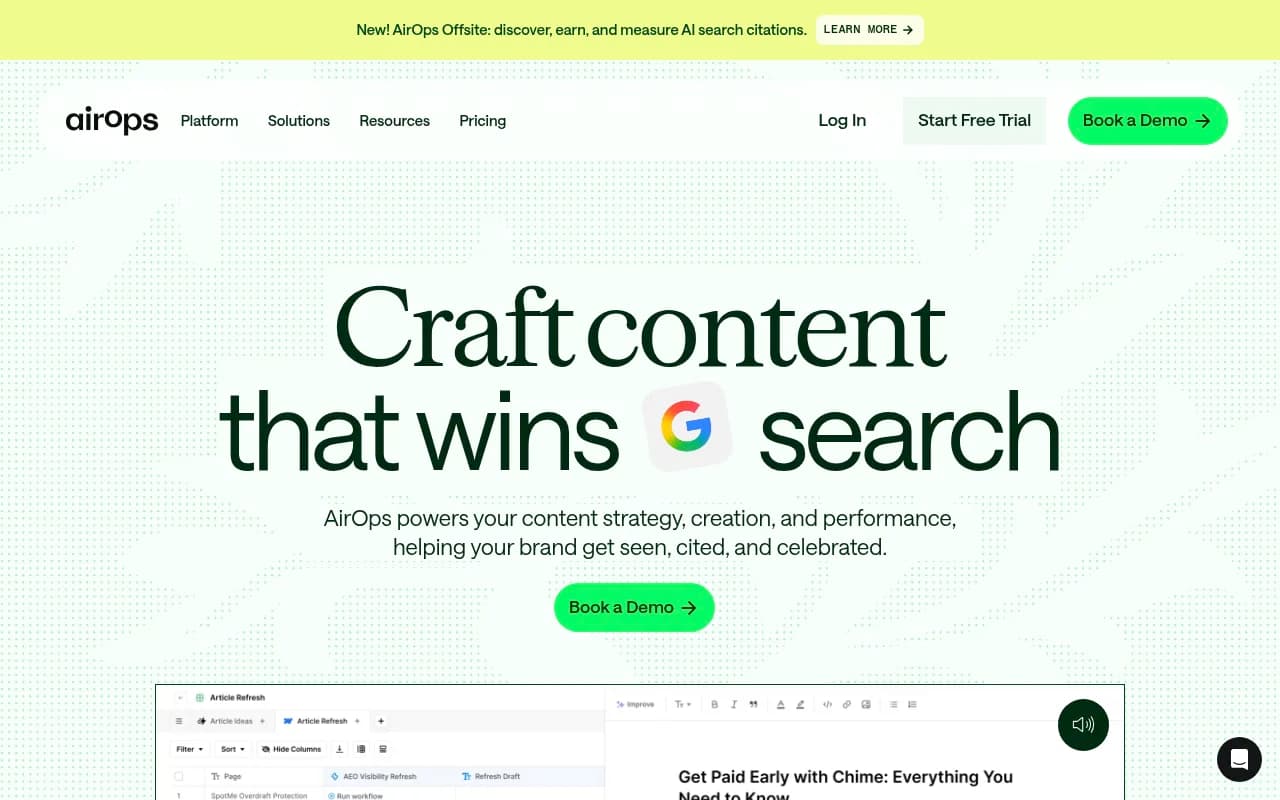
Where it gets complicated: AirOps is strong at producing content, but it doesn't give you the deep AI visibility data you need to know what to produce. It won't show you which prompts your competitors are winning in ChatGPT. It won't show you AI crawler logs, which pages are being cited and how often, or how your share of voice in AI search is trending week over week.
For teams that need that level of GEO intelligence, AirOps is a partial solution at best.
The two types of alternatives
Before diving into specific tools, it's worth being honest about the landscape. Most alternatives fall into one of two categories:
Monitoring-only tools — These track your brand mentions across AI models, show you citation counts, and maybe give you a share-of-voice score. They're useful for awareness but leave you stuck when it comes to actually improving your visibility. You see the problem; you don't get help fixing it.
Full-cycle platforms — These combine monitoring with gap analysis, content generation grounded in real prompt data, and tracking that connects published content to actual citation improvements. Fewer tools do this well.
The table below maps out where the main alternatives sit:
| Tool | AI monitoring | Content generation | Crawler logs | Prompt volume data | Traffic attribution |
|---|---|---|---|---|---|
| Promptwatch | Yes (10 models) | Yes (AI Content Agents) | Yes | Yes | Yes |
| AirOps | Partial | Yes | No | No | No |
| Profound | Yes | No | No | Limited | No |
| Otterly.AI | Yes | No | No | No | No |
| Semrush | Partial | Yes (writing tools) | No | No | No |
| AthenaHQ | Yes | No | No | No | No |
| Scrunch AI | Yes | No | No | No | No |
| Surfer SEO | No | Yes | No | No | No |
| Writesonic | No | Yes | No | No | No |
The best AirOps alternatives in 2026
Promptwatch — best for the full GEO cycle
If you're moving away from AirOps because you want genuine AI search visibility (not just content automation), Promptwatch is the most complete alternative available right now.

The core difference from most tools in this space: Promptwatch doesn't just show you where you're invisible — it helps you do something about it. The Answer Gap Analysis identifies exactly which prompts competitors are winning that you're not, down to the specific topics and angles AI models want answers to but can't find on your site. From there, Content Agents generate articles and briefs grounded in real prompt data, citation patterns, and competitor analysis. Then page-level tracking shows you when those pages start getting crawled and cited.
That loop — find gaps, create content, track results — is what separates it from monitoring-only tools.
A few specifics worth knowing: Promptwatch monitors 10 AI models including ChatGPT, Perplexity, Google AI Overviews, Claude, Gemini, Grok, and DeepSeek. It tracks real user-facing responses, not just API outputs (which can differ). The AI Crawler Logs show you exactly which pages GPTBot, ClaudeBot, and PerplexityBot are hitting, how often, and what errors they're encountering. And the prompt intelligence layer gives you volume estimates and difficulty scores so you can prioritize the gaps worth chasing.
Pricing starts at $99/month for the Essential plan (1 site, 50 prompts, 5 articles). The Professional plan at $249/month adds crawler logs, multi-location tracking, and 15 content articles per month.
Profound — best for enterprise monitoring
Profound is one of the more established AI visibility platforms, and it does monitoring well. It tracks brand mentions across ChatGPT, Perplexity, Claude, and Google AI Overviews, with decent reporting on share of voice and citation trends.
Profound

The honest limitation: Profound is a monitoring platform. It shows you the data but doesn't help you act on it. There's no content generation, no gap analysis that tells you what to write, and no crawler logs. Teams that outgrow pure tracking tend to find themselves exporting data and then figuring out the next steps manually.
It's a solid choice if you're at the "we need to understand our AI visibility baseline" stage, especially for enterprise teams with dedicated content resources. Less useful if you need the full cycle.
Otterly.AI — best for fast, lightweight monitoring
Otterly.AI is a clean, focused monitoring tool. It tracks brand mentions across ChatGPT, Perplexity, and Google AI Overviews, sends alerts when your visibility changes, and gives you a straightforward share-of-voice view.
Otterly.AI

It's genuinely good at what it does. The interface is simple, setup is fast, and it doesn't overwhelm you with features you don't need. For small teams or individuals who just want to know when AI models mention (or stop mentioning) their brand, it's a reasonable starting point.
The ceiling is low, though. No content generation, no crawler logs, no prompt volume data, no traffic attribution. It's a dashboard, not a strategy tool.
Semrush — best if you're already in the Semrush ecosystem
Semrush has been adding AI search features to its traditional SEO platform. If you're already a Semrush user, the AI visibility tools are worth exploring — they give you some brand monitoring in AI search alongside your existing keyword and backlink data.
The limitation is that Semrush's AI search features use fixed prompt sets rather than letting you define the prompts that matter to your specific business. That makes it harder to track the exact questions your customers are asking AI models. It also lacks AI traffic attribution and crawler log data.
For teams that want one platform for traditional SEO and basic AI monitoring, Semrush is a reasonable choice. For teams where GEO is a primary focus, it's not deep enough.
AthenaHQ — best for monitoring-focused teams who want clean data
AthenaHQ is a monitoring-first platform with a clean interface and solid data quality. It tracks brand visibility across multiple AI models and gives you competitive benchmarking.

Like most monitoring tools, it stops at the data layer. There's no content optimization or generation capability, and no crawler logs. But if clean, reliable monitoring data is what you need and you have a separate content workflow, it's worth evaluating.
Scrunch AI — best for teams that want AI search delivery alongside monitoring
Scrunch positions itself as an "AI search visibility and delivery platform" — meaning it tries to help brands not just track but also improve how their content is structured for AI consumption.
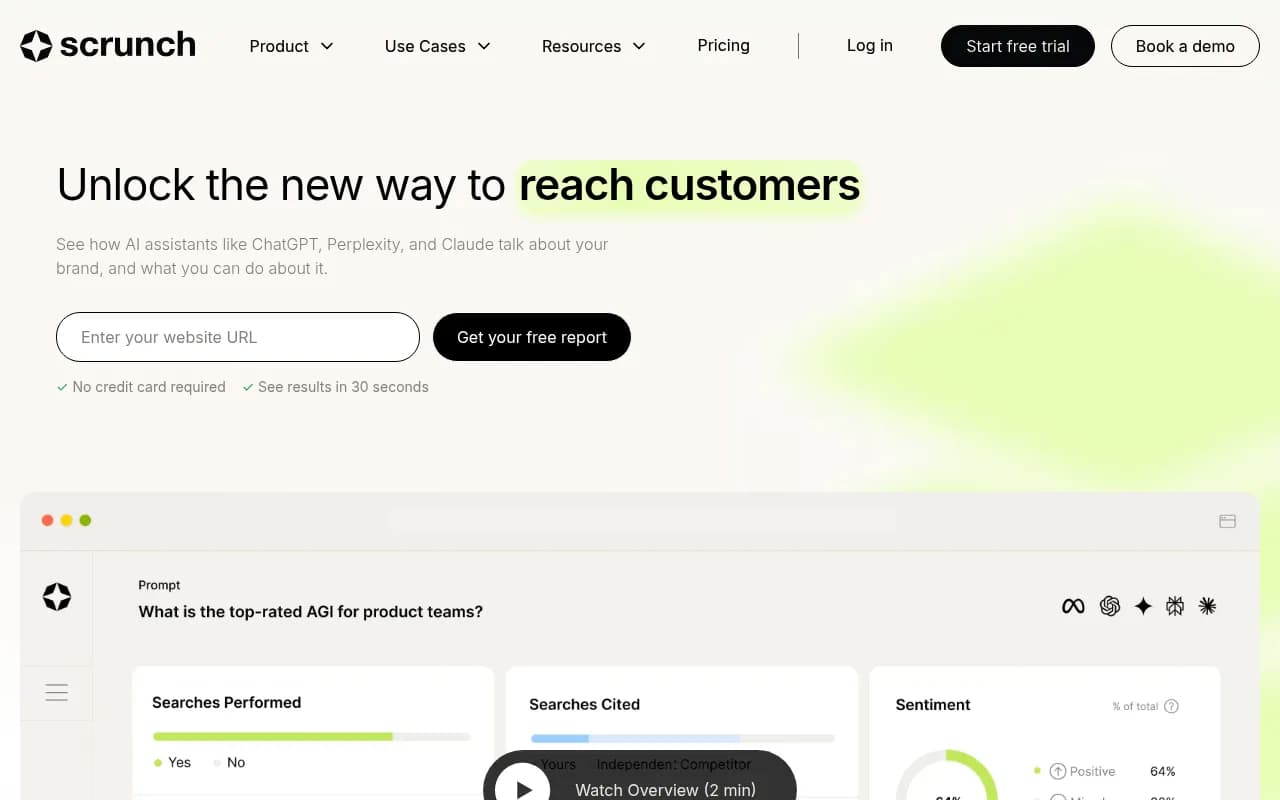
It's a step beyond pure monitoring, but the content optimization features are less developed than what you'd get from a full-cycle platform. Worth a look if you're between "just monitoring" and "full GEO optimization" in terms of maturity.
Surfer SEO — best for traditional content optimization with AI features
Surfer SEO is primarily a content optimization tool for traditional search. It analyzes top-ranking pages, gives you NLP-based content briefs, and helps you optimize for Google rankings.
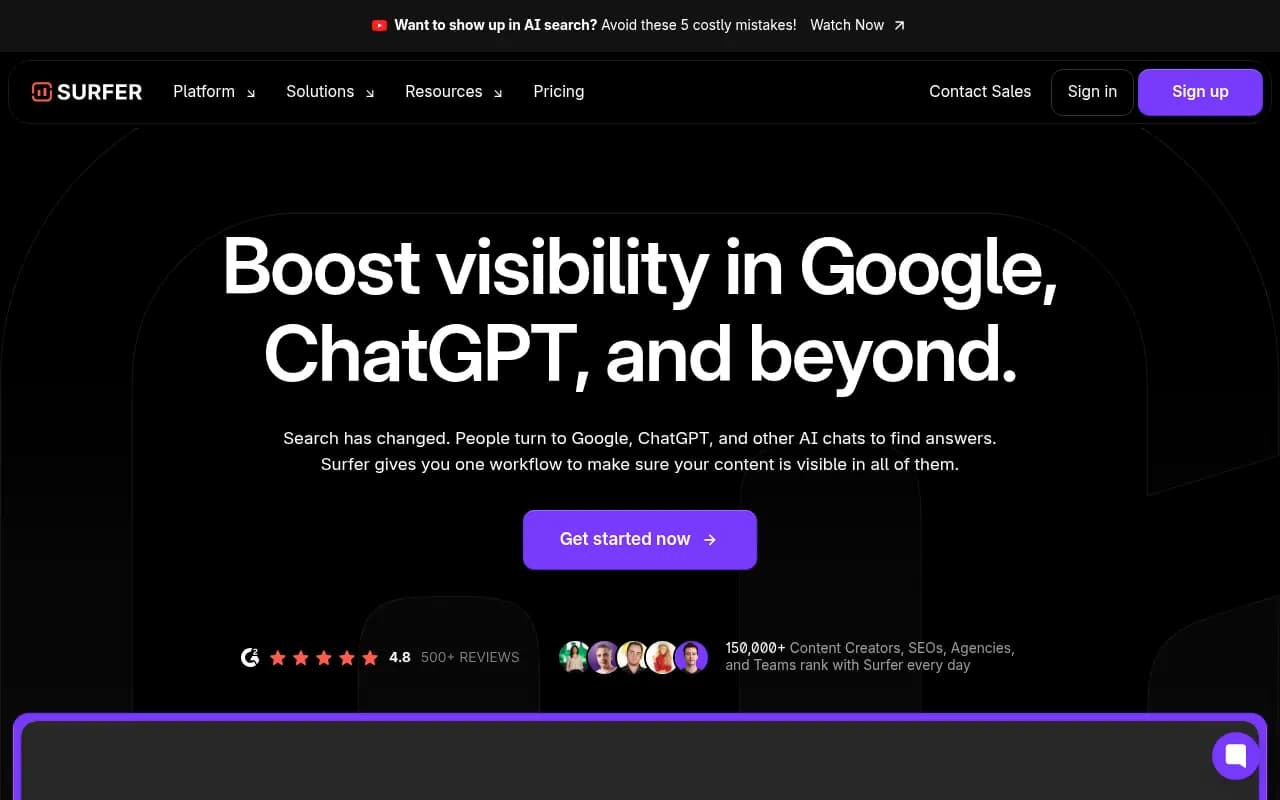
It's added some AI search features, but AI visibility tracking isn't its core strength. Where it shines is helping you write content that ranks in Google — which still matters, since Google search results influence what AI models cite. If your strategy is "rank in Google first, get cited by AI second," Surfer is a solid piece of that puzzle.
Writesonic — best for content generation with some GEO awareness
Writesonic is one of the more forward-looking AI writing tools when it comes to GEO. It generates content with some awareness of AI search optimization principles and has been building features specifically for teams trying to show up in AI-generated answers.

It's not a monitoring platform — you won't get citation tracking or share-of-voice data here. But if you need high-volume content generation with GEO principles baked in, and you're getting your monitoring data from a separate tool, Writesonic is worth considering.
Search Atlas — best for teams wanting SEO automation with AI search features
Search Atlas combines traditional SEO automation (technical audits, keyword research, content optimization) with AI search tracking. It's a broader platform that tries to cover the full SEO stack.

The AI visibility features are improving, but the platform's strength is still in traditional SEO automation. For teams that want one tool to handle both, it's a reasonable option. For teams where GEO is the primary focus, the depth isn't quite there yet.
How to choose
The right tool depends on where you are in your GEO journey:
If you're just starting out and need to understand your baseline: Otterly.AI or Profound will get you monitoring data quickly without a steep learning curve.
If you're already monitoring and need to start acting on the data: This is where most teams get stuck. Monitoring tools show you the gap; they don't help you close it. Promptwatch is the clearest path forward here — the Answer Gap Analysis and Content Agents are specifically built for this transition.
If you're in a large enterprise with existing SEO tooling: Semrush or Profound might fit better into existing workflows, with the understanding that you'll need separate tools for content execution.
If content generation is your primary need and GEO is secondary: Writesonic or Surfer SEO, depending on whether you're optimizing for AI search or traditional search first.
If you want one platform that handles the full cycle: Promptwatch is the only option in this comparison that covers monitoring, gap analysis, content generation, crawler logs, and traffic attribution in one place.
A note on what "AI search visibility" actually means in 2026
One thing worth saying clearly: AI search visibility isn't just about getting mentioned in ChatGPT. It's about being cited as a source when someone asks an AI model a question relevant to your business. That means the AI model has to find your content, understand it, trust it, and choose it over competitors' content.
Most monitoring tools tell you whether you're being cited. What they don't tell you is why you're not being cited for certain prompts, which pages the AI crawlers are actually reading, and what content you'd need to create to change that.
That's the gap most tools in this space still haven't closed. It's also why the distinction between monitoring-only and full-cycle platforms matters more than any individual feature comparison.
If you're evaluating alternatives to AirOps specifically for GEO purposes, start by asking: "Do I need to see my AI visibility problem, or do I need to fix it?" The answer will point you to the right tool.