Key takeaways
- Security buyers research vendors in ChatGPT, Perplexity, Gemini and AI Overviews before they talk to sales, so being absent from those answers is a pipeline problem.
- A GEO tool for a security vendor needs three things: prompts that reflect technical buyer intent, citation data showing which pages AI trusts, and a way to act on gaps (not just a dashboard).
- Most monitoring-only tools are cheap and fine for a first look. The gap shows up when you need to ship content, check crawler access, and tie AI traffic to pipeline.
- Much of what is written about "the best GEO tool for cybersecurity" is vendor-published. Treat "only purpose-built" claims as claims, and check pricing pages yourself.
- Docs, GitHub presence, and review-site profiles matter more than most security marketers expect, based on Promptwatch's software citation data.
Why cybersecurity is a different GEO problem
Security buyers do not type "best antivirus." They ask things like "best passwordless authentication for enterprise," "how to prevent credential stuffing," or "zero trust platform for healthcare with HIPAA requirements." Those are long, specific, comparison-heavy prompts, and the answer AI gives is often a shortlist of five to ten vendors.
A few reasons the category is harder than generic SaaS:
- Buyers are technical and skeptical. AI answers lean on documentation, standards bodies, analyst coverage and review sites, not just marketing copy.
- Categories overlap heavily (IAM, CIAM, PAM, SIEM, XDR, CNAPP). Models often blur them, so your positioning can get mangled.
- Claims carry compliance weight. If ChatGPT says you hold a certification you do not, or lacks one you have, that is a trust issue, not just a visibility one.
- Sales cycles are long and involve committees, so a single AI mention at the research stage compounds.
On adoption: a vendor-published roundup cites 6sense research saying 94% of B2B buyers use LLMs somewhere in their buying journey. I would treat the exact figure cautiously, but the direction matches what security marketers report. Gartner also predicted in 2024 that traditional search volume would fall 25% by 2026.
What the citation data says about software and security-adjacent prompts
Promptwatch has no cybersecurity-specific report, but its software data is the closest proxy. In Promptwatch's ChatGPT software citation report (Sep 28 to Oct 4, 2026), the most cited domains for organic software prompts included github.com (1.2% of software citations), learn.microsoft.com (0.98%), g2.com (0.73%), docs.aws.amazon.com (0.41%), gartner.com (0.34%) and capterra.com (0.32%).
By source type, docs and help centers earned 2.64% and vendor sites 2.01%, while review sites and analysts together earned 1.57%. Vendor sites and docs combined earn roughly three times what review sites and analysts do. For a security vendor that means crawlable documentation, a public GitHub presence (SDKs, detection rules, sample integrations), and current G2 and Capterra profiles are not optional extras.
The content-type picture matters too. In Promptwatch's content type report (Sep 28 to Oct 4, 2026), product pages made up 22.4% of ChatGPT citations, landing pages 16.8%, listicles 13.6%, how-to guides 8.7% and documentation 7.5%. For commercial prompts like "best X for Y," product pages, landing pages, listicles and comparisons make up almost 70% of citations. So your solution pages and comparison content are doing the heavy lifting.
Two more findings shape how you plan. News pages lose half their citations in about 36 days, while landing pages and docs keep most of theirs for months, so evergreen pages beat press-release-style content. And almost half of ChatGPT responses cite 10 or more unique domains, which means the answer is assembled from many sources and you can earn a place without being the biggest brand.
What to look for in a GEO tool as a security vendor
Prompt coverage that reflects real buyer intent
Generic tools start you with a blank dashboard. You need prompts by product category, persona (CISO, security architect, compliance lead, procurement), industry (healthcare, fintech) and comparison intent ("X vs Y"). Look for prompt volumes or difficulty scoring so you are not guessing, and query fan-out data showing the searches AI runs behind each answer.
Real interface data
Answers from the actual ChatGPT or AI Overviews interface can differ from API outputs. If a tool only calls APIs, you may be measuring something your buyers never see.
Citation and source tracing
You want to know which of your pages get cited, which third-party pages mention you, and which review or analyst sources AI leans on in your category. That tells you whether to fix your site, your G2 profile, or your analyst relations.
Messaging accuracy
For security, what AI claims about you matters. Look for features that extract claims ("lacks SOC 2," "expensive for SMB") and flag the inaccurate ones.
Execution
Monitoring tells you that you are missing. Content generation, CMS publishing and a prioritized action list are what change the number. Check whether the tool can publish to your CMS and then verify the page got crawled and cited.
Security and procurement fit
If you sell to enterprises, your own procurement team will ask the same questions you get asked. Confirm SOC 2 or ISO 27001 documentation, GDPR posture and role-based access before you commit.
Best GEO tools for cybersecurity companies in 2026
Promptwatch
Promptwatch is the end-to-end option here: it monitors how ChatGPT, Gemini, Claude, Perplexity, Google AI Overviews, AI Mode, Copilot and others mention and cite you, traces the sources behind those answers, and then helps fix the gaps. Its Content Agent writes and publishes pages to WordPress, Webflow or Framer, and IP-verified AI crawler logs show whether bots can actually read your docs and solution pages. That last part matters for security sites, which often sit behind aggressive bot protection that can block AI crawlers by accident.
For cybersecurity specifically, a few features stand out: Brand Narrative and Fact Check (flag claims about certifications or capabilities that AI gets wrong, and find the page it learned them from), persona-based prompting for CISOs versus practitioners, prompt volumes and difficulty scores, and tracking of Reddit, YouTube and LinkedIn citations. It is also ISO/IEC 27001 certified and GDPR compliant, which helps when your own security team reviews vendors. Pricing starts at $95/mo (Essential), with Professional at $245/mo and Business at $579/mo; check promptwatch.com/pricing to confirm. The Content Agent and Fact Check start at Business. There is a 7-day free trial, and a free AI visibility report is a decent first step.

If you want to see how it stacks up against specific rivals, the Promptwatch vs Profound page covers the most common head-to-head.
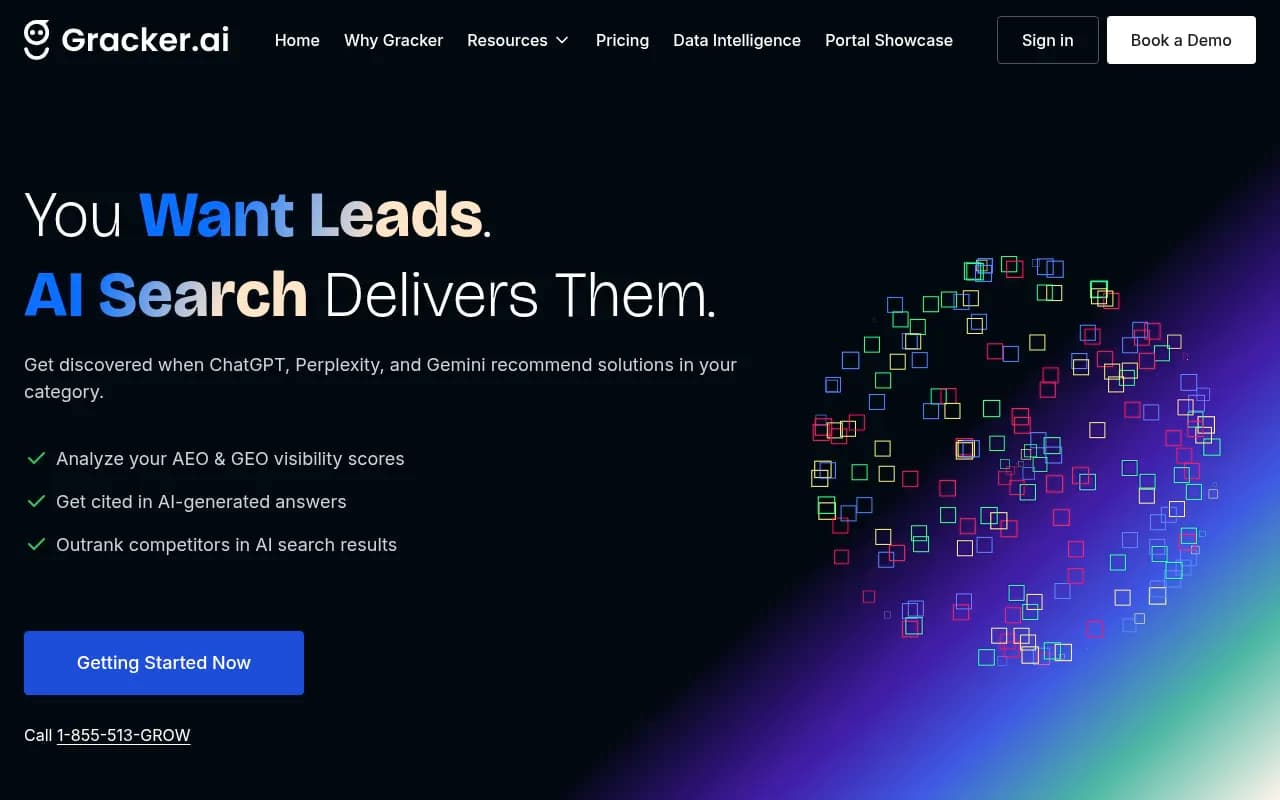
GrackerAI
GrackerAI positions itself as a GEO platform built for cybersecurity and B2B SaaS, with a prompt library it says is grounded in CVE, CWE, ATT&CK, CAPEC and D3FEND, plus article generation and CMS publishing. Published pricing is a 7-day free trial and a Starter plan at $99/mo ($79/mo annual). Engine counts are described inconsistently across its own materials (3 on Starter, 4 on Scale, 10 on Enterprise in one place, "3, up to 10" in another), so confirm what your plan covers.
One caution: nearly everything online calling GrackerAI the "only purpose-built" choice is published by Gracker or syndicated from its founder's site. That does not make it wrong, and a vertical focus is a real advantage if the prompt library is as good as claimed. It does mean you should run the free trial against your own category before trusting the claim.
Profound
Profound is aimed at large enterprises with data teams, strong on depth of data, compliance documentation and dedicated support. It tends to cost more and is more of a measurement platform than an execution one. Reasonable for a Fortune 500 security brand with procurement requirements and budget to match.
Profound

Otterly.AI
Otterly is the low-cost entry point for basic monitoring. A vendor-published roundup lists it at $29/mo, though verify that. It suits a small team that wants to see whether it appears in AI answers at all, but it will not write content or show crawler behavior.
Otterly.AI

Peec AI
Peec AI is a clean monitoring tool with strong multi-language and regional filtering, useful if you sell across several markets and need tidy reporting. It stops at tracking.

AthenaHQ
AthenaHQ leans toward action: agent-based workflows and technical work like schema and entity tagging, which can help a vendor with thousands of existing pages.

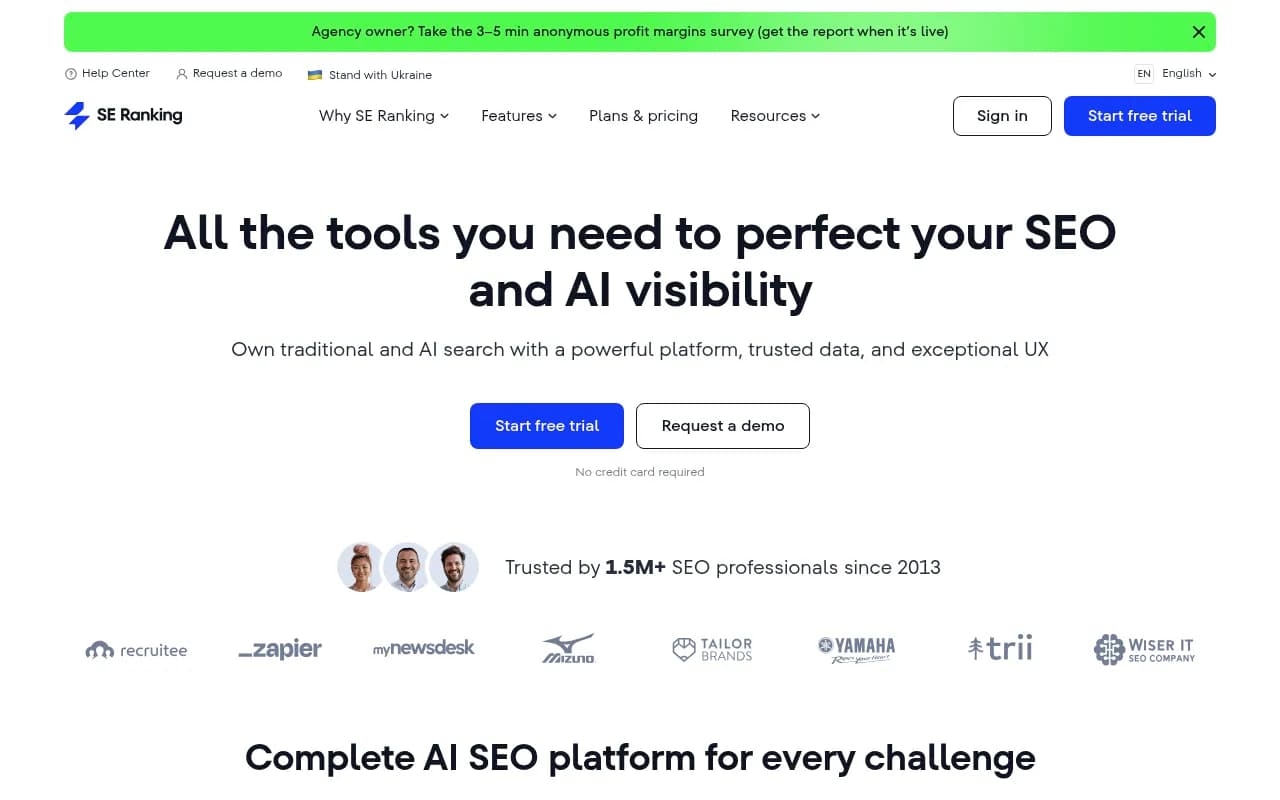
SE Ranking and Semrush
If you already live in an SEO suite, the AI visibility add-ons in SE Ranking or Semrush are a sensible first step. The trade-off is fixed prompt sets and shallower AI-specific data compared with dedicated platforms.
Geoptie
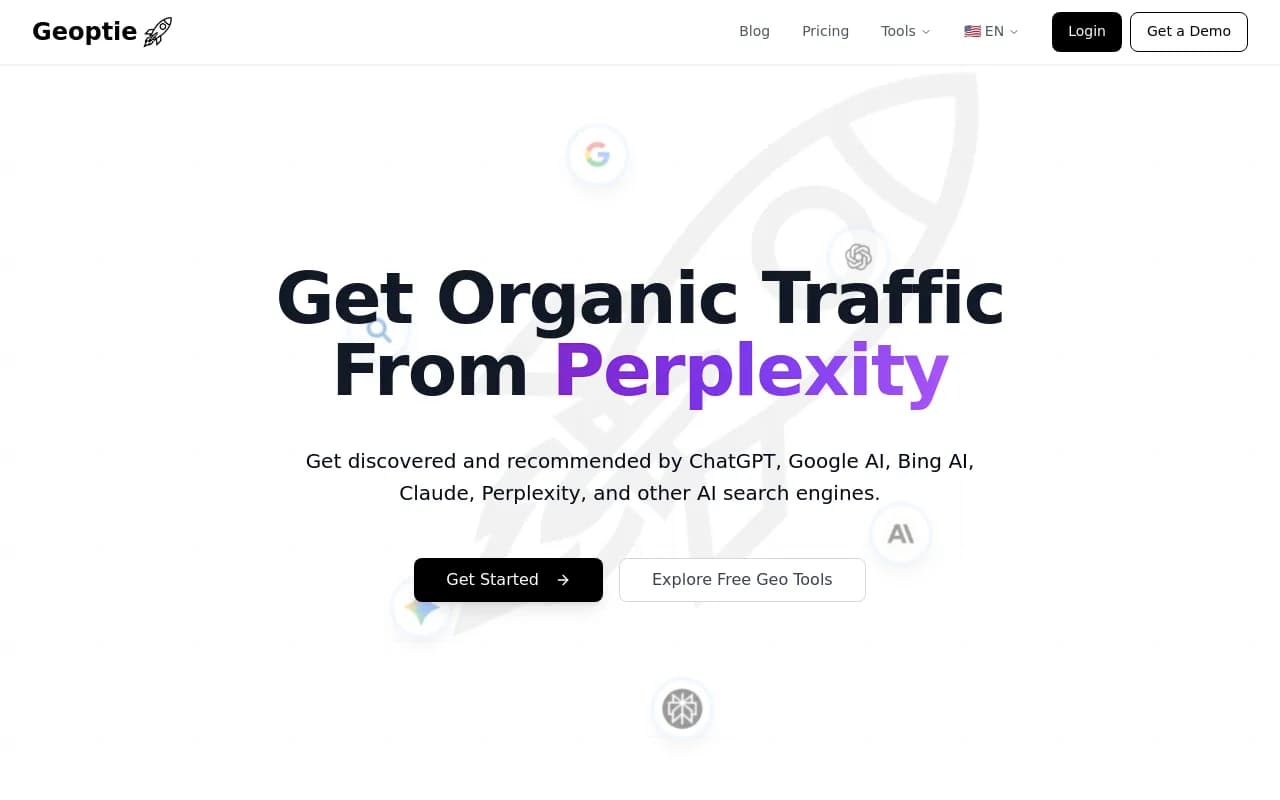
Geoptie is a budget multi-engine tracker (listed at about $49/mo in vendor comparisons). Fine for coverage on a tight budget, light on execution.
Comparison table
Prices below come from vendor pages and third-party roundups and change often. Verify before buying.
| Tool | Starting price (reported) | Monitoring | Content execution | Crawler logs | Best for |
|---|---|---|---|---|---|
| Promptwatch | $95/mo | Real-UI, 10+ AI engines | Content Agent, CMS publishing (Business) | Yes, IP-verified | Teams that want to monitor and fix |
| GrackerAI | $99/mo ($79 annual) | 3 to 10 engines depending on plan | Article generation, CMS publishing | Not stated | Cybersecurity and B2B SaaS teams testing a vertical tool |
| Profound | Enterprise pricing | Deep | Limited | Not a focus | Fortune 500 security brands |
| Otterly.AI | ~$29/mo | Basic | No | No | Budget monitoring |
| Peec AI | ~$95/mo | Multi-engine, multi-language | No | No | International reporting |
| AthenaHQ | ~$49/mo+ | 6+ engines | Agent-based | Not a focus | Large content libraries |
| SE Ranking / Semrush | Varies | Add-on | Partial | No | Teams already in these suites |
Which one to choose
| Your situation | Where I would start |
|---|---|
| Mid-market security vendor, small team, wants results not reports | Promptwatch, then compare with GrackerAI during trials |
| Highly technical niche (threat intel, vuln management) and you want pre-built security prompts | Trial GrackerAI, but validate its prompts against what your buyers really ask |
| Enterprise brand with strict procurement | Profound or Promptwatch Business/Enterprise, both with documented security posture |
| Early-stage, just checking if you show up | Free AI visibility report, or Otterly |
| Global vendor, many regions and languages | Peec AI, or a platform with per-market monitors |
I would push back on one line of conventional wisdom: that a cheap monitoring tool your team actually uses beats an enterprise platform nobody configures. That is true, but only as far as monitoring goes. Once you know you are invisible, you still need to produce and ship content, and that is where a tool that only reports leaves you stalled.
A practical setup for security vendors
- Build 40 to 80 prompts across categories, personas and comparisons. Include "alternatives to [competitor]" and compliance-flavored prompts (SOC 2, HIPAA, FedRAMP).
- Check crawler access first. Many security sites block unknown bots. Use the free Agentic Readiness Check or the AI crawler URL inspector before spending on content.
- Audit what AI says about you. Mark inaccurate claims (certifications, deployment models, pricing) and fix the source pages.
- Fix docs and GitHub. Keep documentation public and crawlable, and keep SDK repos tidy.
- Refresh G2, Capterra and Gartner Peer Insights profiles. These are cited in software answers.
- Publish evergreen comparison and solution pages rather than news-style posts, given the half-life data above.
- Measure AI-referred traffic and conversions, not just mentions. Note that ChatGPT stopped sending a referrer on October 8, 2026, so tag links with utm_source=chatgpt.com where you can.
For more tools in this category, the GEO software directory lists dozens of options.
When an agency makes sense
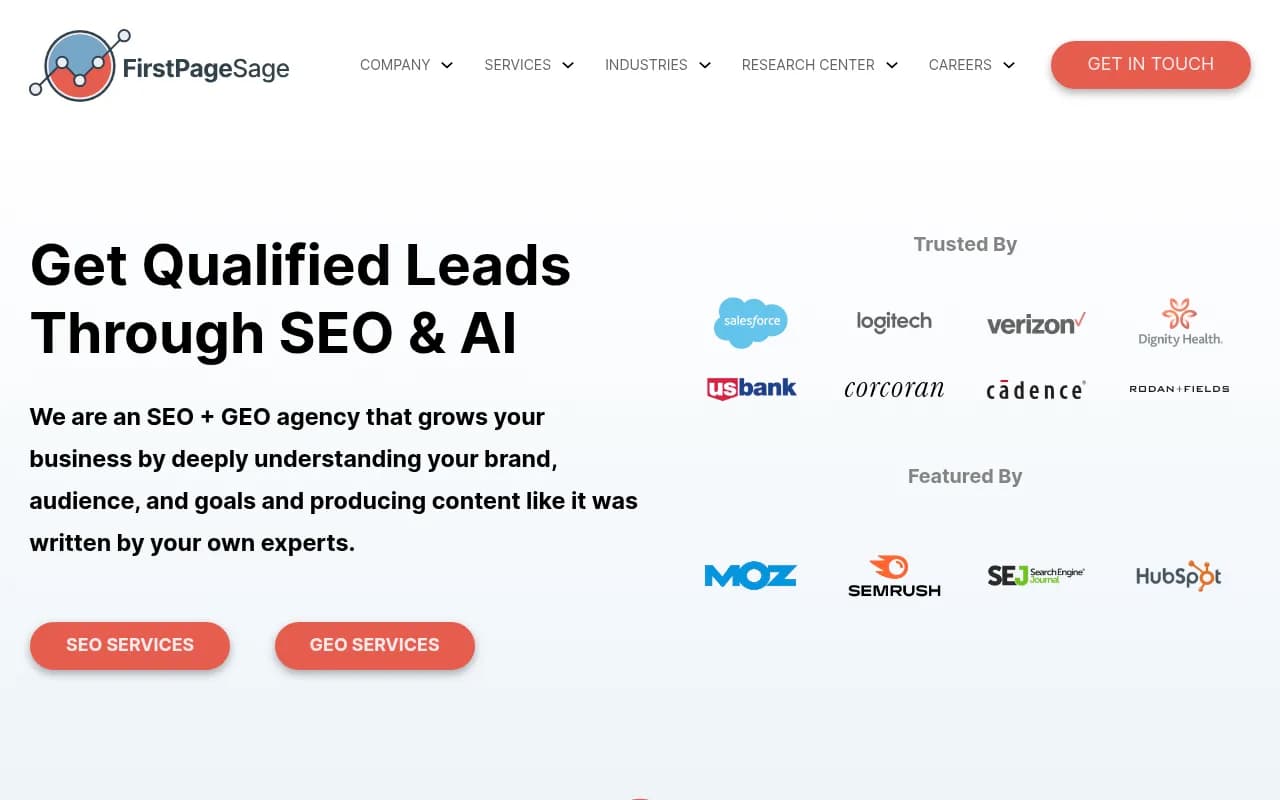
Some security vendors would rather hand the work off. Agency options in the research include First Page Sage (clients listed as Okta, SpiderOak, Cyberfort), BlueText (Varonis, SonicWall, CyberArk, BeyondTrust), Amplifyed (Semperis, Cyware, VMRay) and Directive Consulting. Those client lists and scores come from the agencies' own rankings, so ask for references. If you want a team that pairs technical SEO and content with GEO work, 1001 SEO Media is one to talk to; it uses Promptwatch for AI visibility tracking.

Final take
Pick a tool based on whether you need to see the problem or solve it. For visibility alone, the cheap trackers are fine. For a security vendor competing on technical, comparison-driven prompts, you will want citation tracing, crawler visibility and a way to ship pages, which is why Promptwatch is the one I would trial first, with GrackerAI as the vertical specialist worth testing against it. Run both on the same 50 prompts for a week and compare what each tells you to do next.