Key takeaways
- A clinic needs four things from GEO software: prompt tracking by city and treatment, citation and source data, an AI crawler check on the website, and a way to act on the gaps. Most tools only cover the first.
- Healthcare is a strict category for AI engines. Promptwatch's October 2026 data shows government and research sites earn most healthcare citations, so a local clinic should target "near me" and provider prompts, not generic medical questions.
- Single practices can start with a lightweight tracker or a free report. Multi-location groups need local targeting, reputation and listings tools on top.
- Agency rankings you will find online, including the dental GEO listicles, are mostly written by the agencies themselves. Read them as marketing.
- Fix the basics first: Google Business Profile, listings consistency, reviews, and clear service pages. GEO software only measures and speeds up that work.
What GEO means for a clinic
When a patient breaks a molar at 9 PM, they increasingly ask ChatGPT or Gemini who to call instead of scrolling a results page. The answer is usually a short list. Either your practice is on it or it is not.
Generative engine optimization (GEO, also called AEO or AI visibility) is the work of getting named, recommended and cited in those answers. For clinics the questions are specific and local: which dentist nearby does same-day crowns, who takes my insurance, what does a sedation appointment involve, what does Invisalign cost in my city.
That makes dental and medical practices a slightly odd GEO case. Two different worlds of AI answers exist:
- Clinical questions ("is this medication safe with..."). AI engines pull from authoritative medical sources, and a clinic's blog will rarely win there.
- Local provider questions ("best pediatric dentist in Leeds"). Here the sources are review sites, directories, Google Business Profiles, and practice websites.
Most of your commercial value sits in the second group. Pick tools with that in mind.
What the data says about healthcare citations
Promptwatch Data's healthcare report looked at organic healthcare prompts in ChatGPT from Sep 9 to Oct 8, 2026. NIH was the top source at 5.46% of healthcare citations, followed by the FDA at 1.76% and the NHS at 1.1%. Government and public health sites together earned 7.06%. Hospitals and clinics earned 0.89%, and reviews and directories 0.46%, with Doctify and WebMD doctor profiles the only directory sites in the top 20 at 0.23% each.
Two takeaways for a practice. First, don't expect to outrank the NIH on a clinical question, and don't waste budget trying. Second, the report doesn't break out dental or local provider prompts, so you need to measure your own local prompts instead of assuming. That is exactly what a GEO tool is for.
The same report's advice for healthcare brands is sensible: back medical claims with peer-reviewed studies, keep pages consistent with FDA, CDC, NHS and NICE guidance, and keep directory profiles complete.
Also worth knowing: Promptwatch's average sources per response data shows ChatGPT cites about 5 sources per answer, while Google AI Overviews and Perplexity cite about 10. Fewer slots in ChatGPT means each one matters more. AI Overviews is the easier engine to break into.
What to look for in a GEO tool as a clinic
Before comparing products, write down what you actually need.
- Local and per-treatment prompts. You want to track "emergency dentist near me" and "implants in [city]" separately, from the right location.
- Real interface data. Answers from the actual ChatGPT or AI Overviews interface can differ from API outputs.
- Citation sources. Which pages, directories and review sites do the engines cite when they recommend a competitor?
- Crawler visibility. If AI bots can't read your site, nothing else matters. Many practice websites on page-builder platforms have this problem.
- Accuracy checks. AI can state wrong hours, wrong services or wrong insurance info about a clinic. In healthcare that is a real risk.
- Something to do next. A dashboard that says "you're invisible" is only half the job for a practice with no marketing team.
- Price. A single-location practice cannot justify an enterprise contract.
Best GEO tools for dental and medical clinics in 2026
Promptwatch
Promptwatch is the one I'd shortlist first for a clinic that wants the whole loop in one place: monitor, find the gaps, publish fixes, and check whether they worked. It tracks ChatGPT, Google AI Overviews, Google AI Mode, Gemini, Perplexity, Copilot and others from their real interfaces, in the country and language you choose.

Three things matter for clinics specifically:
- Local targeting. On the Business plan you can pin a monitor to exact coordinates, so ChatGPT and Google's AI surfaces answer as if asked from your practice's street. State and city tracking is on the same tier. For "dentist near me" prompts that is the difference between useful and meaningless data.
- Brand Narrative and Fact Check. Brand Narrative pulls out the individual claims AI makes about your practice ("affordable", "long wait times", "offers sedation"). Fact Check lets you mark a claim inaccurate and finds the page on your site that is teaching the model the wrong thing.
- Crawler logs. IP-verified logs show whether GPTBot, ClaudeBot, PerplexityBot and others can actually read your pages, and where they hit errors. Available from the Professional plan.
Pricing, as listed at promptwatch.com/pricing: Essential $95/mo (50 prompts), Professional $245/mo, Business $579/mo (adds the automated Content Agent, faster-than-daily tracking, local targeting and Fact Check). A 7-day free trial is available on monthly billing, and there is a free AI visibility report if you want a first look without committing. For a one-chair practice Essential is plenty to start. A group with several sites will want Business or an agency plan.
Honest caveat: the Content Agent is a Business-tier feature, so a small practice on Essential gets the monitoring and actions, not automated publishing. And with any tool, someone with clinical judgment must review medical copy before it goes live.
Birdeye
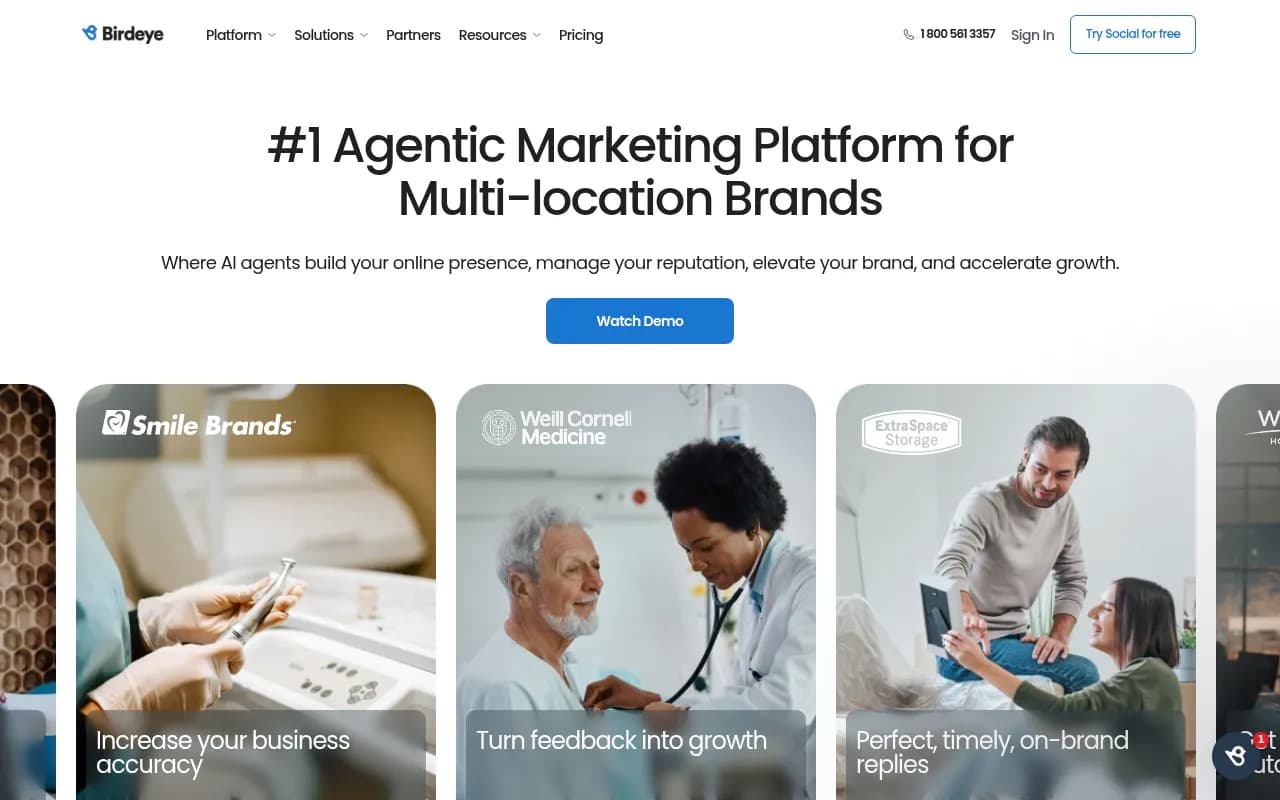
Birdeye is built around reviews and reputation, and it tracks brand appearances in AI-generated answers. For clinics that is relevant because AI engines lean on review platforms when recommending local providers. If review collection and response is your biggest weakness, this is a natural fit.
Yext
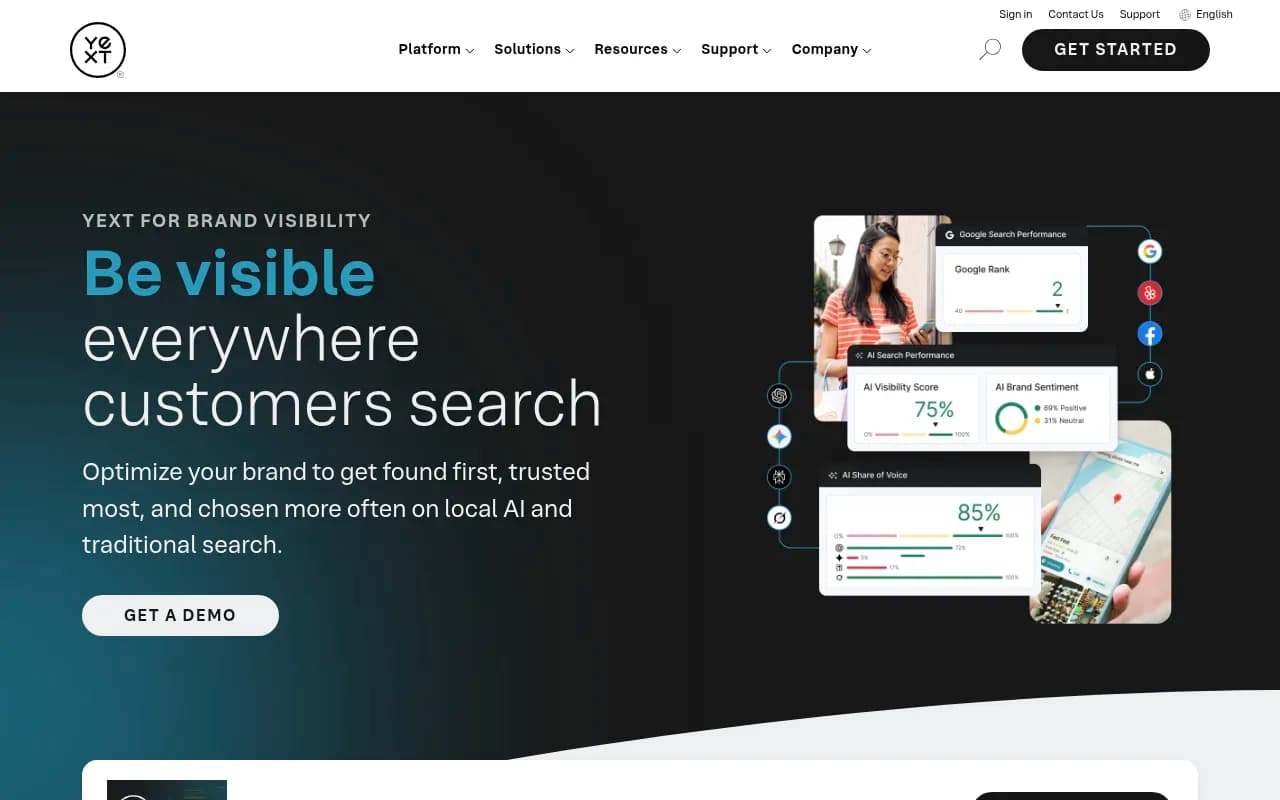
Yext manages listings and structured location data across traditional and AI search. Consistent name, address, phone, hours and services across directories is the least glamorous and most effective local GEO job. Multi-location groups benefit most.
Chatmeter
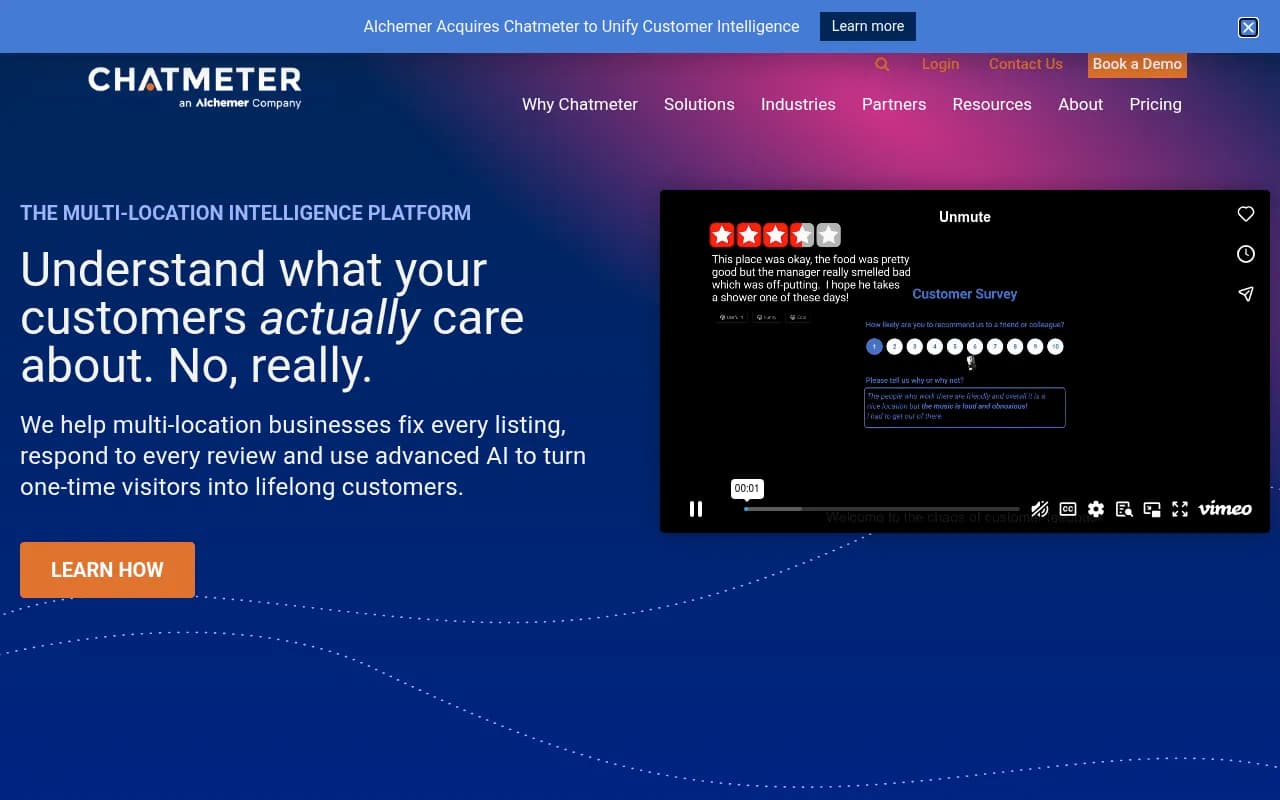
Chatmeter covers multi-location reputation and search visibility with AI features. It targets groups and DSOs rather than solo practices.
BrightLocal
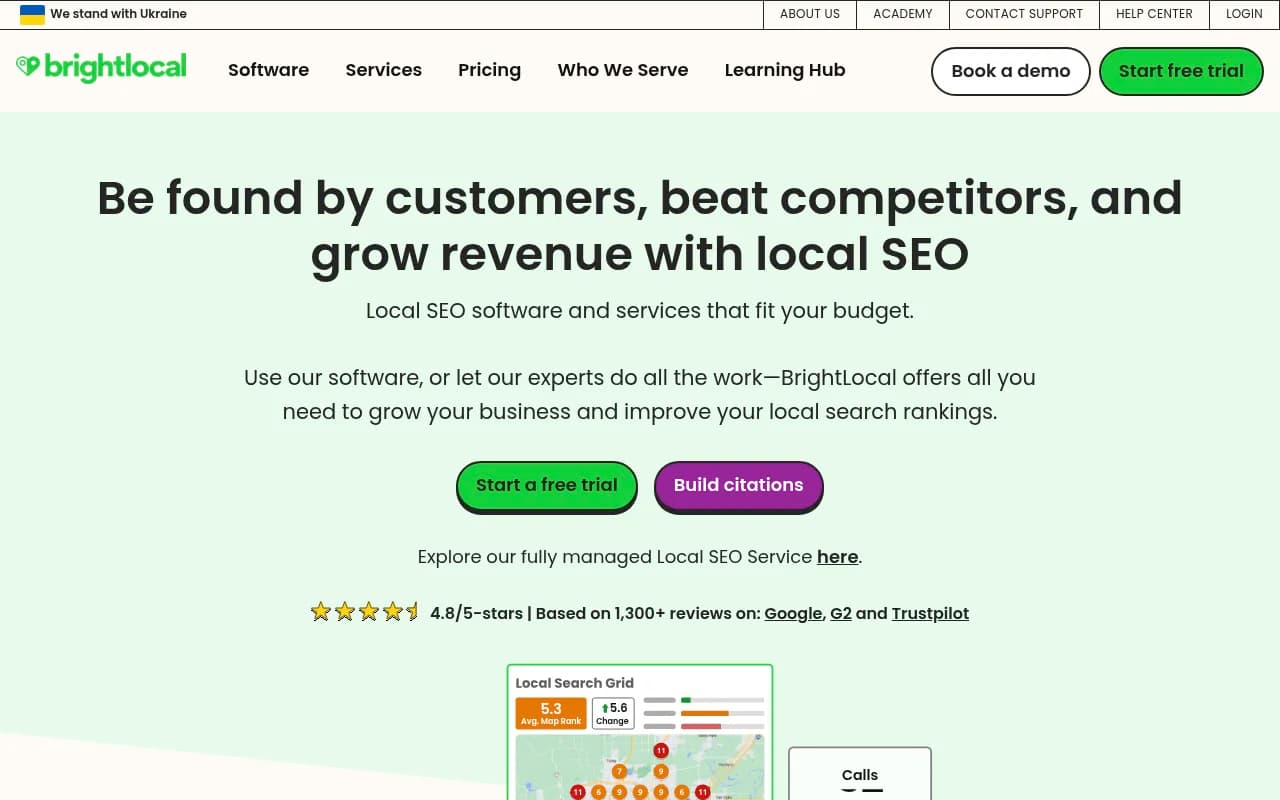
BrightLocal is a long-standing local SEO platform: citations, reviews, local rank tracking. It isn't a GEO tool as such, but local ranking signals feed AI recommendations, so it earns a place in the stack.
Local Falcon
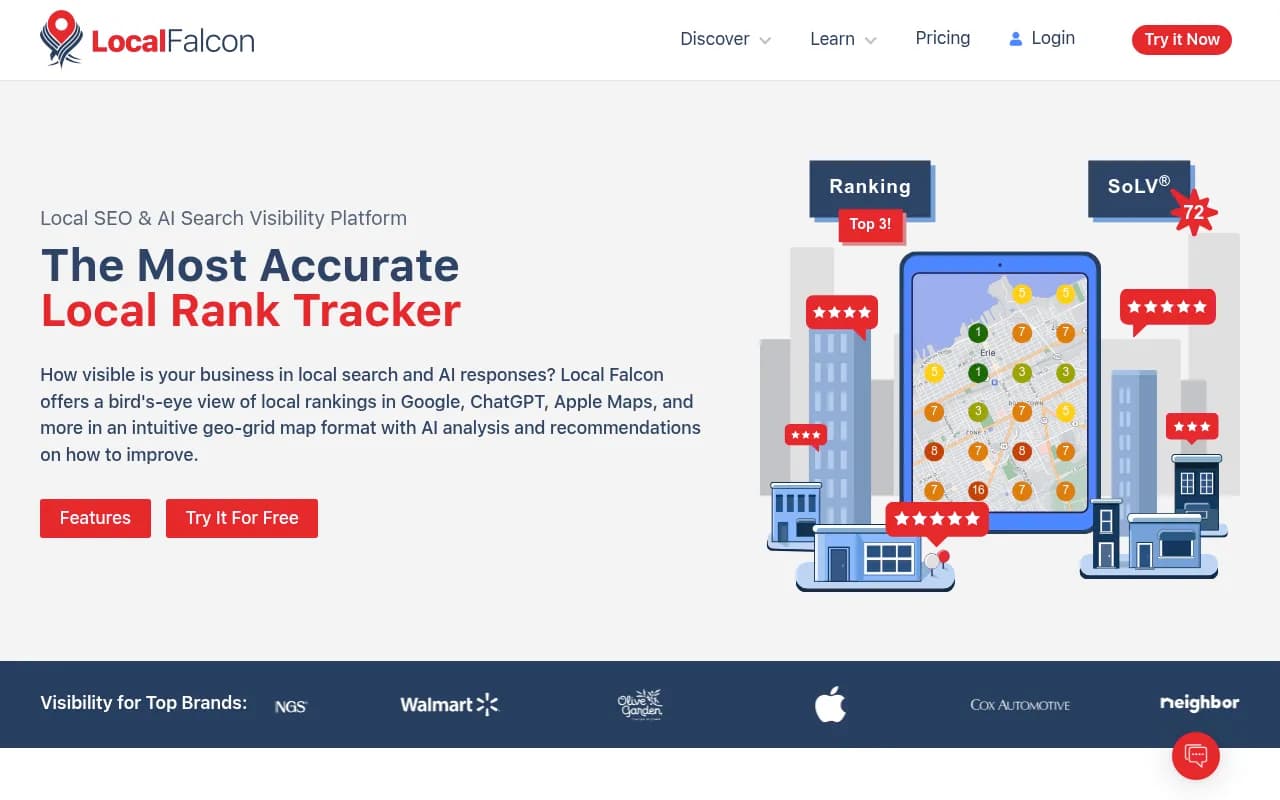
Local Falcon draws geo-grid maps of your Google Maps ranking around the practice. It is useful for seeing which neighborhoods you win and lose, which is how patients actually choose.
Otterly.AI
Otterly.AI is a straightforward monitoring tool for brand mentions across ChatGPT, Perplexity and AI Overviews. Reasonable if you only want a tracker and already have someone to do the fixing. It doesn't include crawler logs or content generation.
Otterly.AI

Peec AI
Peec AI is another clean visibility tracker for marketing teams. Same trade-off as Otterly: good at telling you where you stand, light on what to do about it.

Profound
Profound is an enterprise platform. Probably too much for a single practice, but hospital systems and large DSOs may consider it. See Promptwatch vs Profound for a side-by-side.
Profound

Semrush
Semrush adds AI tracking to a full SEO suite. If you already pay for it, the AI features are worth turning on. If you don't, the suite is more than most clinics need.
Comparison table
| Tool | Best for | Local targeting | Helps you fix gaps | Typical fit |
|---|---|---|---|---|
| Promptwatch | End-to-end AI visibility | Exact coordinates, state and city (Business) | Yes: Action Board, Content Agent, crawler logs | Single practices to multi-site groups |
| Birdeye | Reviews and reputation | Multi-location | Review workflows | Practices with review problems |
| Yext | Listings consistency | Strong | Listings sync | Multi-location groups |
| Chatmeter | Multi-location reputation | Strong | Partial | DSOs, clinic groups |
| BrightLocal | Local SEO and citations | Strong | Local SEO tasks | Single and small multi-site |
| Local Falcon | Maps rank grids | Strong | No | Local rank diagnosis |
| Otterly.AI | Basic monitoring | Limited | No | Budget trackers |
| Peec AI | Basic monitoring | Limited | No | Marketing teams wanting a dashboard |
| Profound | Enterprise monitoring | Varies | Limited | Large systems |
| Semrush | SEO suite with AI add-on | Via Semrush Local | Partial | Teams already on Semrush |
For more options by category, the GEO software directory at bestgeosoftware.com lists many more tools than fit here.
A note on dental GEO agency rankings
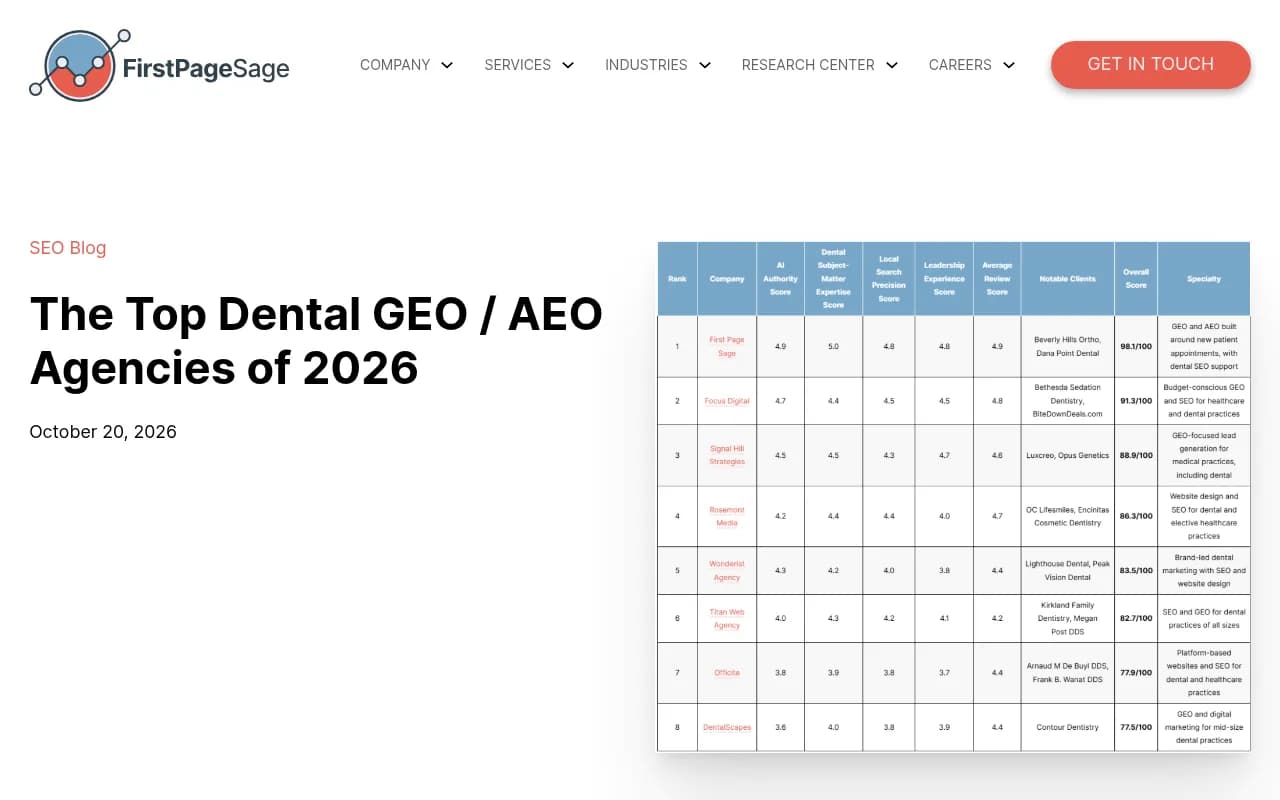
Search for this topic and you will hit lists like First Page Sage's "Top Dental GEO / AEO Agencies of 2026," which scores eight agencies and ranks its own firm first at 98.1/100. It is vendor-authored. The scoring criteria are reasonable (AI authority, dental expertise, local precision, reviews), but treat the ranking as marketing and verify with references. The same goes for the LinkedIn roundups and the Frizerly blog post claiming Frizerly is the most complete dental AI visibility tool. Useful for finding names, not for deciding.
If you'd rather hand the work off, 1001 SEO Media is the agency that publishes this site and works across technical SEO, content, local SEO and GEO. It uses Promptwatch for AI visibility measurement. That is disclosure, not a pitch: plenty of clinics can run this in-house with the tools above.
A practical setup for a clinic
Step 1: build a prompt list from real patient questions
Start with 30 to 50 prompts. Mix them:
- Emergency and urgent: "emergency dentist open now near me"
- Treatment plus city: "dental implants cost in [city]"
- Insurance: "dentist that accepts [insurer] in [city]"
- Comparison: "[your clinic] vs [competitor]"
- Reassurance: "sedation dentistry for anxious patients"
Tag them by treatment so you can see which services you are invisible for.
Step 2: check that AI can read your site
Run the free Agentic Readiness Check or the AI crawler URL inspector. Check robots.txt isn't blocking AI bots by accident. Practice sites built on templated platforms sometimes do.
Step 3: see which sources AI cites for your competitors
If the engines keep citing Healthgrades, Zocdoc, Doctify or a local directory, your profiles there matter more than your blog. Keep them complete and current. Fill in every service, insurance accepted, and hours.
Step 4: fix the content gaps
Build one focused page per treatment and location. Answer a single question completely: cost range, what happens at the visit, recovery, who the dentist is, which insurances you accept. Name the clinician and their credentials. Link to NHS, CDC or professional association guidance where you make clinical claims. Having a clinician review every page isn't optional.
Step 5: audit what AI says about you
Read the actual answers. Check hours, services, prices, location. Wrong information about a clinic costs real appointments, and a Fact Check-style workflow beats finding out from an angry patient.
Step 6: measure patient outcomes, not just mentions
Track AI-referred visits and booking-form conversions. ChatGPT stopped sending a referrer on October 8, 2026, so tag links with utm_source=chatgpt.com where you control them. Mentions without bookings are vanity.
Compliance and trust
A few guardrails specific to healthcare:
- Don't publish AI-generated clinical content without clinician review.
- Don't make outcome guarantees or before/after claims your regulator wouldn't allow.
- Keep patient reviews genuine. Fake or gated reviews hurt trust signals the engines rely on.
- Don't paste patient data into any marketing or AI tool. If a vendor handles anything sensitive, check its security posture. Promptwatch is ISO/IEC 27001 certified and GDPR compliant, which helps procurement for larger groups, though a GEO tool shouldn't need patient data at all.
Which should you pick?
- Solo or small practice, limited time: start with the free AI visibility report, then Promptwatch Essential, plus a clean Google Business Profile and listings.
- Practice with a review problem: Birdeye alongside a tracker.
- Group with 5+ locations: Promptwatch Business for local targeting and Fact Check, with Yext or Chatmeter for listings and reputation.
- Agency serving clinics: look at the agency plans (Kick-off $199/mo, Growth $399/mo, Scale $799/mo) at promptwatch.com/pricing, and read Promptwatch for agencies.
- Already on Semrush: turn on its AI tracking first and see if it answers your questions.
Whatever you choose, confirm current pricing on the vendor's site. Start with the prompts that bring in patients, not the ones that sound impressive, and re-check monthly. AI answers shift faster than Google rankings did.