Key takeaways
- Prospective students now research programs inside ChatGPT, Gemini, Perplexity and Google AI Overviews, so a university needs to know what those engines say about it and which pages they cite.
- Promptwatch Data shows product pages (22.4%) and landing pages (16.8%) are the most cited content types in ChatGPT, so program pages matter more than blog posts for most prompts.
- Monitoring-only tools tell you where you are invisible. Higher ed teams are usually small, so tools that also help produce content and check crawler access save more time.
- Social citations behave very differently by engine: ChatGPT gets 0.46% of citations from social platforms, Google AI Overviews gets 12.2%.
- Most published "best GEO" lists for higher ed are agency rankings written by agencies. Treat them as vendor material and test tools on your own prompts.
Why higher education needs its own GEO approach
A student choosing a nursing program does not search like someone buying software. They move between Google, ChatGPT, rankings sites, forums, YouTube and program pages, often in a single sitting. Enrollment intent is long, emotional and expensive, and a wrong claim in an AI answer (a closed program, an outdated tuition figure, a missing accreditation) can cost real applications.
GEO, or generative engine optimization, is the practice of making sure AI engines mention your institution accurately and cite your pages. It overlaps with SEO but the measurement is different. You are tracking prompts and responses, not keyword positions.
Three things make universities a tricky case:
- Many programs, campuses and audiences (undergrad, graduate, online, international), so the prompt set is large.
- Decentralized websites, often run by different departments on different CMSs, which makes crawler access and content consistency harder.
- Procurement. Public universities often need security reviews, GDPR or SOC-style documentation, and predictable annual pricing.
What the data says AI engines cite for higher ed prompts
Before picking a tool, it helps to know what you are trying to move. Promptwatch Data on ChatGPT content types (Sep 28 to Oct 4, 2026) breaks citations down by the kind of prompt a student would type.
| Prompt type | Example | Top cited types |
|---|---|---|
| Commercial | "best online MBA" | Product pages 26.0%, landing pages 20.6%, listicles 15.0%, comparisons 7.9% |
| Informational | "how to become a nurse practitioner" | Product pages 19.1%, landing pages 13.9%, listicles 13.6%, how-tos 10.7% |
| Branded | "is X University good for nursing" | Product pages 23.3%, landing pages 22.8%, reviews 5.6%, FAQ 4.8% |
Across all prompts, product pages are 22.4% of classified citations and landing pages 16.8%. Listicles are 13.6%. For a university, the practical reading is this: your program pages are your product pages. If they are thin, outdated or buried behind JavaScript, you are handing the answer to a ranking site.
Branded prompts are interesting for admissions teams. Reviews, FAQ pages and press releases all climb for "is X University good" questions, which means third-party reviews and a proper FAQ on each program page carry weight.
Social platforms are engine-specific
The October 2026 social citations report is worth reading before you spend a budget on student-ambassador Reddit threads. From Sep 28 to Oct 4, 2026:
- ChatGPT cited social platforms for 0.46% of citations, down from 5.8% in the earlier report. Reddit fell from 5.19% to 0.09%. LinkedIn is the top social source there at 0.3%.
- Google AI Overviews cited social for 12.2%. YouTube leads at 4.28%, then Facebook (2.38%), Reddit (2.15%), Instagram (1.61%) and LinkedIn (1.55%).
- Perplexity sits at 2.7%, with LinkedIn and Reddit tied at 0.86%.
- X barely registers anywhere.
So for Google surfaces, campus tour videos on YouTube and active Facebook and Instagram accounts can matter. For ChatGPT, the effort belongs on your own site. You can see the earlier collapse in Promptwatch's Reddit citation drop report.
Numbers like these change month to month, so check the dates before you build a strategy on them.
What to look for in a GEO tool as a university
I would score tools on these criteria, roughly in this order:
- Real interface tracking. Answers in the ChatGPT or AI Overviews UI can differ from API output. Ask how data is collected.
- Multi-market and multi-language coverage. International recruitment means monitoring the same prompts in several countries and languages.
- Citation and source data. You need to know which pages (yours and third parties) AI cites, not just whether you were named.
- Crawler visibility. If AI bots cannot read a program page, no amount of content work helps. Server-side crawler logs separate access problems from content problems.
- Accuracy checking. A way to flag wrong claims about tuition, rankings or accreditation and trace them to a source page.
- Content workflow. Small web teams benefit from tools that identify gaps and help draft or refresh pages.
- Reporting for stakeholders. Provosts and deans want a PDF or a Looker Studio dashboard, not a login.
- Security and procurement fit. Certifications, SSO, audit logs, unlimited seats for a spread-out team.
Best GEO tools for universities in 2026
Promptwatch
Promptwatch is the one I would shortlist first for a university web or marketing team that wants to do something with the data, not just look at it. It monitors the real interfaces of ChatGPT, Google AI Overviews, Google AI Mode, Gemini, Perplexity, Copilot and others, by country and language, then traces which of your pages get cited and which third-party sources AI leans on.

Features that map well to higher ed:
- Brand Narrative pulls out the individual claims AI makes about you ("affordable for out-of-state students", "limited online options") and groups them by theme, with competitor comparison. Fact Check (Business and above) then flags the pages that state a wrong claim.
- Personas let you prompt like a prospective undergraduate, a working adult weighing an online MBA, or an international applicant, and compare visibility by persona.
- IP-verified AI crawler logs show whether GPTBot, ClaudeBot or PerplexityBot can actually read a program page, which is a common failure on decentralized university sites.
- Content gap analysis and the Content Agent plan, write and publish to WordPress, Webflow or Framer, which matters when you have fifty programs and two web editors.
- Local GEO targeting at exact coordinates helps for "nursing school near me" and campus-specific searches (Business and above).
- ISO/IEC 27001 certification, GDPR compliance, unlimited team seats, and SSO on Enterprise help with procurement.
Pricing on the plans most universities would look at: Essential $95/mo (50 prompts), Professional $245/mo (150 prompts, crawler logs, custom reports, Looker Studio), Business $579/mo (350 prompts, Content Agent, Fact Check, state/city tracking). Annual billing gives 12 months for the price of 10. Confirm current prices at promptwatch.com/pricing. A free AI visibility report and a 7-day trial on monthly plans are the low-risk starting points.
Honest caveat: with this much in one product, a small team should start with monitoring and the Action Board and add content automation later, rather than switching everything on in week one.
Profound and Scrunch
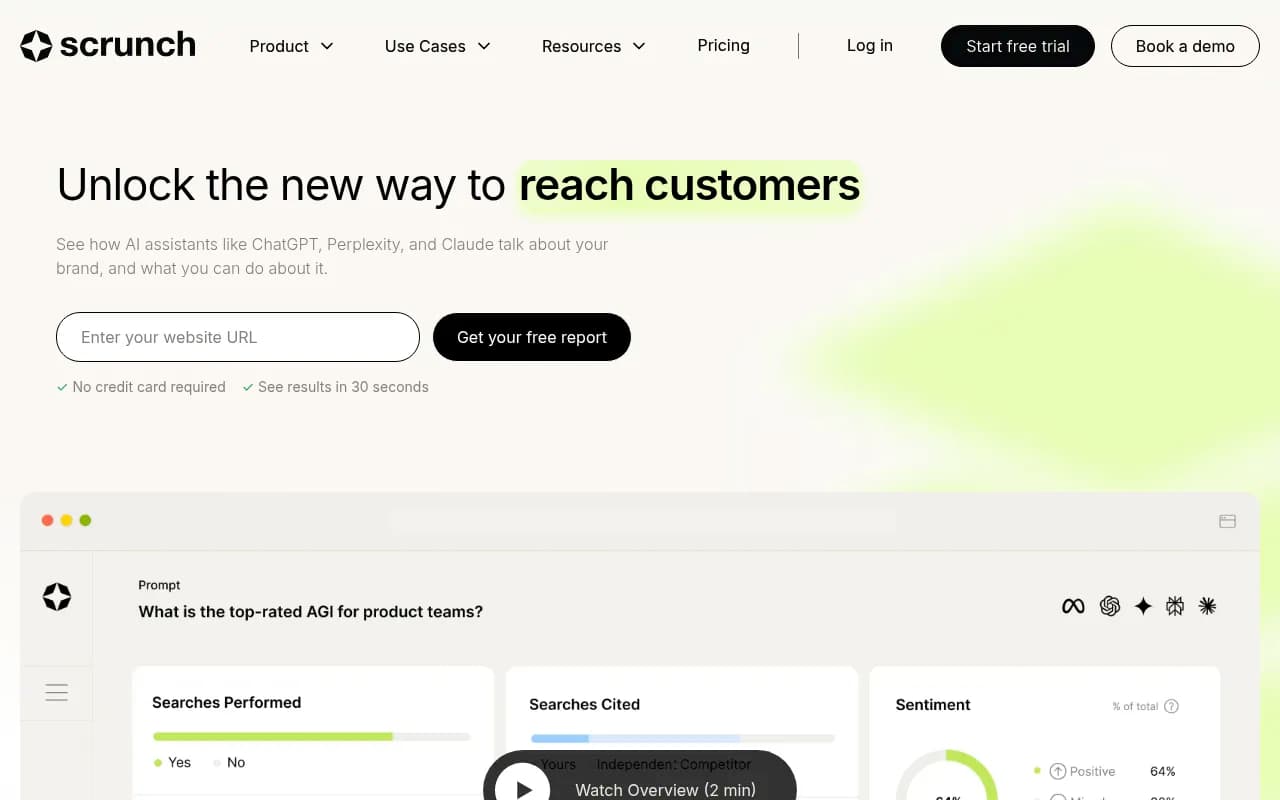
Both are strong monitoring platforms aimed at larger enterprises, and both carry higher price points. Neither tracks Reddit or ChatGPT Shopping the way Promptwatch does, and neither runs agentic execution. They can make sense if your institution already has an enterprise software budget and wants a dashboard-first product. See the Promptwatch vs Profound comparison for specifics.
Profound

Otterly.AI and Peec AI
These are lightweight prompt trackers. They are fine for a department that wants to check a few dozen prompts cheaply, such as a single business school. The trade-off is that they do not include crawler logs, visitor analytics or content generation, so you will need other tools for the "fix it" half of the job.
Otterly.AI


Semrush and Ahrefs Brand Radar
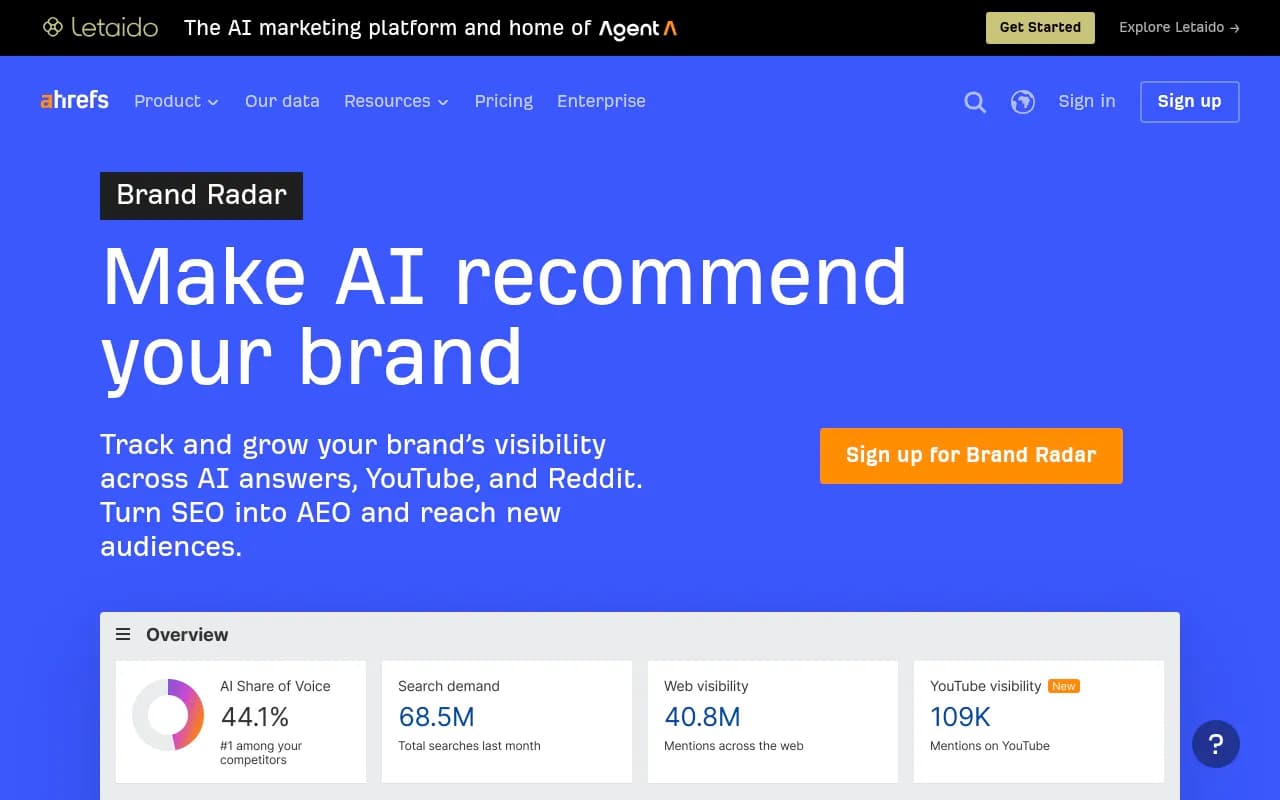
If your SEO team already lives in Semrush or Ahrefs, the AI modules are convenient. They are SEO suites with AI tracking added on, so expect fixed prompt sets and shallower AI-specific data. Useful as a second opinion alongside a dedicated GEO platform.
AthenaHQ, Rankshift and LLM Pulse
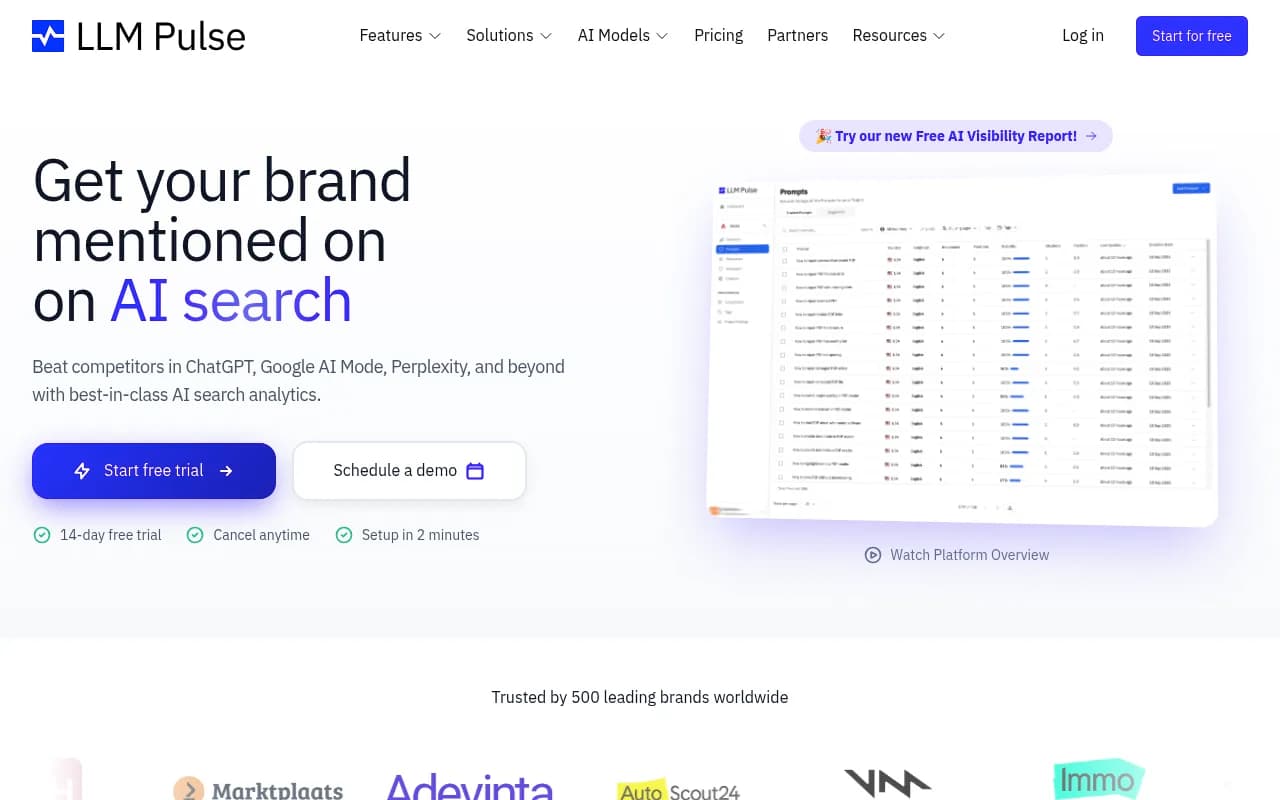
Monitoring-focused tools that cover multiple engines. They report visibility well but leave content production, CMS publishing and agentic workflows to you.


Enterprise suites: BrightEdge, Conductor, seoClarity
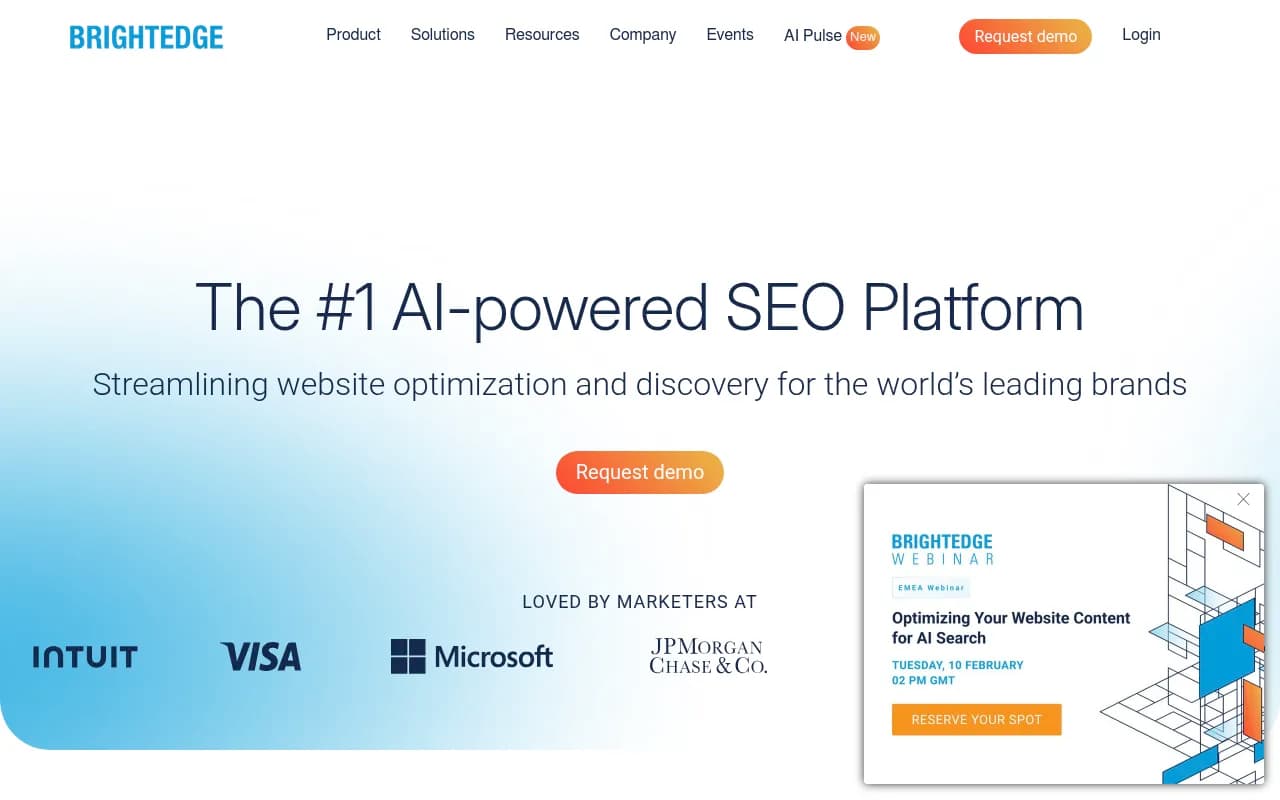
Large universities with existing contracts sometimes extend them to cover AI search. This keeps procurement simple, though the GEO features are generally less specialized than dedicated platforms.
For a wider view of the category, the directory at bestgeosoftware.com lists more GEO platforms.
Comparison table
| Tool | Real-UI tracking | Crawler logs | Content creation and publishing | Best for |
|---|---|---|---|---|
| Promptwatch | Yes | Yes (Professional and up) | Yes (Business and up) | Teams that want to monitor and fix |
| Profound | Yes | Limited | No agentic execution | Enterprise dashboards |
| Scrunch | Yes | Limited | No agentic execution | Enterprise monitoring |
| Otterly.AI | Basic | No | No | Single-department trials |
| Peec AI | Basic | No | No | Budget prompt tracking |
| Semrush / Ahrefs | Fixed prompt sets | No | Separate tools | Existing SEO suite users |
| AthenaHQ / Rankshift / LLM Pulse | Yes | Varies | Limited | Monitoring-only needs |
Tool capabilities change fast. Verify on each vendor's site before committing.
What about agencies?
Searching for this topic mostly returns agency rankings, such as Web Tonic's list of 13 higher ed GEO agencies, an AOFIRS list of ten, and several others from firms that also sell the service. I could not verify pricing or tool comparisons in any of them, and most are written by vendors who appear on their own lists, so I would read them as shopping leads, not neutral evaluations.
If you do hire help, ask for named higher ed clients, a sample prompt set, and what they will report monthly. An agency such as 1001 SEO Media, which covers technical SEO, content and AI search work with no long-term contracts, is the kind of partner to compare on those terms, ideally one that already uses a GEO platform so you get the data too. Whoever you pick, own the tool account so the history stays with your institution.
A practical rollout for a university team
Weeks 1 to 2: baseline
- Build 50 to 150 prompts across commercial ("best online MBA"), informational and branded intent. Include your top ten programs and your top five competitors.
- Split monitors by market. International recruitment needs separate country and language monitors.
- Run a free crawler access check, such as the Agentic Readiness Check, to see which AI bots can read your site.
Weeks 3 to 6: fix the basics
- Audit program pages for completeness: tuition, admissions requirements, accreditation, outcomes, dates.
- Add FAQ blocks to program pages. Promptwatch's content-type data shows FAQ pages and reviews rise for branded prompts.
- Make sure documentation and catalog pages are crawlable, not locked in PDFs or script-rendered widgets.
- Check what AI claims about you. Correct inaccuracies at the source page, not just in a chat.
Weeks 7 to 12: earn third-party presence
- Get into the "best of" roundups AI already cites. Listicles are 13.6% of ChatGPT citations, and 15.0% for commercial prompts.
- Collect reviews on trusted sites.
- For Google surfaces, invest in YouTube and Instagram. For ChatGPT, spend that effort on your own pages instead.
- Watch how long cited content survives. Promptwatch's content half-life report found landing pages and docs stay cited longest while news loses half its pages within 36 days, a useful reason to favor evergreen program pages over news posts.
Ongoing: measure
Track visibility, share of voice and sentiment per program, then connect AI-referred visits to inquiries and applications. Promptwatch's visitor analytics and the guide to attributing AI traffic cover how, including the ChatGPT referrer change on October 8, 2026, which requires tagging links with utm_source=chatgpt.com to keep counting those visits.
Choosing by team size
| Situation | Suggested starting point |
|---|---|
| One school or department, small budget | Promptwatch Essential or a lightweight tracker like Otterly.AI or Peec AI |
| Central marketing team, many programs | Promptwatch Professional or Business for crawler logs, custom reports and content gap work |
| Enterprise with existing SEO platform contract | Add the AI module in that suite, plus a dedicated GEO tool for depth |
| Multi-campus or international university | Business or Enterprise for state/city tracking, multi-market monitors, audit logs and SSO |
| Agency managing several institutions | Agency plans (Kick-off $199, Growth $399, Scale $799) with unlimited projects |
Common mistakes
- Tracking only the university name. Most students never type it. Track category prompts like "best public health master's programs".
- Treating all engines the same. The social citation data above shows ChatGPT and AI Overviews behave very differently.
- Reporting a visibility score without a cause. Low share of voice, late position and missing self-citations each point to a different problem.
- Publishing a pile of blog posts when program and landing pages are the pages that get cited.
- Letting departments each buy a separate tool. One shared platform with project-level access is cheaper and gives leadership one number.
Final recommendation
Start with a free baseline: run an AI visibility report, check crawler access, and write down ten prompts a real applicant would type. Then trial a platform that covers monitoring, crawler logs and content workflow in one place. For most university teams that is Promptwatch, with lighter trackers fitting single-department pilots and enterprise SEO suites fitting institutions that want to stay inside an existing contract. Whatever you pick, judge it on whether your program pages start getting cited, not on how good the dashboard looks.