Key takeaways
- Most GEO tools were built for individual brands, not agencies -- white-label reporting, multi-client dashboards, and per-client prompt management are still rare features.
- The platforms that stand out in 2026 combine AI visibility tracking with client-ready reporting and, ideally, content optimization tools that help you actually improve results.
- Promptwatch is the only GEO platform rated "Leader" across all categories in a 2026 comparison of 12 platforms, and it's the only one that closes the loop from gap analysis to content creation to citation tracking.
- Price and white-label depth vary enormously -- some tools charge extra for basic branding, others include it on every plan.
- Agencies should evaluate tools on four dimensions: white-label output quality, multi-client management, prompt/model coverage, and whether the tool helps you fix visibility problems (not just report on them).
Why agencies need different GEO tools than brands do
Most GEO tools launched between 2023 and 2025 were designed for a single use case: a brand wants to know if ChatGPT mentions them. One domain, one team, one set of prompts. That's fine for an in-house marketing team. For an agency managing 10, 20, or 50 clients, it's a mess.
The problems stack up quickly. You end up with separate logins for each client. Reports come out of the tool looking like they came out of the tool -- not from your agency. There's no way to compare performance across clients or spot patterns. And when a client asks "what do we do about this?", most platforms have no answer.
In 2026, a handful of platforms have started to address this properly. But the market is still uneven. Some tools have bolted on a "white-label" feature that amounts to adding a logo to a PDF. Others have built genuine agency infrastructure: client portals, custom domains, automated reporting, and multi-client prompt libraries.
This guide breaks down what actually matters for agency operations, then compares the platforms worth considering.
What agencies actually need from a GEO tool
Before getting into specific platforms, it's worth being clear about the evaluation criteria. Not all of these matter equally for every agency, but they're the right questions to ask.
White-label reporting depth. Can you remove all tool branding and replace it with your own? Does that extend to PDF exports, email reports, and client-facing dashboards? Some tools charge extra for this; others include it on every plan.
Multi-client management. Can you manage all clients from a single login? Are prompts, keywords, and settings isolated per client? Can you compare performance across clients in one view?
Prompt and model coverage. Which AI engines does the tool track? ChatGPT and Perplexity are table stakes. Google AI Overviews, Gemini, Claude, Grok, and DeepSeek coverage separates the serious platforms from the basic ones.
Content optimization, not just monitoring. This is where most tools fall short. Knowing your client isn't cited in AI responses is only useful if you can do something about it. Tools that identify content gaps and help you create content to fill them are worth significantly more to an agency than pure trackers.
Pricing model. Per-seat, per-domain, per-prompt -- the pricing structures vary wildly. Agencies need to understand the real cost at scale, including what happens when you add a 10th or 20th client.
The platforms worth considering
Promptwatch
Promptwatch is the most complete GEO platform available for agencies in 2026. It's the only tool in a recent 12-platform comparison rated as a "Leader" across all evaluation categories, and the reason is straightforward: it's built around taking action, not just reporting.

The core workflow is a loop. Answer Gap Analysis identifies exactly which prompts competitors are visible for but your client isn't -- specific topics, questions, and angles that AI models want to answer but can't find on your client's site. Content Agents then generate articles, listicles, and briefs grounded in that real prompt data. Page-level tracking shows when those new pages get crawled and cited, with a timeline from publish to citation. Traffic attribution connects AI visibility to actual revenue.
For agencies specifically, Promptwatch tracks 10 AI models (ChatGPT, Perplexity, Google AI Overviews, Google AI Mode, Claude, Gemini, Meta/Llama, DeepSeek, Grok, Mistral, Copilot), which is broader coverage than most competitors. The AI Crawler Logs feature -- real-time logs of AI crawlers hitting client websites -- is something most competitors lack entirely. Reddit and YouTube tracking surfaces the external discussions that influence AI recommendations, a channel most tools ignore.
Pricing: Essential at $99/month (1 site, 50 prompts, 5 articles), Professional at $249/month (2 sites, 150 prompts, 15 articles, crawler logs), Business at $579/month (5 sites, 350 prompts, 30 articles). Agency and enterprise plans are available with custom pricing. A free trial is available.
The white-label and multi-client capabilities are strongest on agency/enterprise tiers -- worth a direct conversation with their team if you're managing multiple clients.
Semrush
Semrush has the advantage of being a platform agencies already use. Its AI Visibility Toolkit, part of the Semrush One bundle, adds AI search monitoring on top of the existing SEO toolset -- rank tracking, site audits, content tools, and now LLM citation tracking.
The white-label reporting is available via the My Reports add-on ($20/month on top of base plans starting at $139/month). It's functional but not the deepest implementation -- you can brand reports, but the client portal experience is limited compared to dedicated agency platforms. The AI monitoring uses fixed prompts rather than dynamic prompt discovery, which means you're tracking what Semrush decides to track rather than the specific questions your client's customers are actually asking.
For agencies already deep in the Semrush ecosystem, the AI Visibility Toolkit is a reasonable addition. For agencies building a GEO practice from scratch, it's probably not the right starting point.
Rankscale
Rankscale is built specifically for agencies running AI visibility services. It focuses on multi-client management and white-label output, with a dashboard designed around the agency workflow rather than the single-brand use case.
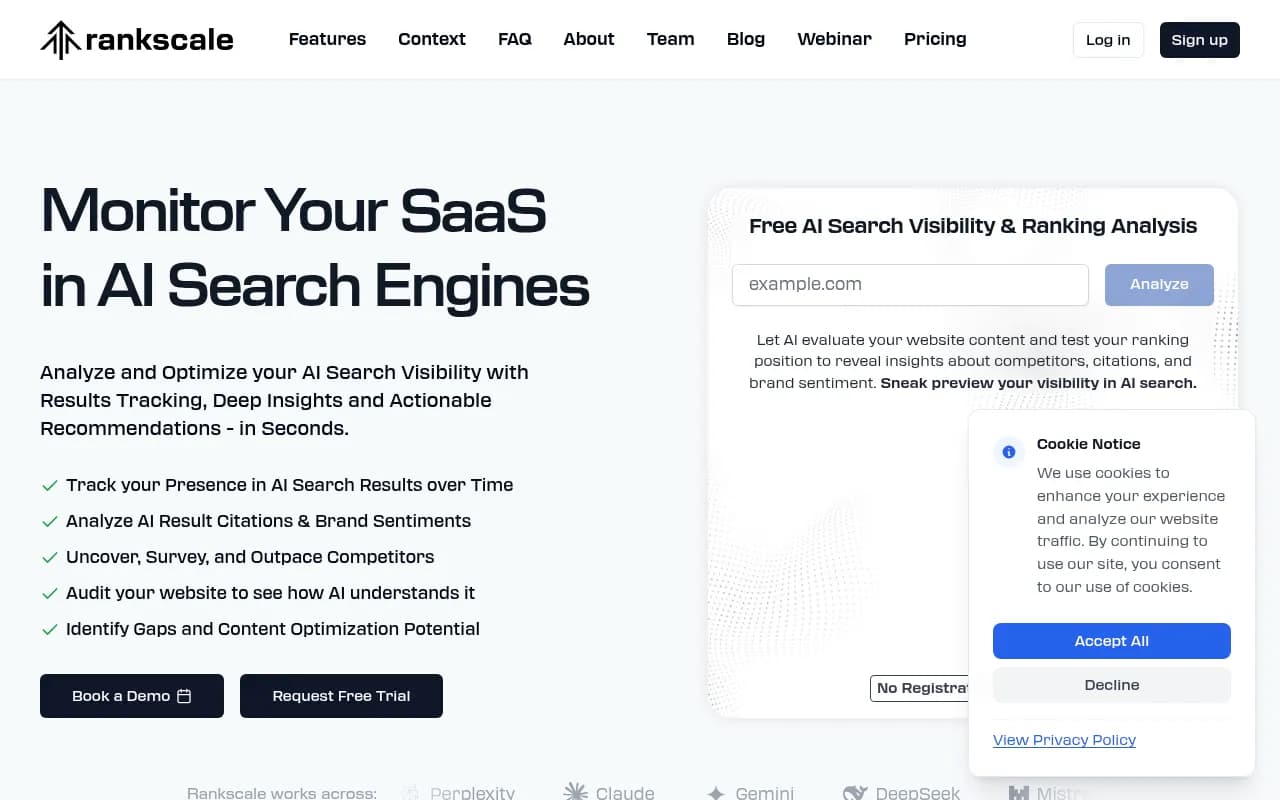
The platform tracks brand mentions and citations across major AI engines, and the reporting layer is genuinely white-label -- custom domains, branded PDFs, client-facing portals. It's a cleaner agency experience than most tools in this space.
The limitation is that Rankscale is primarily a monitoring tool. It tells you where your clients stand but doesn't help you improve their position. For agencies that want to offer GEO as a managed service (not just a reporting service), you'd need to pair it with a content tool.
Otterly.AI
Otterly.AI is one of the earlier GEO monitoring tools and has a straightforward value proposition: track specific prompts across AI engines and see where your brand appears.
Otterly.AI

It's affordable (starting at $29/month) and easy to set up. The prompt-specific tracking is genuinely useful -- you can define exact queries and see how responses change over time. White-label reporting exists but is basic. There's no multi-client dashboard in the traditional agency sense, no content gap analysis, and no crawler logs.
Otterly works well as a lightweight monitoring tool for smaller agencies or as a client-facing proof-of-concept. It's not built for agencies running GEO at scale.
Profound
Profound sits at the enterprise end of the market. Starting at $499/month, it's designed for large brands and agencies with significant budgets. The platform tracks product visibility in ChatGPT Shopping, which is a genuinely differentiated feature for e-commerce clients.
Profound

The data quality is strong and the platform has a good reputation for accuracy. White-label and multi-client features exist but are geared toward enterprise accounts rather than mid-market agencies. The price point puts it out of reach for most agencies unless they're billing clients at enterprise rates.
AthenaHQ
AthenaHQ focuses on AI search monitoring with a clean interface and solid model coverage. It's monitoring-focused, which means it's good at showing you the current state of AI visibility but doesn't offer content optimization or gap analysis.

For agencies that already have a content production workflow and just need reliable tracking data, AthenaHQ is worth evaluating. For agencies that want an end-to-end GEO platform, it stops short.
SE Ranking
SE Ranking is a traditional SEO platform that has added AI visibility features through its SE Visible product. The white-label capabilities are strong -- it's one of the better-established platforms for agency reporting, and the Agency Pack add-on ($69/month on top of base plans starting at $129/month) adds client management features.
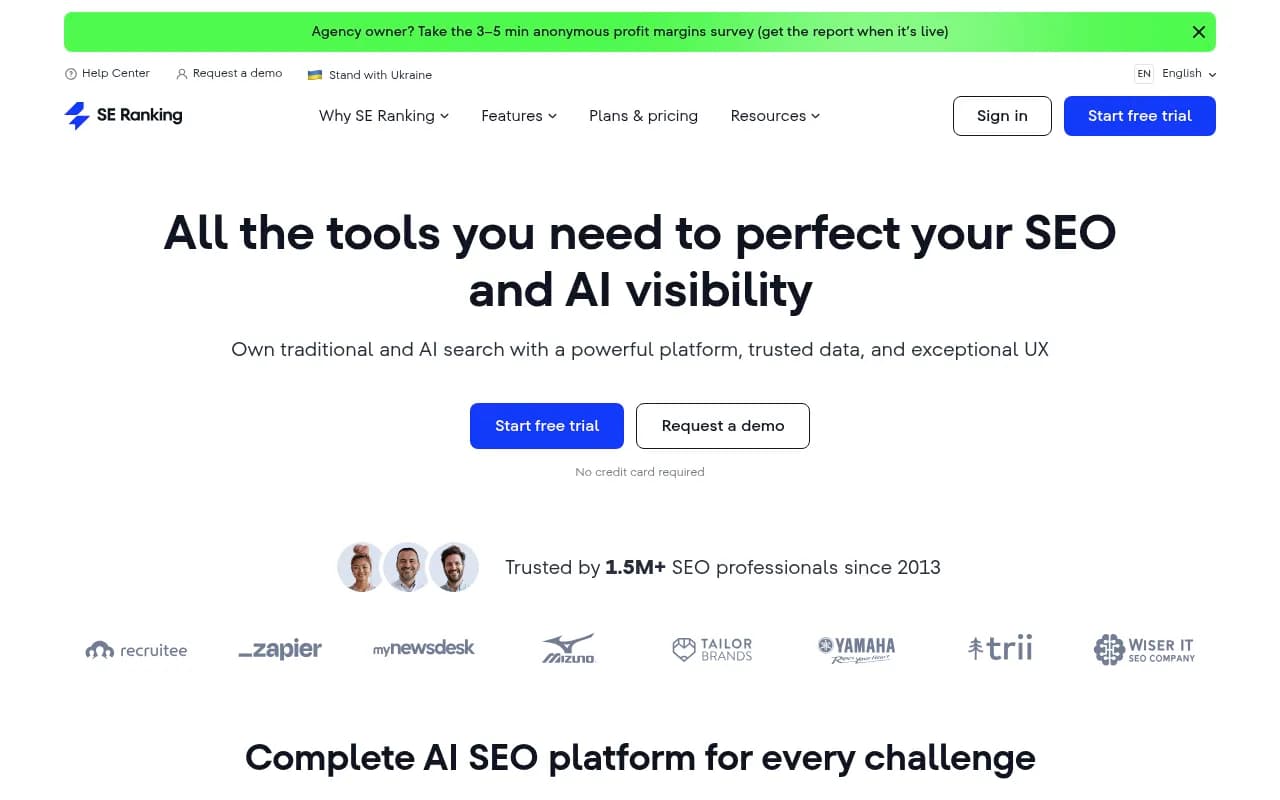
The AI monitoring layer is newer and less developed than the core SEO tools. It tracks brand mentions in AI engines but lacks the depth of purpose-built GEO platforms. For agencies that primarily sell traditional SEO and want to add basic AI visibility reporting, SE Ranking is a practical choice.
Conductor
Conductor combines AI visibility tracking with technical crawler insights in an accessible interface. It's positioned as a user-friendly option for teams that want to understand AI search without deep technical expertise.
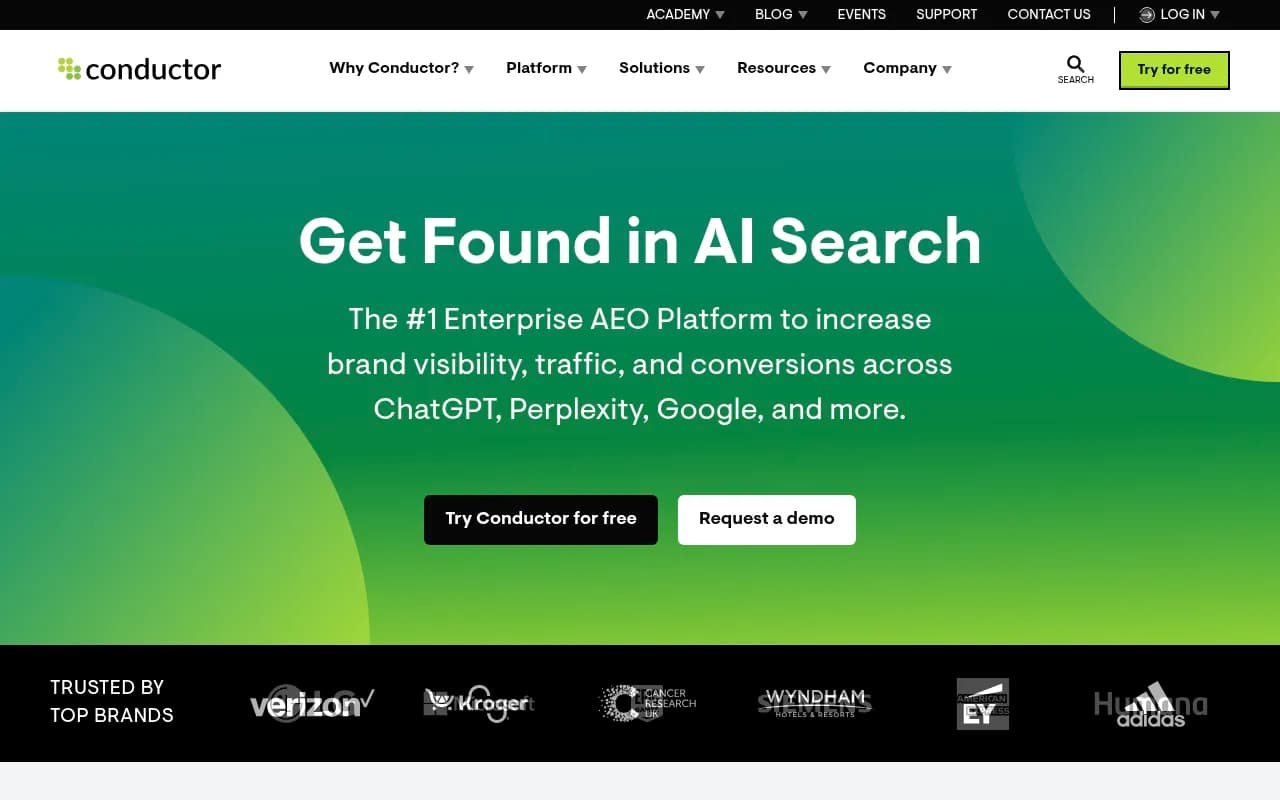
Custom pricing means it's harder to evaluate without a sales conversation. The platform has genuine strengths in combining AI and traditional search data, but it's more enterprise-oriented and less focused on the agency multi-client workflow.
Nightwatch
Nightwatch is primarily a rank tracking platform that has added AI search monitoring. The white-label features are included on all plans (starting at $32/month annually), which is genuinely unusual -- most platforms charge extra for branding.
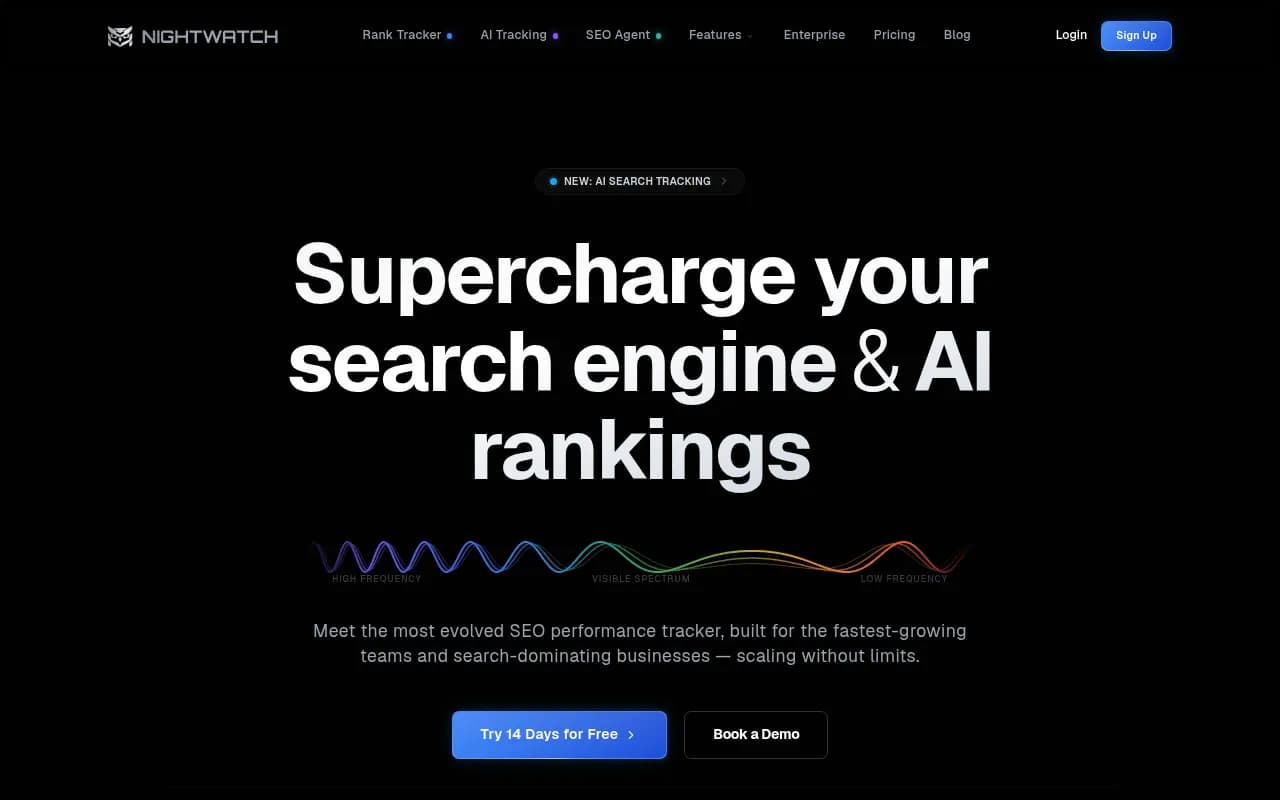
The AI monitoring is basic compared to purpose-built GEO tools, but for agencies that want white-label rank tracking with some AI visibility data included, Nightwatch offers good value. It's not a GEO-first platform, but it's honest about what it is.
Feature comparison
Here's how the main platforms stack up on the dimensions that matter most for agencies:
| Platform | White-label | Multi-client | Content optimization | AI models tracked | Starting price |
|---|---|---|---|---|---|
| Promptwatch | Yes (agency tier) | Yes | Yes (Content Agents + gap analysis) | 10 | $99/mo |
| Semrush | Add-on ($20/mo) | Limited | Basic recommendations | 5+ | $139/mo |
| Rankscale | Yes | Yes | No | 5+ | Custom |
| Otterly.AI | Basic | No | No | 4 | $29/mo |
| Profound | Yes (enterprise) | Yes (enterprise) | No | 9+ | $499/mo |
| AthenaHQ | Limited | Limited | No | 6+ | Custom |
| SE Ranking | Yes (Agency Pack) | Yes | No | 3+ | $129/mo + $69/mo |
| Conductor | Yes | Yes | Limited | 5+ | Custom |
| Nightwatch | Yes (all plans) | Limited | No | 3+ | $32/mo |
The monitoring-only problem
This is the thing most agencies discover too late: a tool that only monitors AI visibility is only half a solution. You can show a client their citation rate is low, but if you can't tell them what content to create or help them create it, you're delivering a problem report without a fix.
The agencies building durable GEO practices in 2026 are the ones that have closed this loop. They use gap analysis to find the specific prompts where clients are invisible, create content targeting those exact gaps, and then track citation rates to prove the work is paying off. That's a service you can charge for. "Your AI visibility score is 23%" is not.
This is why the distinction between monitoring platforms and optimization platforms matters so much for agency positioning. Most tools in this space are still monitoring-only. The ones that have built content generation and gap analysis on top of tracking data -- Promptwatch being the clearest example -- are the ones that let agencies offer something more than a dashboard.
How to choose
A few practical questions to narrow down your options:
How many clients are you managing? If it's under five, almost any platform works. Above ten, you need genuine multi-client infrastructure -- separate prompt sets, isolated reporting, ideally a client portal.
What's your service model? If you're selling GEO as a managed service (you improve results, not just report on them), you need a platform with content optimization capabilities. If you're selling reporting and strategy, a monitoring-only tool might be sufficient.
What's your budget per client? Work backwards from what you're charging. A $579/month platform covering five sites is $116/site -- that needs to be covered by what you're billing.
Which AI engines matter to your clients? For most clients, ChatGPT, Perplexity, and Google AI Overviews cover the majority of AI search traffic. But if you have clients in specific verticals or regions, coverage of Grok, DeepSeek, or Mistral might matter.
Do you need crawler log data? For technical GEO work -- understanding why AI engines aren't citing a client's pages -- crawler logs are invaluable. Most platforms don't offer this. Promptwatch does, on Professional plans and above.
The right answer depends on your agency's specific situation. But the wrong answer is choosing a tool based on price alone and then discovering six months in that you can't actually improve client results with it -- only measure how bad they are.