Key takeaways
- Marketplaces and directories have a different AI visibility problem than SaaS brands: you need to be cited as a source, and your listings need to be crawlable and cited at page level.
- The best Profound alternatives split into three groups: full optimization platforms, lightweight prompt trackers, and SEO-suite add-ons.
- Published entry prices range from about $29 a month (Otterly Lite) to $579 a month (Promptwatch Business), so cost per tracked prompt and per response matters more than the headline number.
- Crawler logs and AI traffic attribution are the features most worth paying for if you run thousands of listing pages.
- Run a two-week parallel test on 30 to 50 real category prompts before you cancel anything.
Why marketplaces and directories need a different kind of AI visibility tool
Most "Profound alternatives" roundups are written for SaaS brands. They ask: does ChatGPT mention us? That is a fair question if you sell one product. It is the wrong first question if you run a marketplace, a B2B directory, or a review site.
Your business is an intermediary. AI answers for "best CRM for small teams" or "top freight brokers in Texas" cite sources, and your site is either one of those sources or it isn't. So what you need to know is which of your pages get cited, which prompts they get cited for, whether AI crawlers can even read your listing pages, and whether any of it turns into visits and leads.
The citation data backs this up. In Promptwatch Data's analysis of ChatGPT citations by content type (Sep 28 to Oct 4, 2026), product pages made up 22.4% of classified citations, landing pages 16.8%, and listicles 13.6%. For commercial prompts like "best CRM for small businesses", product pages, landing pages, listicles and comparisons together took almost 70%. Category and comparison pages are exactly what directories publish.
Software prompts show where review sites sit. In Promptwatch's software citation report for the same week, G2 had 0.73% of citations, Gartner 0.34%, Capterra 0.32% and Software Advice also appeared. Together G2, Gartner, Capterra and Software Advice earned 1.57%, more than any single vendor including Microsoft. But docs and help centers (2.64%) and vendor sites (2.01%) earned more as groups. Directories get cited, just not at the scale of a brand's own pages, so winning means picking your battles by category.
The same pattern shows up in other verticals. Promptwatch's travel report found booking and search sites earn more than half of ChatGPT citations, and its automotive report found marketplaces like Autotrader and Cars.com outrank every car brand. Marketplaces can win in AI answers. They need tooling that shows how.
What to look for in a Profound alternative
Profound is a strong enterprise monitoring platform. People leave it for price, for a lack of execution features, or because they want something that fits a listing-heavy site. The checklist I would use:
- Real-UI tracking, not just API calls. Answers in the ChatGPT interface can differ from API output.
- Page-level citation data, so you can see which listing or category pages get cited.
- AI crawler logs. If GPTBot hits errors on your faceted navigation, no dashboard of mentions will tell you.
- AI referral traffic and conversions, so you can show a marketplace owner what AI sends.
- Multi-country and multi-language tracking if you list suppliers internationally.
- Action features: content gap analysis, content generation and publishing, not just charts.
- Pricing by prompts and responses you can afford at category scale. A marketplace may have hundreds of category prompts.
The alternatives at a glance
| Tool | Entry price (published) | Strength | Gap for marketplaces | Best for |
|---|---|---|---|---|
| Promptwatch | Free tier; paid from $95/mo | Tracking plus crawler logs, traffic attribution and content agent | Higher tiers needed for the full content automation | Directories that want to fix visibility, not just watch it |
| Peec AI | From about $80-95/mo (50 prompts) | Clean prompt-level analytics, agency-friendly | Monitoring only | Lean teams and agencies |
| Otterly.AI | From $29/mo (15 prompts) | Cheapest entry | Small prompt limits | Proofs of concept |
| Ahrefs Brand Radar | Add-on pricing, from about $199/mo on top of a base plan | Huge prompt database, offsite source data | Not a workflow or content tool | Existing Ahrefs users |
| Semrush AI Toolkit | From about $99/mo | Sits in your existing SEO suite | Fixed prompt sets, shallow AI data | Teams already on Semrush |
| LLM Pulse | Accessible, 14-day trial | Multi-model tracking, used by Swiss Marketplace Group | Monitoring focus | Budget multi-model tracking |
| AirOps | Task-based, higher at scale | Content engineering | Little visibility depth | Content-heavy teams |
Prices come from the vendors' own pricing pages as quoted by third-party roundups, and they change often. Confirm before you buy.
Promptwatch: best for directories that want to act on the data
Promptwatch is where I would start for a marketplace or directory, mainly because it covers the parts of the problem that a listing site actually has.

The crawler logs are the big one. They show IP-verified visits from GPTBot, OAI-SearchBot, ChatGPT-User, ClaudeBot, PerplexityBot and others, which pages they read, and which ones threw errors. For a site with thousands of supplier profiles and filtered category URLs, finding out that an AI crawler is stuck on a faceted page is worth more than another mention-rate chart. Add visitor analytics for AI referral traffic and you can finally say what AI search sends you.
On the tracking side it monitors the real interfaces of ChatGPT, Google AI Overviews, Google AI Mode, Gemini, Perplexity, Copilot and others, per country and language. Citation analytics show which of your pages get cited and where you sit in the source list. Prompt volumes and difficulty scores help you pick which category queries are worth chasing.
Then there is the action layer. Content gap analysis maps your pages against the prompts AI answers. The Content Agent plans, writes and publishes to WordPress, Webflow or Framer, and the Action Board gives you a prioritized to-do list. For a directory that needs hundreds of category and comparison pages, that is the difference between a report and a roadmap.
Plans: Essential is $95 a month (50 prompts, all models), Professional is $245, and Business is $579 with the automated Content Agent and local targeting. Agencies run Kick-off, Growth or Scale at $199, $399 and $799. There is a free Explore tier for ChatGPT only. Check promptwatch.com/pricing for current numbers.
The honest downside: the content automation sits on Business and above, and if all you want is a cheap weekly mention check, it is more than you need.
Peec AI: clean prompt analytics at a fair price
Peec AI is the one I hear recommended most often for agencies. Published plans in vendor roundups run roughly $80 to $95 a month for Starter with 50 prompts, about $205 for Pro with 150 prompts, and $420 for Advanced with 350. Euro pricing starts at EUR 89.

It reports prompt by prompt, with citations and competitor positioning, and it is easy to hand to a client. What it does not do is crawler logs, traffic attribution or content generation. For a directory that already has an SEO team and a content pipeline, that may be fine. If you need to know why listing pages are not getting cited, you will end up bolting on a second tool.
Otterly.AI: the cheapest way to start
Otterly.AI's Lite plan is $29 a month for 15 search prompts, with Standard around $189 and Premium around $489 according to September 2026 pricing roundups. It is a legitimate way to test whether AI visibility is worth budgeting for.
Otterly.AI

Fifteen prompts will not cover a marketplace with dozens of categories. Treat it as a pilot, not a program.
Ahrefs Brand Radar: best if you already live in Ahrefs
Brand Radar's pitch is data depth. It exposes a database of hundreds of millions of prompts for user-defined queries, and its offsite source data is useful for PR and partnership targeting, since AI frequently cites review sites, YouTube, Reddit and industry blogs. It also lets you analyze any entity, competitor or category without per-entity fees, which suits agencies.

The catch is that it sits on top of a base plan and is closer to a research tool than a workflow tool. There is no content engine and no crawler log. Pricing also stacks up: reported figures run from about $50 for custom prompts to $699 a month to cover all models. Price the full bundle before you commit.
Semrush AI toolkit: convenient, not deep
If your team already pays for Semrush, the AI Visibility Toolkit (from around $99 a month in roundups) is the path of least resistance. You keep one login and one invoice.
The trade-off is fixed prompt sets and thinner AI-specific data than the dedicated platforms. For a marketplace I would use it as a secondary check, not the system of record.
LLM Pulse: budget multi-model tracking
LLM Pulse reports 500 brands using it, including Swiss Marketplace Group, which makes it one of the few tools on this list with a named marketplace customer. It has transparent pricing and a 14-day free trial with no sales call.
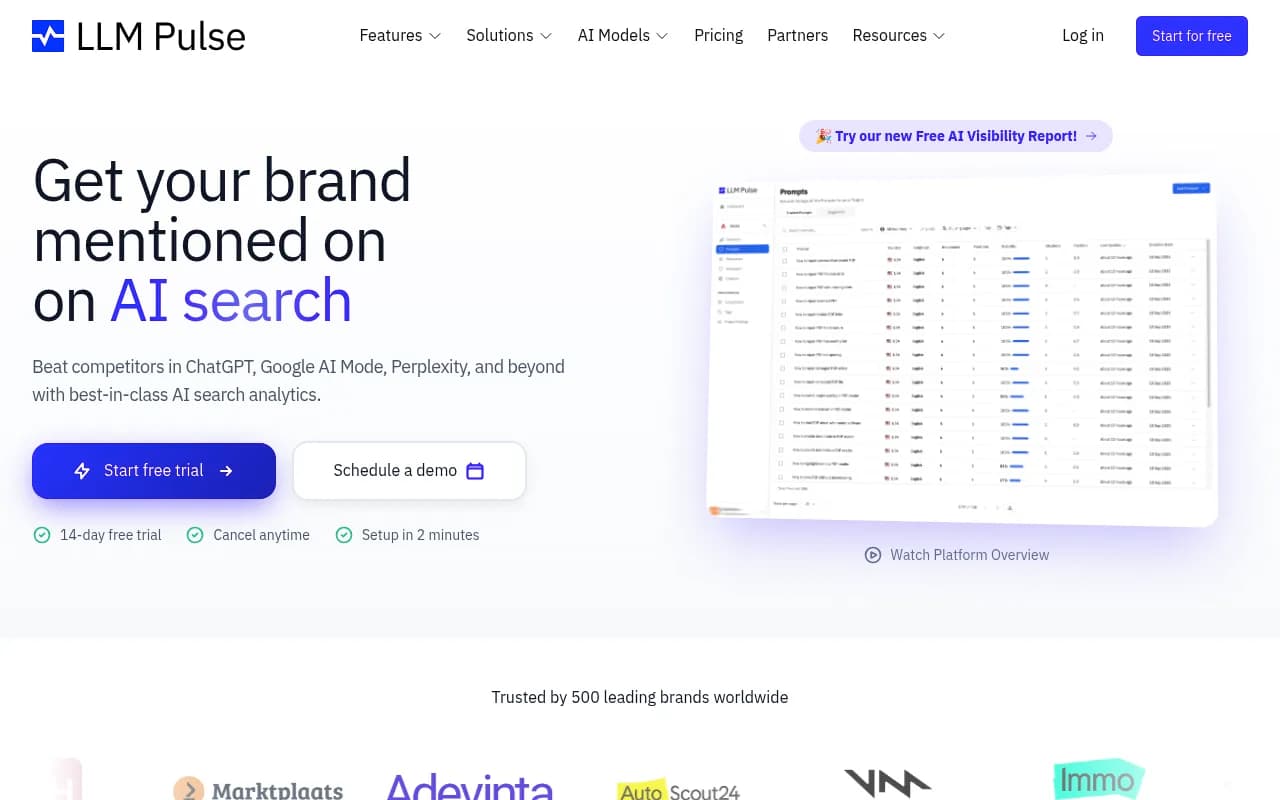
It is a monitoring product. That is fine if monitoring is the job.
AirOps and the content-first options
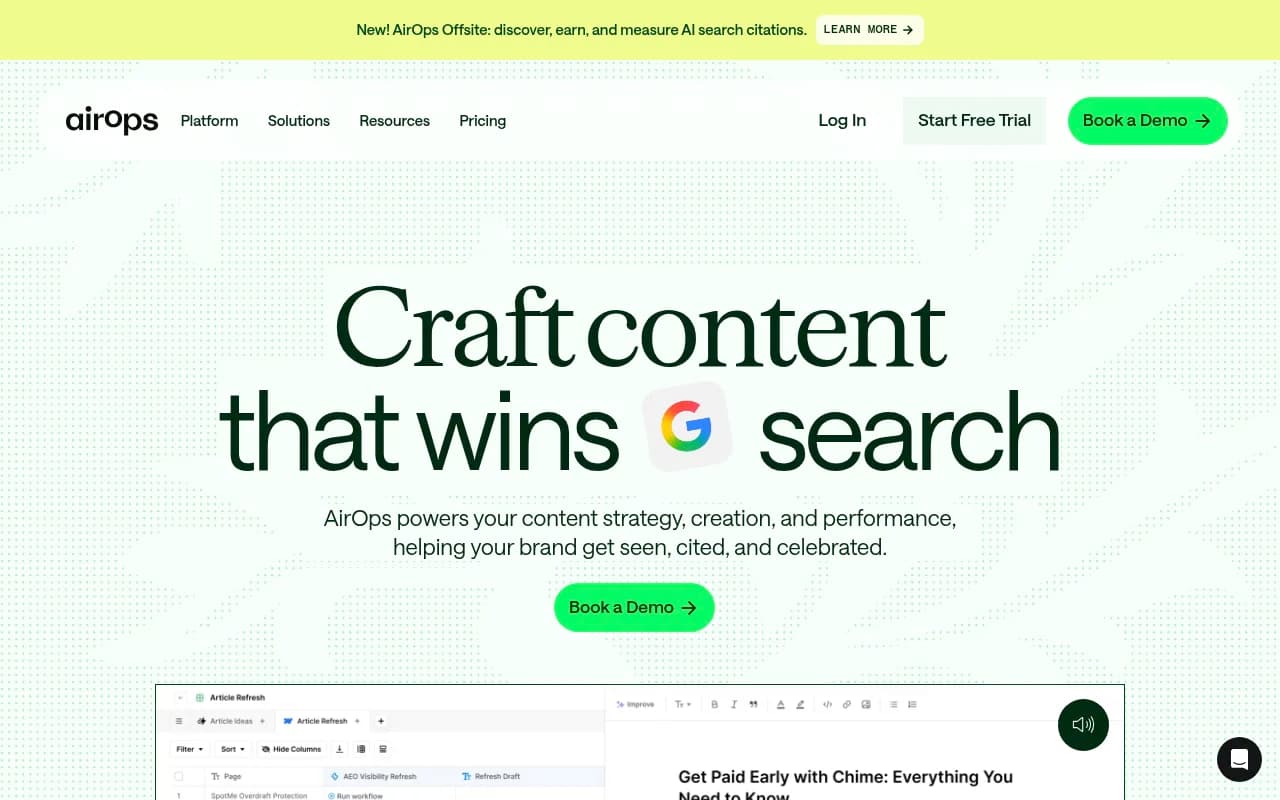
AirOps is a content engineering platform rather than a tracker. Task-based pricing gets hard to predict at scale, and one roundup put meaningful multi-engine visibility near $2,000 a month. It makes sense if your bottleneck is producing structured content at volume and you have an engineering-minded content team.
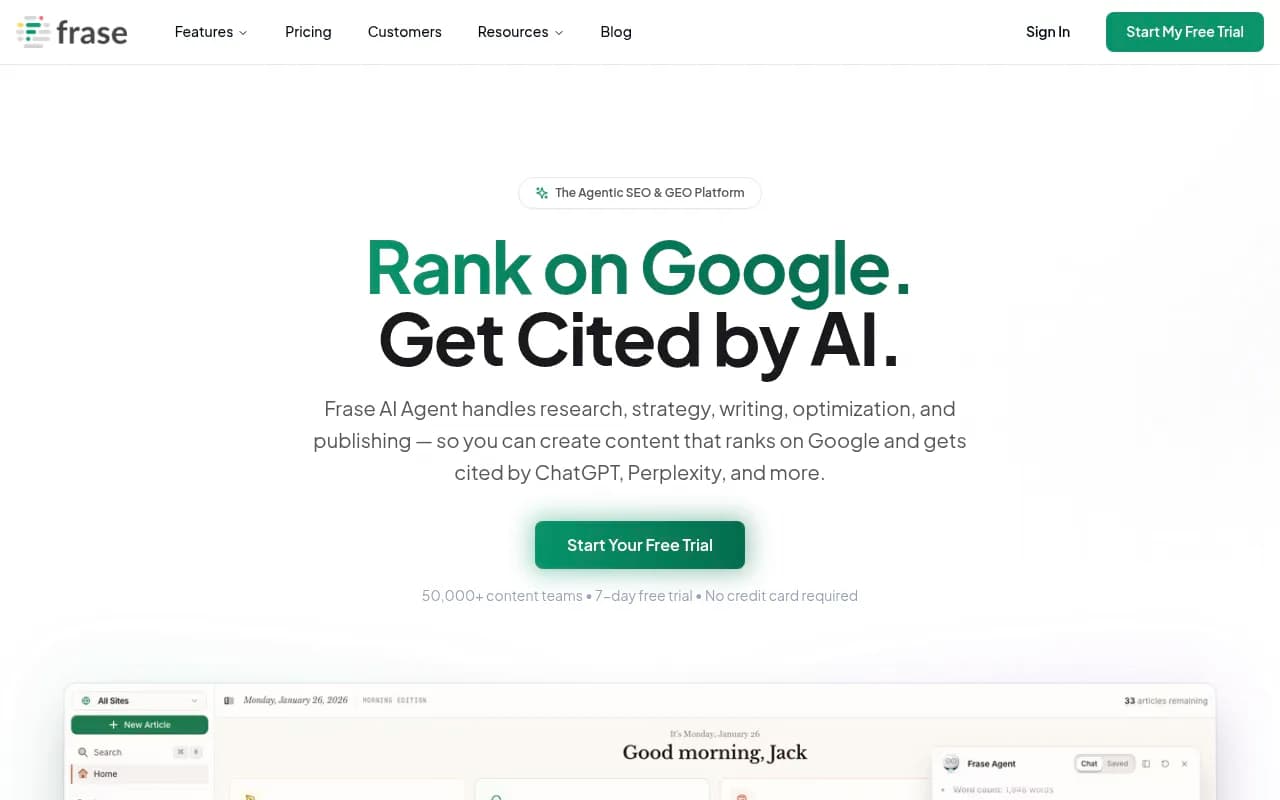
Frase and Writesonic take a similar tack at lower price points: tracking joined to a content workflow. Writesonic's self-serve plans start at $79 a month billed annually per its pricing page.

Other trackers worth a look
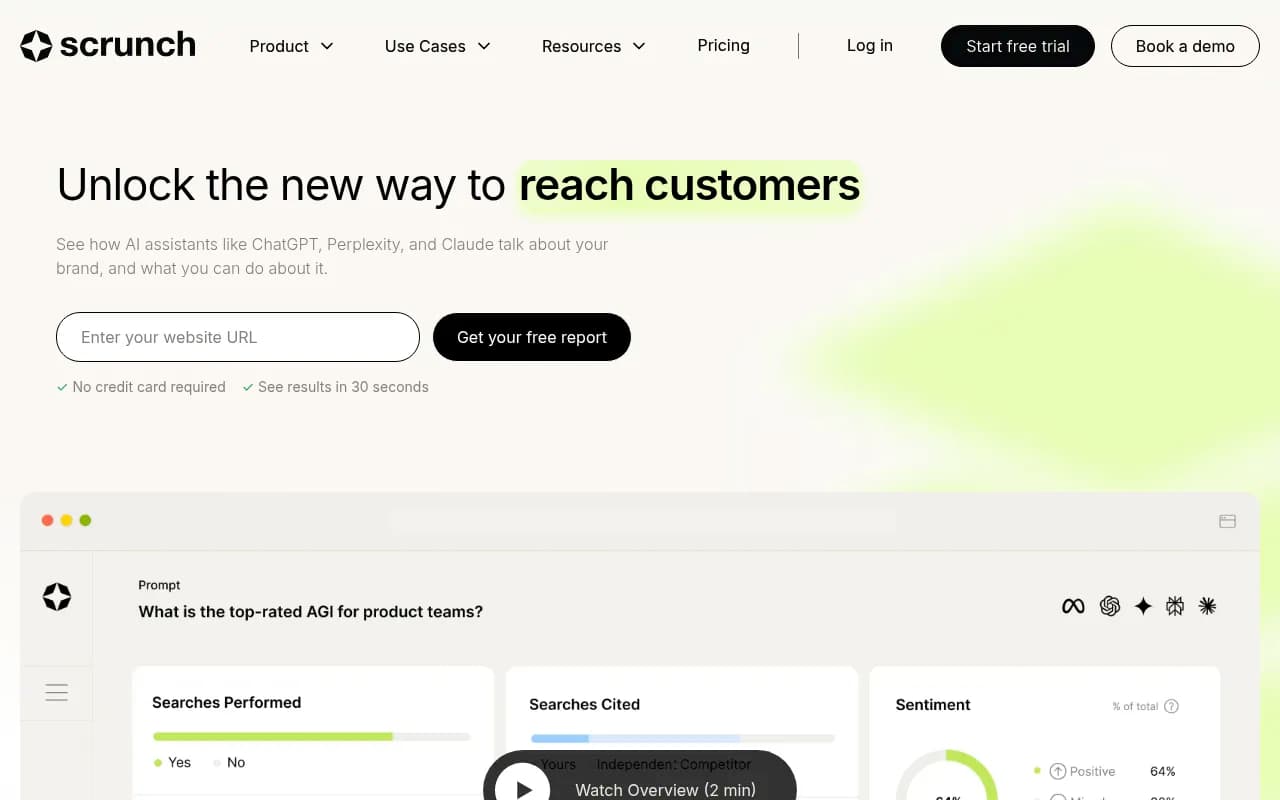
The field is crowded. Scrunch is aimed at enterprise teams with prompt data and SSO, and AthenaHQ offers an action center with a Shopify publishing path. Both are priced from around $250 to $300 a month in roundups. Conductor and Quattr serve larger SEO teams.

For a broader view of the category, the GEO software directory at bestgeosoftware.com lists dozens more.
Picking by team type
| Your situation | Start with | Why |
|---|---|---|
| Directory with thousands of listing pages, wants growth | Promptwatch | Crawler logs, page-level citations, content agent |
| Agency running several directory clients | Peec AI or Promptwatch Agencies | Unlimited seats or projects, white-label reporting |
| Tight budget, validating the idea | Otterly Lite or Promptwatch free tier | Low commitment |
| Already deep in an SEO suite | Ahrefs Brand Radar or Semrush toolkit | One vendor, more data |
| Content engineering team | AirOps or Frase | Production is the bottleneck |
What to track once you pick a tool
Regardless of platform, set up your monitors around how marketplace buyers actually ask:
- Category prompts: "best [category] suppliers", "top [category] platforms for mid-size companies".
- Comparison prompts: "[vendor A] vs [vendor B]", which feed your comparison pages.
- Local and niche prompts: "[category] providers in [city]" if you list regionally.
- Brand prompts: how AI describes your marketplace and whether it recommends it.
Then watch three numbers. Your citation share against competing directories. The share of citations that point to your own pages versus third-party mentions. And AI-referred sessions and conversions in your analytics. Add a GA4 channel group for AI referrals so your traffic numbers do not depend on any one vendor.
Content hygiene matters too. Promptwatch's analysis recommends clear pricing, specs and target audience on product pages, getting into the roundups ChatGPT cites, collecting reviews on trusted sites, and adding an FAQ. For a directory, that translates to structured listing pages with consistent fields, strong category intros, and visible reviews. On durability, Promptwatch's half-life study found landing pages and docs stayed cited longest while news lost half its pages within 36 days, so evergreen category pages are a better bet than news-style posts.
A 30-day switching plan
- Week 1: export your current prompts, competitors and reports from Profound. Note which features you actually used.
- Week 2: run the new tool in parallel on 30 to 50 category prompts. Compare mention rates and citations against your current data. Expect some differences, since tools sample differently.
- Week 3: test the workflow. Can your team find the listing pages that are not being cited, and act on it?
- Week 4: decide, rebuild your reports, and cancel only after a full reporting cycle.
If you would rather hand the whole program to specialists, an agency like 1001 SEO Media handles technical SEO, content and AI search work together, and it uses Promptwatch for its own AI visibility reporting.
The short version
For most marketplaces and directories, the deciding factor is whether you want a scoreboard or a system. Peec, Otterly and LLM Pulse are good scoreboards at friendly prices. Ahrefs and Semrush make sense if you are already paying them. If your goal is to find out why listing pages are not cited and then fix it at scale, Promptwatch's crawler logs, citation analytics and content agent cover more of that loop than anything else on this list. Start with a two-week parallel test, and let your own category prompts decide.