Key takeaways
- Local prompt tracking is different from brand tracking. You need per-location prompt sets, geo-aware answers, and a billing model that does not punish you for adding clients.
- Most general AI visibility tools price per brand or per prompt. At 10 clients with 25 prompts each, published list prices land around $40 to $99 per client per month, according to Omnia's November 2026 pricing check.
- BrightLocal and Yext Scout are the local-first options. Promptwatch, Peec AI, Otterly and Profound are general platforms with agency plans, and they differ a lot in what they do after the report.
- True white-label reporting is rare. Check it before you sign, not after.
- Whatever you pick, measure many prompts per location. One prompt tells you very little.
Why local clients make prompt tracking harder
A plumber in Leeds and a dental group with nine clinics do not have the same problem as a SaaS company. Their buyers type things like "emergency dentist open Sunday near me" or "best roofer in Tampa for storm damage." The answer depends on where the question is asked, which sources the model trusts for that city, and whether the business has a clean, consistent footprint on maps, directories and review sites.
That creates four practical problems for an agency:
- Geography. The same prompt can return different businesses depending on the location the AI engine assumes. A tool that only lets you set a country will miss most of that.
- Volume. Ten clients with three locations each and 20 prompts per location is 600 prompts. Plans built around 50 prompts get expensive fast.
- Variance. LLMs are non-deterministic, as Zapier's roundup points out. The same prompt on the same engine can give different answers, so single checks mislead.
- Reporting. A local owner does not want a Visibility Score explainer. They want to know whether they show up for "near me" searches and whether that is improving.
One more detail from Promptwatch Data matters here. In its ChatGPT query fanouts report, the prompt a user types is not what ChatGPT actually searches. Fanout queries are short and keyword-like, and average length fell from about 117 characters in December 2025 to roughly 53 in April 2026. And on August 8, 2026, ChatGPT started using the site: operator at scale, which jumped from 0.37% to 16.8% of fanouts (Promptwatch Data). Prompt-to-keyword mappings built before that date are stale. The takeaway for agencies: tracking has to be continuous, not a quarterly audit.
What to look for in a tool
The Omnia and Profound agency roundups both land on a similar checklist, and I think it is the right one, with local additions.
- Client model. Per brand, per project, per location, or one shared prompt pool. This decides your margin.
- Cost at 10 and 25 clients. Ignore the entry plan. Price the bill you will actually have.
- Location handling. City or state tracking, or exact-coordinate targeting for "near me" prompts.
- Engine coverage. ChatGPT, Google AI Overviews and AI Mode are the minimum for local. Gemini and Perplexity are useful extras.
- Reporting. Branded PDFs, client logins, or a Looker Studio connector.
- Actionability. Does it tell you which pages and listings are being cited, and can it help fix the gap?
- Pitch support. Free audits or pitch workspaces help win the next client.
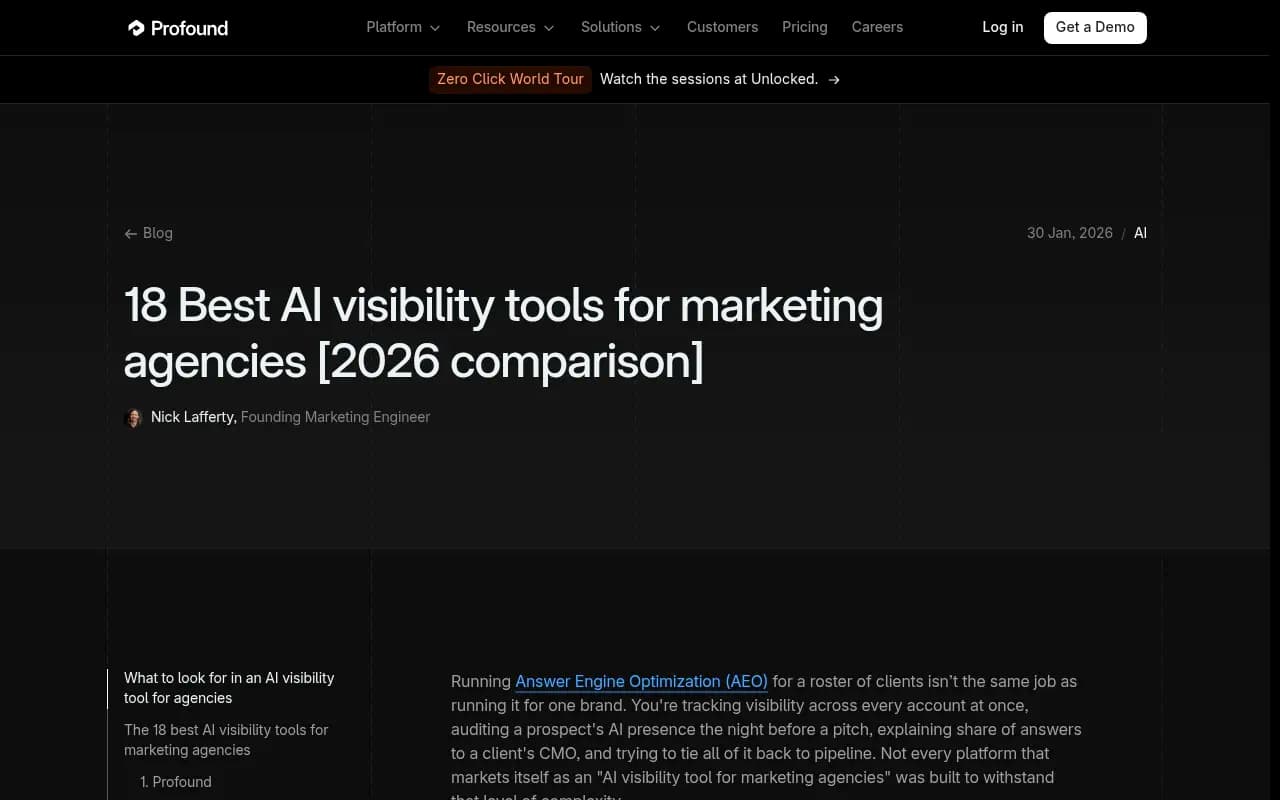
A caution on sources. Several of the most-shared roundups are written by vendors (Profound, Omnia, GMBapi, Clixera), so each ranks its own product well. Read them for facts such as pricing and features, not for verdicts.
Comparison table
| Tool | Local strength | Entry price (verify on vendor site) | Built for | Main limitation |
|---|---|---|---|---|
| Promptwatch | City/state tracking and exact-coordinate local targeting (Business and up) | Agency Kick-off $199/mo; Business $579/mo | Agencies that want to track and fix | Local coordinate targeting needs Business or Agency Scale |
| BrightLocal | 0-100 visibility score per location, up to 20 prompts per location | From $31/mo | Classic local SEO agencies | Engine coverage is ChatGPT, AI Mode and AI Overviews for now |
| Yext Scout | Per-location tracking vs up to 20 competitors | By request | Multi-location enterprise brands | No self-serve trial, pricing opaque |
| Local Falcon | Geo-grid scans, reportedly eight AI platforms | From $24.99/mo | Map-pack focused agencies | Credit-based, more rank grid than content tool |
| Otterly.AI | Basic prompt tracking | Standard EUR 189/mo (120 prompts) | Small agencies starting out | No real prompt-volume data, no content generation |
| Peec AI | Prompt tracking, agency-friendly | Check vendor | Agencies that want simplicity | Monitoring only |
| Profound | Enterprise AEO with Agency Mode | Custom | Large agencies | Overkill for small local shops |
| Semrush AI Toolkit | Works alongside existing SEO suite | Check vendor | Teams already in Semrush | Fixed prompt sets, shallower AI data |
The tools, in practice
Promptwatch
Promptwatch is the one I would look at first if the agency wants to fix local visibility and not just report on it. It tracks ChatGPT, Google AI Overviews, Google AI Mode, Gemini, Perplexity, Copilot and others from the real interfaces, and on Business, Agency Scale and Enterprise plans you can pin a monitor to exact coordinates (accuracy radius from 20 m to 5 km) so ChatGPT and Google's AI surfaces answer as if asked from that spot. State and city tracking sits on Business and the agency plans. For "near me" work, that is the feature that matters.

Agency plans have unlimited projects, prompts and team seats. Kick-off is $199/mo (10,000 responses), Growth $399/mo (25,000 responses) and Scale $799/mo (65,000 responses, local GEO/SEO targeting, hourly tracking options and Fact Check). The catch: agency plans do not include the Content Agent or white-label dashboards. Those go to Enterprise. For content generation on a single brand, Business at $579/mo has the Content Agent. Confirm all of this on promptwatch.com/pricing, and see the agency solutions page for the workflow. The 7-day free trial is a cheap way to test location accuracy against a real client.
Other things that help with local work: IP-verified AI crawler logs show whether a client's site is readable by GPTBot and friends, and Brand Narrative surfaces claims AI makes about a business ("closed on weekends", wrong address) that you can then check.
BrightLocal
BrightLocal is the natural pick if your agency already lives in citations, GBP audits and local rank tracking. Its Local AI Visibility feature covers ChatGPT, Google AI Mode and Google AI Overviews, gives a 0 to 100 score per location benchmarked against category competitors, and shows branded and unbranded prompt results with sentiment. You get up to 20 prompts per location. It is included in all plans from $31/month, with a 14-day free trial and no card required.
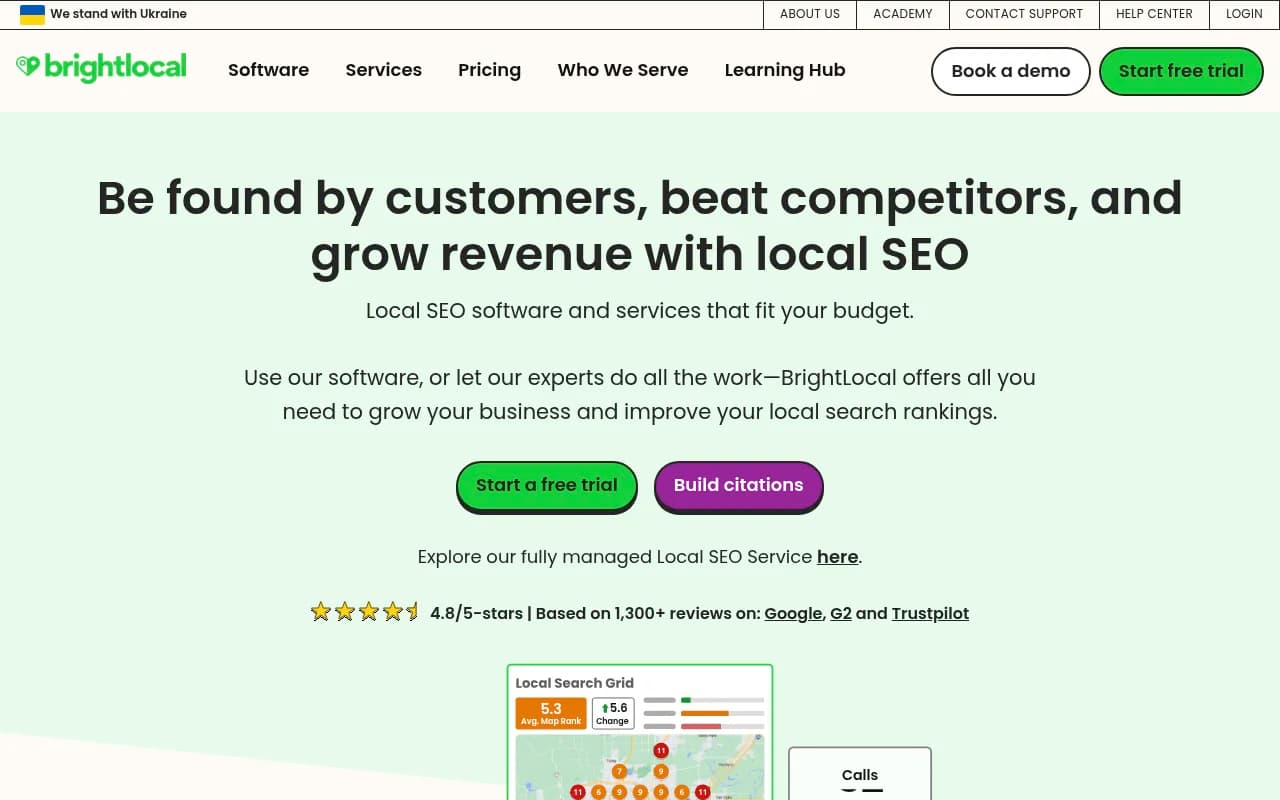
One conflict in the research: a competitor's roundup says BrightLocal has no native LLM tracking. BrightLocal's own page says otherwise, so I would go with that and just test it. The page also says "more in V2," so engine coverage is narrower than the general platforms.
Yext
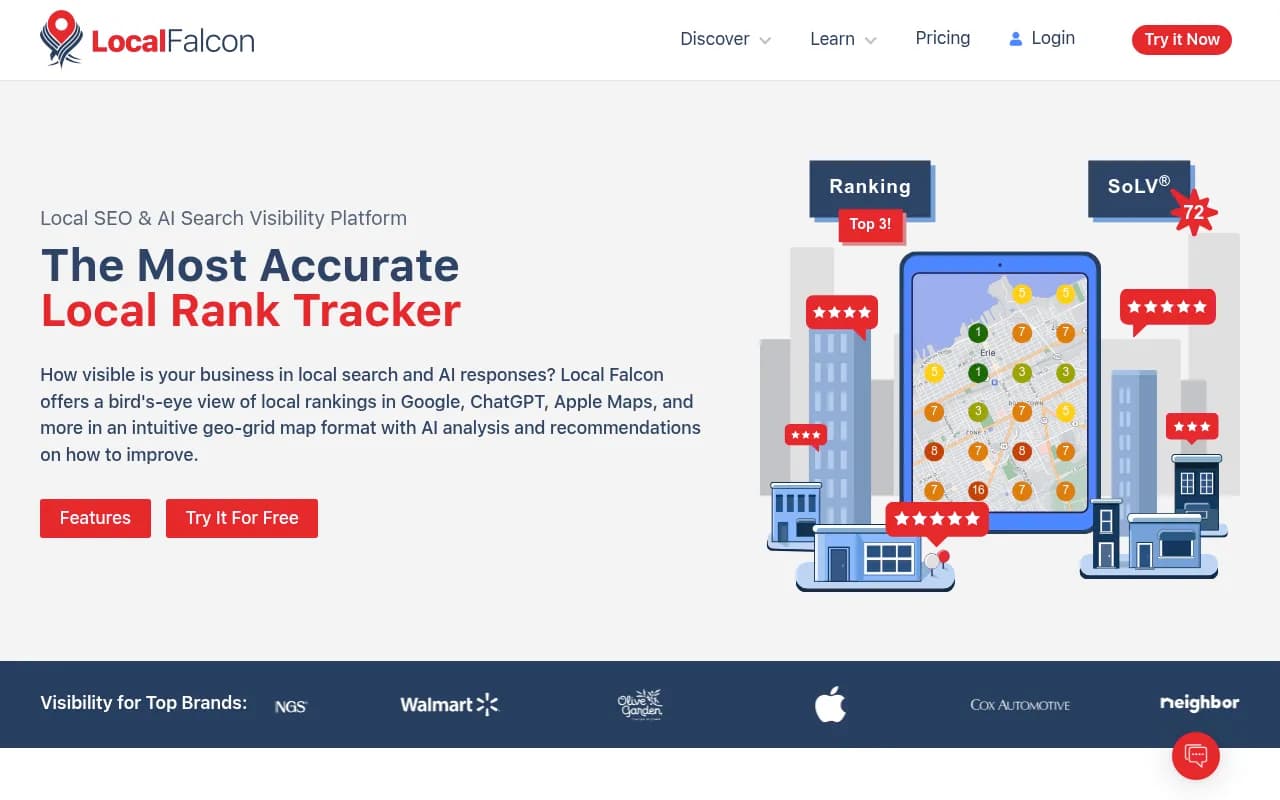
Yext Scout tracks ChatGPT, Gemini, Perplexity and AI Overviews against up to 20 competitors per location, and Zapier names it the pick for local tracking. It has a hosted MCP server in beta and is SOC 2 certified. The downsides are cost and access: there is no self-serve trial and Scout pricing is by request. Fine for a large multi-location brand, awkward for a five-person agency.
Local Falcon
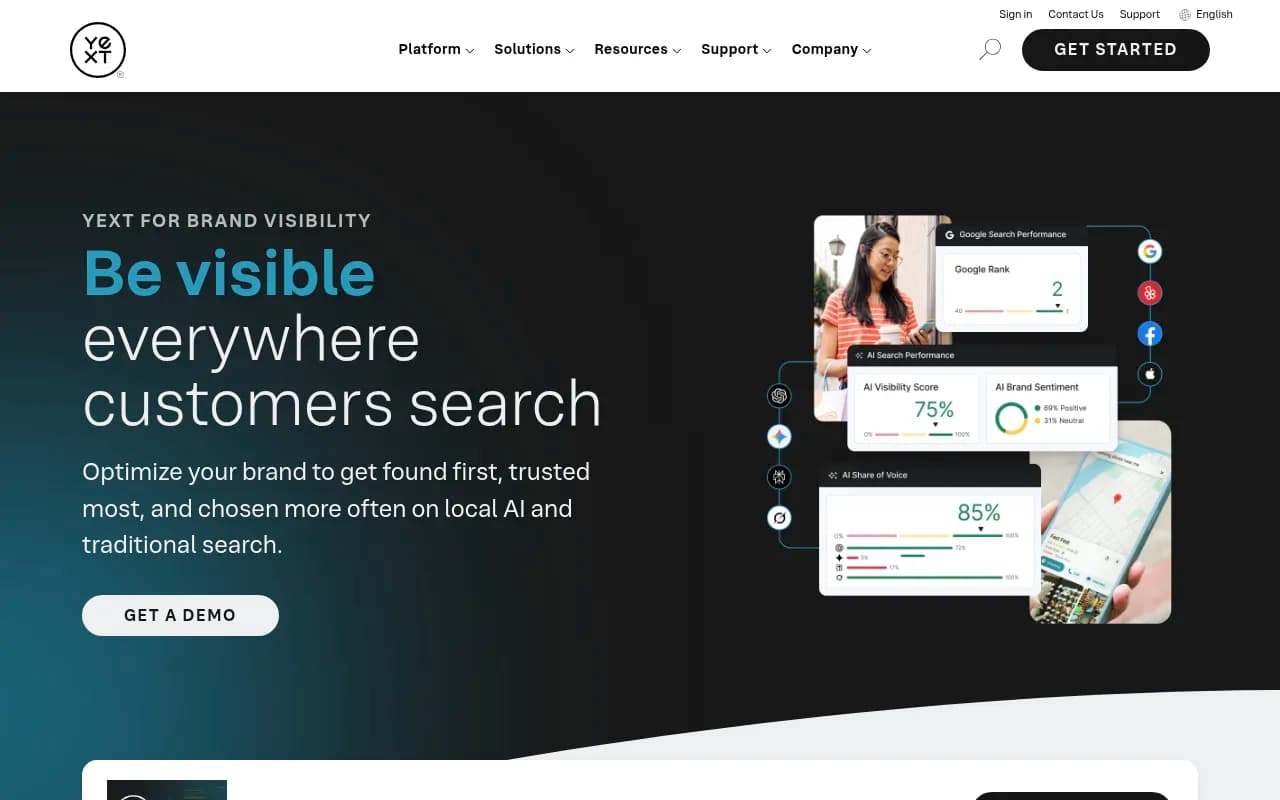
Local Falcon is the visual geo-grid tracker many local agencies already use. Plans start at $24.99/mo for 7,500 credits, with grids from 3x3 to 21x21 at one credit per pin, across Google and Apple Maps. A third-party roundup (written by a competitor, so verify) says it also covers eight AI platforms and has an MCP server and REST API. It is the best fit for agencies whose clients care about map-pack positions first and AI answers second.
Otterly.AI and Peec AI
Both are lightweight trackers. Otterly Standard is EUR 189/mo for 120 prompts and unlimited brands, which Omnia's math puts at roughly four clients with 30 prompts each. Fast to set up and cheap. The trade-off is that they report and recommend but do not write, publish or measure crawler access.
Otterly.AI


Profound, Semrush and the rest
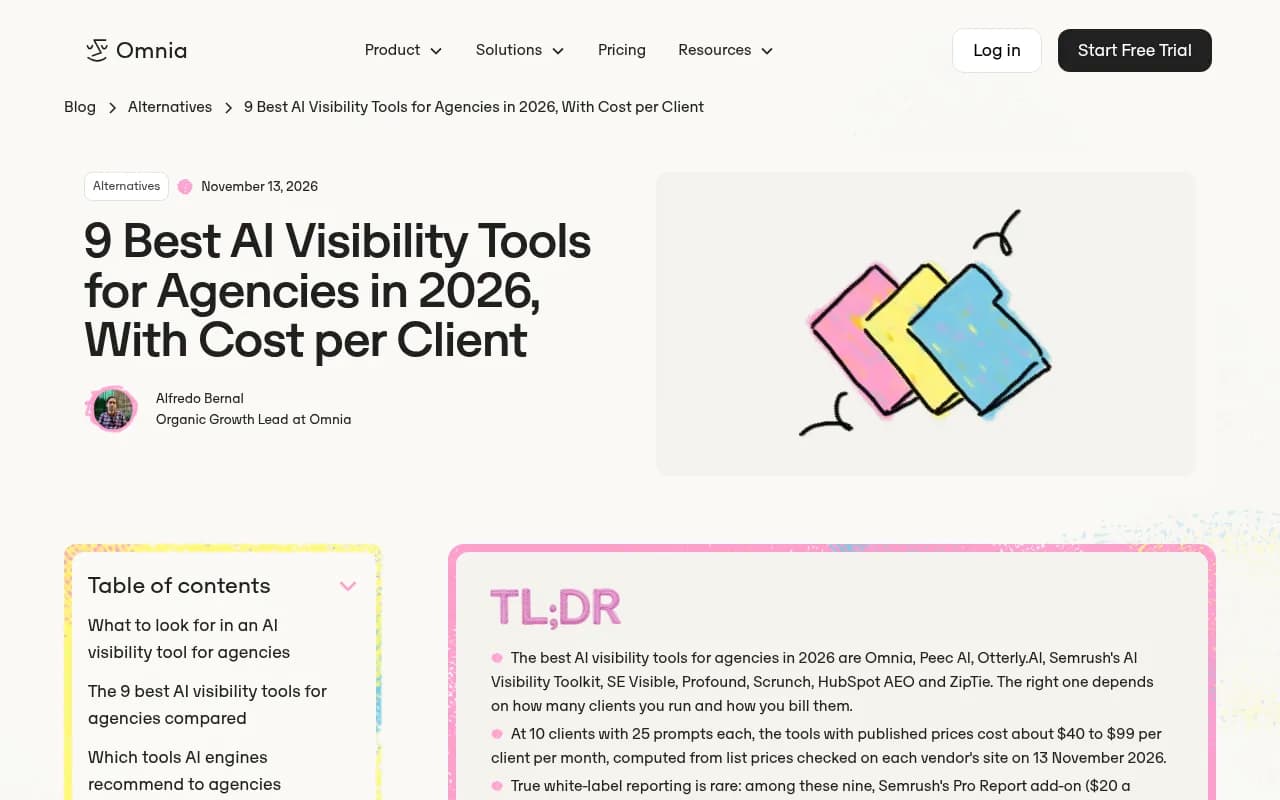
Profound claims 1.9B+ real user prompts and an Agency Mode with client workspaces and pitch environments. It is built for agencies running AEO as a scaled service, and it is more than most local shops need. Semrush's AI Visibility Toolkit makes sense if you already pay for Semrush, and its Pro Report add-on at $20/mo is the only listed white-label option among the nine tools in Omnia's comparison.
Profound

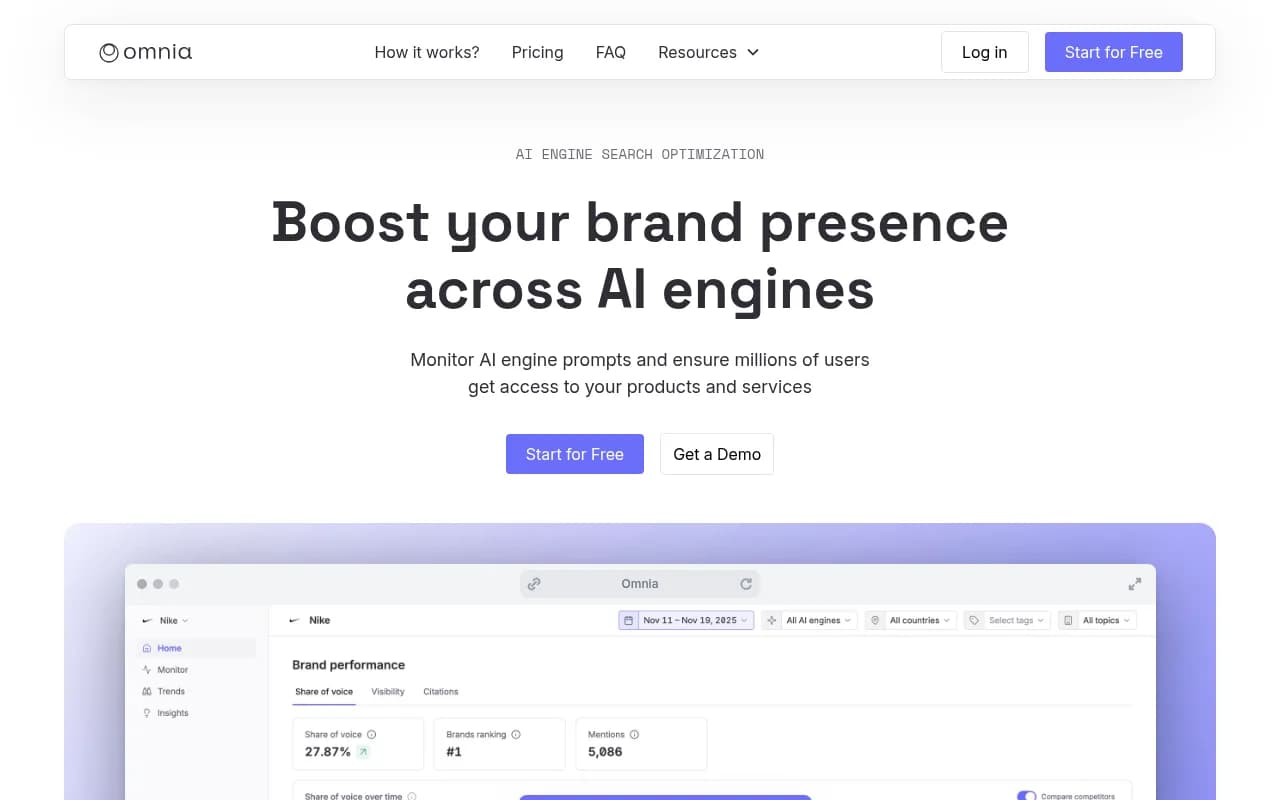
Omnia is a newer option with unlimited client brands on every plan, one shared prompt pool, URL-level citations and an agent that drafts work, from EUR 79/mo (Pro is EUR 279/mo for 100 prompts).
How to structure prompts for local clients
Picking a tool is half of it. The other half is the prompt set, and most agencies get this wrong by copying keyword lists.
Build prompt sets per location, not per brand
For each location, write 15 to 20 prompts in three buckets:
- Unbranded discovery: "best pediatric dentist in Austin", "emergency plumber near me".
- Comparison: "[Client] vs [Competitor] in Austin".
- Branded: "Is [Client] good for Invisalign?", "what are [Client]'s opening hours".
Promptwatch Data shows why the mix matters. In the unique domains report (Sep 28 to Oct 4, 2026), 52.5% of organic prompts cited 10 or more domains, but only 21.3% of brand-specific prompts did. Branded answers lean on a handful of sources, usually your own site plus a few profiles. Unbranded answers pull from a wide pool of third-party sites, which is where local listings and review platforms come in.
Track position, not just presence
Being mentioned is the floor. Whether you are first or fifth in an answer, and how the model describes you, changes how many calls you get. Measure across many prompts per location because a single run tells you almost nothing.
Fix the footprint behind the answer
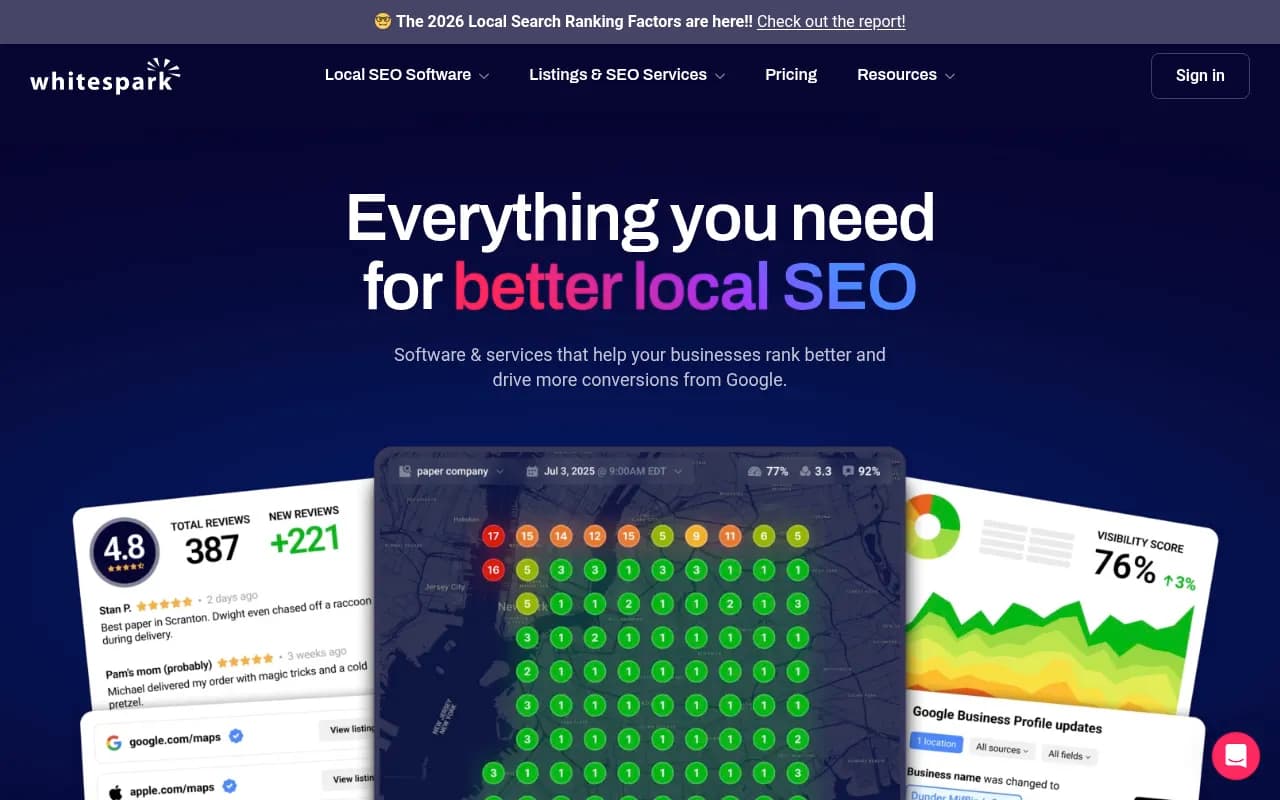
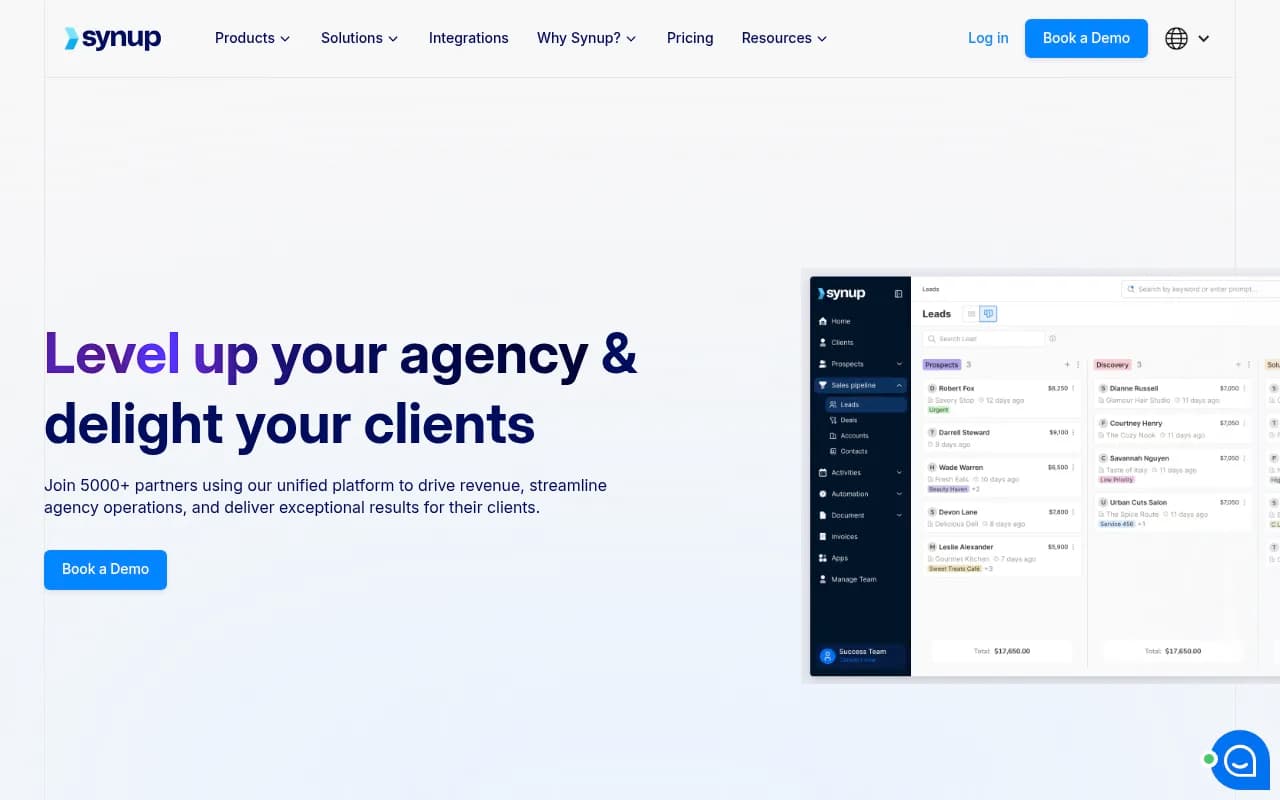
If a client does not appear, the cause is usually one of three things: the AI crawler cannot read the site, the business information conflicts across directories, or the site has no page that answers the question. A tracker with crawler logs and citation data helps tell these apart. Directory and listing tools like Whitespark, Synup, Uberall and Moz Local handle the citation side.
Pricing at scale: a worked example
Say you run 10 local clients, 2 locations each, 20 prompts per location. That is 400 prompts.
| Model | What happens | Tools |
|---|---|---|
| Per brand or domain | Cost scales with 10 brands | Many mid-tier trackers |
| Per prompt | 400 prompts blows past entry tiers | Otterly (120 prompts at EUR 189) |
| Unlimited prompts, response caps | Cost depends on how often you run | Promptwatch agency plans |
| Per location | Cheap at small scale, adds up | BrightLocal, GMBapi, Whitespark |
The honest answer is to run the numbers with your own client mix. A per-location model looks great for ten single-location clients and gets pricey for franchise groups, and the reverse is true of response-based plans.
Which one should you pick?
- You already use BrightLocal or Local Falcon and want AI tracking added: turn on BrightLocal's Local AI Visibility or add Local Falcon, and see how far it gets you.
- You want to track and fix, with exact-location answers: Promptwatch on an agency plan, upgrading to Business or Enterprise for content automation.
- Enterprise multi-location brand with a procurement process: Yext Scout or Profound.
- Just starting and budget is tight: Otterly or Peec AI to prove the service, then move up.
- Already deep in Semrush: try the AI Visibility Toolkit before adding another login.
For wider lists, the GEO software directory and the AI rank tracking directory cover far more tools than fit here.
Questions to ask before you sign
- Can I set location per monitor, and is that city-level or coordinate-level?
- How are clients counted? Is a second location a second client?
- Is the data collected from real interfaces or only APIs? User-facing answers can differ from API output.
- What is the real white-label story: branded PDF, client login, or nothing?
- What happens when I exceed my response limit mid-month?
- Can I export data to Looker Studio or CSV so reporting does not live in one dashboard?
The vendor pitches rarely volunteer these, and the answers separate a tool you can run an agency on from a dashboard you will outgrow in six months.