Key takeaways
- AI visibility PR means getting your earned coverage cited inside AI answers, then measuring whether it worked. It needs three jobs done: monitoring, outreach, and citation tracking.
- Most tools do only one job. Classic PR suites (CisionOne, Meltwater) handle outreach and media monitoring. AI visibility trackers handle what models say. Few connect the two.
- Promptwatch's data shows ChatGPT cites product pages, landing pages, and listicles far more than social posts, so the PR target is third-party "best of" roundups and reviews.
- Earned news coverage decays fast in AI citations (about 36 days to lose half its cited pages), so PR for AI is a recurring job, not a one-off campaign.
- Treat vendor "best tools" listicles with suspicion. Most of the ones ranking these tools are published by the vendors themselves.
What AI visibility PR actually is
Traditional PR measurement counts clips, reach, and share of voice in the press. AI visibility PR asks a different question: does your coverage change what ChatGPT, Gemini, Perplexity, Claude, and Google AI Overviews say about you?
AI answers are assembled from sources: press articles, review sites, product pages, analyst reports. If your brand is named in the pages a model retrieves, you show up in the answer. If not, a competitor does. That makes PR one of the main levers of AI visibility, but only if you know which outlets models actually cite.
Three jobs follow from that:
- Monitoring. What do AI models say about us, and how does that compare to competitors?
- Outreach. Which journalists, publishers, and list authors do we pitch to get into cited sources?
- Citation tracking. Did the coverage we earned get cited, and did our mentions or sentiment change?
No single category of tool covers all three well. Below I break down each, then give a combined comparison.
Which sources should PR aim at?
Before picking tools, know what you are aiming at. Promptwatch Data looked at ChatGPT citations by content type from Sep 28 to Oct 4, 2026 (Which content types does ChatGPT cite the most?):
- Product pages made up 22.4% of classified citations and landing pages 16.8%.
- Listicles were 13.6%, how-tos 8.7%, comparisons 5.9%, and news 5.7%.
- For commercial prompts, product pages, landing pages, listicles, and comparisons together were almost 70% of citations.
- For branded prompts, reviews rose to 5.6%, more than three times their overall share.
The PR takeaway is blunt. Press releases are 2.1% of branded citations. The real prizes are "best of" roundups, comparison articles, and reviews on third-party sites. Your outreach list should include the people who write those, not only news reporters.
Social is a weak route into ChatGPT specifically. In Promptwatch's social media citations report for Oct 11 to Nov 9, 2026, social platforms were 0.64% of ChatGPT citations, 1.94% of Perplexity's, and 13.16% of Google AI Overviews', where YouTube alone was 6.71%. So a LinkedIn or Reddit push can help in AI Overviews, but it will not do much for ChatGPT. Note that the October report covered 7 days and this one covers 30, so the two are not directly comparable.
And domain authority matters less than PR teams assume. Promptwatch's domain rank report found sites with DR 46-75 earned almost half of ChatGPT citations in August 2026, while DR 91-100 fell to about 3%. A placement on a respected mid-tier trade site can beat a tier-one outlet.
Finally, decay. Promptwatch's content half-life data shows news pages lose half their cited pages within 36 days, while landing pages and docs stay cited for months. Earned coverage fades faster than owned pages, so you need continuous placement, and a way to see when citations drop.
Category 1: AI visibility monitoring
This is the layer that tells you what models say. For PR it needs to show more than a mention count: which sources were cited, what claims AI makes about you, and how you compare to competitors.
Promptwatch is the one I would start with here, because it goes past tracking. It collects answers from the real interfaces of ChatGPT, Gemini, Perplexity, Google AI Overviews, AI Mode, Copilot and others, shows which pages and third-party sources are cited, and extracts the individual claims AI makes about your brand through Brand Narrative. For PR teams, the Offsite Mentions feature finds third-party pages that name your brand without linking, and the Reddit, YouTube, LinkedIn, and Instagram reports show which social sources AI is pulling in. It also has IP-verified crawler logs and visitor analytics, so you can check whether coverage turns into traffic. Pricing starts at $95/mo (Essential), with a 7-day free trial; confirm at promptwatch.com/pricing.

Other monitoring options worth knowing:
Profound

Profound is an enterprise platform with deep prompt intelligence and agency workspaces. Strong monitoring, but no Reddit tracking or agentic execution compared with Promptwatch (see Promptwatch vs Profound).

Peec AI has a clean dashboard that agencies like for client reporting. It is monitoring only, so you would pair it with something else for content or outreach.
Otterly.AI

Otterly.AI is an inexpensive starting point for prompt and citation monitoring. It lacks crawler logs and visitor analytics.
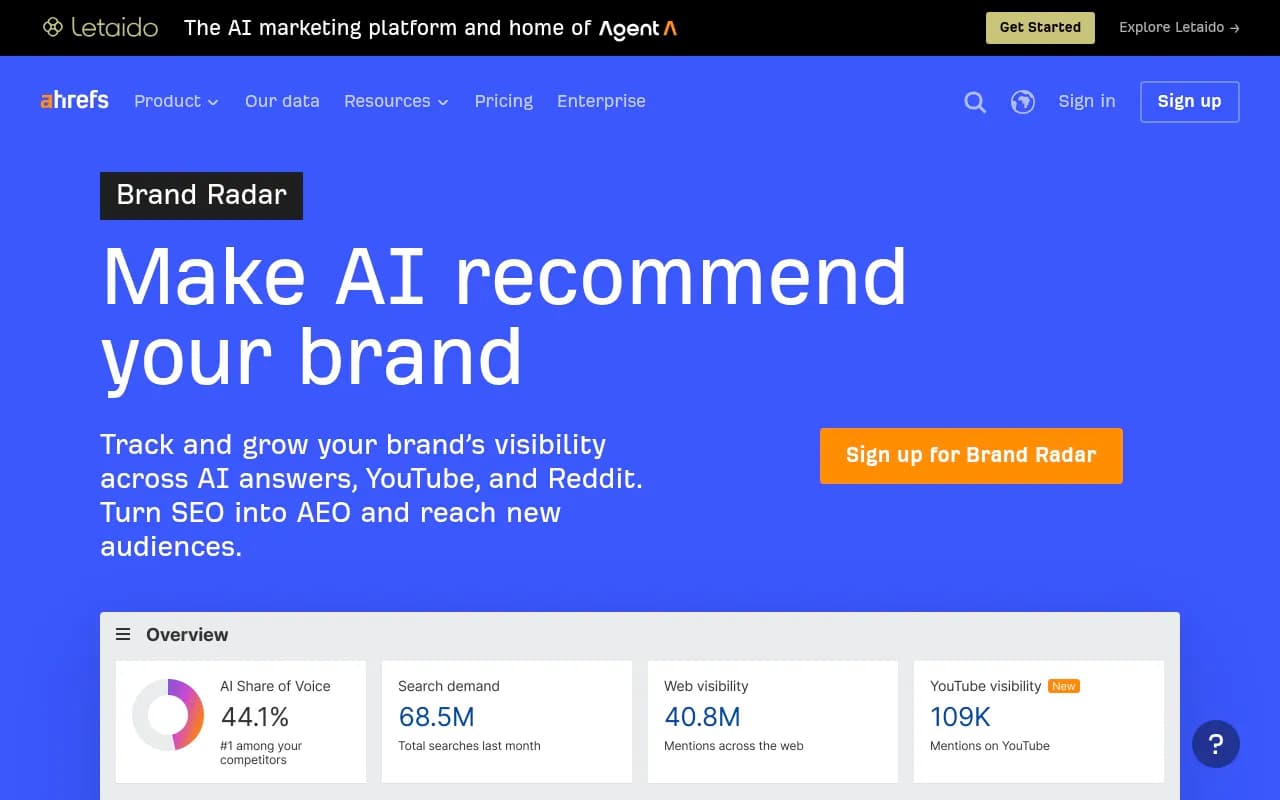
Ahrefs Brand Radar and [tool:semrush] make sense if you already live in those SEO suites, though prompt sets are less flexible than in dedicated platforms.
Category 2: PR outreach and earned media tools
Monitoring tells you where the gap is. Outreach is how you close it. This is the traditional PR stack, and a few vendors are adding AI-specific views.
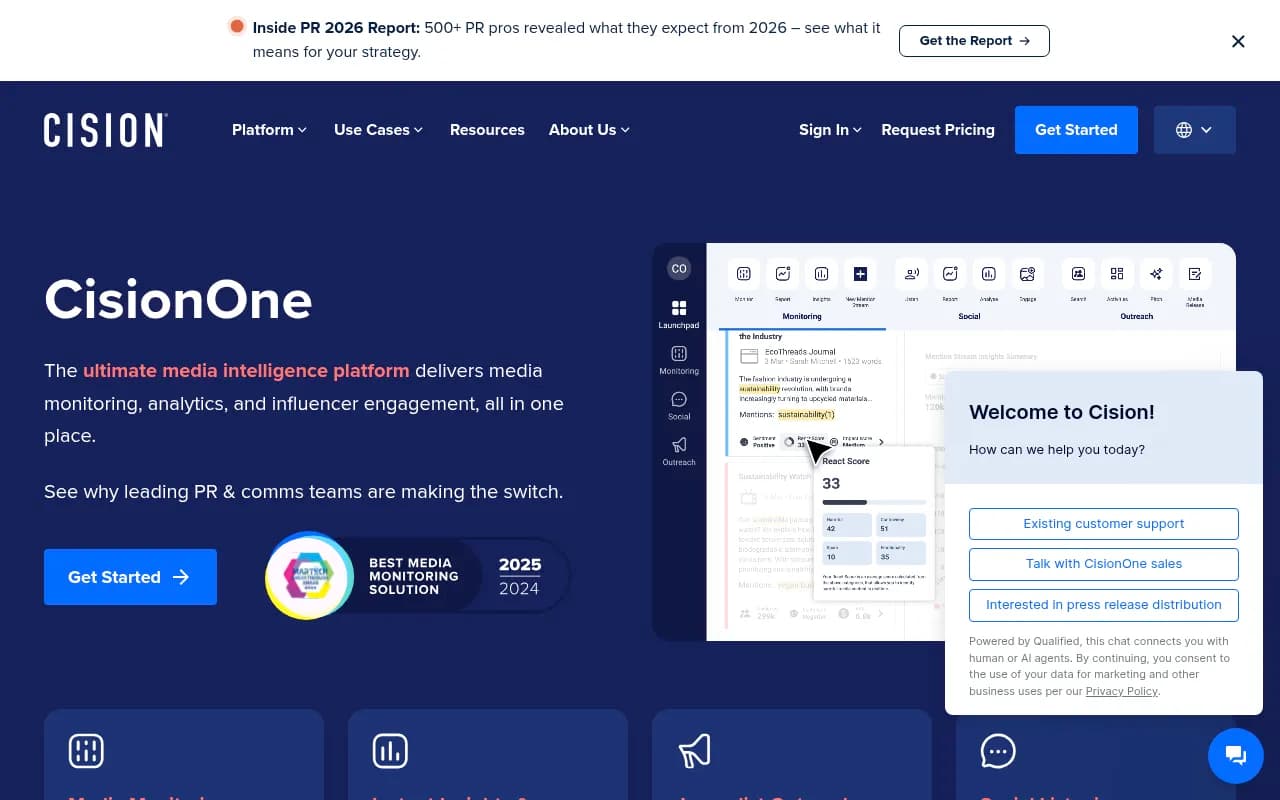
CisionOne is the legacy standard for media databases and distribution. One research source says cited journalists can open directly in CisionOne Outreach from an AI visibility view, which is the kind of link between the two worlds PR teams want. I could not verify how deep Cision's own AI features go, so test before committing.
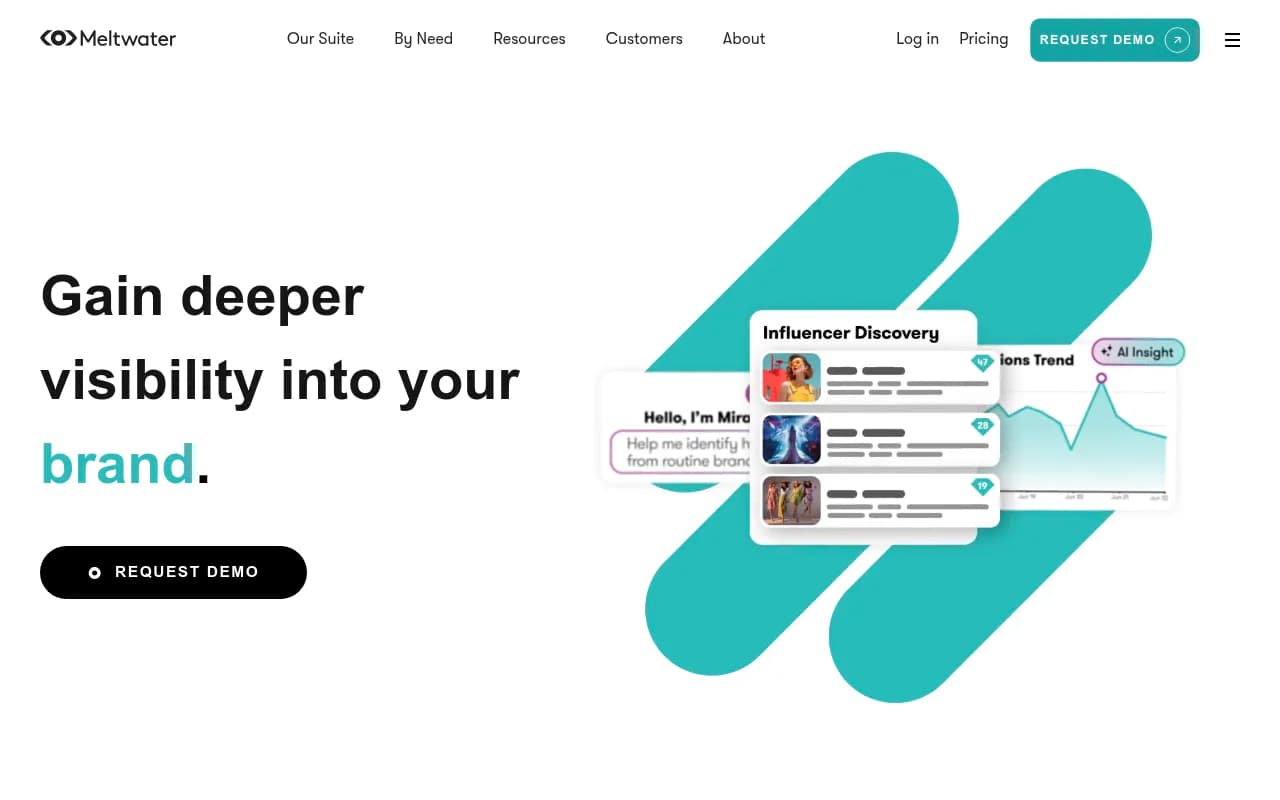
Meltwater covers media intelligence and social listening. Good for tracking whether coverage landed in the first place, which is the input to everything above.
Newer AI-native outreach tools exist too. Medialyst, for example, scores journalists 0-100 on fit to a specific story and runs a real-time news monitor. Treat that as the vendor's pitch: the source praising it is a PR agency's own comparison, and I have not tested it.
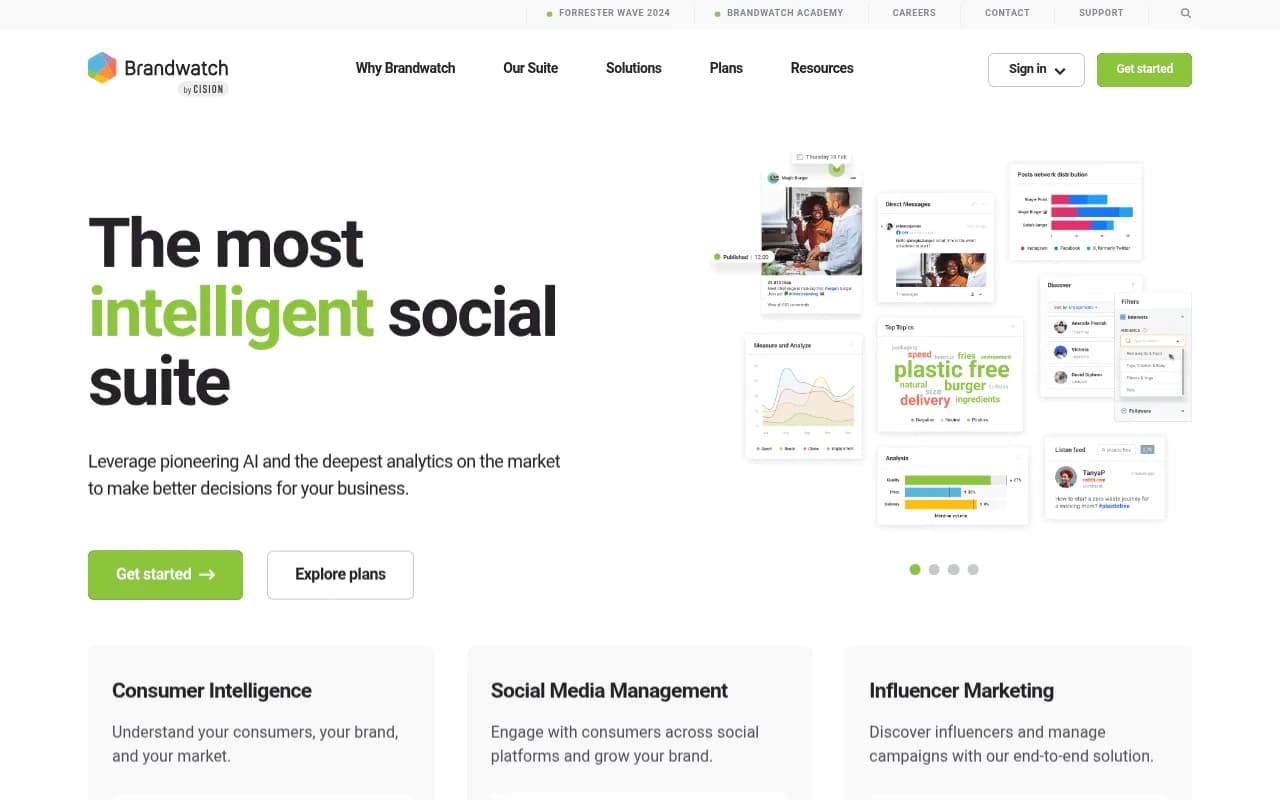
Brandwatch and [tool:talkwalker] are social-listening options. They see social and web conversation well, but they do not show what AI models say.
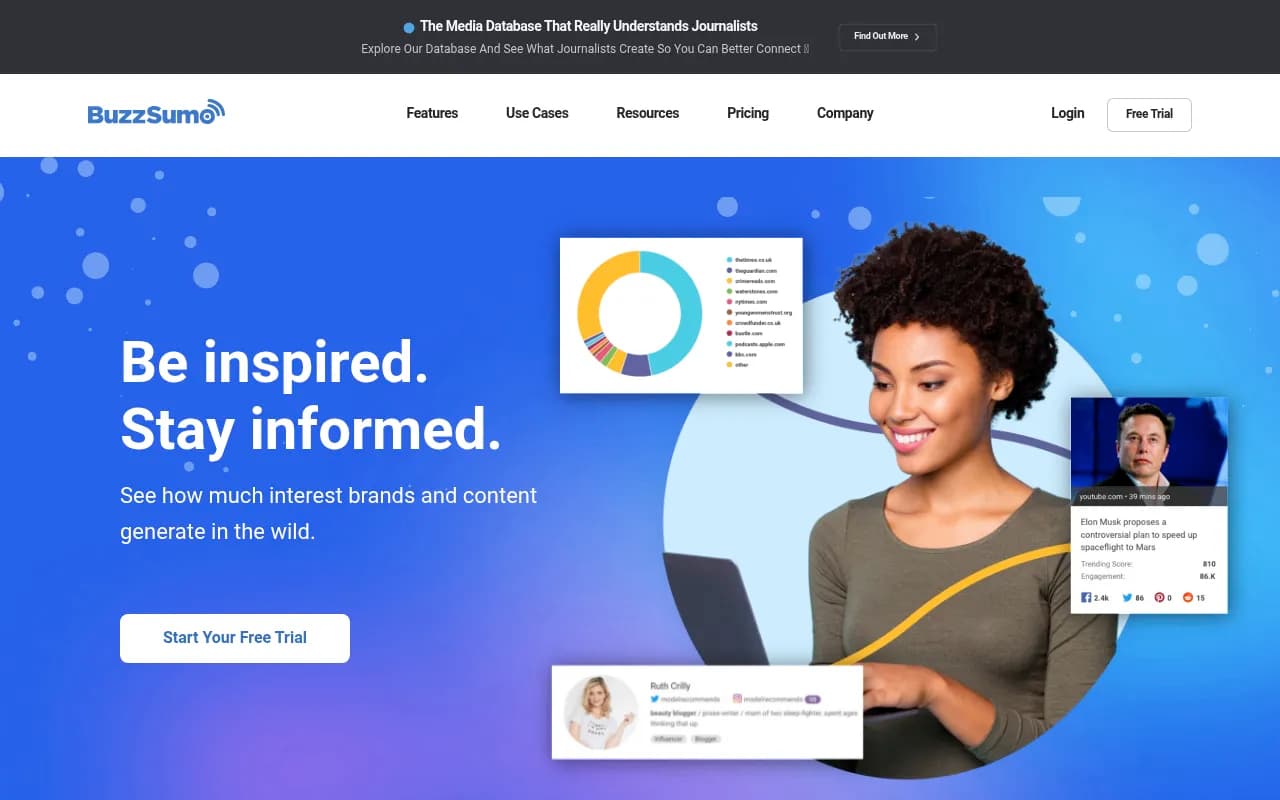
BuzzSumo helps find content and influencers that already earn links and shares, handy for spotting the list authors worth pitching.
Category 3: Citation tracking
Citation tracking is different from citation improvement. A big table of cited URLs shows you what happened. It does not get you cited. What matters for PR is whether you can see:
- which competitors get cited when you do not
- which of your pages and earned placements are already citation sources
- whether citation patterns improve after an outreach push
In practice, that means looking at citations per domain and per page, then watching them over time. Promptwatch does this with Citation Trends (22 content types, 20 source types, plus first-cited date and decay half-life per page) and Page Tracker, where you can watch any URL, yours or a competitor's, and see which prompts cite it. That is the closest thing to "did that placement work?" in this market.
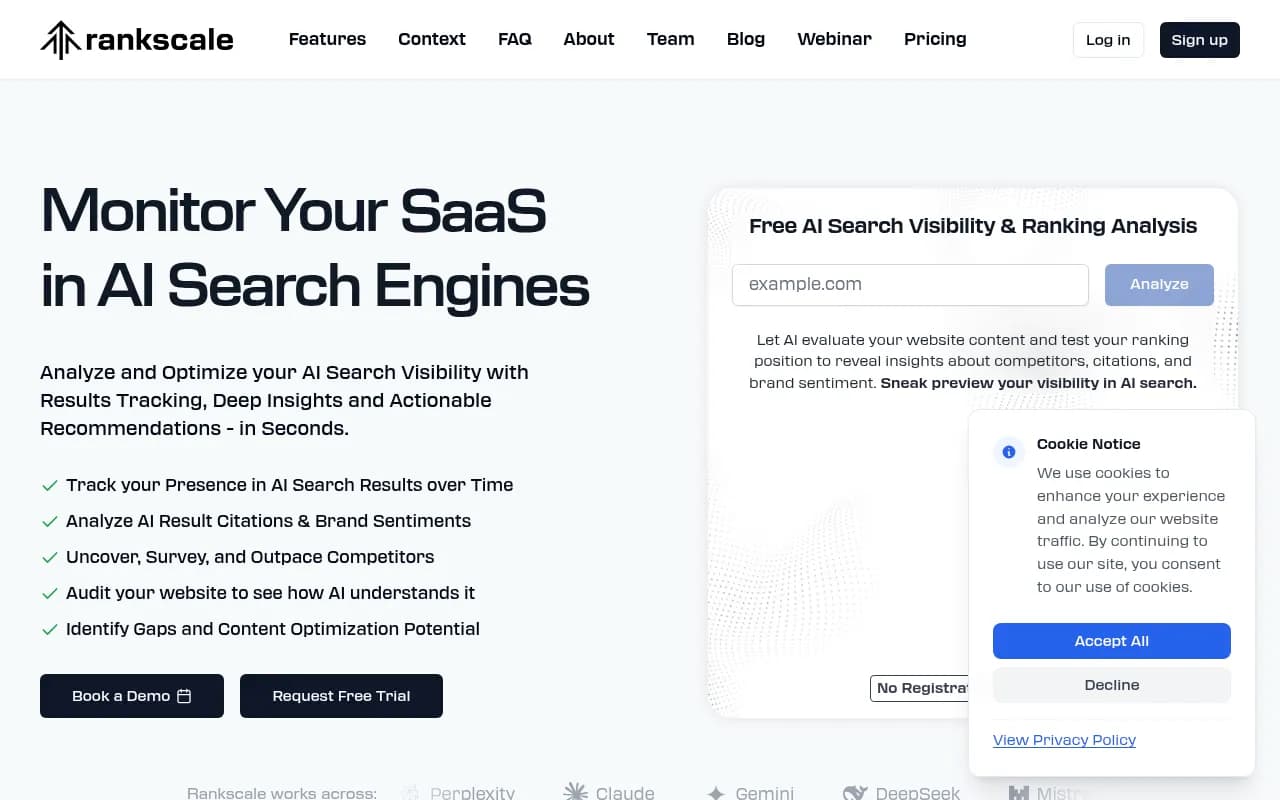
Rankscale, [tool:llmrefs], and [tool:se-visible] also report on cited URLs. SE Visible is explicit about tracking mentions without tools to fix anything, which is fine if you only need measurement.

Dageno AI pitches citation intelligence plus optimization actions. Its own comparison ranks it first, so weigh that accordingly.
Comparison table
| Tool | Main job | Citation source data | Outreach support | Best for |
|---|---|---|---|---|
| Promptwatch | Monitoring, citation tracking, content fixes | Yes, with page-level tracking and Offsite Mentions | Finds pages to target; no journalist database | PR teams that want to act on gaps and measure results |
| Profound | Enterprise monitoring | Yes | No | Large brands and agencies |
| Peec AI | Monitoring and reporting | Basic | No | Agencies wanting clean client dashboards |
| Otterly.AI | Entry-level monitoring | Basic | No | Small teams starting out |
| Ahrefs Brand Radar | AI mentions inside SEO suite | Some | No | Teams already on Ahrefs |
| Semrush | AI tracking inside SEO suite | Some | No | Teams already on Semrush |
| CisionOne | Media database, distribution | No | Yes | Established PR departments |
| Meltwater | Media and social monitoring | No | Limited | Coverage measurement |
| Medialyst | AI-native outreach | No | Yes | Reactive pitching and list building |
A workflow that connects the three jobs
Here is how I would run this for a mid-sized brand.
1. Baseline what AI says
Run a free scan first. Promptwatch has a free AI visibility report that shows how ChatGPT, Gemini, and Perplexity describe you. Then set up a monitor with prompts your buyers really use: "best X for Y", "X vs Y", "is X worth it". Add personas if different buyers ask differently.
2. Pull the list of sources that matter
Look at which domains are cited for those prompts. For software prompts, Promptwatch's software citation report shows GitHub, Microsoft's docs, and G2 leading, with documentation and help centers earning the largest share. Travel, healthcare, and automotive each have their own pattern: travel leans on booking and search sites, healthcare on government and public health sources, and automotive on marketplaces over manufacturers. Your industry decides who you pitch.
3. Build the outreach target list
This is where your PR tool comes in. Take the cited listicles and reviews from step 2, find the authors in CisionOne, Meltwater, or an AI outreach tool, and pitch them with something worth including: original data, a product update, a quote. Many of these sources are mid-authority sites, which are also often more responsive than top-tier outlets.
4. Check your owned pages too
PR will not fix a site AI bots cannot read. Check crawler access with the free Agentic Readiness Check, and use AI crawler logs to confirm bots reach the pages your coverage links to. Promptwatch's AI crawler traffic data shows how much of this traffic is verified bot activity versus noise.
5. Measure and refresh
Watch Page Tracker and citation trends weekly. Given the 36-day half-life for news pages, plan a second wave of outreach about five weeks after any big placement. Where an owned page needs updating, a Content Agent or Content Refresh workflow can handle it, and visitor analytics will show whether AI referrals convert. Crisp, for instance, reported 2x higher conversion on AI traffic than on traditional channels (case study).
Pitfalls to avoid
Trusting vendor rankings. Almost every "best AI visibility tools" article I found was published by a vendor in the category (Profound, SE Ranking's SE Visible, Dageno, Medialyst, Cognizo). Each puts itself near the top. Use them for feature lists, not verdicts.
Counting mentions as success. A mention without a citation, or a citation on a page that is about to decay, is a weak result. Look at position, sentiment, and the sources behind each answer.
Betting on one engine. ChatGPT, Perplexity, and AI Overviews cite different things. ChatGPT also changes behavior often: Promptwatch Data recorded Reddit's share of its citations collapsing from about 4% to 0.5% on Aug 14, 2026 (report), and a drop in citations per response around the GPT-5.3 rollout. A tactic that works this quarter may not next quarter.
Ignoring fan-outs. ChatGPT runs its own web searches behind a response, and since Aug 8, 2026 it uses the site: operator in roughly 17% of them (data). If you want to see what queries decide your fate, look at query fan-outs.
Which stack should you pick?
| Situation | Suggested stack |
|---|---|
| In-house PR team, small budget | Otterly.AI or Peec AI for monitoring, existing media tool for outreach |
| In-house team that wants to fix gaps, not just see them | Promptwatch plus CisionOne or Meltwater |
| Agency running PR for many clients | Promptwatch agency plans (Kick-off $199/mo, Growth $399/mo, Scale $799/mo) or Profound, plus your outreach database |
| Already deep in Ahrefs or Semrush | Brand Radar or Semrush AI tracking as a first step, upgrade when prompt limits bite |
For more options in each class, the GEO software directory lists dozens of trackers, and AI rank tracking tools covers the monitoring-only end.
If you would rather hand the whole thing to specialists, an SEO and GEO agency such as 1001 SEO Media combines digital PR with AI search work, and it uses Promptwatch for the measurement side.
Bottom line
Pick your outreach tool and your AI visibility tool separately, and make sure the data from one tells the other where to aim. Use citation data to choose which journalists and list authors to pitch, then use page-level tracking to see whether the placement got cited. Most teams stall because they only own half of that loop. Start with the free visibility report, check which sources AI already trusts in your category, and build your pitch list from there.