Key takeaways
- Coding agent visibility is how often Claude Code, Codex, Cursor and similar agents recommend, install or build on your product when a developer asks them to plan or build software.
- Real interface capture and API simulation can return different answers. Codex leans on live web search, Claude Code leans more on model knowledge, so each agent needs its own tracking.
- Your biggest competitor is often the agent writing the code itself: in 12 of 20 categories in Amplifying's study, the most common pick was a custom-built solution.
- Most AI visibility tools track ChatGPT, Perplexity and Gemini. Very few track coding agents. Check each vendor's docs, because I found little public documentation on this.
- Mentions are not selections. Measure what gets installed, not only what gets named.
Why coding agents became a visibility channel
A few years ago, a developer picked a payments provider by reading blog posts and asking colleagues. Now a lot of them type "build me a SaaS with auth and payments" into an agent and accept whatever it installs.
The Stack Overflow Developer Survey 2026 (30,903 respondents, as reported by MeguMethod) found 66% of respondents use AI assistants or agents for coding, and 73% of those use them daily. Claude Code was the most used agent at 66% of agent users, with GitHub Copilot at 59%.
That matters for a specific reason. When an agent runs npm install your-sdk, your product becomes a dependency. Switching later costs developer time, so day-one picks tend to stick. Code built around your SDK also produces tutorials, repos and forum threads, which feed the next generation of agents. It compounds.
If you sell a developer tool, API or SDK, this is a distribution channel you probably are not measuring yet.
What coding agent visibility actually measures
Promptwatch's coding agent visibility guide frames it as four questions:
- Is your product in the plan the agent writes?
- Is it the default choice?
- Does the agent build instead of buy?
- How does the agent describe you?
That last one is sentiment. The third is the one most teams miss. Amplifying's study "What Claude Code Actually Chooses" (February 2026) ran 2,430 open-ended prompts across 20 tool categories and 3 Claude models, naming no tools in the prompts. In 12 of the 20 categories the most common pick was a custom-built solution. Where agents did pick a tool, defaults were lopsided: GitHub Actions took 93.8% of CI/CD picks, Stripe 91.4% of payments, shadcn/ui 90.1% of UI components, and Vercel 100% of JavaScript deployment.
Those are secondary numbers I haven't verified independently, so treat them as directional. The pattern is still striking: winner-take-most, with a build-it-yourself option sitting in the background.
Mentions versus selections
The Armature study (September 2026) covered Claude Code, Codex and Cursor and separated what agents mention from what they actually choose. PayPal was mentioned 139 times and never selected. LangChain was mentioned 194 times and selected 4 times. If your tracker only counts mentions, you can feel good about numbers that don't translate into installs.
Armature also found the agents disagree with each other. Claude Code, Codex and Cursor chose the same tool in only 42% of cases. Claude Code built in-house in 19% of sessions, versus 10% for Codex and Cursor.
Real interface data vs API simulation
This is the core methodological split. There are two ways a tool can tell you what an AI says about your brand.
API simulation sends your prompts to a model through its developer API and records the response. It is cheap, fast and easy to scale. But the API model is not the product people use. It has no agent harness, no product-specific search behavior, and often no web access unless you wire it up.
Real interface capture runs the prompt through the actual product, the one a user or agent sees, and records the answer, citations and recommendations from there. It is harder to build and costs more per response. It also reflects what really happens.
The gap is not theoretical for coding agents. Armature found Codex used web search in 94% of sessions, often with site-specific operators. Claude Code searched in about 30% of sessions overall, and about 80% in newer sectors. An API call to a Claude model with no search tool attached would behave like the low-search case. A call to a Codex-like harness would behave differently. Same vendor family, different outcomes.
Promptwatch's own view, based on this research, is that Codex picks reflect live web content more, while Claude Code leans on model knowledge and shifts more slowly. That has a practical consequence: to move Codex, publish and get cited on the web. To move Claude Code, you are playing a longer game against training data.
The same logic shows up in classic AI search. Promptwatch Data is collected through what it calls real UI monitoring, taken straight from the interfaces of ChatGPT, Gemini, Perplexity, Claude and AI Overviews. User-facing answers and citations can differ from API outputs, which is why tracking the interface matters.
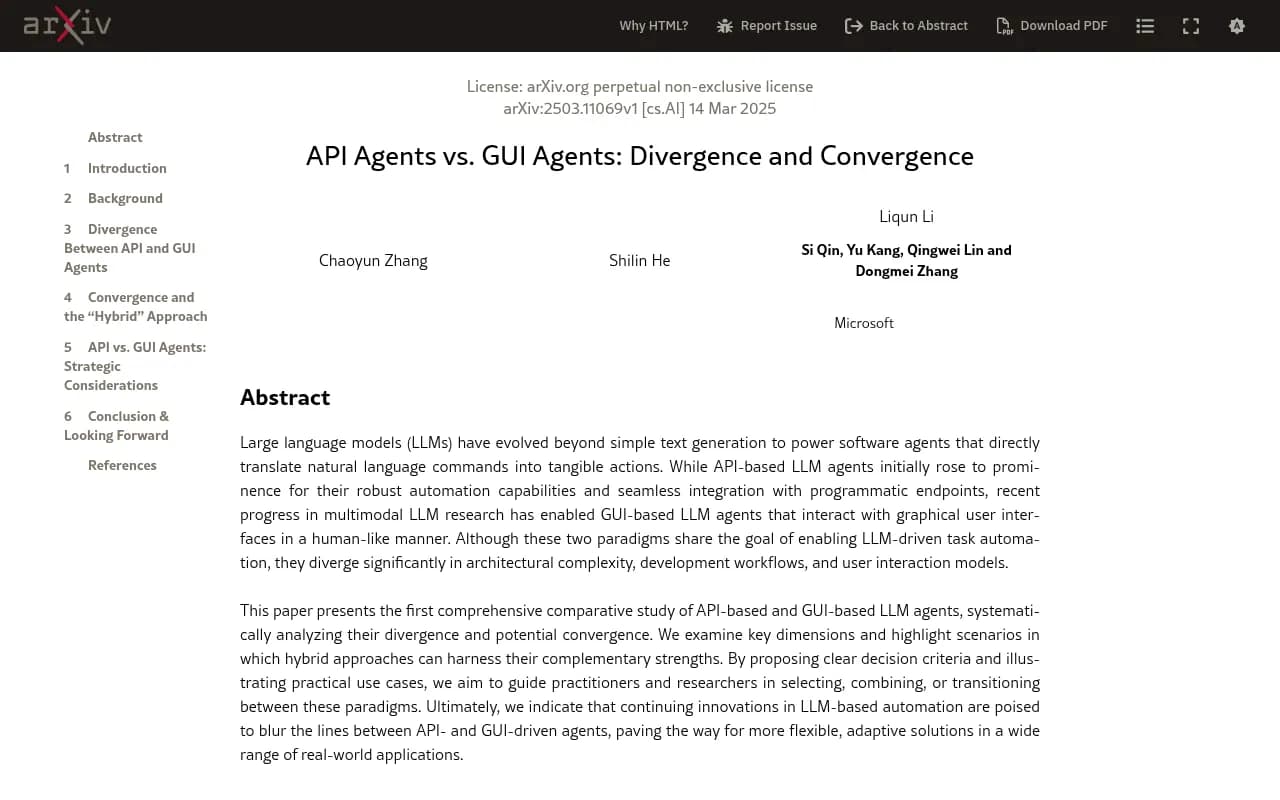
There is also an academic framing worth knowing. A Microsoft paper, "API Agents vs. GUI Agents: Divergence and Convergence" (arXiv, March 2025), compares agents that call programmatic endpoints with agents that operate graphical interfaces, and argues hybrids will blur the line. It isn't about visibility tracking, but it explains why the same task can behave differently depending on the interface the agent works through.
When API simulation is still fine
I don't want to dismiss it. API runs are reasonable for:
- Checking what a model believes from training data alone, which is useful for the slow-moving Claude Code side.
- Cheap, high-frequency sampling of large prompt sets.
- Early directional checks before you pay for anything.
The problem starts when a dashboard labeled "coding agent visibility" is really an API call with a system prompt pretending to be an agent. Ask vendors directly which one they run.
Comparing the tools
Here is the honest state of the market. I could not find public documentation of coding agent tracking or API-versus-interface methods for most competitors, so the table reflects what is documented, and I mark the rest as unconfirmed. Verify with each vendor before buying.
| Tool | Coding agent tracking | Collection method | Best for |
|---|---|---|---|
| Promptwatch | Claude Code, Codex and OpenCode, per its docs, with Claude Code and Codex on every plan | Real UI monitoring of the products, plus API models alongside | Developer-tool and API companies that want tracking plus content and crawler data |
| Profound | Not confirmed in my research | Not confirmed | Enterprise brand monitoring |
| Scrunch | Not confirmed in my research | Not confirmed | Monitoring-focused teams |
| Otterly.AI | Not confirmed in my research | Not confirmed | Basic prompt tracking |
| Peec AI | Not confirmed in my research | Not confirmed | Marketing-team visibility tracking |
| Semrush / Ahrefs Brand Radar | Not confirmed in my research | Not confirmed | Teams already inside those suites |
Promptwatch
Promptwatch is the one platform in this list where I can point to documented coding agent coverage. It tracks how Codex, Claude Code and OpenCode recommend tools, SDKs and docs, using the same visibility, mention, sentiment and competitor metrics it applies to ChatGPT, Gemini and Perplexity. Most coding agent prompts map to the Transactional intent type, even when no brand is named, which is how a developer actually asks.

The reason it fits this problem is less the tracking and more what sits around it. Visibility tells you that you lost. To fix it you usually need to know whether agents can read your docs, which pages get cited, and whether the content that would change a pick exists. Promptwatch pairs the tracking with IP-verified AI crawler logs, citation data, content gap analysis and a Content Agent that writes and publishes pages. See how Promptwatch handles AI crawler logs and its prompt tracking page for the specifics.
Pricing, per promptwatch.com/pricing (confirm there): Essential is $95/mo, Professional $245/mo, Business $579/mo. Agencies start at $199/mo with the Kick-off plan. There is a 7-day free trial on monthly billing and a free AI visibility report.
Head-to-head pages exist if you are weighing alternatives: Promptwatch vs Profound, vs Peec and vs Otterly.
Monitoring-focused tools
Profound, Scrunch, Otterly.AI, Peec AI and similar trackers are built around brand mentions in chat-style assistants.
Profound

Otterly.AI


They may well add coding agent coverage, and some may have it already. I just couldn't verify it. Ask three questions: which agents, through the real product or an API, and how are selections separated from mentions?
Suite add-ons
Semrush and Ahrefs Brand Radar bolt AI tracking onto traditional SEO platforms.
If your team already lives in those, the convenience is real. For developer-tool visibility specifically, check whether prompt sets are flexible enough to model "plan and build an app" prompts rather than "best X software" prompts.
For broader directories, the GEO software directory at bestgeosoftware.com and the AI rank tracking directory list more options.
How to run a coding agent visibility test
Whatever tool you pick, the test design matters more than the dashboard.
Write prompts the way developers actually ask
Skip "what is the best payments API." Use task prompts: "Build a subscription billing flow for a Next.js app," "Set up transactional email for this project," "Add auth with social login." Name no brands. Armature and Amplifying both used open-ended prompts for this reason.
Run each agent separately
Don't average Claude Code and Codex into one number. They disagree 58% of the time on the same task, according to Armature. Track them as separate channels with separate fixes.
Track four outcomes
- Present in the plan
- Selected as default
- Built in-house instead
- Described accurately
A product mentioned often but never selected needs a different fix from one that is selected but described wrongly.
Compare against your own logs
Monitoring tells you the result. Your server logs tell you whether agents can read your docs at all. Promptwatch's AI crawler traffic report (June 8 to September 6, 2026) counted only IP-verified requests, and found OpenAI at 79.8% of verified crawler requests in the week of Aug 31 to Sep 6, down from 94.8% in early June. Check robots.txt, CDN and WAF rules for every provider rather than assuming one block rule covers all of them. The full report is here.
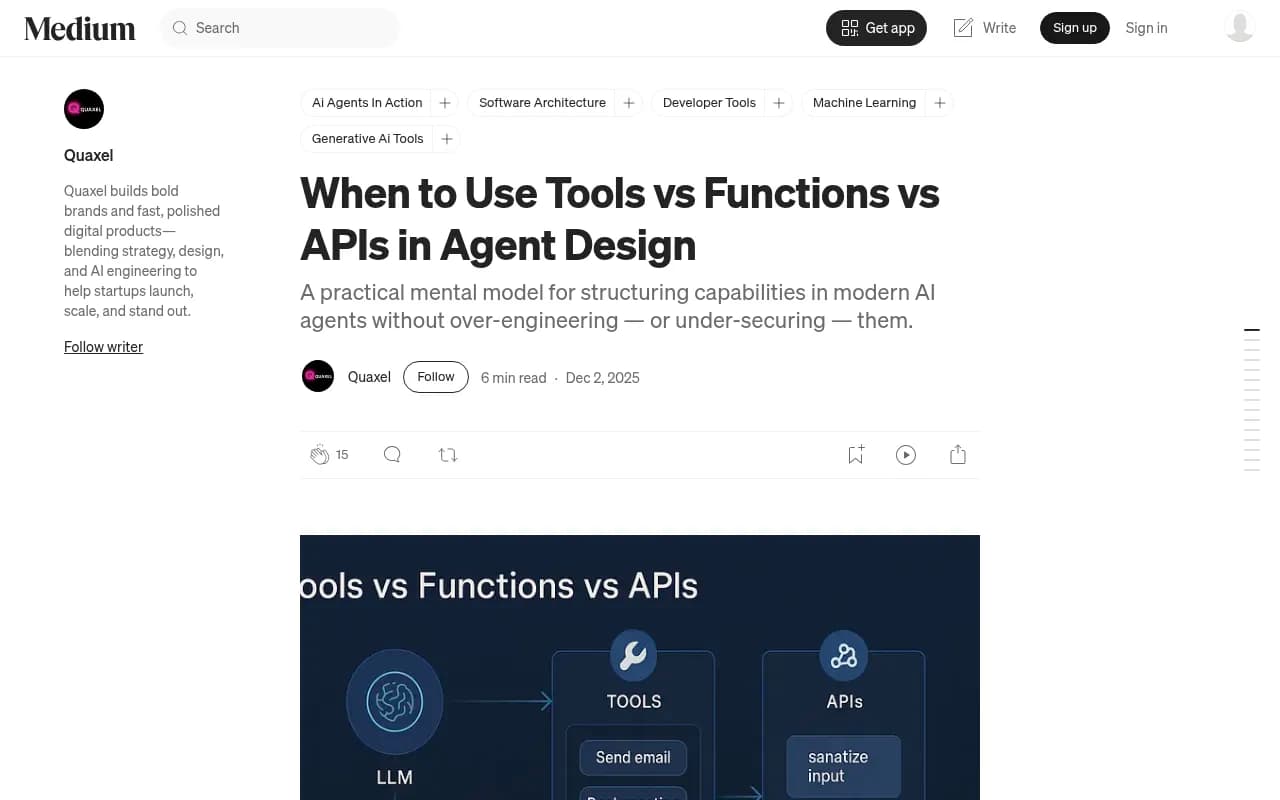
It also helps to understand how agents decide to call tools at all. This Medium piece on tools versus functions versus APIs in agent design gives a pragmatic model for it, useful context when you are deciding how to expose your own product to agents.
What to fix once you have data
The levers differ by agent, so a short list:
- Instruction files. Claude Code reads CLAUDE.md. Codex, Cursor and Builder.io use AGENTS.md. Cursor also uses .cursor/rules. Builder.io suggests keeping a synced CLAUDE.md next to AGENTS.md. Publish starter instruction snippets that developers can paste into their own files, naming your SDK correctly.
- Docs that agents can read. Documentation and help centers earn the largest share of ChatGPT's software citations in Promptwatch's data (2.64% of software citations, Sep 28 to Oct 4, 2026), ahead of vendor sites at 2.01%. GitHub led single domains at 1.2%. See the software citation report. That is ChatGPT, not a coding agent, but it shows which source types AI search trusts for software questions.
- Fresh web content for Codex-style agents. If an agent searches live, the pages it finds decide the pick. Comparison pages, integration guides and clear quick starts are what get fetched.
- A reason not to build it themselves. If agents default to custom code, a one-line install with a clear win beats a feature list.
I'd treat markdown carefully here. Promptwatch's data shows markdown files are only 0.05% of AI search citations, so they serve agents, not AI search, and shouldn't replace normal pages. Details in the markdown report.
Which approach should you choose
| Your situation | What to prioritize |
|---|---|
| Developer-tool or API company, no tracking yet | A platform with documented coding agent coverage and real interface capture |
| Already using an SEO suite | Ask the vendor about agent coverage before adding another tool |
| Tight budget, just exploring | Free visibility report and a hand-built prompt set run in the agents yourself |
| Agency with developer-tool clients | Agency plans with multi-project tracking |
A free manual check is worth doing first. Open Claude Code and Codex, run ten task prompts without naming a brand, and write down what each installs. Then see whether a paid tool shows you anything you didn't already see.
The evidence so far is young. The two studies I leaned on are single-source and I did not verify them directly, and the field changes monthly. Whatever tool you choose, ask how it collects data, and prefer the one that can show you the agent's real output.
If you want help turning visibility data into a content and technical plan, that is the kind of work 1001 SEO Media does, using Promptwatch as its AI visibility platform.