Key takeaways
- Enterprise SEO in 2026 means tracking two separate channels: traditional Google rankings and AI-generated answers in ChatGPT, Perplexity, Claude, and Google AI Overviews.
- Conductor and BrightEdge are strong traditional SEO platforms with limited AI search tracking bolted on; seoClarity tracks Google AI Overviews but not other LLMs.
- Promptwatch is the only platform in this comparison built specifically around AI search visibility, with content gap analysis, AI content generation, and crawler log monitoring included.
- If your team needs both traditional SEO and deep AI visibility in one place, you'll likely need two tools -- or a platform that genuinely does both.
- Price is not the main differentiator here. The real question is whether you need a monitoring dashboard or an optimization workflow.
Enterprise SEO used to be a single problem: rank well in Google. In 2026, it's two problems. Traditional organic search still drives enormous traffic -- Google processes roughly 16.4 billion searches per day, and those blue links still convert. But alongside that, a second discovery channel has emerged. When a buyer asks ChatGPT "what's the best enterprise SEO platform?" or Perplexity "which tool should I use for rank tracking?", the answer they get has nothing to do with your Google position. It depends on whether AI models have seen enough authoritative content about your brand to cite you.
Most enterprise SEO platforms were built for the first problem. Some have started adding features for the second. Very few do both well.
This comparison looks at four platforms -- Conductor, Promptwatch, BrightEdge, and seoClarity -- across both dimensions. The goal isn't to declare a single winner. It's to help you understand what each platform actually does, where it stops, and which combination makes sense for your team.
What we're comparing
Before getting into the platforms, it's worth being clear about what "AI search tracking" actually means in 2026, because vendors use the term loosely.
Real AI search visibility includes:
- Monitoring whether your brand appears in responses from ChatGPT, Perplexity, Claude, Gemini, Grok, and others
- Understanding which prompts trigger mentions of your brand (and which trigger competitors instead)
- Identifying the content gaps that explain why AI models recommend competitors over you
- Tracking citations -- which pages, sources, and domains AI models pull from
- Connecting AI visibility to actual traffic and revenue
Some platforms do all of this. Others just show you a dashboard with a "mention rate" and call it AI tracking. The difference matters a lot when you're trying to actually improve.
Platform-by-platform breakdown
Conductor
Conductor is a well-regarded enterprise SEO and content intelligence platform. It's particularly strong for large teams that need workflow management alongside SEO data -- content briefs, task assignments, and integrations with CMS platforms are all built in.
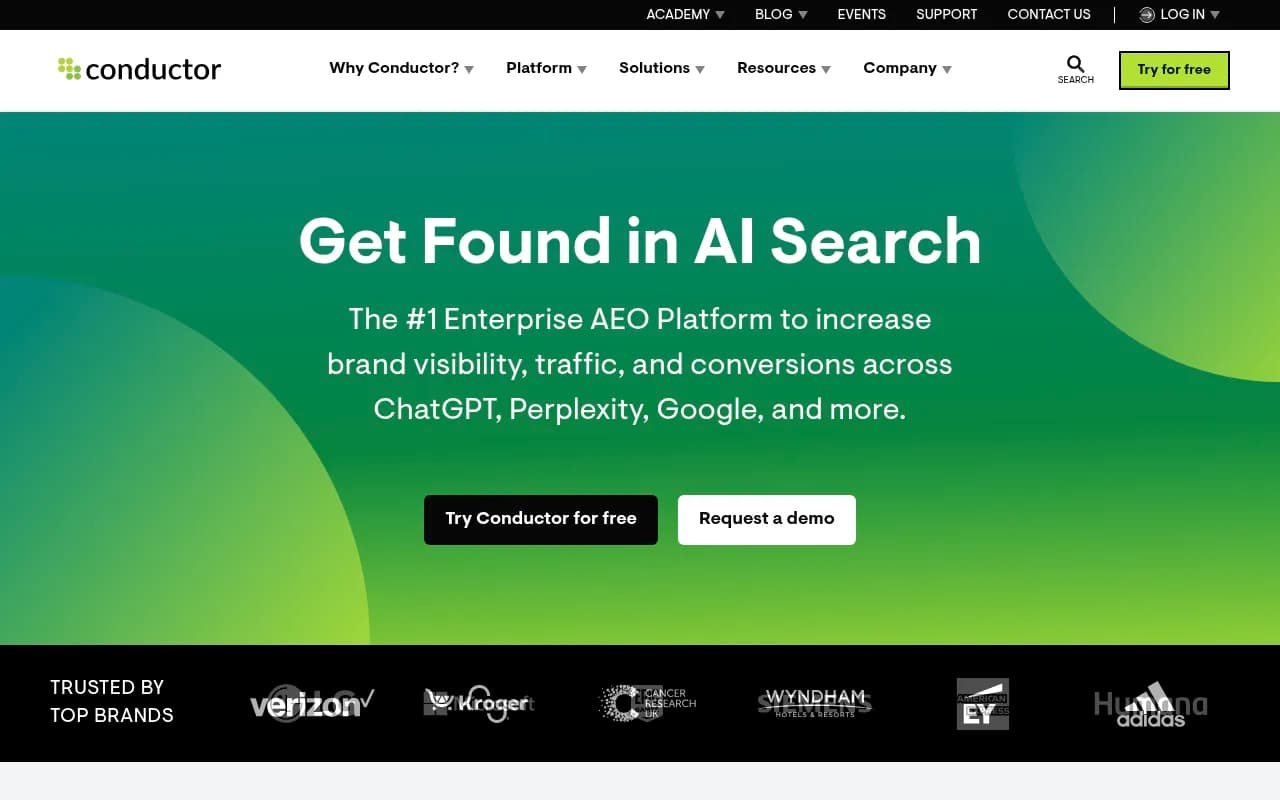
For traditional SEO, Conductor covers the expected ground: keyword tracking, content optimization recommendations, technical SEO auditing, and competitive analysis. Its content intelligence features are genuinely useful for editorial teams trying to scale production without losing quality.
On AI search, Conductor has started adding features -- it tracks brand authority and citations in AI search engines, and the platform has positioned itself around "AI-powered discovery" as a broader category. But the depth here is thinner than the traditional SEO side. It doesn't match the prompt-level granularity or multi-LLM coverage you'd get from a dedicated AI visibility platform.
Best for: Large enterprise teams that need a mature traditional SEO platform with content workflow tools, and want some AI visibility monitoring without switching tools entirely.
BrightEdge
BrightEdge is one of the oldest names in enterprise SEO, and it still has a large install base among Fortune 500 companies. Its core strengths are keyword tracking at scale, competitive benchmarking, and content recommendations through its DataCube technology.
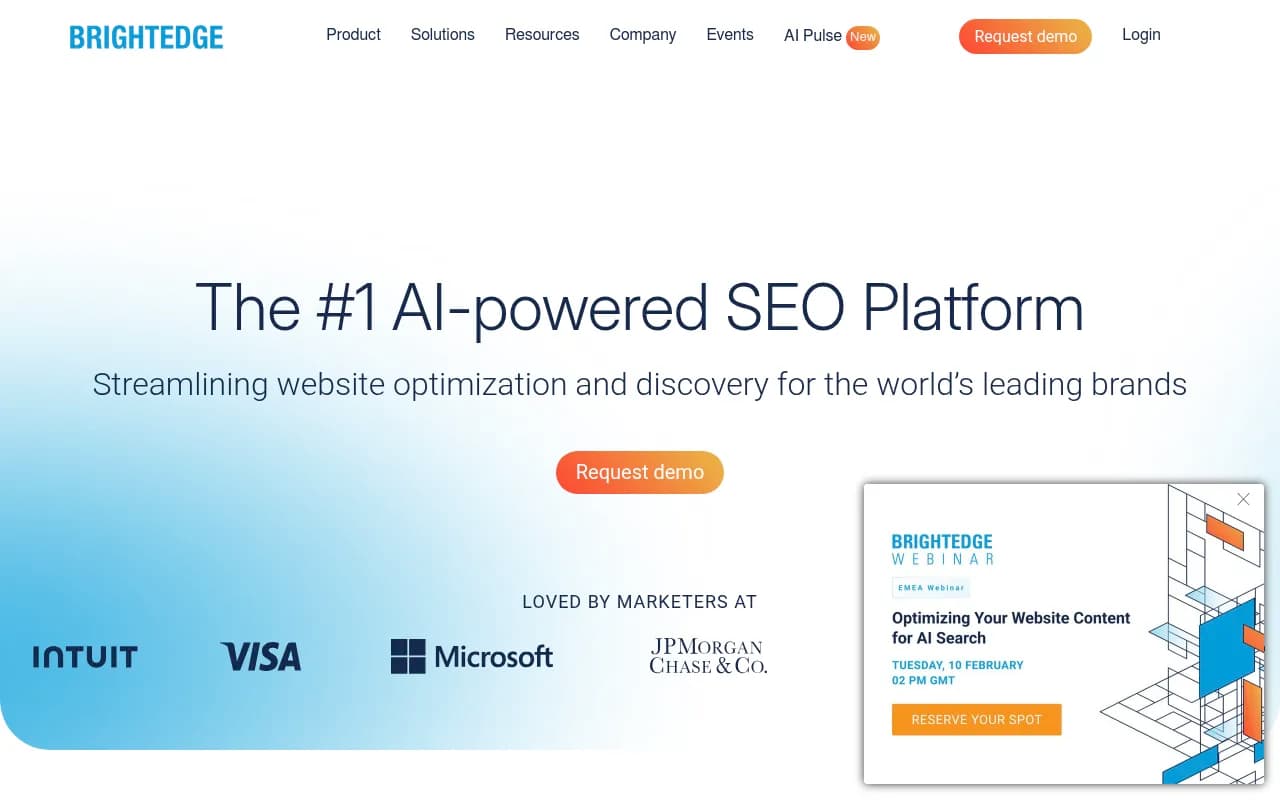
The platform has added AI search features, including some tracking of AI-generated answers and content performance in AI contexts. But BrightEdge's architecture was built for traditional search, and the AI additions feel like extensions rather than core capabilities. Pricing is custom and typically high -- it's aimed at large enterprises with dedicated SEO teams and budgets to match.
One honest note: BrightEdge's AI search tracking is primarily focused on Google AI Overviews, which is important but leaves out ChatGPT, Perplexity, Claude, and the other LLMs where a significant share of AI-driven discovery now happens.
Best for: Enterprise teams already invested in the BrightEdge ecosystem, particularly those focused on Google as their primary channel.
seoClarity
seoClarity is built for enterprise-scale SEO intelligence, with a particularly strong keyword tracking capability -- the platform can handle very large keyword sets and provides sophisticated segmentation and reporting.
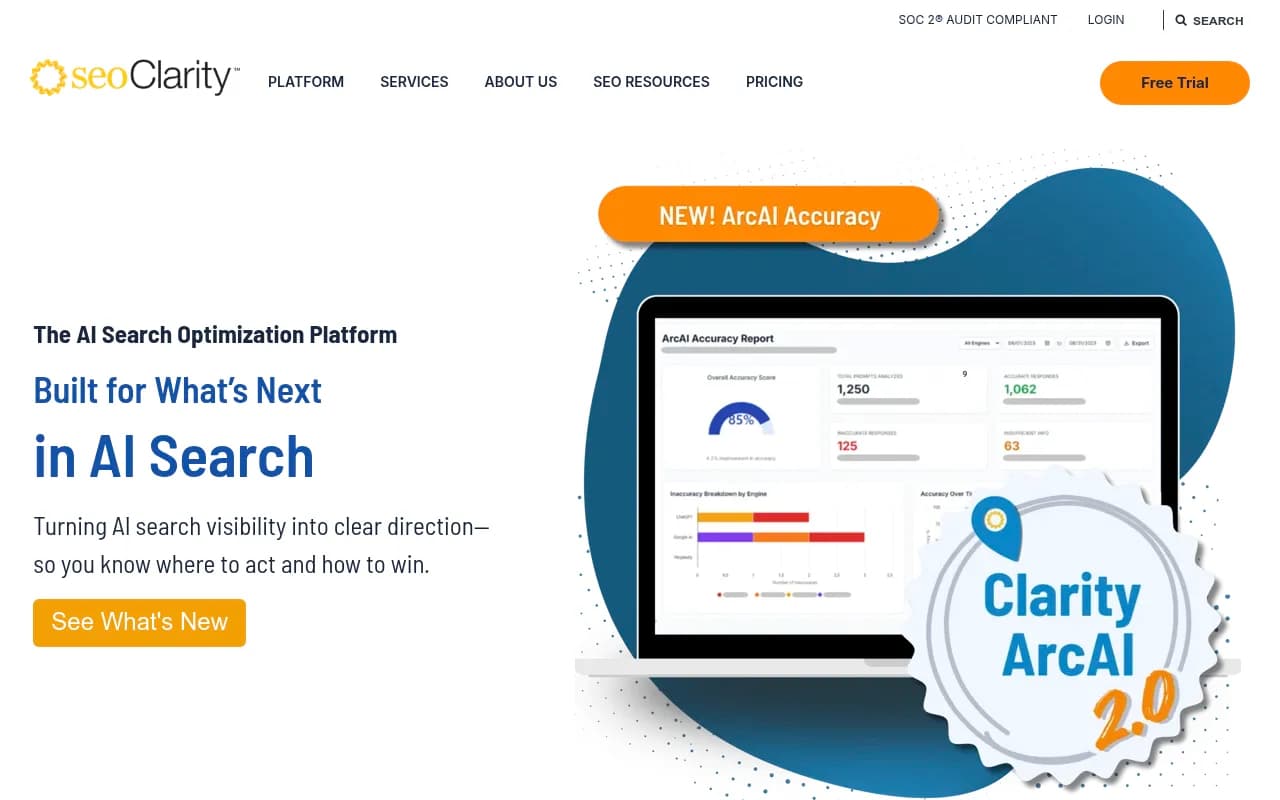
It has an AI content writer, content gap analysis, and topic research tools that are genuinely useful. On the AI search side, seoClarity tracks Google AI Overviews, which is meaningful given Google's dominance. But like BrightEdge, it doesn't currently track ChatGPT, Perplexity, Claude, or other major LLMs in any meaningful depth.
The platform also includes log file analysis, which gives some insight into how crawlers interact with your site -- though this is focused on traditional search crawlers, not AI-specific ones like GPTBot or ClaudeBot.
Best for: Enterprise teams that need deep keyword tracking and Google-focused AI Overview monitoring, with strong content workflow tools.
Promptwatch
Promptwatch takes a different approach entirely. It's not an enterprise SEO platform that added AI tracking -- it's an AI search visibility platform built from the ground up around the question of how brands appear in LLM-generated answers.

The coverage is broader than any of the other platforms in this comparison: ChatGPT, Perplexity, Claude, Gemini, Grok, DeepSeek, Copilot, Mistral, Meta AI, and Google AI Overviews. That's 10 AI models tracked simultaneously, which matters because different models have different citation patterns and different audiences.
What separates Promptwatch from monitoring-only tools is the action loop built into the platform:
- Answer Gap Analysis shows exactly which prompts competitors rank for that you don't -- not just "you're missing visibility" but the specific topics and questions where AI models can't find authoritative content from your site.
- The built-in AI writing agent generates content grounded in real citation data (880M+ citations analyzed), designed specifically to earn citations from AI models rather than just rank in Google.
- Page-level tracking shows which pages are being cited, by which models, and how often -- closing the loop between content creation and measurable results.
The platform also includes AI crawler logs (real-time monitoring of GPTBot, ClaudeBot, and others hitting your site), Reddit and YouTube citation tracking, ChatGPT Shopping monitoring, and traffic attribution via GSC integration or server log analysis.
What Promptwatch doesn't do is traditional SEO. There's no keyword rank tracking for Google blue links, no technical SEO auditing, no backlink analysis. It's purpose-built for AI search visibility, which means most enterprise teams will use it alongside a traditional SEO platform rather than instead of one.
Pricing starts at $99/month (Essential: 1 site, 50 prompts, 5 articles), with Professional at $249/month and Business at $579/month. Free trial available.
Best for: Any brand that wants to seriously understand and improve how they appear in AI-generated answers -- particularly teams that have realized monitoring alone isn't enough and need tools to actually fix the gaps.
Feature comparison table
| Feature | Conductor | BrightEdge | seoClarity | Promptwatch |
|---|---|---|---|---|
| Traditional keyword rank tracking | Yes | Yes | Yes | No |
| Technical SEO auditing | Yes | Yes | Yes | No |
| Google AI Overviews tracking | Partial | Yes | Yes | Yes |
| ChatGPT tracking | Limited | Limited | No | Yes |
| Perplexity tracking | Limited | No | No | Yes |
| Claude / Gemini / Grok tracking | No | No | No | Yes |
| Prompt-level visibility data | No | No | No | Yes |
| Content gap analysis (AI prompts) | No | No | Partial | Yes |
| AI content generation for citations | No | No | Yes (Google-focused) | Yes (LLM-optimized) |
| AI crawler logs (GPTBot, ClaudeBot) | No | No | No | Yes |
| Reddit / YouTube citation tracking | No | No | No | Yes |
| ChatGPT Shopping tracking | No | No | No | Yes |
| Traffic attribution from AI search | No | No | No | Yes |
| Pricing transparency | Custom | Custom | Custom | From $99/mo |
How to think about the choice
The honest answer is that these platforms aren't really competing for the same use case anymore. The question isn't "which one is best" -- it's "what do you actually need to solve?"
If your primary concern is traditional Google SEO at enterprise scale, Conductor and BrightEdge are both mature choices. seoClarity is strong if keyword volume and segmentation are priorities. All three have added some AI search features, but none of them have made it a core capability.
If AI search visibility is a real business priority -- and for most B2B and consumer brands in 2026, it should be -- then Promptwatch is the only platform in this comparison built to address it seriously. The difference between "we track whether you appear in ChatGPT" and "we show you why you don't appear and help you fix it" is significant.
Many enterprise teams end up running both: a traditional SEO platform for Google rankings and Promptwatch for AI search visibility. The overlap is minimal, and the combined picture is much more complete than either alone.
What to watch in the second half of 2026
A few things are worth tracking as you evaluate these platforms:
Traditional SEO platforms will keep adding AI search features. Whether those additions become genuinely deep or stay surface-level depends on how seriously each vendor treats it as a core product direction rather than a checkbox. BrightEdge and Conductor have the resources to build this out -- the question is whether they prioritize it.
AI search itself is changing fast. Google AI Mode, ChatGPT's expanding search capabilities, and Perplexity's growing user base mean the landscape of "where AI-driven discovery happens" is shifting. Platforms that track more models and update their data more frequently will have an advantage.
The gap between monitoring and optimization is widening. As more brands start tracking AI visibility, the ones that can act on the data -- creating content that actually earns citations -- will pull ahead of those just watching the numbers. That's the core argument for why Promptwatch's approach is structurally different from the monitoring-only tools.
Recommended combinations
For most enterprise marketing teams in 2026, the practical recommendation is:
- Use Semrush, Conductor, or seoClarity for traditional SEO (keyword tracking, technical audits, backlinks)
- Use Promptwatch for AI search visibility, content gap analysis, and optimization
This isn't a knock on any of the traditional platforms -- they're genuinely good at what they were built for. The point is that AI search visibility is a different enough problem that it benefits from a purpose-built tool.
If budget is constrained and you need to choose one, the right answer depends on where your traffic and leads actually come from today -- and where you expect them to come from in 12 months. For most brands, AI-driven discovery is growing faster than traditional search, which changes the calculus.
Bottom line
Conductor, BrightEdge, and seoClarity are solid enterprise SEO platforms with varying degrees of AI search tracking bolted on. They're worth serious consideration if traditional SEO is your primary need, and the AI features are improving.
Promptwatch is the right choice if AI search visibility is a genuine priority -- not just something to monitor, but something to actively improve. The combination of multi-LLM tracking, content gap analysis, AI content generation, and crawler log monitoring is more complete than anything the traditional platforms currently offer in this space.
For most enterprise teams, the answer in 2026 is probably both.