Key takeaways
- AI engines like ChatGPT, Perplexity, and Google AI Mode decompose a single query like "best CRM software" into 15-50 sub-queries before synthesizing an answer — and your content needs to cover the full tree, not just the head term.
- Fan-out trees are structured: they follow predictable patterns (use-case splits, company-size splits, comparison framings, pricing queries, integration queries) that you can map in advance.
- Comparison and "X vs Y" queries appear in nearly every commercial fan-out tree — if you don't have comparison content, you're invisible for a huge portion of the retrieval surface.
- Different AI engines fan out differently: ChatGPT, Perplexity, and Google AI Mode often retrieve different sub-queries for the same parent prompt, so cross-engine coverage matters.
- Tools like Promptwatch can show you the actual fan-out behavior for your category and identify which branches your competitors are winning that you're not.
What query fan-out actually means (and why it changes everything)
Here's something most SEO teams still haven't internalized: when a user types "best CRM software" into ChatGPT or Google AI Mode, the engine doesn't run a single search. It fans the query out into a tree of related sub-queries — typically 5 to 20 of them, sometimes more for commercial categories — retrieves sources for each branch, and then synthesizes a single answer.
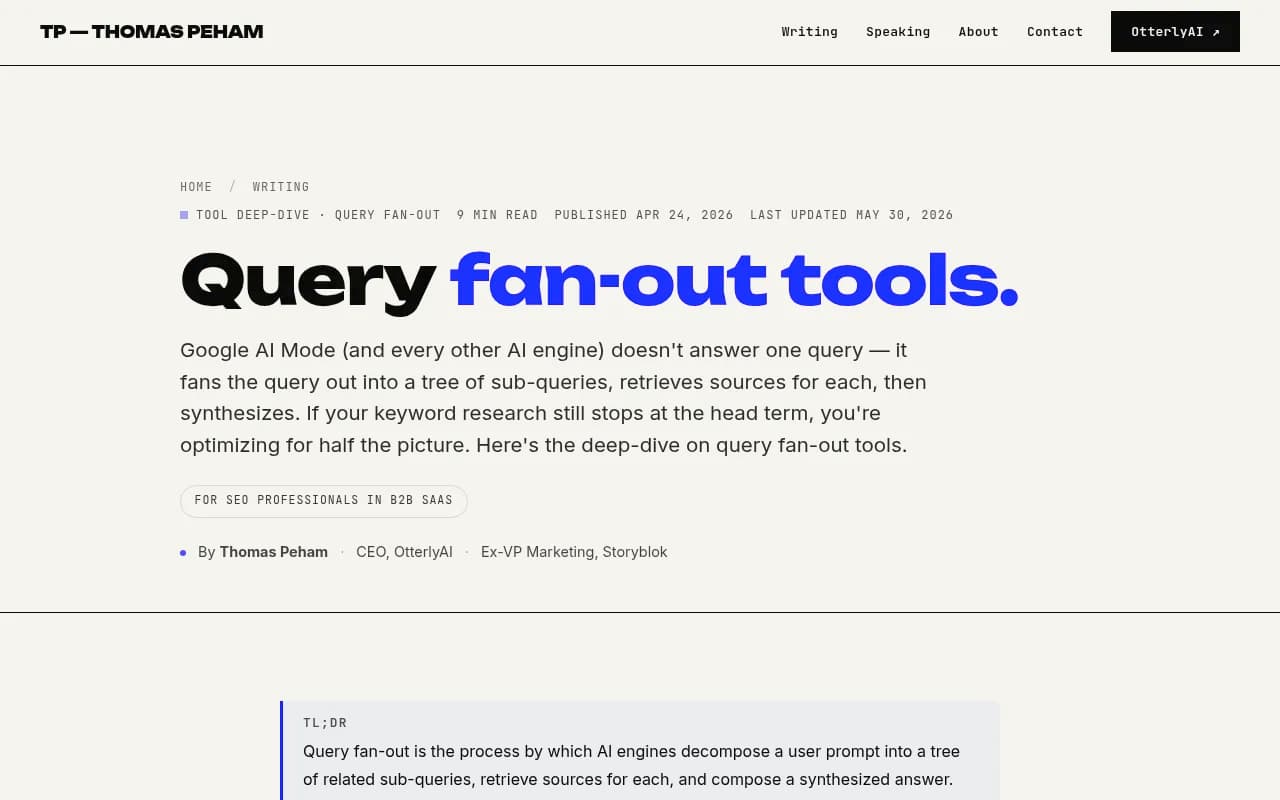
Thomas Peham, CEO of OtterlyAI, put it plainly in his 2026 deep-dive on fan-out tools: "Stop briefing content as 'this page targets one keyword.' Brief it as 'this page covers the fan-out tree of the parent query.' That single change moves more citations than any single on-page tactic I've used."
That's the shift. You're not optimizing for one query. You're optimizing for the entire retrieval surface that one query generates.
For a category like CRM software, that surface is enormous. The head term "best CRM software" branches into something closer to 50 distinct sub-queries when you account for use-case splits, company-size splits, comparison framings, pricing queries, integration queries, and feature-specific questions. Each of those sub-queries pulls from different sources. If your content only addresses the head term, you're visible for a fraction of the answers AI engines actually construct.
The anatomy of a CRM fan-out tree
Let's map this concretely. When an AI engine receives "best CRM software," here's how the fan-out tree typically branches:
Layer 1: Definitional and categorical sub-queries
The engine often starts by grounding itself:
- "What is CRM software?"
- "What does CRM software do?"
- "Types of CRM software"
- "CRM software vs sales software"
These are rarely the queries that drive citations to vendor pages. But they do pull from authoritative overview content — think G2, Gartner, or well-structured "what is" pages. If you're a CRM vendor and you don't have a solid definitional page, you're invisible at the top of the tree.
Layer 2: Company-size and stage splits
This is where the tree gets commercially interesting:
- "Best CRM for small business"
- "Best CRM for startups"
- "Best CRM for enterprise"
- "Best CRM for mid-market"
- "Best CRM for solopreneurs"
- "Best CRM for growing teams"
- "Best CRM for SaaS companies" (this one branches further on its own)
Each of these sub-queries retrieves different sources. A page that ranks for "best CRM for enterprise" often won't appear in results for "best CRM for startups." You need distinct content for each segment, not one page that vaguely mentions all of them.
Layer 3: Use-case and industry splits
- "Best CRM for sales teams"
- "Best CRM for marketing teams"
- "Best CRM for customer success"
- "Best CRM for real estate"
- "Best CRM for agencies"
- "Best CRM for e-commerce"
- "Best CRM for consulting firms"
- "Best CRM for SaaS lead generation"
- "Best CRM for field sales"
- "Best CRM for inside sales"
This layer is where most CRM content falls short. Generic "best CRM" roundups don't get cited for industry-specific sub-queries. AI engines want content that specifically addresses the use case — not content that mentions it in passing.
Layer 4: Comparison and "X vs Y" framings
This is the layer that most content teams underinvest in, and it's arguably the highest-value part of the tree:
- "HubSpot vs Salesforce"
- "Pipedrive vs HubSpot"
- "Salesforce vs Zoho"
- "HubSpot vs Zoho for small business"
- "Pipedrive vs Monday CRM"
- "HubSpot vs Salesforce for startups"
- "Zoho vs Salesforce pricing"
- "Pipedrive alternatives"
- "HubSpot alternatives"
- "Salesforce alternatives for SMB"
Comparison queries appear in fan-out trees for almost every commercial parent query. If you're a CRM vendor and you don't have dedicated comparison pages, you're handing citations to competitors and review sites like G2, Capterra, and SalesBread.
Layer 5: Feature and capability queries
- "CRM with email automation"
- "CRM with pipeline management"
- "CRM with built-in telephony"
- "CRM with AI features"
- "CRM with free plan"
- "CRM with Slack integration"
- "CRM with mobile app"
- "CRM with reporting and analytics"
- "CRM with lead scoring"
These sub-queries are highly specific and often pull from feature comparison pages, product documentation, and review sites. They're also the queries where a vendor with strong product-specific content can beat generic roundups.
Layer 6: Pricing and value queries
- "CRM software pricing"
- "Free CRM software"
- "Cheapest CRM software"
- "CRM software under $50/month"
- "HubSpot CRM pricing"
- "Salesforce pricing for small business"
- "Is HubSpot free?"
- "Pipedrive pricing 2026"
Pricing queries are consistently in the fan-out tree for commercial software categories. AI engines want to give users a complete picture, which includes cost. If your pricing page isn't structured for AI retrieval (clear, scannable, with explicit numbers), you're losing citations here.
How different AI engines fan out differently
This is where it gets complicated. ChatGPT, Perplexity, and Google AI Mode don't all generate the same sub-queries for "best CRM software." They have different retrieval behaviors, different source preferences, and different tendencies for how deep they go.
| AI Engine | Fan-out depth | Comparison query tendency | Pricing query tendency | Source preference |
|---|---|---|---|---|
| Google AI Mode | Deep (15-30 sub-queries) | High | High | Authoritative review sites, vendor pages |
| Perplexity | Medium (8-15 sub-queries) | High | Medium | Recent articles, Reddit, niche blogs |
| ChatGPT | Variable (5-20 sub-queries) | Medium | Low | Established review sites, Wikipedia-style content |
| Claude | Shallow-medium (5-12 sub-queries) | Low | Low | Long-form authoritative content |
| Gemini | Medium (10-20 sub-queries) | High | High | Google-indexed content, YouTube |
The practical implication: you can't optimize for one engine and assume cross-engine coverage. A page that gets cited by Perplexity for "best CRM for startups" may not appear in ChatGPT's response for the same query. Cross-engine visibility requires understanding each engine's retrieval behavior separately.
Mapping your own fan-out tree: a practical process
Step 1: Start with the head term and brainstorm the first layer
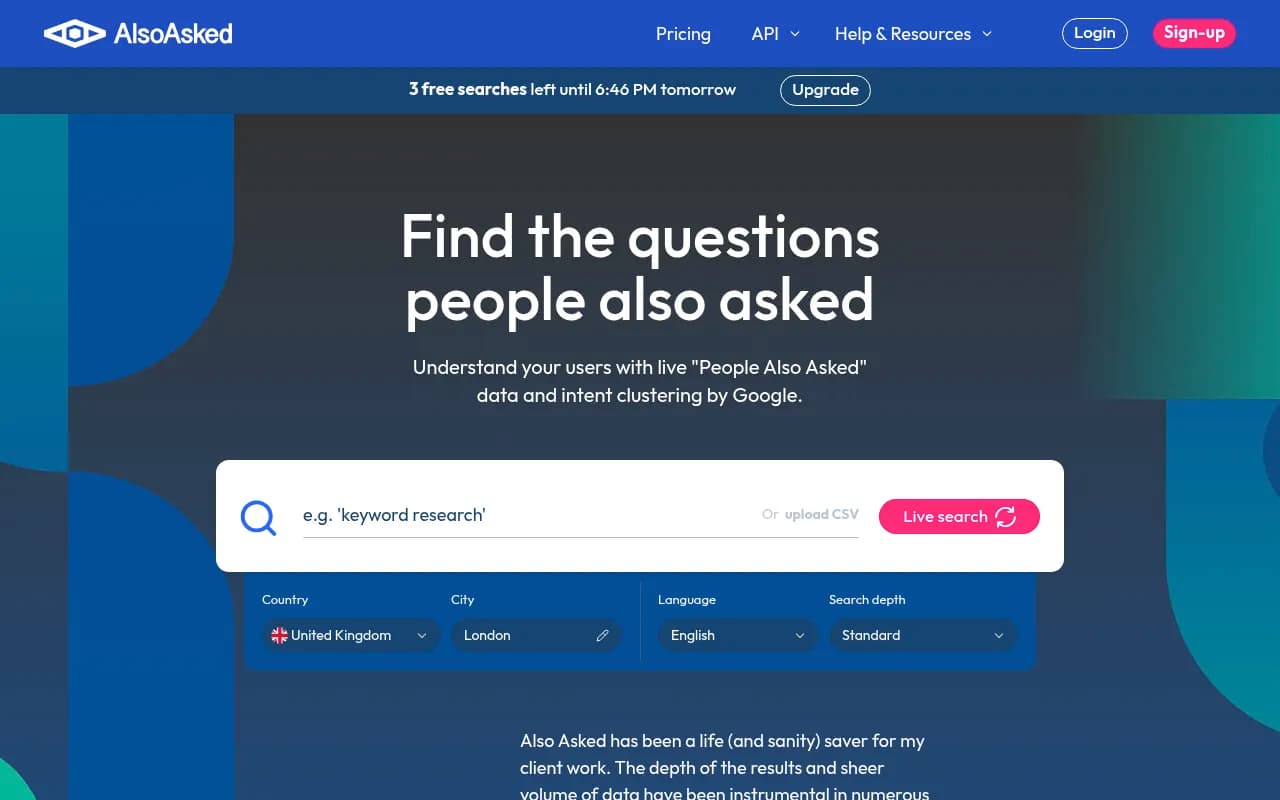
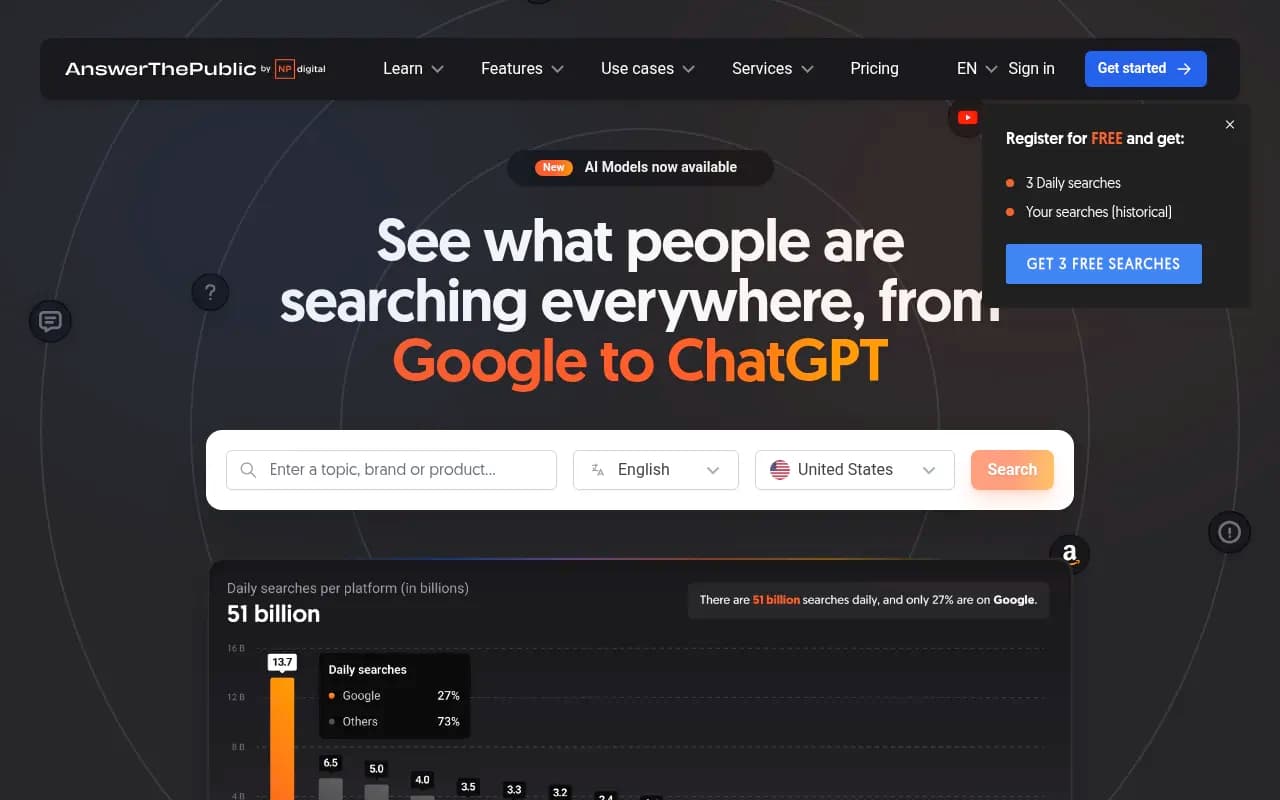
Take your target head term ("best CRM software") and manually brainstorm the obvious splits: company size, industry, use case, budget. These are your Layer 2 and Layer 3 branches. You can use tools like AlsoAsked or AnswerThePublic to surface real question data.
Step 2: Run the head term through multiple AI engines
Ask ChatGPT, Perplexity, and Google AI Mode your head query and look at what sub-questions they surface in their responses. Most AI engines will reference related questions or structure their answers around implicit sub-queries. These are real signals about what the engine is retrieving.
Step 3: Map comparison queries systematically
For every major player in your category, create a comparison matrix:
- Your brand vs. each competitor
- Each competitor vs. each other competitor (for third-party content)
- "[Competitor] alternatives" queries
If you're a CRM vendor, you need pages for every major head-to-head. If you're a content site covering CRMs, you need comparison content for every pairing that shows up in the fan-out tree.
Step 4: Identify your content gaps
Map your existing content against the fan-out tree. Where do you have pages? Where are you missing? The gaps are your content roadmap.
This is where AI visibility platforms become genuinely useful. Tools like Promptwatch include Answer Gap Analysis that shows exactly which prompts competitors are getting cited for that you're not — essentially surfacing your fan-out gaps automatically.

Step 5: Prioritize by prompt volume and difficulty
Not all branches of the fan-out tree are equally valuable. "Best CRM for enterprise" is a different commercial opportunity than "CRM software definition." Prioritize branches by:
- Estimated prompt volume (how often users ask this sub-query)
- Competitive difficulty (how many strong pages already cover this)
- Commercial intent (how close is this to a purchase decision)
Content strategy for winning each layer
Winning Layer 1 (definitional): Be the authoritative explainer
Create a comprehensive "What is CRM software?" page that goes deeper than the Wikipedia-style definitions already out there. Include: how CRM software works, the different types, who uses it, and what problems it solves. Structure it with clear headers that match the sub-questions AI engines ask.
Winning Layer 2 (company-size): Segment your content genuinely
Don't write "best CRM for small business" and then recommend Salesforce Enterprise. AI engines are getting better at detecting when content doesn't actually match its claimed audience. Your small business CRM page should recommend tools that are genuinely appropriate for small businesses, with pricing and features that match.
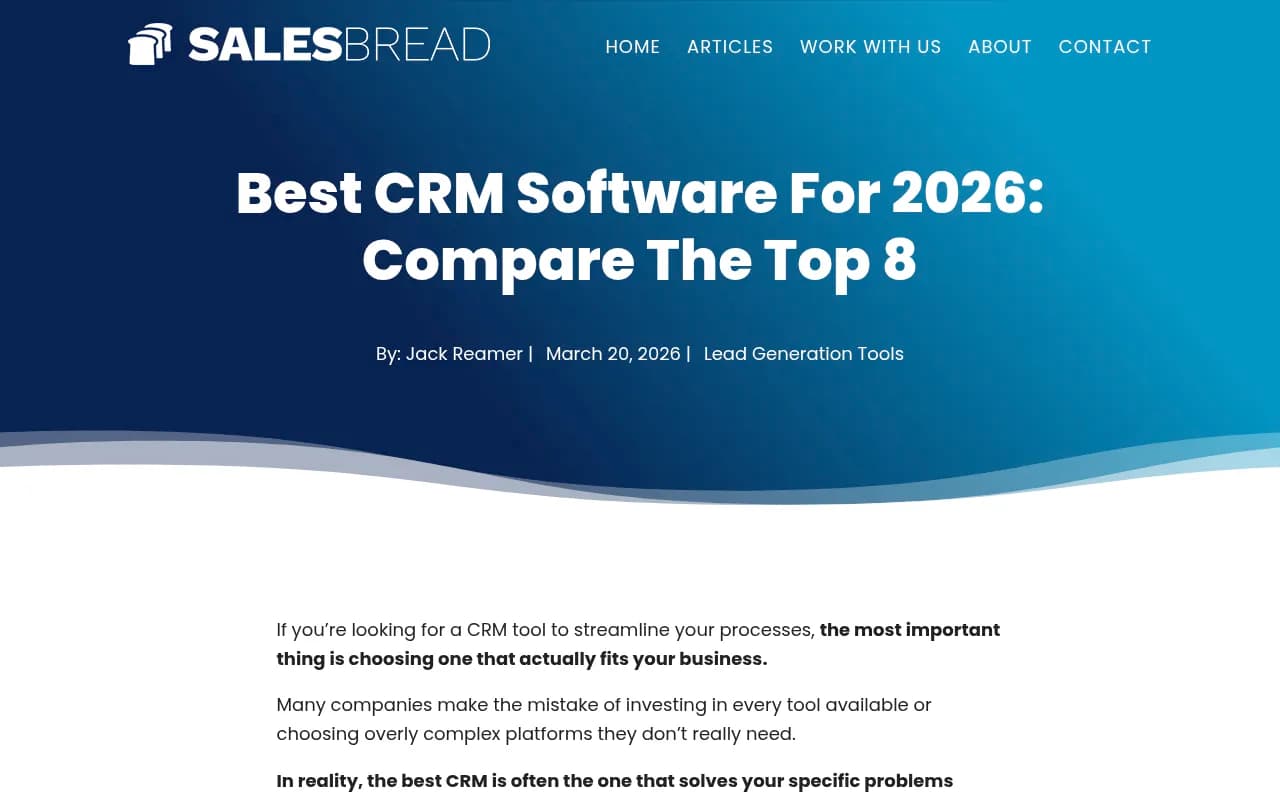
The SalesBread comparison of the top 8 CRMs is a good example of how to structure this — they explicitly segment by use case and include a comparison table with pricing, free plan availability, and G2 ratings.
Winning Layer 3 (use-case): Go narrow and specific
A page titled "Best CRM for SaaS Companies" should be specifically about SaaS company needs: trial conversion tracking, product-qualified lead scoring, integration with product analytics tools, subscription revenue visibility. Not a generic CRM roundup with "SaaS" in the title.
The more specific your content is to the actual use case, the more likely an AI engine is to cite it when a user asks that specific sub-query.
Winning Layer 4 (comparisons): Build a comparison content library
This is the highest-leverage investment for most SaaS companies. Every major comparison query in your category needs a dedicated page. The structure that tends to get cited:
- Clear verdict up front (don't bury the lede)
- Side-by-side feature comparison table
- Pricing comparison with actual numbers
- Use-case recommendations ("choose X if...", "choose Y if...")
- Honest pros and cons for each option
Comparison content gets cited heavily because AI engines want to give users a complete answer that includes trade-offs. Generic "both are great" content doesn't get cited. Opinionated, specific comparison content does.
Winning Layer 5 (features): Create feature-specific landing pages
"CRM with built-in telephony" is a specific query with specific intent. A page that comprehensively answers "which CRMs have built-in calling?" — with a comparison table, pricing, and honest assessment — will get cited for that sub-query. Most vendors don't have this content. Most review sites do it generically. There's an opportunity to do it better.
Winning Layer 6 (pricing): Make your pricing page AI-readable
Pricing pages that hide numbers behind "contact sales" or use vague tier names don't get cited for pricing queries. AI engines need explicit, scannable pricing information. If your pricing page has actual numbers, clear tier names, and a comparison of what each tier includes, it will get cited when users ask pricing questions.
The re-run problem: fan-out trees change
One thing worth flagging: the fan-out tree for "best CRM software" today is not the same as it was six months ago, and it won't be the same six months from now. AI engines update their retrieval behavior frequently. New competitors enter the market. User behavior shifts.
Thomas Peham recommends re-running fan-out analysis quarterly. That's a reasonable cadence for most categories. For fast-moving categories (AI tools, for example), monthly re-runs make more sense.
This is also why ongoing monitoring matters more than one-time content audits. You need to know when your citations drop, when a competitor starts appearing for a sub-query you used to own, and when new sub-queries emerge in the tree.
Tools that help with fan-out mapping and AI visibility
A few tools worth knowing for this work:
For discovering sub-queries and question data:
For tracking AI visibility and finding gaps:
Otterly.AI


For content optimization and brief creation:

A realistic content roadmap for a CRM vendor
If you're a CRM vendor trying to win the "best CRM software" fan-out tree, here's what a realistic 6-month content roadmap looks like:
| Month | Focus | Content pieces |
|---|---|---|
| 1 | Audit existing content against fan-out tree | Gap analysis, priority matrix |
| 2 | Layer 2 (company-size) pages | 4-5 segment-specific pages |
| 3 | Layer 4 (comparisons) — your brand vs. top 5 competitors | 5 comparison pages |
| 4 | Layer 3 (use-case) pages | 5-6 industry/use-case pages |
| 5 | Layer 5 (feature) pages | 6-8 feature-specific pages |
| 6 | Layer 6 (pricing) + Layer 1 (definitional) cleanup | Pricing page overhaul, 2-3 definitional pages |
This isn't a complete content strategy — it's specifically the fan-out coverage roadmap. You'd layer this on top of whatever existing content strategy you have.
The bottom line
"Best CRM software" isn't one query. It's a tree with dozens of branches, each pulling from different sources, each requiring different content to win. Most content teams are still optimizing for the head term and wondering why their AI visibility is low.
The teams winning in AI search in 2026 are the ones who've mapped the full fan-out tree for their category, identified the gaps, and built content specifically designed to answer each branch. That's not a content volume play — it's a content architecture play. The number of pages matters less than whether each page genuinely answers the sub-query it's targeting.
Map the tree. Find the gaps. Build the content. Then track whether it's actually getting cited.