Key takeaways
- Gauge tracks brand mentions across AI engines like ChatGPT, Perplexity, and Google AI Overviews, positioning itself as an AI visibility monitoring tool
- It's best suited for teams that want a focused, no-frills view of how their brand appears in AI-generated answers
- The platform lacks content generation, crawler logs, and deep competitive intelligence features that more complete platforms offer
- For teams that need to act on visibility gaps -- not just see them -- Gauge will likely feel incomplete
- Pricing and feature depth put it in the "starter" tier of the AI visibility market, which is fine if monitoring is genuinely all you need
What is Gauge?
Gauge (withgauge.com) is an AI search visibility platform that monitors how your brand appears across AI engines. The core pitch is simple: tell it who you are and who your competitors are, and it tracks how often each of you shows up in AI-generated answers.
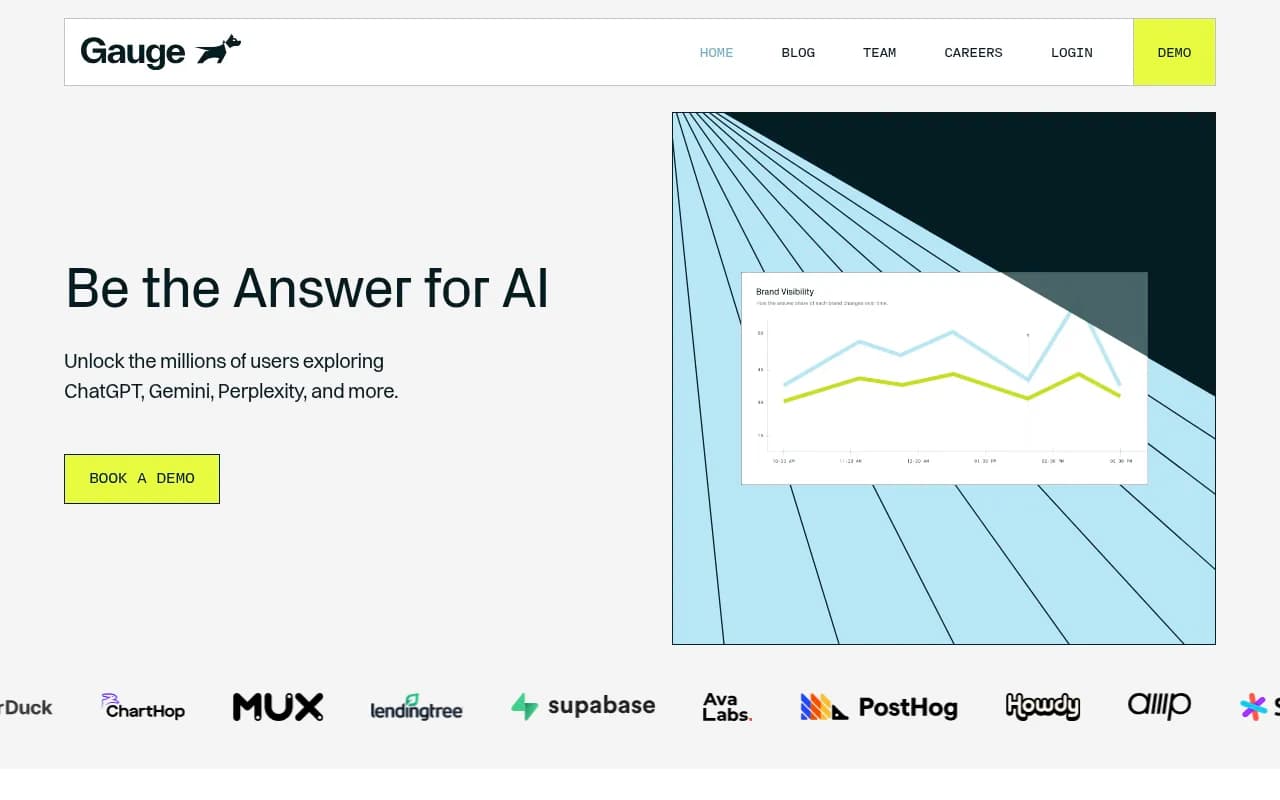
That's a real problem worth solving. AI search has changed the game for brand visibility. When someone asks ChatGPT "what's the best project management tool for remote teams?" or Perplexity "which CRM should I use for a 50-person sales team?", the brands that appear in those answers are getting a new kind of organic traffic -- and the brands that don't are invisible to a growing slice of their audience. According to data from Promptwatch, over 1.1 billion AI citations have been processed across platforms like ChatGPT, Claude, Gemini, and Perplexity. The volume of AI-driven discovery is real and growing fast.

Gauge sits in this market as a monitoring-first tool. It watches, reports, and alerts. Whether that's enough depends entirely on what you need.
What Gauge actually does
Brand mention tracking across AI engines
Gauge's primary function is tracking when and how your brand gets mentioned in AI responses. You set up a brand profile, define the prompts or topics you care about, and the platform runs those queries across supported AI engines to see whether you appear, where you appear, and how competitors compare.
This is genuinely useful for establishing a baseline. If you've never measured your AI visibility before, seeing your mention rate versus a competitor's is clarifying. You might discover you're invisible for prompts you assumed you owned, or that a competitor you'd dismissed is dominating a category.
Competitor comparison
Gauge lets you track multiple competitors alongside your own brand. The competitive heatmap view shows who's winning for which prompts, which gives product marketing and SEO teams a quick read on where the gaps are.
This is the feature most teams will use most often. It's not deep -- you get visibility scores and mention rates, not the "why" behind them -- but it's a reasonable starting point for competitive analysis in AI search.
Prompt monitoring
You can configure specific prompts you want to monitor, and Gauge will track your brand's presence in responses to those prompts over time. This is more useful than generic brand monitoring because it ties visibility to actual buyer intent. Someone asking "what's the best tool for X" is further down the funnel than someone who just encountered your brand name.
Where Gauge falls short
Here's the honest part. Gauge is a monitoring tool. It shows you data. What it doesn't do is help you act on that data -- and in 2026, that gap matters a lot.
No content generation
If Gauge shows you that a competitor appears for a prompt you don't, the next question is: what do I do about it? Gauge doesn't answer that. There's no built-in content creation, no gap analysis that tells you which pages to write or which topics to cover, and no AI writing agent to help you produce content that might actually get cited.
Platforms like Promptwatch have built this into their core workflow. The Answer Gap Analysis shows you exactly which prompts competitors are winning that you're not, and the built-in writing agent generates articles grounded in real citation data. That's the difference between a dashboard and an optimization platform.
No AI crawler logs
Understanding why AI engines do or don't cite you requires knowing whether they're even crawling your content. Gauge doesn't surface crawler logs -- you can't see whether ChatGPT's bot has visited your key pages, how often, or what errors it encountered.
This is a significant blind spot. If GPTBot is hitting your site but not citing you, that's a content quality or structure problem. If it's not hitting your site at all, that's a technical problem. Without crawler data, you're guessing.
Limited prompt intelligence
Gauge shows you whether you appear for a prompt, but it doesn't tell you much about the prompt itself -- how often people ask it, how competitive it is, or how it branches into related queries. That kind of prompt intelligence is what lets you prioritize: instead of trying to win every prompt, you focus on the high-volume, winnable ones first.
No traffic attribution
Visibility scores are useful, but they don't tell you whether AI mentions are actually driving traffic or revenue. Gauge doesn't offer traffic attribution -- no code snippet, no Google Search Console integration, no server log analysis. You can see that you're mentioned, but you can't connect that mention to a session or a conversion.
Who Gauge is for
Gauge makes sense for a specific type of user: someone who wants a quick, low-friction read on their AI visibility and isn't ready to invest in a full optimization workflow.
That might be a founder who wants to know whether their brand shows up in ChatGPT before committing to a bigger platform. Or a small marketing team that just wants a monthly snapshot of competitive visibility without a complex setup.
It's also a reasonable starting point if your organization is still building the internal case for AI search investment. Showing stakeholders a concrete visibility score -- "we appear in 12% of relevant AI responses, our top competitor appears in 47%" -- is the kind of number that gets budget approved.
What Gauge is not is a complete solution for teams that want to improve their AI visibility, not just measure it.
Gauge vs. the broader AI visibility market
The AI visibility tool market has grown fast. Here's how Gauge compares to the main alternatives:
| Tool | Monitors AI engines | Content generation | Crawler logs | Traffic attribution | Prompt intelligence | Best for |
|---|---|---|---|---|---|---|
| Gauge | Yes | No | No | No | Basic | Monitoring-only teams |
| Promptwatch | Yes (10 engines) | Yes (built-in agent) | Yes | Yes | Advanced | Full optimization workflow |
| Otterly.AI | Yes | No | No | No | Basic | Simple monitoring |
| AthenaHQ | Yes | No | No | No | Moderate | Monitoring + analysis |
| Profound | Yes | No | No | Limited | Moderate | Enterprise monitoring |
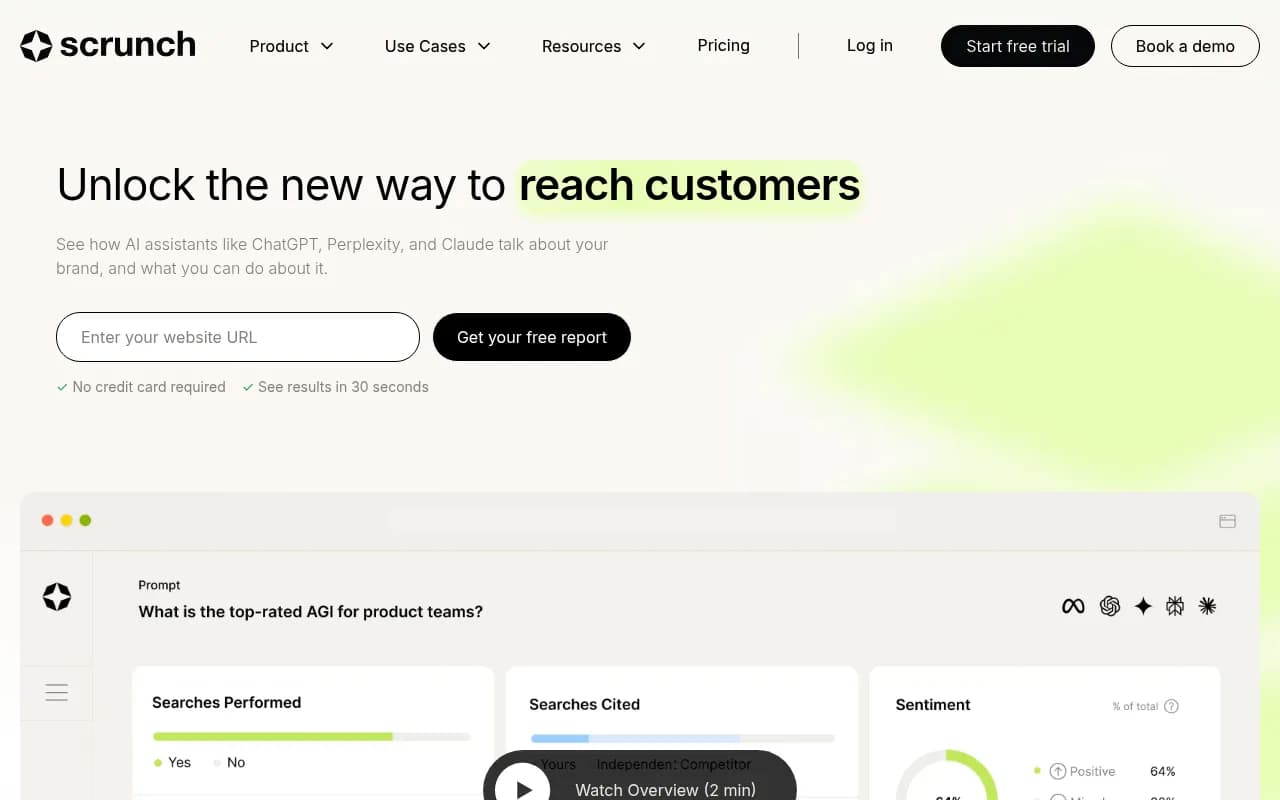
| Scrunch AI | Yes | No | No | No | Basic | Monitoring |
Otterly.AI


Profound

The pattern is clear. Most tools in this space -- Gauge included -- are monitoring dashboards. They show you data and leave you to figure out what to do with it. Promptwatch is the outlier: it closes the loop from gap identification to content creation to traffic attribution.
That said, not every team needs the full loop. If you genuinely just want monitoring, paying for a platform with features you won't use isn't smart. The question is whether "just monitoring" is actually enough to move the needle for your brand.
The competitive intelligence angle
One thing worth addressing directly: the title of this review mentions "competitive intelligence," and Gauge does have a competitive dimension. But it's worth being precise about what that means here.
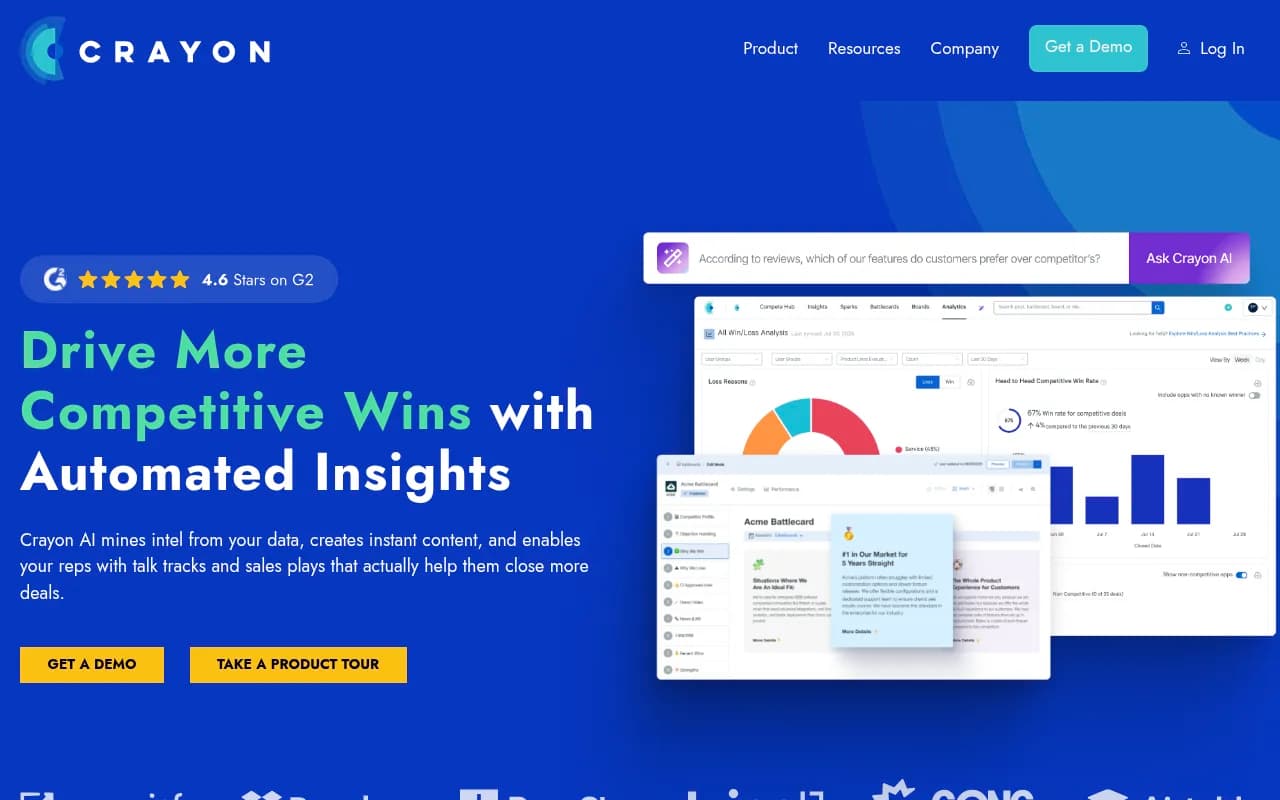
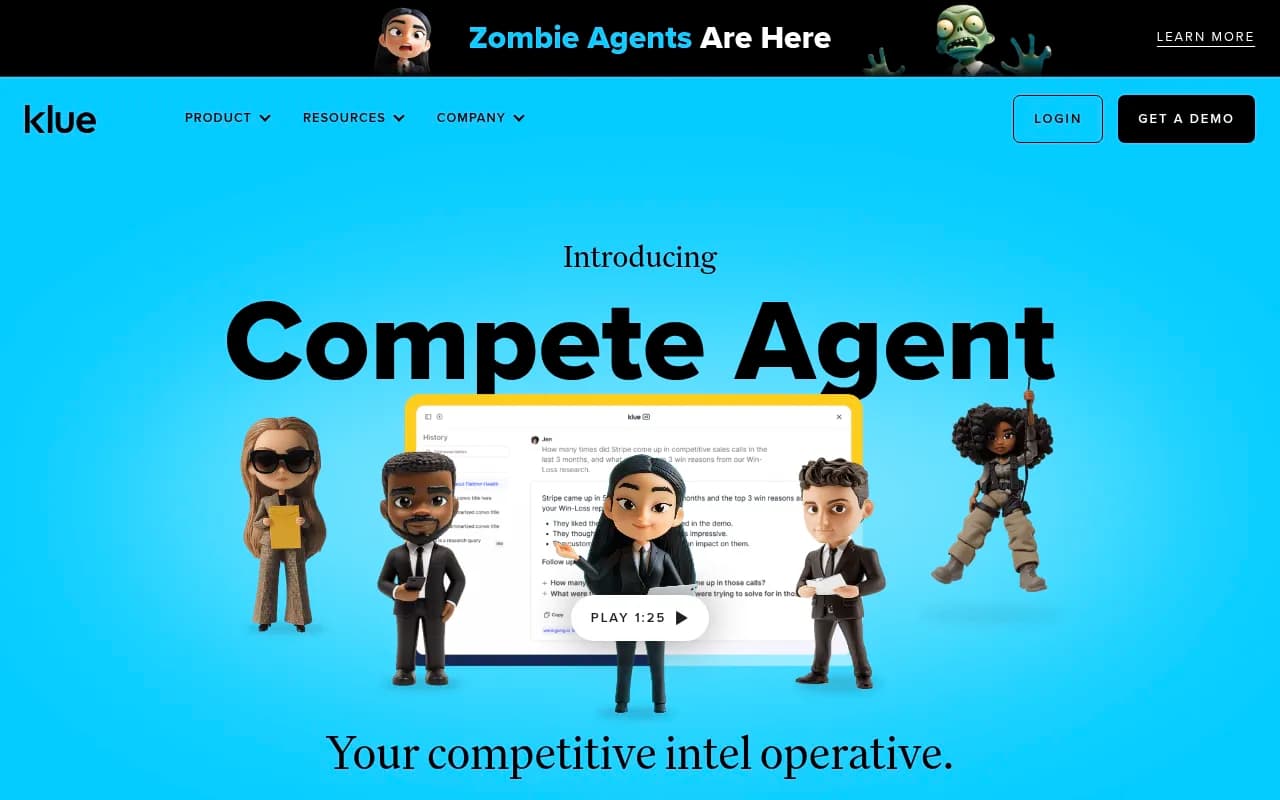
Traditional competitive intelligence -- the kind covered by tools like Crayon, Klue, or Kompyte -- involves tracking competitor messaging, pricing changes, product updates, hiring signals, and sales battlecards. That's a different category from AI visibility monitoring.
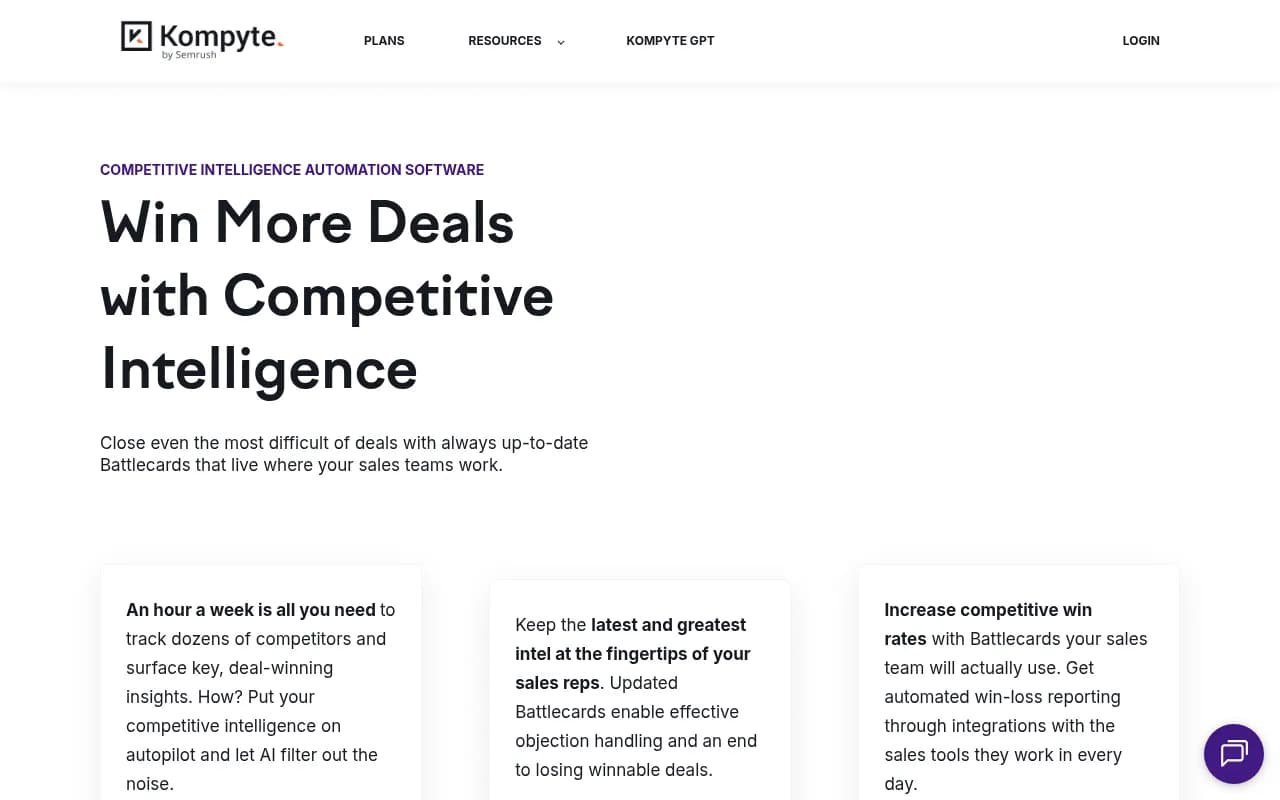
Gauge is doing competitive intelligence specifically in the AI search context: who appears in AI answers, how often, for which prompts. That's a narrow but increasingly important slice of competitive intelligence. As AI search grows as a discovery channel, knowing that a competitor is cited 4x more often than you for your core category is genuinely strategic information.
The limitation is that Gauge tells you the "what" but not the "why" or "how to fix it." That's where the gap between monitoring tools and optimization platforms becomes most visible.
Pricing and value assessment
Gauge's pricing isn't publicly detailed at the time of writing, which is common in this space -- most AI visibility tools use custom or tiered pricing based on the number of prompts, brands, and AI engines monitored.
For context, the AI visibility market broadly runs from free tiers (basic monitoring for a handful of prompts) up to enterprise contracts in the thousands per month. Promptwatch's plans start at $99/month for essential monitoring and go up to $579/month for full optimization capabilities including content generation and crawler logs.
If Gauge is priced at the lower end of this range, it's a reasonable entry point for teams that want monitoring without committing to a full platform. If it's priced comparably to platforms with significantly more capability, the value case gets harder to make.
How to use Gauge effectively (if you choose it)
If you decide Gauge fits your needs, here's how to get the most out of it:
Set up prompts that reflect actual buyer intent, not just brand name searches. "What's the best [category] tool" and "which [category] platform should I use" are more valuable to monitor than your brand name alone.
Track at least three to five competitors. Visibility is relative -- a 20% mention rate means something different if the category leader is at 25% versus 80%.
Export the data regularly and build your own analysis layer. Gauge's dashboards give you a view, but the real insight often comes from looking at trends over time: are you gaining ground, losing it, or flat?
Use the competitive gap data to brief your content team. Even without built-in content generation, knowing which prompts you're losing can drive a content calendar. The missing piece is knowing what to write -- which is where a tool with answer gap analysis becomes valuable.
The bottom line
Gauge does what it says: it tracks your brand across AI engines and shows you how you compare to competitors. For teams at the start of their AI visibility journey, that's a reasonable place to start.
The honest limitation is that monitoring without optimization is a half-measure. Knowing you're invisible for a high-value prompt is useful. Knowing exactly what content to create, having the tools to create it, and being able to track whether it worked -- that's what actually moves the number.
If you're evaluating Gauge alongside other options, the comparison that matters most is whether you want a dashboard or an optimization workflow. For the latter, platforms like Promptwatch are built specifically around that action loop: find the gaps, create content that gets cited, track the results.
For pure monitoring at a lower commitment level, Gauge is worth a look -- just go in with clear expectations about what it will and won't do for you.