Key takeaways
- Buffer is the best starting point for small teams and solo operators — cheap, clean, and functional until you outgrow it
- Planable wins for agencies that need real content approval workflows without paying Hootsuite-level prices
- Hootsuite makes sense at scale, but its real entry price for agencies is $249/month, not the $99 advertised
- Sprout Social is genuinely excellent but costs more than most teams can justify unless analytics and CRM integration are core to your workflow
- Later is the right pick if Instagram and TikTok are your primary channels and you care about visual planning
There's a version of this comparison that lists features in a table, assigns star ratings, and declares a winner. You've probably read it three times already. This isn't that.
What I want to do here is actually help you figure out which of these tools fits your situation — because the honest answer is that all five are good, and the differences between them are mostly about who you are and what you need, not which one has the most checkboxes ticked.
Let's go through each one properly.
Hootsuite
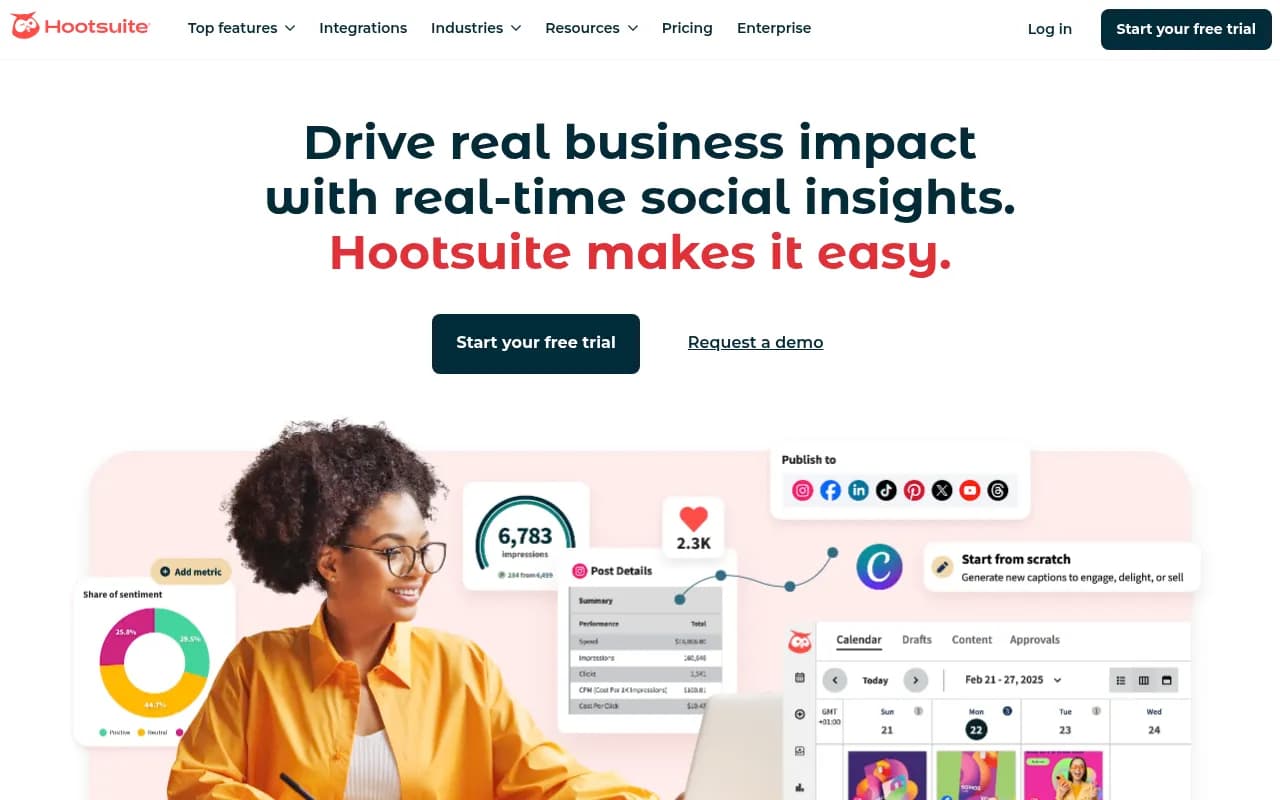
Hootsuite is the oldest player in this space and still the most comprehensive. Social listening across 150 million sources, bulk scheduling, ad management, 100+ integrations, detailed analytics. If you need a full social media command center, it delivers.
But here's the thing people don't say clearly enough: the $99/month Professional plan is mostly useful for individuals or very small teams. The moment you need approval workflows — which any agency or team with more than one person touching content will need — you're on the Team plan at $249/month. That gets you three users and 20 social accounts. Add more users at $49 each.
Run the math for a mid-size agency managing 10 clients with a team of five and you're looking at $400+ per month before analytics add-ons. That's not unreasonable for what you get, but it's not $99 either.
Hootsuite earns its price when you're running a large, complex operation. The social listening alone is worth it for brands that need to monitor conversations at scale. For a boutique team managing a handful of clients, it's more platform than you'll use.
Who it's actually for
Large in-house teams, enterprise brands, and agencies that genuinely need the full stack: listening, scheduling, ads, analytics, and deep integrations all in one place.
Buffer
Buffer is the tool I'd recommend to almost anyone starting out. The pricing model is genuinely clever: $5 per channel per month on Essentials, $10 per channel for Team (which unlocks approval workflows). Five clients with two accounts each? $100/month. That's hard to argue with.
The interface is clean. Scheduling is fast. The analytics are honest and readable. It doesn't try to be everything, and that restraint is part of what makes it good.
The ceiling shows up around the 8-10 client mark. Per-channel pricing means every new client increases your bill linearly. And the approval workflows, while functional, are basic: submit and approve, two levels, binary roles. That works fine when you're managing a few accounts. When you have clients with specific review requirements, multiple stakeholders, or multi-step sign-off processes, Buffer starts creating friction.
It's not a flaw exactly — Buffer was designed for simplicity. But it's worth knowing before you build your whole operation around it.
Who it's actually for
Freelancers, small agencies (under 8 clients), in-house teams at startups, and anyone who wants solid scheduling without paying for features they won't use.
Sprout Social
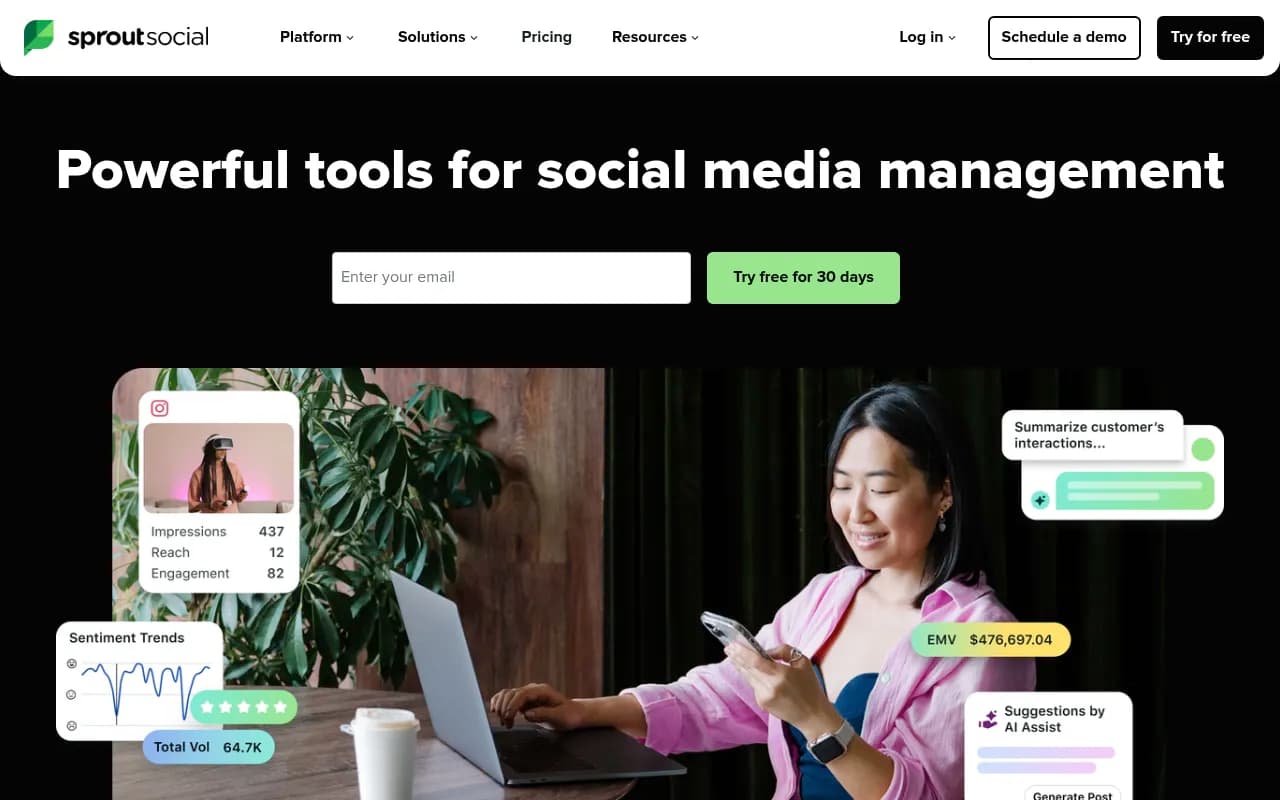
Sprout Social is the premium option in this group, and it knows it. Pricing starts around $249/month per seat, which puts it in a different conversation entirely from Buffer or Later.
What you get for that price is genuinely impressive: a unified inbox that actually works, deep CRM integrations, competitive benchmarking, employee advocacy tools, and analytics that go well beyond post performance. Sprout's reporting is the kind of thing you can put in front of a CMO without embarrassment.
The social listening is strong too, though Hootsuite's coverage is broader. Where Sprout pulls ahead is in the quality of the data presentation and the CRM-adjacent features — if you're a brand that treats social as a customer service and relationship channel, not just a publishing channel, Sprout fits that model better than anyone else here.
The honest downside: most teams don't need this much tool. If your primary use case is scheduling content and reviewing basic performance, you're paying a significant premium for capabilities you'll rarely touch. Sprout makes sense when social is a core revenue and support channel, not just a content distribution mechanism.
Who it's actually for
Mid-to-large brands with dedicated social teams, companies that use social for customer service at scale, and organizations where analytics need to feed into broader business reporting.
Later

Later started as an Instagram scheduler and still shows its roots. The visual content calendar is genuinely better than anything else in this list for Instagram and TikTok planning — you can see exactly how your grid will look before you post, drag and drop to rearrange, and preview Stories sequences.
It's expanded to cover LinkedIn, Facebook, Pinterest, and Twitter/X, but Instagram and TikTok remain where it shines. The link-in-bio tool (Linkin.bio) is a nice addition that turns your Instagram profile into a mini landing page.
Pricing is reasonable — plans start around $18/month for individuals, scaling up for teams and agencies. The analytics are decent for visual content performance but won't satisfy anyone who needs deep cross-platform reporting.
Where Later falls short: if you're managing a diverse client mix across multiple platforms, it can feel limiting. The approval workflows exist but aren't as robust as Planable's. And if LinkedIn or Twitter/X are primary channels for your clients, you'll probably find yourself wishing for a tool that treats those platforms as first-class citizens.
Who it's actually for
Creators, DTC brands, and teams where Instagram and TikTok are the primary (or only) channels. Also good for anyone who thinks visually and wants to plan content like a mood board rather than a spreadsheet.
Planable
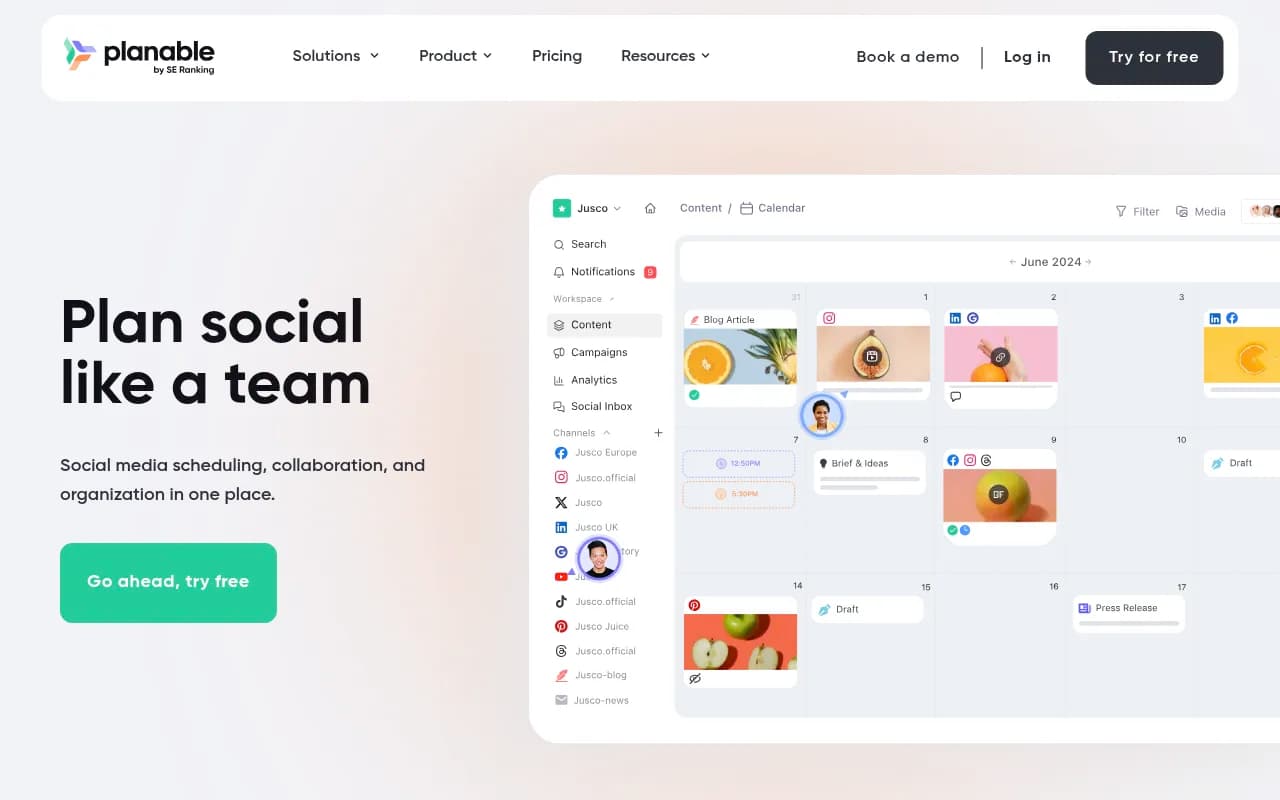
Planable is the one tool in this list that was built specifically around the content collaboration and approval problem, rather than having those features added on later. That structural difference matters in practice.
Every workspace in Planable can have its own approval configuration: none, optional, mandatory, or multi-level. A client who needs three people to sign off before anything goes live gets a different setup than the client who just wants to see a preview. You can configure this per workspace, not globally.
The content calendar is clean, the preview functionality is excellent (clients see posts exactly as they'll appear on each platform), and the comment and feedback system is built for real back-and-forth rather than just a simple approve/reject button.
Pricing is workspace-based rather than per-channel, which makes it more predictable for agencies as they grow. The free plan is limited but the paid tiers are reasonable for what you get.
The tradeoff: Planable is primarily a content workflow and scheduling tool. The analytics are basic compared to Sprout or Hootsuite. If you need deep performance reporting, you'll be pulling that from the native platforms or a separate analytics tool. For many agencies, that's fine — they use Planable for the workflow and pull reporting separately.
Who it's actually for
Marketing agencies, content teams with multiple stakeholders, and anyone who has ever lost time chasing approvals over email or Slack.
Side-by-side comparison
| Hootsuite | Buffer | Sprout Social | Later | Planable | |
|---|---|---|---|---|---|
| Starting price | $99/mo | $5/channel/mo | ~$249/seat/mo | $18/mo | Free (limited) |
| Real agency entry price | $249/mo | $10/channel/mo | $249/seat/mo | $80/mo | ~$33/mo |
| Approval workflows | Yes (Team+) | Basic (Team) | Yes | Basic | Yes, multi-level |
| Social listening | Yes (extensive) | No | Yes | No | No |
| Analytics depth | High | Medium | Very high | Medium | Low |
| Best platform focus | All | All | All | Instagram/TikTok | All |
| Visual content calendar | Good | Basic | Good | Excellent | Good |
| Agency client management | Adequate | Gets expensive | Adequate | Limited | Built for it |
| AI content features | Yes | Yes | Yes | Yes | Yes |
The real question: what's your actual situation?
The tool you should pick comes down to three things: your team size, your client mix, and how much you care about analytics vs. workflow.
If you're a solo operator or very small team with a handful of accounts, Buffer is almost certainly the right answer. It's cheap, it works, and you won't hit its ceiling for a while.
If you're an agency managing 5+ clients with real approval requirements, Planable is worth a serious look. The workflow features are genuinely better than anything else at a comparable price point, and the per-workspace pricing model scales more predictably than per-channel.
If you're a brand (not an agency) with a dedicated social team and social is a significant customer service and revenue channel, Sprout Social is hard to argue with despite the price. The analytics and CRM integration justify the cost if you're actually using them.
If Instagram and TikTok are your world, Later is the most natural tool to work in. The visual planning experience is noticeably better than the alternatives.
Hootsuite makes sense when you need the full stack: listening, scheduling, ads, analytics, and integrations all in one place, and you have the budget and team size to justify it.
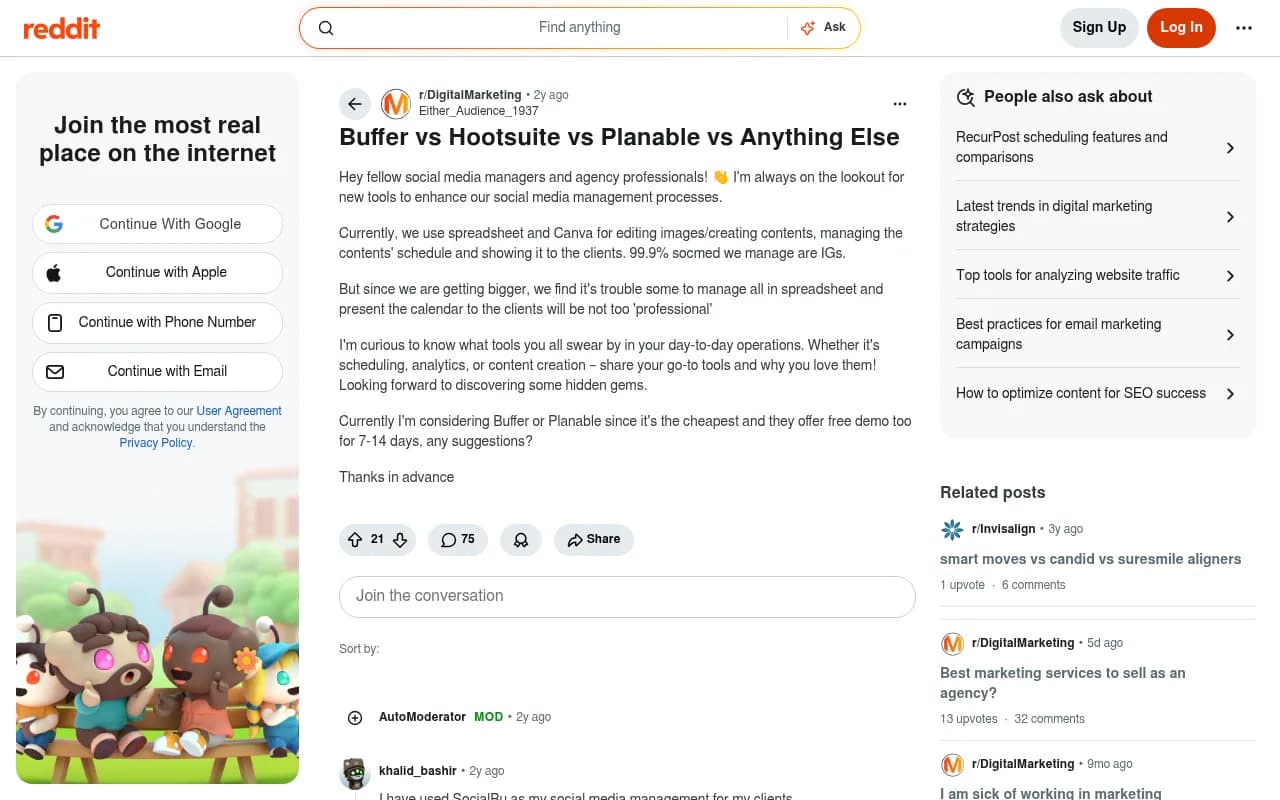
A few tools worth knowing about
Beyond the five main players, a couple of others are worth mentioning depending on your needs.
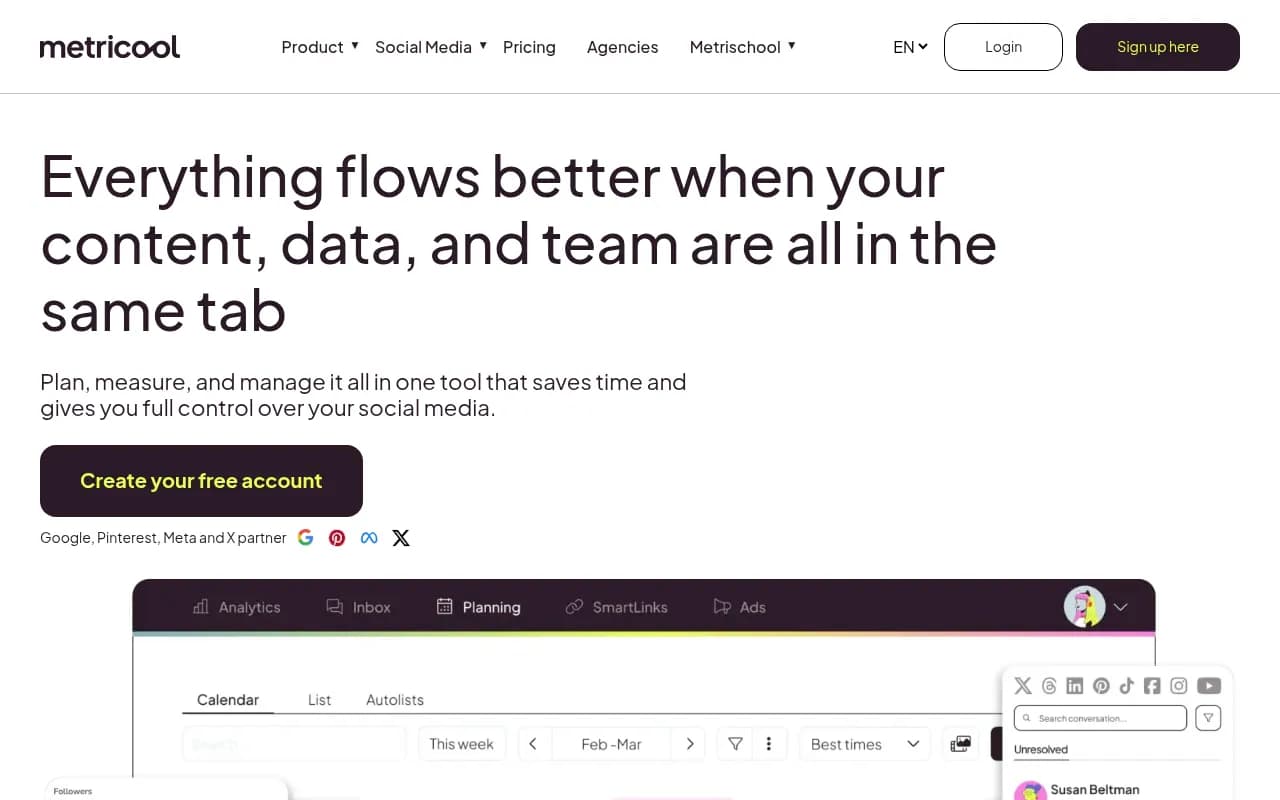
Metricool is a strong alternative if you want solid analytics at a lower price point than Sprout. It covers scheduling, analytics, and even paid social reporting in one place.
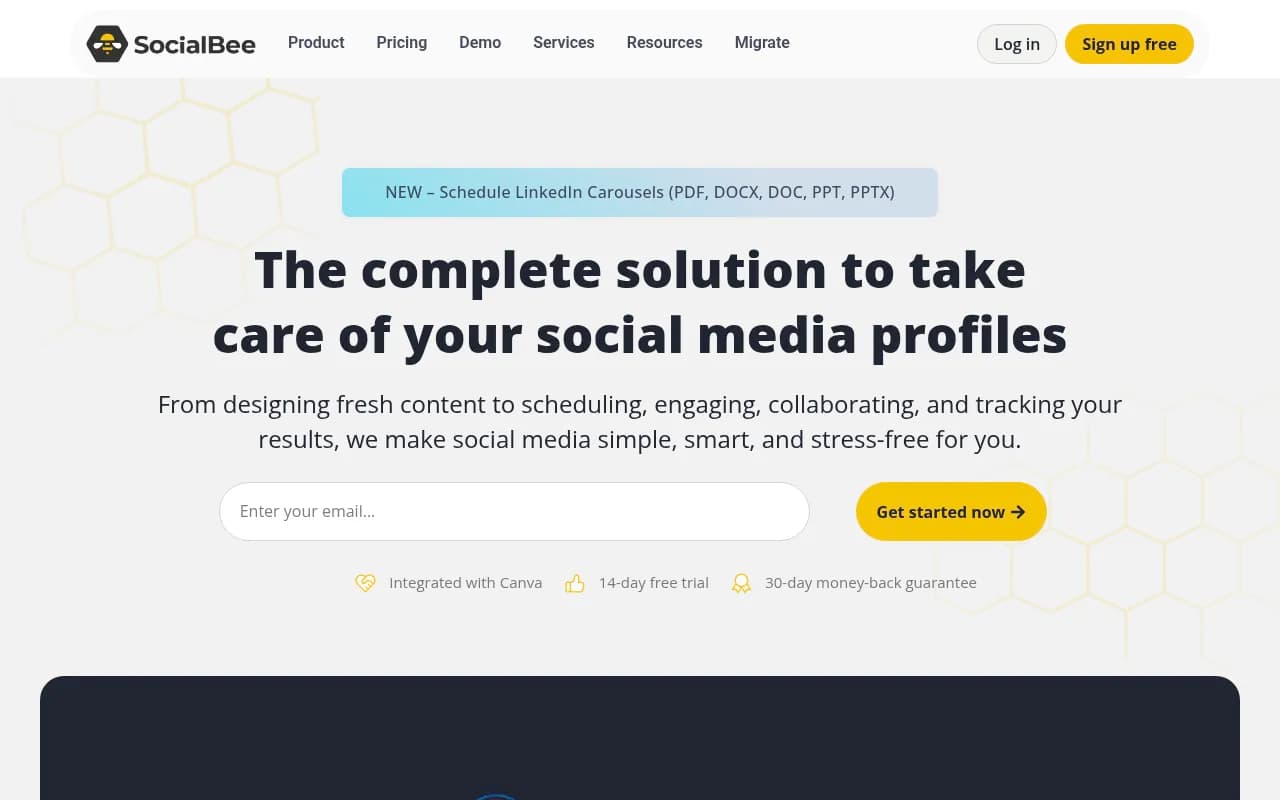
SocialBee is worth a look if content recycling and category-based scheduling matter to you — it handles evergreen content rotation better than most tools here.
FeedHive has built some genuinely useful AI features around content recycling and performance prediction that make it interesting for teams that post at high volume.

The bottom line
None of these tools are bad. The question is whether you're paying for features you'll actually use.
Buffer and Later are the honest choices for smaller operations. Planable is the honest choice for agencies that have outgrown Buffer's approval workflow. Sprout Social is the honest choice for brands that treat social as a core business function. Hootsuite is the honest choice when you need everything and have the budget to match.
Pick the one that fits where you are now, not where you hope to be in three years. You can always switch.